- WebRTC Protocol Stack and Glass to Glass Latency Deconstruction
- Hardware Video Encoding and Zero Copy Frame Capture via HDMI
- Dynamic Bitrate Adaptation and RTCP Feedback Jitter Buffer Tuning
- Global Edge Media Servers and STUN TURN Relay Optimization
- Audio Video Lip Sync and Physical Command Timecode Matching
- Multi Camera Switching Architecture for Overhead and Frontal Angles
- Frequently Asked Questions
The remote arcade gaming industry faces a critical technological hurdle where players physically operate remote claw machines, coin pushers, and arcade cabinets via internet-connected mobile applications. In this interactive hybrid paradigm, any delay between the player initiating a joystick movement and seeing the physical claw respond on their screen directly destroys the player experience. Traditional live streaming architectures rely on protocols like RTMP and HTTP Live Streaming HLS. While these protocols deliver excellent video quality and broad compatibility for passive broadcasting, they consistently introduce sluggish 300ms to 5000ms end-to-end delays. When users attempt to play a fast-paced game of skill under these conditions, the cognitive dissonance caused by high latency leads to frustration, severe player drop-off, and devastating reductions in user lifetime value. For teleoperation of physical machines, achieving sub-80ms WebRTC glass-to-glass latency is an absolute operational necessity, not an optional feature. Players require real-time video streaming for claw machines that feels identical to standing in a physical amusement center. This comprehensive engineering guide investigates how leading operators reduce remote arcade video latency using sophisticated WebRTC pipelines, h264 hardware encoding arcade solutions, and deeply optimized networking infrastructure to deliver low latency live video arcade experiences on a global scale.
| Streaming Protocol | Glass-to-Glass Latency | Browser Compatibility | Jitter Buffer Adaptation | CPU Overhead | Firewall Traversal |
|---|---|---|---|---|---|
| WebRTC Ultra-Low Latency | Sub-80ms | Universal Native Support | Highly Dynamic | Moderate to High | Complex STUN TURN ICE |
| RTMP Streaming | 1000ms to 3000ms | Requires Player SDKs | Static | Low | Problematic over Port 1935 |
| Low-Latency HLS LL-HLS | 2000ms to 4000ms | Excellent Ecosystem | Moderate | Low | Excellent via Port 443 |
| SRT Secure Reliable Transport | Sub-500ms | Poor Web Support | Configurable | Low | Complex UDP Requires Forwarding |
WebRTC Protocol Stack and Glass to Glass Latency Deconstruction
Understanding webrtc arcade streaming latency requires a meticulous deconstruction of the entire glass-to-glass latency pipeline. Glass-to-glass latency represents the total accumulated time from the exact moment light enters the camera lens positioned in front of the physical arcade cabinet to the precise microsecond those captured photons are emitted by the player mobile device display. This pipeline consists of dozens of discrete operational steps, each capable of introducing fatal milliseconds of delay. When operators design low latency live video arcade platforms, they must audit every component. For a comprehensive architectural overview and turnkey procurement frameworks, review our master guide on WebRTC remote arcade streaming architecture. For factory-direct procurement and comprehensive engineering specs, consult our master guide on industrial IoT remote arcade machine teleoperation.
The WebRTC protocol stack fundamentally departs from traditional TCP-based streaming by leveraging UDP at the transport layer, acknowledging that in real-time interactive systems, a lost frame is less damaging than a delayed frame waiting for retransmission. The Real-Time Transport Protocol RTP carries the actual media payloads, while the RTP Control Protocol RTCP provides continuous out-of-band statistics and control information used to modulate encoding parameters dynamically. To prevent Maximum Transmission Unit MTU fragmentation, RTP payloads must be carefully packetized, often utilizing sophisticated pacing algorithms that distribute packet transmission evenly over time rather than bursting frames onto the network, which can cause micro-congestion at edge routers. To explore detailed technical specifications and deployment considerations, see our operational guide on How Operators Start a Remote Claw. To explore detailed technical specifications and deployment considerations, see our operational guide on How Industrial IoT Gateway Architecture Powers. To explore detailed technical specifications and deployment considerations, see our operational guide on How Remote Live Arcade Hardware and. To explore detailed technical specifications and deployment considerations, see our operational guide on Industrial IoT Controller Boards and GPIO. To explore detailed technical specifications and deployment considerations, see our operational guide on How WebRTC Streaming and IP Camera.
To reduce remote arcade video latency below 80ms, engineers must dissect the pipeline into its constituent parts. First, the camera sensor exposure and readout phase consumes approximately 16ms at 60 frames per second. Next, the captured frame must be transported from the camera to the encoder, typically via HDMI or USB interfaces, which can introduce another 5ms to 10ms depending on bus contention. Hardware encoding the raw video frame into an H.264 or VP8 bitstream takes another 5ms to 15ms. The encoded packet is then encapsulated into RTP payloads and dispatched to the network interface, adding minimal microsecond-level overhead assuming zero-copy memory operations.
Network transmission represents the most variable component. For a well-routed fiber connection to a regional edge node, propagation delay might be 15ms to 30ms. Upon arrival at the player device, the WebRTC jitter buffer holds the packets briefly to reorder them and smooth out network delivery variations. A poorly tuned jitter buffer can artificially inflate latency by 50ms or more. Decoding the compressed frame typically consumes 5ms to 10ms on modern smartphone hardware. Finally, the operating system display compositor and the physical screen refresh cycle require another 16ms to 32ms before the image actually appears to the user. Summing these absolute minimums yields a theoretical floor of roughly 60ms to 70ms, illustrating why achieving consistent sub-80ms performance requires obsessive optimization across the entire stack.
Hardware Video Encoding and Zero Copy Frame Capture via HDMI
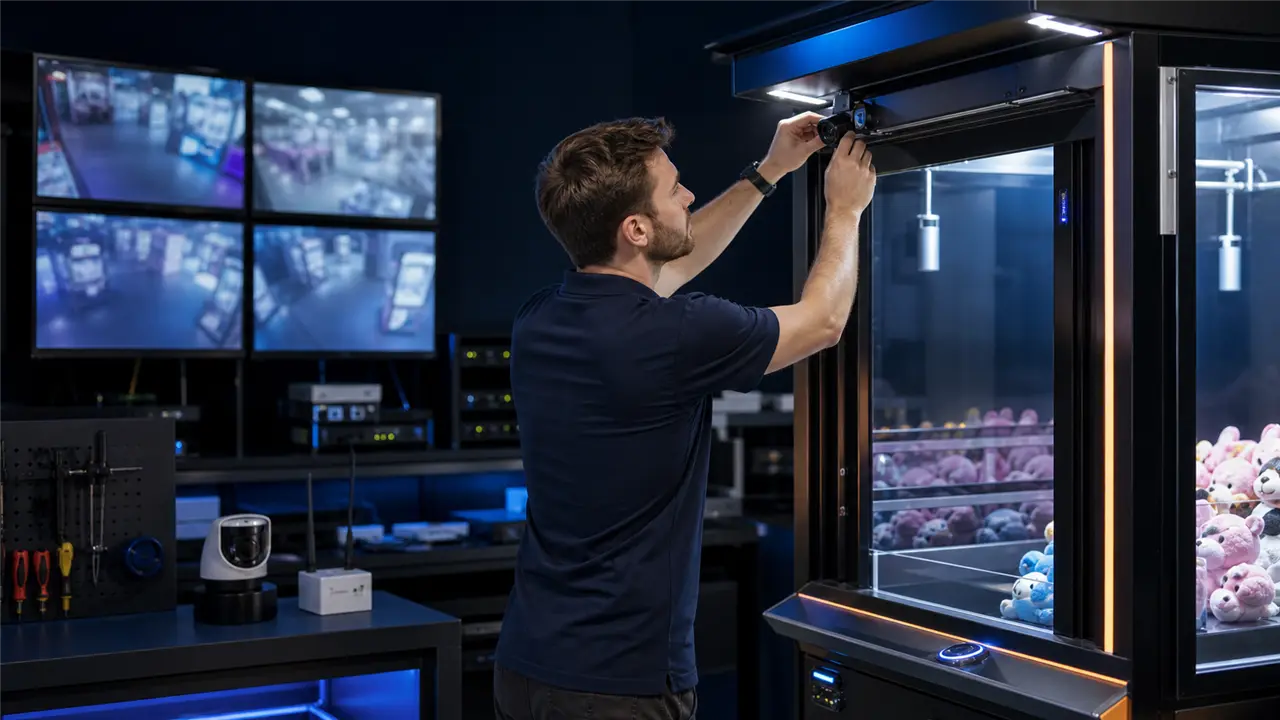
The foundation of low latency live video arcade transmission begins at the physical machine with hardware video encoding and zero-copy frame capture. Software encoding using libraries like x264 running on generic CPUs introduces unacceptable processing delays, often exceeding 50ms just to compress a single frame. To eliminate this bottleneck, arcade operators deploy dedicated h264 hardware encoding arcade solutions integrated directly into the cabinet control board.
High-performance setups typically utilize specialized System on a Chip SoC architectures or dedicated video processing units VPUs. Devices based on Rockchip, Amlogic, or NVIDIA Jetson platforms provide hardware-accelerated H.264 and H.265 encoders capable of compressing 1080p video in under 10 milliseconds. However, simply having a hardware encoder is insufficient. The memory pipeline feeding raw video data from the camera to the encoder must be rigorously optimized.
Zero-copy memory management is critical. In naive implementations, a frame captured by a USB webcam or HDMI capture card is copied from the peripheral buffer into kernel space, then copied into user space memory for processing, and finally copied back into the hardware encoder memory domain. Each of these memory copy operations consumes valuable CPU cycles and introduces latency. By utilizing advanced Linux subsystems like Video4Linux2 V4L2 with memory-mapped buffers, Direct Memory Access DMA frameworks, and unified memory allocators like ION or DMA-BUF, developers can ensure that the raw uncompressed video frame captured by the HDMI interface is passed directly to the hardware encoding block via pointer reference without ever being copied in system RAM.
Furthermore, configuring the hardware encoder for real-time video streaming for claw machines requires specific parameter tuning. Operators must disable B-frames entirely, as they require the encoder to buffer future frames before encoding the current one, inherently adding latency. The encoder must be configured for the baseline or main profile, utilizing constant bit rate CBR or constrained variable bit rate VBR to ensure predictable packet generation. The Context-Adaptive Variable-Length Coding CAVLC algorithm is often preferred over CABAC in extreme low-latency scenarios due to its lower computational complexity during the entropy coding phase. The Group of Pictures GOP size should ideally be set to match the frame rate, or in extreme ultra-low latency scenarios, intra-refresh techniques can be employed where no full I-frames are transmitted after the initial connection. Instead, a column of macroblocks is refreshed in each frame, significantly smoothing the network transmission profile and preventing the latency spikes associated with large keyframe generation.
Dynamic Bitrate Adaptation and RTCP Feedback Jitter Buffer Tuning
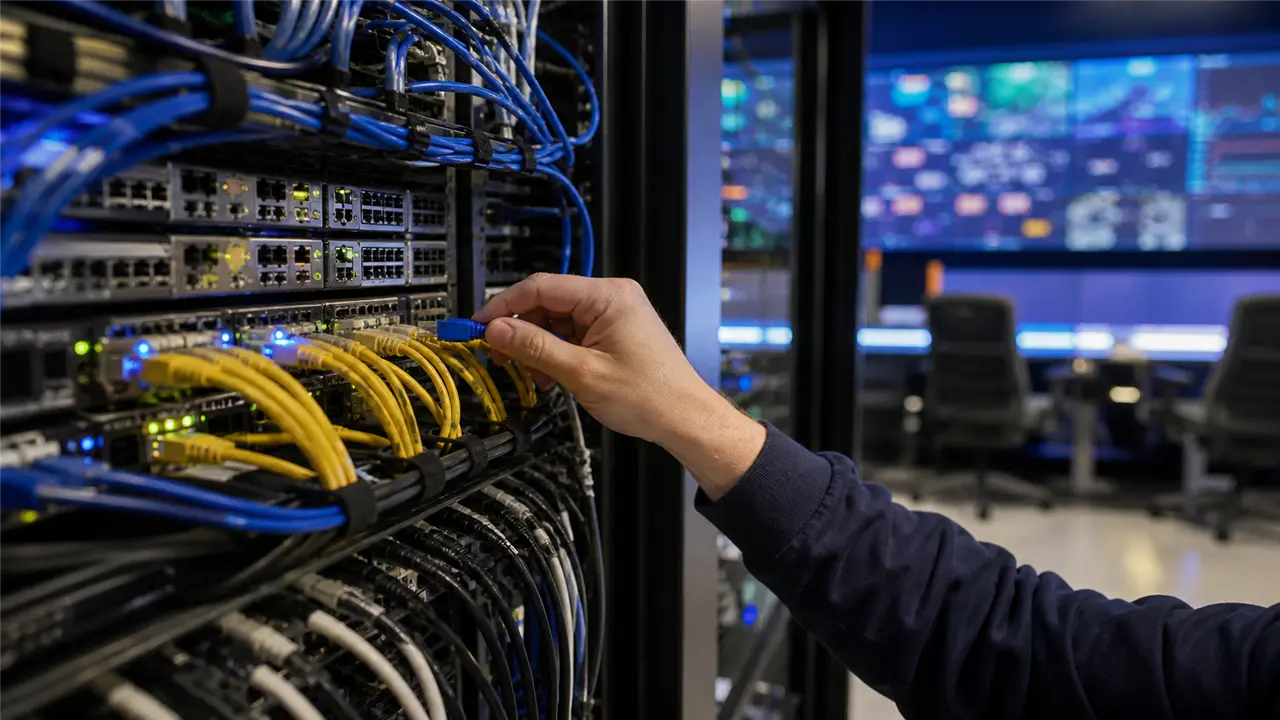
Maintaining sub-80ms webrtc arcade streaming latency over volatile mobile networks demands sophisticated dynamic bitrate adaptation and aggressive jitter buffer tuning. The internet is hostile to UDP traffic. Packet loss, network congestion, and variable bandwidth are constant threats to real-time video streaming for claw machines. When network conditions deteriorate, the system must respond instantaneously to prevent queue buildup at the network interface or packet loss that forces retransmissions.
WebRTC utilizes Google Congestion Control GCC algorithms or similar proprietary mechanisms based on Transport-wide Congestion Control TWCC to monitor network health continuously. Modern WebRTC stacks employ a trendline estimator that analyzes the arrival time differences of packet groups to detect the onset of queuing delays before packet loss actually occurs. The receiver sends frequent RTCP feedback packets containing detailed statistics on packet arrival times, loss rates, and delay variations. The sender analyzes this feedback to estimate the available bandwidth in real-time. If the algorithm detects rising queuing delays, it immediately instructs the hardware encoder to lower the target bitrate, reduce the frame rate, or decrease the spatial resolution. When packet loss does occur, the system relies on Negative Acknowledgments NACK or Picture Loss Indications PLI to request retransmissions or new keyframes, although forward error correction FEC might be used cautiously if bandwidth permits.
This dynamic bitrate adaptation must be tightly integrated with the h264 hardware encoding arcade pipeline. When the WebRTC stack requests a bitrate reduction, the encoder must comply within the very next frame. Some cheaper hardware encoders fail to adjust on the fly, continuing to pump out high-bitrate video and exacerbating the congestion. Enterprise-grade arcade streaming boards utilize custom firmware ensuring sub-millisecond response times to bitrate modification requests.
Equally important is the tuning of the WebRTC jitter buffer on the player client device. The jitter buffer temporarily stores incoming RTP packets to reassemble them into the correct sequence and absorb variations in network transit time. A larger jitter buffer ensures smoother playback by hiding network instability but directly increases overall glass-to-glass latency. For passive video consumption, a jitter buffer might hold 500ms of audio and video. For remote arcade video latency reduction, this is unacceptable. Engineers must configure the WebRTC client to operate with minimal jitter buffering, often pushing the limits to 10ms or 20ms. This aggressive tuning requires a highly adaptive algorithm that expands the buffer only when absolutely necessary to prevent severe packet loss artifacts, and rapidly shrinks it back to the minimum threshold the moment network conditions stabilize. Implementing custom jitter buffer logic via WebRTC Native APIs provides the necessary control that default browser implementations often lack. For audio, modules like NetEQ dynamically compress or expand voice payloads to manage jitter without noticeable pitch shifts, ensuring the audio latency remains coupled to the video.
Global Edge Media Servers and STUN TURN Relay Optimization
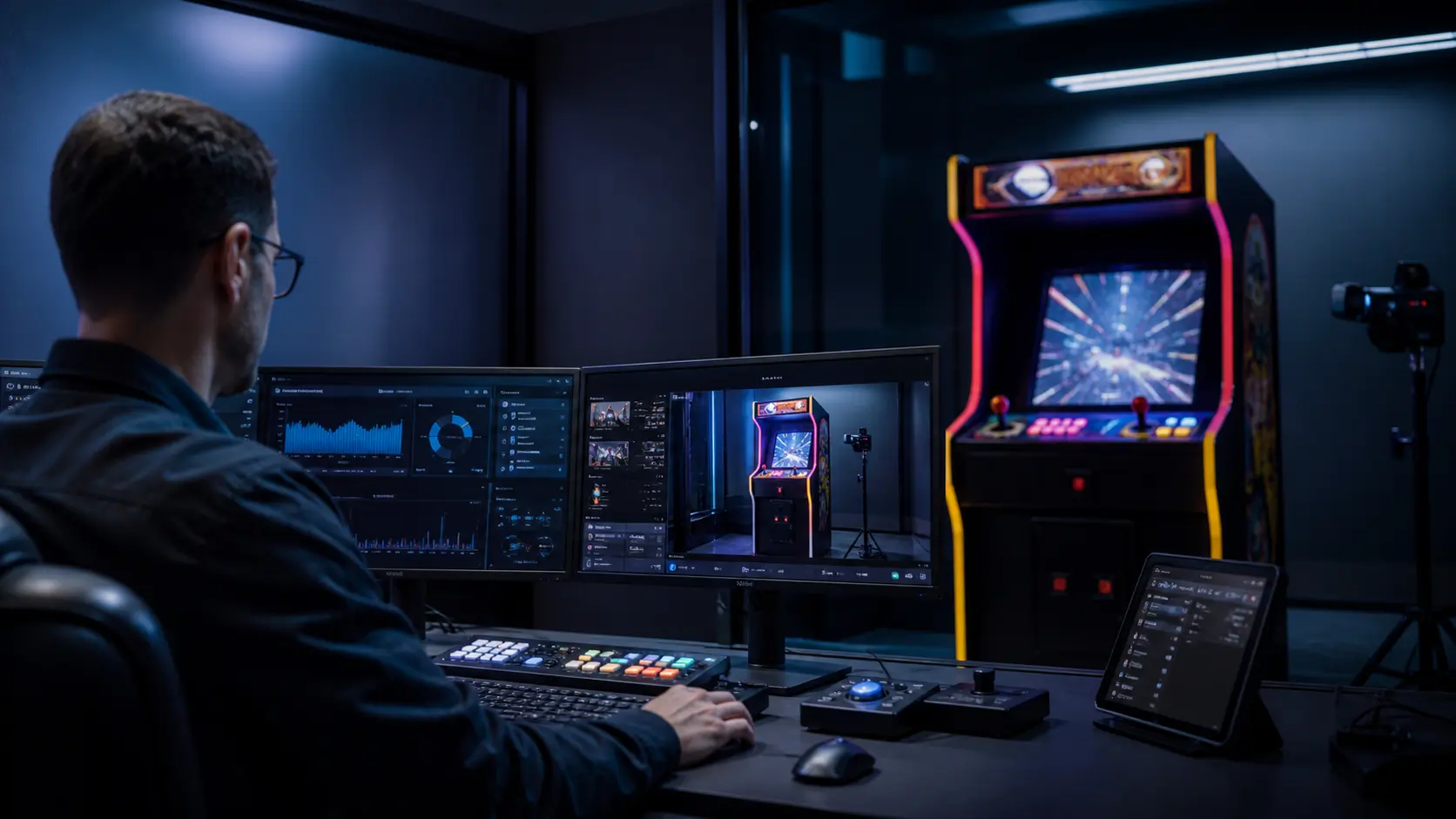
The physical distance between the arcade cabinet and the player dictates the unalterable speed-of-light propagation delay. To reduce remote arcade video latency for a geographically dispersed user base, operators must deploy distributed global edge media servers rather than relying on centralized data centers. A player in London attempting to control a physical claw machine located in Tokyo will experience at least 120ms to 150ms of pure network transit latency, regardless of how fast the hardware encoding is.
To combat this, enterprise architectures utilize strategically positioned WebRTC media servers acting as Selective Forwarding Units SFU. Platforms like Pion, mediasoup, or Janus are deployed across global cloud providers. When a cabinet connects to the network, it pushes its stream to the closest regional edge node via a dedicated, high-quality transit backbone. Players connecting via the mobile application are intelligently routed to the edge node geographically closest to them using Geo-DNS and Anycast IP routing. The video stream is then transmitted from the arcade machine, across the optimized enterprise backbone to the player local edge node, and finally delivered to the mobile device over the public internet. This avoids the unpredictable anomalies of Border Gateway Protocol BGP routing over the public internet over long distances.
This architecture fundamentally alters the WebRTC connection negotiation process. Standard WebRTC relies on Session Traversal Utilities for NAT STUN and Traversal Using Relays around NAT TURN servers to establish peer-to-peer connections through complex firewalls and cellular provider Carrier-Grade NATs CGNAT. However, negotiating these connections takes time, and relying on public TURN relays introduces unpredictable routing paths.
For low latency live video arcade platforms, operators integrate STUN and TURN capabilities directly into their edge media servers. The arcade cabinet is pre-configured to establish a persistent connection to the edge server, effectively bypassing the need for complex Interactive Connectivity Establishment ICE candidate gathering on the broadcast side. When the player client connects, it establishes a WebRTC session directly with the edge server. This hub-and-spoke topology ensures that media packets travel over the most direct, highly monitored network paths possible. By optimizing the STUN TURN relay infrastructure to prioritize UDP transport over TCP or TLS wrappers, and leveraging premium transit providers, operators can minimize network jitter and maintain the strict timing required for real-time video streaming for claw machines across continents.
Audio Video Lip Sync and Physical Command Timecode Matching
While video latency dominates the discussion, synchronizing the audio stream and matching physical control commands to the video feed is a critical engineering challenge in hybrid-arcade environments. If a player presses a button to drop the claw, but the sound of the claw descending arrives before the video shows the movement, the brain immediately detects the discrepancy, shattering the illusion of direct physical control.
WebRTC uses RTP timestamps to align audio and video streams at the receiver. However, in an arcade setting, audio capture and video capture often occur through entirely separate peripheral buses. The HDMI capture card handles video, while a separate USB audio interface or I2S digital audio bus captures the cabinet sound effects and ambient noise. If these capture pipelines are not precisely synchronized at the hardware level, the RTP timestamps will drift, leading to desynchronization.
To maintain perfect audio-video lip sync, engineers must implement a unified timecode system on the broadcasting hardware. RTCP Sender Reports SR play a crucial role here. The sender must map the internal hardware clock—typically synchronized via Network Time Protocol NTP—to the respective RTP timestamps for both audio and video streams. When a video frame is captured, it is stamped with a Presentation Time Stamp PTS generated from this master hardware clock. The corresponding audio samples captured at that exact microsecond are stamped with the identical reference timecode. The WebRTC receiver uses these RTCP Sender Reports to align the distinct RTP streams for synchronized playback.
Furthermore, reducing remote arcade video latency involves physical command timecode matching. When the player presses a directional button on their mobile app, the control command is sent via a separate low-latency signaling channel, often utilizing WebSockets or dedicated UDP datagrams. To ensure fairness and accuracy, the application embeds a client-side timestamp into the control packet. When the arcade cabinet control board receives the command, it compares the command timestamp with the currently broadcasting video frame timestamp. This allows the system to calculate the exact round-trip time and apply predictive algorithms. For instance, if the system knows there is a 60ms delay between the player seeing the frame and the command arriving, the physical motor controller can initiate movement slightly more aggressively or interpolate the command trajectory to compensate, making the real-time video streaming for claw machines feel significantly more responsive than the raw network latency would suggest.
Multi Camera Switching Architecture for Overhead and Frontal Angles
Modern remote arcade applications provide players with multiple viewing angles, typically featuring a frontal wide-angle view for spatial orientation and an overhead macro view for precise claw positioning. Implementing multi-camera switching without introducing stutter or increasing webrtc arcade streaming latency requires a highly sophisticated video routing architecture.
The naive approach involves the player client maintaining two separate WebRTC connections simultaneously, decoding both video streams, and hiding one behind the UI. This method doubles the bandwidth requirement on the player device, heavily taxes the mobile CPU, and often leads to thermal throttling on smartphones, which ultimately degrades decoding performance and increases latency.
To achieve seamless, zero-latency camera switching, operators employ server-side compositing or intelligent SFU stream manipulation utilizing a Unified Plan architecture. In a server-side compositing model, both camera feeds from the physical cabinet are transmitted to the edge media server. The server utilizes a hardware-accelerated mixer to composite both feeds into a single ultra-wide video frame or a picture-in-picture layout. The player client receives only one WebRTC stream and uses CSS transforms or WebGL shader techniques within the mobile application to crop and display the desired camera angle. Switching cameras simply involves a local UI update that shifts the viewport, resulting in an instantaneous transition with absolutely zero network delay.
Alternatively, operators use intelligent SFU signaling with distinct tracks. Both camera feeds are sent to the SFU as separate RTP tracks within the same WebRTC session. By default, the SFU only forwards the active camera track to the player device, minimizing bandwidth consumption. When the user taps the camera switch button, a tiny signaling message is sent to the SFU over the WebRTC data channel. The SFU instantly stops forwarding the frontal track and begins forwarding the overhead track. To eliminate the delay associated with waiting for a standard keyframe to initialize decoding of the new stream, the SFU utilizes RTCP PLI messages to immediately request an instantaneous keyframe or Intra-Refresh frame from the arcade hardware encoder. This tightly coupled architecture ensures that players can rapidly toggle between views while maintaining the critical sub-80ms low latency live video arcade experience necessary for precision gameplay.
Frequently Asked Questions
Question One What is the maximum acceptable latency for remote claw machines
The absolute maximum acceptable glass-to-glass latency for real-time video streaming for claw machines is generally considered to be 150ms, beyond which players perceive noticeable lag that interferes with reaction times. However, for a premium user experience that drives high retention and repeat play, top-tier operators target sub-80ms webrtc arcade streaming latency. At this speed, the delay is practically imperceptible to the human nervous system, allowing for skill-based gameplay that mirrors physical arcade conditions.
Question Two Why is RTMP no longer suitable for interactive arcade games
RTMP Real-Time Messaging Protocol was originally engineered for passive broadcasting, not highly interactive teleoperation. It relies on the TCP transport protocol, which guarantees packet delivery through mandatory retransmissions. If a single packet is lost on a mobile network, the entire video stream halts while waiting for the missing data to be re-sent, causing massive and unpredictable latency spikes. Additionally, standard RTMP delivery pipelines typically rely on large server-side buffers and client-side HLS format conversion, resulting in 2000ms to 5000ms base delays, making it fundamentally incompatible with the requirement to reduce remote arcade video latency for physical machine control.
Question Three How does hardware encoding reduce latency compared to software encoding
Software encoding relies on generic CPU processing cycles, which are subject to operating system thread scheduling and variable execution times. Processing a high-definition frame with software can take 30ms to 50ms per frame. Dedicated h264 hardware encoding arcade chips contain specialized silicon designed exclusively for video compression. These Application-Specific Integrated Circuits ASICs process raw pixel data deterministically, executing complex motion estimation and quantization algorithms in under 10ms. When combined with zero-copy memory pipelines, this dramatically shrinks the initial capture-to-transmit segment of the glass-to-glass latency pipeline.
Question Four Can WebRTC operate effectively over unreliable 4G mobile networks
Yes, WebRTC is uniquely architected to operate efficiently over hostile network conditions like fluctuating 4G or 5G cellular networks. It utilizes UDP transport, entirely bypassing TCP retransmission delays. More importantly, it employs advanced Congestion Control algorithms that continuously analyze RTCP feedback reports. When the WebRTC stack detects packet loss or jitter typical of a mobile connection, it automatically instructs the encoding pipeline to lower the video bitrate, adjust resolution dynamically, or apply forward error correction, prioritizing continuous low latency live video arcade transmission over pristine image quality during network degradation.
Question Five What role do edge servers play in WebRTC streaming architecture
Edge servers minimize the physical geographic distance data must travel between the arcade cabinet hardware and the player mobile device. Without edge nodes, media traffic might traverse inefficient public internet routes across multiple continents, introducing substantial speed-of-light propagation delays and excessive jitter. By deploying global edge media servers acting as Selective Forwarding Units SFU, operators route the video feed over optimized private backbones to a relay node geographically closest to the user, significantly lowering the overall network transit time and stabilizing the baseline webrtc arcade streaming latency.
Author & Technical Consultant Contact Information
- Engineer: Wang
- WhatsApp/WeChat: +86 17620842078
- Telegram: https://t.me/JLwyc
- Email: miba515527@gmail.com
- Company: Guangzhou Miba Animation Technology Co., Ltd.