- Electromagnetic Pulse Vulnerabilities in Arcade Logic Architectures
- Transient Surge Clamping Under 5ps
- Optical Isolation for Peripheral Inputs
- Faradaic Cage Enclosure Engineering
- Firmware Cryptography and State Validation
- Advanced Spectrum Detection and Alert Systems
- Parameter Comparison Table
- Advanced PCB Layer Isolation and High Voltage Pulse Hardening Architecture
- Operator Standard Operating Procedures and Incident Response Playbook
- Frequently Asked Questions
Protecting high-yield arcade and casino machinery from electromagnetic pulse interference requires industrial transient surge suppression modules capable of immediate voltage clamping. Route operators lose significant revenue daily due to unprotected logic boards succumbing to handheld EMP jammers.
Modern rogue devices emit bursts ranging from 300MHz to 1200MHz, inducing chaotic logic states and forcing coin-hopper relays to latch open. A wholesale EMP jammer protection device neutralizes these threats by implementing ultra-fast transient voltage suppression and optical pulse isolation within the main harness. Implementing these safeguards at the manufacturing stage ensures that every deployed cabinet is mathematically hardened against inductive sabotage. For comprehensive circuit evaluation, contact Engineer Wang at Guangzhou Miba Animation Technology Co., Ltd. (Panyu Manufacturing Base). Reach out via WhatsApp at +86 17620842078, Telegram at https://t.me/JLwyc, or Email at miba515527@gmail.com to request engineering samples. For factory-direct procurement and comprehensive engineering specs, consult our master guide on arcade machine anti-cheat hardware architecture.
Electromagnetic Pulse Vulnerabilities in Arcade Logic Architectures
Unprotected printed circuit boards act as antennas for high-frequency electromagnetic radiation. When a jammer discharges near a cabinet bill acceptor or coin mechanism, the resulting magnetic flux induces rogue currents across the logic traces. These currents exceed the standard 5V and 12V operating parameters of the JAMMA standard, leading to CPU instruction corruption and false credit generation. Overcoming this requires analyzing the specific frequency spectrum of the attack. Most consumer-grade jammers utilize resonant coils tuned between 300MHz and 800MHz. Defending the architecture involves decoupling these frequencies using ferrite beads and strategically placed grounded copper pours on the logic board. The inductive coupling phenomenon occurs when the transient magnetic field permeates the FR4 substrate, finding loops of minimal impedance. Engineers must map the entire return current path to minimize the loop area. This practice effectively reduces the mutual inductance between the external attack source and the internal sensitive digital logic lines. A comprehensive analysis of the victim traces reveals that clock lines, reset pins, and interrupt request lines are the most susceptible. A voltage spike of merely 1.5V above VCC on a reset pin can trigger a spurious reboot, bypassing the main game loop and dumping the volatile RAM contents directly to the payout hopper.
Transient Surge Clamping Under 5ps
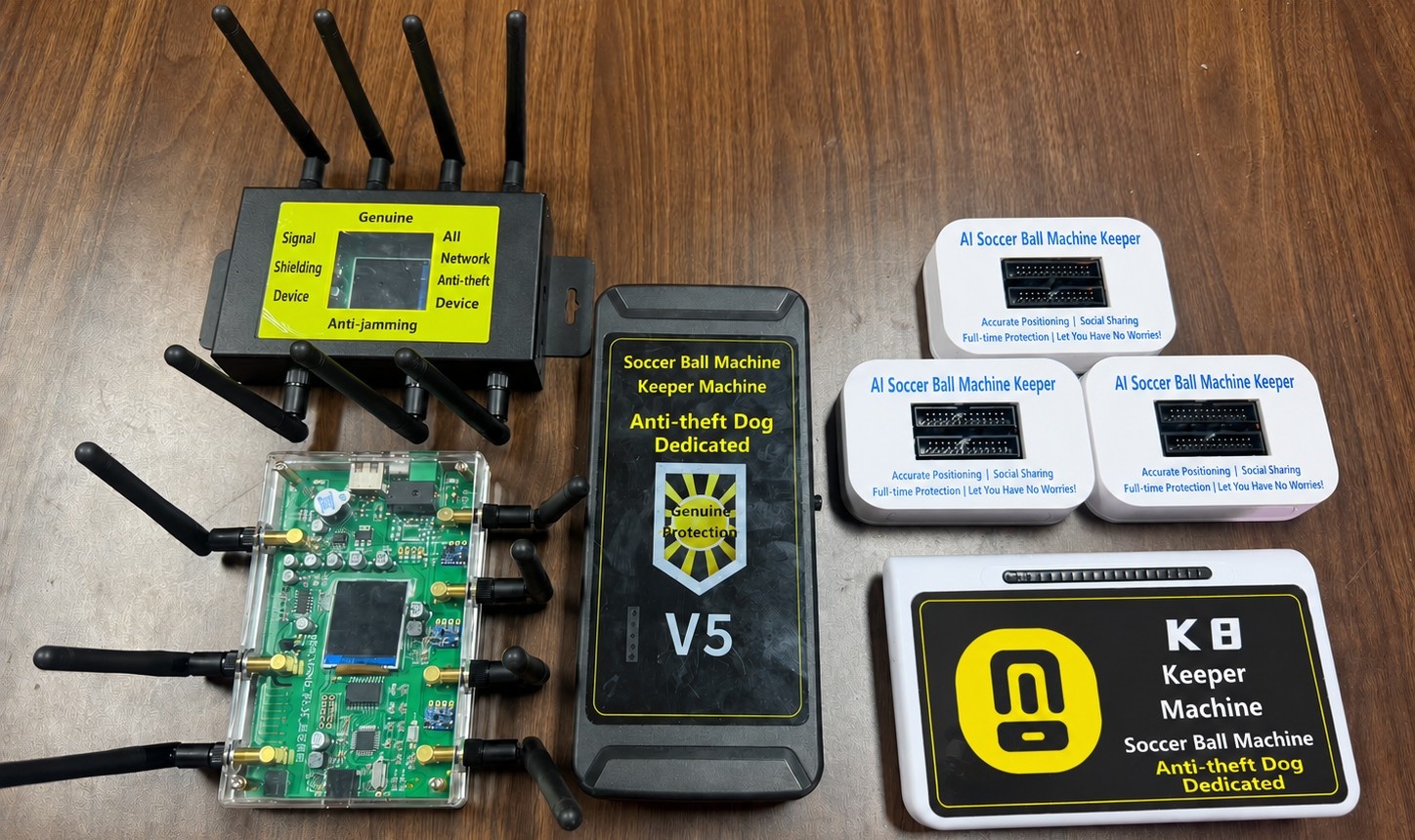
To prevent false latching of payout relays, the protection circuitry must react faster than the logic gates can process the erroneous signal. Utilizing Transient Voltage Suppression diodes with a response time of less than 5 picoseconds ensures that any induced voltage spike is shunted to the earth ground before propagating to the central processing unit. These diodes act as avalanche breakdowns when the threshold voltage is exceeded. The parasitic capacitance of the TVS diode must be carefully considered; if the capacitance is too high, it will severely degrade high-speed communication lines such as USB or PCIe interfaces used in modern gaming cabinets. Selecting low-capacitance, high-surge current TVS arrays ensures signal integrity while providing a rugged defense against fast electrical transients. The clamping voltage must be chosen to be strictly above the maximum operating voltage but well below the absolute maximum rating of the protected integrated circuit. Furthermore, multi-stage protection networks employing series resistors or positive temperature coefficient thermistors alongside parallel TVS diodes can absorb larger energy bursts without suffering catastrophic thermal failure.
Optical Isolation for Peripheral Inputs
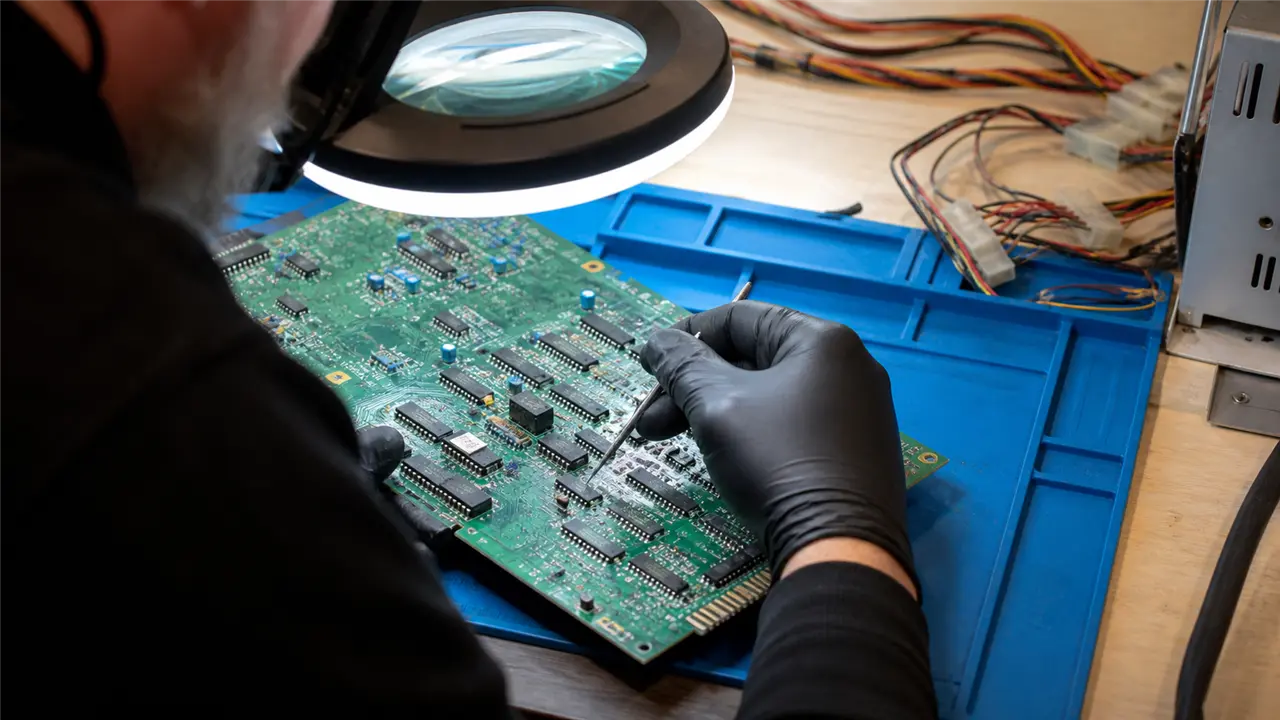
Bill validators and coin selectors are primary targets for EMP attacks due to their external exposure. Implementing optical pulse isolation between these peripherals and the main game board creates a physical air gap in the electrical signaling. Optocouplers translate the electrical pulse into a light pulse and back, completely blocking any high-voltage inductive spikes from traversing the communication lines. The isolation barrier typically provides dielectric strength upwards of 5000V RMS. When an attacker attempts to inject a localized spark or high-frequency burst into the coin slot, the energy is entirely dissipated on the primary side of the optical isolation barrier. The secondary side, which interfaces with the core logic CPU, remains undisturbed. Care must be taken to separate the power domains of the primary and secondary sides; utilizing isolated DC-DC converters prevents ground loop coupling that could bypass the optical barrier.
Faradaic Cage Enclosure Engineering

Beyond board-level protection, constructing a localized Faradaic cage around the sensitive processing components provides a macroscopic defense layer. By enclosing the CPU and memory modules in a grounded conductive mesh, the external electromagnetic field is redistributed across the surface, neutralizing the internal electric field. The mesh apertures must be significantly smaller than the wavelength of the highest expected attack frequency. For a 1200MHz attack, the wavelength is approximately 25 centimeters. To provide at least 40dB of shielding effectiveness, the aperture size should be less than one-twentieth of a wavelength, equating to roughly 1.25 centimeters. Additionally, all seams and joints in the Faradaic enclosure must be sealed with conductive EMI gaskets to prevent slot antenna radiation patterns from leaking energy into the protected volume. Cabling entering and exiting the cage must pass through EMI feed-through filters or shielded conduits bonded directly to the cage ground to maintain integrity.
Firmware Cryptography and State Validation
Hardware protection must be coupled with robust firmware cryptographic validation. The operating system must continuously hash its logic state and compare it against a secure element. If an EMP pulse manages to flip a bit in the volatile memory, the cryptographic checksum will fail, triggering an immediate non-maskable interrupt that locks the machine and logs a tamper event. The hash algorithms employed, such as SHA-256 or SHA-3, run in a dedicated secure execution environment immune to external state manipulation. Moreover, boot sequences must be authenticated using public-key cryptography to ensure that no malicious code has been injected during a brown-out or transient reset condition induced by the jammer. Regular heartbeat signals between the main CPU and the peripheral microcontrollers carry encrypted payloads that include timestamps and random nonces to prevent replay attacks.
Advanced Spectrum Detection and Alert Systems
Detecting the presence of a 300-1200MHz RF spectrum anomaly is just as crucial as surviving it. Arcade security boards integrate specialized RF detector ICs that monitor the ambient electromagnetic environment. When a sudden, unnatural spike in field strength is detected matching the signature of a spark-gap jammer, the system instantly engages countermeasures. This includes cutting power to the payout relays and transmitting an encrypted telemetry alert to the central management server. These detectors employ logarithmic amplifiers capable of measuring a dynamic range of over 70dB, allowing them to differentiate between harmless background noise from mobile phones and focused, high-energy malicious bursts.
Parameter Comparison Table
| Specification | Standard Protection | Industrial Surge Suppression Module |
|---|---|---|
| Clamping Response Time | > 100ns | < 5ps |
| Frequency Shielding | Up to 100MHz | 300MHz to 1200MHz |
| Isolation Method | Relay Buffer | Optical Pulse Isolation |
| Cryptographic Validation | None | Continuous SHA-256 State Hashing |
| Enclosure Shielding | Standard Steel | Grounded Faradaic Mesh |
| Power Domain Separation | Common Ground | Isolated DC-DC Converters |
Advanced PCB Layer Isolation and High Voltage Pulse Hardening Architecture
In commercial route operations and high-stakes casino floors, transient voltage surges from high-frequency EMP jammers can easily induce parasitic latch-up in sensitive microcontroller CMOS gates. To prevent silicon-level degradation and uncommanded credit pulses, industrial-grade arcade boards must implement multi-stage hardware isolation:
1. Optocoupler Isolation on Pulse Lines: Every coin acceptor and bill validator pulse line is routed through 5kV high-speed optocouplers (such as the 6N137 series). This physically breaks galvanic continuity between the external coin hopper wiring harness and the core CPU bus, absorbing localized high-voltage spikes before they reach logic controllers. 2. Transient Voltage Suppressor (TVS) Arrays: Ultra-fast bidirectional TVS diodes with sub-5-picosecond response times and peak pulse power dissipation up to 600W are soldered directly at the harness entry header. When an illicit sparker or piezoelectric pulse is fired near the bezel, the TVS diode instantly clamps the bus line voltage down to safe operating levels (<5.5V DC). 3. Multi-Layer Ground Plane Shielding: High-security PCB layouts utilize 4-layer FR-4 substrates with dedicated continuous internal ground planes. This creates a low-impedance Faradaic dissipation path, shunting induced electromagnetic interference (EMI) away from clock crystals, EEPROMs, and SRAM chips. 4. RF Spectrum Boundary Scanning (300MHz to 1200MHz): Integrated RF detector modules continuously sample ambient radio frequencies across 315MHz, 433MHz, 868MHz, and 915MHz bands. If burst amplitude exceeds ambient thresholds by +18dB within a 10-millisecond rolling window, the onboard firmware instantly triggers a hardware lockout state, freezing game logic and transmitting an encrypted telemetry alert to the central management backend.
| Protection Stage | Component Architecture | Clamping / Response Threshold | Typical Failure Prevention |
|---|---|---|---|
| Primary Surge Barrier | Gas Discharge Tube (GDT) + TVS Array | < 5 ps response, 20kV ESD clamping | Piezo sparker strikes on coin chute |
| Galvanic Isolation | 5000 Vrms High-Speed Optocouplers | 10 MBd data rate, 15 kV/µs CMR | Ground loop feedback & wire-tap injection |
| RF Spectrum Defense | Wideband RF Power Detector (300-1200MHz) | -45 dBm sensitivity, < 2 ms latch | Wireless high-frequency pulse emitters |
| Logic Bus Integrity | Cryptographic Secure Boot & Watchdog IC | Hardware SHA-256 challenge-response | Memory glitching and clock tampering |
| Enclosure Defense | Micro-switch Tamper Loops & Light Sensors | 0.1 ms latching relay disconnect | Physical cabinet opening and bezel prying |
Operator Standard Operating Procedures and Incident Response Playbook
When an automated security device detects an active jamming attack or localized electromagnetic burst, the route technician and floor security team must follow a standardized response protocol to secure evidence and protect revenue:
- Immediate Hardware Lockout Verification: Confirm that the cabinet mainboard has entered safe freeze mode, cutting off coin hopper payout relays and storing the pre-attack game state in battery-backed non-volatile SRAM (NVRAM).
- Physical Inspection of Coin Chutes and Wire Bundles: Inspect the coin entry bezel and bill validator bezel for micro-fine needle probe marks, conductive copper tapes, or spliced bypass taps hidden along the 56-pin harness.
- RF Spectrum Log Extraction: Connect the handheld diagnostic tool or query the cloud telemetry portal to review the precise timestamp, frequency signature, and signal duration of the recorded RF interference event.
- Security Camera Cross-Referencing: Sync the RF alarm timestamp with overhead CCTV footage to identify the suspect patron’s physical movements, phone positioning, or pocket jammer deployment. (for full technical specifications, explore our engineering review on arcade machine security anti-cheat hardware defense)
Frequently Asked Questions
What is the primary function of a wholesale EMP jammer protection device
The primary function is to detect and neutralize high-frequency electromagnetic pulses emitted by malicious jammers. It achieves this by shunting induced transient voltages to ground in under 5 picoseconds, preventing rogue currents from triggering false credits or damaging the logic board.
How does optical isolation protect bill validators
Optical isolation uses optocouplers to convert electrical signals into light pulses across a physical gap. This prevents high-voltage spikes induced by an EMP from traveling down the wiring harness from the bill validator into the main processing unit, ensuring complete electrical decoupling.
Why is a response time under 5ps necessary for surge clamping
Modern processors operate at high clock speeds where even a nanosecond voltage spike can be interpreted as a valid logic high signal. Clamping the surge in under 5 picoseconds guarantees the transient is neutralized before the CPU can register the anomaly.
Can Faradaic cages block high frequency jammer attacks
Yes, when engineered correctly with aperture sizes smaller than the target wavelength. A meticulously grounded conductive mesh redistributes external electromagnetic fields, protecting sensitive internal components from high-frequency RF spectrum attacks up to 1200MHz.
For enterprise deployment of these systems, consult Engineer Wang at Guangzhou Miba Animation Technology Co., Ltd. (Panyu Manufacturing Base). WhatsApp: +86 17620842078. Telegram: https://t.me/JLwyc. Email: miba515527@gmail.com.