- Technical Comparison Table Turnkey Remote Claw Platform vs Custom In House Build vs White Label SaaS Reseller
- Warehouse Facility Architecture Rack Mounting and Power Distribution
- Multi Angle HD Camera Framing and HDMI Video Capture Topologies
- Mobile App Token Economy Daily Quests and Virtual Currency Flow
- Claw Grip Strength Probability Mathematics and Win Rate Calibration
- Automated Prize Inventory Barcoding and Logistics Fulfillment API
- Step by Step 30 Day Launch Roadmap from Machine Rigging to App Store Launch
- Frequently Asked Questions
- Conclusion and System Integration Planning
The transition from traditional brick-and-mortar arcades to remote live streaming arcade environments represents one of the most lucrative and technologically complex shifts in the modern amusement industry. Entrepreneurs and commercial arcade operators seeking to build high-margin remote real-time claw machine platforms must navigate a multidimensional engineering landscape. This involves architecting physical warehouse facilities optimized for machine density, deploying specialized multi-camera streaming hardware for sub-second latency, and engineering robust mobile tokenization economics to ensure long-term player retention. When investigating how to start remote claw machine business ventures, operators must realize that the physical hardware is only a single layer of a comprehensive ecosystem. The true technical challenge lies in integrating electromechanical actuators with ultra-low latency WebRTC streaming protocols and automated prize fulfillment logistics. By leveraging a turnkey remote claw machine platform, enterprise operators can bypass years of custom software development and direct their capital expenditures toward scalable warehouse infrastructure and user acquisition.
To fully comprehend the scope of an online claw machine app development project, operators must dissect the architecture of a remote live arcade business model. The primary objective is to abstract the physical act of playing an electromechanical crane game into a frictionless, globally accessible mobile experience. This requires an amalgamation of Internet of Things gateways, high-frequency voltage controllers, real-time video encoding, and complex database management to handle the token economy and physical inventory. This deep integration is precisely why operators choose turnkey solutions rather than embarking on costly, multi-year internal software development cycles. The integration of mechanical engineering, low-latency networking, mobile app development, and global logistics fulfillment forms the foundation of modern high-margin remote claw machine operations. Understanding the fundamental distinctions between various deployment models is crucial for projecting initial capital expenditure and ongoing operational costs. Operators typically evaluate three primary deployment pathways when entering this sector. For a comprehensive architectural overview and turnkey procurement frameworks, review our master guide on industrial IoT arcade gateway systems. For factory-direct procurement and comprehensive engineering specs, consult our master guide on low latency live arcade streaming and IoT controller integration.
Technical Comparison Table Turnkey Remote Claw Platform vs Custom In House Build vs White Label SaaS Reseller
| Specification | Turnkey Remote Claw Platform | Custom In-House Build | White-Label SaaS Reseller |
|---|---|---|---|
| **Initial CAPEX** | Moderate (Hardware + Setup) | Extremely High (R&D) | Low (Software Only) |
| **Monthly Server OPEX** | Variable based on bandwidth | High (Unoptimized WebRTC) | Fixed subscription tiers |
| **Hardware Telemetry Depth** | Deep (Motherboard level API) | Custom developed | Superficial (Basic I/O) |
| **Prize Fulfillment Automation** | Built-in WMS integration | Requires custom ERP links | Standard manual exports |
| **Deployment Timeline** | 30 to 45 Days | 12 to 18 Months | 7 to 14 Days |
| **Maintenance Overhead** | Minimal (Vendor supported) | Maximum (Internal devops) | Minimal (Cloud reliant) |
Warehouse Facility Architecture Rack Mounting and Power Distribution
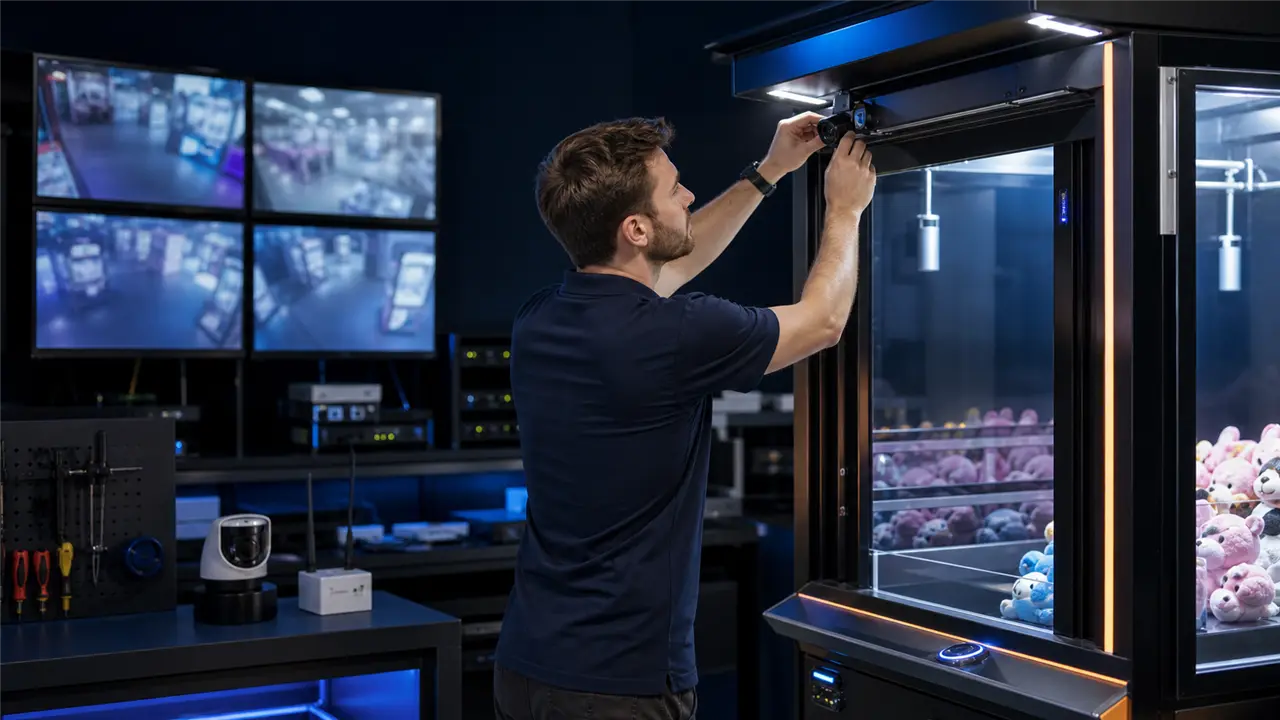
The physical foundation of any online claw machine app development project begins with the industrial warehouse environment. Unlike consumer-facing arcades where aesthetic appeal dictates floor plans, remote claw machine warehouse automation relies on data center principles. Maximizing cubic volume efficiency means deploying high-density rack mounting solutions specifically designed for crane game form factors. Standard deployment requires structurally reinforced, multi-tiered industrial shelving systems capable of supporting hundreds of kilograms of electromechanical equipment per linear meter. The spacing between shelves must account for gantry height, top-mounted cameras, and crucial access channels for maintenance technicians to resolve line snags or replenish prizes without disturbing adjacent active units. The structural integrity of these racks is paramount, as vibrations generated by gantry movements must not be transferred to adjacent machine cameras, which would otherwise induce motion blur and degrade the user experience. To explore detailed technical specifications and deployment considerations, see our operational guide on How Industrial IoT Gateway Architecture Powers. To explore detailed technical specifications and deployment considerations, see our operational guide on How Remote Live Arcade Hardware and. To explore detailed technical specifications and deployment considerations, see our operational guide on Industrial IoT Controller Boards and GPIO. To explore detailed technical specifications and deployment considerations, see our operational guide on How WebRTC Streaming and IP Camera.
Power distribution represents a critical safety and operational engineering constraint. A standard commercial claw machine draws significant peak loads during simultaneous gantry movement and claw drop operations. When multiplying this draw across rows of 50 or 100 machines, standard commercial wiring is vastly insufficient. Electrical engineers must design dedicated high-capacity busbar trunking systems with isolated circuits for motor drives and sensitive streaming electronics. Three-phase power distribution units with intelligent load balancing and surge suppression protect the delicate motherboard telemetry systems from inductive spikes generated by large stepper motors. Every rack requires industrial-grade uninterpretable power supplies to provide ride-through capabilities during micro-outages, ensuring that a player’s session is not abruptly terminated and that the gantry safely returns to its home position. Grounding systems must be meticulously designed to prevent ground loops that could introduce electrical noise into the video encoding hardware, thereby destroying stream clarity.
HVAC considerations within these facilities are equally demanding. Although there are no human patrons, the thermal output of hundreds of continuous-duty power supplies, high-intensity LED illumination arrays, and video encoding microcomputers generates substantial localized heat loads. Directed airflow systems utilizing cold aisle containment strategies prevent thermal throttling of the video encoders, ensuring the turnkey remote claw machine platform maintains consistent streaming frame rates. Furthermore, stable humidity control prevents condensation on the polished glass enclosures and precision stainless steel gantry rails, mitigating mechanical friction variances that could alter payout probabilities and preventing oxidation on the sensitive conductive tracks of the gantry carriage. The facility design must also incorporate advanced fire suppression mechanisms tailored for high-density electronic environments, utilizing clean agents instead of water to prevent catastrophic hardware loss in the event of an electrical fire.
Multi Angle HD Camera Framing and HDMI Video Capture Topologies
Delivering an immersive and lag-free player experience mandates sophisticated video transmission engineering. The standard remote live arcade business model requires a minimum of two synchronized high-definition camera feeds per machine one providing a wide-angle frontal overview of the entire playfield, and a secondary dynamic or static top-down view centered over the prize drop zone. The focal lengths, aperture settings, and sensor sizes of these optical modules must be optimized for the specific dimensions and intense LED lighting characteristics of the machine enclosure. Advanced deployments may incorporate a third dynamic camera mounted directly to the moving gantry assembly, providing a first-person perspective that dramatically increases player engagement, albeit at the cost of vastly more complex wiring harnesses and slip-ring assemblies. Lighting calibration must be performed using professional lux meters to ensure uniform illumination, eliminating harsh shadows or glare that might obscure the prize drop zone from the remote player’s perspective.
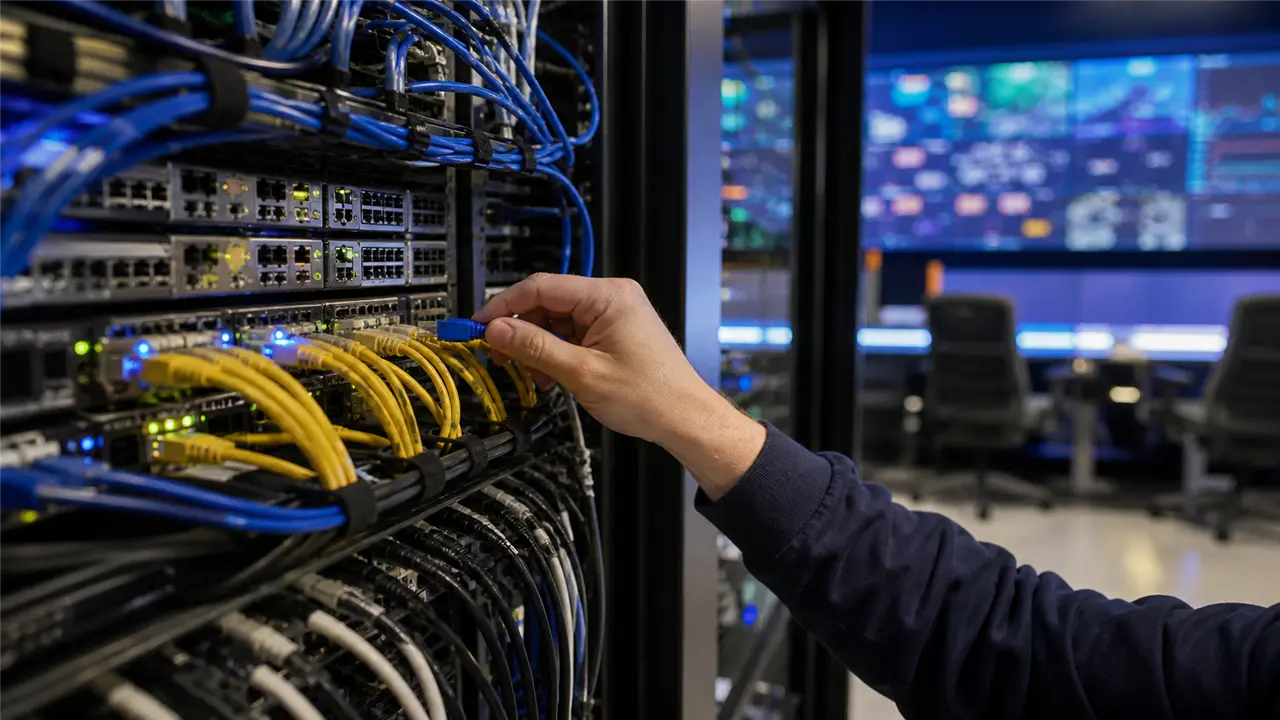
Video capture topologies define the latency and scalability of the streaming infrastructure. Modern platforms avoid consumer-grade USB webcams, which introduce unacceptable encoding latency and inconsistent framerates. Professional deployments utilize dedicated hardware encoders equipped with H.264 or H.265 compression ASICs. These capture modules interface directly with the machine’s primary logic board and transmit Real-Time Messaging Protocol or WebRTC streams via dedicated gigabit ethernet backbones. The encoding must happen at the edge, literally inches from the machine, to prevent uncompressed video data from saturating the local area network. This edge-encoding paradigm drastically reduces the processing overhead required on the central media servers.
Network architecture within the facility requires enterprise-grade switching fabric capable of handling massive, continuous upstream bandwidth. Operators deploy managed switches with Quality of Service prioritization protocols to ensure that player control inputs via WebSockets receive absolute priority over video stream packets. The synchronization between the visual feed and the physical mechanical response must remain under 200 milliseconds to preserve the illusion of direct physical control. Exceeding this latency threshold severely degrades the player experience, leading to poor application reviews and rapid user churn. The facility requires redundant fiber-optic uplinks to multiple Tier-1 internet service providers, utilizing BGP routing to ensure that global players connect to the lowest latency ingress node possible. Furthermore, automated network health monitoring systems must be deployed to instantly detect packet loss or jitter, autonomously rerouting traffic or gracefully downgrading stream quality to maintain a playable framerate under degraded network conditions.
Mobile App Token Economy Daily Quests and Virtual Currency Flow
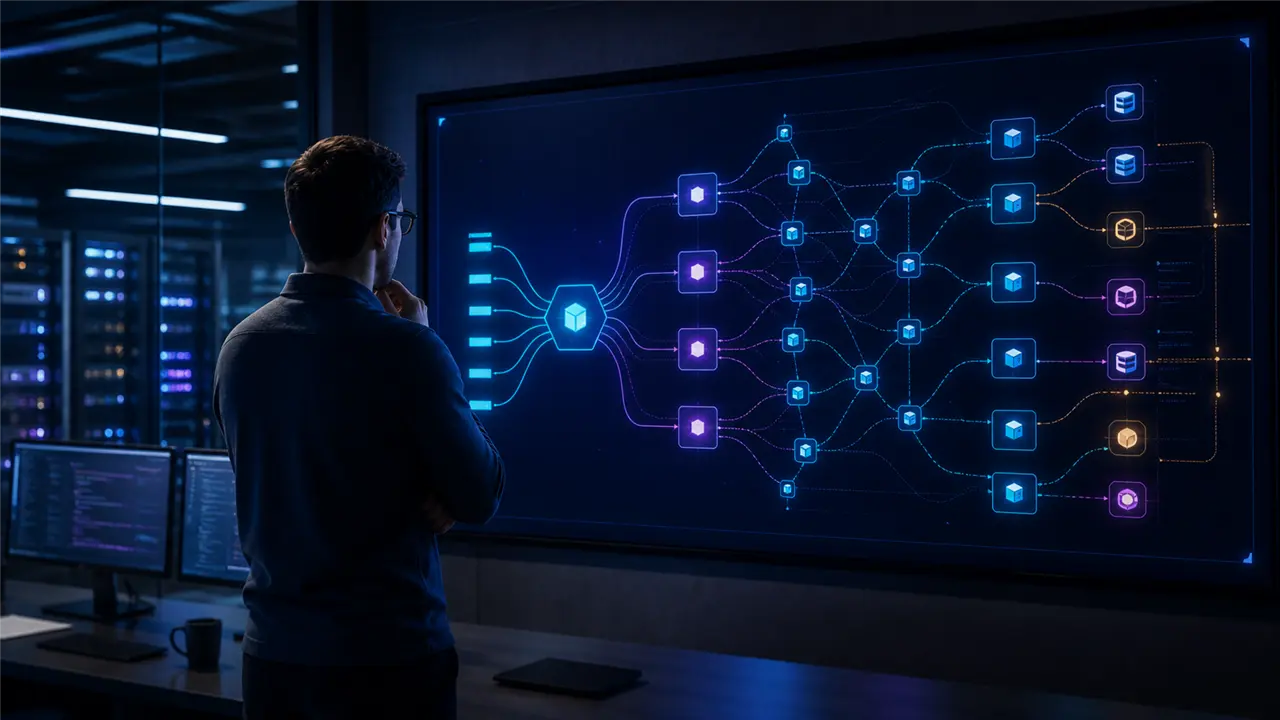
The economic engine of a remote claw machine business relies on intricate mobile app token economy design. Direct fiat currency to gameplay transactions introduce excessive friction and are susceptible to localized payment gateway restrictions. Implementing an abstracted virtual currency ecosystem solves these issues while enabling sophisticated psychological monetization mechanics. Token economies abstract the real-world value, reducing purchase anxiety and enabling micro-transactions that would otherwise be consumed by credit card processing fees. The user interface must seamlessly present this economy, displaying the user’s token balance prominently alongside daily recharge offers and limited-time discount bundles.
Operators establish base token conversion rates, typically obfuscating the exact fiat cost per play through tiered purchase bundles that offer progressively higher bonus token percentages. This encourages larger initial deposits and increases the player’s lifetime value. The flow of virtual currency must be meticulously balanced. Sinks include machine gameplay, VIP subscription tiers, premium prize shipping requests, and cosmetic avatar upgrades. Sources include fiat purchases, daily login bonuses, referral programs, achievement rewards, and participation in community events. By providing multiple avenues for players to earn ‘free’ tokens, operators ensure the top of the acquisition funnel remains full while relying on the friction of gameplay difficulty to monetize the core user base. Retention architectures heavily depend on this delicate equilibrium between token scarcity and generous daily rewards.
Daily quests and time-limited events are critical for driving daily active user metrics. By programming backend scheduled tasks that reward players with fractional tokens or special consumable items for logging in consecutively or successfully extracting specific low-tier prizes, operators create powerful habit-forming loops. The turnkey remote claw machine platform typically provides a comprehensive centralized dashboard for tuning these economic variables in real-time. Data analysts monitor token velocity and sink-to-source ratios to prevent hyperinflation within the closed economy, ensuring that the aggregate cost of player acquisition and prize fulfillment remains well below the total token purchase revenue. Machine learning algorithms can even be deployed to dynamically adjust package pricing and targeted promotions based on individual user behavior and historical spending patterns, maximizing revenue extraction per user while minimizing churn probability. Cross-promotional events with brand partners can also inject limited-edition digital currency or exclusive physical prizes into the ecosystem, driving sharp spikes in concurrent user engagement.
Claw Grip Strength Probability Mathematics and Win Rate Calibration
The core profitability of any crane game operation hinges on the precise calibration of electromechanical variables. The mathematical foundation of claw grip strength probability is the most guarded operational secret in the hybrid-arcade sector. Modern printed circuit boards control the current delivered to the claw’s solenoid, thereby dictating the closing force of the prongs. This force is rarely static. It is mathematically modulated across multiple phases to create a compelling and addictive player experience. An uncalibrated machine will either hemorrhage expensive inventory or alienate players through impossible difficulty. The fine-tuning of these electrical parameters constitutes the operational edge for successful enterprises.
Advanced platforms utilize dynamic voltage regulation algorithms to manipulate grip strength across multiple phases of a single gameplay cycle. A typical cycle involves a ‘grab’ phase, a ‘lift’ phase, and a ‘transit’ phase. The motherboard can be programmed to deliver maximum voltage during the grab and lift phases to create a compelling near-miss illusion, before subtly reducing the voltage during transit, causing the prize to slip. This near-miss psychology is heavily documented in behavioral economics and is essential for driving consecutive plays. The claw must possess enough strength to visually engage the prize, but precisely calibrated weakness to ensure the item drops exactly when the payout algorithm dictates a loss. Operators can fine-tune these phases down to the millisecond, configuring variables such as ‘lift height before drop’ and ‘gantry transit speed during return’ to manipulate player perception.
Win-rate calibration is a statistical exercise deeply integrated into the remote live arcade business model. Operators define a target payout percentage or a specific ‘win cost’ for each machine based on the wholesale value of the loaded merchandise. The system employs pseudo-random number generators or accumulator logic to determine when a machine should enter a ‘payout state’. When in this state, the system supplies maximum voltage throughout the entire transit phase, guaranteeing a win provided the player accurately positions the gantry. Enterprise software allows operators to mathematically model these payout curves over thousands of simulated plays, dynamically adjusting voltage parameters via remote API calls to maintain strict gross margin targets while ensuring enough organic wins occur to keep players engaged and sharing their victories on social media.
Furthermore, advanced anti-cheat heuristics monitor player input patterns. If an automated script or bot is detected attempting to map machine coordinates, the system can instantly isolate the user session or dynamically alter the mechanical resistance of the gantry to thwart automated exploitation, protecting the inventory from non-human extraction. This sophisticated risk management framework is essential for protecting the platform’s liquidity and preventing massive inventory losses orchestrated by malicious syndicates utilizing macro scripts.
Automated Prize Inventory Barcoding and Logistics Fulfillment API
Transitioning physical merchandise won via a digital interface into a shipped parcel requires robust supply chain engineering. Claw machine warehouse automation extends far beyond the machines themselves into the realm of automated logistics and warehouse management systems. When a user successfully captures a prize, the mobile application triggers a webhook that updates the centralized database, moving the item from ‘machine inventory’ to the user’s digital ‘prize backpack’. This seamless digital transition masks the immense backend complexity required to track physical objects moving across an automated facility. Operators must employ strict inventory auditing procedures to reconcile the digital database against physical bin counts, ensuring that no stock discrepancies delay player fulfillment.
To achieve operational efficiency, each physical prize must be mapped to a unique SKU within the inventory management database. Large-scale facilities utilize automated barcoding and RFID tagging for high-value merchandise. When a player requests physical shipment of their accumulated prizes, the turnkey remote claw machine platform generates a consolidated picking list for warehouse staff. For mega-facilities, this picking process is augmented by automated guided vehicles that navigate the warehouse floor, retrieving bins of specific SKUs and delivering them to centralized packing stations, drastically reducing human error and labor costs. Advanced warehouse management software will even optimize picking routes based on product location and order density, minimizing the physical distance warehouse personnel must traverse during a shift.
Integration with global logistics fulfillment APIs transforms a localized arcade into an international e-commerce operation. The backend architecture must communicate seamlessly with shipping carriers to dynamically calculate volumetric weight, generate commercial invoices for cross-border customs clearance, and print standardized shipping labels. Advanced implementations utilize automated conveyor sorting systems and weigh-in-motion scales to verify parcel accuracy before dispatch. This logistics pipeline is critical to the online claw machine app development lifecycle, as shipping delays or lost parcels directly translate into customer service overhead and negative app store ratings. The system must also elegantly handle edge cases such as damaged inventory, delayed stock replenishment, and international address validation failures, triggering automated customer support tickets and compensation protocols. By integrating with major carriers like DHL, FedEx, and localized postal services, the platform can automatically route parcels via the most cost-effective tier, dramatically improving the overall margin on physical fulfillment operations.
Step by Step 30 Day Launch Roadmap from Machine Rigging to App Store Launch
Deploying a comprehensive remote arcade platform demands rigorous project management and adherence to a strict technical roadmap. The following 30-day timeline outlines the critical path for launching a turnkey remote claw machine platform, ensuring all hardware, software, and logistical components are synchronized for a successful public deployment.
Day 1 to 5 Facility Preparation and Network Infrastructure The initial phase focuses purely on environmental and network readiness. Engineering teams deploy high-capacity power distribution rails, install gigabit networking fabric, and configure localized edge servers for video capture aggregation. Internet Service Provider redundancy is verified, ensuring dual-WAN failover for uninterrupted operations. HVAC systems are calibrated to manage the specific thermal load of the anticipated hardware density. Fire suppression systems are upgraded to handle electrical fires in high-density rack configurations. Server cabinets are provisioned to host the local relay nodes that process the camera feeds before transmitting them to the global content delivery network.
Day 6 to 12 Machine Rigging and Hardware Integration Physical claw machines are positioned onto reinforced racks. Technicians mount high-definition cameras, align optical focal points, and route HDMI cables to capture cards. Each machine’s logic board is interfaced with the central IoT management gateway via RS232 or USB serial protocols. Initial telemetry tests confirm that joystick inputs translate to accurate gantry movements. Lighting arrays are tuned to prevent glare on the glass enclosures, which would otherwise degrade the video feed quality. Dedicated subnetworks are established for the management layer, completely isolating the machine control telemetry from the public video streaming backbone.
Day 13 to 18 Software Configuration and Payout Calibration The backend software environment is provisioned. System administrators configure the virtual token economy, establish database connections, and map physical hardware IDs to virtual application endpoints. The mathematical calibration of claw grip strength begins. Technicians perform hundreds of test drops per machine to validate the statistical payout curves against the target margin thresholds. Edge cases involving irregular prize geometries are documented, and mechanical parameters are adjusted to prevent unexpected wins or mathematically impossible extraction scenarios. During this phase, quality assurance engineers rigorously test the fail-safe mechanisms, ensuring the gantry reliably resets if a prize becomes jammed within the claw mechanism.
Day 19 to 24 Mobile Application Compilation and Payment Gateway Integration Developers finalize the customized UI/UX of the mobile application. Secure API endpoints for Apple Pay, Google Pay, and localized credit card processors are integrated and subjected to rigorous penetration testing. The staging environment is stress-tested with simulated concurrent user loads to verify database transaction integrity. Video stream buffering algorithms are optimized across various mobile network profiles, ensuring functional gameplay even on degraded 4G connections. Multi-language localization files are imported, and customer support portal integrations are finalized within the application shell.
Day 25 to 30 Logistics API Integration and Store Publication The warehouse management system is linked to external shipping APIs. Test parcels are generated to validate the automated label printing workflow. Inventory synchronization scripts are verified to prevent overselling of physical stock. Once all systems pass integration testing, the application binaries are submitted to the iOS App Store and Google Play Store for review. Upon approval, operators initiate targeted digital marketing campaigns to drive initial user acquisition, monitoring Day-1 retention metrics and dynamically adjusting the token economy to optimize the initial onboarding experience. Live-ops teams are placed on standby to monitor system stability during the initial traffic influx and rapidly triage any emerging hardware or software anomalies.
Frequently Asked Questions
Question What is the minimum internet bandwidth required per remote claw machine?
To maintain high-definition, low-latency video streams without frame dropping, a minimum dedicated upstream bandwidth of 2 to 3 Megabits per second (Mbps) per camera is required. Since most machines utilize two cameras, operators should provision at least 5 to 6 Mbps of symmetric, unshaped bandwidth per physical machine unit on the warehouse floor. For a 100-machine facility, this necessitates a dedicated gigabit uplink purely for video transmission, entirely separate from the control telemetry data. Utilizing a burstable fiber connection guarantees that sudden spikes in concurrent viewers do not cause localized network congestion.
Question How does the turnkey software handle network latency during gameplay?
Advanced platforms utilize predictive movement algorithms and strict WebRTC streaming protocols to minimize latency. If a player experiences a severe temporary network drop, the backend server retains the last known directional vector for a safety threshold (typically 500ms) before automatically halting the gantry to prevent out-of-bounds movement or mechanical jamming. The system will then attempt a rapid reconnection handshake while locking out other users from queueing onto the machine. In cases of unrecoverable connection loss during a grab attempt, the platform’s conflict resolution logic will typically refund the virtual currency to prevent player frustration and customer service disputes.
Question Can the payout probability be adjusted dynamically without restarting the machine?
Yes, modern turnkey platforms utilize motherboard-level serial API connections that allow real-time adjustments to solenoid voltage, drop speed, and gantry speed. Operators can push these updates via the centralized cloud dashboard without taking the machine offline or interrupting current gameplay sessions. This allows for dynamic yield management, similar to airline ticket pricing, adjusting payout difficulty based on current player demand and inventory levels. It enables operators to run localized ‘easy win’ events instantly without dispatching technicians to manually flip dip switches on the physical motherboards.
Question What are the standard electrical requirements for a 50 machine deployment?
A standard commercial claw machine draws approximately 150 to 250 watts depending on LED configurations and motor load. For a 50-machine array, operators must provision at least 15 kilowatts (kW) of continuous power exclusively for the machines, plus an additional 5 to 10 kW for networking hardware, cooling systems, and general facility illumination. Three-phase power is highly recommended to distribute the load evenly and prevent phase imbalance from stepper motor harmonics. Utilizing smart power distribution units allows administrators to remotely power-cycle individual machines via a web interface, drastically reducing the need for on-site maintenance personnel during overnight operations.
Question How does the app handle international shipping calculations for won prizes?
The backend server integrates directly with global courier APIs (such as DHL, FedEx, or local equivalents). Each prize SKU in the database contains precise dimensional and weight metadata. When a user requests shipment, the system calculates the aggregate volumetric weight, queries the API with the user’s destination address, and dynamically deducts the appropriate amount of virtual currency or fiat from the user’s account to cover the shipping cost. Tracking numbers are automatically injected back into the user’s mobile app interface via webhook callbacks. The warehouse management module can also aggregate multiple prize wins over several days into a single consolidated parcel, significantly optimizing the shipping expense ratio for both the operator and the end user.
Conclusion and System Integration Planning
Building a highly profitable remote arcade platform requires balancing mechanical reality with digital scalability. By leveraging robust streaming infrastructure, complex electromechanical calibration, and advanced token economies, enterprise operators can architect platforms that achieve rapid return on investment and sustained market dominance. The fusion of logistics automation with gamified digital interfaces represents the future of physical merchandise distribution.
Guangzhou Miba Animation Technology Co., Ltd. Enterprise Remote Arcade Infrastructure & Engineering Solutions Engineer Wang WhatsApp / WeChat: +86 17620842078 Telegram: https://t.me/JLwyc Email: miba515527@gmail.com