- The Engineering Reality of Remote Live Arcades
- Physical Cabinet Modifications for Unattended Operation
- Industrial IoT Gateway and Pulse Signal Conversion
- Overcoming the Latency Barrier with WebRTC Dual Camera Pipelines
- Cross Platform Player Mobile Apps and Cloud Billing
- How We Manufacture Commercial Arcade Game Machines
- ROI and Commercial Viability for Arcade Operators
- Why Partner With Us for Turnkey Solutions
- Frequently Asked Questions
Are your offline arcade machines sitting idle during off-peak hours while operational costs drain your margins? Over the past 12 years of architecting hardware and game systems at Guangzhou Miba Animation Technology Co., Ltd., I have witnessed operators lose massive revenue due to geographic limitations and foot traffic dependency. The transition to remote live arcade operation solves this, but most operators fail because they rely on pieced-together solutions—laggy IP cameras, unstable relay boards, and white-label apps with hidden backdoor fees.
We are a complete machine manufacturer and source code developer based in our 15,000-square-meter Panyu manufacturing base. We do not just sell you a cabinet; we deliver a true turnkey solution. From industrial-grade cabinet modifications and custom IoT gateway integrations to ultra-low latency WebRTC video pipelines and complete mobile app deployments, we engineer the entire ecosystem. We guarantee under 80ms latency and provide 100% source code ownership for your software. Stop losing money on disjointed systems. Connect with me directly via WhatsApp at +86 17620842078 or Telegram at https://t.me/JLwyc to schedule a live video demonstration of our Panyu QA lab and discuss your remote arcade deployment.
The Engineering Reality of Remote Live Arcades
When operators first attempt to digitize their physical arcade machines, they often severely underestimate the physical and digital friction involved. You are essentially taking an electromechanical device designed for direct human interaction and translating those physical inputs over the internet in real-time. If a player taps the “drop coin” button on their smartphone, the physical coin must drop into the pusher bed within milliseconds, and the player must see that coin hit the bed instantly on their screen.
If the delay exceeds 150 milliseconds, the illusion of control breaks. The player feels cheated, the app store reviews tank, and your retention rate drops to zero. As the Lead Hardware and Game System Architect, my team and I have spent years eliminating this latency. We achieved this not by buying off-the-shelf security cameras, but by engineering a proprietary IoT low-latency streaming architecture from the ground up. We integrate industrial control boards directly with custom firmware designed specifically for arcade timing parameters.
Physical Cabinet Modifications for Unattended Operation
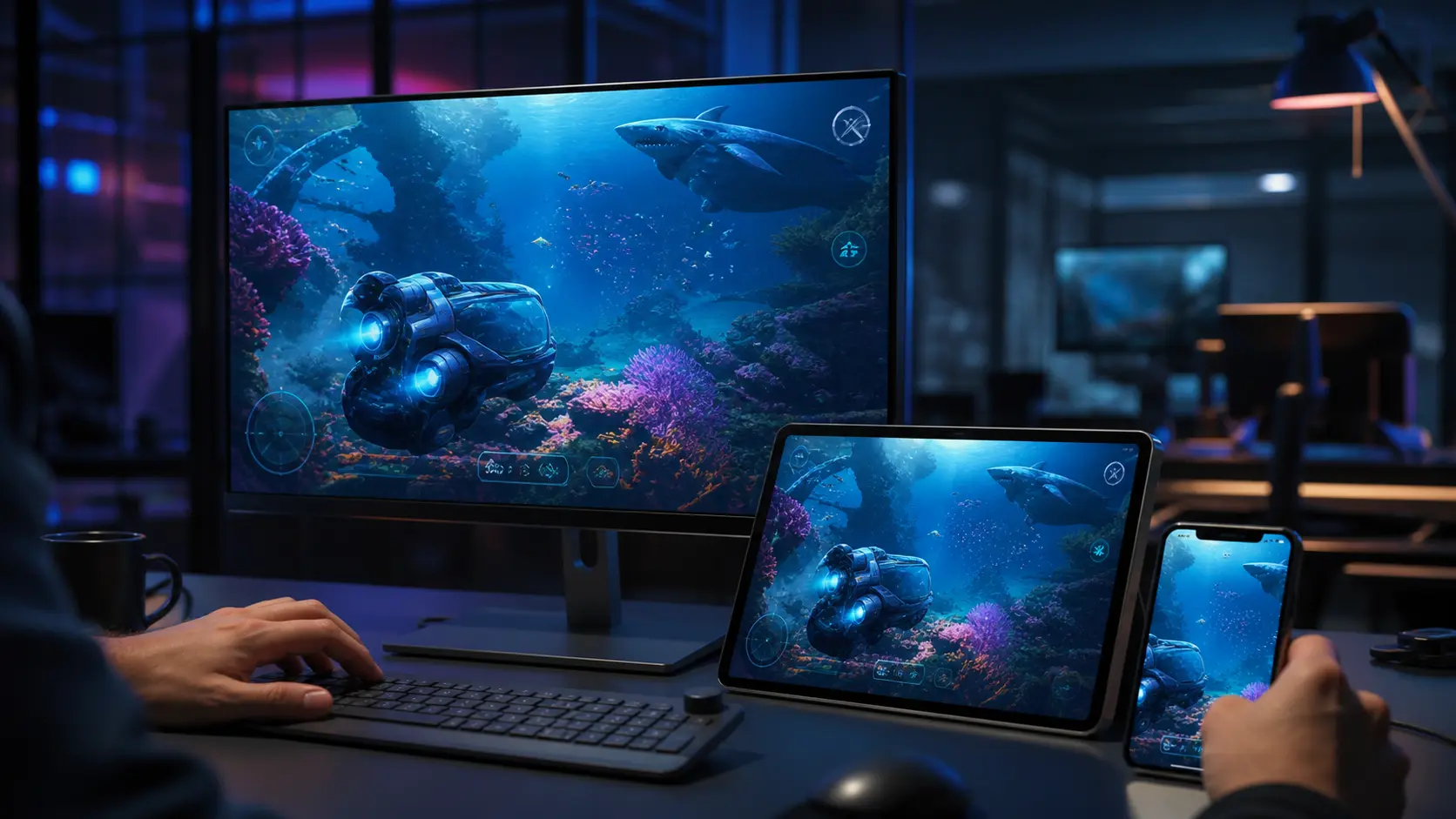
A standard arcade cabinet is designed assuming an attendant is on duty to clear coin jams, refill tickets, and fix broken microswitches. A remote live arcade machine must run 24/7 in a dark warehouse without human intervention. This requires rigorous remote coin pusher machine hardware modification and WebRTC streaming upgrades.
In our manufacturing process, we strip down the standard coin mechanisms and replace them with solid-state, jam-proof industrial hoppers. Standard machines use gravity-fed coin slots that are prone to mechanical failure. We install automated coin circulation systems that recycle the pushed tokens back into the delivery hopper automatically. This closed-loop system ensures the machine never runs out of ammunition during a high-stakes player session.
Furthermore, we upgrade the power supply units. Standard commercial arcades use basic switching power supplies that suffer from voltage droop when multiple motors engage simultaneously. For our remote cabinets, we utilize industrial-grade Mean Well power supplies with high capacitance reserves. We also implement extreme EMP shielding. Because these machines operate unattended, they are prime targets for internal sabotage or electronic interference. Our industrial-grade EMP pulse interference shield provides transient surge clamping at less than 5 picoseconds, entirely neutralizing spark-gap jammers and radio frequency attacks.
Industrial IoT Gateway and Pulse Signal Conversion
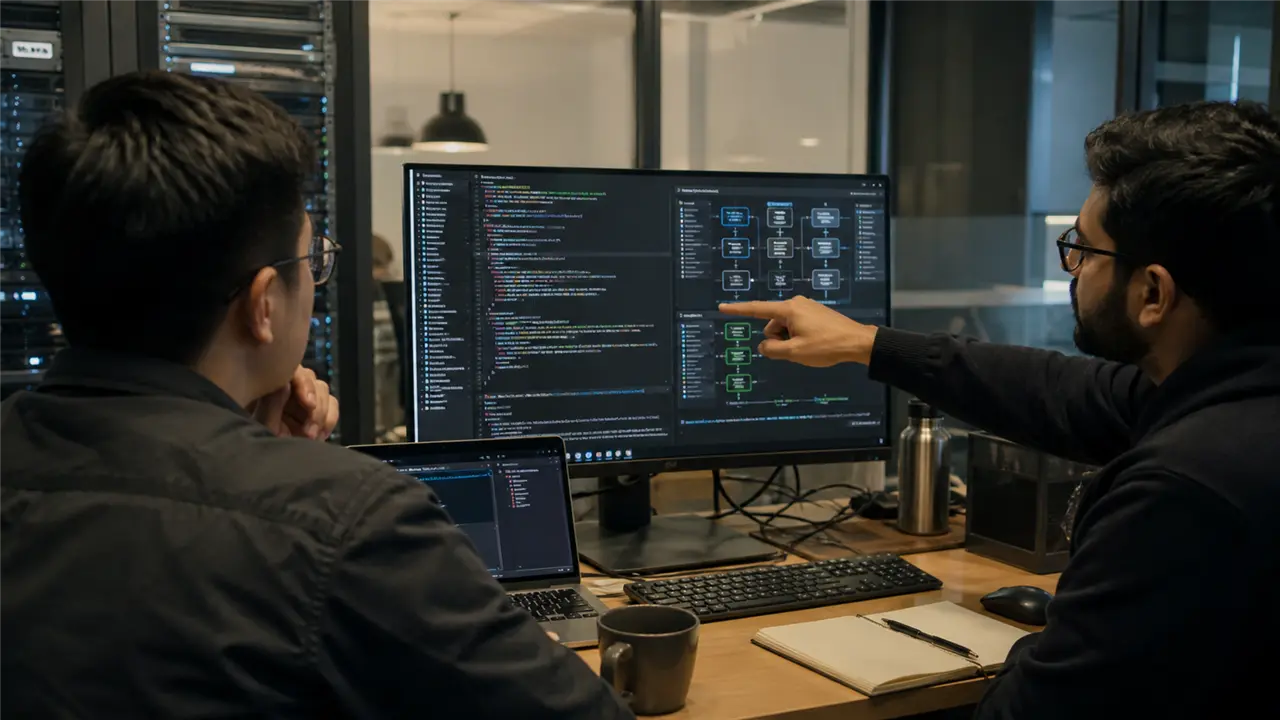
The core bridge between the physical cabinet and the digital cloud is our proprietary IoT controller board. A typical arcade cabinet communicates via 12V or 5V pulse signals generated by mechanical relays and microswitches. Cloud servers communicate via TCP/IP, WebSockets, and HTTP REST APIs. Bridging this gap seamlessly is where our engineering excels.
We design and manufacture our own industrial IoT arcade controller board and pulse signal conversion hardware. Powered by a robust ARM Cortex processor, this gateway board sits securely inside the cabinet. It features optocoupler isolation on all input and output channels. This optical isolation is critical; it prevents voltage spikes from the cabinet’s heavy motors (like the wiper arm on a coin pusher) from feeding back and frying the delicate digital logic circuits.
When a player hits the “Fire” button on their app, the command travels via a secure WebSocket connection to our cloud server, which instantly routes it to the specific IoT gateway IP. The ARM processor decodes the packet and triggers a solid-state relay to send a perfect, debounce-free 50-millisecond 12V pulse to the game board. This entire round trip—from smartphone screen tap to physical relay click—happens in under 30 milliseconds on a 4G/5G or fiber network.
Overcoming the Latency Barrier with WebRTC Dual Camera Pipelines
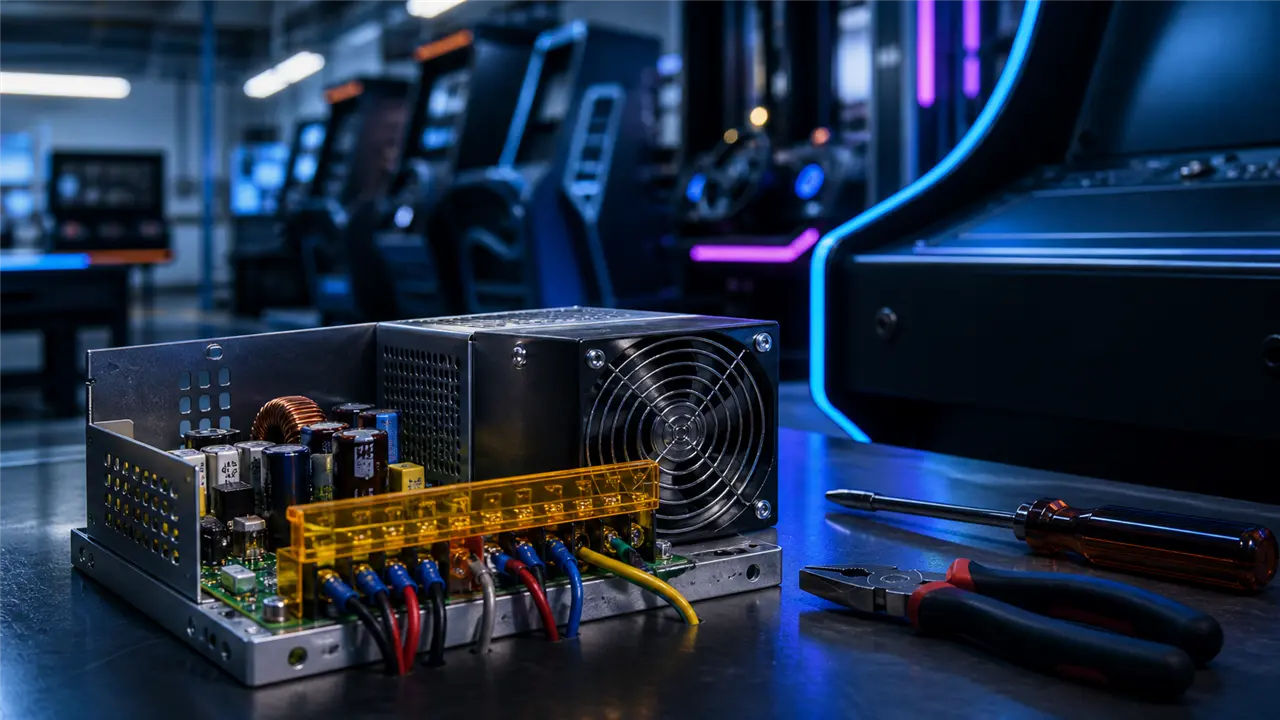
Video streaming is the most resource-intensive aspect of a remote live arcade. Traditional RTSP or HLS streaming protocols, commonly used in security cameras and live broadcasting, have built-in buffer delays ranging from 3 to 15 seconds. This is completely unacceptable for skill-based gaming like claw machines or coin pushers.
To solve this, we implement a pure WebRTC dual-camera pipeline. WebRTC is the same technology that powers high-end video conferencing, designed for real-time peer-to-peer communication. However, running WebRTC on a cheap Raspberry Pi inside an arcade cabinet leads to thermal throttling and frame drops.
Instead, we use dedicated hardware video encoders. Each cabinet is equipped with two 1080p 60fps global shutter cameras—one for the front view and one for the top-down view. These cameras feed uncompressed video directly into an ASIC-based hardware encoder via MIPI CSI interfaces. The ASIC handles the H.264/H.265 compression natively without burdening the main CPU.
This creates a hyper-optimized stream that bypasses traditional buffering. By pushing UDP packets directly to our Edge servers, we consistently achieve glass-to-glass latency of under 80ms. The player sees the coin drop exactly when they hear the sound effect on their phone. This level of synchronization is what separates amateur setups from our professional, revenue-generating ecosystems.
Cross Platform Player Mobile Apps and Cloud Billing
Hardware is only half the equation. The player’s point of contact is the mobile application. Many operators make the mistake of renting a white-label app that restricts their payment gateways and holds their user data hostage. We believe in total operator control, which is why we offer 100% source code ownership of the software we develop for you.
When considering the remote live arcade app development cost and turnkey deployment, our methodology provides the highest return on investment. We build cross-platform applications using modern frameworks like Flutter or React Native, ensuring seamless performance on both iOS and Android. The app architecture includes a robust real-time billing engine.
When a user deposits funds via credit card, PayPal, or crypto gateways, the fiat is converted to in-game digital currency. This ledger is maintained on a secure, scalable cloud backend (AWS or localized dedicated servers). Every action—entering a room, dropping a coin, using a special skill—triggers an atomic transaction in the database. Our anti-fraud algorithms continuously monitor for suspicious packet injection or connection tampering. If a player’s connection drops unexpectedly during a crucial play, our system automatically pauses the physical machine and reserves the room for 60 seconds, preventing unfair losses and reducing customer support tickets.
How We Manufacture Commercial Arcade Game Machines
We do not just assemble parts; we are a source factory. When you work with us, you are bypassing middlemen and trading companies. Our factory operations adhere to strict international quality standards, which is a critical factor detailed in our commercial arcade game machines manufacturing B2B procurement guide.
In our Panyu facility, every remote live arcade cabinet undergoes a rigorous 72-hour continuous burn-in test. We simulate peak load conditions, firing the hopper motors, panning the cameras, and stressing the IoT gateway under high thermal loads (up to 45 degrees Celsius) to ensure absolute stability in your warehouse.
Our sheet metal fabrication department can deeply customize the cabinet aesthetics, reducing the footprint to maximize your warehouse floor space. Since there is no physical human player standing in front of the machine, we strip away heavy marquees, coin mechs, and oversized control panels, creating high-density server-rack style cabinets. This allows you to fit 30% more revenue-generating machines into the same square footage compared to standard arcade conversions.
ROI and Commercial Viability for Arcade Operators
The mathematics behind a remote live arcade deployment heavily favor the operator when engineered correctly. Traditional arcades suffer from high commercial rent, expensive liability insurance, and costly on-site staff.
With our turnkey remote system, you move your operations to a low-cost industrial warehouse. A single technician can monitor and maintain 50 machines through our comprehensive digital backoffice dashboard. The dashboard provides real-time telemetry on every machine hopper levels, CPU temperatures, network packet loss, and daily revenue generation.
Because your app is available globally 24/7, you break free from the traditional 10 AM to 10 PM operating hours. Your machines generate revenue while you sleep, catering to players in different time zones. The typical payback period for a 20-machine deployment, factoring in our custom software development and hardware procurement, ranges from 45 to 90 days depending on your user acquisition strategy.
Why Partner With Us for Turnkey Solutions
Guangzhou Miba Animation Technology Co., Ltd. (Arcade Manufacturer) provides an uncompromising, industrial-grade solution for serious operators. We do not sell retail spare parts; we build complete, bespoke machine cabinets and software ecosystems.
When you choose us, you receive our four major risk-avoidance guarantees. First, we offer one-piece sample testing so you can verify our latency claims firsthand. Second, we welcome SGS/TÜV third-party factory inspections. Third, we deliver 100% source code ownership upon project completion. Fourth, I provide direct 12-hour video debugging and technical support.
Stop settling for high-latency, unreliable remote setups. Let us architect a highly profitable, scalable remote arcade empire for you.
Contact our engineering team directly today to schedule a virtual tour of our QA lab and discuss your custom project requirements.
- WhatsApp / WeChat +86 17620842078
- Telegram https://t.me/JLwyc
- Email miba515527@gmail.com
Frequently Asked Questions
What exactly is a remote live arcade turnkey system? A turnkey system means we provide everything required to run a remote arcade business. This includes the physical arcade machines (customized for unattended warehouse operation), the IoT controller boards, the low-latency camera systems, the cloud server architecture, and the cross-platform mobile app for your players, complete with source code ownership.
How do you achieve under 80ms video latency? We abandon standard RTSP/HLS protocols and rely exclusively on a pure WebRTC dual-camera pipeline. We use dedicated ASIC-based hardware encoders inside the cabinets that compress global shutter camera feeds natively, bypassing CPU bottlenecks and streaming directly to our Edge servers via UDP.
Can you convert my existing offline arcade machines to online remote play? Yes. We manufacture industrial IoT arcade controller boards that can bridge the pulse signals of your existing mechanical pushers or claw machines. We provide the hardware conversion kits and integrate them into our cloud architecture so your legacy machines can join the digital ecosystem.
Why is source code ownership important for operators? Many suppliers trap operators into a SaaS model where they take a percentage of every coin dropped or charge exorbitant monthly fees for app updates. By delivering 100% source code ownership, we ensure you have complete control over your payment gateways, user data, and future development roadmap without backdoor revenue sharing.
Do you sell spare parts like buttons or joysticks for DIY repairs? No. We are a complete machine manufacturer and turnkey solution provider. We focus exclusively on commercial wholesale, custom OEM/ODM cabinet manufacturing, and complete software development. We only provide spare parts as after-sales support for our existing whole-machine clients.
What happens if a player loses internet connection during a game? Our backend features state-aware connection monitoring. If a packet loss threshold is crossed, the server instantly commands the IoT gateway to pause the physical machine and reserves the session for 60 seconds. This prevents unfair losses, protects your brand reputation, and drastically reduces customer service disputes.