- Anatomy of the High Frequency Mines Game Loop
- Combinatorial Probability Calculations and Hypergeometric Distribution
- Multiplier Curve and Strict House Edge Calibration
- Cryptographic Security and Provably Fair Hash Verification
- Frontend Touch Response and Sub Millisecond Animation Latency
- Scaling from Single Tenant to Global Multi Tenant Operations
- Frequently Asked Questions About Mines Game Source Code
Every day across global iGaming platforms and crypto casinos, the Mines instant-win game commands immense transaction volumes. Operators love it because the math is rock solid, and players love it because they have total agency over their risk-to-reward ratio. Here at Guangzhou Miba Animation Technology Co., Ltd., we have spent years engineering high-frequency betting architectures. As the Lead Game Physics and Optimization Architect, I oversee the mathematical models and the 100% source code delivery for our bespoke casino software systems.
I am Engineer Wang, broadcasting from our 15,000m² Panyu manufacturing base where our 50-person software studio develops industrial-grade arcade machines and turnkey iGaming solutions. We are the source factory. We do not just build the hardware; we engineer the core mathematics, the backend server logic, and the front-end user experience, offering complete source code ownership to our B2B clients. If you are an operator looking to deploy your own customized Mines game, crypto crash variant, or a fully integrated casino platform, our turnkey delivery ensures you bypass the typical third-party revenue-sharing traps.
Direct Connect for 100% Source Code Delivery and Turnkey Casino Solutions WhatsApp/WeChat: +86 17620842078 Telegram: https://t.me/JLwyc Email: miba515527@gmail.com
Anatomy of the High Frequency Mines Game Loop
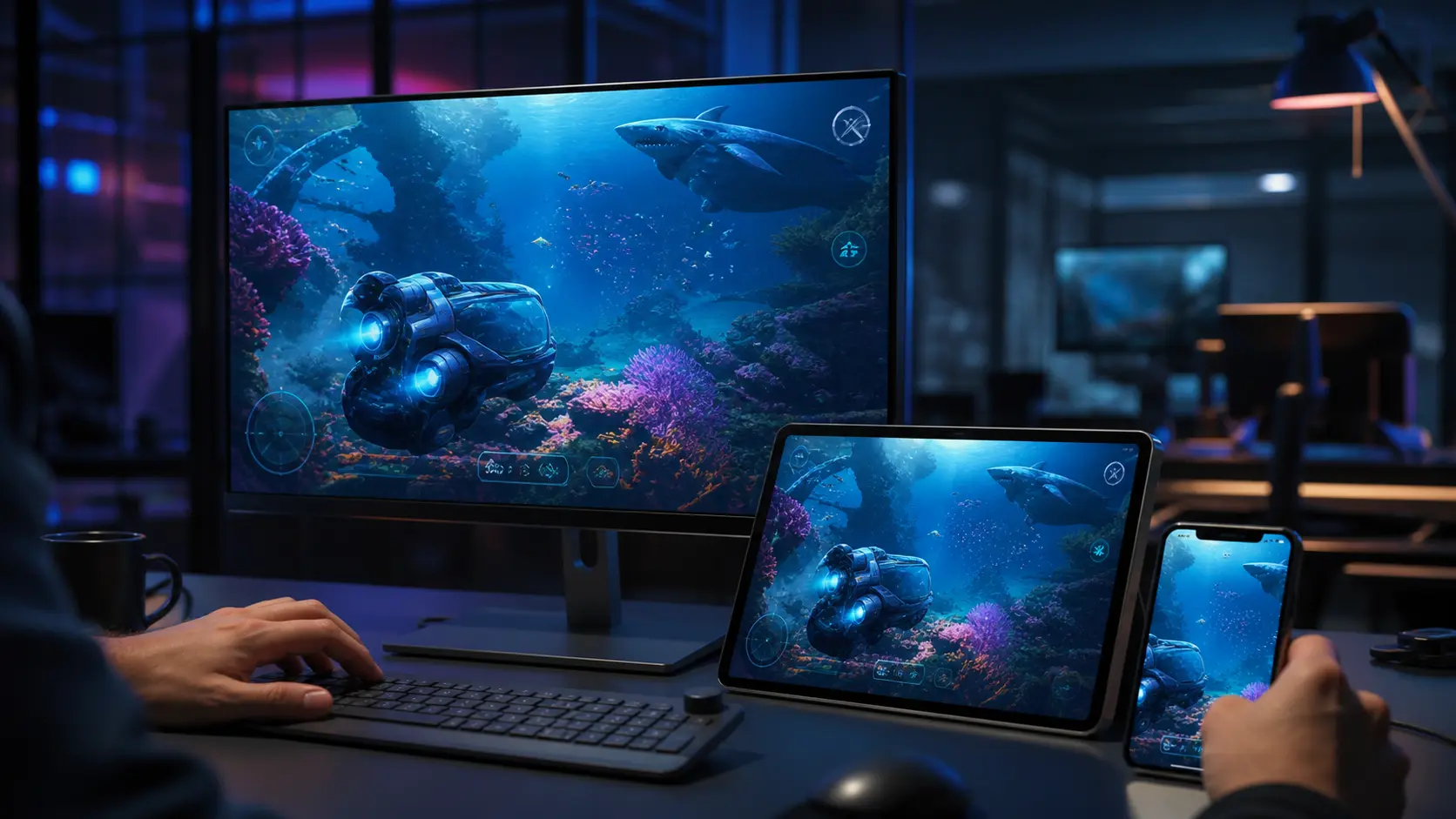
The elegance of the Mines game lies in its simple yet highly engaging 5×5 grid. The player faces 25 tiles and must select the number of hidden mines they wish to embed in this minefield. The configuration ranges from a single mine for low volatility grinding to 24 mines for an extreme lottery-style single-pick payout.
In our custom casino and arcade game software engineering department, we approach the Mines game loop as a state machine demanding sub-millisecond validation. When the player initiates a bet, the server does not merely wait; it locks the seed, generates the immutable grid, and waits for the client’s sequential picks.
Each time a player clicks a tile, they trigger a micro-decision point. If they reveal a gem, their current multiplier increases, and they face the ultimate psychological hurdle of whether to cash out or risk the accumulated multiplier for another tile. This continuous cash-out decision mechanism is what drives the extreme dopamine loops seen in the most successful instant-win titles. We engineer the backend state management to handle thousands of concurrent grid sessions per second, utilizing Redis for fast state caching and ensuring that even in the event of a client disconnect, the session state is perfectly preserved and recoverable.
Combinatorial Probability Calculations and Hypergeometric Distribution
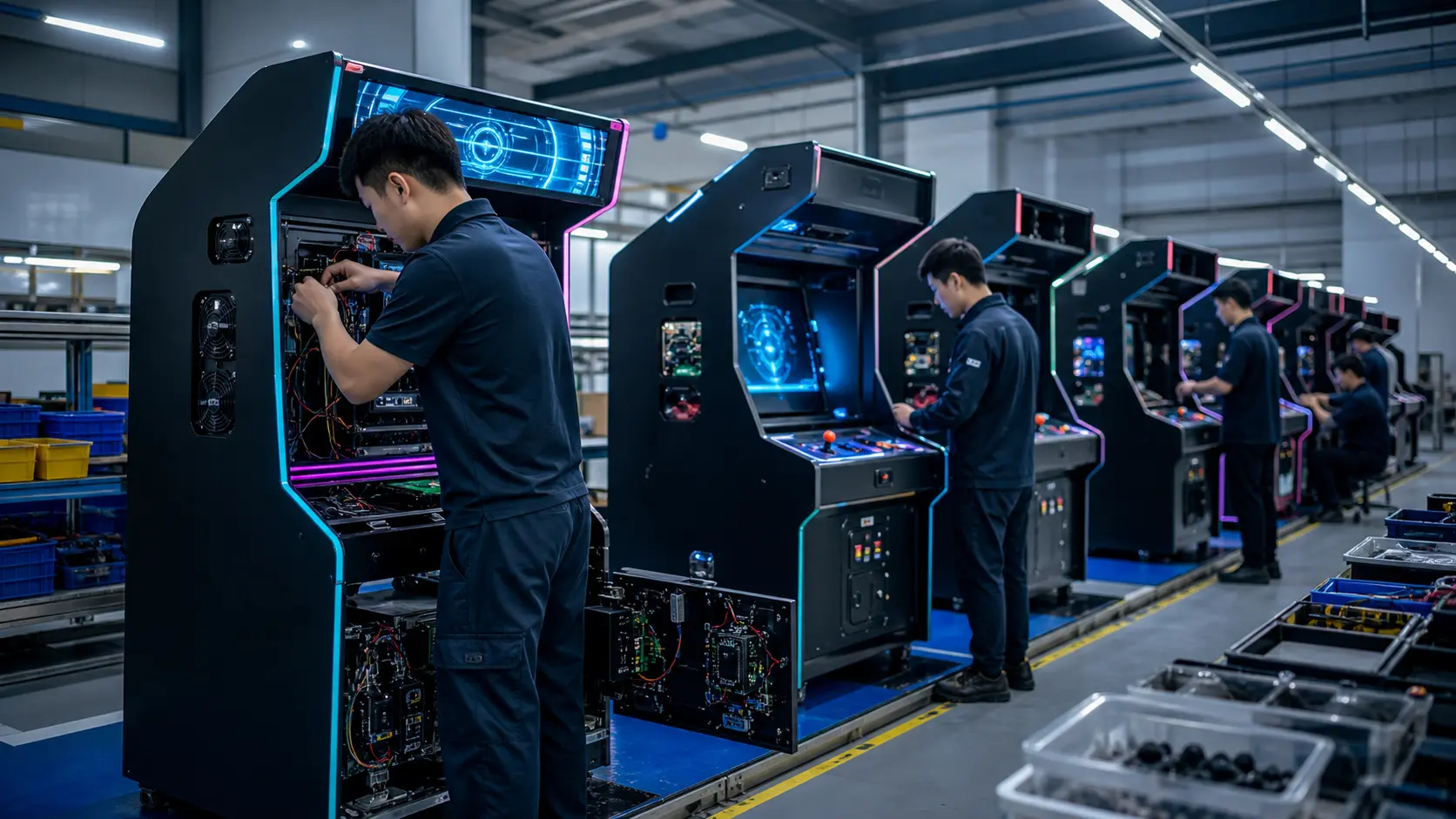
The mathematical foundation of Mines is rooted in strict combinatorial probability. We cannot rely on simple pseudo-random number generators operating on the fly; the entire payout structure depends on the exact probability of picking a safe tile from a shrinking pool of available safe tiles.
When engineering the math model, we utilize the hypergeometric distribution formula to calculate the exact probability of surviving *k* consecutive tile selections. Let *M* be the number of mines configured by the player. The total number of tiles is 25. The probability *P(k)* of successfully picking *k* safe tiles without hitting a single mine is calculated by dividing the number of ways to choose *k* safe tiles by the total number of ways to choose *k* tiles from the entire grid.
The mathematical formulation is expressed through combinations. *P(k) = C(25-M, k) / C(25, k)*.
In our Panyu QA lab, our protocol mandates that these probability arrays are pre-calculated and hardcoded into the backend lookup tables for every possible value of *M* (from 1 to 24) and every possible step *k*. By removing real-time floating-point math from the critical execution path, our Node.js and Go-based backend microservices can validate bets with zero computational overhead, which is a core tenet of our cross platform html5 casino game engine architecture.
Multiplier Curve and Strict House Edge Calibration

With the probability of every single step mapped out flawlessly, we must derive the payout multipliers that will be presented to the player. The core business logic of any casino game dictates that the operator must retain a mathematical advantage, known as the house edge, while delivering a compelling Return to Player (RTP) percentage.
To calibrate a consistent 96.0% to 99.0% RTP across all mine settings, we apply the house edge directly to the raw combinatorial probability. The exact multiplier awarded for surviving *k* steps is calculated as: *Multiplier = (1 – House Edge) / P(k)*.
This calibration is critical. Unlike a slot machine where the volatility can be tuned through virtual reel mapping as detailed in our custom slot machine math engine cascading reels rtp calibration documentation, the Mines game has no hidden reels. The mathematics are completely transparent and bound by the physical constraints of the 25-tile grid.
Our proprietary math engine automatically truncates the calculated multiplier to a specific number of decimal places (usually two or three) to avoid rounding errors during financial settlement. We also implement a maximum payout cap, ensuring that a player attempting a 24-mine grid does not break the bank on a statistical anomaly. This precise tuning ensures the operator’s profitability remains predictable, regardless of whether players are adopting a low-risk strategy with 3 mines or chasing astronomical multipliers with 20 mines.
Cryptographic Security and Provably Fair Hash Verification
In the modern iGaming landscape, especially within the crypto casino sector, players demand absolute transparency. They need cryptographic proof that the operator did not alter the position of the mines after the bet was placed or during the tile selection process. We implement an industrial-grade Provably Fair system utilizing SHA-256 hashing algorithms to guarantee unalterable grid layout seeds.
The architecture of our Provably Fair engine mirrors the security protocols we developed for our custom crash game provably fair multiplier engine. Before the game round begins, the server generates a cryptographically secure random string known as the Server Seed. We hash this Server Seed using SHA-256 and display only the resulting hash to the client. This commits the server to a specific grid layout without revealing it.
The client then provides their own Client Seed, and we utilize a Nonce (a number that increments with each bet). The final unalterable grid is generated by combining the raw Server Seed, the Client Seed, and the Nonce into a final hash, which is then parsed to place the mines mathematically.
Once the game concludes (either by the player cashing out or hitting a mine), the raw Server Seed is revealed. The player can then take this Server Seed, combine it with their Client Seed and Nonce, and run it through any independent SHA-256 calculator to verify that the resulting grid perfectly matches the one they just played. This player-verifiable proof of randomness is a mandatory requirement for Tier-1 operators, and our source code delivers this out of the box.
Require Custom Game Math or Source Code? Connect Directly with the Factory WhatsApp/WeChat: +86 17620842078 Telegram: https://t.me/JLwyc Email: miba515527@gmail.com
Frontend Touch Response and Sub Millisecond Animation Latency
While the backend math and cryptographic verification ensure fairness and profitability, the player’s retention is entirely dictated by the frontend tactile experience. A Mines game must feel snappy, responsive, and rewarding. Any perceived lag between a tap on a mobile screen and the visual reveal of a tile will instantly shatter the dopamine loop.
Our 50-engineer software studio utilizes advanced HTML5 Canvas and WebGL techniques to guarantee sub-30ms client tactile feedback. The moment a player selects a tile, the frontend immediately triggers a localized visual response before the server confirmation even returns. We employ predictive optimistic UI updates; if the server later rejects the action (e.g., due to a network timeout), the state gracefully reverts, but in 99.9% of cases, the player experiences instantaneous feedback.
The particle gem reveal animations and sound effects are timed with psychological precision. A successful gem reveal utilizes a sharp, rising-pitch audio cue paired with a satisfying visual burst, reinforcing the player’s correct decision. Conversely, hitting a mine triggers a localized screen shake and a distinct, final explosion sound. These sensory feedback loops are just as crucial as the physics models we deploy in other physics-based games, which you can explore in our plinko game source code unity physics math engine analysis.
We heavily optimize our sprite sheets and texture atlases to ensure that the game loads in under one second on standard 4G mobile connections. By minimizing draw calls and utilizing hardware-accelerated CSS transforms, our turnkey Mines game engine runs at a flawless 60 Frames Per Second (FPS) on both high-end desktop browsers and mid-range Android devices prevalent in emerging markets.
Scaling from Single Tenant to Global Multi Tenant Operations
The source code architecture we deliver is not a simple script; it is a scalable enterprise solution designed for operators planning rapid expansion. Our backend microservices are containerized using Docker and orchestrated via Kubernetes, allowing the game engine to scale horizontally based on concurrent user load.
During peak traffic events, such as a major influencer stream or a marketing push, the game server automatically spins up additional instances to handle the influx of API requests. The Redis caching layer absorbs the database write pressure, batching financial settlements and state updates to the main PostgreSQL database asynchronously. This architecture guarantees zero downtime and zero dropped bets, which is the baseline expectation for any serious operator partnering with a factory like ours.
When you purchase our software solutions, you are acquiring the same robust, industrial-grade architecture that powers top-tier global casinos. We provide full documentation, deployment scripts, and the absolute freedom to modify the math models, swap out the graphic assets, and integrate the game directly into your proprietary wallet systems.
Deploy Your Own Provably Fair Casino Games Today Partner with Guangzhou Miba Animation Technology Co., Ltd. for true source-code ownership and turnkey delivery. WhatsApp/WeChat: +86 17620842078 Telegram: https://t.me/JLwyc Email: miba515527@gmail.com
Frequently Asked Questions About Mines Game Source Code
Do I receive the full source code when purchasing your Mines game engine? Absolutely. As the source factory, we specialize in 100% source code buyout solutions. You receive the complete frontend Vue/React repositories, the backend Node.js/Go math engine, and the Provably Fair cryptographic modules. You own the intellectual property and are free to audit, modify, and deploy the code across your own infrastructure without ongoing revenue sharing.
Can the RTP and house edge be adjusted in the backend? Yes, the mathematics engine is entirely configurable. Operators can define their desired house edge (typically between 1.0% and 4.0%), and the system dynamically recalculates the exact payout multipliers across all possible mine configurations and steps based on the hypergeometric distribution formulas embedded in the code.
Is the game compatible with crypto wallets and custom fiat gateways? Our turnkey delivery is designed for seamless integration. The backend exposes standard RESTful APIs and WebSocket channels for seamless communication with your existing player wallet system. Whether you operate a crypto casino requiring direct blockchain integration or a fiat-based platform, our architecture handles the bet debiting and payout crediting with absolute transactional integrity.
How does the Provably Fair system guarantee fairness to the player? We implement a strict Server Seed, Client Seed, and Nonce cryptographic protocol using SHA-256. The server commits to the grid layout before the round starts by exposing the hashed Server Seed. Players can verify the unalterable nature of the grid post-game, guaranteeing that the mines were not dynamically relocated to force a loss.
What is the delivery timeline for a fully customized Mines game? For a standard deployment of our existing high-performance engine, we can deploy to your staging servers within 72 hours. If you require deep UI/UX customization, bespoke particle effects, or unique mathematical side bets, our 50-engineer team typically executes full delivery and Factory Acceptance Testing (FAT) within 2 to 4 weeks.