- The Business Reality of Poor Cash Handling Infrastructure
- Fundamentals of Fish Table Bill Validator Wiring
- Electromagnetic Pulse Exploits and Hardware Defenses
- Step by Step Implementation of Secure Pulse Isolation Wiring
- Grounding Architecture and Chassis Bonding
- Linking Hardware Integrity to Mathematical Return to Player
- Real World Economics and ROI Breakdown Table
- Factory Acceptance Testing and Quality Assurance Protocols
- Troubleshooting Guide and Pinout Reference
- Frequently Asked Questions
- Secure Your Arcade Revenue With Professional Engineering
For arcade venue operators and route owners, the single most critical point of failure in any physical gaming cabinet is cash handling. When a floor manager calls you on a Friday night during peak foot traffic to report that a machine is racking up phantom credits without any cash intake, you are bleeding profit by the second. Operator concerns are entirely valid. You worry about downtime, machine tampering, EMP interference, and the catastrophic impact that unearned credits have on your overall revenue and mathematical hold percentages. If players are finding ways to exploit the bill validator wiring harness, your hard-earned profits vanish. I am Engineer Wang, Lead Hardware and Game System Architect with 12 years of hands-on experience in the arcade manufacturing industry. Operating out of our 15,000-square-meter Panyu Manufacturing Base, my 50-engineer team and I design airtight hardware frameworks for Guangzhou Miba Animation Technology Co., Ltd., also globally known as Arcade Manufacturer. We build robust systems that protect your investment. In this technical manual, we will dive deep into fish table bill validator wiring, pulse isolation engineering, and hardware security so you can safeguard your machines and guarantee your return on investment.
The Business Reality of Poor Cash Handling Infrastructure
To truly understand the importance of secure bill validator wiring, we must examine the financial implications for the arcade operator. A standard fish table can pull in thousands of dollars in a busy weekend. However, if the pulse signal wire connecting your ICT, ITL, or MEI bill validator to the host game board is vulnerable to electromagnetic pulse interference or simple short circuits, malicious players can generate fake coin-in signals. Every fake pulse registered by the system inflates the player’s credit balance. For factory-direct procurement and comprehensive engineering specs, consult our master guide on turnkey arcade cabinet manufacturing and B2B procurement.
When this happens, the mathematical Return to Player algorithms are severely disrupted. Fish games operate on calculated probability models that dictate how quickly players can capture targets based on the amount of real money they have invested. If the system is tricked into thinking thousands of dollars were deposited, it will enter a payout phase, allowing the exploiter to drain the machine’s true cash reserves. Operator margins shrink, and the machine effectively becomes a liability rather than an asset. We understand this pain point intimately. That is why at Arcade Manufacturer, our primary goal is preventing these hardware exploits before they ever reach your arcade floor.
Fundamentals of Fish Table Bill Validator Wiring
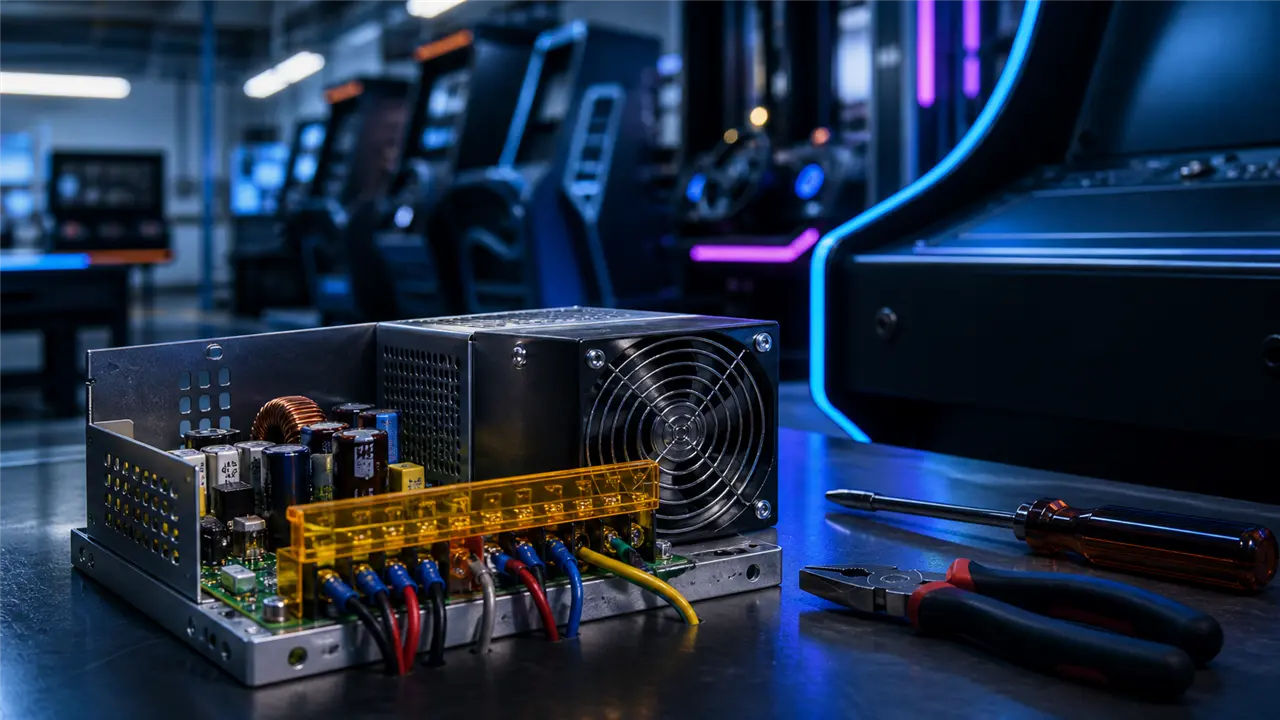
The core communication method between a standard bill validator and an arcade game board relies on a pulse signal protocol. When a patron inserts a twenty-dollar bill, the validator recognizes the currency, stores the cash in the stacker, and sends a rapid sequence of electrical pulses down the signal wire to the game board. For example, if the machine is configured for four pulses per dollar, a twenty-dollar bill generates eighty discrete electrical pulses.
The standard wiring harness for a bill validator typically consists of four primary connections. Understanding these wires is the first step in mastering fish table bill validator wiring.
First, there is the 12V DC power wire, generally color-coded red. This wire supplies the necessary voltage to run the motors, optical sensors, and microprocessors inside the bill validator unit. Second, the ground wire, usually black, completes the electrical circuit and provides a baseline zero-voltage reference for all signals. Third, the pulse signal wire, often green or white depending on the harness standard, is the data line that carries the credit information. Finally, the enable or inhibit wire, frequently yellow or orange, allows the game board to tell the validator when to accept or reject bills. If the game is in an error state or the credit limit is reached, the board pulls this line high or low to disable the validator, preventing patrons from inserting money when the game cannot award credits.
Electromagnetic Pulse Exploits and Hardware Defenses
Malicious actors often employ miniature EMP generators hidden in cigarette lighter casings or small handheld devices. These devices emit high-frequency, high-voltage bursts of electromagnetic energy. When triggered near the coin door or the bill validator bezel, this intense electromagnetic field induces a voltage spike on the unshielded pulse signal wire. The game board interprets this transient voltage spike as a legitimate credit pulse, rapidly racking up the player’s score.
To combat this, we implement rigorous pulse isolation engineering at our manufacturing facility. We do not rely on standard direct-wire connections. Instead, we utilize high-speed optocoupler isolation circuits. An optocoupler separates the bill validator circuit from the game board circuit using light. When the validator sends a pulse, it powers a tiny internal LED within the optocoupler chip. A phototransistor on the other side detects this light and forwards the pulse to the game board. Because there is no direct electrical connection between the input and output sides, a massive high-voltage EMP spike induced on the bill validator wiring cannot jump the physical gap inside the optocoupler.
Furthermore, we utilize specialized EMP interference blocking devices featuring transient voltage suppression diodes with clamping times under five picoseconds. These components absorb high-energy spikes and shunt them safely to the earth ground before they can affect the logic circuits. This guarantees that your fish games remain impervious to handheld EMP attacks.
Step by Step Implementation of Secure Pulse Isolation Wiring
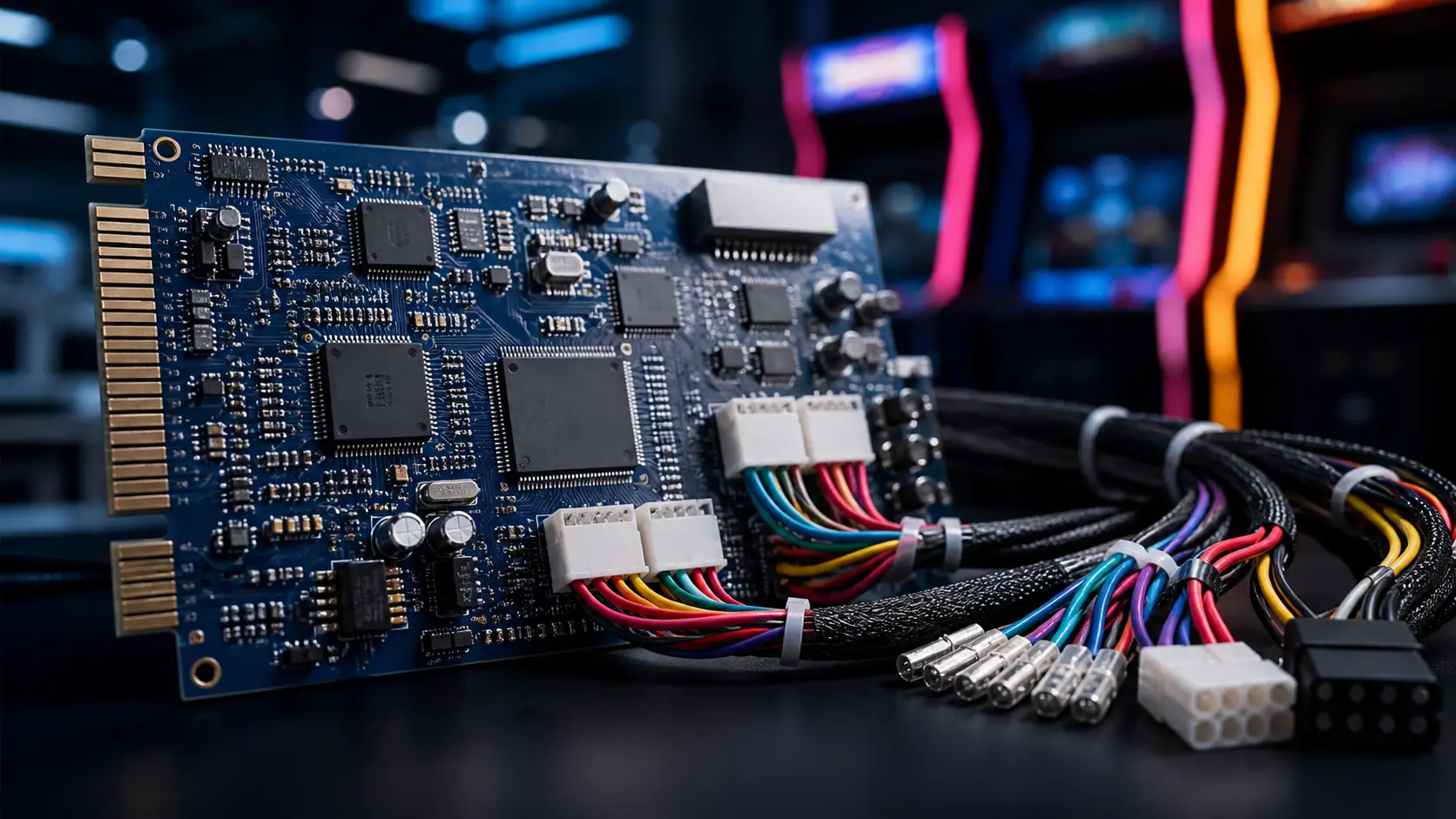
For operators looking to upgrade their existing cabinets or understand our manufacturing process, the implementation of secure wiring requires absolute precision. Our factory technicians follow a strict protocol to ensure every unit leaving our assembly line is bulletproof.
The first phase involves preparing the shielded cabling. We use twisted-pair wiring with a braided copper shield to reject ambient electromagnetic noise. The shield must be bonded to the earth ground chassis at one end only to prevent ground loops, which can cause erratic credit behavior.
Next, we integrate the pulse isolation board. This intermediate printed circuit board sits between the bill validator harness and the main JAMMA interface or custom IO board of the fish game. The validator’s 12V power and ground connect to the input side of the isolator board. The validator’s signal wire connects to the optocoupler input. The output side of the isolator board connects to the game board’s 12V, ground, and coin-in pins.
It is crucial to verify the pulse width and pulse interval settings on both the bill validator and the game board. Most modern validators use DIP switches to set these parameters. A common setting is a fifty-millisecond pulse width with a fifty-millisecond interval. If the game board expects a long pulse and the validator sends a short one, credits will drop or fail to register. Our engineers meticulously match these timing parameters to ensure one hundred percent accuracy over millions of transactions.
We also install relay isolation for the enable line. This protects the game board’s output transistors from being damaged by voltage feedback from the bill validator.
Grounding Architecture and Chassis Bonding
A frequent oversight in fish table bill validator wiring is inadequate grounding. Operators sometimes daisy-chain ground wires from the validator to the coin door, then to the power supply, and finally to the main board. This creates ground loops and differential voltage potentials across the cabinet, leading to false credits and random reboots.
In our engineering designs, we employ a star grounding topology. Every component, including the bill validator, the switching power supply, the monitor chassis, and the game board, has a dedicated, heavy-gauge ground wire running directly to a single central grounding busbar located at the bottom of the cabinet. This busbar is then tied directly to the earth ground pin of the main AC power inlet. This topology guarantees a zero-voltage reference across all subsystems, drastically reducing the effectiveness of static electricity shocks and localized EMP attempts.
If you are a route operator experiencing phantom credits, the first thing I advise is to check your grounding architecture. Upgrading to a star ground system is a low-cost, high-impact modification that instantly improves stability.
Linking Hardware Integrity to Mathematical Return to Player
Many operators view hardware and software as separate domains, but in the arcade industry, they are deeply intertwined. The mathematical model of a fish game relies on accurate data regarding total cash intake and total payout to maintain the target Return to Player percentage.
If your bill validator wiring allows for unearned credits due to electronic interference or mechanical manipulation like stringing, the game’s accounting meters become corrupted. The algorithm assumes the machine has taken in substantial revenue and subsequently increases the catch rate for the players, entering a payout cycle. The operator is hit twice: first by the fake credits themselves, and second by the game’s algorithm paying out real winnings based on those fake credits.
By employing robust opto-isolated wiring and shielded cables, we ensure that the physical cash drop exactly matches the digital coin-in meter. This data integrity allows the math model to perform exactly as designed, ensuring stable, predictable profits for the venue owner week after week.
Real World Economics and ROI Breakdown Table
Investing in secure hardware infrastructure is not a sunk cost; it is a profit-protection strategy. Let us examine the economic reality for a standard eight-player fish table operating in a mid-volume venue.
| Financial Metric | Standard Unsecured Cabinet | Arcade Manufacturer Secure Cabinet |
|---|---|---|
| Initial Cabinet Cost (CAPEX) | $3,500 | $4,200 |
| Monthly EMP/Tamper Losses | $800 to $1,500 | $0 |
| Maintenance & Downtime (OPEX) | $300 | $50 |
| Average Monthly Gross Revenue | $8,000 | $8,000 |
| True Monthly Net Profit | $6,200 | $7,950 |
| Hardware Upgrade Payback Period | N/A | Less than 2 weeks |
| Lifespan of Hardware Components | 1 to 2 years | 4 to 6 years |
As the data clearly demonstrates, the slightly higher initial capital expenditure for a machine with proper pulse isolation engineering, shielded wiring, and advanced grounding topologies pays for itself almost immediately by completely eliminating theft and reducing maintenance downtime. Venue operators must view their cabinets not just as gaming devices, but as automated cash vaults that require enterprise-grade security.
Factory Acceptance Testing and Quality Assurance Protocols
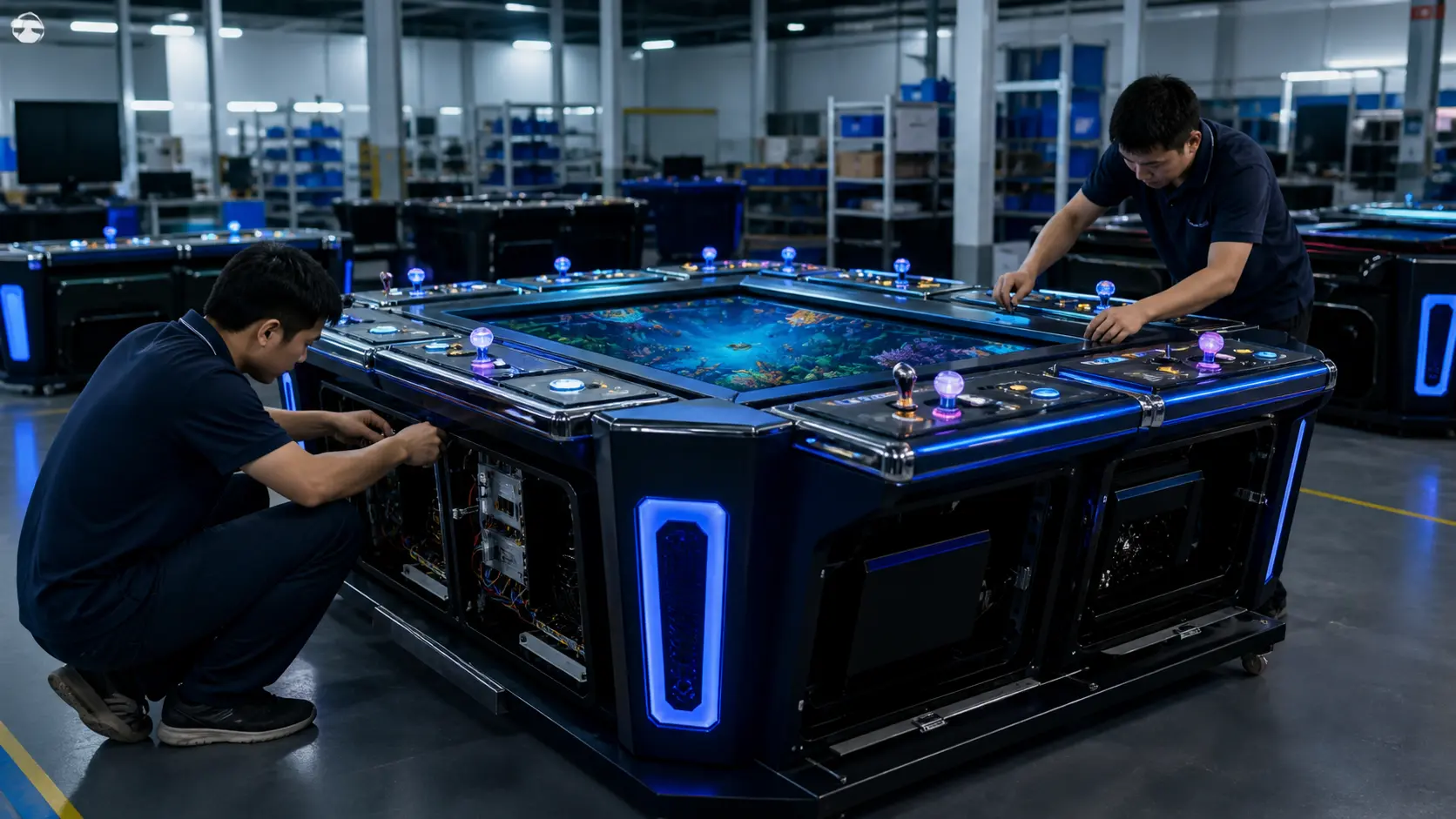
At our Panyu Manufacturing Base, we do not leave anything to chance. Every machine that rolls off our assembly line undergoes an exhaustive Factory Acceptance Testing protocol. When an operator orders a batch of cabinets, they are guaranteed equipment that has survived rigorous stress testing.
Our quality assurance lab utilizes automated pulse generators to simulate ten years of continuous bill insertion. We verify that the optocouplers do not degrade and that the game board never misses a single pulse, even under heavy load. We then subject the coin door and bill validator bezel to localized electromagnetic interference using high-powered Tesla coils and RF transmitters. If a machine registers even a single phantom credit during this trial, it is pulled from the line, and the wiring harness is completely rebuilt.
We also conduct a seventy-two-hour thermal burn-in test. We run the bill validators continuously in an environmental chamber set to forty-five degrees Celsius and eighty-five percent humidity. This ensures that the power supplies do not suffer from thermal throttling and that the isolation circuits maintain their integrity in the harsh environments often found in unconditioned arcade venues.
Troubleshooting Guide and Pinout Reference
For technicians out in the field, having a clear diagnostic roadmap is essential. When you encounter a bill validator issue, follow these systematic steps to isolate the fault.
First, always measure your input voltage. The bill validator requires a stable 12V DC. If your power supply is outputting 11.2V due to voltage drop across cheap, thin wires, the validator’s motors will lack torque, leading to bill jams and frequent rejections. Upgrade your 12V lines to 16 AWG pure copper wire.
Second, if the validator accepts bills but the game awards no credit, inspect the pulse signal path. Disconnect the signal wire from the game board and use a digital multimeter set to continuity or a specialized logic probe. Insert a bill and watch the probe. You should see rapid pulses. If you see pulses at the validator output but not at the game board input, your opto-isolator board or wiring harness is compromised.
Third, if the validator refuses to accept any bills and the bezel lights are flashing an error code, verify the enable/inhibit line. The game board must pull this line low to enable the validator. If a faulty relay or a blown transistor on the IO board is keeping this line high, the validator will remain disabled.
Standard JAMMA Bill Validator Pinout Reference
| Wire Color Code | Function Designation | Connection Point | Diagnostic Expected Value |
|---|---|---|---|
| Red | 12V DC Power | Power Supply +12V Terminal | 11.9V to 12.2V DC under load |
| Black | Ground / Common | Central Grounding Busbar | < 0.1 Ohms to Earth Ground |
| Green / White | Pulse Signal Output | Optocoupler Input / Coin-In Pin | 0V idle, rapid pulsing to 5V/12V on insertion |
| Yellow / Orange | Enable / Inhibit Line | IO Board Enable Pin | Low (0V) to enable, High (5V/12V) to disable |
This pinout represents the most common configuration, but always consult the specific technical manual for your exact validator model and game board architecture.
Related Engineering References and Floor Operational Guides
- For our comprehensive factory production standards, review our turnkey fish table manufacturing framework.
- To secure your floor against transient spark attacks, see our breakdown on EMP jammer detectors for fish game arcades.
- Compare footprint and power demands with our commercial Ocean King hardware specifications.
- Calculate venue launch economics with our commercial fish table arcade setup and ROI model.
Frequently Asked Questions
Why does my machine occasionally give hundreds of credits when a player touches the coin door? This is a classic symptom of static discharge entering the unshielded pulse line. The static electricity creates a massive voltage spike that the board misinterprets as rapid coin pulses. Upgrading to an opto-isolated wiring harness and implementing a star grounding topology will completely eliminate this issue.
Can I connect two bill validators to the same game board in parallel? While physically possible by splicing the pulse wires, it is highly discouraged unless you use a dedicated pulse accumulator board. Splicing wires directly can cause signal collision if two players insert money simultaneously, resulting in lost credits. A pulse accumulator buffers the signals and sends them to the board in a clean, sequential stream.
What is the difference between a 12V pulse and a 5V pulse system? Older game boards operate on 12V logic for their coin inputs, while modern digital boards often use 5V logic. If you send a 12V pulse from a validator directly into a 5V logic pin, you will permanently destroy the input IC on the game board. Our custom interface boards handle voltage step-down and level shifting automatically.
How do I adjust the pulse width if my game board is missing credits? Most bill validators have a row of tiny DIP switches on the side or bottom. Referencing the manufacturer’s manual, you can toggle these switches to change the pulse width from fast to slow. If your game board is older, it may require a slower pulse width to accurately register the signal.
Is it better to use a solid-state relay or an optocoupler for signal isolation? For high-speed digital pulse signals like those generated by a bill validator, an optocoupler is vastly superior. Solid-state relays are too slow to cleanly transmit rapid pulses and are better suited for switching high-current loads like motors or heavy solenoids.
Secure Your Arcade Revenue With Professional Engineering
The profitability of your arcade venue rests entirely on the security and reliability of your hardware infrastructure. Do not let poorly designed wiring harnesses and vulnerable bill validators drain your revenue. At Arcade Manufacturer, we build machines that operators can trust.
If you are currently planning a new arcade location or looking to upgrade your existing fleet of fish tables, we are here to provide enterprise-grade solutions.
For initial inquiries and to request our comprehensive technical whitepaper on anti-cheat cabinet designs, reach out to our sales team today. We can help you spec out the perfect machines for your market.
When you are ready to discuss custom software development, white-label systems, or specialized hardware architectures, you need expert engineering guidance. Connect with me, Engineer Wang, and my team directly. We can review your specific operational challenges and design a custom IO and isolation framework tailored to your needs.
For factory direct pricing, FAT inspection bookings, and immediate technical consultation, contact me via WhatsApp or WeChat at +86 17620842078, reach out on Telegram at https://t.me/JLwyc, or email me at miba515527@gmail.com. We invite all serious operators and route owners to visit our 15,000-square-meter Panyu Manufacturing Base to see our quality assurance processes firsthand. Let us build the most secure and profitable arcade floor in your region together.