Transitioning high-yield amusement hardware into fully unattended operations requires eliminating physical operator intervention without sacrificing uptime or asset security. Route operators face escalating challenges managing distributed locations and ensuring robust arcade machine security when relying on rudimentary localized management platforms.
The immediate solution lies in implementing industrial-grade cloud hardware control gateways to bridge unattended cloud machine telemetry and physical I/O pulse generation. By installing purpose-built IoT bridges equipped with galvanic isolation, operators can safely execute coin-drop pulses, read prize-dispense telemetry, and power cycle mainboards directly from a centralized cloud dashboard. This architecture completely removes the need for physical attendants while establishing comprehensive hardware defense systems against localized tampering or environmental failures. Whether managing crane machines, coin pushers, or interactive rhythm cabinets, deploying verified telemetry gateways allows operators to achieve near-perfect daily cash reconciliation and drastically reduce on-site labor overhead. Interested in experiencing commercial-grade hardware abstraction? Contact our engineering team for a live demonstration of our gateway hardware interfacing with standard arcade cabinets. For a comprehensive architectural overview and turnkey procurement frameworks, review our master guide on WebRTC remote arcade streaming architecture. For factory-direct procurement and comprehensive engineering specs, consult our master guide on industrial IoT remote arcade machine teleoperation.
Hardware Control Gateway Architecture Comparison
Operators frequently attempt to repurpose consumer electronics for route operations, leading to catastrophic logic board failures and unpredictable downtime. Commercial amusement deployment demands industrial specifications to ensure continuous unattended revenue generation and protect the core investments housed within each cabinet. When scaling operations across hundreds of unstaffed locations, the distinction between hobbyist microcontrollers and industrial gateways becomes the determining factor in overall profitability.
| Feature Profile | Legacy Serial Controllers | Consumer IoT Relays | Industrial Cloud Control Gateway |
|---|---|---|---|
| **Galvanic Isolation** | None | Basic mechanical relay only | PC817 Optocouplers across all I/O |
| **MTBF (Hours)** | 10,000 | 25,000 | 100,000+ |
| **Communication Standard** | Polled RS-232 | Unsecured HTTP/MQTT | MQTT over TLS 1.3 with mTLS |
| **Hardware Watchdog Timers** | Absent | Software-based | Dedicated hardware watchdog IC |
| **Fail-Safe Disconnect** | Undefined | Random state retention | Configurable default-open state |
| **Coin Pulse Precision** | ±50ms variance | ±20ms variance | ±1ms crystal-locked precision |
| **Thermal Operating Range** | 0°C to 40°C | 0°C to 50°C | -20°C to 85°C Industrial Grade |
Industrial IoT Gateway Circuitry and Microcontroller Architecture
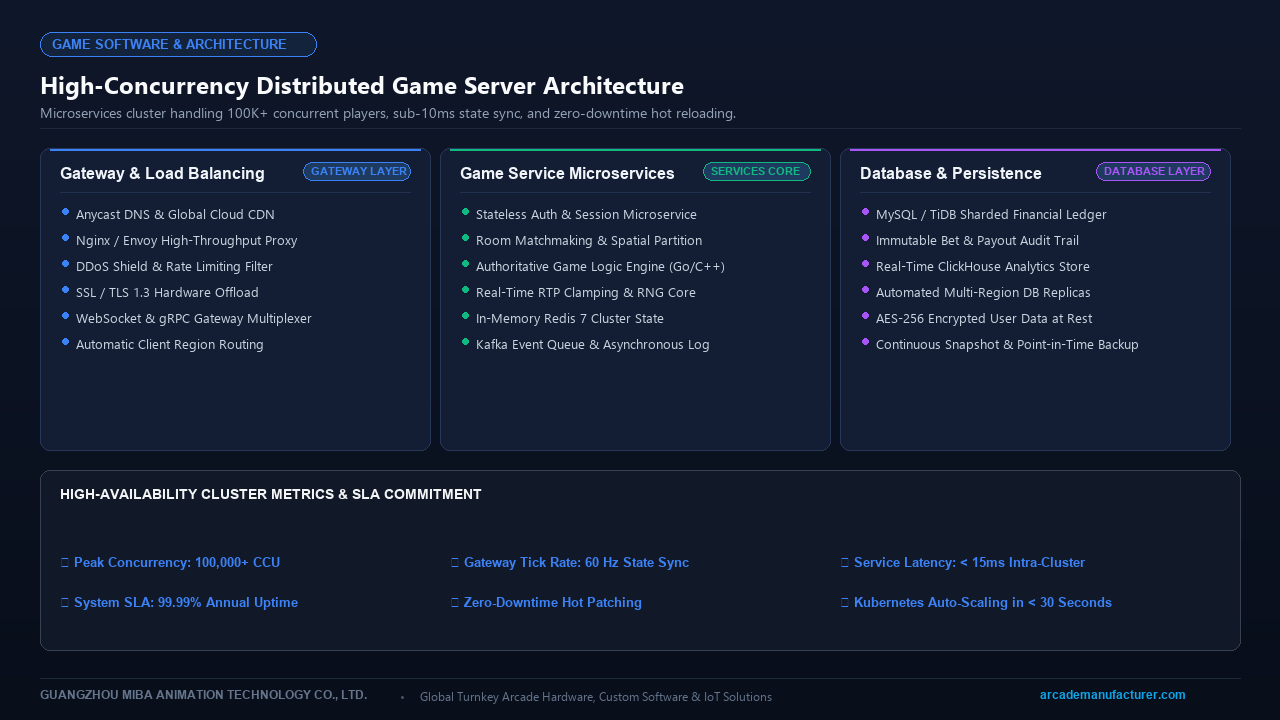
Developing a reliable gateway for amusement cabinets requires a rigorous approach to electronic component selection and circuit topology. The environment within a running crane or pusher machine involves significant electromagnetic interference from switching power supplies, large DC motors, and electromechanical coin hoppers. To combat this, the gateway architecture relies on a dual-core processing approach utilizing STM32 and ESP32 microcontrollers. The ESP32 handles high-level wireless communication and cryptographic TLS handshakes, offloading network overhead from the critical timing tasks. Simultaneously, the STM32 acts as the dedicated real-time I/O processor, strictly governing pulse width modulation, coin-in signals, and prize payout verification counters.
To protect the logic circuits from the harsh cabinet electrical environment, total galvanic isolation is mandatory. Optocoupler isolation using PC817 components separates the low-voltage microcontroller logic from the potentially noisy 5V or 12V pulse lines of the game mainboard. This design prevents voltage spikes generated by coin mechanisms or motorized actuators from causing logic resets on the gateway. Furthermore, for controlling high-current AC loads such as cabinet main power or high-wattage marquee lighting, zero-crossing solid-state relays are implemented to eliminate arcing and significantly extend component lifespan over traditional mechanical relays, which frequently fuse shut under inductive loads.
- Cloud Platform | | Arcade Game Cabinet
- TLS 1.3 / MQTT
- v———–+ I2C/SPI +———–v
- ESP32 Network Module +<------------------>+ STM32 Real-Time Core
- (Crypto & TCP/IP) | | (Pulse & Logic I/O)
- PC817 Opto-Isolation
- Pulse Output
- JAMMA / Logic Harness
- Integrating a robust anti cheat device into the hardware topology requires these isolated microcontrollers to run continuously without succumbing to external interference. The architecture includes dedicated watchdog circuitry independent of the main processors. If the gateway experiences a software lockup due to localized network storms or extreme voltage sag on the primary supply rails, the hardware watchdog forcibly reboots the system within milliseconds. This rapid recovery mechanism ensures that the cabinet never enters a zombie state where credits can be artificially injected via standard EMP generation tools commonly used by malicious actors.
- ## Bidirectional Cloud Communication Protocols and Telemetry Ingestion
- The lifeblood of unattended remote operation is the network protocol stack managing the constant stream of cabinet telemetry and command packets. In an environment where players expect instantaneous credit deposition after a mobile payment, latency is unacceptable. We utilize MQTT over TLS 1.3 as the primary transport layer. MQTT provides a lightweight, publish-subscribe messaging model highly resilient to cellular network jitter and intermittent connectivity. By implementing mutual TLS (mTLS) authentication, the gateway and the server cryptographically verify each other before any data exchange occurs, nullifying the risk of man-in-the-middle attacks injecting false credit data.
- For real-time player interaction, especially in remote claw machine applications where video latency directly impacts gameplay, the system establishes parallel data pathways. While MQTT handles asynchronous telemetry such as error codes and audit meters, sub-20ms WebSocket command queues handle the real-time joystick and button inputs. This dual-path architecture ensures that high-volume control data does not block critical revenue-related telemetry. The payload format is serialized into highly efficient binary structures rather than verbose JSON strings, reducing packet size and maximizing throughput over constrained 4G LTE connections.
- Cloud Server Gateway Node Game Mainboard
- [MQTT Connect / TLS 1.3] —>
- <-------- [ACK Session]
- [WebSocket Upgrade Req] —->
- <------ [Upgrade Accepted]
- ====== [WebSocket Stream] =======
- (Command: Insert Coin) —–>
- (Pulse: 100ms Low-Active) —>
- <-- (Acknowledge: Coin Meter)
- <-- [MQTT Pub: Coin Accepted]
- <-- [MQTT Pub: Heartbeat PING]
- [MQTT Sub: Heartbeat ACK] –>
Network instability is a reality when you service arcade locations across diverse geographical regions ranging from deep indoor shopping malls to isolated highway rest stops. Heartbeat watchdog timers are built directly into the protocol design. The gateway node expects a cryptographic ping from the cloud server every five seconds. If the network link fails and the heartbeat drops, the local hardware immediately ceases accepting physical inputs, halts ongoing gameplay safely, and triggers a localized alarm state. This fail-safe programming ensures players do not spend money when the resulting prize payout cannot be verified by the cloud backend.
Multi-Cabinet Network Clustering and Venue Edge Switching
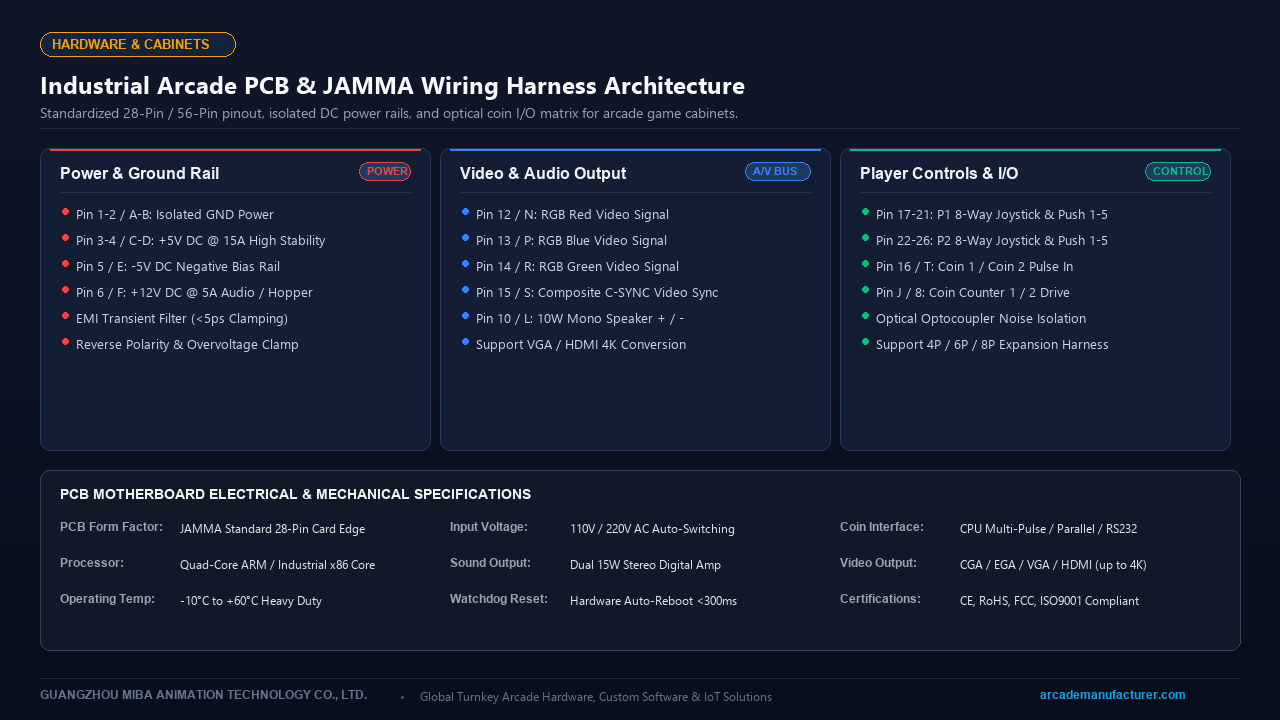
Scaling from a single connected machine to a venue housing dozens of unattended cabinets introduces severe networking complexities that outstrip the capabilities of standard commercial routers. Consumer-grade networking equipment quickly saturates under the load of continuous MQTT streams, WebSocket control queues, and concurrent high-definition video feeds emanating from multi-camera cabinets. Operators must implement industrial DIN-rail gigabit switches within the venue’s core electrical panel to handle the dense data aggregation.
A critical strategy for maintaining network integrity is strict VLAN segmentation. Control telemetry, which requires minimal bandwidth but demands ultra-low latency, must be logically separated from the heavy bandwidth demands of RTSP video streams. By assigning the hardware control gateways to an isolated VLAN with maximum Quality of Service (QoS) priorities, operators guarantee that a dropped video frame never translates into a missed coin drop or a delayed claw drop command. Furthermore, implementing MAC-address binding at the switch level ensures that rogue devices plugged into an open Ethernet port on the venue floor cannot access the control plane.
Implementing bandwidth throttling per camera node at the edge switch level prevents localized network flooding. If a single camera malfunctions and attempts to broadcast uncompressed raw footage, the edge switch actively throttles that specific port, preserving the bandwidth allocated for the operational machines on the cluster. This edge-level intelligence is paramount for maintaining overall route stability. Modern operators also deploy dual-WAN failover routers at the edge, utilizing a primary fiber connection with a seamless 5G cellular backup, ensuring that temporary ISP outages do not disconnect the unstaffed venue from the central management platform.
Unattended Route Maintenance and Remote Troubleshooting SOP
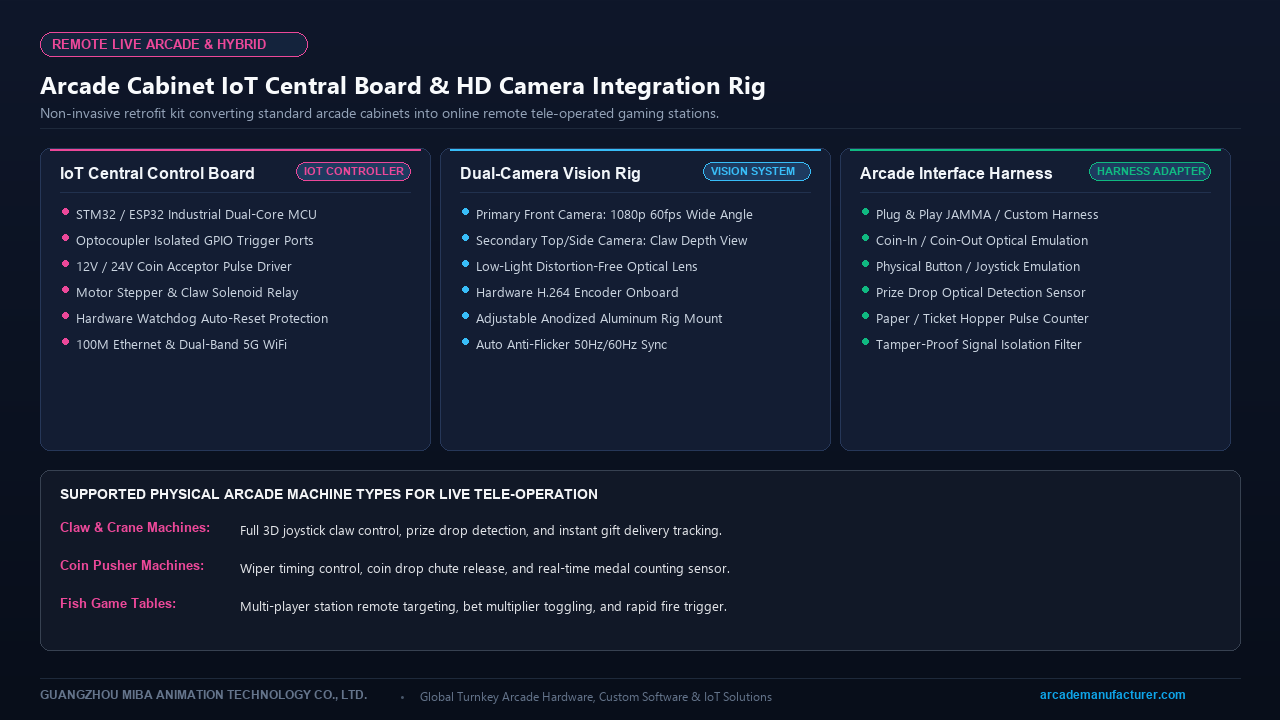
Operating a successful unattended route shifts the burden of maintenance from localized floor attendants to centralized cloud operators and specialized field technicians. Establishing a rigorous Standard Operating Procedure (SOP) for remote troubleshooting dramatically improves machine uptime and reduces unnecessary truck rolls. The hardware control gateway acts as the primary diagnostic tool when field issues arise, providing deep insights into cabinet health long before a player files a complaint.
The first line of defense is automated credit clearing and state management. When a game ends abnormally or a player disputes a transaction due to a jammed coin mech, the cloud dashboard allows route operators to securely query the current credit state of the cabinet. Through the gateway interface, they can issue specific pulse commands to clear credits, award makeup games, or digitally refund mobile payments without requiring physical access to the service button. This digital mediation maintains player trust in unstaffed environments.
If a machine’s mainboard experiences a critical software lockup, the gateway’s zero-crossing solid-state relays facilitate remote power cycling. Operators can command a hard reboot of the specific cabinet directly from the backend, often resolving transient software faults in less than sixty seconds. Additionally, the gateway constantly monitors the cabinet’s proprietary data lines for hardware-level error codes. These codes—ranging from empty prize hopper alerts to claw motor overcurrent warnings—are instantly ingested, translated into human-readable alerts, and dispatched to the maintenance team’s mobile devices, ensuring technicians arrive on-site with the exact replacement parts required.
Frequently Asked Questions
What prevents network latency from affecting the player experience? Our architecture separates bulk data from real-time inputs. We utilize MQTT over TLS 1.3 for telemetry and audit data, while deploying independent, sub-20ms WebSocket command queues exclusively for real-time player controls. This ensures joystick movements and button presses remain instantaneous regardless of background data synchronization.
How does the gateway handle sudden power loss or network drops? The gateway features robust hardware watchdog timers and configurable fail-safe disconnect states. If cloud communication fails, the gateway immediately isolates the cabinet’s coin and control lines, preventing unauthorized play. Upon restoration, it synchronizes cached audit data to ensure seamless daily cash reconciliation without data loss.
Can the hardware gateway interface with legacy amusement cabinets? Yes, the system utilizes programmable STM32 microcontrollers paired with PC817 optocoupler isolation. This allows our engineering team to program custom pulse widths and logic levels, enabling the gateway to safely interface with virtually any legacy JAMMA standard or proprietary serial control board.
Does this system protect against localized electromagnetic interference? Absolutely. The integration of total galvanic isolation and zero-crossing solid-state relays forms the core of our hardware defense systems. The gateway is specifically engineered to reject voltage spikes from motorized coin hoppers and high-draw switching power supplies found in standard arcade cabinets.
—
Ready to upgrade your route infrastructure to industrial standards? Partner with Guangzhou Miba Animation Technology Co., Ltd. for deployment-ready cloud gateway solutions. Contact Engineer Wang at +86 17620842078 to schedule a technical consultation or arrange a visit to our Panyu facility for a live hardware demonstration.