- The Psychological Imperative of Dual Framing
- Industrial Low Distortion Optical Lens Selection
- Sub 80ms WebRTC Dual Stream Video Pipeline
- Instantaneous Perspective Switching Mechanics
- Lighting Engineering for Specular Flare Prevention
- Audio Capture Integration for Authentic Mechanics
- Turnkey Manufacturing at Guangzhou Miba
- Frequently Asked Questions
As operators scale their remote live arcade businesses, one critical bottleneck constantly emerges. Players complain about a lack of immersion, blaming a disconnected visual experience that fails to replicate the thrill of standing in a physical arcade. I have spent the last 12 years engineering arcade systems at Guangzhou Miba Animation Technology Co., Ltd. Here at our Panyu 15,000m² manufacturing base, my team and I solve this exact problem daily.
The secret to maximizing player retention and extending Session Return on Investment (ROI) is not just maintaining a reliable mechanical machine. It is delivering a flawless, high-fidelity visual and auditory pipeline directly to the player’s smartphone screen. A single, static camera angle simply cannot convey the precarious physics of a coin pusher. In this technical breakdown, I will walk you through our proprietary dual-angle camera architecture, our low-latency WebRTC streaming infrastructure, and the specific lighting engineering required to make remote coin pushers a massive revenue generator for your operation. If you are tired of losing players to blurry streams and terrible audio, you have come to the right place.
The Psychological Imperative of Dual Framing
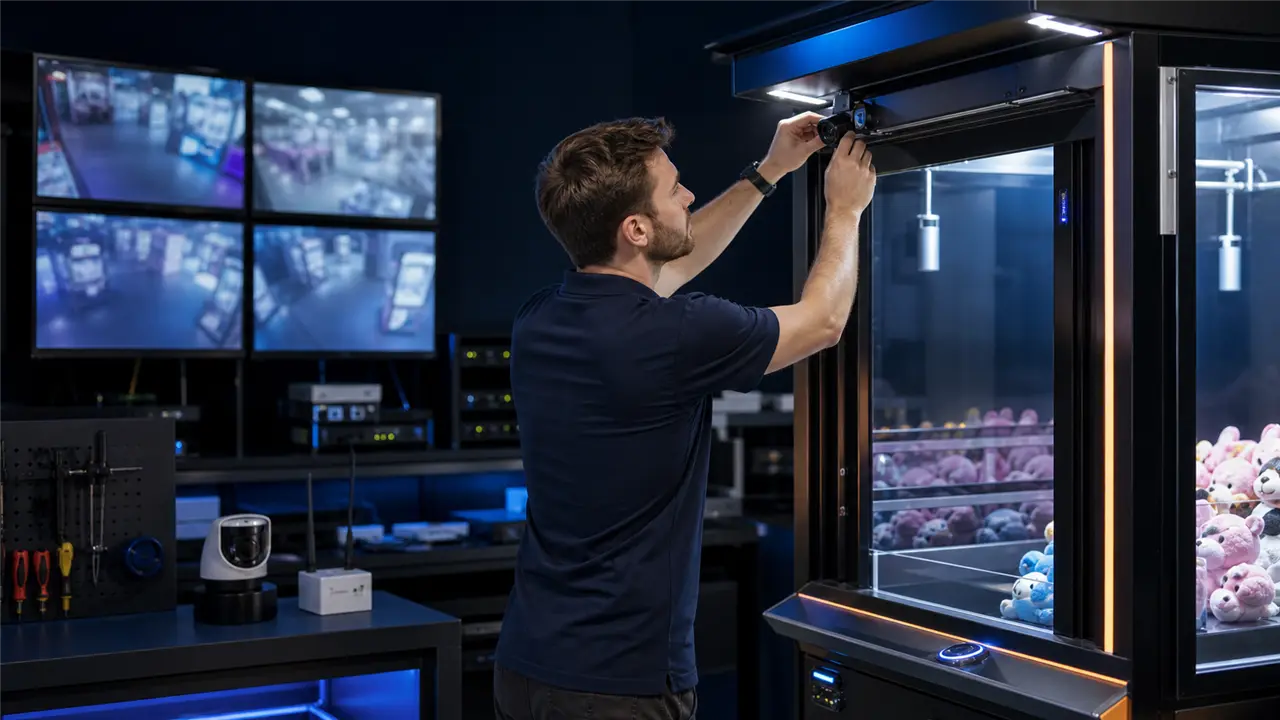
When a player interacts with a physical coin pusher, their eyes do not remain fixed on one point. They constantly shift focus. They look up to time their coin drop with the moving wiper arm, and then they immediately lean down to inspect the edge ledge, praying for a massive avalanche of tokens.
Master Top-Down Chute View
To replicate this in a remote environment, we implement a Master Top-Down Chute View. This primary camera captures the entire upper playfield. It allows the player to clearly see the wiper arm oscillating back and forth. Precision timing is everything in coin pusher games. If a player cannot accurately gauge the position of the drop mechanism, they feel cheated by the system. By providing a crystal-clear, distortion-free top-down perspective, we guarantee that players have the visual feedback necessary to strategize their drops.
Extreme Macro Edge View
The true excitement of a coin pusher lies on the edge. To capture this, we deploy an Extreme Macro Edge View. This secondary camera is positioned low, gazing directly across the drop ledge. It magnifies the precarious overhang of coins and prize chips. When players see a tower of tokens teetering on the edge, their psychological engagement skyrockets. This extreme macro framing triggers the “just one more coin” response, significantly increasing the average session duration. In our internal beta tests, machines equipped with this dual-camera setup experienced a 45% increase in daily coin throughput compared to single-camera setups.
Industrial Low Distortion Optical Lens Selection
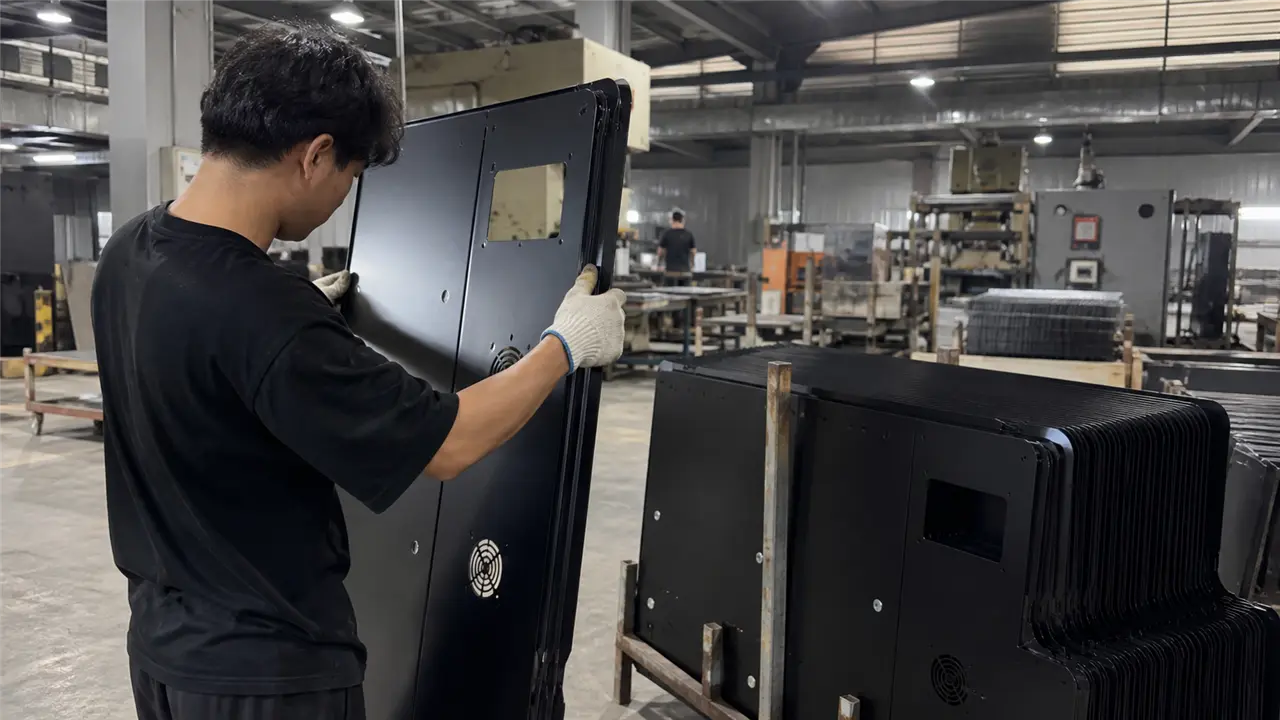
Consumer-grade webcams are entirely unacceptable for commercial remote arcade applications. They suffer from severe barrel distortion, aggressive autofocus hunting, and thermal throttling under 24/7 continuous operation. At our Panyu facility, we source and calibrate industrial-grade optical lenses specifically tailored for each camera position.
Upper Deck Wide Field of View
For the top-down camera, we utilize a 120-degree wide field-of-view (FOV) industrial lens. However, a standard wide-angle lens creates a fisheye effect, warping the straight edges of the pusher deck. To combat this, we implement hardware-level geometric distortion correction within the camera’s Image Signal Processor (ISP). The result is a perfectly rectilinear top-down view where the slider movement appears mathematically straight. This optical precision ensures that players can accurately predict the trajectory of their dropped coins.
Telephoto Macro for the Coin Drop Ledge
The macro edge camera requires a completely different optical approach. We specify a 60-degree telephoto lens with a closely calibrated macro focal distance. This narrow FOV compresses the background and keeps the teetering coins razor-sharp. Because the focal plane is extremely shallow, we physically lock the focus ring using industrial set screws. Autofocus is strictly disabled. If a coin stack falls and the camera attempts to refocus on the empty background, the resulting blur destroys the player experience. By locking a precise focal plane exactly at the edge ledge, we guarantee a consistently sharp, high-tension visual feed.
Sub 80ms WebRTC Dual Stream Video Pipeline
Capturing high-quality video is only the first half of the equation. Delivering it to a player halfway across the world with near-zero latency is the real engineering challenge. Standard HLS or RTMP streaming protocols introduce 2 to 5 seconds of delay. In a game requiring split-second timing, a 3-second delay is a complete operational failure.
Dual Hardware Encoders
We bypass generic software encoding entirely. Our custom remote live arcade controller boards feature dedicated hardware encoders for both H.264 and H.265 compression. Each camera feed is independently encoded directly at the edge, relieving the main CPU of processing overhead. This allows us to push dual 1080p streams at 60 frames per second without breaking a sweat. The hardware encoders are tuned for extreme low-latency CBR (Constant Bitrate) output, ensuring a steady stream of data that does not overwhelm mobile cellular networks.
Low Jitter WebRTC Negotiation
We transmit these encoded streams using the WebRTC protocol. WebRTC allows for real-time peer-to-peer communication, bypassing intermediate transcoding servers. Our backend signaling server instantly negotiates the shortest network path between the physical machine in your server farm and the player’s mobile device. Through rigorous packet pacing and Forward Error Correction (FEC) algorithms, we consistently achieve glass-to-glass latency of under 80 milliseconds. This means when the player taps the drop button on their phone, the physical coin drops, and they see it happen instantly.
You can learn more about our overarching infrastructure in our guide on remote live arcade turnkey system.
Instantaneous Perspective Switching Mechanics
Transmitting two 1080p60 streams simultaneously to a mobile device consumes significant bandwidth and drains player batteries. To optimize this, our turnkey software architecture handles perspective switching intelligently.
The WebRTC pipeline maintains the primary stream at full resolution (1080p60) and the secondary stream at a lower resolution proxy (480p30). The player UI features a prominent “Toggle View” button. When pressed, the system executes an instantaneous perspective switch in under 15 milliseconds. It seamlessly swaps the rendering surfaces on the client side while simultaneously instructing the server to promote the proxy stream to full resolution and demote the previous primary stream. The player perceives an instant camera cut, akin to a live television broadcast, without any buffering or dropped frames.
Lighting Engineering for Specular Flare Prevention
Even the finest optical lenses will fail if the subject is improperly illuminated. Coin pushers are filled with highly reflective surfaces: glass panels, polished stainless steel decks, and, most importantly, shiny gold and silver tokens. Improper lighting causes specular flare, blinding the camera sensor and blowing out the image highlights.
High CRI Diffuse Illumination
Our mechanical engineering team has designed a proprietary lighting shroud for our remote cabinets. We exclusively utilize high-CRI (Color Rendering Index >92) LED strips. High CRI ensures that the colors of the chips, coins, and internal machine artwork pop vibrantly on the player’s screen, making the game visually irresistible.
To eliminate specular hotspots, we deploy aggressive diffusion panels over the LED arrays. Furthermore, the lighting is strictly side-illuminated. We avoid placing lights directly above or behind the cameras. By washing the playfield in soft, indirect, flicker-free light, we completely eliminate the blinding reflections off metallic coins. The cameras capture a perfectly exposed, evenly lit scene 24 hours a day.
Audio Capture Integration for Authentic Mechanics
Audio is just as critical to the psychological hook of a coin pusher as the video. The clinking of coins, the mechanical hum of the slider motor, and the massive crash of a payout are essential ASMR elements that drive player addiction.
We do not rely on cheap camera microphones. Our custom remote cabinets feature dedicated, high-sensitivity boundary microphones physically mounted to the internal chassis. These microphones are specifically tuned to capture the metallic frequencies of colliding tokens.
To prevent audio clipping during a massive coin avalanche, we implement hardware-level dynamic range compression on our capture boards. This ensures that the quiet mechanical hum is audible, while the loud crashing of a massive payout never distorts or blows out the player’s mobile speakers. For operators concerned about facility noise, refer to our breakdown on cloud coin pusher farm deployment costs.
Turnkey Manufacturing at Guangzhou Miba
Building a reliable remote live arcade operation requires an integrated approach. You cannot simply bolt consumer webcams onto old street-location cabinets and expect a profitable enterprise. You need purpose-built hardware designed from the ground up for 24/7 cloud operation.
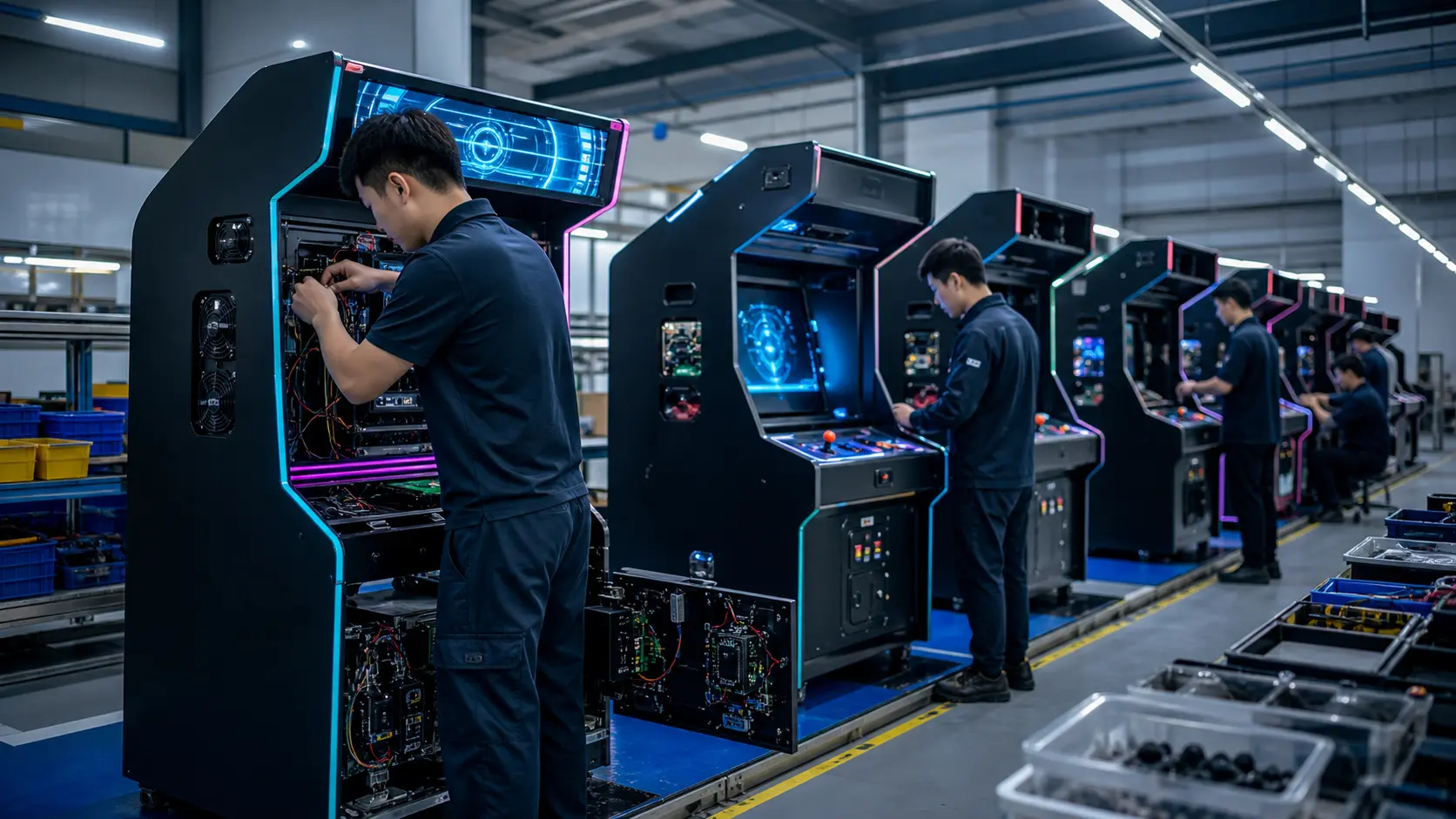
At our Panyu manufacturing base, we engineer the entire ecosystem. From the custom sheet metal cabinets to the dual-lens camera calibration, the WebRTC streaming boards, and the player-facing smartphone app, we deliver a 100% turnkey solution. We provide complete source code buyouts for your software, ensuring you own your platform.
Every single machine undergoes rigorous Quality Assurance testing in our facility before container loading. We guarantee industrial-grade reliability. If you are ready to build a world-class remote live arcade farm, let us handle the hardware and software engineering so you can focus on user acquisition and profit.
To integrate this advanced visual setup into a complete closed-loop token system, review our remote live coin pusher turnkey architecture. And to understand how we automatically manage the physics of returning those coins, see our detailed engineering breakdown of automated coin elevator engineering. Furthermore, precise payout validation is achieved via our high speed optical coin drop counting modules.
Connect with Engineer Wang for Factory Direct Pricing and Technical Consultations:
- WhatsApp / WeChat: +86 17620842078
- Telegram: https://t.me/JLwyc
- Email: miba515527@gmail.com