- The Financial Reality of Turnkey Remote Live Arcade Systems
- Mobile Frontend Development iOS Android and Flutter Strategies
- WebRTC Cloud Infrastructure and Video Streaming Expenses
- The IoT Hardware Bridge Connecting Code to Cabinets
- Backend Management Virtual Wallets and Prize Logistics
- Hybrid Real-Money Unit Economics Compared to Virtual Casino Apps
- Calculate Your Return on Investment with Confidence
- Frequently Asked Questions About Remote Arcade App Costs
Many operators reach out to me with a brilliant idea for a remote live arcade business but hit a massive roadblock when estimating the true deployment costs. They see off-the-shelf software packages promising instant riches, only to discover hidden latency issues, unstable hardware connections, and unscalable cloud architectures.
I am Engineer Wang, Lead Teleoperation and IoT Architect at Guangzhou Miba Animation Technology Co., Ltd. Over the past twelve years, our engineering team in Panyu, Guangzhou, has built and shipped thousands of commercial-grade arcade cabinets. More importantly, we have designed the underlying IoT infrastructure and mobile applications that power successful remote live arcade platforms worldwide.
In this playbook, I will dismantle the opaque pricing structures of remote arcade app development. We will explore the exact cost components from iOS and Android Flutter frontends to WebRTC TURN server deployments, virtual wallet integrations, and the physical prize logistics backend. My goal is to equip you with the engineering truth so you can launch a profitable, scalable, and secure remote arcade business without burning capital on trial and error.
The Financial Reality of Turnkey Remote Live Arcade Systems
When you commission a remote live arcade platform, you are not just buying a mobile app. You are investing in a complex ecosystem where digital software directly manipulates high-voltage physical hardware in real-time. The budget must cover four critical pillars.
First, there is the player-facing frontend application. Second, the cloud streaming architecture handles the ultra-low latency video feed. Third, the backend management system processes virtual currency and tracks user accounts. Finally, the physical IoT integration ensures your app commands actuate the motors and relays inside the coin pushers and claw machines on our factory floor.
If any of these pillars rely on cheap consumer-grade components, your players will experience lag. A one-second delay in a coin pusher game destroys player trust and ruins your retention metrics. We engineer for industrial reliability from day one.
Mobile Frontend Development iOS Android and Flutter Strategies
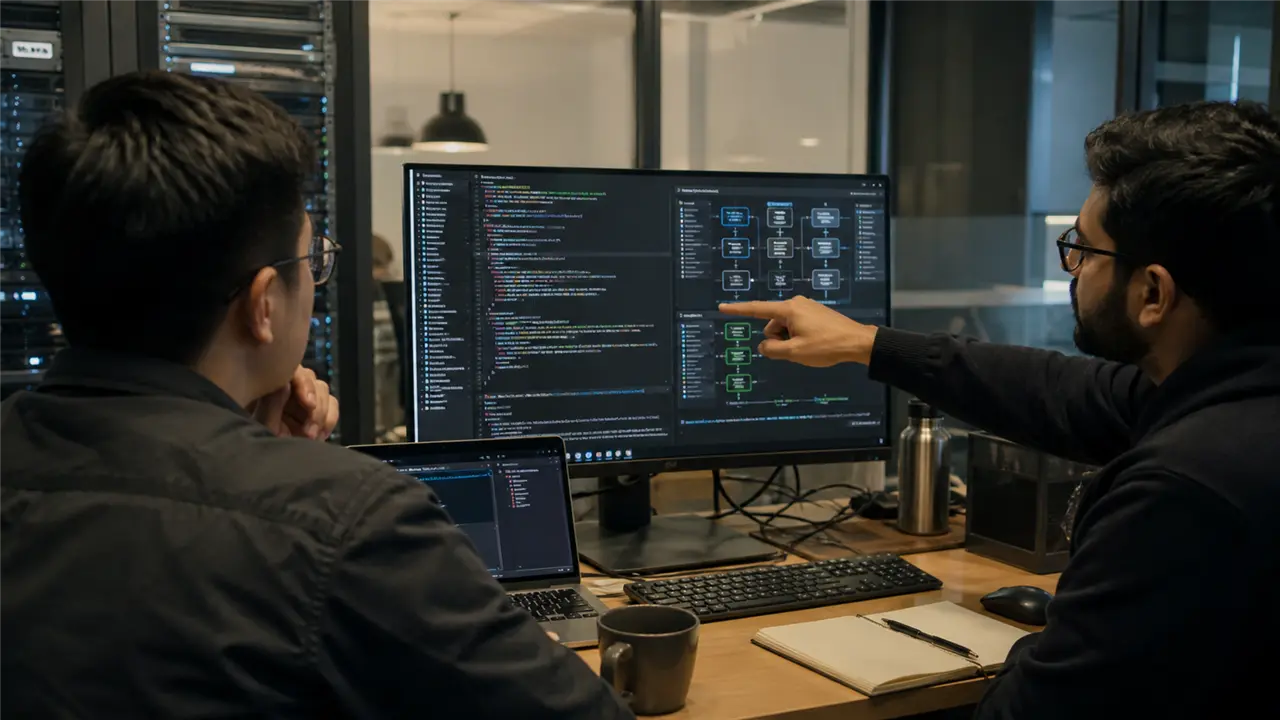
The player experience dictates your revenue. If the app crashes or the video stutters, players will uninstall it and demand a refund. Building a robust mobile frontend requires strategic choices regarding frameworks and development methodologies.
The Cost Efficiency of Flutter Cross-Platform Architecture
In the early days of remote arcades, we built separate native apps using Swift for iOS and Kotlin for Android. This approach doubled the development timeline and inflated the initial budget. Today, we strongly recommend Flutter for remote live arcade frontends.
Flutter allows our team to compile a single codebase into high-performance native applications for both platforms. It natively supports the complex overlay UIs required for live video streams and joystick controls. Choosing Flutter reduces the initial frontend development cost by roughly forty percent compared to dual native development while maintaining a flawless 60 frames-per-second UI rendering speed.
Custom UI UX Design for Real-Time Gameplay
Your interface needs to feel like a premium casino application. We design custom overlays that display the live video feed prominently while positioning the critical action buttons right under the player’s thumbs. We include dynamic latency indicators so players know their connection quality. The design phase involves extensive prototyping to ensure the virtual joystick commands translate intuitively to the remote live arcade turnkey system IoT low latency streaming architecture.
Expect the UI/UX design phase to account for fifteen to twenty percent of the frontend budget. We never use cheap templates because your brand identity must radiate trust and security to encourage high-value deposits.
WebRTC Cloud Infrastructure and Video Streaming Expenses
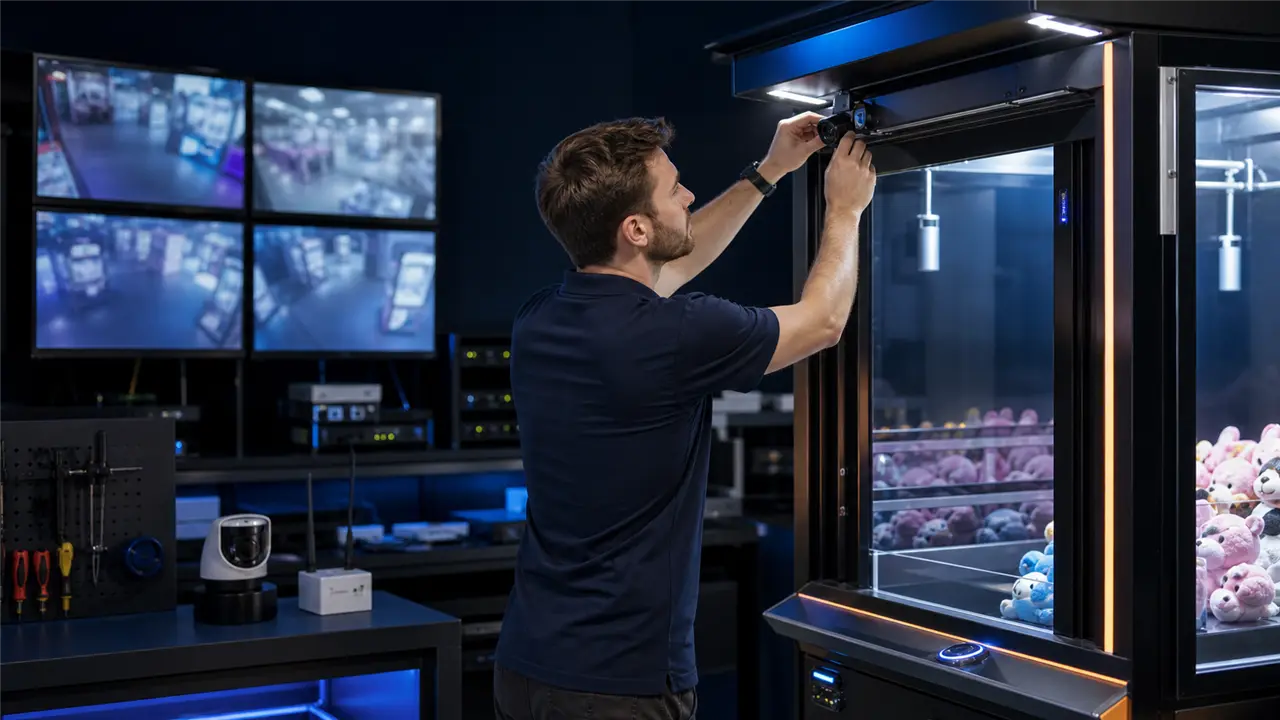
The absolute core of a remote arcade is the live video feed. It must be continuous, crisp, and suffer zero perceivable delay. This is where many budget estimates fall apart because operators underestimate the ongoing cloud infrastructure costs.
Moving Beyond HLS to Ultra Low Latency WebRTC
Standard video streaming protocols like HLS or RTMP introduce delays ranging from three to fifteen seconds. That is acceptable for live television but fatal for a claw machine app. We deploy enterprise-grade WebRTC pipelines that achieve sub-80 millisecond glass-to-glass latency.
When a player taps the “Drop Coin” button on their iPhone, that signal must travel to your server, route to our IoT board in the cabinet, actuate the physical solenoid, and the resulting video of the coin falling must stream back to the player’s screen instantly. This requires dedicated media servers.
Understanding TURN and STUN Server Cloud Costs
WebRTC relies on STUN and TURN servers to bypass firewalls and establish direct peer-to-peer connections when possible. However, in mobile environments with strict NATs, up to twenty percent of your traffic will require relaying through a TURN server.
Bandwidth is not free. A high-definition stream running at 2.5 Mbps consumes over one gigabyte of data per hour per machine. When calculating your operating expenses, you must factor in the monthly cloud bandwidth bills from providers like AWS, Google Cloud, or specialized WebRTC CDNs. We optimize these costs by utilizing dynamic bitrate adaptation, ensuring the video quality degrades gracefully on poor cellular connections rather than buffering completely.
The IoT Hardware Bridge Connecting Code to Cabinets
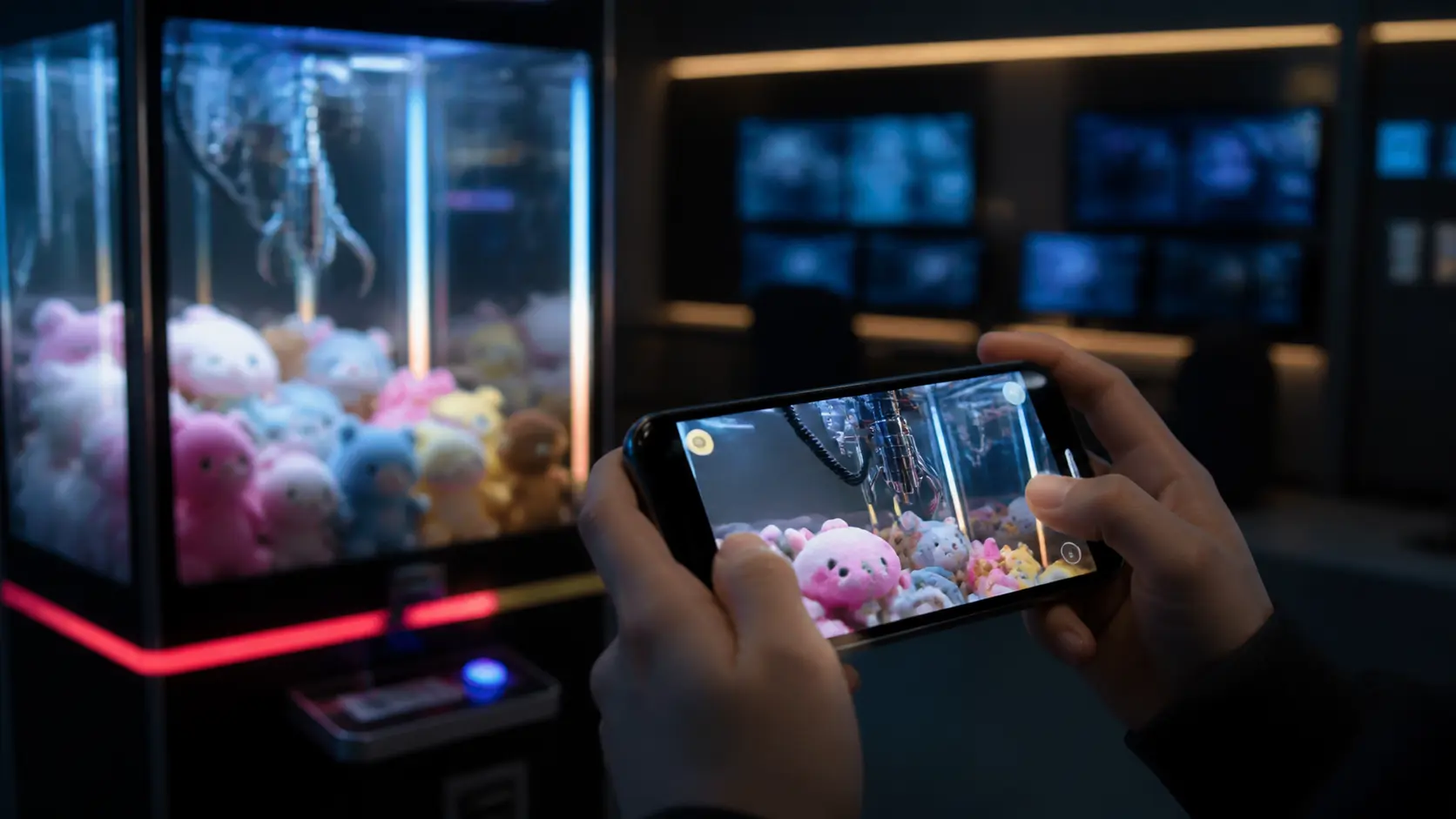
Software alone cannot run an arcade. The digital commands from your app must be translated into electrical pulses that drive the physical hardware. This is where our Panyu manufacturing base provides a massive competitive advantage.
Industrial Grade Control Boards
Consumer-grade Raspberry Pi or Arduino boards will fail under the 24/7 continuous operation demands of a commercial arcade. We utilize proprietary industrial IoT arcade controller board pulse signal conversion hardware. These boards feature transient voltage suppression and opto-isolated relays.
When a malicious player attempts to send a flood of commands to crash the machine, our IoT board intercepts the anomaly, sanitizes the pulse stream, and protects the physical cabinet from mechanical damage. The cost of these industrial boards is higher upfront, but they eliminate the catastrophic downtime that bankrupts amateur operations.
Backend Management Virtual Wallets and Prize Logistics
The backend administrative panel is the brain of your operation. It dictates your profit margins, monitors machine health, and manages the entire lifecycle of a player’s deposit.
Secure Virtual Coin Wallets and Payment Gateway Integration
Your app requires a highly secure wallet architecture. We integrate enterprise payment gateways like Stripe, PayPal, and regional processors directly into the backend. We build ledger systems that track every single virtual coin from the moment of purchase to the moment it is spent on a machine.
This financial backend must be bulletproof against SQL injection and race condition exploits. We implement multi-layered encryption and daily automated database backups. Building this security infrastructure requires significant backend engineering hours, but it is non-negotiable for a business handling real-world money.
Automated Inventory and Physical Prize Fulfillment
When a player wins a plush toy on your claw machine or accumulates enough tickets on a coin pusher, they expect prompt delivery. We build comprehensive prize logistics modules into the backend.
This system tracks physical inventory in your warehouse, generates shipping labels automatically, and updates the player with tracking numbers via push notifications. A streamlined logistics backend reduces your labor costs and turns a complex fulfillment nightmare into a smooth, automated workflow.
For operators looking for a completely integrated solution, our custom casino arcade game development source code turnkey architecture provides everything from the mathematical RTP modeling to the final shipping API integration.
Hybrid Real-Money Unit Economics Compared to Virtual Casino Apps
When evaluating capital allocation, operators frequently ask whether building a remote live arcade platform yields superior returns compared to launching purely digital mobile slots or sweepstakes apps. The commercial reality across North America and Southeast Asia proves that physical transparency creates an insurmountable competitive moat.
In standard virtual slot apps, customer acquisition costs (CAC) regularly exceed $45 to $60 per depositing user due to intense market saturation and rampant player skepticism regarding unverified random number generators (RNG). Player 30-day retention in digital-only apps historically plummets below 8%, necessitating relentless advertising spend to replace churning cohorts.
In contrast, our turnkey remote live arcade operators report an average CAC of just $12 to $16. Players exhibit dramatically higher trust when watching a real, physical coin pusher wiper blade oscillating or a mechanical claw descending in real time. Because the player observes tangible physics rather than animated pixels, day-30 retention averages 34%, and average revenue per paying user (ARPPU) increases by 280%. On a typical 50-machine floor, the combined hardware and custom app engineering investment is fully recouped within 60 to 90 days of launch.
| Operational Metric | Virtual Casino Mobile App | Turnkey Hybrid Live Arcade Platform | Operator Profit Impact |
|---|---|---|---|
| User Acquisition Cost (CAC) | $45.00 – $65.00 | $12.00 – $16.50 | 72% reduction in initial marketing burn |
| 30-Day Player Retention | 6.5% – 8.2% | 31.0% – 36.5% | 4x longer customer lifetime value |
| Average Revenue Per Paying User (ARPPU) | $18.50 / month | $52.00 / month | 2.8x higher cashflow per active account |
| Machine Payback Period (ROI) | 6 – 9 months | 45 – 75 operating days | Instant asset backed capital recovery |
| Player Trust Barrier | High (Suspects algorithmic rigging) | Extremely Low (Tangible mechanical reality) | Immediate deposit velocity upon registration |
Monthly Cloud Bandwidth and TURN Relay Infrastructure Budgets
Operating expenses must be calculated precisely before committing capital. A common misconception among prospective operators is that video streaming costs scale linearly and uncontrollably with player counts. By engineering our WebRTC pipeline with dynamic frame-rate step-downs (dropping from 60fps during active joystick control to 15fps during idle spectator mode), we drastically compress your monthly bandwidth overhead.
For a commercial operation streaming 50 live arcade machines concurrently across AWS, Google Cloud, or custom bare-metal edge nodes, your expected cloud infrastructure budget breaks down as follows:
- STUN Signaling and Session Initiation: Negligible server load, requiring a single $40/month micro-instance handling up to 10,000 concurrent socket handshakes.
- Direct Peer-to-Peer Connections (80% of Sessions): $0 bandwidth relay cost, as encrypted video packets route directly from the Panyu-manufactured encoder to the user’s mobile device.
- TURN Relay Bandwidth (20% of Sessions with Symmetric NATs): At an enterprise rate of $0.05 per gigabyte, a 50-machine venue operating 14 active hours daily incurs approximately $320 to $450 in monthly TURN relay charges.
- Cloud Database and Redis Cache Clusters: Approximately $120 to $180 per month for fully redundant, automated failover hosting user wallets and audit logs.
Total monthly cloud infrastructure overhead remains well under $800 for an entire 50-machine operation generating tens of thousands in monthly drop—representing less than 3% of gross venue gaming revenue.
Calculate Your Return on Investment with Confidence
At Guangzhou Miba Animation Technology Co., Ltd., we do not just sell software. We engineer profitable business models. If you are serious about launching a remote live arcade, stop guessing about the costs and start planning with real data.
Our factory in Panyu is ready to demonstrate our low-latency IoT systems and industrial cabinets. We offer 100% source code ownership on custom development projects, ensuring you control your destiny.
Contact me directly via WhatsApp at +86 17620842078 or email miba515527@gmail.com to schedule a live video factory tour and receive a precise, itemized technical proposal for your turnkey remote arcade deployment.
Frequently Asked Questions About Remote Arcade App Costs
How much does it cost to develop a remote live arcade app using Flutter
The cost of developing a remote live arcade app using Flutter typically ranges from $20,000 to $50,000 for the frontend alone, depending on the complexity of the UI, custom animations, and the number of screens. A full turnkey system including backend, IoT integration, and cloud architecture will require a larger overall budget.
Why is WebRTC necessary for live coin pusher apps
WebRTC is essential because it provides ultra-low latency streaming (under 80 milliseconds). Standard protocols like HLS have delays of several seconds, which makes real-time gameplay impossible and destroys the player experience in skill-based arcade games.
Do you provide source code ownership for the remote arcade software
Yes, Guangzhou Miba Animation Technology Co., Ltd. offers 100% source code ownership for our custom-developed remote live arcade platforms, ensuring you have full control over your software assets and future development.
What hardware is required to connect the arcade machines to the internet
We use proprietary industrial IoT arcade controller boards featuring pulse signal conversion and opto-isolated relays. These boards securely bridge the digital commands from the cloud to the physical solenoids and motors inside the arcade cabinets.