- Authentic Casino Grade Mechanical Sic Bo Hardware Engineering
- The Pneumatic Solenoid Vibration Plate Architecture
- Securing the Physical Randomness with Anti Tamper Acrylic Domes
- Multi Camera Optical Dice Recognition and Blob Detection Framework
- Advanced Anti Cocking Detection Algorithm for Validated Shakes
- Seamless Digital Sic Bo Betting Grid Integration
- GLI 11 and GLI 24 Compliance for True Mechanical Randomness
- Profit Centric ROI and Commercial Operator Economics
- Panyu Factory Manufacturing and Global B2B Procurement Support
- [Remote Live Arcade](/remote-live-arcade-dual-camera-webrtc-pipeline/) Teleoperation Network Architecture
- Frequently Asked Questions About Mechanical Sic Bo Teleoperation
As the global transition from purely algorithmic online gaming to remote live arcade teleoperation accelerates, venue operators and iGaming platforms are demanding absolute physical authenticity. Operators understand deeply that high-stakes players trust mechanical physics far more than any software pseudo-random number generator (PRNG). This paradigm shift has brought the traditional Asian dice game of Sic Bo, also known as Tai Sai or Dai Siu, directly into the spotlight of live teleoperation. My name is Engineer Wang, and over the past twelve years, I have spearheaded the design, electrical engineering, and commercial mass production of arcade machines and live streaming casino equipment at our Panyu manufacturing base in Guangzhou. In this extensive engineering deep dive, I will unpack the intricate mechanical architecture behind our pneumatic Sic Bo domes and the sophisticated multi-angle optical dice recognition systems that allow these machines to operate seamlessly in a live streaming environment.
At Guangzhou Miba Animation Technology Co., Ltd. (Arcade Manufacturer), we are not mere traders, brokers, or spare parts suppliers. We are the absolute source factory for complete commercial-grade arcade cabinets, mechanical gambling apparatuses, and full-stack turnkey software ecosystems. When operators procure our equipment, they receive a fully integrated, revenue-ready ecosystem designed for immediate deployment. Designing a Sic Bo machine for 24/7 live teleoperation requires mastering high-pressure pneumatic actuation, high-speed machine vision, edge-computing validation, and ultra-low latency broadcasting protocols. We will explore exactly how we engineer these systems from the ground up to guarantee uncompromised randomness, instant payout calculation, and bulletproof operational stability that maximizes return on investment (ROI).
Authentic Casino Grade Mechanical Sic Bo Hardware Engineering
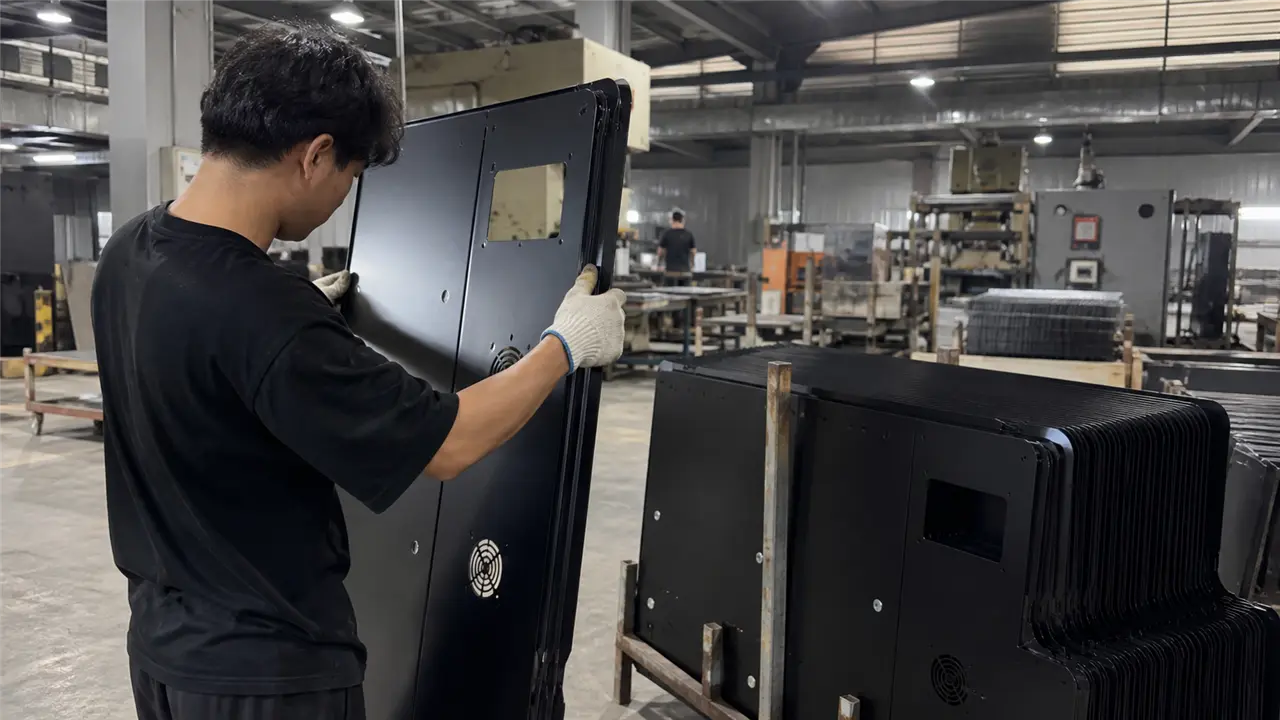
The foundational requirement for any remote live arcade hardware is that it must faithfully replicate the physical experience of a premium land-based casino floor. In the context of Sic Bo, this means delivering three physically separate, precision-machined casino dice tumbling chaotically within an enclosed space. To achieve this, our engineering team eschews the cheap, recreational vibration motors commonly found in consumer-grade toys, instead opting for industrial-grade pneumatics and heavy-duty structural engineering.
The primary structural chassis of our Sic Bo teleoperation unit is fabricated from cold-rolled steel, laser-cut and welded to provide a perfectly rigid foundation. This heavy base is crucial because it absorbs the intense kinetic energy generated during the dice-shaking phase, preventing the entire machine from vibrating and throwing the high-resolution optical tracking cameras out of alignment. Every internal component is shielded, grounded, and meticulously secured using vibration-resistant hardware, adhering strictly to the highest commercial arcade game machines manufacturing standards that dictate longevity in 24/7 operational environments. Our commitment to industrial durability ensures that operators experience minimal downtime and zero mechanical drift over thousands of operational hours.
The Pneumatic Solenoid Vibration Plate Architecture
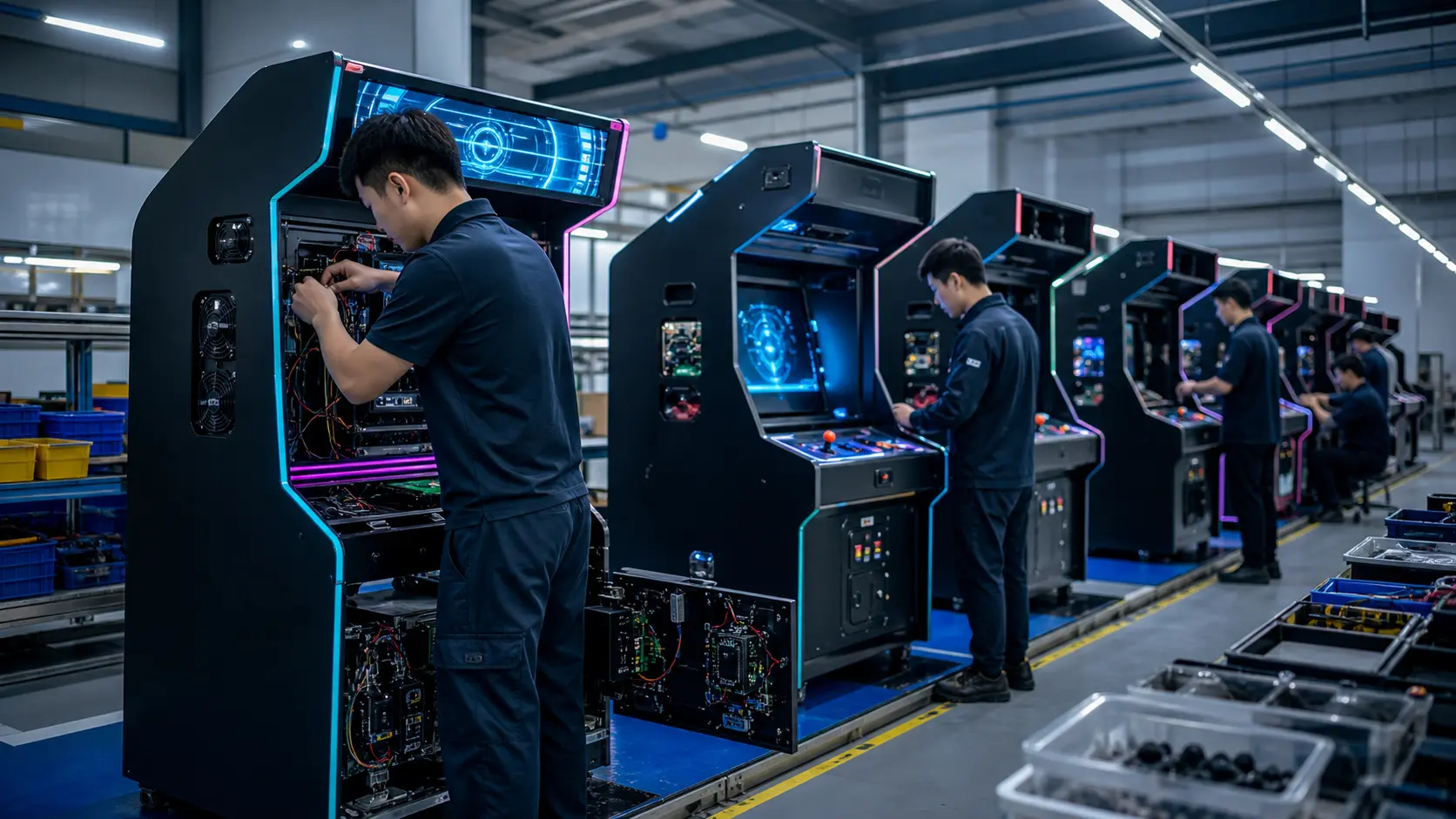
At the absolute heart of our authentic physical Sic Bo machine lies the mechanism responsible for shaking the dice. We utilize a heavy-duty pneumatic solenoid vibration plate architecture engineered to deliver violent, chaotic, and completely unpredictable kinetic energy to the three precision-machined dice. This ensures absolute mechanical randomness with every game round.
The vibration plate itself is forged from aerospace-grade aluminum alloy, chosen specifically for its exceptional rigidity and extremely low mass. This allows the plate to transfer kinetic energy rapidly and efficiently without dampening the impact force. Beneath this high-tolerance plate sits a bank of industrial pneumatic solenoids and high-speed directional control valves, driven by a dedicated programmable logic controller (PLC). When a new game round is initiated remotely by the central game server, the PLC fires the solenoids in a rapid, pseudo-random pulse-width modulation (PWM) sequence. This creates a chaotic topological surface vibration that throws the dice upward into the dome with immense, staggered force.
I have spent countless hours in our Panyu QA lab refining the resonance frequency of these solenoid coils alongside our electrical engineers. If the vibration frequency is too low, the dice simply slide around the plate without tumbling, which completely compromises the randomness and invites player suspicion. If the frequency is too high or overly predictable, the dice can enter a synchronized bounce pattern. By implementing a variable-frequency pneumatic drive system operating at pressures up to 6 Bar, we ensure that the initial kinetic vector of each die is mathematically chaotic. The solenoid strike forces are constantly shifted across the X and Y axes of the plate in millisecond intervals, meaning no two shakes ever produce the same mechanical trajectory.
Securing the Physical Randomness with Anti Tamper Acrylic Domes
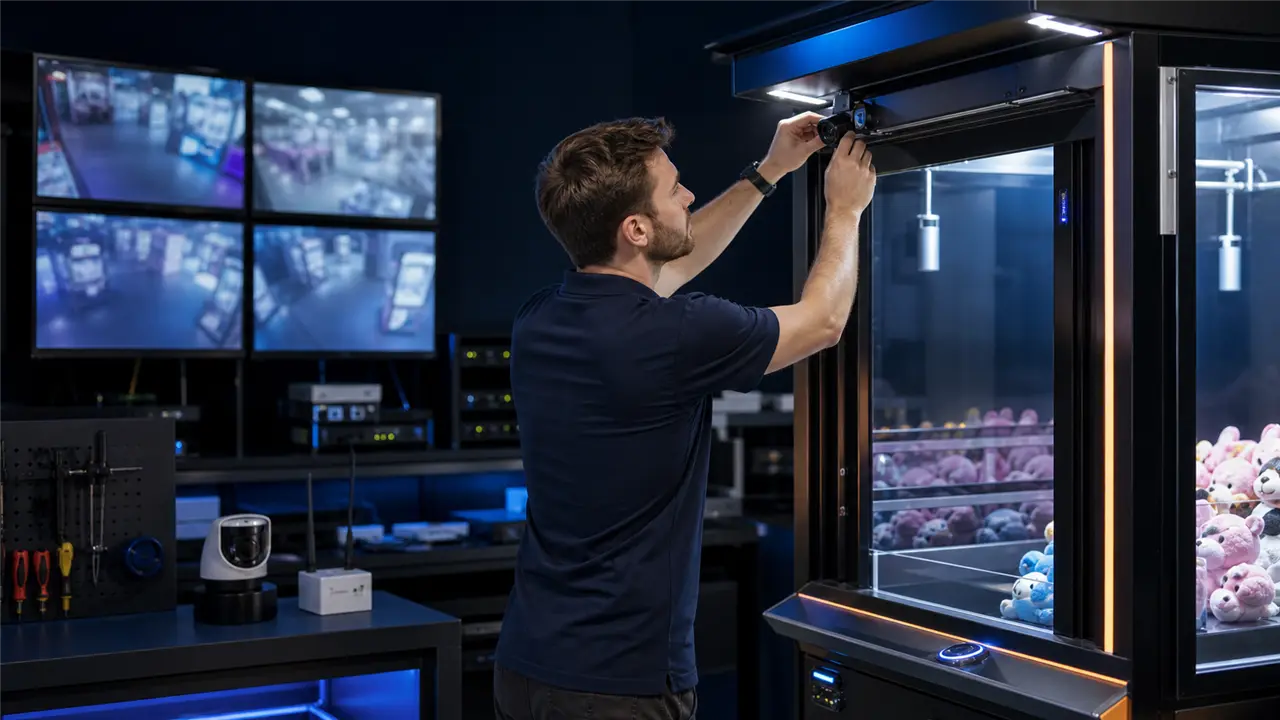
The integrity of the physical game is paramount in any remote teleoperation setup. Because remote VIP players cannot physically inspect the machine, the hardware itself must serve as an impenetrable fortress against any form of manipulation, environmental interference, or external bias. This is precisely why the three precision dice are completely enclosed within a sealed, heavily reinforced anti-tamper acrylic dome.
We manufacture these protective domes using 12mm thick, optical-grade polycarbonate acrylic. This specialized material is chosen not only for its shatterproof physical durability but also for its exceptionally high light transmission properties, which are absolutely critical for the performance of the optical recognition cameras mounted above. The dome is hermetically sealed to the vibration plate chassis using custom industrial gaskets, preventing any dust, moisture, or foreign micro-particles from interfering with the dice mechanics or clouding the camera lens.
Furthermore, we integrate active security logic sensors into the dome housing architecture. Any attempt to lift, pry, or even apply excessive external vibration to the dome triggers an immediate hardware interrupt. This halts the game round, locks the betting grid, and pushes an emergency alert directly to the operator’s back-office dashboard. To defend against advanced electronic threats, the entire base chassis is lined with copper Faraday shielding. This robust shielding prevents malicious actors from using hidden external magnetic pulses or static electricity generators to influence the resting position of the internal components. This multi-layered defense strategy guarantees that the physical outcome is entirely dictated by chaotic collision dynamics.
Multi Camera Optical Dice Recognition and Blob Detection Framework
Generating a perfectly random physical outcome is merely the first half of the teleoperation equation. The second, and arguably far more complex engineering challenge, is reading that physical outcome with absolute accuracy and translating it into digital game logic in a fraction of a second. To achieve this demanding metric, our Sic Bo machines feature a state-of-the-art multi-angle optical dice recognition system, capable of identifying the precise face-up value of all three dice in strictly under 180 milliseconds.
Mounted directly above the acrylic dome is the primary top-down 4K macro camera, equipped with a Sony IMX sensor and an ultra-low distortion lens. This high-end optics package captures a high-resolution, uncompressed 60fps video feed of the shaker plate. However, attempting to read dice dots (pips) through a thick acrylic dome under bright studio lighting introduces severe optical challenges, including specular highlights, blinding reflections, and deep shadowing. To counteract this, our engineers designed a custom cross-polarized LED ring light illumination system. By aligning the polarization filters on both the high-intensity light source and the camera lens, we successfully eliminate 99% of surface glare from the acrylic dome, providing a perfectly pristine, flatly lit view of the dice below.
The core image processing pipeline relies on a highly optimized edge-computed blob detection and contour analysis framework built on OpenCV. When the vibration plate comes to a complete halt, the RTOS triggers a validation frame capture. The algorithm first performs Otsu’s adaptive thresholding to cleanly isolate the white dice bodies from the dark background plate. Next, advanced Canny edge detection and contour analysis isolate the exact boundaries of the three distinct cubes. Finally, the blob detection algorithm scans within these valid contours to identify the high-contrast circular pips. By counting the number of distinct, geometrically valid blobs within each contour, the system determines the numerical value of each die.
Because this intense processing occurs locally on a dedicated industrial computer hidden within the cabinet base, we completely bypass external network latency. The identified values are instantly packaged into a highly compressed JSON payload and transmitted to the remote server. This foundational optical speed perfectly mirrors the high-performance architecture we utilize in our dual laser ball drop detection systems.
Advanced Anti Cocking Detection Algorithm for Validated Shakes
In the rigorous realm of physical dice games, there is a specific mechanical edge case that haunts casino operators worldwide: the cocked die. A die is technically considered “cocked” when it fails to rest completely flat on the vibration plate, often leaning against the curved outer edge of the dome or balancing precariously on top of another die. In traditional land-based casinos, a live dealer visually inspects the dice and verbally calls a “no game” if a die is cocked. In a fully automated remote teleoperation environment, this crucial visual inspection must be handled flawlessly by artificial intelligence.
To solve this, our machine vision engineering team developed a rigorous anti-cocking detection algorithm that works in tight synchronization with the primary optical recognition system. Instead of relying solely on the top-down 4K camera, we deploy secondary, low-angle validation cameras positioned precisely around the perimeter of the dome. These peripheral cameras actively profile the elevation and geometric angle of each die relative to the horizontal plane of the vibration plate.
When the validation frame is captured, the edge-computing algorithm executes a rapid volumetric analysis. If the bounding box of any individual die exhibits a non-orthogonal skew, or if the Z-axis elevation of a die exceeds the standard 19mm height of a perfectly flat casino die, the system instantly flags a cocked condition. Furthermore, the top-down contour analysis algorithm mathematically checks the aspect ratio of the top face. A flat die presents a perfect geometric square to the overhead camera, whereas a tilted die presents a skewed rhombus. If the calculated area or aspect ratio deviates from a micro-millimeter tolerance threshold, the outcome is aggressively invalidated.
When a cocked die is detected, the PLC automatically triggers a short, corrective pneumatic micro-burst to resettle the dice. If the dice stubbornly remain cocked after three automated attempts, the game round is voided safely, all digital bets are refunded via the ledger, and the system logs an anomaly report for technical review. This uncompromising approach to validation ensures that players are never subjected to ambiguous results and operators are completely protected from payout disputes.
Seamless Digital Sic Bo Betting Grid Integration
The spectacular mechanical theater of the physical Sic Bo dome must interface flawlessly with the digital user interface presented on the remote player’s screen. We engineer our machines to provide 100% seamless, frictionless integration with a comprehensive digital Sic Bo betting grid. Our turnkey software suite includes a highly responsive, HTML5/WebGL-based player interface that synchronizes frame-by-frame with the live video feed.
This synchronization is achieved using ultra-low latency WebRTC streaming coupled with bidirectional WebSocket communication. The betting grid supports the complete, authentic spectrum of traditional Sic Bo wagers. Players can confidently place high-speed bets on Big/Small (Tai/Sai), Odd/Even, specific triples, any triple, total sum bets ranging from 4 to 17, two-dice combinations, and single die face wagers. The payout multipliers and complex Return to Player (RTP) mathematics are fully customizable within our secure operator back-office dashboard. This allows venue owners to finely tailor the risk and reward profile to their specific market demographics and operational strategies.
Because we provide the entire unbroken ecosystem—the physical steel machine, the optical recognition middleware, and the front-end player application—there is absolutely zero integration friction during deployment. As soon as the anti-cocking algorithm validates the mechanical outcome, the central game server processes thousands of concurrent player bets in mere milliseconds. Winning digital chips are instantly credited to player wallets, and the betting grid boldly reopens for the next round. This high-concurrency architecture is built on the exact same robust backbone that powers our massive remote live roulette machine farm infrastructure, ensuring that even during extreme peak traffic events, the system never stutters, lags, or drops a financial transaction.
GLI 11 and GLI 24 Compliance for True Mechanical Randomness
For high-tier B2B operators navigating strictly regulated or semi-regulated jurisdictions globally, technical compliance is a non-negotiable operational requirement. Our mechanical pneumatic Sic Bo domes are heavily engineered specifically to meet and exceed the rigorous testing standards set forth by international testing laboratories, including GLI-11 (Gaming Devices in Casinos) and GLI-24 (Electronic Table Game Systems).
Achieving this prestigious level of certification requires mathematically proving that the mechanical pneumatic shaker plate introduces absolutely no bias over a statistically massive sample size. During our brutal internal QA stress tests in Panyu, we subject prototype machines to over 500,000 continuous, automated shake cycles. We diligently capture every single outcome and run comprehensive Chi-Square and standard deviation statistical analyses. This proves beyond a shadow of a doubt a perfectly uniform distribution across all 216 possible three-dice combinations.
Our hardware architecture strictly and physically prevents any external manipulation. The pneumatic solenoid arrays utilize air pressure, not massive magnetic fields that could be theoretically exploited to attract or repel maliciously modified dice. We use standard, non-magnetic casino-grade celluloid dice, precision-machined to exact weight and center-of-gravity tolerances. The PLC firmware that governs the random PWM shake intervals is heavily locked behind hardware-level encryption, actively preventing unauthorized modifications by floor staff.
Profit Centric ROI and Commercial Operator Economics
For the serious arcade investor and iGaming operator, the decision to deploy our mechanical Sic Bo teleoperation systems is fundamentally driven by Return on Investment (ROI) and operational economics. The transition from software RNG to physical mechanical teleoperation dramatically increases player trust, which directly translates to longer session times, higher average bet sizes, and increased player retention metrics.
When players can visually verify the violent, chaotic shaking of physical dice in a secure dome, they are far more likely to engage with high-volatility bets, such as specific triples (which typically pay 150:1 or 180:1). This mechanical transparency is the ultimate marketing tool for operators. Furthermore, by utilizing our fully automated system, operators eliminate the massive overhead costs associated with hiring, training, and managing live human dealers. The machine runs flawlessly 24 hours a day, 7 days a week, 365 days a year, requiring zero breaks, zero shift changes, and zero tip management. The robust industrial construction guarantees that maintenance costs are kept strictly to a minimum, ensuring that the gross gaming revenue (GGR) flows directly to the operator’s bottom line.
Panyu Factory Manufacturing and Global B2B Procurement Support
Guangzhou Miba Animation Technology Co., Ltd. (Arcade Manufacturer) proudly operates a premier, state-of-the-art 15,000-square-meter manufacturing facility deeply rooted in Panyu, Guangzhou. We are the ultimate source factory, heavily invested in advanced CNC machining centers, precision sheet metal fabrication, complex PCB surface mount technology (SMT) assembly lines, and rigorous quality control testing chambers. We are not mere assemblers of cheap, generic market components; we are the primary architects of commercial-grade gaming infrastructure.
When you partner with us for your grand-scale teleoperation needs, you are cutting out the inefficient middleman and dealing directly with the engineering source. We offer comprehensive OEM and ODM customization services, allowing operators to deeply tailor the cabinet aesthetics, software UI branding, and even the physical footprint of the machines to suit their specific studio broadcast requirements. Furthermore, we uniquely offer 100% source code buyout options for our turnkey software platforms, giving large-scale operators total undisputed ownership and control over their digital financial infrastructure.
We actively invite global B2B buyers, mega-arcade operators, and iGaming platform directors to connect with us directly. We offer immersive virtual factory tours via high-definition video calls, allowing you to witness our bustling production lines, extreme stress testing protocols, and live software demonstrations in real-time. For serious procurement inquiries, custom architectural planning, or to schedule a live technical demonstration of our optical dice recognition systems, you can reach me directly anytime.
Contact Engineer Wang for Turnkey Solutions:
- WhatsApp / WeChat: +86 17620842078
- Telegram: https://t.me/JLwyc
- Email: miba515527@gmail.com
[Remote Live Arcade](/remote-live-arcade-dual-camera-webrtc-pipeline/) Teleoperation Network Architecture
The physical Sic Bo machine, while an engineering marvel, is only one specific node within a much larger, global teleoperation network architecture. To deliver a truly immersive, delay-free, and highly responsive experience to remote players sitting thousands of miles away, we have engineered a sophisticated, end-to-end broadcasting and data management infrastructure capable of handling massive concurrency.
The undeniable core of this architecture is our industrial IoT edge gateway, installed securely within the steel chassis of every Sic Bo cabinet. This robust gateway is directly responsible for managing all local hardware components—the high-pressure pneumatic solenoids, the anti-tamper security sensors, and the complex multi-angle camera feeds. It utilizes a highly tuned real-time operating system (RTOS) to guarantee microsecond precision when synchronizing the violent physical shaker action with the precise optical recognition capture frame.
Video broadcasting is expertly handled by a dedicated, hardware-accelerated encoding appliance. This ensures that the 4K uncompressed camera feeds are rapidly compressed into ultra-low latency H.265 streams without bogging down the main game logic processing unit. By leveraging modern WebRTC protocols, we consistently achieve a glass-to-glass latency of under 180 milliseconds, ensuring that remote players see the dice land in real-time, completely synchronized with the instant locking of the betting interface.
This powerful edge network connects seamlessly to a highly scalable, cloud-based microservices backend. Our central server architecture effortlessly handles secure player authentication, encrypted wallet balances, high-speed bet validation, and instantaneous payout distribution. The system is designed fundamentally for massive horizontal scalability. This core philosophy is what allows operators to effortlessly deploy dozens of machines simultaneously. This holistic, uncompromising approach to network architecture is a defining characteristic of our expansive remote live arcade turnkey system and mirrors the raw performance of our remote live electronic roulette turnkey system, providing operators with unparalleled reliability and absolute operational oversight.
Frequently Asked Questions About Mechanical Sic Bo Teleoperation
To assist our valued B2B partners and technical directors in deeply understanding the nuances of our mechanical Sic Bo domes and associated teleoperation infrastructure, I have compiled a comprehensive list of the most common technical inquiries we receive from global venue operators and platform integrators.
How does the anti cocking detection system handle edge cases? Our proprietary anti-cocking algorithm utilizes multi-angle optical profiling to stringently evaluate the Z-axis height and bounding box geometry of each individual die. If a die is leaning awkwardly or resting on top of another, the system instantly detects the deviation from the standard 19mm flat profile and immediately flags a cocked condition, triggering a rapid corrective pneumatic burst to resettle the dice cleanly before registering any valid outcome to the betting grid.
Can the pneumatic vibration intensity be adjusted? Yes, absolutely. The pneumatic solenoid array is intelligently controlled by a programmable logic controller (PLC) that allows authorized back-office operators to precisely adjust the PWM frequency and strike force. This ensures that the kinetic energy can be finely tuned to maintain absolute physical randomness and exciting dice action while preventing excessive long-term wear on the mechanical chassis components.
What is the true latency of the optical dice recognition system? Our optimized edge-computed blob detection and contour analysis framework processes the high-resolution 4K validation frame and accurately identifies the values of all three dice in strictly under 180 milliseconds. This blazing speed allows for instant server payout calculation and provides a completely seamless, zero-lag betting experience for all remote players connected to the stream.
Are your Sic Bo machines genuinely compliant with GLI standards? Yes, our foundational hardware architecture is engineered specifically to meet and heavily exceed the rigorous statistical and security requirements of international testing standards like GLI-11 and GLI-24. The high-pressure pneumatic shaker ensures uncompromised mechanical randomness over massive sample sizes, and the hermetically sealed anti-tamper dome actively prevents any external magnetic, physical, or electrostatic manipulation.
Do you sell individual optical recognition cameras or bare shaker plates? No, we absolutely do not. At Arcade Manufacturer, we exclusively manufacture and supply complete, fully integrated arcade machines and massive turnkey software solutions. We are a dedicated B2B factory producing commercial-grade gaming infrastructure, and we do not sell isolated spare parts, cheap components, or DIY kits. We deliver highly polished, out-of-the-box, revenue-ready systems directly to operators.