- Backend Architectural Paradigm Comparison
- Distributed Microservices Scaffolding and High Throughput Event Streaming
- Virtual Machine Waiting Rooms and Real Time Queue State Machines
- Redis In Memory State Caching and Machine Lock Lease Expiration
- WebSockets Control Loop Routing and Epoll Network Multiplexing
- Multi Region Edge Deployment and Geolocation Based Machine Routing
- Automated Machine Health Monitoring and Fault Tolerant Failover
- Frequently Asked Questions
- Engineering Contact and Collaboration
Modern cloud arcade platform architecture demands exceptional precision and scale to successfully bridge the gap between global digital audiences and finite physical hardware clusters. Platform architects designing high-concurrency cloud backends for remote physical arcade operations face unique engineering constraints that simply do not exist in pure digital gaming or conventional cloud software environments. Because each gaming session fundamentally relies on dedicated, singular physical machines such as crane games, coin pushers, or specialized mecha rigs, the infrastructure must elegantly manage strict finite physical machine availability constraints alongside massive digital traffic spikes.
Engineers must architect solutions capable of executing strict queue state transitions to guarantee fair access without race conditions, while simultaneously maintaining sub-millisecond control loops for real time physical machine state sync. A hybrid gaming cloud backend cannot afford dropped packets or latency jitter when robotic actuators are responding to remote joystick commands. This definitive engineering guide unpacks the complex backend topologies, distributed queue management paradigms, and real-time networking protocols required to deploy and scale enterprise-grade remote arcade infrastructure. By mastering the core components of distributed state management and asynchronous event streaming, software architects can build resilient platforms capable of seamlessly orchestrating tens of thousands of simultaneous physical hardware units worldwide. For a comprehensive architectural overview and turnkey procurement frameworks, review our master guide on remote live arcade teleoperation solutions. For further architectural integration standards, refer to How Operators Reduce Remote Arcade Video. For factory-direct procurement and comprehensive engineering specs, consult our master guide on remote live arcade turnkey system architecture.
Backend Architectural Paradigm Comparison
Selecting the appropriate computational paradigm dictates the foundational resilience and throughput capabilities of the entire remote arcade platform. The architecture must explicitly support strict locking semantics and high-frequency binary data transmission. For further architectural integration standards, refer to How Operators Start a Remote Claw.
| Technical Metric | Distributed Event-Driven Microservices | Monolithic Backend Architecture | Serverless Lambda Functions |
|---|---|---|---|
| Queue State Persistence | High durability via distributed transactional event logs and Redis state caching | Moderate durability constrained by single-node memory or monolithic relational database bottlenecks | Extremely complex state management requiring external transactional databases and cold start mitigation |
| Concurrency Capacity | Virtually unlimited horizontal scalability for websocket connections and state streams | Heavily restricted by single process thread pools and global interpreter locks | High burst scaling but constrained by execution duration limits and connection exhaustion |
| Latency Predictability | Exceptional consistency through dedicated routing nodes and persistent protocol connections | Degrades significantly under load as garbage collection and thread contention increase | Unpredictable due to container provisioning delays and stateless environment execution |
| Machine Lock Management | Robust lease management utilizing distributed consensus algorithms and watchdog timers | Brittle locking mechanisms susceptible to process crashes and deadlocks | Impractical for holding persistent locks during active remote control sessions |
| Cost Efficiency | Optimal resource utilization through granular scaling of heavily loaded network boundaries | Wasted compute resources scaling entire application layers for localized bottlenecks | Prohibitive costs for persistent high-frequency websocket communication and steady traffic |
Distributed Microservices Scaffolding and High Throughput Event Streaming
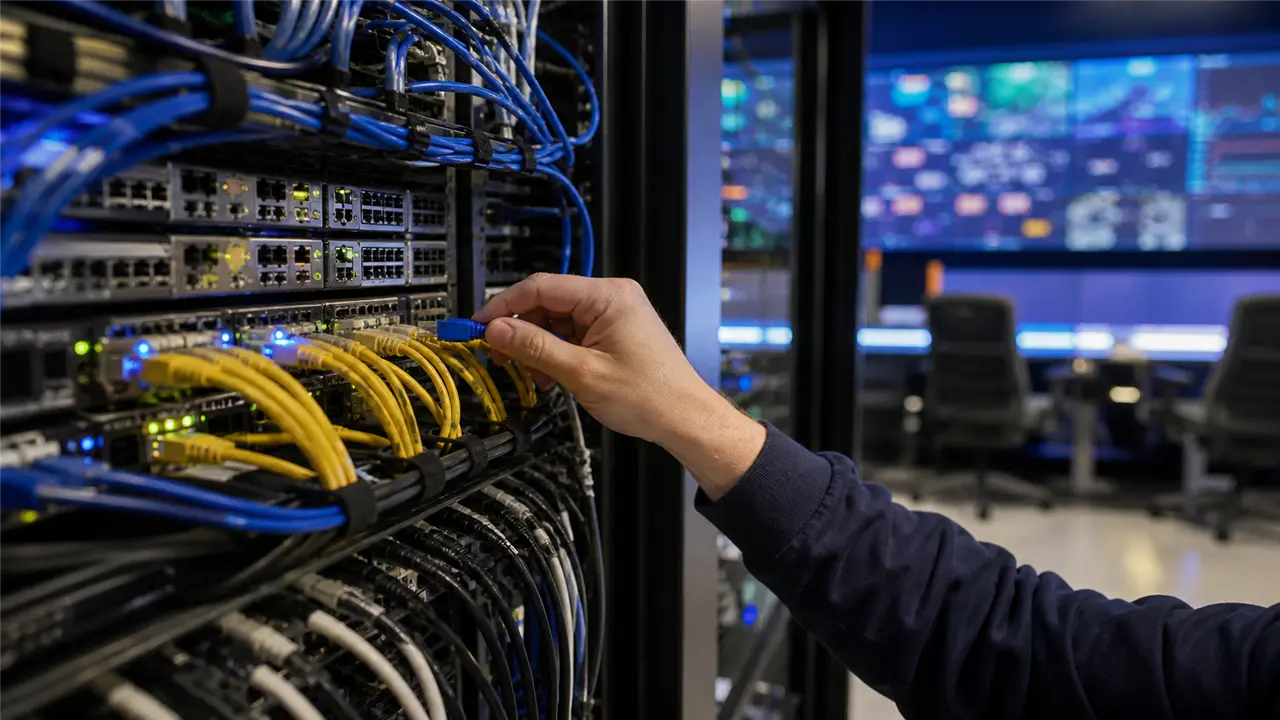
Scaling a hybrid gaming cloud backend requires moving away from monolithic designs in favor of highly decoupled distributed microservices scaffolding. This architectural topology isolates distinct domain responsibilities such as user authentication, financial transaction processing, physical machine telemetry, and video streaming into independently deployable containers. By leveraging container orchestration platforms like Kubernetes, engineering teams can configure granular auto-scaling rules based on specific resource consumption metrics. For example, the websocket termination cluster can scale based on active TCP connections, while the video transcoding pipeline scales based on CPU utilization and GPU encoding availability.
The connective tissue binding these microservices is high-throughput event streaming. Implementing a robust event bus utilizing Apache Kafka or Apache Pulsar enables asynchronous communication between microservices, decoupling producers of telemetry data from the downstream consumers responsible for analytics or state updates. When a physical machine updates its claw position or coin sensor status, the embedded hardware agent publishes a binary payload to a partitioned Kafka topic. The microservices architecture then fans out this telemetry data to multiple independent subscribers. The real time physical machine state sync service processes the message to update the frontend user interface, the fraud detection service analyzes the sensor patterns for anomalies, and the data warehouse ingestion pipeline archives the event for historical analysis. This event-driven approach ensures that a spike in video rendering latency does not impact the critical path of joystick command execution. Furthermore, partitioned topic architectures allow for strict ordering guarantees per physical machine, ensuring that state transitions occur exactly in the sequence they were generated by the hardware sensors.
Virtual Machine Waiting Rooms and Real Time Queue State Machines
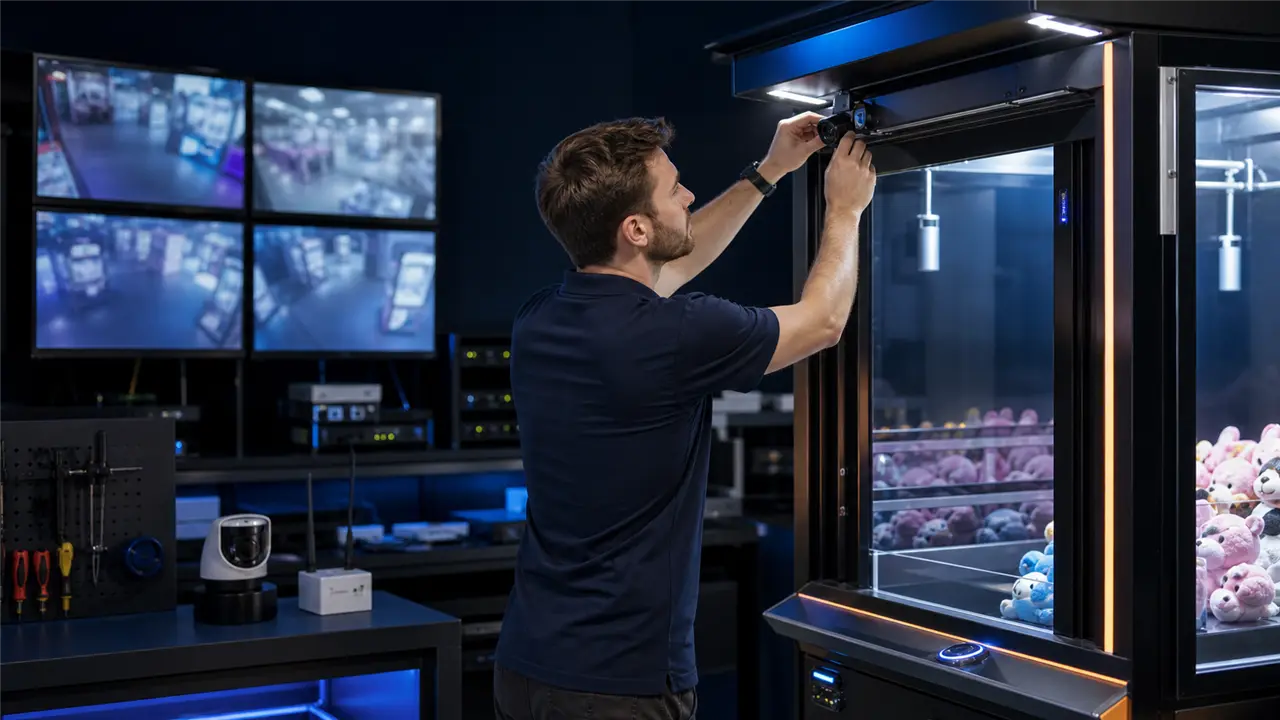
Managing player access to a strictly limited inventory of physical hardware necessitates sophisticated virtual machine waiting rooms and real time queue state machines. Unlike digital matchmaking where virtual instances can be spun up on demand, remote arcade platforms must map thousands of concurrent users to a fixed number of physical cabinets. This creates scenarios where popular machines experience overwhelming demand, requiring the backend to enforce strict orderly queues. The architecture must handle user join requests, queue position advancements, turn notifications, session expirations, and graceful user abandonments.
Implementing these systems requires a robust finite state machine paradigm distributed across the cloud backend. Each physical machine possesses a centralized state model transitioning through stages such as Idle, Maintenance, Queuing, Ready, Active, and Settlement. When a machine is in the Queuing state, the backend virtual room manager maintains a strict First-In-First-Out sequence. To prevent stale queues and resource hogging, the system must employ real-time keepalive mechanisms. If a queued player’s websocket connection drops or their client fails to acknowledge a heartbeat ping, the queue state machine automatically evicts them and advances the next player, broadcasting the updated queue topology via Server-Sent Events or WebSocket frames to all remaining clients in the waiting room. The transition from Queuing to Active demands critical synchronization. The backend must securely issue temporary access tokens valid only for the duration of the physical session, ensuring that only the player at the front of the queue can successfully transmit joystick commands to the hardware edge controller.
Redis In Memory State Caching and Machine Lock Lease Expiration
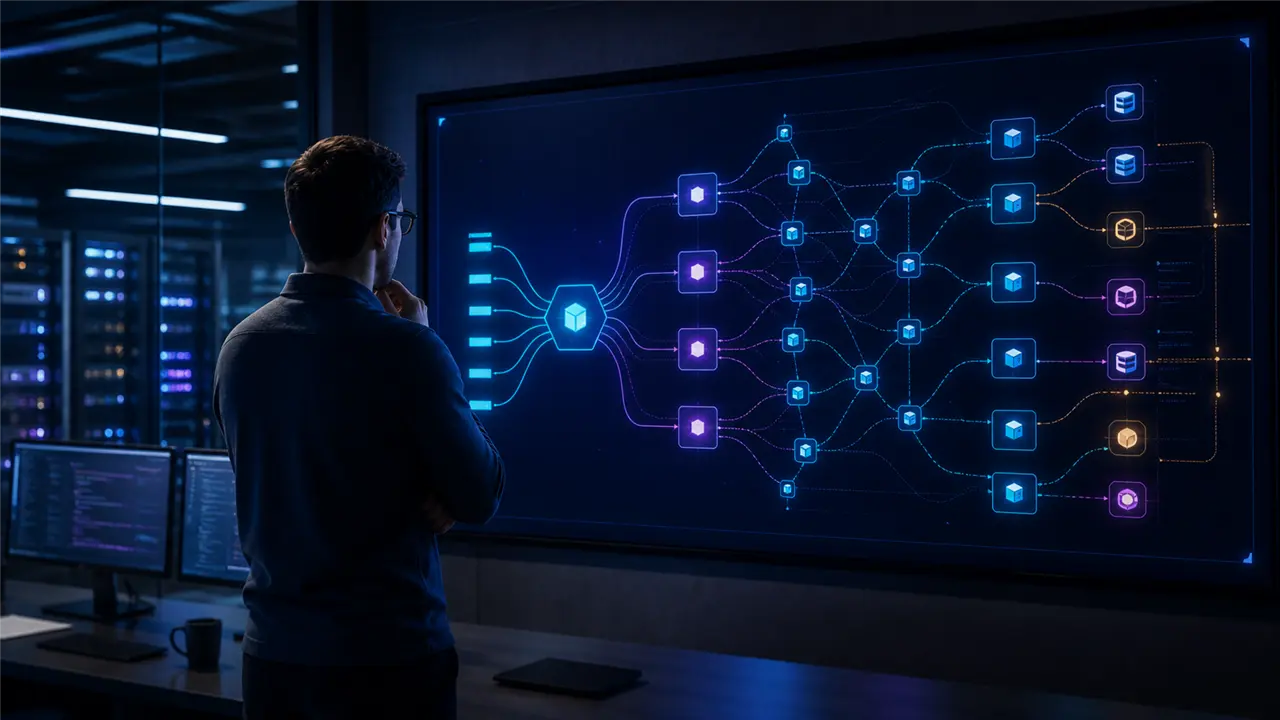
High frequency hybrid gaming environments cannot rely on traditional disk-backed relational databases for transactional state synchronization. The latency overhead of disk I/O and complex ACID transaction locks is fundamentally incompatible with the sub-millisecond response times required for smooth remote play. Instead, platform architects must deploy Redis in memory state caching as the primary operational data store for active gameplay sessions. Redis provides the extreme throughput and low-latency characteristics necessary to manage rapid state mutations resulting from physical sensor inputs and remote player commands.
A critical application of Redis state management arcade architecture involves machine lock lease expiration. When a player successfully acquires control of a physical machine, the backend must establish an exclusive distributed lock to prevent command injection from other users or concurrent backend processes. This is typically implemented using Redis SET key value NX PX commands, which atomically create a lock with an explicit time-to-live expiration. This lease mechanism acts as a critical safety net against zombie sessions. If the player’s network connection drops or the controlling microservice crashes without explicitly releasing the machine, the Redis lock will automatically expire after the predefined lease duration (e.g., 30 seconds). Once the lease expires, Redis Keyspace Notifications can trigger a backend serverless function or microservice to forcefully terminate the hardware session, reset the physical machine to its default state, and seamlessly invite the next player in the queue. This self-healing architecture prevents physical machines from becoming permanently locked and unusable due to distributed software failures.
WebSockets Control Loop Routing and Epoll Network Multiplexing
The core mechanic of remote arcade platforms involves transmitting continuous streams of directional commands from digital clients to physical robotic actuators, while simultaneously streaming sensor telemetry back to the user interface. This bidirectional communication requires persistent, full-duplex network connections. WebSockets control loop routing serves as the industry standard protocol for this real-time data exchange, completely bypassing the massive overhead of HTTP headers and connection establishment handshakes associated with traditional REST APIs.
To handle millions of concurrent WebSocket connections efficiently, the backend infrastructure must leverage epoll network multiplexing within its edge routing layers. High-performance proxy servers utilizing epoll (on Linux environments) or kqueue (on BSD systems) can monitor massive arrays of file descriptors, waking up thread pools only when binary frames are actually ready for read or write operations. This non-blocking I/O paradigm prevents thread exhaustion and allows a single edge node to route tens of thousands of active game sessions simultaneously. The routing layer inspects the metadata of incoming WebSocket frames and utilizes consistent hashing algorithms to route the command payloads to the specific microservice instance currently holding the active lease for the targeted physical machine. This targeted routing minimizes network hops within the data center, ensuring that joystick commands traverse from the edge load balancer to the physical hardware gateway in the absolute minimum possible timeframe, preserving the illusion of instantaneous control for the remote player.
Multi Region Edge Deployment and Geolocation Based Machine Routing
The speed of light imposes absolute physical constraints on network latency. For a global cloud arcade platform, centralized data center deployments inevitably result in unacceptable latency for users separated by oceans and continents. Overcoming this physical limitation requires multi region edge deployment strategies. By distributing the backend infrastructure across data centers in North America, Europe, and Asia, platform operators drastically reduce the physical distance between end users and the routing servers processing their commands.
Geolocation based machine routing becomes the critical orchestrator in this distributed topology. When a user connects to the platform, geo-DNS routing directs their initial connection to the nearest regional edge POP (Point of Presence). The backend matchmaking service analyzes the user’s location and intelligently surfaces available physical machines hosted in physical arcade facilities closest to that specific edge node. If a user in Tokyo attempts to play, the routing system prioritizes physical hardware located in Asian facilities connected to the Tokyo edge data center. In scenarios where a user specifically chooses to play on a machine located across the globe, the architecture must utilize optimized inter-region transit networks, often leveraging dedicated global accelerator backbones provided by major cloud vendors, rather than relying on unpredictable public internet routing paths. This strategic deployment minimizes jitter and packet loss, ensuring that the critical control loop remains stable regardless of the player’s physical location.
Automated Machine Health Monitoring and Fault Tolerant Failover
Physical hardware operating continuously will inevitably experience mechanical degradation and electronic failures. Arcade claws break, coin pushers jam, and network cables fail. To maintain high platform availability, the backend must incorporate aggressive automated machine health monitoring. Embedded IoT controllers on the physical cabinets continuously stream granular diagnostic telemetry, including servo motor temperatures, power supply voltages, network interface packet drop rates, and camera feed framerates.
The cloud backend ingests this telemetry into time-series databases for real-time analysis. When the system detects anomalous patterns, such as a claw mechanism failing to return to its home position within the expected timeframe, the automated fault tolerant failover protocols activate immediately. The backend immediately marks the specific hardware unit as out-of-service in the global Redis state cache, preventing any new users from joining its queue. Users currently in the waiting room for the failed machine are seamlessly and automatically migrated to the queue of an identical, healthy machine within the same facility or region, complete with push notifications explaining the transition. The backend simultaneously triggers high-priority alerts to on-site physical maintenance technicians through mobile applications, providing detailed diagnostic logs to expedite hardware repairs. This automated detection and remediation lifecycle ensures that localized hardware failures do not cascade into widespread platform outages or negative user experiences.
Frequently Asked Questions
Question How does the architecture prevent race conditions when multiple users try to join a machine queue simultaneously?
Distributed backend architectures prevent race conditions by utilizing strictly serialized transactional operations for queue management. When multiple users send simultaneous join requests, the requests are routed through a high-throughput event stream or processed using atomic Redis operations such as RPUSH and INCR. These mechanisms ensure that concurrent requests are sequenced into a strict chronological order before state mutations occur, guaranteeing that queue positions are assigned sequentially without overlaps or duplicated assignments.
Question What happens to the physical machine if the controlling user abruptly loses internet connectivity?
The cloud arcade platform relies on Redis machine lock lease expiration and continuous WebSocket heartbeats. If a user loses connectivity, their client stops sending heartbeat acknowledgments. The backend routing layer detects the dropped connection and instantly revokes the exclusive access token. The Redis lock governing the session expires automatically, triggering a backend worker to send an emergency reset command to the physical machine, returning it to a neutral idle state and advancing the queue.
Question Why are WebSockets preferred over HTTP polling for remote arcade control?
WebSockets provide a persistent, full-duplex TCP connection capable of transmitting binary data frames with minimal overhead. HTTP polling requires establishing new TCP connections, negotiating TLS handshakes, and transmitting bulky headers for every single command, resulting in hundreds of milliseconds of unnecessary latency. WebSockets allow the continuous, instantaneous stream of joystick vectors and button states required for real-time physical control loops.
Question How does the system handle video streaming latency alongside control data?
Control data and video streams are deliberately separated at the edge routing layer. Joystick commands are routed through ultra-low latency WebSocket control microservices, while video feeds from the physical machines utilize UDP-based protocols like WebRTC. This architectural separation ensures that heavy video transcoding loads or UDP packet drops do not block the transmission of critical TCP control commands, maintaining responsive gameplay even under degraded network conditions.
Question What role does Redis play in managing the global state of the arcade platform?
Redis serves as the centralized, in-memory source of truth for all ephemeral operational data. It tracks the exact real-time state of every physical machine (Idle, Playing, Maintenance), maintains the exact ordered lists of virtual waiting rooms, and handles the atomic lock leases for active gaming sessions. Its extreme read/write throughput allows the distributed microservices scaffolding to query and mutate platform state in microseconds.
Engineering Contact and Collaboration
For architectural consulting, enterprise backend integration, and B2B deployment of advanced hybrid gaming infrastructure, please reach out to our engineering team.
Engineer Wang WhatsApp/WeChat: +86 17620842078 Telegram: https://t.me/JLwyc Email: miba515527@gmail.com Guangzhou Miba Animation Technology Co., Ltd.