- Teleoperation Architecture Defense Comparison
- HMAC-SHA256 Command Signing and Nonce-Based Anti-Replay Defense
- Mutual TLS mTLS Authentication for Edge Gateway Hardware
- Dynamic Rate Limiting and Token Bucket Traffic Shaping Algorithms
- Behavioral Biometrics and AI-Powered Bot Automation Detection
- Hardware Secure Elements and Cryptographic Key Storage
- Emergency Isolation Relays and Automated Kill-Switch Protocols
- Frequently Asked Questions
- [Contact Us](/contact-us/) for Enterprise Arcade Solutions
As the hybrid arcade industry rapidly expands into the digital teleoperation domain, the cybersecurity threats facing remote real-world arcade machines have grown exponentially. Engineering teams deploying physical machinery controlled via remote web interfaces must defend against sophisticated adversaries attempting packet injection, command replay attacks, bot auto-clipping, and credential sniffing. When users control real mechanical hardware via the internet, the attack surface expands from pure software vulnerabilities to physical machine damage and financial manipulation. A compromised API gateway can lead to unauthorized coin dispensing, claw strength manipulation, mechanical arm damage, or complete network takeovers. This guide provides an enterprise-grade defense framework focusing on how to secure remote arcade api endpoints through advanced cryptographic strategies, edge gateway hardware hardening, and strict anti-tamper protocols. By implementing robust teleoperation api security mechanisms, engineering teams can guarantee that every physical action initiated by a remote player is authentic, authorized, and cryptographically verified.
Teleoperation Architecture Defense Comparison
| Security Architecture | Command Replay Vulnerability | MITM Interception Risk | Physical Machine Protection | Latency Overhead | Cryptographic Strength |
|---|---|---|---|---|---|
| **Zero-Trust Teleoperation Gateway** | Eliminated via Nonces and Timestamps | Mitigated via mTLS and Pinning | Maximum isolation and fail-safes | Moderate (15ms – 25ms) | Enterprise Grade (ECDSA / AES-256) |
| **Basic HTTPS Token Auth** | High risk if tokens are stolen | Moderate (Relies on standard PKI) | Basic software limits only | Low (5ms – 10ms) | Standard (TLS 1.2 / RSA-2048) |
| **Unencrypted Raw Sockets** | Critical vulnerability | Critical vulnerability | None (Direct hardware access) | Ultra-Low (< 5ms) | None |
HMAC-SHA256 Command Signing and Nonce-Based Anti-Replay Defense

The foundational layer of remote arcade anti packet tampering revolves around ensuring that commands sent from the client application are strictly unaltered and cannot be retransmitted by malicious actors. In a typical scenario, a player presses a button to lower the claw, which sends a payload containing directional vectors and drop commands. If an attacker intercepts this payload and resends it, they could potentially execute unauthorized drops without spending credits. To counter this, engineers employ hmac sha256 command signing across the entire communication pipeline. For a comprehensive architectural overview and turnkey procurement frameworks, review our master guide on WebRTC remote arcade streaming architecture. For further architectural integration standards, refer to How Operators Reduce Remote Arcade Video. For factory-direct procurement and comprehensive engineering specs, consult our master guide on industrial IoT remote arcade machine teleoperation.
Every API request generated by the client must include a cryptographic signature calculated using a secret key shared between the client session and the server. The payload concatenated with a strictly monotonically increasing nonce (number used once) and a high-precision timestamp forms the base string for the HMAC-SHA256 hashing algorithm. When the API gateway receives the request, it recalculates the signature using the expected secret key. If the signatures match, the gateway confirms the payload integrity.
Furthermore, the nonce-based anti-replay defense ensures that even if an attacker manages to capture a perfectly valid, signed packet, any attempt to inject that same packet into the network later will be instantly rejected. The API gateway maintains a highly optimized Redis cache of recently processed nonces and enforces strict timestamp expiration windows, typically dropping any packet older than two seconds. This incredibly tight temporal window is crucial for real-time arcade operations, where legitimate commands must be processed with sub-100 millisecond latency. Any packet arriving outside the temporal validity window is flagged as a potential replay attack, triggering immediate session termination and IP blacklisting.
Mutual TLS mTLS Authentication for Edge Gateway Hardware

While standard TLS protects data in transit from the client to the server, securing the internal network between the cloud backend and the physical arcade machines requires a significantly more robust approach. This is where mtls arcade gateway defense becomes paramount. Mutual TLS (mTLS) enforces two-way cryptographic authentication; not only does the edge gateway verify the identity of the central server, but the central server cryptographically demands proof of identity from the edge gateway installed within the physical arcade cabinet.
Implementing mTLS requires establishing a private Certificate Authority (CA) managed by the arcade enterprise. Each physical arcade machine is provisioned with a unique X.509 client certificate during the manufacturing or deployment phase. When the arcade machine boots up and attempts to establish a WebSocket or gRPC connection to the central teleoperation cluster, the server requests this certificate. If the certificate is missing, expired, or signed by an untrusted CA, the connection is instantly severed at the TCP level.
This rigorous mtls arcade gateway defense completely eliminates the risk of unauthorized devices connecting to the control network. Even if an attacker uncovers the internal IP addresses and port numbers of the command servers, they cannot establish a connection without the physical cryptographic material residing within the legitimate arcade machine. This strategy also prevents rogue machines from being introduced into the network to spoof high scores or syphon virtual currency. Certificate revocation lists (CRLs) and Online Certificate Status Protocol (OCSP) stapling are utilized to immediately revoke access for any hardware that is reported stolen or suspected of being compromised.
Dynamic Rate Limiting and Token Bucket Traffic Shaping Algorithms
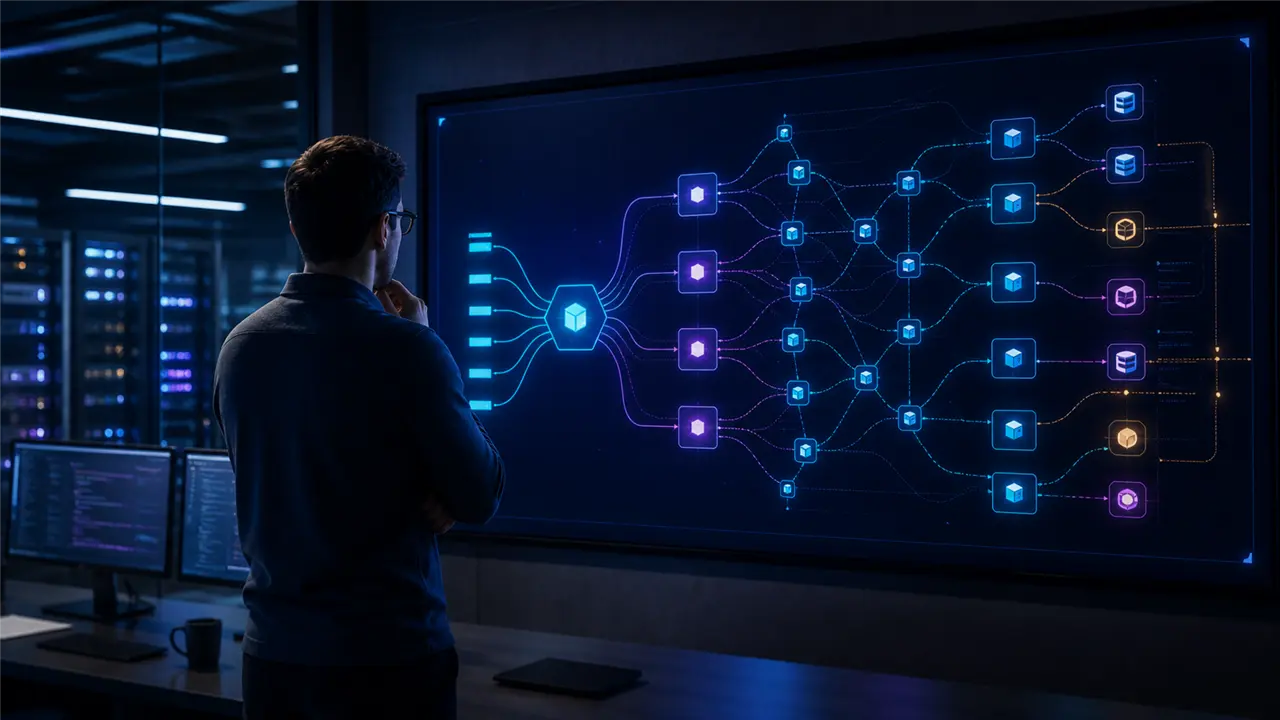
Arcade hardware is governed by strict mechanical limitations. A stepper motor can only move so fast, and a physical relay can only actuate a finite number of times per second. Attackers often attempt to bypass gameplay mechanics or cause denial-of-service (DoS) conditions by flooding the API gateway with thousands of rapid-fire movement commands. To protect the mechanical integrity of the machinery, engineers must implement sophisticated dynamic rate limiting.
Standard rate limiting based purely on IP addresses is insufficient for teleoperation, as players naturally generate high volumes of legitimate traffic during intense gameplay. Instead, engineering teams utilize token bucket and leaky bucket traffic shaping algorithms integrated directly into the API gateway layer. Each active gameplay session is assigned a specific token bucket corresponding to the mechanical capabilities of the machine they are controlling. For example, a joystick movement channel might allow a burst of ten directional updates per second, replenishing at a rate of five per second.
When an incoming command payload arrives, it must consume a token from the bucket. If the bucket is empty, the gateway immediately drops the packet and returns an HTTP 429 Too Many Requests response or equivalent WebSocket error frame. This dynamic traffic shaping ensures that the API gateway smooths out erratic network bursts while strictly enforcing the physical speed limits of the hardware. Furthermore, the rate limiting logic is tied directly to the state machine of the game; movement commands are completely throttled during the prize drop sequence or while the machine is resetting, preventing out-of-band commands from causing mechanical collisions or software race conditions.
Behavioral Biometrics and AI-Powered Bot Automation Detection
The rise of automated scripts and AI-driven bots poses a significant threat to skill-based remote arcade operations. Malicious users deploy computer vision algorithms to perfectly time claw drops or coin pushes, extracting maximum value and disrupting the economic balance of the platform. Defending against these automated threats requires moving beyond static signature detection and embracing behavioral biometrics within the teleoperation api security framework.
Engineers implement deep telemetry collection within the client application, analyzing micro-interactions that differentiate human players from automated scripts. The client SDK captures touchscreen pressure variations, accelerometer data, joystick trajectory smoothness, and the micro-delays between sequential inputs. A human player exhibits natural organic variance, slight hesitations, and imperfect linear movements. In contrast, an automated bot typically sends mathematically perfect trajectories, instantaneous reactions to video frames, and rigidly uniform timing intervals.
This telemetry data is securely streamed to an AI-powered risk engine operating asynchronously alongside the API gateway. Using machine learning models trained on millions of legitimate gameplay sessions, the risk engine calculates a real-time bot probability score. If the score exceeds a predefined threshold, the system can take defensive actions such as introducing artificial latency, slightly altering the physics variables to break the bot’s mathematical model, or terminating the session entirely. By analyzing the “how” of the input rather than just the “what”, engineers can effectively neutralize sophisticated automated clipping scripts without inconveniencing legitimate players.
Hardware Secure Elements and Cryptographic Key Storage
The strongest cryptographic protocols are entirely useless if the underlying secret keys are compromised. In remote arcade environments, the edge hardware physically resides in public spaces or remote warehouses, making it susceptible to physical tampering and reverse engineering. Attackers may attempt to extract firmware, read memory dumps, or probe I2C buses to steal the mTLS certificates or HMAC secret keys.
To mitigate this severe risk, enterprise arcade architectures mandate the use of Hardware Secure Elements (SE) or Trusted Platform Modules (TPM). These dedicated cryptographic microcontrollers provide a physically isolated environment for key generation, storage, and cryptographic operations. The private keys used for mTLS authentication and the shared secrets for command signing are generated directly within the Secure Element and are designed to be non-exportable.
When the edge gateway needs to sign a packet or establish a TLS handshake, the payload is sent to the Secure Element, which performs the mathematical operations internally and returns only the final signature or ciphertext. Even if an attacker gains root shell access to the edge gateway’s primary operating system, they cannot read the private keys out of the Secure Element. Furthermore, these chips employ advanced physical anti-tamper mechanisms, such as protective meshes, voltage sensors, and temperature monitors. If the chip detects decapsulation attempts or abnormal operating conditions, it immediately zeroizes its internal memory, permanently destroying the cryptographic material and rendering the compromised hardware useless to the attacker.
Emergency Isolation Relays and Automated Kill-Switch Protocols
Despite the most rigorous digital defenses, engineering teams must plan for the worst-case scenario: a successful breach of the API gateway or a catastrophic software malfunction resulting in erratic machine behavior. In the realm of cyber-physical systems, software bugs or malicious commands can translate into actual mechanical damage, overheating motors, or electrical fires. Therefore, implementing physical emergency isolation relays is a critical component of remote arcade infrastructure.
The edge gateway hardware interfaces with a series of high-power, normally-open electrical relays that sit between the power supply and the mechanical actuators (motors, electromagnets, solenoids). These relays are controlled by an independent, highly restrictive micro-controller acting as a hardware watchdog. The primary edge gateway must continuously send a cryptographic heartbeat signal to this watchdog. If the heartbeat ceases, or if the watchdog detects abnormal power consumption patterns indicative of a stalled motor or short circuit, it instantly drops the relays, physically cutting power to all moving parts while maintaining power to the communication module for diagnostic reporting.
Additionally, the central API gateway features an automated kill-switch protocol. If the intrusion detection systems identify coordinated attacks, massive replay attempts, or severe latency anomalies across the fleet, operators can trigger a global or regional kill-switch. This command propagates through the mTLS network, instructing all edge gateways to immediately halt operations, transition to a safe standby state, and sever all active teleoperation sessions. This fail-safe architecture guarantees that regardless of the digital compromise, the physical assets remain protected from catastrophic destruction.
Frequently Asked Questions
Question 1 What is the most effective method to stop command replay attacks in remote arcade systems?
The absolute most effective method is a combination of strictly enforced monotonically increasing nonces and highly restrictive timestamp validation windows. Every command sent to the API gateway must include a unique, never-before-seen nonce and a timestamp accurate to the millisecond. The server cache rejects any duplicate nonces and drops any packet older than one to two seconds. When combined with HMAC-SHA256 command signing, this ensures that intercepted packets are utterly useless to an attacker attempting to replay them.
Question 2 How does mTLS prevent unauthorized arcade hardware from connecting to the server?
Mutual TLS (mTLS) requires both the client and the server to present and validate digital certificates before establishing a connection. In this context, the server demands a unique, enterprise-signed X.509 certificate from the arcade machine’s edge gateway. Because the attacker does not possess the private cryptographic key and the enterprise-signed certificate (which are stored in hardware Secure Elements), any connection attempt from a rogue device or spoofed machine will fail the cryptographic handshake and be rejected immediately.
Question 3 Can rate limiting stop automated bots from winning arcade games?
Standard network rate limiting prevents denial-of-service floods but is ineffective against sophisticated bots that operate within normal human speed limits. To stop automated bots, engineers must deploy behavioral biometrics and AI-driven telemetry analysis. By scrutinizing touchscreen pressure, accelerometer variance, and input timing irregularities, the system can differentiate between the organic imperfections of a human player and the mathematically perfect inputs of an automated script.
Question 4 Why is HMAC-SHA256 preferred over simple token authentication for arcade API endpoints?
Simple token authentication (like Bearer tokens) only proves that the user is authenticated; it does not protect the integrity of the payload in transit. If an attacker intercepts a token-authenticated request, they can modify the payload (e.g., changing claw coordinates) and resend it. HMAC-SHA256 command signing solves this by hashing the specific payload data along with a secret key. Any alteration to the payload will result in a completely different hash, causing the server to reject the tampered command instantly.
Question 5 What physical protections exist if the digital API gateway is fully compromised?
In the event of a total digital compromise, the hardware relies on autonomous emergency isolation relays and watchdog timers. An independent microcontroller monitors the main system via cryptographic heartbeats. If the main system behaves erratically or fails to send heartbeats, the watchdog automatically opens physical relays, instantly severing electrical power to all mechanical actuators. This prevents malicious commands from burning out motors or causing physical damage to the arcade cabinet.
[Contact Us](/contact-us/) for Enterprise Arcade Solutions
For advanced teleoperation API security implementation and enterprise-grade hybrid arcade hardware manufacturing, contact our engineering team:
Guangzhou Miba Animation Technology Co., Ltd. Engineer Wang WhatsApp/WeChat: +86 17620842078 Telegram: https://t.me/JLwyc Email: miba515527@gmail.com