- Industrial [Remote Claw Machine](/b2b-remote-claw-machine-app-development-venue-guide/) Cloud Architecture Overview
- Physical Claw Cabinet Mechanics Versus Commercial Street Cabinets
- X Y Z Gantry Motion Control and Pulse Signal Conversion
- Dual Camera Orthogonal WebRTC Streaming for 3D Depth Perception
- Optical Infrared Prize Drop Detection and Anti Tamper Logic
- Multi Tenant Cloud Allocator and Virtual Queue State Machine
- High Density Warehouse Machine Farm Layout and Infrastructure
- Operator ROI Math Model and Payback Period Analysis
- Panyu Manufacturing Base FAT Inspection and Pre Wired Turnkey Delivery
- Frequently Asked Questions
For operators seeking to transition from traditional street location arcades to a centralized warehouse farm setup, the technical chasm between offline cabinets and online cloud operations can be devastating. Many investors burn capital trying to retrofit consumer-grade crane games with off-the-shelf webcams, only to suffer from 2,000ms latency, constant mechanical breakdowns, and phantom claw drops.
As the Lead Hardware and Game System Architect at Guangzhou Miba Animation Technology Co., Ltd. (Arcade Manufacturer), I oversee the engineering of our industrial-grade teleoperation frameworks at our 15,000m² Panyu factory. We deliver complete, fully integrated turnkey solutions rather than loose DIY parts. In this technical breakdown, I will map out our exact end-to-end architecture for a profitable, low-latency live claw machine farm operation, eliminating the guesswork from hardware integration to app development.
Industrial [Remote Claw Machine](/b2b-remote-claw-machine-app-development-venue-guide/) Cloud Architecture Overview
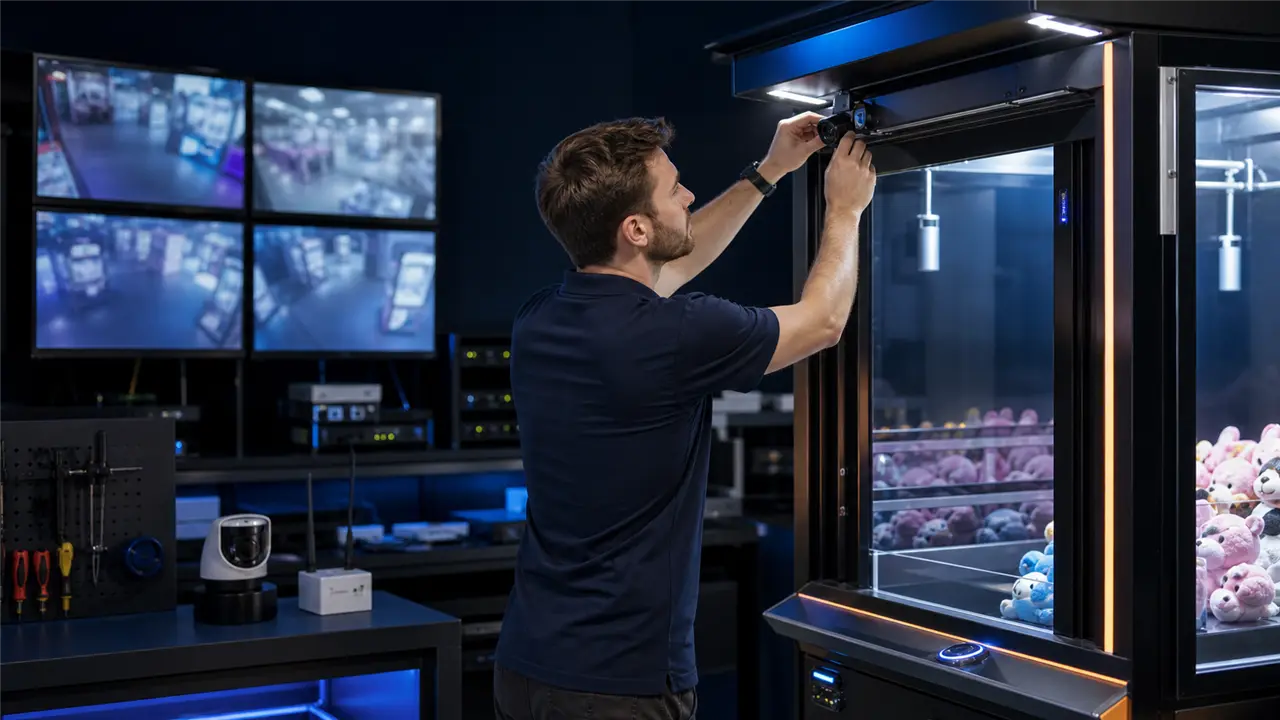
A professional remote live claw machine ecosystem requires a robust bridge connecting physical mechanical motion with virtual user inputs across global networks. At its core, the architecture relies on an industrial IoT edge gateway embedded within the cabinet, which orchestrates bidirectional traffic. It pushes dual-channel video streams upwards while pulling precision vector commands downwards.
By utilizing WebRTC protocols, we bypass traditional HLS streaming bottlenecks to achieve glass-to-glass latency below 80ms. This ensures that when a player taps the directional arrow on their mobile phone, the physical gantry inside our remote live arcade turnkey system responds instantly. The entire loop integrates payment gateways, hardware execution, and video feedback into one cohesive, cloud-managed unit ready for global deployment.
Physical Claw Cabinet Mechanics Versus Commercial Street Cabinets
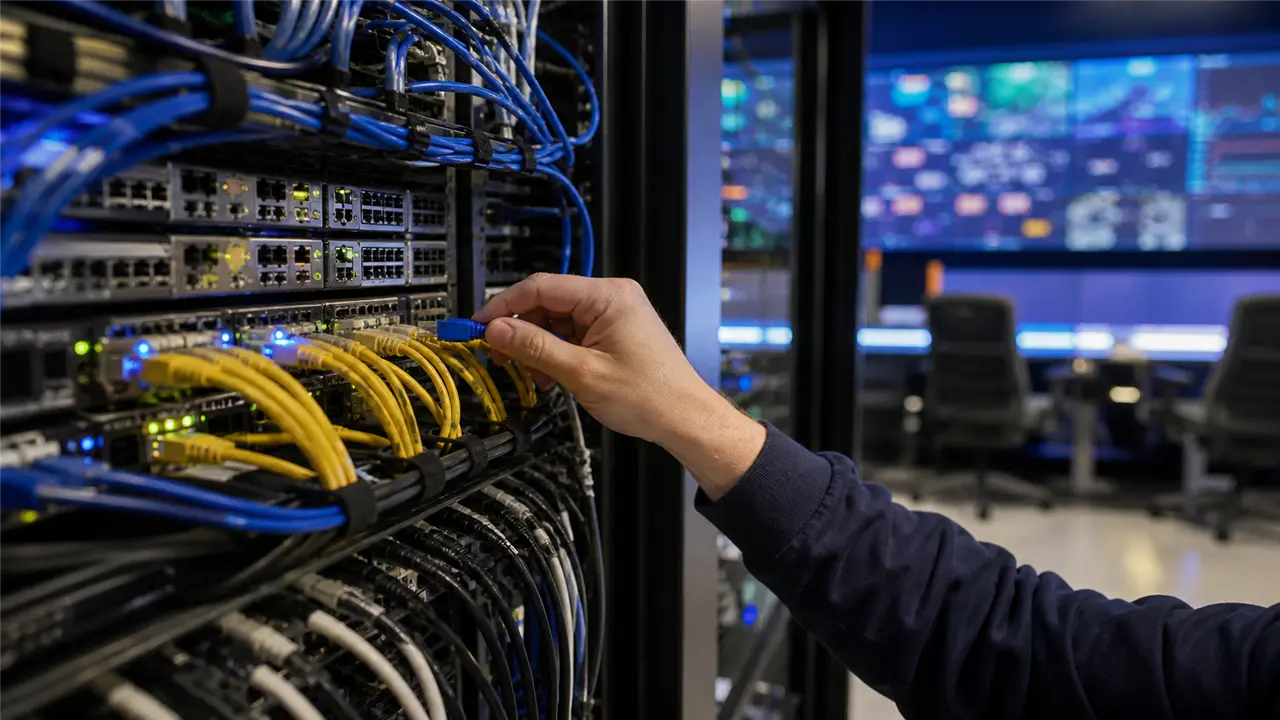
Standard street arcades are built to withstand physical abuse from foot traffic, utilizing heavy coin mechs and decorative LED marquees. Remote machine chassis designs strip away these offline necessities to maximize spatial density and continuous 24/7 robotic operation.
Our factory constructs these units with high-gauge cold-rolled steel, omitting external coin acceptors and oversized control panels. Instead, we reinforce the internal skeleton to support rigid camera mount points. Vibration isolation is paramount. Any structural flex during gantry movement will translate into camera jitter on the player’s screen, ruining the immersive experience. We utilize anti-vibration rubber dampening blocks between the gantry rail mounts and the chassis, ensuring a rock-solid video feed even when the claw hits its mechanical limits.
Additionally, the prize chutes are re-engineered. Traditional gravity drop chutes are designed for human hands to retrieve plush toys. In a remote farm setup, prizes drop into an internal collection hopper equipped with automated conveyor belts or centralized sorting bins.
X Y Z Gantry Motion Control and Pulse Signal Conversion
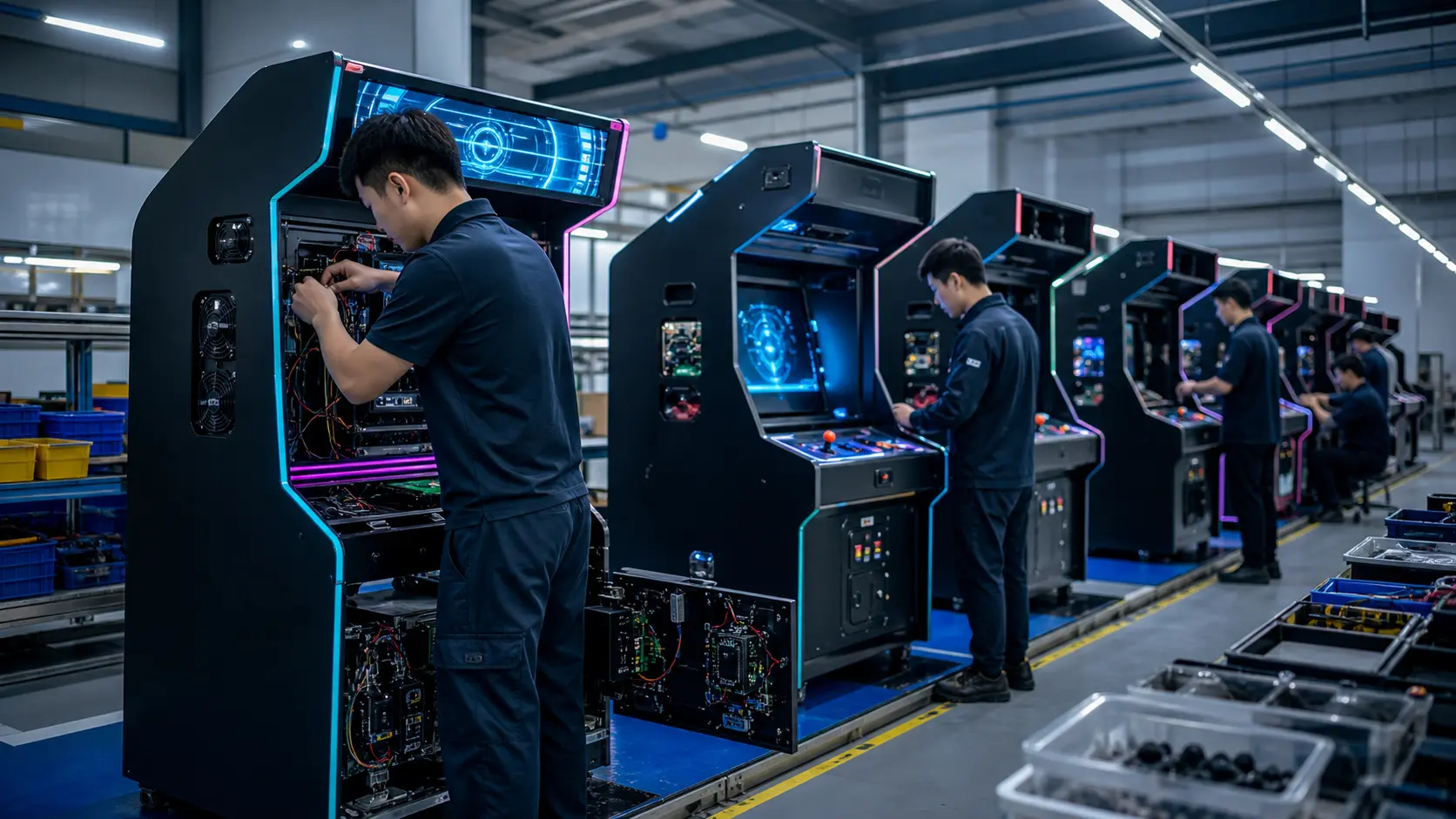
Translating digital HTTP or WebSocket commands into smooth, physical mechanical motion is the most critical link in teleoperation. We accomplish this using an advanced industrial IoT arcade controller board that acts as the brain of the cabinet.
When a player interacts with the mobile UI, the command vector is sent over WebSockets to the embedded ARM-based MCU. This gateway converts the digital vector coordinates into high-frequency microstep pulses (DIR/PULSE) directed at the stepper or servo motors driving the X, Y, and Z axes.
If you are interested in the specific coil voltage parameters and firmware algorithms used to eliminate pendulum swing effects, I highly recommend reading our deep dive on remote claw machine gantry hardware modification. We deploy S-curve acceleration and deceleration ramps within the motor driver firmware. This prevents the payload from swaying erratically when a player suddenly releases the joystick, maintaining absolute precision for the gripping action.
Dual Camera Orthogonal WebRTC Streaming for 3D Depth Perception
A single camera view makes it impossible for remote players to gauge depth accurately, leading to frustration and high churn rates. Our turnkey solution incorporates two high-definition industrial cameras positioned at a strict 90-degree orthogonal angle (front view and side view).
Players can toggle between these two feeds instantly on their mobile interface. This dual camera video streaming depth perception setup mimics the human action of leaning around the side of a physical cabinet to check alignment. We utilize hardware-accelerated H.264/H.265 encoding directly on the machine’s edge gateway, transmitting via WebRTC. This peer-to-peer streaming topology bypasses cloud transcoding servers, slashing latency from typical 3-second streaming delays down to a tactile, instantaneous 50-80 millisecond response time.
Optical Infrared Prize Drop Detection and Anti Tamper Logic
In a physical arcade, an attendant can visually verify if a prize was successfully won. In a cloud operation, the machine must accurately self-report wins to the centralized state machine to update the player’s inventory and trigger the prize shipping logic.
We install dense optical infrared matrix sensors across the entire cross-section of the prize chute. Our infrared prize drop sensor validation system algorithms filter out false positives caused by dust, ambient light flickering, or swinging claw shadows. It requires a sustained beam break matching the volumetric profile of a plush toy.
Furthermore, our anti-tamper logic detects anomalies such as stuck prizes or sensor masking. If an error is detected, the system immediately flags the machine as ‘Out of Order’ in the app, refunding the current player’s virtual currency and alerting a warehouse technician via the dashboard.
Multi Tenant Cloud Allocator and Virtual Queue State Machine
Handling thousands of concurrent users requires a robust backend architecture. Our cloud allocator manages machine availability, routing players to open cabinets or placing them in a virtual queue state machine.
When a machine is occupied, viewers can watch the live stream, chat, and queue up for the next turn. The state machine strictly governs the transition between `IDLE`, `PLAYING`, `PAYOUT_CHECK`, and `MAINTENANCE`. The remote claw machine app development costs for building this infrastructure from scratch can easily exceed $100,000. Our turnkey solution provides a fully integrated, white-label mobile application (iOS/Android) and backend CRM, allowing operators to bypass the grueling software development cycle and launch within weeks.
High Density Warehouse Machine Farm Layout and Infrastructure
Scaling from 10 machines to 200 machines within a single warehouse introduces severe power, thermal, and networking constraints. A typical street setup cannot simply be multiplied by 200 without causing cascading electrical failures.
In our factory guidelines for warehouse live claw machine farm infrastructure, we detail the implementation of industrial Mean Well power buses to ensure clean, stable DC voltage across rows of cabinets. Heat exhaust is another critical factor. Two hundred embedded Linux boards and motor drivers generate significant ambient heat. We design our server-rack-style chassis with active thermal exhaust routing, preventing thermal throttling on the video encoders.
Network topology is equally rigid. We mandate hardwired CAT6 Ethernet to every machine via managed gigabit switches. Relying on Wi-Fi in a dense farm environment will result in packet loss and fatal latency spikes due to severe RF congestion.
Operator ROI Math Model and Payback Period Analysis
The primary driver for adopting the remote live arcade model is the dramatic reduction in commercial real estate overhead. Traditional street arcades require high-foot-traffic mall locations, commanding premium rent, extensive decor, and constant on-site staffing.
By relocating to a low-cost industrial warehouse, rent per square foot plummets. A standard 100-machine remote farm operating 24/7 can achieve a payback period (ROI) of 30 to 45 days. The machines never sleep, capturing different global time zones. When a player in New York sleeps, a player in Tokyo logs in. This continuous monetization, combined with centralized prize shipping logistics, creates a highly scalable, high-margin business model unmatched by brick-and-mortar constraints.
Panyu Manufacturing Base FAT Inspection and Pre Wired Turnkey Delivery
At Guangzhou Miba Animation Technology Co., Ltd., we do not ship prototype jigsaw puzzles. We are a source factory adhering strictly to commercial arcade game machines manufacturing standards. Every turnkey system undergoes rigorous Factory Acceptance Testing (FAT) at our Panyu facility.
We simulate high-load concurrent network traffic, run 72-hour continuous motor stress tests, and verify optical sensor calibrations before a single unit is crated. We deliver complete, pre-wired, software-bound machines that are ready to plug in and monetize the moment they arrive at your warehouse.
If you are planning to launch a large-scale live teleoperation center and require a proven, industrial-grade hardware and software partner, bypass the middlemen and contact our engineering team directly.
Connect with Engineer Wang for Factory Direct Pricing and Technical Blueprints
- WhatsApp/WeChat: +86 17620842078
- Telegram: https://t.me/JLwyc
- Email: miba515527@gmail.com
- Factory Location: Panyu Manufacturing Base, Guangzhou, China (Video tours and FAT inspections available 24/7)
Frequently Asked Questions
Q: What is the actual latency of your WebRTC video streaming system? A: Our embedded hardware encoders and WebRTC architecture achieve a glass-to-glass latency of 50 to 80 milliseconds. This ultra-low latency ensures that the physical claw reacts instantly to the player’s mobile joystick inputs, eliminating the disconnected feeling found in cheaper IP camera setups.
Q: Can I integrate your hardware with my existing mobile app? A: Yes. We offer a comprehensive API and WebSocket SDK for operators who have already developed their own frontend applications. Our industrial IoT gateway accepts standard JSON vector commands, making integration seamless for your development team.
Q: How does the system handle network dropouts during a player’s turn? A: Our hardware features an onboard watchdog circuit and state preservation logic. If a network heartbeat is lost, the gantry automatically halts, executes a safe automated homing sequence, and the backend cloud allocator immediately refunds the player’s credits to prevent disputes.
Q: What are the power requirements for a 100-machine warehouse farm? A: A 100-machine farm typically requires a dedicated 3-phase industrial power supply. Each stripped-down teleoperation cabinet draws significantly less power than a street cabinet (averaging 150W-200W). We provide complete electrical load blueprints to ensure your warehouse is adequately provisioned.
Q: Do you provide source code ownership for the mobile applications? A: Yes. Unlike SaaS platforms that trap you in perpetual revenue-sharing contracts, we offer 100% source code buyout options for our turnkey software solutions. You own the code, the player data, and the entire profit margin.