The decision to buy turnkey online casino source code is a fundamental inflection point for enterprise operators aiming to secure complete autonomy over their iGaming platforms. Moving beyond traditional Software as a Service subscriptions and standard white label deployments, a full turnkey casino source code buyout transfers absolute intellectual property and infrastructure control to the operator. This transition from a shared ecosystem to a fully isolated, privately managed infrastructure requires rigorous technical and operational due diligence. Procuring a complete full-stack online casino platform codebase involves deep analysis of architectural scalability, database autonomy, source code integrity, and the definitive absence of hidden backdoors or encrypted third-party dependencies.
In the realm of pure online casino game development, operators must assess the underlying technology stack to ensure long-term viability. The codebase must not only support legacy monolithic operations but should ideally leverage modern distributed architectures. Evaluating the backend framework, database schema flexibility, frontend rendering engines, and real-time transaction processing layers is paramount. Furthermore, securing white label casino software source code with unrestricted modification rights empowers technical teams to integrate bespoke payment gateways, deploy proprietary risk management algorithms, and develop custom frontend experiences without relying on the original vendor’s update cycle. This definitive guide explores the critical engineering gateways, infrastructure orchestrations, and source code transfer protocols necessary for a successful turnkey software buyout. For a comprehensive architectural overview and turnkey procurement frameworks, review our master guide on white label casino software guide. For further architectural integration standards, refer to How B2B Operators Evaluate and Deploy Custom. For factory-direct procurement and comprehensive engineering specs, consult our master guide on game software source code buyout and turnkey development.
Full-Stack Source Code Buyout vs Turnkey SaaS Subscription vs White-Label Reseller Program
Understanding the exact technological and operational boundaries of different deployment models is crucial before executing a procurement contract. For further architectural integration standards, refer to How Operators Deploy Turnkey Fish Game WebGL.
| Infrastructure Parameter | Full-Stack Source Code Buyout | Turnkey SaaS Subscription | White-Label Reseller Program |
|---|---|---|---|
| **Infrastructure Ownership** | 100% owned and deployed on private cloud or bare metal | Leased infrastructure managed by vendor | Shared multitenant infrastructure |
| **Monthly Licensing Overhead** | Zero monthly revenue share or ongoing licensing fees | High percentage revenue share (often 10-15%) | Medium to high revenue share |
| **Custom Game Integration Freedom** | Absolute freedom to parse and integrate any third-party APIs | Strictly limited to vendor-approved game providers | Restricted to the master platform’s portfolio |
| **Payment Gateway Autonomy** | Complete control over custom API integrations and crypto nodes | Locked to the vendor’s payment processing network | Highly restricted and monitored transactions |
| **Database Control and Schema** | Full root access to relational and NoSQL databases | No direct database access, only exported reports | Zero database access |
| **Code Modification Rights** | Unrestricted Git repository access and modification | Locked source code, API only | Zero code access |
Full-Stack Microservices Scaffolding and Distributed Ledger Architecture
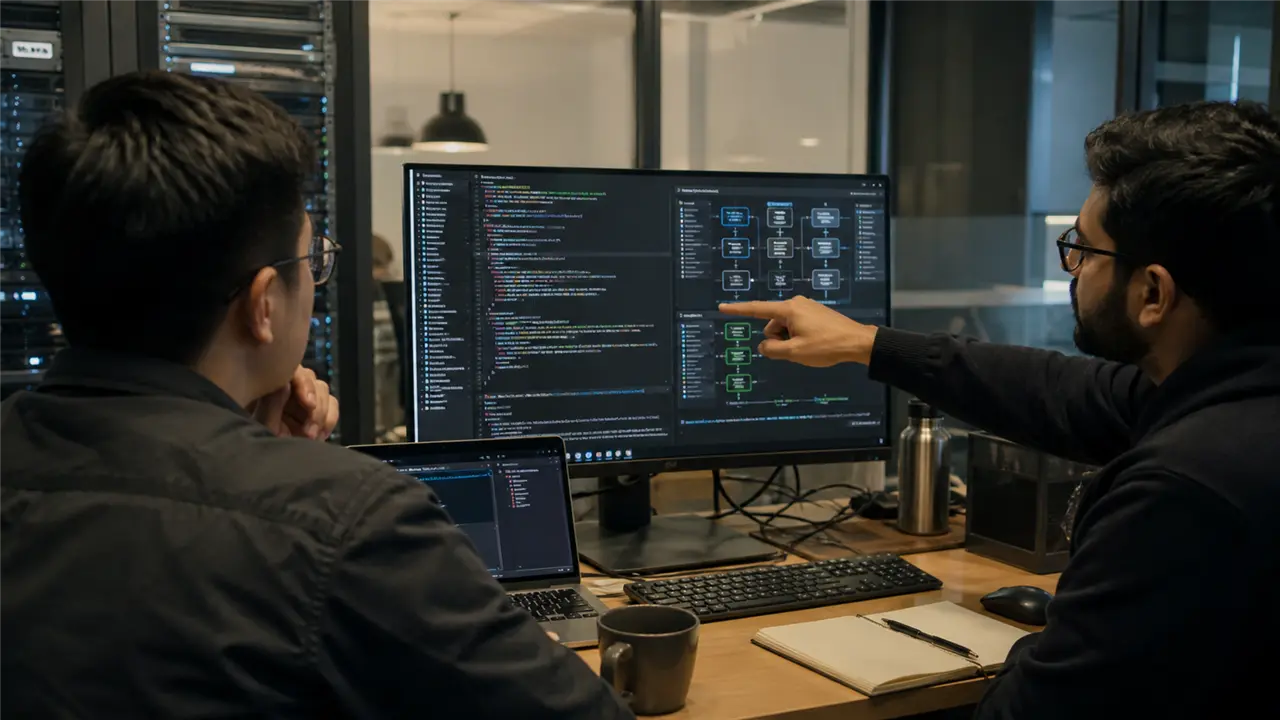
Modern iGaming platforms require a robust backend capable of processing thousands of concurrent transactions with millisecond latency. When assessing turnkey sweepstakes software or real money casino codebases, the architectural paradigm must support extreme horizontal scalability. Legacy monolithic applications often suffer from single points of failure and bottlenecked performance during peak traffic events. Therefore, operators must demand a microservices-based scaffolding where distinct domain logic is isolated into independent, independently deployable services.
The backend infrastructure should ideally be constructed using high-performance compiled languages such as Go, Rust, or optimized runtimes like Node.js or .NET Core. These environments provide the necessary concurrency models to handle intensive WebSocket connections and real-time game state synchronization. The architecture must separate the user management service, wallet transaction ledger, game logic engine, and risk analysis modules. This decoupled approach ensures that an unexpected spike in slot machine spins does not degrade the performance of the payment processing service.
A critical component of the underlying system is the implementation of a distributed ledger architecture for transaction processing. In a high-stakes environment, data consistency and idempotency are non-negotiable. The financial ledger must utilize ACID-compliant relational databases, such as PostgreSQL, configured for high availability and synchronous replication. For high-throughput, low-latency operations like session state management and leaderboard updates, the system should incorporate in-memory data stores like Redis or Memcached. Implementing a distributed ledger ensures that every financial event, from deposit crediting to bet deduction and win allocation, is immutably recorded, traceable, and resistant to race conditions in a highly concurrent environment.
Multi-Currency Cashier Gateways and Crypto Payment Microservices
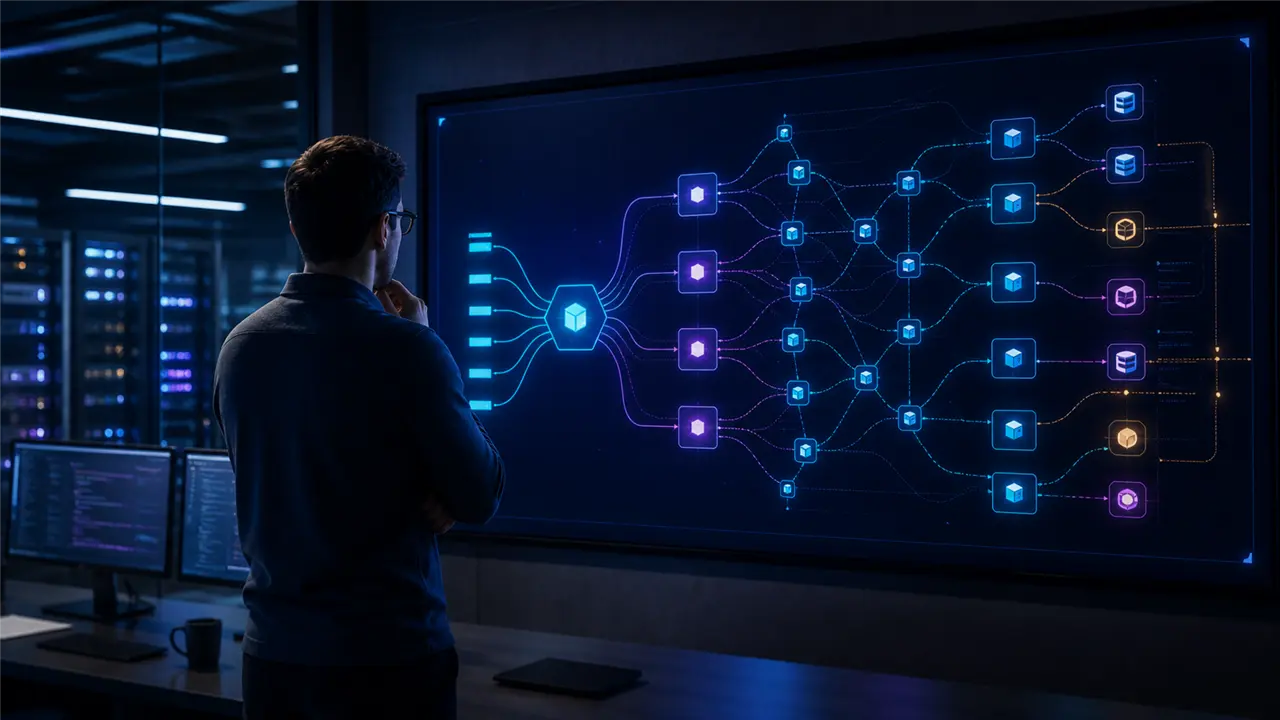
Financial autonomy is the primary driver for a turnkey casino source code buyout. Operators must verify that the codebase includes a highly modular and extensible multi-currency cashier system. The payment gateway architecture should not be hardcoded to specific regional processors; instead, it must implement an abstract factory pattern allowing engineering teams to seamlessly plug in new payment service providers via standardized RESTful or gRPC APIs.
The cashier module must support complex currency conversion matrices, dynamic exchange rates via external oracle integrations, and robust rollback mechanisms for failed transactions. It is imperative that the source code handles fractional monetary values with absolute precision, avoiding floating-point arithmetic errors that can lead to catastrophic financial discrepancies. The implementation of robust retry logic and exponential backoff algorithms is necessary when communicating with third-party payment APIs to ensure transaction finality even during network degradation.
Furthermore, native crypto payment microservices are essential for modern global operations. The codebase should include fully decentralized payment nodes or seamless integration layers for major blockchain networks. This involves automated wallet address generation, real-time transaction mempool monitoring, and deterministic confirmations based on block depth. The cryptographic components must securely handle hot wallet private keys, ideally utilizing hardware security modules or secure enclave technologies. By owning the complete white label casino software source code, operators can bypass third-party crypto processors, eliminating transaction fees and preventing external monitoring of platform liquidity.
Hierarchical Master Agent Backend and Real-Time Risk Analytics

For B2B networks and regional operations, a sophisticated hierarchical master agent backend is a fundamental requirement. The provided source code must define a granular role-based access control system capable of supporting unlimited tiers of super agents, master agents, sub-agents, and direct affiliates. The schema must handle complex commission calculation algorithms, including gross gaming revenue share, multi-level turnover rebates, and customized CPA models.
The backend administrative dashboard should be built using modern reactive frameworks like React, Vue.js, or Angular, consuming highly optimized GraphQL or REST APIs. The administrative interfaces must provide deep introspection into player activity, financial flows, and agent performance. The source code must allow for the dynamic generation of localized accounting reports and real-time reconciliation across all hierarchical levels.
Equally important is the integration of real-time risk analytics and fraud detection microservices. The codebase must implement heuristic algorithms and machine learning models to identify anomalous betting patterns, bonus abuse, arbitrage syndicates, and potential money laundering activities. This requires the system to stream game event logs and financial transactions into an analytical database like ClickHouse or Apache Kafka for immediate stream processing. Operators must scrutinize the risk engine’s source code to ensure they can adjust parameter thresholds, implement custom blocking rules, and deploy proprietary risk scoring models without vendor intervention.
Comprehensive Codebase Deliverables and Database Schema Handover
A legitimate turnkey casino source code buyout dictates the transfer of every single technological asset required to compile, deploy, and modify the platform. Operators must perform a rigorous code audit to verify the completeness of the deliverables. This includes the unminified frontend source files, uncompiled backend application code, comprehensive API documentation (Swagger or OpenAPI specifications), and all associated infrastructure as code templates (Terraform, Ansible, or CloudFormation).
The database schema handover is a highly critical phase. The vendor must provide complete SQL data definition language scripts required to bootstrap the relational and NoSQL databases from scratch. The schema must be clearly documented, outlining primary keys, foreign key constraints, indexing strategies, and stored procedures. Operators must verify the absence of obfuscated database triggers or encrypted tables that could lock them out of their own data.
Furthermore, the code transfer must include all auxiliary scripts necessary for platform operation, such as automated database backup routines, log rotation configurations, and continuous integration pipeline definitions. The source code repositories (typically Git) should preserve the commit history if possible, providing developers with valuable context regarding architectural decisions and bug resolutions. Total transparency in the codebase deliverables guarantees that the operator’s in-house engineering team can assume immediate control and begin executing pure online casino game development initiatives.
Docker and Kubernetes Orchestration for Zero-Downtime Scaling
To achieve enterprise-grade reliability and infinite scalability, the delivered source code must be inherently containerized and ready for orchestration. The vendor should provide highly optimized Dockerfiles for every microservice, frontend application, and backend daemon. These container images must adhere to security best practices, utilizing minimal base images, executing as non-root users, and avoiding hardcoded secrets.
The deployment topology should rely on Kubernetes for container orchestration. The codebase must include comprehensive Helm charts or Kubernetes manifest files defining deployments, services, ingress controllers, horizontal pod autoscalers, and persistent volume claims. This infrastructure as code approach allows operators to deploy the entire casino platform across any major cloud provider or on-premise bare metal clusters with a single command.
Kubernetes orchestration ensures zero-downtime scaling and automated self-healing. During high-traffic events, the system must automatically provision additional pod replicas to handle the increased load, subsequently scaling down to minimize infrastructure costs. The integration of robust service meshes, such as Istio or Linkerd, can further enhance network security, traffic routing, and deep observability across the microservices architecture. By mastering the containerized deployment of the turnkey sweepstakes software, operators guarantee maximum uptime and operational resilience.
Legal Licensing, Intellectual Property Transfer, and SLA Support
The technical excellence of the codebase must be matched by airtight legal documentation transferring intellectual property rights. The buyout agreement must explicitly state that the operator receives perpetual, non-exclusive or exclusive (depending on the negotiation) rights to use, modify, distribute, and commercialize the source code without geographic restrictions. The contract must definitively waive any future royalties, revenue shares, or ongoing software licensing fees.
Furthermore, the vendor must warrant that the source code does not infringe upon third-party patents or copyrights and does not contain any malicious backdoors, logic bombs, or unauthorized remote access trojans. Legal counsel must review the software transfer agreement to ensure robust indemnification clauses protecting the operator from potential intellectual property disputes arising from the vendor’s underlying code.
While a buyout implies independence, transitioning a complex full-stack architecture requires initial support. The procurement contract should include a defined Service Level Agreement for the handover phase. This SLA should mandate technical onboarding sessions, architectural walkthroughs, and guaranteed bug-fixing support for a specified duration post-deployment. This transitional support ensures that the operator’s engineering team comprehensively understands the codebase architecture and can confidently assume full maintenance responsibilities.
Frequently Asked Questions
Question 1 What are the primary technical advantages of buying turnkey online casino source code over a SaaS model?
The primary advantage is absolute architectural autonomy. Operators own the core infrastructure, eliminating monthly revenue shares and vendor lock-in. They gain unrestricted root access to databases, the ability to modify core game logic, integrate custom crypto payment gateways, and deploy the platform on highly secure, private infrastructure using Kubernetes.
Question 2 How can operators verify the integrity of the white label casino software source code during procurement?
Operators should demand a technical escrow agreement or a supervised code audit phase before final payment. In-house or third-party cybersecurity engineers must perform static application security testing to scan for vulnerabilities, verify the absence of encrypted backdoors, and ensure all cryptographic implementations adhere to enterprise standards.
Question 3 Does a turnkey casino source code buyout include game math models and RNG certifications?
This depends on the specific package. Comprehensive buyouts should include the underlying random number generator algorithms and the mathematical payout models (Return to Player and Volatility matrices) for proprietary games. If third-party games are integrated, the source code only includes the API bridge, and the operator must negotiate separate contracts with the game providers.
Question 4 What technical skills are required to manage pure online casino game development in-house after a buyout?
Operators require a robust internal engineering team. This typically includes senior DevOps engineers proficient in Docker, Kubernetes, and CI/CD pipelines, backend developers skilled in Go, Node.js or C#, frontend engineers experienced with React or Vue, and database administrators capable of optimizing PostgreSQL and Redis clusters for high-frequency transactions.
Question 5 Can turnkey sweepstakes software codebases be easily modified to support traditional real money casino operations?
Yes, provided the source code is well-structured. A high-quality codebase will abstract the core ledger and wallet systems. Transitioning from a dual-currency sweepstakes model (Gold Coins and Sweeps Coins) to a standard fiat or crypto real money model involves modifying the wallet management microservice and adjusting the regulatory compliance and KYC onboarding flows, which is entirely possible with full code access.
Guangzhou Miba Animation Technology Co., Ltd.
For advanced enterprise integrations and full-stack source code buyouts, consult our principal architect:
- Engineer Wang
- WhatsApp / WeChat: +86 17620842078
- Telegram: https://t.me/JLwyc
- Email: miba515527@gmail.com