- Operator Reality and the True Cost of Peak Hour Downtime
- Core Hardware Architecture Protecting Venue Profitability
- Mathematical Profit Stability and RNG Game Board Design
- Defeating Cheats and Electromagnetic Interferences
- Real World Operational Economics and ROI Breakdown
- Factory Acceptance Test Quality Assurance Inspection Checklist
- Actionable Operator Troubleshooting Guide and Pinout Table
- Streamlined Maintenance for Zero Floor Disruption
- Frequently Asked Questions About 8 Player Electronic Roulette Machines
Operator Reality and the True Cost of Peak Hour Downtime
Friday night at 10 PM is the proving ground for any arcade venue. When the floor is packed and the energy is high, the last thing an operator needs is a catastrophic hardware failure on their highest earning equipment. A frozen game board, an unresponsive touch panel, or a sudden power reset on your 8 player electronic roulette machine does not just cost you the immediate bets on the table. It triggers heated disputes at the front desk, damages your venue reputation, and severely hemorrhages your weekend profit margins. As venue owners, your primary concerns are zero downtime, rock solid mathematical payout stability, and absolute protection against cheating devices that attempt to drain your hard earned cash box.
I am Engineer Wang, Lead Hardware and Game System Architect at Arcade Manufacturer. Based in our 15,000 square meter manufacturing facility in Panyu, Guangzhou, I have spent the last 12 years designing and refining casino grade arcade equipment. We understand that a commercial 8 player electronic roulette machine is a massive capital investment for your floor. Therefore, we do not just build flashy cabinets. We engineer resilient, tamper proof profit engines. In this technical breakdown, I will walk you through how our specialized hardware specifications directly translate to relentless operational stability, guaranteed RTP enforcement, and the fastest possible return on investment for your business. For factory-direct procurement and comprehensive engineering specs, consult our master guide on commercial arcade game machines manufacturing factory.
Core Hardware Architecture Protecting Venue Profitability
The physical foundation of the 8 player electronic roulette machine dictates its lifespan on a busy arcade floor. Many inferior machines look impressive in a catalog but rely on thin gauge metals and residential grade electronics that warp and fail under heavy commercial abuse. Our approach in the Panyu factory is fundamentally different. We over engineer the chassis and the central roulette mechanism to withstand 24/7 operation in high traffic environments, ensuring that your machine continues to generate revenue year after year without requiring constant patching.
Heavy Duty Cabinet Construction and Ergonomic Design
The main chassis is constructed using 1.5mm thick cold rolled steel, treated with an anti corrosive electrostatic powder coating. This prevents rust in high humidity environments and provides a rigid structure that cannot be easily breached by physical tampering. We incorporate tempered, shatter resistant glass over the central roulette dome, protecting the physical wheel and the ball from spilled drinks, impact, and aggressive players. The eight individual player stations are ergonomically angled to reduce player fatigue during extended gaming sessions, encouraging longer playtime and consequently increasing your overall drop. Each station features commercial grade, waterproof mechanical buttons rated for over 10 million actuations, eliminating the common issue of sticky or dead inputs that frustrate patrons and halt gameplay.
Precision Stepper Motors and Optical Ball Tracking
At the heart of the machine is the physical roulette wheel mechanism. We utilize high torque, closed loop stepper motors manufactured to industrial tolerances. These motors guarantee precise acceleration and deceleration profiles, ensuring that the wheel spin is visibly smooth and entirely free of mechanical bias that sharp players could exploit. To track the ball, we deploy a proprietary array of infrared optical sensors positioned around the track. These sensors operate at a high polling rate to instantly determine the winning number the millisecond the ball settles into a pocket. This automated, immediate resolution speeds up the game cycle. Faster game cycles mean more spins per hour, which directly multiplies your venue turnover rate and maximizes your peak hour profitability.
Robust Power Delivery and Component Isolation
Power instability is the silent killer of arcade game boards. Voltage drops or spikes can cause the logic board to reset mid game, wiping current bets and infuriating players. To solve this, we exclusively utilize genuine Mean Well industrial power supplies. We separate the power delivery into isolated rails. One rail handles the logic board and displays, while a completely separate high current rail drives the stepper motors, hopper motors, and bill acceptors. This isolation guarantees that a heavy current draw from the mechanical hopper dispensing coins will never cause a voltage dip that could reset the CPU. Furthermore, we install localized power filtering capacitors and optical isolators on all external I/O lines to prevent static shocks from traveling back to the main CPU.
> Looking for detailed cabinet dimensions and a full parts breakdown? > Request our comprehensive 2024 Product Catalog and interactive 3D cabinet models today. Contact our sales engineering team for immediate digital delivery.
Mathematical Profit Stability and RNG Game Board Design
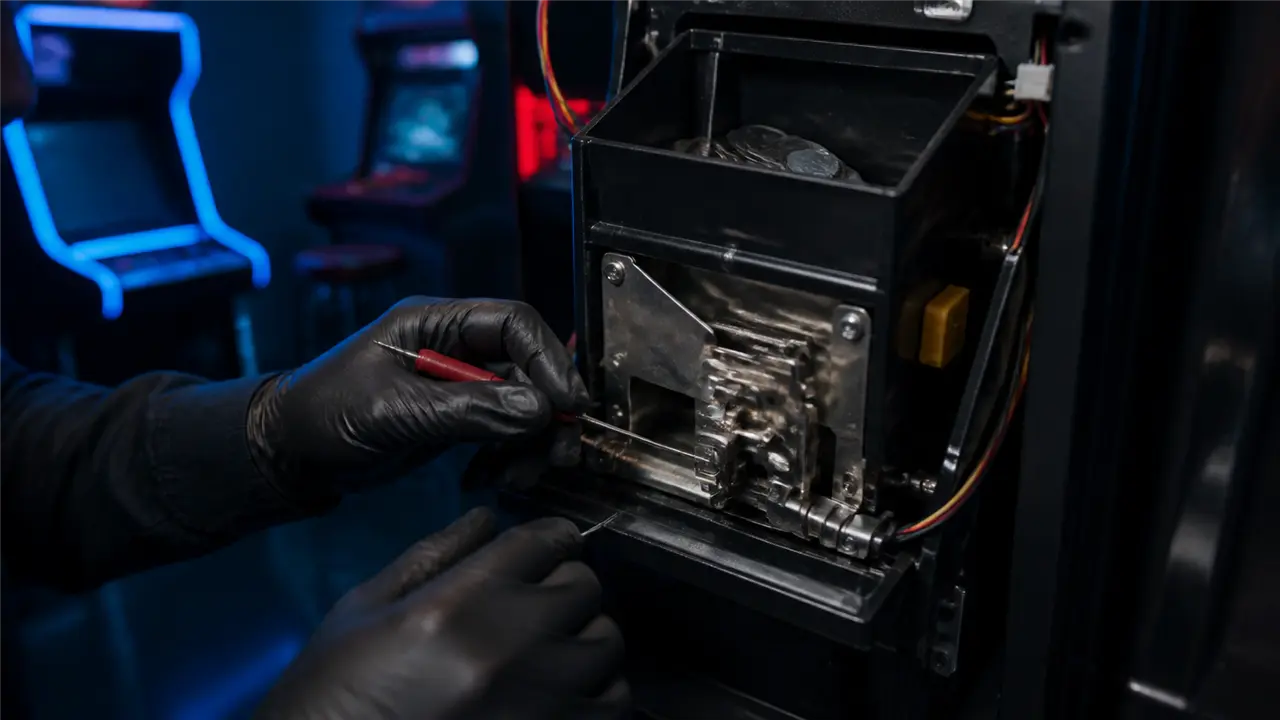
While the physical cabinet draws the players in, the game board is the brain that secures your profit. For an operator, the Return to Player (RTP) percentage is not just a theoretical number; it is the fundamental business metric that dictates cash flow. A flawed mathematical model or an unstable Random Number Generator (RNG) can result in wild payout swings, temporarily bankrupting the machine and requiring constant manual fills from your floor staff. We design our 8 player electronic roulette game boards to provide mathematical certainty.
Deterministic RNG and Cryptographic Payout Control
Our game logic operates on an embedded Linux system running on a ruggedized ARM Cortex quad core processor. The RNG algorithm is cryptographically secure and rigorously tested over millions of simulated spins in our QA lab to ensure uniform distribution. We allow operators to configure the RTP parameters securely via an encrypted operator backend, typically ranging from 92 percent to 96 percent depending on local regulations and venue preference. Once set, the system mathematically enforces this hold percentage over the operating cycle. There are no unpredictable payout explosions. The machine intelligently manages volatility, ensuring that while players experience the thrill of massive wins, the operator’s mathematical edge remains completely uncompromised at the end of the month.
Multi Layered Watchdog Timers and Auto Recovery
Software crashes in inferior machines require a technician to physically unlock the cabinet and cycle the power, resulting in unacceptable downtime. Our boards feature dual hardware watchdog timers. These are independent microcontrollers that constantly monitor the heartbeat of the main game application. If the game logic freezes for more than 500 milliseconds due to an anomaly, the watchdog instantly cuts and restores power to the CPU, rebooting the system in under 15 seconds. Crucially, the current state of all player credits, bets, and the RNG seed are written to non volatile NVRAM every 10 milliseconds. After an auto recovery reboot, the machine resumes the exact state it was in prior to the interruption. Players do not lose their credits, and you do not lose your revenue or face angry disputes.
Defeating Cheats and Electromagnetic Interferences
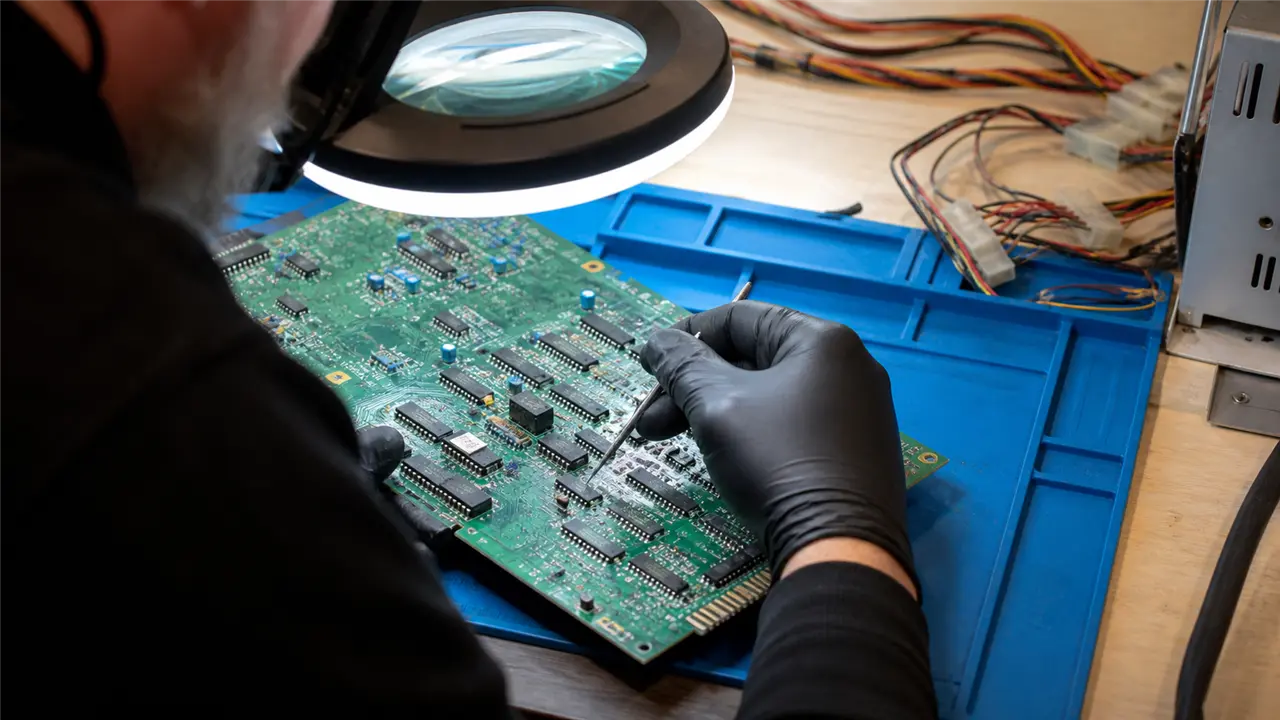
Arcade venues are frequently targeted by sophisticated cheating rings using electromagnetic pulse (EMP) devices, frequency jammers, and mechanical fishing tools to steal credits. An operator’s profit margin can be decimated in a single evening if a machine is vulnerable. Protecting your cash box is our highest engineering priority. We have implemented military grade countermeasures within the 8 player electronic roulette machine to neutralize these threats before they can execute a successful attack.
EMP Surge Clamping and Faraday Shielding
EMP jammers emit high voltage, high frequency bursts designed to confuse the coin comparator or bill acceptor into registering fake credits. Our defense is twofold. First, the internal cash box and sensitive logic boards are encased in a grounded Faraday cage that absorbs and dissipates external electromagnetic radiation. Second, we integrate transient voltage suppression (TVS) diodes and fast acting optocouplers on every single input line connecting the payment peripherals to the mainboard. If an EMP burst hits the coin slot, the TVS diode clamps the voltage spike in under 5 picoseconds, shunting the destructive energy safely to ground. The mainboard simply ignores the noise, and the would-be thief wastes their time and battery.
AI Driven Anti Fishing and Coin Validation
Mechanical stringing or fishing involves attaching a thin wire to a coin or token and pulling it back out after the credit is registered. We eliminate this threat by utilizing dual stage optical and mechanical coin acceptors. As the coin passes through, it must break two independent infrared beams in a specific timing sequence dictated by gravity. If the sensor detects reverse motion or a timing anomaly indicative of a string, the system instantly triggers a lockdown state. The machine sounds a localized alarm, disables the betting interface for that specific player station, and logs a critical security event in the operator backend. Furthermore, the bill acceptors feature deep anti stringing teeth and dynamic validation algorithms that update to reject the latest counterfeit currency notes.
> Need to understand the deep technical architecture of our anti cheat systems? > Request our exclusive Arcade Security Whitepaper. It details our proprietary pulse isolation circuits and AI anomaly detection algorithms.
Real World Operational Economics and ROI Breakdown
Engineering excellence is meaningless if the machine does not make business sense for your venue. The 8 player electronic roulette machine is designed to be a high density profit center. By accommodating eight players simultaneously in a relatively compact footprint, you maximize the revenue generated per square foot of your arcade floor. Below is a conservative real world Return on Investment projection based on aggregate data from our international clients operating in mid to high traffic venues.
| Operational Metric | Estimated Value |
|---|---|
| Initial Hardware Investment | Contact for Factory Direct Pricing |
| Average Hourly Drop Per Seat | $15.00 |
| Total Hourly Drop (8 Seats Active 50%) | $60.00 |
| Daily Revenue (10 Hours Operation) | $600.00 |
| Operator Net Profit (Assuming 94% RTP) | $36.00 / Day |
| Monthly Gross Profit (30 Days) | $1,080.00 |
| Estimated ROI Payback Period | 3 to 5 Months |
This aggressive payback period is achieved because the hardware requires virtually zero ongoing maintenance, and the automated game cycle requires no live dealer or constant floor attendant supervision. The machine is a self contained, high efficiency revenue generator.
Factory Acceptance Test Quality Assurance Inspection Checklist
Before any 8 player electronic roulette machine is loaded into a shipping container at our Panyu facility, it must pass a grueling Factory Acceptance Test (FAT). We do not outsource our quality control. My engineering team personally signs off on every unit. This checklist ensures that when you unpack the machine on your floor, it is plug and play ready.
- Continuous 72 Hour Burn In Test (All systems running under maximum simulated load)
- Multi Point Stepper Motor Calibration (Verifying zero mechanical wheel bias)
- EMP Resistance Injection Testing (Subjecting coin and bill acceptors to 100kV static shocks)
- NVRAM State Recovery Verification (Simulating hard power cuts during active betting cycles)
- Coin Hopper Dispense Accuracy (Dispensing 10,000 tokens with zero miscounts or jams)
- Network Interface and Operator Backend Synchronization Check
- Ground Fault and Chassis Isolation Testing (Ensuring maximum player safety)
Actionable Operator Troubleshooting Guide and Pinout Table
Even with industrial grade components, operators need the ability to quickly diagnose and resolve minor issues without waiting for an external technician. We design our wiring harnesses for maximum clarity. Every cable is color coded and labeled, and the main logic board features diagnostic LED indicators.
| Diagnostic Code | LED Indicator Status | Identifying the Root Cause | Recommended Operator Action |
|---|---|---|---|
| ERR-01 | Main CPU Board Flashing Red | NVRAM Backup Battery Low | Hot swap the CR2032 battery on the mainboard while powered on to retain settings. |
| ERR-04 | Player Station 3 Solid Yellow | Bill Acceptor Jam Detected | Open station 3 panel, clear the physical note path, and press the internal reset toggle. |
| ERR-07 | Wheel Controller Flashing Blue | Optical Sensor Dust Interference | Use compressed air to clean the infrared sensor array surrounding the roulette wheel track. |
| ERR-09 | Hopper Board Solid Red | Low Token Level or Jam | Refill the hopper reservoir. If full, agitate the tokens to clear any bridging at the funnel exit. |
| ERR-12 | Power Supply Rail B Flashing | 12V Rail Under Voltage | Inspect the 12V Mean Well power supply for overheating. Check for loose terminal connections. |
Streamlined Maintenance for Zero Floor Disruption
We understand that opening up a machine on a busy Saturday night looks bad to your patrons. Therefore, we engineered the cabinet for modular front access. The coin hoppers, bill acceptors, and player input panels are mounted on heavy duty sliding rails. If a bill acceptor jams, your floor manager can unlock the specific player station door, slide the unit out, clear the jam, and slide it back in under 60 seconds without disrupting the other seven players at the table. The main logic board and power supplies are housed in a secure, isolated lower cabinet that is completely separate from the cash handling systems, preventing accidental damage during routine cash collection.
Related Engineering References and Floor Operational Guides
- For our factory engineering standards, review our multiplayer electronic roulette manufacturing framework.
- For multiplier calibration, see our Forest Dance and animal roulette setup guide.
- Inspect anti-cheating laser circuits in our electronic roulette motherboard sensor calibration guide.
- Calculate coin-in margins using our casino-grade roulette machine ROI model.
Frequently Asked Questions About 8 Player Electronic Roulette Machines
How does the 8 player electronic roulette machine prevent EMP attacks?
Our machines combat EMP attacks through a combination of physical Faraday shielding around sensitive components and electronic transient voltage suppression. We install high speed optocouplers and clamping diodes on all peripheral input lines. When an EMP jammer attempts to inject a high voltage pulse to simulate a coin drop, our circuitry instantly shunts that excess energy to ground, protecting the main CPU and completely ignoring the fake credit signal.
Can I customize the payout RTP percentage for my specific jurisdiction?
Absolutely. We provide a secure, password protected operator menu accessible via the main touchscreen or a wired backend terminal. Through this interface, venue operators can adjust the mathematical hold percentage, usually within a range of 92 to 96 percent. This flexibility ensures you remain compliant with local gaming regulations while optimizing your venue’s profitability based on your specific operational overhead and player demographics.
What is the typical lifespan of the mechanical roulette wheel before calibration is needed?
The mechanical wheel is driven by closed loop industrial stepper motors and rests on heavy duty, sealed steel bearings. Under normal 24/7 arcade conditions, the physical mechanism is designed to operate flawlessly for over five years without requiring manual recalibration. The integrated optical sensors continuously monitor the wheel’s performance, and the system can self correct minor micro stepping deviations automatically.
Do you provide the bill acceptors and ticket printers integrated out of the box?
Yes, we offer fully turnkey solutions. During the ordering process from our Panyu factory, you can specify your exact currency and preferred peripheral brands (such as ICT, MEI, or JCM for bill acceptors, and Custom or Ithaca for thermal ticket printers). We integrate, wire, and test these peripherals during the Factory Acceptance Test so the machine is entirely ready for your specific floor operations the moment it is unpacked.
How long does it take to manufacture and ship a custom branded unit from the Panyu factory?
For standard configurations of the 8 player electronic roulette machine, our typical manufacturing lead time is 15 to 20 business days. If you require deep custom branding, unique cabinet colors, or specialized software localization, the lead time extends to approximately 25 to 30 days. We coordinate directly with international freight forwarders to ensure safe, crated ocean or air freight delivery directly to your venue or local port.
> Stop losing revenue to machine downtime and sophisticated cheaters. > Partner with a true manufacturer. Contact Engineer Wang directly for factory direct pricing, customized PCB architecture discussions, and to arrange a live video tour of our Panyu QA testing facility. > WhatsApp / WeChat: +86 17620842078 > Telegram: https://t.me/JLwyc > Email: miba515527@gmail.com