- Architectural Comparison of Ownership vs Rental Models
- Core Architecture of Modern Sweepstakes Slot Game Engines
- Mathematical Models RTP Calibration and Dynamic Volatility Engines
- Dual-Currency Compliance Architecture and Cashier Workflows
- Security Auditing Code Obfuscation and Anti-Tamper Safeguards
- Full Source Code Deliverables and Multi-Platform Deployment Pipeline
- Step-by-Step Server Setup and Go-Live Roadmap for Operators
- Frequently Asked Questions
Acquiring a high-performance gaming platform demands rigorous evaluation of technological debt, compliance architecture, and long-term operating expenses. Many emerging B2B operators face a harsh reality when purchasing unverified, decompiled software that often harbors malicious backdoors, trojans, or highly unstable state management. Alternatively, operators relying on closed-box Software-as-a-Service providers face punitive revenue-share penalties that strip away profits while offering zero control over the core mathematical models. Securing legitimate custom sweepstakes slot source code eliminates these vendor lock-in risks, granting operators full autonomy over RTP hold control, database sovereignty, and multi-platform low-latency deployments. By transitioning from a recurring revenue-share model to an outright buyout of proprietary source code, gaming syndicates and platform managers can establish highly scalable, compliant, and defensible digital gaming halls. We invite technical directors and operators to test our live WebGL slot demo sandbox to experience the seamless performance and robust state management engineered by our dedicated teams.
Architectural Comparison of Ownership vs Rental Models
Before committing capital to software infrastructure, gaming operators must understand the structural differences between procuring a buy turnkey online casino source code package versus integrating a rented API aggregator feed, weighing comprehensive arcade game development cost estimates and source code buying factors against long-term operational scale. The table below outlines the distinct engineering and commercial dynamics of the three dominant deployment models in the iGaming and sweepstakes sector. For a comprehensive architectural overview and turnkey procurement frameworks, review our master guide on turnkey online gaming software source code. For factory-direct procurement and comprehensive engineering specs, consult our master guide on custom arcade game software studio engineering.
| Evaluation Metric | Full Proprietary Source Code Ownership | Turnkey White-Label SaaS | Rented API Aggregator Feeds |
|---|---|---|---|
| **Initial CAPEX** | High upfront investment | Moderate setup fees | Low integration cost |
| **Monthly OPEX & Rev-Share** | Zero ongoing revenue share | 10% to 25% gross gaming revenue | 8% to 15% aggregator fees |
| **Customization Depth** | Absolute control over UI, math, and network layers | Limited to frontend skinning and branding | None (third-party iframe rendering only) |
| **Deployment Time** | 4 to 8 weeks for custom configuration | 2 to 4 weeks | 1 to 2 weeks |
| **Math Model Control** | Direct manipulation of RTP, hit frequency, and variance | Fixed presets determined by the provider | Strictly controlled by the game studio |
| **Database Ownership** | 100% proprietary ownership of player data and ledgers | Shared or strictly walled off by SaaS provider | No access to raw player session data |
Core Architecture of Modern Sweepstakes Slot Game Engines

Developing high-fidelity digital slot experiences requires a robust, decoupled architecture separating the client-side presentation layer from the server-side state authority. As a leading custom online casino games developer, our engineering approach mandates strict separation of concerns. The frontend rendering engine utilizes Unity C# coupled with WebGL deployment pipelines. This ensures cross-platform compatibility across desktop browsers and mobile web environments without requiring dedicated app store installations, thus bypassing restrictive vendor guidelines. To explore detailed technical specifications and deployment considerations, see our operational guide on How Operators Deploy Turnkey Fish Game WebGL. To explore detailed technical specifications and deployment considerations, see our operational guide on How White Label Online Gaming Hall Software. To explore detailed technical specifications and deployment considerations, see our operational guide on How B2B Studios Build Telegram Mini App. To explore detailed technical specifications and deployment considerations, see our operational guide on How Platform Operators Select a Custom Online. To explore detailed technical specifications and deployment considerations, see our operational guide on How B2B Operators Select a Teen Patti. To explore detailed technical specifications and deployment considerations, see our operational guide on How Operators Deploy PWA Online Casino Game. To explore detailed technical specifications and deployment considerations, see our operational guide on How Studios Build Plinko Game Source Code. To explore detailed technical specifications and deployment considerations, see our operational guide on How Studios Engineer Custom WebGL Fish Shooting.
Within the client application, we implement Spine 2D skeletal rigging rather than traditional frame-by-frame sprite animation. Spine animations calculate skeletal interpolations at runtime, drastically reducing memory footprints while maintaining crisp 60 FPS performance on lower-tier Android and iOS hardware. Sprite batching techniques and texture atlas optimizations further minimize draw calls to the GPU.
The communication layer relies on persistent WebSocket connections for real-time state synchronization, completely discarding RESTful polling mechanisms for game rounds. When a player initiates a spin, the Unity client sends an encrypted packet to the game server. The backend, built as highly concurrent Golang or Node.js microservices, executes the cryptographic RNG generation, calculates the matrix outcome, updates the player balance, and transmits the deterministic result back to the client. The client then animates the reels to match the predetermined server outcome. This authoritative server model ensures that any client-side tampering or memory injection attempts by malicious actors are mathematically futile, as the final source of truth remains isolated on the backend server.
Mathematical Models RTP Calibration and Dynamic Volatility Engines
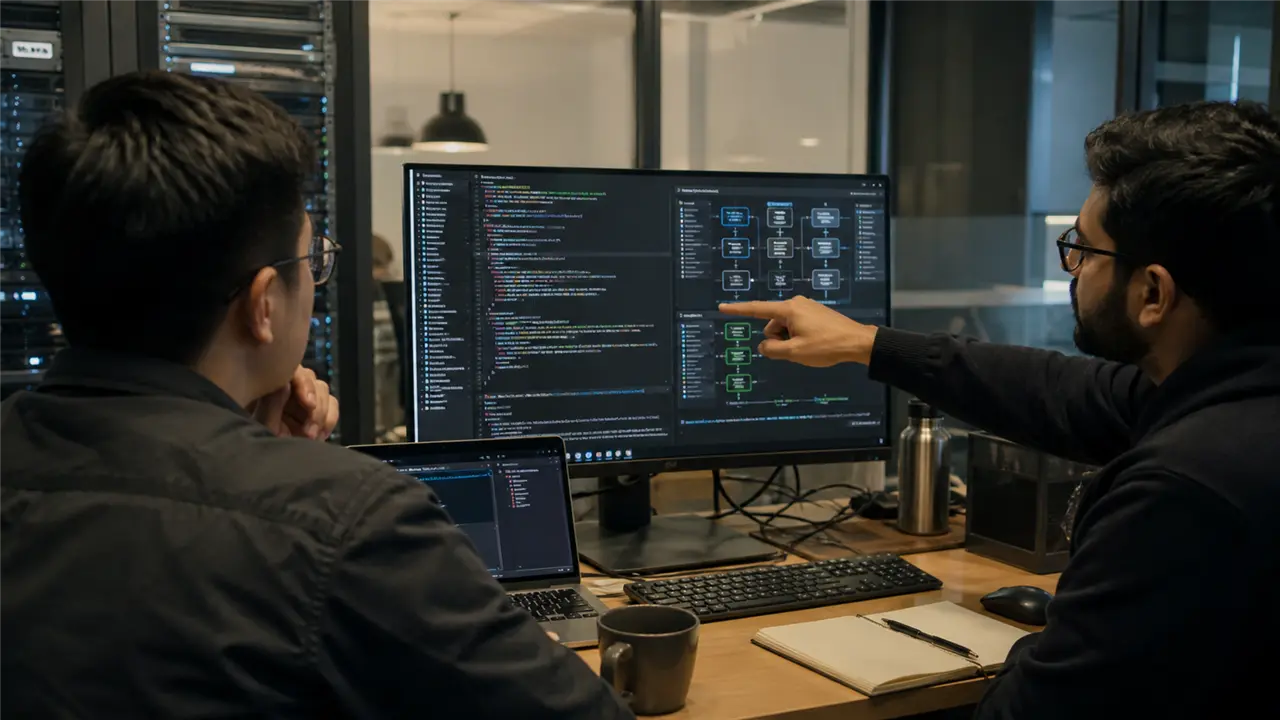
The commercial viability of any sweepstakes platform relies entirely on the precision and stability of its mathematical models. Much like our RTP math engine architecture and odds volatility calibration designed for commercial route operations, high-tier custom slot game unity source code must incorporate deterministic, statistically verified mathematics. Our mathematical engines allow operators to precisely calibrate the Return to Player (RTP) parameters, typically ranging from 88% to 98% depending on jurisdictional compliance and the operator’s targeted profit margins.
Achieving specific variance profiles requires complex probability matrix engineering. Hit frequency determines how often a player achieves a winning combination, while payout variance curves dictate the magnitude of those wins. A high-volatility engine will generate infrequent but massive payouts, appealing to risk-tolerant demographics, whereas low-volatility models provide steady, smaller rewards to maximize session length.
Furthermore, our systems integrate multi-tier Jackpot algorithms featuring Mini, Minor, Major, and Grand progressive or fixed pools. These pools calculate fractional seed contributions per spin, storing the fractional logic in Redis instances for atomic, thread-safe increments. To ensure regulatory compliance in top-tier jurisdictions, our random number generation relies on GLI-19 compliant pseudo-random distribution mechanisms. We utilize cryptographically secure pseudo-random number generators (CSPRNG) seeded with high-entropy environmental noise, guaranteeing uniformly distributed and unpredictable spin outcomes. Operators have access to extensive administrative dashboards to simulate millions of spins via Monte Carlo testing, validating the actual RTP against theoretical payout curves before pushing any custom sweepstakes slot source code to production environments.
Dual-Currency Compliance Architecture and Cashier Workflows

The United States sweepstakes model necessitates a rigorous dual-currency architecture to comply with complex federal and state sweepstakes statutes. White label online gaming hall software must natively separate Gold Coins (GC) and Sweeps Coins (SC) into distinct, non-fungible ledgers. Gold Coins function strictly as a virtual entertainment currency with no intrinsic fiat value, purchasable by players for recreational gameplay. Sweeps Coins, however, are promotional tokens awarded as free bonuses bundled with Gold Coin purchases.
Our source code infrastructure embeds this closed-loop dual-ledger system directly into the database schemas and application logic, integrating seamlessly with multi-tier agent backend systems for arcade operators to handle credit settlement and risk auditing. The cashier workflow mandates strict validation checks to prevent the direct purchase of Sweeps Coins, maintaining the legal distinction of a promotional sweepstakes rather than traditional gambling. Additionally, the system includes built-in Mail-In Alternative Method of Entry (AMOE) processing modules, allowing operators to manually credit SC to players who submit compliant mail-in requests, a critical legal requirement for sweepstakes operations.
Daily login rewards and automated VIP progressive bonuses are tightly integrated into the core retention loops. To mitigate fraud and comply with FinCEN regulations, our cashier gateways feature out-of-the-box API integrations with leading KYC (Know Your Customer) and AML (Anti-Money Laundering) verification providers. Before a player can redeem SC for fiat currency, the system automatically triggers ID verification, facial recognition matching, and sanction list screening. The microservice handling redemptions enforces maximum daily limits, manual review triggers for large withdrawals, and precise transaction logging to provide unalterable audit trails for regulatory bodies.
Security Auditing Code Obfuscation and Anti-Tamper Safeguards
Deploying real-money or high-value sweepstakes platforms exposes servers to continuous, sophisticated adversarial attacks. Securing a custom sweepstakes slot source code package requires implementing military-grade cryptographic protocols at every network layer. The frontend Unity binaries undergo advanced anti-decompilation and code obfuscation processes. Using specialized IL2CPP compilation combined with string encryption and symbol stripping, we render the client-side executable virtually unreadable to reverse engineers utilizing tools like dnSpy or IDA Pro.
Network communication between the client and the Golang/Node.js backend relies exclusively on WSS (WebSocket Secure) with TLS 1.3 encryption. To defeat packet replay attacks, every spin request includes a dynamically generated cryptographic nonce and a sequential transaction hash signed by the client’s session token. If an attacker attempts to intercept and replay a winning spin packet, the server’s state machine rejects the duplicated nonce instantly, flagging the account for manual review.
Backend database architecture utilizes isolated transaction sharding. High-speed, volatile data such as active session tokens, real-time jackpot increments, and leaderboard standings are managed within Redis clusters configured for high availability. Core financial ledgers and persistent player states are committed to vertically scaled PostgreSQL databases employing strict ACID compliance. We utilize memory tampering defense algorithms on the server side to detect any anomalous memory injection within the Node.js or Golang runtimes. By establishing a zero-trust architecture internally, even if an individual microservice is compromised, the blast radius is contained, preventing unauthorized modification of global currency ledgers.
Full Source Code Deliverables and Multi-Platform Deployment Pipeline
When an operator purchases our buy turnkey online casino source code, they receive complete, unrestricted access to the entire technological stack. We do not provide obfuscated DLLs or locked server binaries. The deliverable package includes the uncompiled Unity C# project files, allowing in-house technical artists and developers to modify particle systems, adjust Spine animations, and implement brand-specific UI elements.
The backend deliverables contain the complete Golang and Node.js microservice repositories, thoroughly documented RESTful cashier API schemas for third-party integrations, and raw SQL/NoSQL database schemas. Operators receive full Git repository histories and comprehensive engineering documentation detailing the exact network protocols.
To facilitate rapid, error-free scaling, our engineering team provides robust Docker and Kubernetes containerization scripts, mirroring our enterprise practices for deploying cloud hardware control gateways in remote venues. This CI/CD pipeline allows DevOps teams to automate deployments across AWS, Google Cloud, or bare-metal infrastructures. By defining the infrastructure as code (IaC) via Terraform and Helm charts, operators can spin up highly available server clusters in multiple geographic regions within minutes. This containerized approach ensures environmental parity between staging, QA, and production, drastically reducing the “works on my machine” friction that plagues monolithic software deployments.
Step-by-Step Server Setup and Go-Live Roadmap for Operators
Successfully launching a white label online gaming hall software platform requires a disciplined, multi-phase deployment roadmap. Our engineering team at Arcade Manufacturer acts as an extension of your CTO, guiding your technical staff through a rigorous five-step go-live procedure to ensure zero downtime and absolute data integrity.
Step 1 encompasses bare-metal or cloud server provisioning. We collaborate with your DevOps engineers to size the Kubernetes clusters appropriately, configuring load balancers, configuring PostgreSQL master-slave replication, and deploying Redis Sentinel for cache failover. Network security groups are strictly defined to isolate the database subnets from the public internet.
Step 2 focuses on gateway and payment configuration. Your engineering team will utilize our unified API endpoints to integrate regional payment processors, configure webhook listeners for asynchronous deposit confirmations, and establish the automated KYC verification flows tailored to your targeted jurisdictions.
Step 3 involves math model stress-testing. Using our proprietary headless simulation clients, we bombard the staging server with millions of concurrent spin requests. This phase validates the RTP calibration, verifies the backend scalability under heavy concurrent loads, and ensures that the random number generator maintains standard distribution over a massive dataset.
Step 4 requires comprehensive staging QA and pen-testing. We recommend engaging third-party cybersecurity firms to execute simulated SQL injection, cross-site scripting (XSS), and DDoS attacks against the staging environment. Any identified vulnerabilities are patched immediately. Simultaneously, QA analysts verify cross-browser compatibility and mobile responsiveness.
Step 5 executes the global multi-region launch. DNS routing is configured via Cloudflare or AWS Route 53 for geo-latency optimization. The production databases are initialized, and the platform transitions into a live state with comprehensive Datadog or Prometheus monitoring dashboards actively tracking memory usage, CPU load, and real-time gaming revenue metrics.
Frequently Asked Questions
Do operators receive full legal ownership of the custom sweepstakes slot source code?
Yes, operators who purchase our enterprise packages receive a perpetual, non-exclusive commercial license to the complete, uncompiled source code. This grants you the legal right to modify the frontend assets, alter backend logic, and host the software on your proprietary server infrastructure without any recurring revenue-share obligations.
How long does it take to customize the UI and mathematical models for a new launch?
For a standard UI reskin modifying visual assets, logos, and color palettes, customization typically requires 3 to 4 weeks. If an operator requires fundamentally new game mechanics, bespoke mathematical volatility engines, or complex third-party API integrations, the development lead time extends to 6 to 10 weeks depending on the technical scope.
Can we evaluate a live demo environment before committing to the source code purchase?
Absolutely. We provide dedicated staging environments allowing your technical directors and QA teams to thoroughly evaluate the frontend WebGL performance, backend administrative dashboards, and the mathematical RTP reporting tools in real-time.
What are the minimum server specifications required to run this software stack in production?
For an entry-level production environment supporting up to 5,000 concurrent players, we recommend a distributed setup featuring at least three application server nodes (8-core CPU, 16GB RAM each), a dedicated PostgreSQL database instance (16-core CPU, 64GB RAM, NVMe SSDs), and a Redis caching layer, preferably orchestrated within a managed Kubernetes cluster.
Do you provide ongoing technical maintenance and security patches after the platform goes live?
While the source code buyout grants you independence, we offer optional Service Level Agreements (SLAs). Under an SLA, our engineering team provides tier-3 backend support, routine security patching, database optimization consulting, and immediate remediation for any critical server anomalies.
For enterprise B2B inquiries regarding custom sweepstakes slot source code acquisition, specialized game math development, or white-label server deployments, connect directly with our engineering division. Arcade Manufacturer (Guangzhou Miba Animation Technology Co., Ltd.), operating out of our Panyu Manufacturing Base, builds high-performance, compliant iGaming architectures for global operators.
Contact Engineering Division:
- Engineer Wang
- WhatsApp / WeChat: +86 17620842078
- Email: miba515527@gmail.com