- Input Velocity and Frequency Analysis
- Payout Probability Distribution Monitoring
- State Space Cryptographic Hashing
- Peripheral Telemetry Cross Validation
- Networked Baseline Aggregation
- Parameter Comparison Table
- Advanced PCB Layer Isolation and High Voltage Pulse Hardening Architecture
- Operator Standard Operating Procedures and Incident Response Playbook
- Advanced PCB Layer Isolation and High Voltage Pulse Hardening Architecture
- Operator Standard Operating Procedures and Incident Response Playbook
- Frequently Asked Questions
Modern arcade routes demand sophisticated custom anti cheat software coupled with real-time mathematical anomaly detection to prevent organized payout fraud. When hardware defenses are bypassed, statistical analysis of game states becomes the final barrier against revenue hemorrhaging caused by sophisticated manipulation tools.
By analyzing input frequencies, payout velocity, and win probability distributions, advanced software engines can instantly identify cheating behaviors. These algorithms run on isolated secure processors, cross-referencing live telemetry with historical baselines to freeze cabinets the millisecond a mathematical threshold is breached. To deploy advanced statistical anti-cheat engines, contact Engineer Wang at Guangzhou Miba Animation Technology Co., Ltd. (Panyu Manufacturing Base). WhatsApp: +86 17620842078, Telegram: https://t.me/JLwyc, Email: miba515527@gmail.com. For factory-direct procurement and comprehensive engineering specs, consult our master guide on commercial arcade loss prevention and hardware hardening.
Input Velocity and Frequency Analysis
Human players operate within well-defined biomechanical limits. Custom anti cheat software continuously polls the input matrix of the arcade cabinet, measuring the time delta between joystick movements and button presses. If the input velocity exceeds realistic human capability—such as executing frame-perfect rapid-fire sequences consistently over long durations—the software flags the behavior as macro-scripted or hardware-injected.
Payout Probability Distribution Monitoring
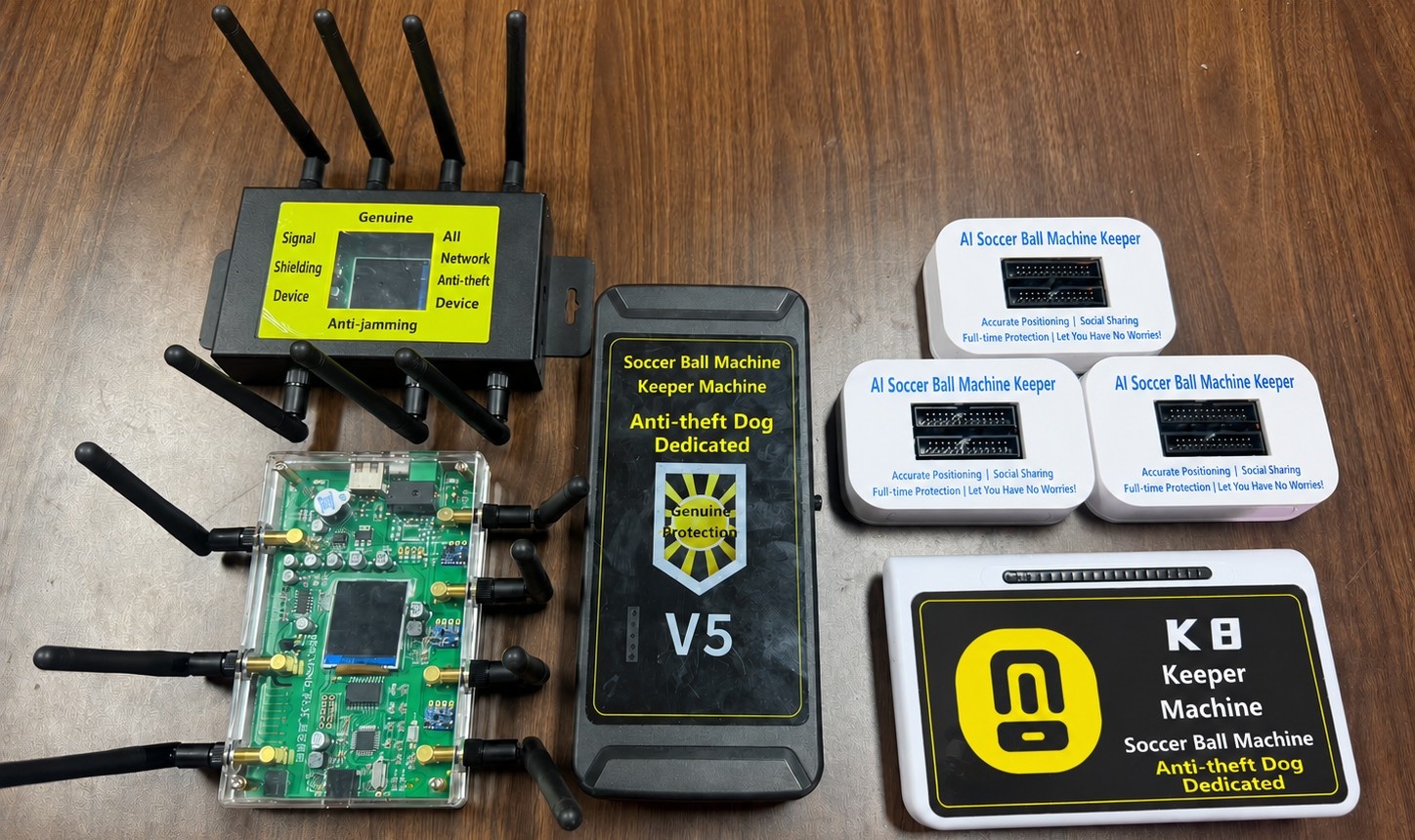
Every arcade and slot game relies on a mathematically defined Return to Player percentage and payout variance. Real-time anomaly detection algorithms dynamically calculate the standard deviation of recent payouts against the theoretical model. If a machine experiences a cluster of high-tier payouts that falls outside a 3-sigma confidence interval, the system initiates a payout freeze. This prevents attackers who have compromised the RNG from draining the hopper before intervention.
State Space Cryptographic Hashing
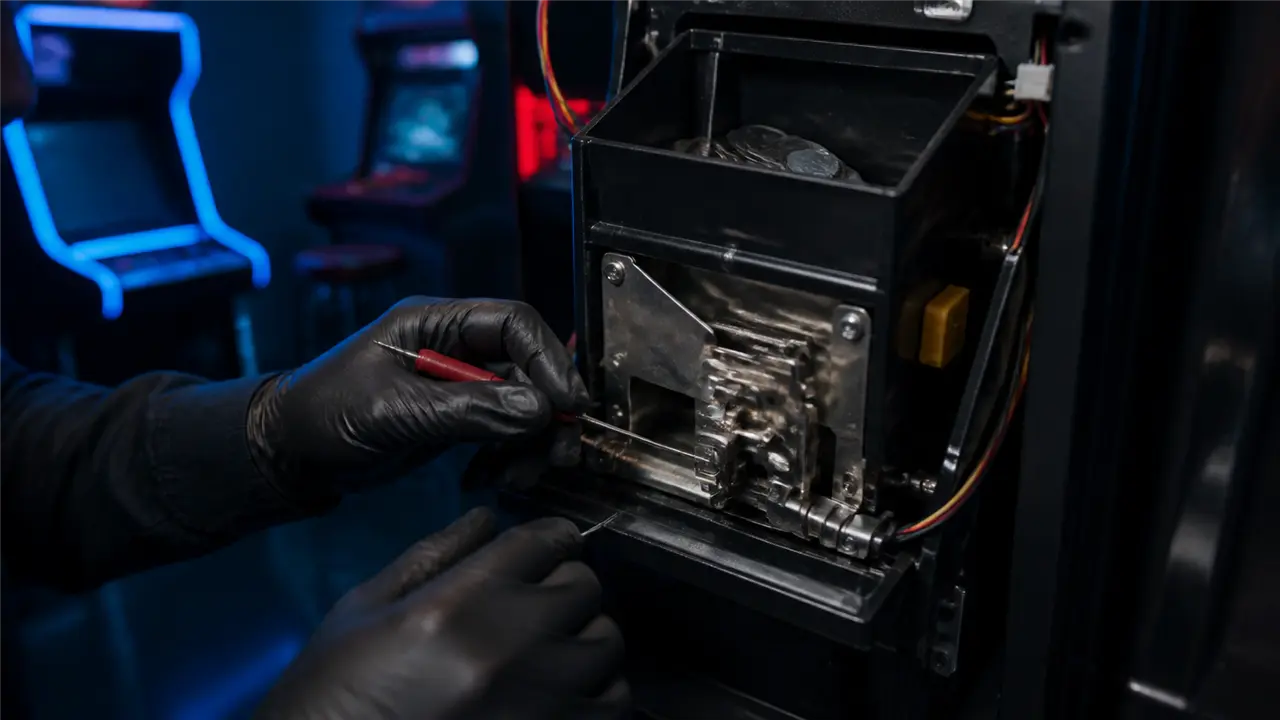
To ensure the game’s logic has not been altered in volatile memory, the anti-cheat engine performs continuous state space cryptographic hashing. Critical game variables, such as current credits, RNG seeds, and player score, are combined with a localized nonce and hashed using SHA-256. This hash is compared against an expected state generated by a secondary, isolated microprocessor. Any deviation indicates a memory injection attack, prompting an immediate machine lockout.
Peripheral Telemetry Cross Validation

Attackers often manipulate the coin comparator or bill validator to register false credits. The anomaly detection software cross-validates the logical credit count with physical telemetry from the coin hopper and validator optical sensors. If the software registers 100 credits, but the optical drop sensors only logged 10 physical coins, the mathematical discrepancy immediately triggers a severe tamper alert and disables the cabinet.
Networked Baseline Aggregation
Standalone detection is powerful, but networked aggregation provides route-wide intelligence. Telemetry from every cabinet is encrypted and streamed to a central server. Machine learning models establish dynamic baselines for normal gameplay across different times of day and locations. If a specific cabinet begins exhibiting statistical anomalies compared to its peer group, route operators receive an automated push notification to inspect the unit for localized tampering.
Parameter Comparison Table
| Security Metric | Standard Arcade Software | Custom Anti Cheat Software |
|---|---|---|
| Input Analysis | Basic Debounce | Biomechanical Velocity Tracking |
| Payout Monitoring | End-of-Day Audit | Real-Time 3-Sigma Variance Check |
| Memory Protection | None | Continuous SHA-256 State Hashing |
| Credit Validation | Single Point Logical | Multi-Sensor Physical Cross-Check |
| Route Intelligence | Local Only | Networked Machine Learning Baselines |
Advanced PCB Layer Isolation and High Voltage Pulse Hardening Architecture
In commercial route operations and high-stakes casino floors, transient voltage surges from high-frequency EMP jammers can easily induce parasitic latch-up in sensitive microcontroller CMOS gates. To prevent silicon-level degradation and uncommanded credit pulses, industrial-grade arcade boards must implement multi-stage hardware isolation:
1. Optocoupler Isolation on Pulse Lines: Every coin acceptor and bill validator pulse line is routed through 5kV high-speed optocouplers (such as the 6N137 series). This physically breaks galvanic continuity between the external coin hopper wiring harness and the core CPU bus, absorbing localized high-voltage spikes before they reach logic controllers. 2. Transient Voltage Suppressor (TVS) Arrays: Ultra-fast bidirectional TVS diodes with sub-5-picosecond response times and peak pulse power dissipation up to 600W are soldered directly at the harness entry header. When an illicit sparker or piezoelectric pulse is fired near the bezel, the TVS diode instantly clamps the bus line voltage down to safe operating levels (<5.5V DC). 3. Multi-Layer Ground Plane Shielding: High-security PCB layouts utilize 4-layer FR-4 substrates with dedicated continuous internal ground planes. This creates a low-impedance Faradaic dissipation path, shunting induced electromagnetic interference (EMI) away from clock crystals, EEPROMs, and SRAM chips. 4. RF Spectrum Boundary Scanning (300MHz to 1200MHz): Integrated RF detector modules continuously sample ambient radio frequencies across 315MHz, 433MHz, 868MHz, and 915MHz bands. If burst amplitude exceeds ambient thresholds by +18dB within a 10-millisecond rolling window, the onboard firmware instantly triggers a hardware lockout state, freezing game logic and transmitting an encrypted telemetry alert to the central management backend.
| Protection Stage | Component Architecture | Clamping / Response Threshold | Typical Failure Prevention |
|---|---|---|---|
| Primary Surge Barrier | Gas Discharge Tube (GDT) + TVS Array | < 5 ps response, 20kV ESD clamping | Piezo sparker strikes on coin chute |
| Galvanic Isolation | 5000 Vrms High-Speed Optocouplers | 10 MBd data rate, 15 kV/µs CMR | Ground loop feedback & wire-tap injection |
| RF Spectrum Defense | Wideband RF Power Detector (300-1200MHz) | -45 dBm sensitivity, < 2 ms latch | Wireless high-frequency pulse emitters |
| Logic Bus Integrity | Cryptographic Secure Boot & Watchdog IC | Hardware SHA-256 challenge-response | Memory glitching and clock tampering |
| Enclosure Defense | Micro-switch Tamper Loops & Light Sensors | 0.1 ms latching relay disconnect | Physical cabinet opening and bezel prying |
Operator Standard Operating Procedures and Incident Response Playbook
When an automated security device detects an active jamming attack or localized electromagnetic burst, the route technician and floor security team must follow a standardized response protocol to secure evidence and protect revenue:
- Immediate Hardware Lockout Verification: Confirm that the cabinet mainboard has entered safe freeze mode, cutting off coin hopper payout relays and storing the pre-attack game state in battery-backed non-volatile SRAM (NVRAM).
- Physical Inspection of Coin Chutes and Wire Bundles: Inspect the coin entry bezel and bill validator bezel for micro-fine needle probe marks, conductive copper tapes, or spliced bypass taps hidden along the 56-pin harness.
- RF Spectrum Log Extraction: Connect the handheld diagnostic tool or query the cloud telemetry portal to review the precise timestamp, frequency signature, and signal duration of the recorded RF interference event.
- Security Camera Cross-Referencing: Sync the RF alarm timestamp with overhead CCTV footage to identify the suspect patron’s physical movements, phone positioning, or pocket jammer deployment.
Advanced PCB Layer Isolation and High Voltage Pulse Hardening Architecture
In commercial route operations and high-stakes casino floors, transient voltage surges from high-frequency EMP jammers can easily induce parasitic latch-up in sensitive microcontroller CMOS gates. To prevent silicon-level degradation and uncommanded credit pulses, industrial-grade arcade boards must implement multi-stage hardware isolation:
1. Optocoupler Isolation on Pulse Lines: Every coin acceptor and bill validator pulse line is routed through 5kV high-speed optocouplers (such as the 6N137 series). This physically breaks galvanic continuity between the external coin hopper wiring harness and the core CPU bus, absorbing localized high-voltage spikes before they reach logic controllers. 2. Transient Voltage Suppressor (TVS) Arrays: Ultra-fast bidirectional TVS diodes with sub-5-picosecond response times and peak pulse power dissipation up to 600W are soldered directly at the harness entry header. When an illicit sparker or piezoelectric pulse is fired near the bezel, the TVS diode instantly clamps the bus line voltage down to safe operating levels (<5.5V DC). 3. Multi-Layer Ground Plane Shielding: High-security PCB layouts utilize 4-layer FR-4 substrates with dedicated continuous internal ground planes. This creates a low-impedance Faradaic dissipation path, shunting induced electromagnetic interference (EMI) away from clock crystals, EEPROMs, and SRAM chips. 4. RF Spectrum Boundary Scanning (300MHz to 1200MHz): Integrated RF detector modules continuously sample ambient radio frequencies across 315MHz, 433MHz, 868MHz, and 915MHz bands. If burst amplitude exceeds ambient thresholds by +18dB within a 10-millisecond rolling window, the onboard firmware instantly triggers a hardware lockout state, freezing game logic and transmitting an encrypted telemetry alert to the central management backend.
| Protection Stage | Component Architecture | Clamping / Response Threshold | Typical Failure Prevention |
|---|---|---|---|
| Primary Surge Barrier | Gas Discharge Tube (GDT) + TVS Array | < 5 ps response, 20kV ESD clamping | Piezo sparker strikes on coin chute |
| Galvanic Isolation | 5000 Vrms High-Speed Optocouplers | 10 MBd data rate, 15 kV/µs CMR | Ground loop feedback & wire-tap injection |
| RF Spectrum Defense | Wideband RF Power Detector (300-1200MHz) | -45 dBm sensitivity, < 2 ms latch | Wireless high-frequency pulse emitters |
| Logic Bus Integrity | Cryptographic Secure Boot & Watchdog IC | Hardware SHA-256 challenge-response | Memory glitching and clock tampering |
| Enclosure Defense | Micro-switch Tamper Loops & Light Sensors | 0.1 ms latching relay disconnect | Physical cabinet opening and bezel prying |
Operator Standard Operating Procedures and Incident Response Playbook
When an automated security device detects an active jamming attack or localized electromagnetic burst, the route technician and floor security team must follow a standardized response protocol to secure evidence and protect revenue: (for full technical specifications, explore our engineering review on 300-1200MHz RF spectrum scanning and wireless cheat defense)
- Immediate Hardware Lockout Verification: Confirm that the cabinet mainboard has entered safe freeze mode, cutting off coin hopper payout relays and storing the pre-attack game state in battery-backed non-volatile SRAM (NVRAM).
- Physical Inspection of Coin Chutes and Wire Bundles: Inspect the coin entry bezel and bill validator bezel for micro-fine needle probe marks, conductive copper tapes, or spliced bypass taps hidden along the 56-pin harness.
- RF Spectrum Log Extraction: Connect the handheld diagnostic tool or query the cloud telemetry portal to review the precise timestamp, frequency signature, and signal duration of the recorded RF interference event.
- Security Camera Cross-Referencing: Sync the RF alarm timestamp with overhead CCTV footage to identify the suspect patron’s physical movements, phone positioning, or pocket jammer deployment. (for full technical specifications, explore our engineering review on arcade machine security anti-cheat hardware defense)
Frequently Asked Questions
What is mathematical anomaly detection in arcade software
Mathematical anomaly detection uses statistical models to compare real-time gameplay data against theoretical baselines. It identifies impossible input speeds or statistically improbable payout clusters that indicate cheating or hardware manipulation.
How does input velocity analysis detect cheating
It measures the exact milliseconds between button presses. If the frequency and precision of inputs exceed human biomechanical limits consistently, the system identifies the use of automated macros or injected hardware signals.
Why is cross validating peripheral telemetry important
Cross-validation ensures that logical credits match physical actions. If the software detects a high credit count but the optical sensors in the coin drop never registered physical coins, it proves a false-credit injection attack occurred.
For enterprise deployment of these systems, consult Engineer Wang at Guangzhou Miba Animation Technology Co., Ltd. (Panyu Manufacturing Base). WhatsApp: +86 17620842078. Telegram: https://t.me/JLwyc. Email: miba515527@gmail.com.