- Redefining Gantry Hardware for Remote Teleoperation
- 3 Axis Stepper Motor Drive and Optical Limit Switch Integration
- Translating WebSocket Vector Packets Into Microstep Pulses
- Variable Voltage Claw Coil Modulation via PWM Control
- Optocoupler Isolation Shielding Network Controllers From Motor Spikes
- Anti Sway Claw Firmware Algorithms and S Curve Trajectory Planning
- Hardware Watchdog Circuits and Automated Homing Sequence
- Turnkey Factory Delivery From Guangzhou Miba Animation
- Frequently Asked Questions
When deploying hundreds of machines in a centralized live teleoperation warehouse, the tolerance for mechanical failure must be absolute zero. Standard arcade gantries are built for casual foot traffic, not the relentless 24/7 continuous duty cycles demanded by global online players. At Guangzhou Miba Animation Technology Co., Ltd. (Arcade Manufacturer), we tear down and re-engineer the entire mechanical and electrical topology to guarantee uninterrupted remote performance.
As the Lead Hardware Architect at our Panyu facility, I frequently encounter operators struggling with DIY retrofits—experiencing burnt motor coils, erratic swinging claws, and network gateway crashes. In this deep dive, I will expose the precise hardware modifications, optocoupler isolation strategies, and variable voltage PWM tuning techniques we use in our factory to produce industrial-grade teleoperation gantries.
Redefining Gantry Hardware for Remote Teleoperation
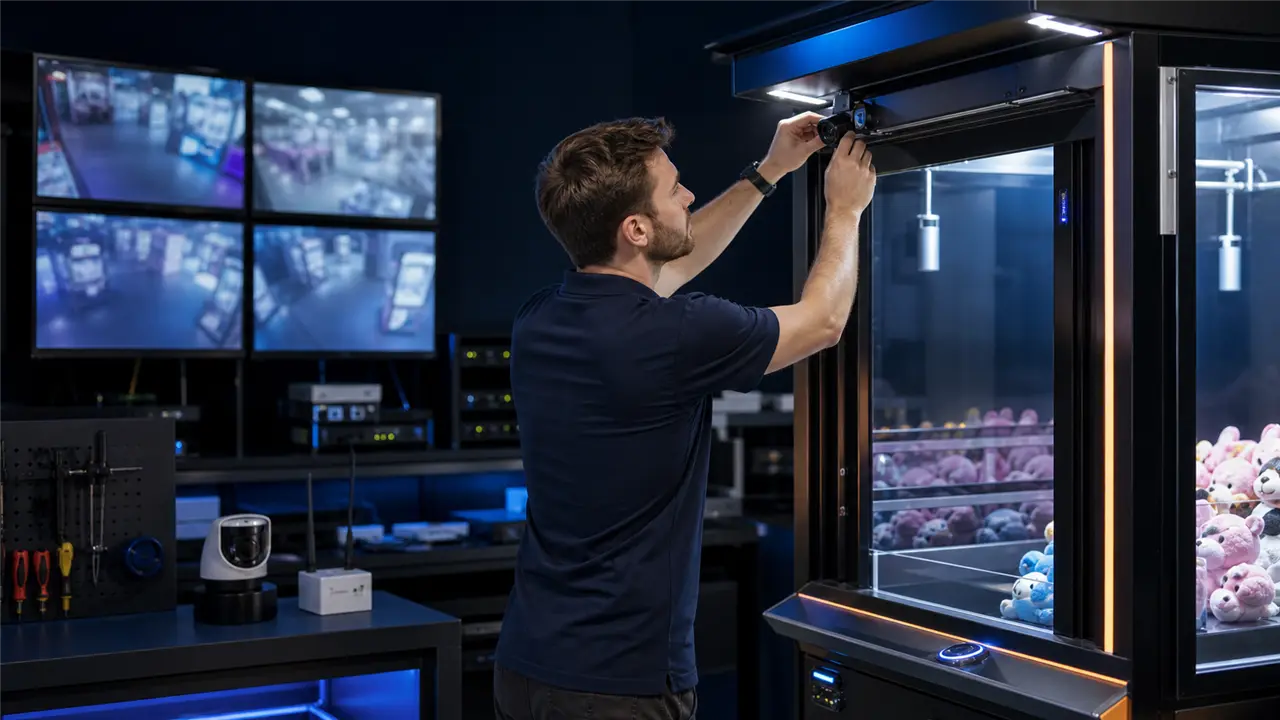
Traditional street machines mask mechanical slop with physical distance. In a remote live claw machine turnkey system, the player’s eye is a camera lens positioned mere inches from the action. Any vibration on the X-Y rails translates into aggressive screen jitter, destroying the user experience.
We replace cheap plastic pulley wheels with self-lubricating POM (Polyoxymethylene) rollers riding on hardened 40Cr steel rails. The chassis framing is reinforced to prevent torsional flexing during rapid directional changes. Every component is audited for continuous MTBF (Mean Time Between Failures), ensuring that the gantry can execute thousands of precise drops daily without requiring a technician to open the cabinet.
3 Axis Stepper Motor Drive and Optical Limit Switch Integration
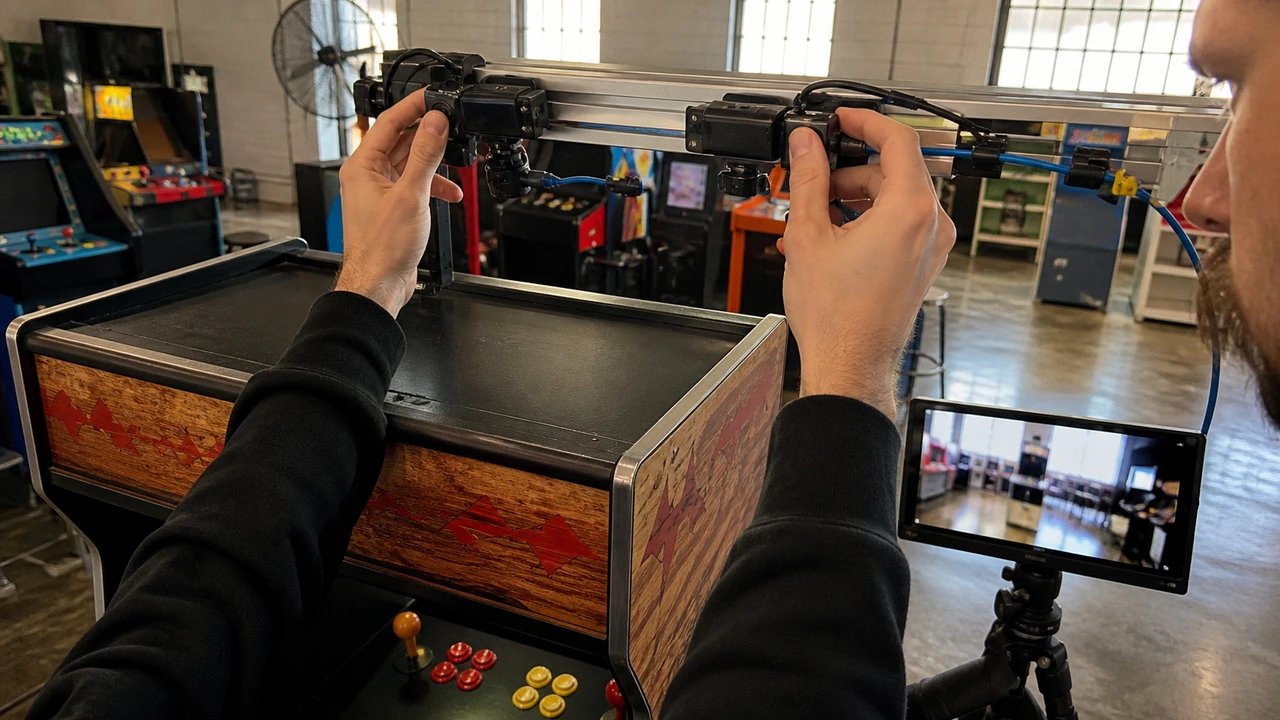
Precision control dictates that we abandon cheap brushed DC motors in favor of high-torque NEMA stepper or servo motors for the X, Y, and Z axes. This allows for absolute positional tracking.
To define the boundaries of the playfield, standard arcade machines use mechanical microswitches. These switches suffer from metal fatigue and contact bounce over time. We upgrade the entire homing system to utilize industrial optical limit switches. These infrared photo-interrupters have zero moving parts and are impervious to wear, providing exact zero-point calibration during the automated initialization sequence. This exactness guarantees that the claw aligns perfectly with the virtual coordinates displayed on the player’s screen via the dual camera video streaming depth perception UI.
Translating WebSocket Vector Packets Into Microstep Pulses
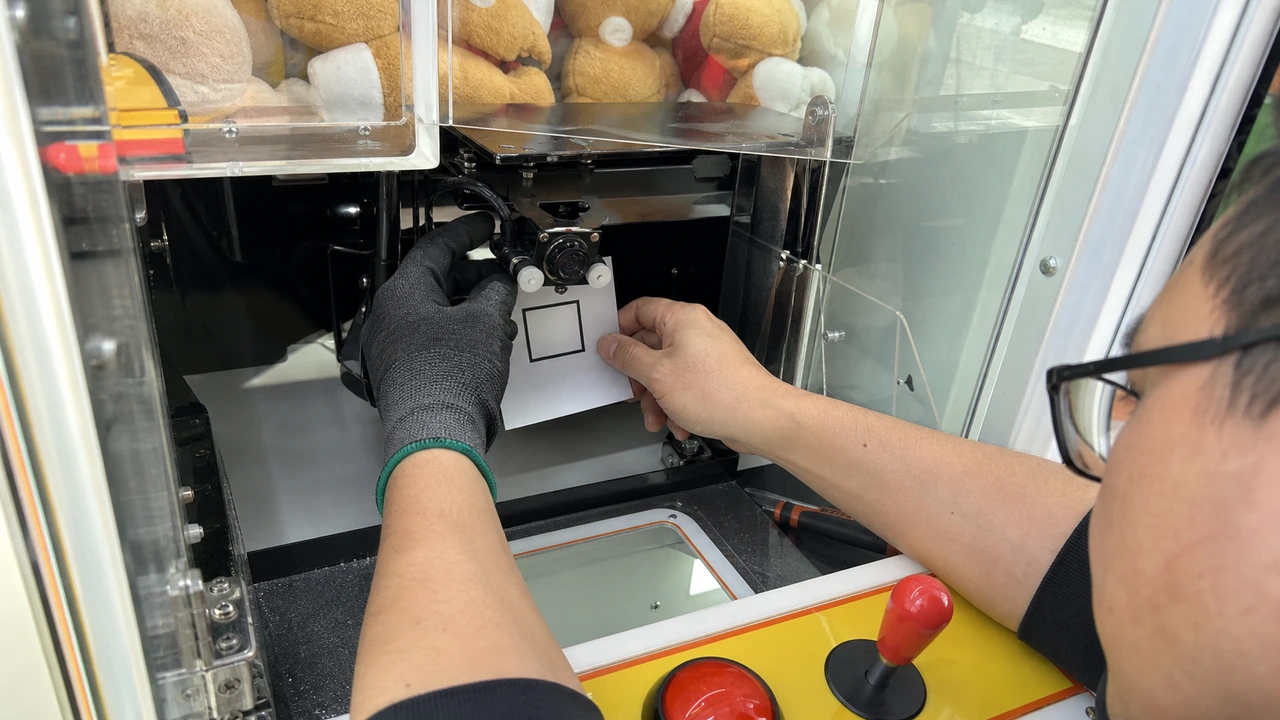
Bridging the mobile application with physical hardware requires an aggressive data translation layer. When a player drags their thumb across a virtual joystick on their phone, the app fires JSON vector packets over secure WebSockets down to the machine.
Our embedded industrial IoT arcade controller board intercepts these network packets and feeds them into an ARM-based motion control MCU. This processor instantly translates the X-Y vector data into high-frequency DIR (Direction) and PULSE microstep signals. This direct hardware-level pulse generation ensures that the physical gantry moves synchronously with the user’s intent, maintaining the critical sub-80ms latency threshold required for an immersive remote live arcade turnkey system.
Variable Voltage Claw Coil Modulation via PWM Control
The secret to mathematical profitability in any claw operation lies in the coil voltage modulation. A static voltage claw is easily manipulated by skilled players and lacks the nuance required for a balanced RTP (Return to Player) model.
We implement a sophisticated 3-stage variable voltage system driven by high-frequency PWM (Pulse Width Modulation) Mosfet arrays. 1. Initial Pick-Up Grip: A high-voltage strike (typically 36V to 48V) ensuring the claw digs firmly into the plush toy. 2. Apex Top Relaxation: Once the Z-axis reaches the upper limit switch, the voltage is dynamically throttled down to a holding state (12V to 18V), allowing heavy or poorly gripped prizes to slip, maintaining operator margins. 3. Drop Payout Probability: The microcontroller evaluates the global payout rate. If the payout condition is unmet, a micro-stutter in the PWM signal induces a natural-looking “slip,” whereas a guaranteed win maintains a solid holding current all the way to the infrared prize drop sensor validation chute.
Optocoupler Isolation Shielding Network Controllers From Motor Spikes
Electrical noise is the silent killer of IoT systems. When large inductive loads like claw coils and stepper motors engage and disengage abruptly, they generate massive transient voltage spikes (flyback voltages). If the motor logic is not galvanically isolated from the sensitive network communication chips, these spikes will reset the Linux kernel or corrupt the video stream encoders.
At our Panyu lab, our protocol mandates strict galvanic separation. We utilize high-speed optocouplers rated for 2,500V isolation between the high-power motor driver plane and the low-voltage logic plane. This physical air-gap ensures that no matter how violently the claw coil fires, the network gateway remains perfectly stable, keeping the live stream and WebSocket connections intact.
Anti Sway Claw Firmware Algorithms and S Curve Trajectory Planning
A major flaw in poorly designed live operations is the pendulum effect. When a remote player releases the joystick, cheap controllers simply cut the DIR/PULSE signal abruptly. Inertia carries the heavy claw forward, causing it to swing wildly like a pendulum. A swinging claw cannot grasp a prize accurately, leading to angry players and customer support tickets.
Our proprietary motion firmware implements aggressive S-curve trajectory planning. Instead of halting instantly, the MCU calculates a rapid deceleration ramp over milliseconds. The motors actively brake the gantry, absorbing the kinetic energy and bringing the drop-string to a dead, plumb stop. This firmware logic creates a rigid, robotic feel that instills confidence in the player, proving that the game relies on skill rather than fighting sloppy physics.
Hardware Watchdog Circuits and Automated Homing Sequence
In a warehouse holding hundreds of active machines, anomalous network drops or temporary power sags will inevitably occur. A machine left paralyzed over the prize pit creates a severe bottleneck and requires manual human intervention.
We hardwire dedicated watchdog timer circuits directly into the logic board. If the MCU fails to receive a network heartbeat ping within 3000 milliseconds, the watchdog triggers a hardware interrupt. The system immediately cuts the claw coil voltage (dropping any held prize safely), and executes an automated homing sequence. The gantry slowly drives itself back to the X-Y zero position optical endstops, resets its internal coordinate matrix, and signals the central server that it is ready for the next player, entirely without human intervention.
Turnkey Factory Delivery From Guangzhou Miba Animation
Building a profitable remote arcade requires engineering precision far beyond bolting a webcam to a commercial chassis. It demands strict electrical isolation, firmware trajectory mapping, and industrial continuous-duty hardware.
We are a complete machine manufacturer and turnkey software studio. We do not sell loose spare parts or DIY kits. We provide fully assembled, deeply customized teleoperation units designed exclusively for high-density warehouse deployment, complete with 100% source code ownership options for the management software.
For detailed hardware blueprints, factory video tours, or bespoke API integration requests, connect with our engineering team today.
Connect with Engineer Wang for Factory Direct Pricing and Technical Blueprints
- WhatsApp/WeChat: +86 17620842078
- Telegram: https://t.me/JLwyc
- Email: miba515527@gmail.com
- Factory Location: Panyu Manufacturing Base, Guangzhou, China
Frequently Asked Questions
Q: Why do you use optical limit switches instead of traditional mechanical microswitches? A: Optical limit switches use infrared beams and have absolutely zero moving parts. Traditional mechanical microswitches suffer from metal fatigue and bounce over thousands of cycles, leading to calibration drift. Optical sensors guarantee absolute zero-point accuracy, which is mandatory for remote digital coordination.
Q: How does the variable voltage PWM system improve profitability? A: By dynamically altering the claw’s holding force through 3-stage PWM modulation (strong pickup, weaker carry, dynamic drop), operators can mathematically balance the Return to Player (RTP) rate. It ensures the game remains challenging yet fair, preventing skilled players from clearing out inventory too quickly.
Q: What prevents the video stream from crashing when the motors move? A: We implement 2,500V optocoupler isolation between the high-power inductive motor circuits and the sensitive low-voltage network processors. This stops transient voltage spikes from causing kernel panics or video encoder resets on the IoT gateway.
Q: How do you solve the claw swinging issue when remote players release the joystick? A: Our motor firmware uses S-curve trajectory planning. Instead of a hard stop, the motors execute a microsecond deceleration ramp that actively brakes the gantry, absorbing the kinetic inertia and stopping the claw perfectly plumb without any pendulum swing.
Q: Can your hardware automatically recover from a sudden internet outage? A: Yes. Embedded hardware watchdog timers constantly monitor the network heartbeat. If connection drops, the system cuts power to the claw, safely aborts the current game, and executes an automated homing sequence to return the gantry to the start position, requiring zero staff intervention.