- The Security Flaw of Client Side Hit Detection
- Server Authoritative Physics Architecture
- Spatial Partitioning Optimization with Quadtree and Octree
- Dynamic Bullet Bounce Reflection Mechanics
- Fish Swimming Path Interpolation and Network Sync
- Server Side Hit Probability and Prize Pool Math
- Headless Server Spatial Partitioning and Ray Casting Code Implementation
- Dynamic RTP Retention Pool and Floating Water Level Formula
- Operator ROI and Turnkey Delivery
- Frequently Asked Questions
Fish table game operators constantly face a silent threat that drains their revenue overnight. When game logic is processed on the player terminal, hackers use memory injection and packet spoofing to manipulate bullet speed, alter fish health, and force impossible win rates. This architectural flaw destroys operator profitability and ruins the fairness of the arcade ecosystem. As Engineer Wang, the Lead Hardware and Game System Architect at Arcade Manufacturer, I have spent the last 12 years analyzing these vulnerabilities in our Panyu 15,000m² manufacturing base. Alongside our 50-engineer software studio, we have engineered a definitive solution.
We completely abandon vulnerable client-side calculations in favor of a robust server-authoritative physics architecture. By migrating all collision detection, bullet reflection mechanics, and probability math to headless server clusters running at 60Hz tick rates, we guarantee absolute mathematical integrity. Our turnkey solutions deliver secure, high-performance custom casino and arcade game software engineering that protects your gross gaming revenue. Whether you are running a localized LAN cabinet network or a globally distributed cloud hybrid arcade, our source code buyout and hardware integration ensure your investment remains highly profitable. Reach out to me directly on WhatsApp at +86 17620842078 to discuss your secure gaming platform architecture.
The Security Flaw of Client Side Hit Detection

The arcade and sweepstakes industry is plagued by cheaply developed software that relies on client-side hit detection. In a typical flawed architecture, the mobile app or local cabinet PC determines if a bullet hits a fish. The client then sends a “hit success” message to the server. This design is fundamentally broken for any real money or high-stakes sweeping operation.
When the client holds authority over game events, malicious actors easily compromise the system. They deploy memory editors like Cheat Engine on PC cabinets or customized APKs on mobile devices to freeze memory addresses associated with bullet coordinates. By manipulating the collision radius, a hacker can make a single bullet hit every fish on the screen simultaneously. Furthermore, packet sniffing tools intercept the outbound network traffic and spoof continuous “boss kill” packets to the backend server.
At Arcade Manufacturer, our quality assurance lab has dissected hundreds of compromised operator platforms. The autopsy always reveals the same fatal error where the backend blindly trusts the frontend. To prevent memory injection and bullet speed alteration, the frontend must be reduced to a “dumb terminal” that merely renders visuals and forwards player inputs. All true logic must reside safely behind your firewall on an authoritative server.
Server Authoritative Physics Architecture
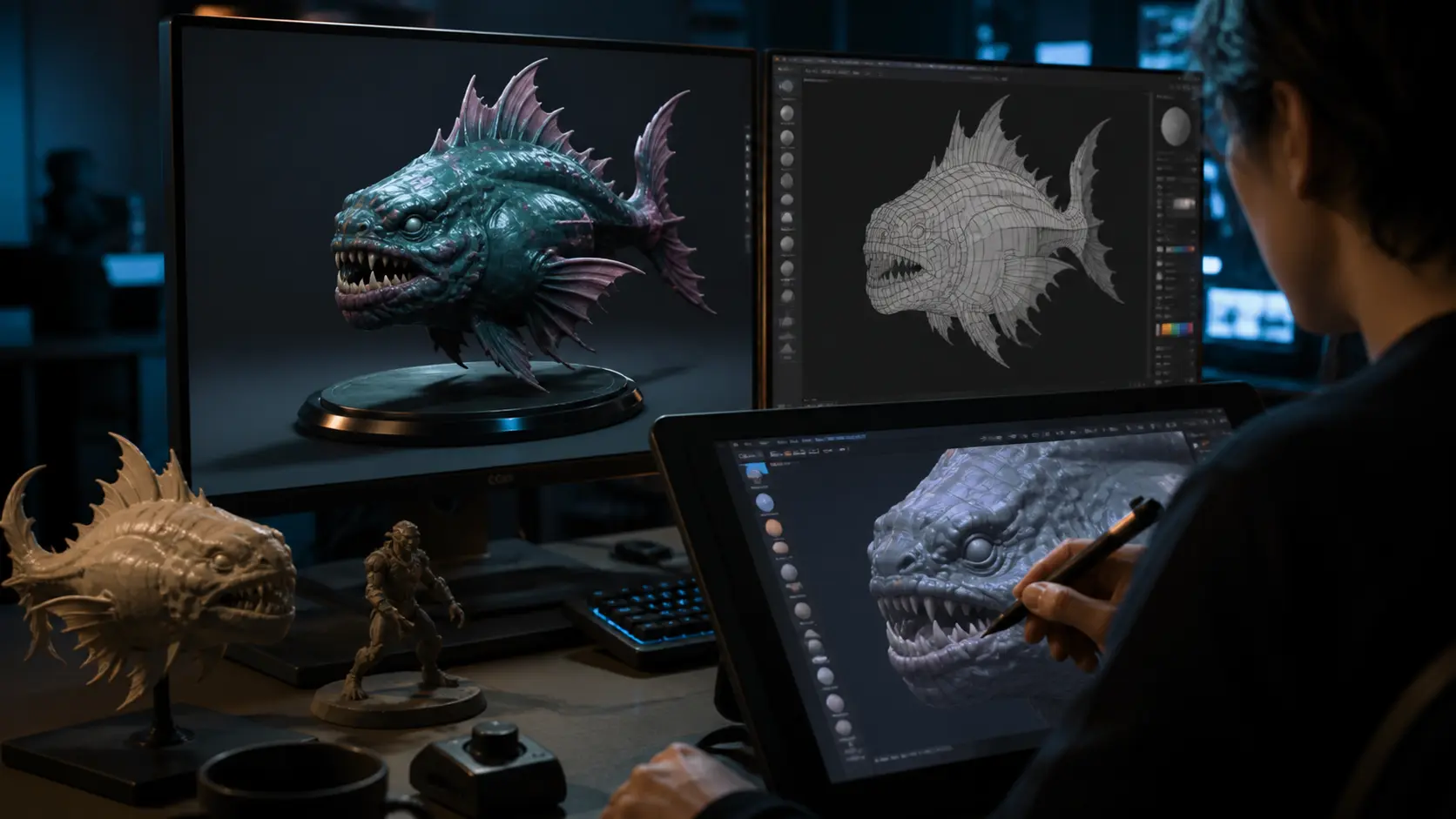
Our engineering mandate dictates that the server is the absolute source of truth. We deploy a headless physics simulation running concurrently with the player clients. This means our backend server executes the exact same physical world in memory without rendering any graphics.
When a player presses the fire button, the client sends an input packet containing the timestamp, weapon angle, and requested bullet tier. The server receives this input, validates that the player has sufficient credits, and spawns the bullet in the headless simulation. The server then broadcasts the bullet creation event back to all connected clients. The clients simply extrapolate the bullet trajectory for smooth visual rendering.
We utilize highly optimized Go and C++ physics engines on our server clusters to maintain a strict 60Hz tick rate. Every 16.6 milliseconds, the server updates the position of hundreds of swimming fish and bouncing bullets. If a client attempts to claim a hit that did not occur in the server simulation, the server rejects it entirely. This absolute separation of visual rendering and physical calculation is the cornerstone of our fish table game source code buyout unity math engine. You own the 100% source code to audit and verify this uncompromisable security layer.
Spatial Partitioning Optimization with Quadtree and Octree
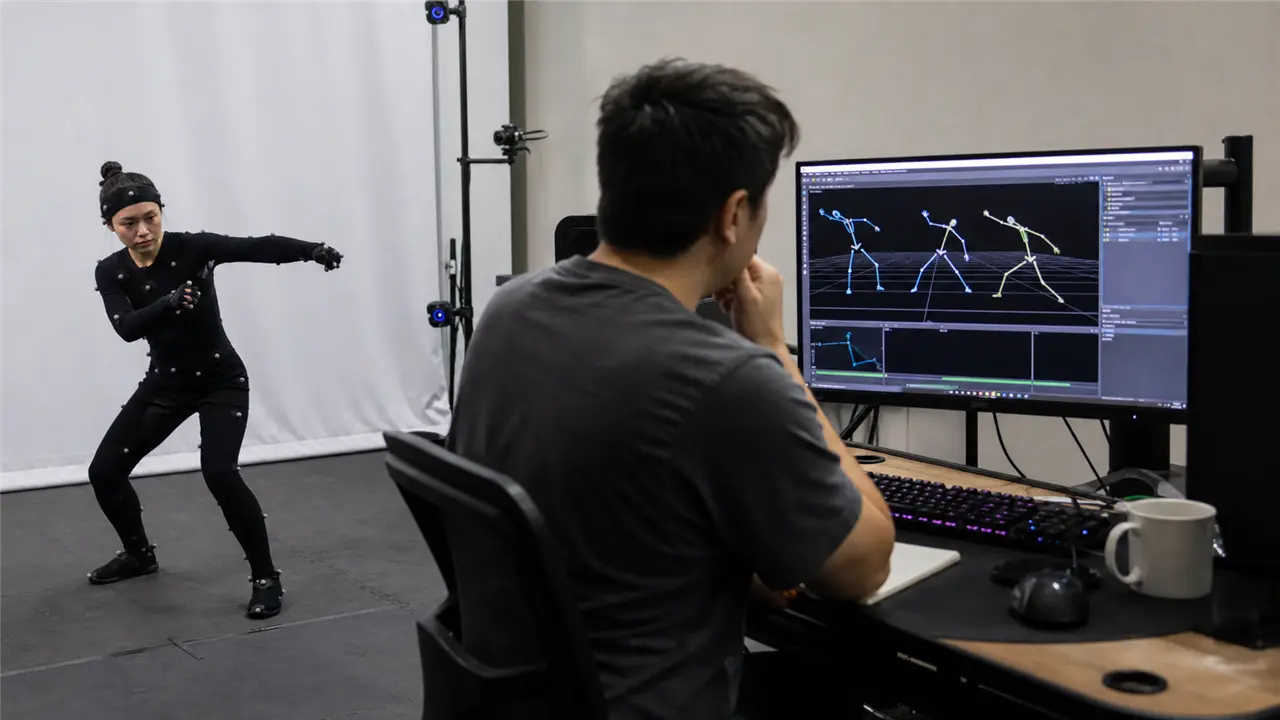
Processing collisions for a multiplayer fish hunter game is computationally expensive. A standard commercial table hosts up to 8 concurrent players, each firing rapid burst weapons. At peak intensity, the screen contains over 500 overlapping fish and 200 high-velocity bullets. A naive collision algorithm checks every bullet against every fish, resulting in 100,000 distance calculations per frame. At 60 frames per second, this O(N^2) complexity immediately throttles the CPU and causes severe network lag.
To solve this physics bottleneck, our engineers implement advanced spatial partitioning structures known as Bounding Volume Hierarchies. For 2D sweepstakes variants, we deploy a dynamic Quadtree algorithm. For our modern 3D Unreal Engine and Unity architectures, we utilize an optimized Octree system.
The spatial partitioning engine divides the game arena into manageable quadrants or cubic nodes. Instead of testing a bullet against every fish in the ocean, the engine queries the specific Quadtree node that the bullet currently occupies. The collision check is therefore restricted only to the fish swimming within that immediate local sector. This reduces the computational load from 100,000 checks down to fewer than 500 targeted queries per frame.
This optimization allows our backend to handle massive concurrent player loads with zero CPU bottleneck. We deliver the foundational backend infrastructure that enables expansive custom unity 3d fish game studio particle physics without sacrificing server stability. When your players experience seamless, lag-free heavy cannon fire, they stay engaged longer and increase your daily turnover.
Dynamic Bullet Bounce Reflection Mechanics
A signature feature of premium fish table games is the bullet bounce mechanic. When a projectile hits the screen boundary without striking a target, it must reflect precisely across the arena until it hits a fish or its lifetime expires. Implementing this accurately on an authoritative server requires rigorous vector mathematics.
Our physics engine calculates the exact intersection point between the bullet trajectory vector and the boundary plane. Upon impact, we apply the fundamental law of reflection where the angle of incidence equals the angle of reflection. We utilize dot product calculations to determine the boundary normal vector and compute the new velocity vector instantly.
Because network latency introduces a delay between the server calculation and the client rendering, we implement dead reckoning and predictive trajectory sharing. The server calculates the exact future path of the bouncing bullet and sends the waypoint data to the client. The client then smoothly interpolates the bullet graphic along these precise vectors. Furthermore, to prevent infinite loops, we enforce a strict bullet lifetime expiration protocol. If a bullet bounces more than a predefined limit without striking a target, the server quietly terminates the entity and refunds the energy or dissipates the projectile naturally.
This robust mathematical foundation guarantees that all 8 players on our commercial fish table game machine cabinet engineering witness the exact same bullet trajectory in real-time. It eliminates the visual desynchronization that plagues inferior arcade setups.
Fish Swimming Path Interpolation and Network Sync
The movement of the fish themselves requires equally complex synchronization. Fish in our games do not move in simple straight lines. They follow complex cubic Bézier curves, dynamic spline paths, and sophisticated flocking algorithms based on the Boids model. This creates an organic, immersive underwater environment that captivates players.
However, streaming complex curve data for 500 fish 60 times a second would saturate the network bandwidth. Instead, our server utilizes deterministic path generation. The server sends the initial spawn coordinates, the control points of the Bézier curve, and a synced master clock timestamp to all clients. Because the math is deterministic, every client calculates the exact same position of the fish at any given millisecond independently.
To account for variable mobile network lag, our protocol includes advanced lag compensation algorithms. The server tracks the historical positions of all entities. When a high-latency player fires a shot, the server rewinds the hitboxes to the exact state they were in when the player pressed the button. This ensures a fair and responsive shooting experience regardless of connection quality, making our system perfect for globally distributed remote live arcade operations.
Server Side Hit Probability and Prize Pool Math
Collision detection merely determines if a bullet hits a fish. The actual determination of whether the fish is captured and awards a prize is driven by our sophisticated RTP math engine. In our architecture, the physics engine passes the confirmed collision event to the probability engine for final adjudication.
The math engine evaluates multiple concurrent variables in a fraction of a millisecond. It analyzes the specific bullet tier and wager amount, the base health and multiplier of the target fish, and the historical state of the dynamic prize accumulation pool. We implement an intelligent water-level algorithm that balances the Return to Player percentage across short-term volatility and long-term operator retention goals.
If the pool is saturated, the server mathematically guarantees the capture, triggers the explosion sequence, and instantly updates the player ledger. If the pool is currently recovering, the server registers the collision as a “damage” event that slightly reduces the fish health but allows it to swim away. This transparent yet unpredictable mathematical volatility is the core driver of player addiction and operator profitability. For a deeper understanding of our financial algorithms, review our breakdown of rtp math engine architecture odds volatility fish games.
Headless Server Spatial Partitioning and Ray Casting Code Implementation
To ensure that game studios and B2B operators understand exactly how our server-authoritative engine processes thousands of bounding-box intersections without dropping below a 60Hz tick rate, we structure our Go-based headless server simulation around an optimized Quadtree spatial hierarchy:
go // Production server-side Quadtree boundary intersection in Go type AABB struct { MinX, MinY, MaxX, MaxY float32 }
type QuadtreeNode struct { Bounds AABB MaxDepth int Entities []*FishEntity Children [4]*QuadtreeNode IsLeaf bool }
func (node *QuadtreeNode) QuerySector(bulletBounds AABB) []*FishEntity { var candidates []*FishEntity if !node.Bounds.Intersects(bulletBounds) { return candidates } // Append entities within local leaf node for _, fish := range node.Entities { if fish.Hitbox.Intersects(bulletBounds) { candidates = append(candidates, fish) } } // Recurse into quadrant children if partitioned if !node.IsLeaf { for i := 0; i < 4; i++ { candidates = append(candidates, node.Children[i].QuerySector(bulletBounds)...) } } return candidates } ```
When a candidate fish is identified within the target sector, the server executes a continuous ray-cast intersection to account for high-velocity bullet tunneling (preventing bullets from passing through small fish between consecutive 16.6ms simulation ticks):
cpp // C++ continuous collision detection (CCD) for high-speed projectiles bool CheckRayBoxIntersection(const Vector3& rayOrigin, const Vector3& rayDir, float rayLength, const OBB& fishBox) { float tMin = 0.0f; float tMax = rayLength; Vector3 delta = fishBox.Center – rayOrigin;
for (int i = 0; i < 3; ++i) { float e = fishBox.Axes[i].Dot(delta); float f = fishBox.Axes[i].Dot(rayDir);
if (std::abs(f) > 0.0001f) { float t1 = (e + fishBox.Extents[i]) / f; float t2 = (e – fishBox.Extents[i]) / f; if (t1 > t2) std::swap(t1, t2); if (t1 > tMin) tMin = t1; if (t2 < tMax) tMax = t2; if (tMin > tMax) return false; } else if (-e – fishBox.Extents[i] > 0.0f || -e + fishBox.Extents[i] < 0.0f) { return false; } } return true; } ```
Dynamic RTP Retention Pool and Floating Water Level Formula
The math engine calculates the capture probability \(P_{capture}\) dynamically on every confirmed hit according to our proprietary floating water level formula:
\[ P_{capture} = \min \left( 1.0, \frac{\text{Wager} \times \text{RTP}_{target}}{\text{FishMultiplier} \times \text{BaseCost}} \times \left( \frac{\text{Pool}_{current}}{\text{Pool}_{target}} \right)^{\gamma} \right) \]
Where:
- \(\text{Wager}\): The denomination of the fired bullet.
- \(\text{RTP}_{target}\): Configured venue return rate (typically 0.92 to 0.96).
- \(\text{FishMultiplier}\): Payout value of the target fish (e.g., 2x for clownfish, 300x for golden dragon).
- \(\text{Pool}_{current} / \text{Pool}_{target}\): The real-time financial buffer ratio of the game room.
- \(\gamma\): Elasticity damping exponent (calibrated to 1.35) preventing sudden pool depletion during high-frequency jackpot strikes.
If an operator sets a 94% retention rate on the administrative backoffice, the server automatically throttles \(\gamma\) whenever the pool drops below 85% of target, subtly increasing the challenge while preserving player excitement and visual near-miss triggers.
Operator ROI and Turnkey Delivery
Investing in a robust, server-authoritative architecture is the only way to safeguard your gaming enterprise. Cheaply coded software with client-side vulnerabilities will inevitably lead to catastrophic financial losses when hackers exploit your operation. At Arcade Manufacturer, we build industrial-grade fortresses.
When you partner with our Panyu factory and software studio, you receive the complete turnkey package. We deliver the custom 3D game software, the authoritative backend infrastructure, the secure cabinet hardware, and the anti-cheat management systems. We offer 100% source code buyout options, allowing you absolute control and independent auditability over your investment. We invite you to book a video tour of our QA testing facilities or schedule an in-person FAT factory acceptance test.
Take control of your gross gaming revenue today. Contact Engineer Wang directly to engineer your bespoke fish table arcade solution.
Contact Us for Custom Source Code and Cabinet Manufacturing:
- WhatsApp / WeChat: +86 17620842078
- Telegram: https://t.me/JLwyc
- Email: miba515527@gmail.com