- The Operational Reality of Mechanical Probability
- Precision Weighted Ball Mechanisms and Trajectory Management
- High Torque Actuator and Motor Synchronization
- Optocoupler Sensors and Real Time Token Auditing
- Mitigating Operator Risk with Advanced Anti Cheat Hardware
- Designing for Zero Dealer Overhead and Seamless Automation
- Operational Economics and Projected ROI Trajectory
- Factory Acceptance Testing and QA Inspection Protocol
- Troubleshooting Common Mechanical and Electrical Faults
- Frequently Asked Questions
- Secure Your Next Generation Push Ball Arcade Fleet
When venue owners approach me about adding a push ball arcade machine to their floor, they rarely ask about the gauge of the sheet metal or the specific torque of the stepper motors. Their primary concerns are brutally pragmatic. They want to know if a jammed ball during a Friday night peak hour will cause a catastrophic system reset and lost player credits. They worry about organized syndicates using EMP jammers or physical tilt tactics to manipulate physical payout volatility and drain the hopper. They demand a system that operates with zero dealer overhead while guaranteeing a steady, predictable Return on Investment (ROI) without constant technical intervention.
I am Engineer Wang, Lead Hardware and Game System Architect at Guangzhou Miba Animation Technology Co., Ltd. Over the past twelve years, I have seen every conceivable failure point in mechanical arcade hardware. In our 15,000-square-meter manufacturing base in Panyu, China, our 50-person engineering team has fundamentally redesigned the push ball arcade machine. We do not just assemble cabinets; we engineer physical probability engines. By integrating high-precision optocouplers, proprietary anti-cheat logic boards, and mathematically modeled track trajectories, we have created a push ball architecture that physically enforces your target payout metrics while eliminating the operational risks that plague inferior machines. This document outlines the mechanical engineering and volatility control systems that protect your floor’s profitability. For factory-direct procurement and comprehensive engineering specs, consult our master guide on complete commercial arcade machines factory guide.
The Operational Reality of Mechanical Probability
Unlike purely digital slot machines or video fishing games where RNG algorithms dictate every outcome, a push ball arcade machine relies on physical world interactions. Balls of specific weights are launched, dropped, or pushed onto a moving platform, interacting with pins, ledges, and other balls before eventually falling into payout zones. This physical reality introduces variables that, if not rigorously controlled, can wildly skew payout percentages and destroy your profit margins.
Unregulated physical machines are susceptible to environmental changes, mechanical wear, and player manipulation. A slight alteration in the friction coefficient of the pusher plate, the degradation of a rubber bumper, or a well-timed impact on the cabinet glass can alter the trajectory of the balls. To an operator, this volatility means unpredictable revenue. If the machine pays out too tightly due to mechanical friction, players abandon it. If it pays out too loosely due to a warped pusher, the house loses money.
Our engineering philosophy bridges the gap between digital precision and physical entertainment. We implement closed-loop mechanical systems where every physical action is monitored, verified, and adjusted in real-time by an intelligent overarching logic board. We ensure that the physical payout volatility control is as tight and predictable as a software-based math model, all while delivering the visceral, kinetic thrill that keeps players feeding tokens into the hopper.
Precision Weighted Ball Mechanisms and Trajectory Management
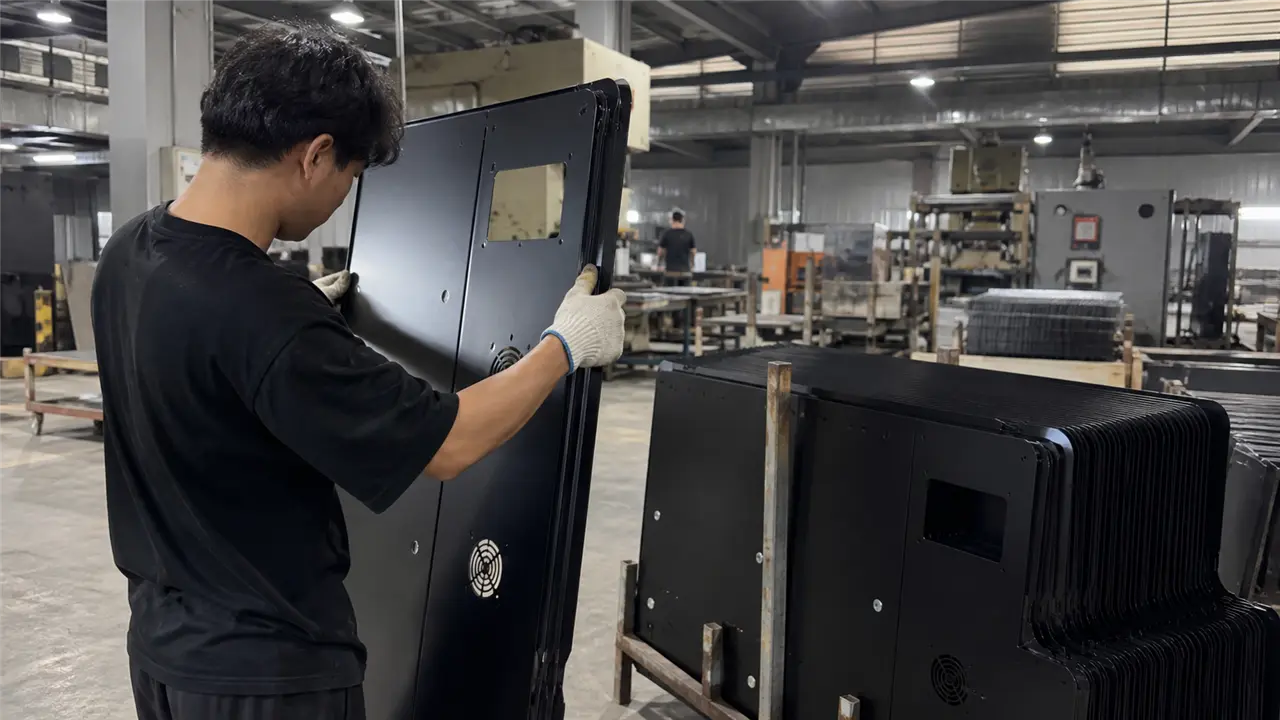
The core of any push ball arcade machine is the interaction between the balls and the playing field. We do not use off-the-shelf plastic spheres. Every ball utilized in our cabinets is precision-cast from a proprietary dense polymer blend, calibrated to a strict weight tolerance of plus or minus 0.1 grams. This uniform mass is critical. Variations in ball weight lead to erratic physical interactions on the playfield, making it impossible to accurately model and control payout volatility.
The trajectory tracks and drop zones are machined using 5-axis CNC equipment from aerospace-grade aluminum. We apply a specialized anodized coating that normalizes surface friction across varying humidity and temperature levels. Whether your venue is in a highly air-conditioned resort casino in Macau or a humid coastal arcade in South America, the balls behave identically.
Furthermore, our pin layout is not arbitrary. We run thousands of hours of Monte Carlo simulations in our physics engine software before finalizing the physical pin matrix. This ensures that the dispersion of balls across the pusher plate adheres to a predictable normal distribution curve. This mathematical approach to physical layout is the bedrock of our payout volatility control, ensuring that skill and chance intersect exactly where our operators need them to for maximum profitability.
High Torque Actuator and Motor Synchronization
The pusher plate is the heartbeat of the push ball arcade machine. Inconsistent pusher speed, micro-stutters, or torque failures instantly compromise the physical integrity of the game. Cheap machines use standard DC brush motors that lose torque as they heat up, leading to a slower pusher cycle during peak operating hours and subtly shifting the physics of the ball drops.
In our Panyu factory, we equip our cabinets with industrial-grade brushless stepper motors driven by dedicated micro-stepping controllers. These motors provide continuous, unyielding torque regardless of the load on the pusher plate. If a large cluster of balls creates unexpected resistance, our motor control system detects the back-EMF and instantaneously increases current to maintain a flawless, constant velocity.
This synchronization is tied directly to the main logic board. The position of the pusher is tracked down to the millimeter. This allows us to implement advanced payout features, such as timing-based bonuses, where the physical position of the pusher corresponds perfectly with digital lighting and sound cues. This flawless electro-mechanical integration eliminates the dispute-causing desynchronization that often frustrates players on lesser machines.
Optocoupler Sensors and Real Time Token Auditing
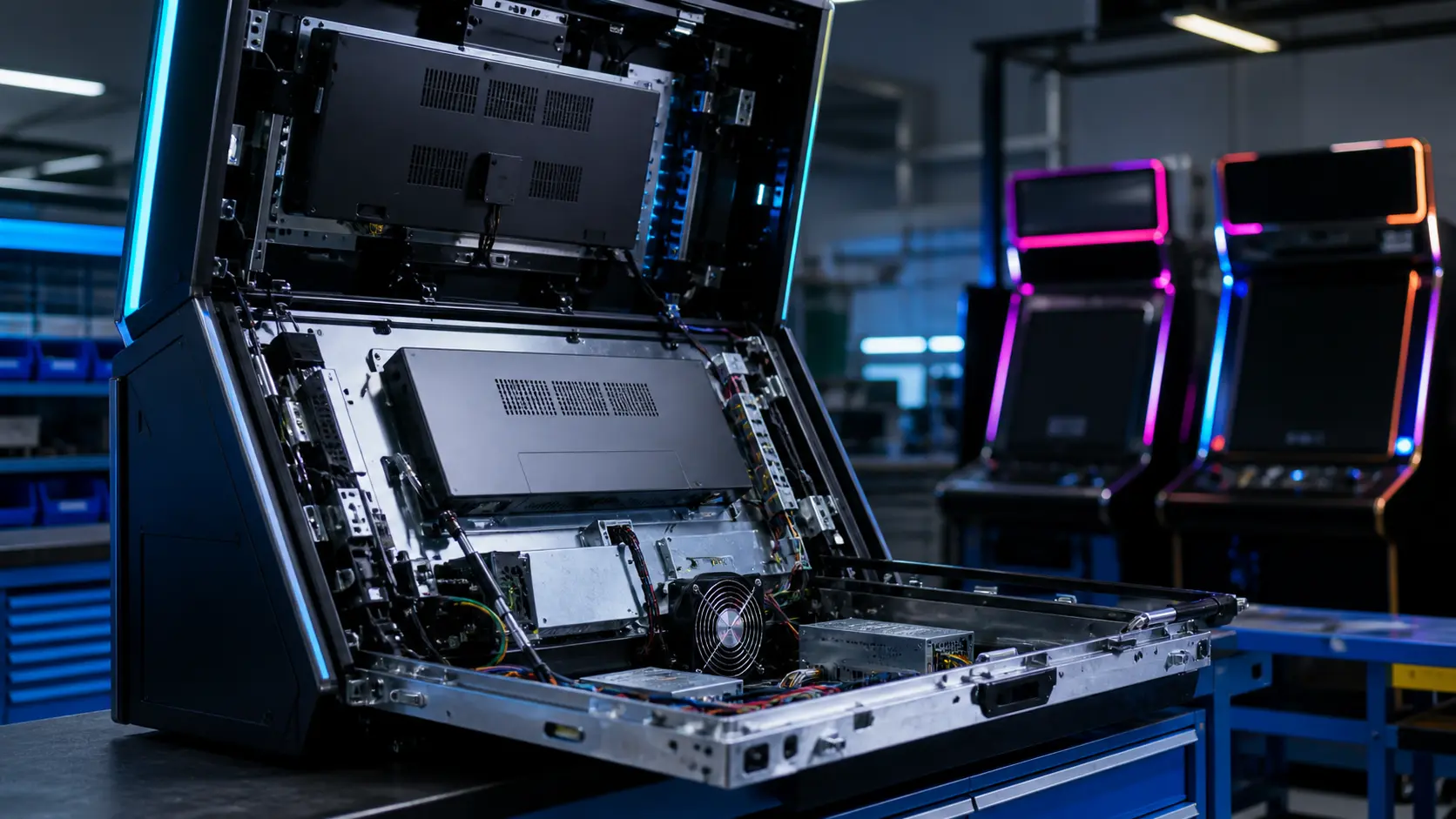
Tracking physical objects with 100% accuracy in a dusty, high-vibration environment is a massive engineering challenge. Traditional mechanical micro-switches fail. They bend, they stick, and they miss counts. To achieve true physical payout volatility control, you must know exactly how many balls have entered the playfield and how many have fallen into the win zones at any given millisecond.
We rely exclusively on high-speed infrared optocoupler sensor arrays. These solid-state optical barriers have no moving parts and offer a response time of under 2 milliseconds. We position these sensor arrays at every critical juncture within the push ball arcade machine: the coin entry chute, the ball elevator mechanism, the drop zones, and the final payout hoppers.
Every optical disruption is logged by the secure I/O board. This creates a real-time, tamper-proof audit trail. The logic board constantly compares the number of balls deployed against the number of balls rewarded. If this ratio deviates from the mathematically projected volatility curve by even a fraction of a percent, the system logs an anomaly. This gives venue operators unprecedented insight into the physical performance of their machines, allowing them to track true RTP (Return to Player) on a physical device just as accurately as they would on a server-based slot machine.
Mitigating Operator Risk with Advanced Anti Cheat Hardware
Arcade security is a relentless arms race. When real money or high-value tickets are on the line, bad actors will attempt to exploit the physical nature of the push ball arcade machine. Our job as your manufacturer is to harden the cabinet so effectively that these attempts are rendered entirely futile.
Shielding Against EMP and Electromagnetic Interference
One of the most common attacks against arcade hardware involves using handheld Electromagnetic Pulse (EMP) generators or high-frequency sparkers to induce phantom credits or force the hopper to dispense coins. These devices overload the low-voltage logic circuits found in standard cabinets.
We engineer our control boards with military-grade electromagnetic shielding. Every sensitive logic trace is isolated via optical isolators, separating the high-voltage motor driving circuits from the low-voltage communication lines. Furthermore, our power supplies feature sub-5-picosecond transient surge clamping. If an EMP device is triggered near the coin acceptor or the hopper output, our clamping diodes absorb and dissipate the energy instantly, preventing the logic board from registering false pulses. The machine simply ignores the attack and continues operating seamlessly.
Tilt Sensors and Physical Tamper Defenses
The oldest trick in the book is physically shaking, lifting, or bumping the cabinet to dislodge balls onto the payout tray. To combat this, we deploy a multi-axis digital accelerometer system, far superior to the primitive mechanical plumb bobs used in older machines.
Our accelerometer continuously monitors the cabinet’s spatial orientation in three dimensions. We calibrate this sensor to distinguish between the normal vibrations of the internal mechanics and the deliberate, high-impact force of a player attempting to tilt the machine. When an unauthorized physical impact is detected, the system reacts in less than 50 milliseconds. It immediately drops a physical solenoid blocker over the payout chute, freezing all payouts. It sounds a high-decibel alarm, flashes the cabinet’s LED arrays in a distinct warning pattern, and logs the precise time and magnitude of the impact in the operator backend. This zero-tolerance approach eliminates physical manipulation and protects your daily yield.
Designing for Zero Dealer Overhead and Seamless Automation
Labor is one of the highest variable costs for any venue operator. The ideal floor operates autonomously, requiring staff only for routine maintenance and cash handling. We design our push ball arcade machine architecture around the concept of zero dealer overhead.
Our automated ball recycling system is a marvel of fluid dynamics and mechanical engineering. After balls fall into the win or lose zones, they are channeled through a series of acoustically dampened, anti-jamming funnels into a high-capacity spiral elevator. This elevator operates continuously, driven by a silent, high-torque motor, carrying the balls back to the top reservoir.
We utilize smart agitators within the hopper reservoirs to prevent bridging and jamming, ensuring a continuous, fluid supply of balls to the playfield. The internal capacity is massive, designed to hold enough balls to sustain continuous peak-hour operation without ever requiring a floor attendant to manually refill the machine. This automation drastically reduces machine downtime, prevents player frustration, and allows your staff to focus on high-value customer service tasks rather than babysitting hardware.
Operational Economics and Projected ROI Trajectory
Understanding the technical specifications is only half the battle. As a venue owner, you need to understand how these engineering choices translate into capital recovery. Because our push ball arcade machine tightly regulates physical payout volatility, you can model your ROI with a degree of certainty previously impossible with mechanical games.
The following table models a standard operational deployment in a mid-to-high traffic arcade environment, demonstrating the economic impact of our tamper-proof architecture and high-uptime mechanics.
| Financial Metric | Projected Value | Operator Benefit / Factory Guarantee |
|---|---|---|
| **Average Daily Turnover** | $350 – $650 | High visual appeal and kinetic gameplay drive continuous token insertion. |
| **Engineered Payout Rate** | 25% – 35% | Controlled by our precision pins and pusher mechanics, ensuring consistent house edge. |
| **Daily Gross Profit** | $227 – $487 | Predictable daily yield due to optocoupler auditing and zero physical manipulation. |
| **Monthly Uptime Rate** | > 99.8% | Brushless stepper motors and anti-jam funnels eliminate mechanical downtime during peak hours. |
| **Labor Cost Reduction** | ~85% Decrease | Automated ball elevator and smart hoppers eliminate the need for manual refills. |
| **Estimated ROI Horizon** | 45 – 85 Days | Rapid capital recovery driven by high uptime, low maintenance, and protected profit margins. |
By eliminating the chaotic variables of cheap mechanical construction, our cabinets transform a volatile novelty into a stable, high-yield financial asset on your casino or arcade floor.
Factory Acceptance Testing and QA Inspection Protocol
Before any push ball arcade machine is crated and shipped from our Panyu manufacturing base, it must endure a punishing Factory Acceptance Testing (FAT) protocol. We do not let our operators discover manufacturing defects on their live floor. Our QA lab simulates years of abuse in a matter of days.
- Continuous Torque Load Test: The main pusher plate mechanism is run continuously for 168 hours under maximum ball load capacity to verify stepper motor thermal stability and rail friction consistency.
- EMP & RF Interference Bombardment: Using industrial frequency generators, we blast the cabinet’s coin acceptors, hoppers, and control panels with high-voltage interference to verify the integrity of our surge clamping and optical isolation circuits.
- Seismic Tilt Calibration: The cabinet is placed on a pneumatic shaker table. We induce controlled impacts to verify that the digital accelerometer triggers the payout blockers within the specified 50-millisecond window without generating false positives during normal operation.
- Optocoupler Accuracy Audit: We cycle exactly 10,000 balls through the system. The I/O board audit logs must match the physical count with 100.00% accuracy. A single missed count results in a rejection of the entire sensor harness.
- Climate Chamber Stress Test: We expose the cabinet to extreme humidity (up to 95% RH) and temperature fluctuations to ensure the anodized aluminum tracks and proprietary polymer balls maintain their strict friction coefficients.
When you receive a cabinet from Guangzhou Miba Animation Technology Co., Ltd., you are receiving a battle-tested piece of commercial hardware, certified to perform from the moment it is plugged in.
Troubleshooting Common Mechanical and Electrical Faults
Even the most robust mechanical systems require occasional maintenance. We have designed our push ball arcade machine to be highly modular, allowing your floor technicians to diagnose and resolve issues rapidly.
Below is an actionable troubleshooting matrix for our advanced cabinet architecture.
| Fault Symptom | Diagnostic Vector | Actionable Engineering Solution |
|---|---|---|
| **Pusher Plate Stuttering** | Stepper Motor Micro-Controller | Check the diagnostic LEDs on the stepper driver board. A flashing red light indicates a current overload. Inspect the pusher rails for foreign debris. Re-grease the linear bearings using our specified synthetic lithium compound. |
| **Phantom Credits Logged** | Coin Acceptor Pulse Isolation | Suspect a high-level EMP attack attempt. Inspect the opto-isolator bridge (Component U12) on the main I/O board. Verify ground continuity between the coin acceptor chassis and the main power supply earth terminal. |
| **Ball Elevator Jamming** | Elevator Motor Torque / Agitator | Clear the primary hopper. Check for foreign objects (drink tokens, debris) bridging the spiral inlet. Verify the 24V supply line to the elevator motor is delivering a full 5.0 Amps under load. |
| **Payout Discrepancy Alert** | Drop Zone Optocoupler Sensors | The system has detected a mismatch between dropped balls and rewarded tickets/tokens. Use a micro-fiber swab and isopropyl alcohol to clean the infrared lenses on sensor arrays S4 through S9. Dust accumulation can cause missed pulses. |
| **Constant Tilt Alarm** | Digital Accelerometer Calibration | The venue floor may have a severe harmonic vibration. Enter the operator diagnostic menu via the internal keypad. Navigate to [System Config] -> [Security] and slightly lower the sensitivity threshold of the X-axis accelerometer, saving the new baseline parameters. |
Our modular harness design ensures that if a sensor array or logic board does require replacement, it can be swapped out via standard Molex connectors in under five minutes, getting your machine back into revenue-generating status immediately.
Related Engineering References and Floor Operational Guides
- For complete industrial ETG engineering standards, review our electronic table game and baccarat manufacturing framework.
- For robotic dealing shuffler architecture, see our electronic baccarat and dragon tiger cabinet setup guide.
- Inspect encrypted thermal ticket protocols in our arcade policy printer hardware security guide.
- Calculate dealer labor savings using our electronic table game ETG venue ROI model.
Frequently Asked Questions
How does your push ball arcade machine handle different token sizes and weights? Our coin entry mechanisms and payout hoppers are fully adjustable. We utilize universal high-speed token dispensers that can be mechanically dialed in to accept diameters from 20mm to 30mm and thicknesses from 1.5mm to 2.5mm. We will pre-calibrate the machines to your specific venue tokens prior to shipment from our Panyu factory.
Can we integrate our existing cashless card system with your cabinets? Yes. Our main logic board features standard pulse, RS232, and ccTalk interfaces. We seamlessly integrate with all major global cashless architectures, including Intercard, Embed, and Nayax. We provide the pinout schematics and mounting brackets required for your specific card readers.
What is the lifespan of the precision polymer balls? Under normal 24/7 high-volume operation, our proprietary polymer balls are rated for a minimum of 24 months before surface degradation alters their friction coefficient enough to impact payout volatility. We supply a full replacement set with your initial spare parts kit.
How do we adjust the physical payout percentage if we want to run a promotional event? Physical payout volatility is adjusted by changing the side-gutter guard rails and the lip height of the main pusher plate. Our cabinets feature a micrometer-adjustable lip system. A technician can increase or decrease the retention lip height by precise millimeter increments using a specialized tool, subtly shifting the RTP percentage without altering the game’s core logic.
Do you provide white-label branding for large franchise operators? Absolutely. We operate a full-service manufacturing facility. For orders exceeding a single 40ft HQ container, we offer comprehensive OEM/ODM services, including custom cabinet acrylics, customized LED light show programming, bespoke sound design, and molded structural elements featuring your franchise logo.
Secure Your Next Generation Push Ball Arcade Fleet
Do not let outdated, insecure mechanical hardware bleed your profits through mechanical failure, physical manipulation, or unpredictable volatility. Upgrading to our precision-engineered architecture guarantees your floor operates with Maximum ROI and Zero Operational Friction.
Our team in Guangzhou is ready to architect your next deployment.
1. Request a Live Video Demo: I will personally walk you through the internal mechanics of our push ball arcade machine via a live video feed from our QA laboratory. 2. Obtain the Technical Whitepaper: We provide detailed schematic breakdowns, exact board pinouts, and our proprietary math model logic flows to verified buyers. 3. Connect with the Lead Architect: To discuss volume pricing, factory acceptance testing schedules, or custom cashless integration, contact me directly.
Direct Factory Contact – Engineer Wang *Lead Hardware & Game System Architect* *Guangzhou Miba Animation Technology Co., Ltd. (Arcade Manufacturer)*
- WhatsApp / WeChat: +86 17620842078
- Telegram: https://t.me/JLwyc
- Email: miba515527@gmail.com
Let us engineer your profitability. Reach out today and secure the most secure, high-yield mechanical push ball hardware on the market.