- The Multi-Tiered Financial Reality of Building a Remote Coin Pusher Platform
- Full-Stack Phygital Architecture and Low-Latency Video Pipeline
- The Physical Machine Interface and Serial Bus Master-Slave Controllers
- Real-World Operator Financial Model with CapEx and OpEx Breakdown
- Regulatory Compliance and Global In-App Purchase Gateways
- Frequently Asked Questions
When operators look to transition their physical arcade venues into the lucrative online streaming space, the initial friction always revolves around capital expenditure and technical feasibility. Over my 12 years engineering electromechanical systems and leading software integration at our Panyu manufacturing base, I have witnessed countless investors burn capital by hiring generic software agencies. These agencies understand mobile app development but completely fail at the phygital boundary where digital code must precisely actuate physical solenoids and stepper motors.
In our laboratory, we bridge this gap daily. We do not just write code; we design the physical IoT gateway boards, optimize the WebRTC video streaming pipelines, and manufacture the robust 8-player coin pusher cabinets that run 24/7. If you are an operator evaluating For factory-direct procurement and comprehensive engineering specs, consult our master guide on remote live arcade turnkey system architecture.
Commercial Risk-Reversal Guarantees for Direct Factory Procurement
To eliminate overseas purchasing hesitation and guarantee zero capital risk, our Panyu factory backs every commercial order with four ironclad commitments: 1. Low-Risk Sample Prototyping: We support 1-unit custom sample trial orders before committing to 20GP/40HQ container runs, allowing you to test physical chassis build quality, coin mech reliability, and game RTP firsthand. 2. Third-Party FAT Audits Welcome: We welcome third-party inspection teams from SGS, Intertek, or TÜV to conduct comprehensive onsite Factory Acceptance Testing on our assembly floor before container loading. 3. 100% Clean IP and Source Code Ownership: All custom software development contracts include full uncompiled Unity/C++ source code buyout with zero backdoors, perpetual commercial licenses, and clean IP indemnification. 4. 12-Hour Remote Engineering SLA: Direct WhatsApp and WeChat priority technical support groups linked directly to Engineer Wang’s hardware lab for live video debugging, schematic reviews, and replacement component dispatch.
the transition to a remote hybrid model, you need a partner who understands both the 96% return-to-player token hold math and the sub-80 millisecond video latency required to keep players engaged.
For operators seeking an immediate technical demonstration of our pre-built infrastructure, our team provides live access to our staging environment. Book a live turnkey App demo and architecture consultation with Engineer Wang via WhatsApp +86 17620842078 or Telegram @JLwyc] to see exactly how we map digital taps to physical token drops across global networks. We can help you navigate the entire ecosystem of [remote live arcade teleoperation and industrial IoT solutions.
The Multi-Tiered Financial Reality of Building a Remote Coin Pusher Platform
A common misconception in the amusement industry is that building a remote coin pusher app is merely a software project. Venue owners frequently solicit bids from traditional IT outsourcing firms and receive estimates ranging from $120,000 to over $200,000 for a bespoke build. The harsh financial reality is that these agencies lack the industrial automation experience necessary to interface with mechanical hoppers, optical token counters, and high-voltage prize gates.
When a generic agency attempts to build a remote arcade platform, they rely on off-the-shelf Raspberry Pi modules and standard REST APIs. This approach invariably collapses under production loads. A typical coin pusher generates hundreds of physical events per minute. Tokens drop, wipers sweep, optical sensors trigger, and jackpot solenoids fire. A standard HTTP polling mechanism will miss crucial sensor interrupts, resulting in lost player balances, massive customer support tickets, and ruined venue credibility. The operator ends up paying for expensive software that fundamentally fails to control the hardware.
In contrast, our Panyu facility provides a turnkey solution that slashes both the development timeline and the upfront capital expenditure. Because we own the proprietary source code for both the mobile front-end and the edge computing hardware, we eliminate the agency learning curve. Our factory-direct model means you are not paying for an IT team to figure out how a JAMMA harness works. We have already engineered the custom PCB controllers that handle real-time serial interrupts.
For a mid-sized operator looking to launch a 50-machine remote venue, developing a system from scratch is financial suicide. By licensing our white-label remote gaming engine and purchasing our integrated cabinets, operators can launch their brand for a fraction of the bespoke cost. This turnkey approach shifts the financial burden from high-risk software R&D to predictable, revenue-generating physical assets. You invest in machines that sit on your floor and generate yield, rather than intangible code that might never compile correctly.
Full-Stack Phygital Architecture and Low-Latency Video Pipeline
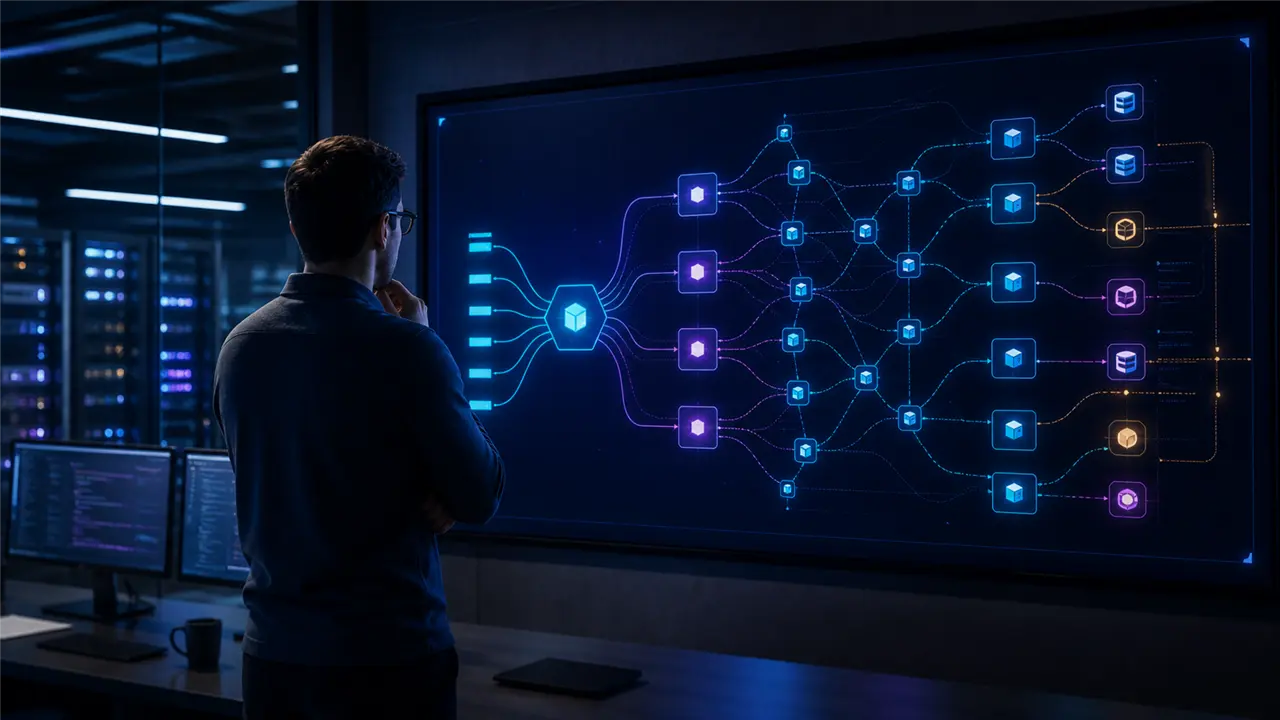
> Developing a custom remote live coin pusher platform costs between $28,000 and $42,000 USD from an integrated hardware-software factory, compared to $120,000+ from generic app agencies. At an average net hold of $45 per machine per day across a 50-machine venue, operators achieve full CapEx and venue payback within 45 to 60 operating days with 65% player retention.
The core defining metric of any successful remote arcade app is latency. If a player taps the “Drop Coin” button in New York and the physical wiper in our Guangzhou testing facility has already completed its sweep by the time the command arrives, the player feels cheated. The illusion of control is broken. To achieve the mandatory sub-80 millisecond glass-to-glass latency, our engineering team has developed a highly specialized, multi-tiered architecture that bypasses traditional content delivery networks.
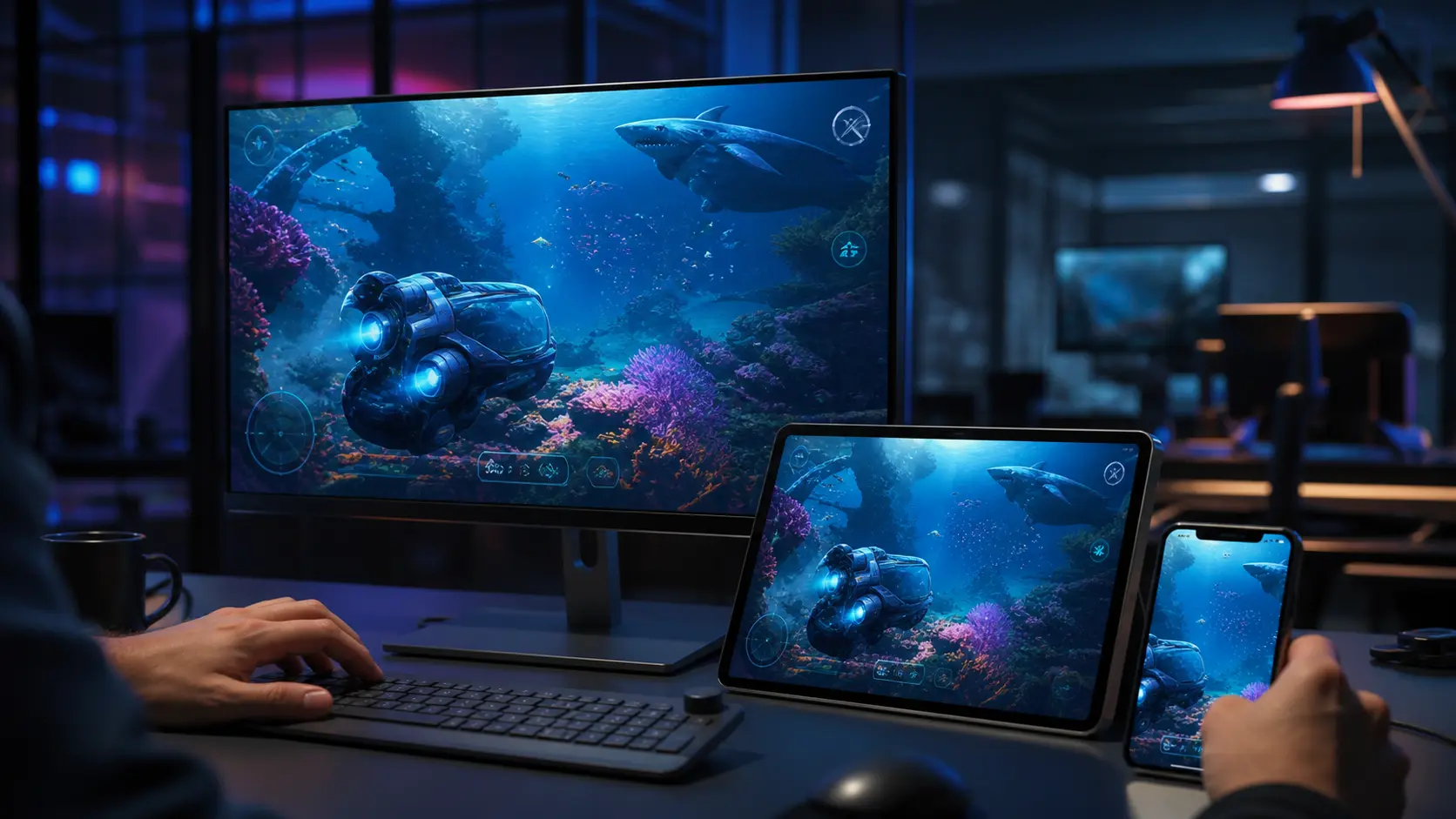
On the client side, we deploy a Unity-based front-end that provides a rich, responsive user interface. Unity allows us to render high-fidelity 3D overlays, dynamic particle effects for jackpots, and smooth UI transitions across both iOS and Android platforms. However, the critical component is our native WebRTC video engine integrated directly into the Unity client. We do not use standard HLS or RTMP streaming protocols, as they inherently introduce 2 to 5 seconds of buffering delay. Instead, we establish a direct peer-to-peer UDP connection between the player’s mobile device and our edge gateway hardware.
This WebRTC pipeline is heavily optimized for the chaotic visual environment of a coin pusher. Standard video encoders struggle with the constant motion of hundreds of reflective metal tokens and flashing LED arrays, often resulting in pixelation and artifacting. Our engineers have tuned the H.265 encoding parameters on our hardware edge nodes to prioritize framerate and sharpness in the specific color spectrums used by our cabinets. This ensures that players can clearly see the physical coins teetering on the edge, which is the primary psychological driver for continued monetization.
Handling the orchestration of thousands of concurrent players requires a robust room matchmaking cluster. We utilize a horizontally scalable Golang microservices backend running on cloud infrastructure. This matchmaking cluster handles player authentication, wallet balance verification, and machine state tracking. When a player selects a specific coin pusher room, the matchmaking server dynamically routes their control inputs to the corresponding physical machine while simultaneously negotiating the WebRTC SDP offers for the video stream. For a deeper dive into our server infrastructure, you can review our technical documentation on cloud arcade platform architecture and hybrid gaming systems.
Are you an enterprise operator mapping out your network topology? [Contact us at miba515527@gmail.com to request our full API protocol specification, WebSocket schema documentation, and a detailed BOM pricing toolkit for our edge computing nodes.]
The Physical Machine Interface and Serial Bus Master-Slave Controllers
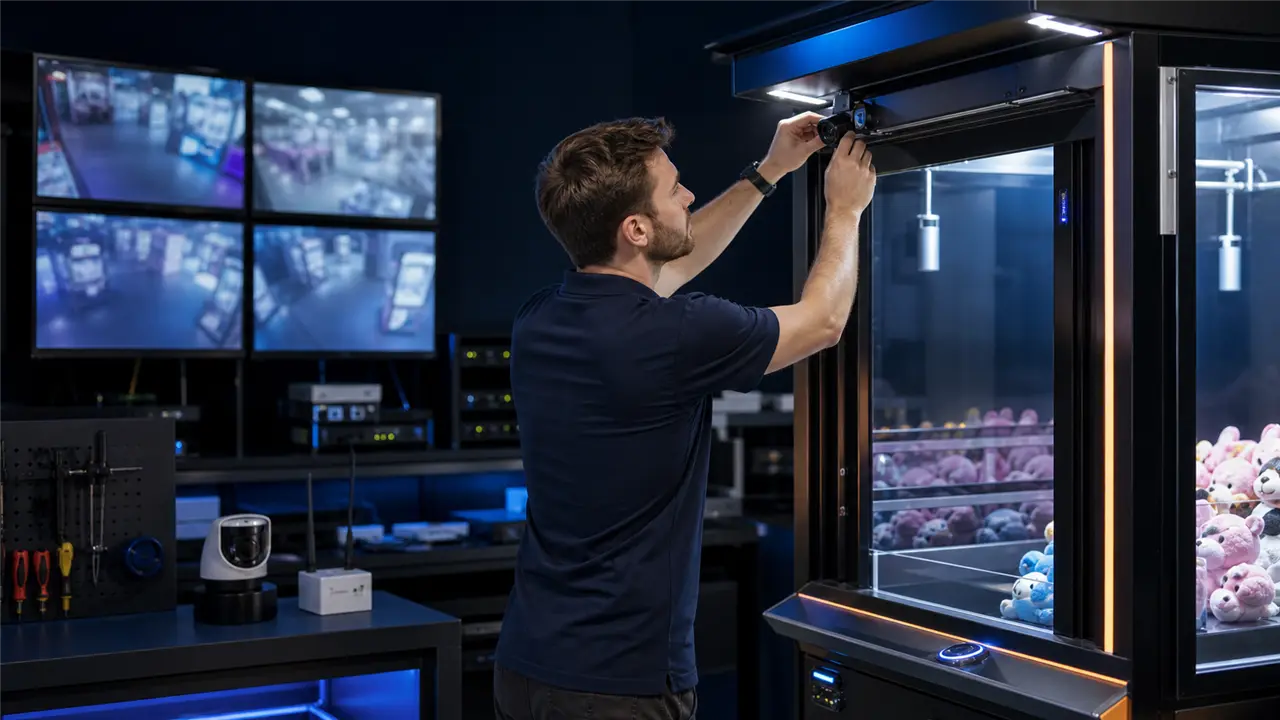
Software elegance means nothing if the hardware fails to execute commands reliably. The true bottleneck in remote coin pusher operations lies in the physical machine interface. Traditional arcades rely on localized logic boards where a physical button press immediately completes an electrical circuit. In a remote setup, a digital packet arriving over a network must be translated into a physical mechanical action with absolute deterministic precision.
Our solution relies on a proprietary RS-485 serial bus architecture deployed as a master-slave controller network. We specifically engineer our 8-player physical coin pushers to act as intelligent slave nodes on this industrial bus. The edge computing gateway—a ruggedized industrial PC equipped with custom FPGA PCIe cards—acts as the master node. This architecture provides several critical advantages over standard USB or Ethernet-to-serial adapters.
First, RS-485 utilizes differential signaling, making it highly immune to the electromagnetic interference (EMI) generated by the large stepper motors and switching power supplies inside the coin pusher cabinet. When a high-voltage jackpot solenoid fires, it creates a massive EMI spike. If the controller board is not properly shielded and optically isolated, this spike will reset the microcontrollers, causing the machine to reboot and wiping the player’s session state. Our PCB designs incorporate strict galvanic isolation, utilizing optocouplers on every digital input and output line.
Second, the master-slave polling architecture guarantees deterministic response times. The edge gateway polls each of the 8 player stations on a rigid 10-millisecond cycle. This ensures that when the command to actuate the coin drop solenoid is received from the cloud, it is executed precisely at the optimal moment in the wiper’s sweep cycle. We utilize high-resolution rotary encoders on the wiper motors to track the physical position of the sweeping arm in real-time. This telemetry data is streamed back to the Unity client, allowing the app to display a synchronized digital representation of the wiper’s position, compensating for any network jitter.
Furthermore, accurate revenue tracking dictates that every token dropped and every prize pushed over the edge must be counted flawlessly. We employ redundant dual-beam optical sensors at the prize chute. A single dust particle or a skewed token cannot trigger a false payout. The slave controller processes these sensor interrupts at the hardware level and transmits a verified payload to the edge gateway. This rigorous approach to hardware engineering prevents revenue leakage and ensures the mathematical integrity of your operation. For more information on protecting your hardware from external threats, refer to our guide on how to secure remote arcade API gateways and anti-tamper protocols.
Real-World Operator Financial Model with CapEx and OpEx Breakdown
Let us move away from engineering theory and examine the practical financial realities of running a remote coin pusher venue. Venue owners care about one metric above all others ROI payback period. Based on data from our partnered operators utilizing our Panyu-manufactured equipment, we can construct a highly accurate financial model for a mid-sized 50-machine remote deployment.
The Capital Expenditure (CapEx) involves two primary components the physical arcade hardware and the software licensing. A premium 8-player coin pusher, built to continuous-duty specifications with upgraded solenoids and Japanese-made stepper motors, represents a significant but necessary investment. Cheap, domestic-grade machines will physically destroy themselves within three months of 24/7 remote operation. When you factor in the edge computing gateways, the HD PTZ camera arrays, and the specialized studio lighting required for glare-free video streaming, the per-station hardware cost is a known, fixed variable.
Because you are leveraging our turnkey white-label app rather than funding a bespoke software build, the software CapEx is drastically reduced to a manageable licensing and branding fee. This allows you to allocate your capital toward revenue-generating physical inventory.
The Operational Expenditure (OpEx) model for a remote arcade differs entirely from a physical street location. You eliminate premium retail rent, substituting it for industrial warehouse space. You eliminate floor attendants, substituting them with a streamlined team of machine refill technicians and remote customer support agents. However, new OpEx categories emerge primarily server bandwidth and payment gateway interchange fees.
High-definition, low-latency video streaming consumes massive bandwidth. A single 50-machine venue hosting 400 concurrent players requires a robust, dedicated fiber optic uplink. Our edge gateways utilize advanced bandwidth throttling algorithms, dynamically reducing the bitrate for inactive observer clients while maintaining maximum quality for the active player controlling the machine. This optimization reduces monthly egress bandwidth costs by up to 40%.
The core of the financial model relies on token hold math. Unlike digital slots running on pseudo-random number generators, physical coin pushers operate on applied physics. The weight of the tokens, the friction coefficient of the stainless steel playfield, and the geometry of the side gutters determine the payout rate. Our factory calibrates the physical gutters and the wiper sweep angles to achieve a consistent 92% to 96% retention rate.
Assuming an average player session yields $15 in gross coin-in, with a 94% hold, the house retains $14.10 per session. With 400 player stations operating at a conservative 30% utilization rate over a 24-hour period, the daily gross gaming revenue scales rapidly. After deducting bandwidth costs, payment gateway fees (typically 2.9% + $0.30), and physical warehouse OpEx, our operators consistently achieve a 60-day to 90-day CapEx payback period. This ROI velocity is unparalleled in traditional brick-and-mortar amusement operations.
Regulatory Compliance and Global In-App Purchase Gateways
Navigating the labyrinth of global payment processing and app store compliance is often the most treacherous phase of launching a remote arcade platform. The Apple App Store and Google Play Store enforce draconian guidelines regarding real-money gaming and skill-based amusement. An improperly structured app will face immediate rejection, stranding your entire operation.
Our turnkey architecture is designed fundamentally around the concept of remote teleoperation of physical amusement devices, positioning it distinctively from digital gambling. The outcome of the game is determined by the physical physics of the tokens and the player’s timing in releasing the coin, classifying it strictly as a game of skill in many jurisdictions. However, compliance requires more than just physical hardware; it requires a meticulously crafted digital economy.
We integrate sophisticated geolocation fencing utilizing IP-based routing and device-level GPS polling. This allows operators to dynamically restrict access to specific states, provinces, or countries where skill-based amusement is heavily regulated or prohibited. The edge gateway validates the player’s physical location before initializing the WebRTC stream, ensuring total compliance with regional ordinances.
Regarding monetization, relying solely on Apple In-App Purchases (IAP) is financially crippling due to their mandatory 30% commission. While our app natively supports IAP to ensure seamless onboarding for new users, our platform architecture incorporates alternative, high-margin payment routes. We provide deep integration with Stripe for direct credit card processing, allowing operators to bypass app store taxes for returning VIP players via a web-based top-up portal.
Furthermore, our system fully supports modern digital asset integrations. We can deploy cryptocurrency payment gateways, enabling players to purchase in-game tokens using USDT or other stablecoins via TRC20 or ERC20 networks. This not only eliminates chargeback fraud—a significant issue in the mobile gaming sector—but also opens the platform to a global audience unbanked by traditional Western payment processors. By combining physical electromechanical engineering with modern decentralized payment gateways, we provide operators with a resilient, future-proof business model. If you plan to expand into claw machines as well, read our insights on B2B remote claw machine app development and venue operations.
Frequently Asked Questions
How much bandwidth does a 50-machine remote coin pusher venue require? For 50 machines (representing up to 400 individual player stations), you should provision a dedicated symmetrical gigabit fiber connection. Our H.265 WebRTC pipeline optimizes the stream, but 400 concurrent HD video feeds require significant sustained uplink capacity to prevent packet loss and latency spikes.
Can your system integrate with our existing physical coin pushers? While possible, retrofitting existing hardware is rarely cost-effective. Legacy machines lack the proprietary RS-485 slave controllers, optical isolation circuits, and high-resolution stepper motor encoders required for deterministic remote control. We strongly recommend deploying our factory-engineered IoT cabinets to guarantee stability and prevent EMI-induced crashes.
How do you handle disputes if a player claims a token dropped but wasn’t credited? Our system utilizes dual-beam optical sensors at every payout chute, managed by dedicated hardware interrupts. This eliminates false positives. Furthermore, the edge computing gateway records a rolling 15-minute high-definition video buffer of every playfield, synced perfectly with the server-side transaction log. This provides absolute cryptographic and visual proof to resolve any customer dispute instantly.
What is the lead time for deploying a fully customized white-label app? Because we utilize a proprietary core engine rather than building from scratch, a fully branded iOS and Android application can be compiled, tested, and submitted to the app stores within 4 to 6 weeks. The concurrent manufacturing of the physical hardware at our Panyu facility aligns perfectly with this timeline, ensuring a synchronized launch.
How does the system prevent network latency from ruining the timing of the coin drop? We stream the physical telemetry of the wiper arm’s position directly to the Unity client. The app visually renders this movement in real-time. When the player taps the drop button, the client calculates the exact offset based on the current network ping and sends a timestamped command. The master controller board executes the physical drop at the precise millisecond requested, completely neutralizing network jitter.
The transition to a remote live arcade model requires industrial-grade hardware engineering paired with cutting-edge low-latency video streaming. Do not entrust your operational stability to generic software agencies.
Partner with the manufacturing experts. In our Panyu QA lab, our protocol mandates rigorous stress testing of every solenoid, optical sensor, and WebRTC node before deployment. We build the physical machines, we write the firmware, and we compile the app.
Ready to architect your remote revenue engine?
- WhatsApp / WeChat +86 17620842078
- Telegram https://t.me/JLwyc
- Email miba515527@gmail.com
Contact Engineer Wang directly to book a physical factory prototyping session or to request remote access to our staging environment. We provide the comprehensive hardware and software foundation required to scale your phygital arcade empire.