- Overcoming Video Streaming Latency in Cloud Slot Operations
- Physical Stepper Reel Capture with Industrial 60fps Cameras
- Direct HDMI and DVI Hardware Loop Out for Video Slots
- Dual Camera Composite Streaming Architecture
- Achieving Sub 80ms WebRTC Glass to Glass Pipeline
- Integration with Operator Turnkey Systems
- Frequently Asked Questions
When route operators scale their physical slot machine floors into cloud-based teleoperation centers, the most critical bottleneck they face is not the payment gateway or the physical button inputs, but the sheer physics of video latency. As Senior Casino Protocols and Low-Latency Video Systems Architect Engineer Wang at Guangzhou Miba Animation Technology Co., Ltd. (Arcade Manufacturer), I have spent the last decade tearing down and rebuilding the video transmission pipelines for remote live arcades. From our 15,000m² manufacturing base in Panyu, we have engineered a complete turnkey solution that bridges the physical reality of mechanical stepper reels and the digital output of modern video slots with the remote player’s mobile device, achieving unparalleled sub-80ms WebRTC glass-to-glass latency.
For the player holding a smartphone halfway across the globe, the illusion of direct physical control shatters the moment they tap the spin button and experience a visual delay. In high-stakes remote live slot environments, this visual lag translates directly to lost revenue, plummeting player trust, and catastrophic retention metrics. The solution requires a rigorous, industrial-grade approach to video capture, encompassing high-refresh 60fps industrial cameras for mechanical reels, zero-latency direct HDMI hardware loop-outs for video slots, and composite dual-camera streaming architectures.
This comprehensive technical deep-dive will expose the underlying architecture of our proprietary video capture systems, detailing how we eliminate motion blur on physical reels, bypass traditional encoding bottlenecks, and deliver an immersive, hyper-responsive remote slot machine experience. If you are an operator looking to transition your physical asset inventory into a highly profitable cloud infrastructure, understanding these foundational video technologies is your first step toward market dominance.
Overcoming Video Streaming Latency in Cloud Slot Operations
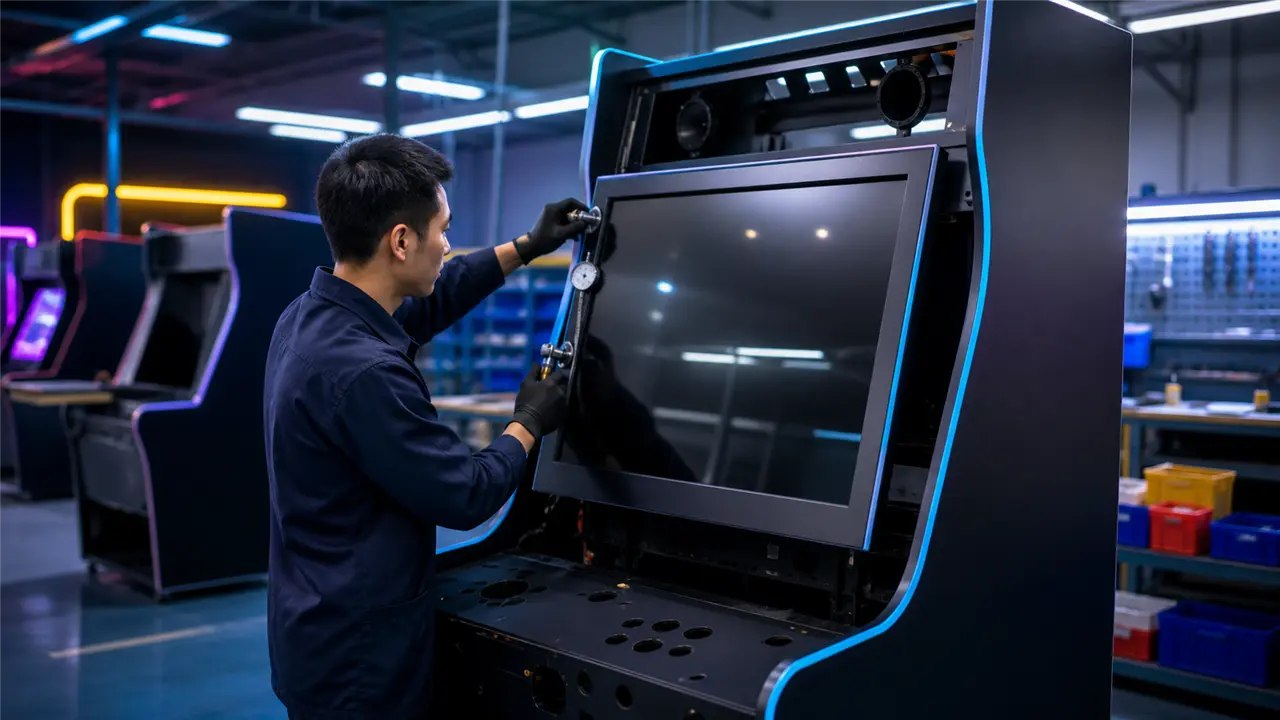
In the realm of remote live arcade systems, video latency is the silent killer of player engagement. Standard IP cameras and consumer-grade streaming protocols like HLS (HTTP Live Streaming) or RTMP (Real-Time Messaging Protocol) inherently introduce between three to fifteen seconds of delay. This is fundamentally unacceptable for a slot machine environment where the feedback loop between pressing the spin button and seeing the reels move must be instantaneous. Our mandate at Arcade Manufacturer is to completely eradicate this delay, pushing the boundaries of what is possible over standard cellular and broadband networks.
The core of our approach lies in shifting the processing burden away from software-based encoders and generic network protocols. Instead, we implement dedicated hardware-accelerated edge encoding directly at the cabinet level. By doing so, we capture the raw visual data—whether it is the physical reflection of light off a mechanical reel or the uncompressed TMDS (Transition Minimized Differential Signaling) data from a DVI port—and compress it using highly optimized H.264 or H.265 profiles in under 15 milliseconds.
This edge-computed stream is then injected directly into our remote live arcade turnkey system, utilizing WebRTC to bypass traditional CDN buffering. The result is a continuous, synchronized stream that maintains pixel-perfect clarity without sacrificing speed. This is not an off-the-shelf camera setup; it is a bespoke industrial video pipeline designed exclusively for the rigorous demands of real-money remote gaming.
Physical Stepper Reel Capture with Industrial 60fps Cameras
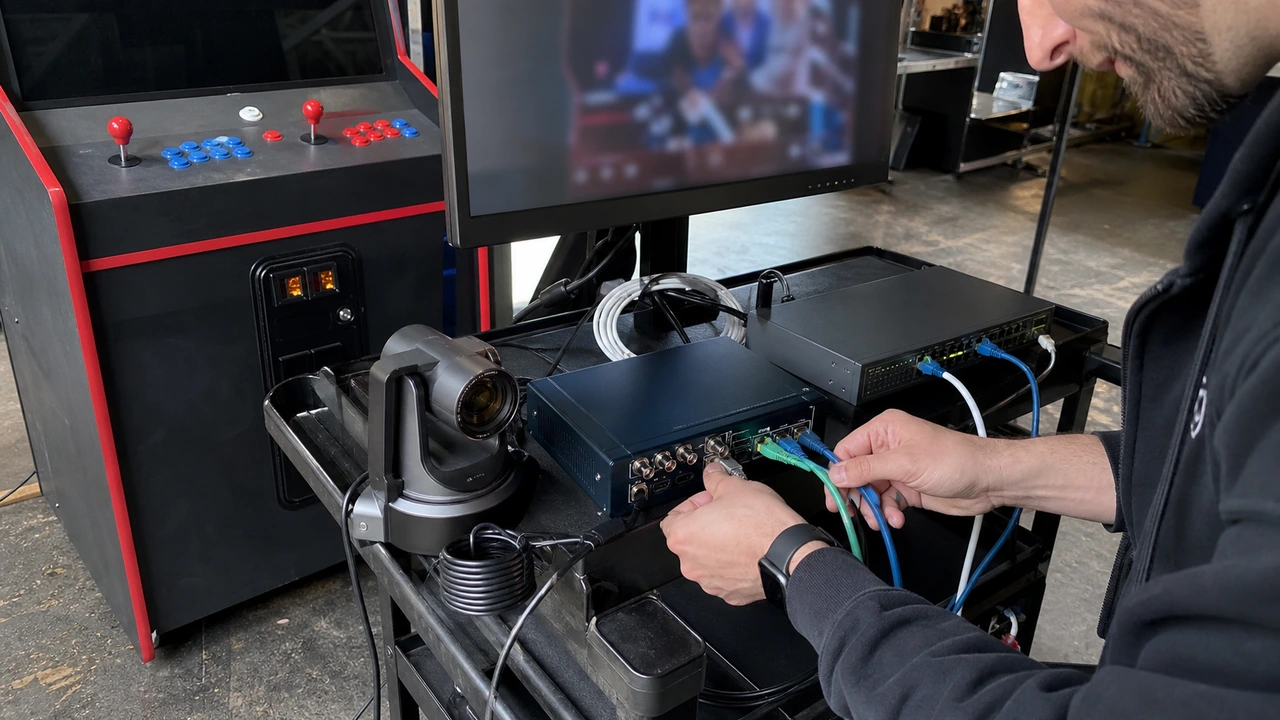
The charm and tactile feedback of mechanical stepper reels remain a massive draw for specific player demographics. However, digitizing this analog experience for remote play presents unique optical challenges. A physical slot machine reel spinning at high RPM creates significant motion blur for standard 30fps security cameras. When a player commands a stop, the camera must capture the exact symbol alignment with zero tearing or artifacting.
To solve this, our engineering team deploys specialized industrial-grade CMOS sensors running at a native 60 frames per second (fps) with ultra-fast global shutters. Unlike rolling shutters that scan the image line by line—causing the dreaded “jello effect” on spinning objects—a global shutter exposes the entire sensor simultaneously. This effectively freezes the mechanical reel in time, ensuring that the fast-moving symbols are rendered with absolute crispness on the player’s screen.
High Refresh Rate and Motion Blur Elimination
The physics of motion capture dictate that to eliminate blur, the shutter speed must significantly exceed the frame rate. In our Panyu QA labs, we configure our reel-capture cameras with shutter speeds upwards of 1/500th of a second. This rapid exposure requires a substantial increase in ambient lighting to prevent image noise, which brings us to the intricate lighting design integrated into our commercial arcade game machines manufacturing standards.
We utilize high-CRI (Color Rendering Index) LED arrays positioned at precise angles relative to the stepper reels. This illumination floods the mechanical components with perfectly balanced white light, compensating for the incredibly brief shutter exposure times. The combination of 60fps global shutter cameras and optimized high-intensity illumination guarantees that the remote player sees exactly what the physical machine is displaying, down to the millimeter alignment of the payline, ensuring absolute trust in the game outcome.
Anti Glare Diffuser Shields for Curved Cabinet Bezels
A secondary, yet equally critical, challenge in capturing physical slot machines is the reflection generated by curved cabinet glass and acrylic bezels. Standard lighting setups will inevitably create harsh, blown-out glare spots on the glass, obscuring the reels and ruining the visual experience.
Our mechanical engineers have designed custom anti-glare diffuser shields and polarized optical filters specifically tailored to the curvature of standard and custom slot cabinets. By cross-polarizing the light source and the camera lens, we can mathematically eliminate specular highlights and reflections from the curved glass surfaces. The diffusers soften the LED output, wrapping the light evenly around the reels without bouncing directly back into the camera sensor. This level of optical engineering is standard out-of-the-box for operators deploying our cloud slot machine farm deployment costs models, ensuring a broadcast-quality feed from day one.
Direct HDMI and DVI Hardware Loop Out for Video Slots
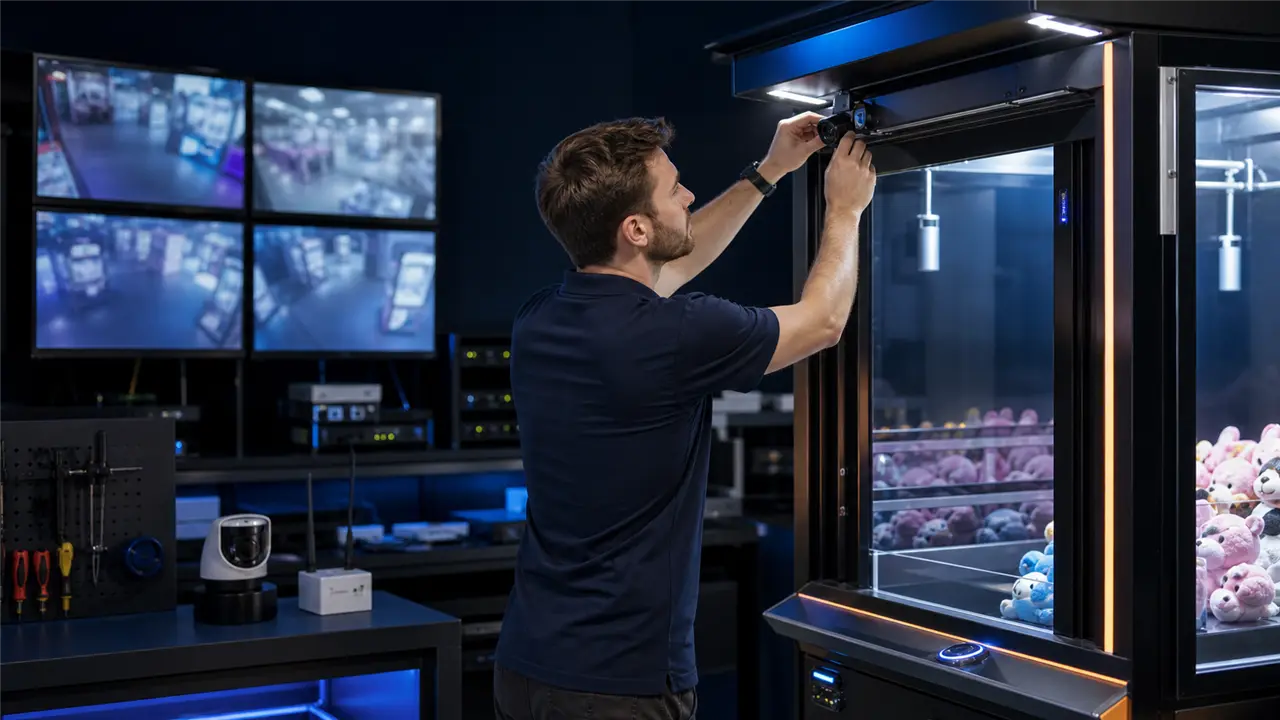
While mechanical reels require sophisticated optical solutions, modern digital video slots demand a completely different approach. Pointing a camera at an LCD screen is an amateur mistake that results in moiré patterns, color degradation, and unnecessary latency. For video-based slots and 8-liners, the only acceptable method is capturing the raw digital video signal directly from the game board’s output.
At Arcade Manufacturer, we utilize direct DVI and HDMI hardware loop-out capture architectures. We install an interceptor module between the game board’s GPU and the cabinet’s internal monitor. This module splits the uncompressed TMDS video signal, sending one path to the physical display (for onsite monitoring or hybrid play) and the other directly into our proprietary edge encoding processor.
Sub 15ms Hardware Encoding at the Edge
The interceptor module is equipped with an ASIC (Application-Specific Integrated Circuit) or FPGA (Field-Programmable Gate Array) designed exclusively for video compression. When the 1080p or 4K signal hits the encoder, it is immediately compressed using H.264/AVC or H.265/HEVC protocols utilizing hardware-accelerated profiles.
Because we control the silicon logic, we can strip out all unnecessary buffering. Traditional capture cards frame-buffer the video, adding 30-50ms of delay before compression even begins. Our custom silicon utilizes zero-delay slice-based encoding, transmitting compressed macroblocks to the network stack as they are generated, rather than waiting for the entire frame to render. This aggressive optimization allows us to achieve sub-15ms hardware encoding latency—a critical metric for operators utilizing our remote live slot machine turnkey system.
Signal Integrity and EDID Emulation
Intervening in the direct video path can often cause game boards to panic if they do not detect a valid display. To prevent the slot machine from throwing an error or dropping its resolution, our capture modules feature advanced EDID (Extended Display Identification Data) spoofing and emulation.
The capture hardware masquerades as the original cabinet monitor, negotiating the exact resolution, refresh rate, and color space expected by the game board. This ensures 100% signal integrity and prevents HDCP (High-bandwidth Digital Content Protection) handshakes from interrupting the feed. The result is a pristine, pixel-perfect digital capture that provides the remote player with an interface identical to the native software, totally devoid of screen glare or optical distortion.
Dual Camera Composite Streaming Architecture
For a remote slot operation to truly replicate the casino floor experience and maintain robust anti-fraud protocols, a single video feed is rarely sufficient. Players need to see the digital game outcome, but they also require visual proof of the physical cabinet’s integrity—they need to see the win lights flashing, the physical meters ticking, and the overall ambient environment of the real machine they are operating.
To achieve this, we engineer a dual-camera composite streaming architecture. This system merges the high-fidelity direct HDMI feed of the game screen with an external, ambient security camera focused on the cabinet’s exterior.
Combining Game Screen and Ambient Security Footage
Our edge IoT controllers perform real-time video compositing, taking the uncompressed 1080p HDMI signal and overlaying it as a Picture-in-Picture (PiP) or side-by-side display alongside the ambient camera feed. This composite is generated prior to network encoding, ensuring that both video sources are perfectly synchronized.
This architectural decision serves a dual purpose. For the player, it provides an immersive, trust-building view of their physical machine interacting with the real world. For the operator, it acts as an integrated anti-fraud mechanism. Any physical tampering, unauthorized access, or hardware faults on the cabinet floor are instantly visible on the stream, providing a verifiable video audit trail. This is a standard requirement for high-compliance jurisdictions and is fully supported by our backend management panels.
Audio Synchronization with Mechanical Reel Clicks
Video without perfectly synchronized audio destroys the illusion of remote control. When a player commands a stepper reel to stop via our physical slot machine button relay modification, the satisfying mechanical ‘clack’ of the solenoid locking the reel must arrive at the mobile device at the exact same millisecond as the visual stop.
Because light travels faster than sound, and video encoding often processes at different speeds than audio sampling, audio desynchronization is a common failure point in poorly designed systems. We solve this by multiplexing the analog audio output directly from the cabinet’s amplifier into the same hardware encoder processing the video. By embedding the AAC (Advanced Audio Coding) or Opus audio stream into the exact same transport stream packet as the corresponding video frame, we lock the audio-visual presentation together at the hardware level. The mechanical reel click and the visual stop are bonded in silicon before they ever touch the network, ensuring absolute synchronous playback on the player’s device.
Achieving Sub 80ms WebRTC Glass to Glass Pipeline
The final, and perhaps most complex, phase of the remote video architecture is network delivery. Generating a 15ms encoded stream at the edge is meaningless if the network protocol buffers the data for three seconds. To achieve our promised sub-80ms glass-to-glass latency, we must entirely bypass standard broadcasting protocols.
Bypassing Traditional HLS and RTMP Protocols
Protocols like HLS and RTMP rely on TCP (Transmission Control Protocol), which guarantees packet delivery but introduces massive latency due to packet acknowledgment requirements and multi-second buffering segments. When a network hiccup occurs, TCP pauses the entire stream to retransmit the lost packet, causing stuttering and severe desynchronization from the physical machine’s state.
Instead, Arcade Manufacturer utilizes a highly customized WebRTC (Web Real-Time Communication) stack running over UDP (User Datagram Protocol). WebRTC is designed for ultra-low latency peer-to-peer communication. By stripping away the large buffers and utilizing UDP—which prioritizes speed over guaranteed delivery—we allow minor frame drops (which are imperceptible at 60fps) in exchange for absolute real-time delivery. The player sees the action exactly as it happens, with a total pipeline delay of less than 80 milliseconds from the physical event to the pixel illuminating on their smartphone screen.
WebRTC Optimization for Global Mobile Networks
Delivering UDP streams across pristine fiber connections is straightforward, but remote players are often accessing our systems via fluctuating 4G, 5G, or unstable Wi-Fi networks. To maintain the sub-80ms target under real-world conditions, our WebRTC implementation features aggressive dynamic bitrate scaling and adaptive network condition negotiation.
Through continuous RTCP (RTP Control Protocol) feedback loops, the edge encoder monitors the player’s packet loss and network jitter. If bandwidth degrades, our hardware encoder instantaneously reduces the quantization parameter, lowering the bitrate within a single frame cycle to prevent buffering. As the network recovers, the quality scales back up to full 1080p HD. This autonomous network resilience guarantees that the player never misses a critical spin or bonus round, safeguarding the operator’s revenue stream and player retention metrics.
Integration with Operator Turnkey Systems
The video capture architecture detailed above is not an isolated component; it is deeply integrated into the central nervous system of our complete turnkey remote operations platform. We do not just sell cameras and encoders; we deliver a holistic, revenue-generating ecosystem tailored for high-volume route operators.
IoT Controller Synchronization
Our low-latency video encoders are directly linked via a robust internal bus to our custom IoT relay control boards. This ensures that the telemetric data of the physical machine—coin-in pulses, button presses, hopper payouts—are perfectly aligned with the video feed. When a player triggers a payout on their mobile app, the IoT controller commands the physical hopper, and the video stream simultaneously captures the real coins falling, all orchestrated with microsecond precision.
Commercial Manufacturing Standards at Our Panyu Factory
Every component, from the anti-glare diffusers to the bespoke HDMI FPGA encoders, is designed, prototyped, and mass-produced in our 15,000m² manufacturing facility in Panyu, Guangzhou. We enforce rigorous quality assurance protocols, subjecting every streaming module to 72-hour thermal stress tests and continuous network saturation simulations. We are a factory-direct manufacturer, which means operators are dealing directly with the source code owners and hardware architects. There are no middlemen, no off-the-shelf consumer workarounds, and no compromises on industrial reliability.
If you are a route operator looking to maximize the yield of your physical cabinet inventory by expanding into global remote operations, you need an infrastructure built by gaming engineers, for gaming operators. Contact us today to schedule a live technical demonstration of our sub-80ms WebRTC streaming capabilities or to request our comprehensive hardware schematics and pricing models.
Connect Directly with the Engineering Source
- WhatsApp / WeChat: +86 17620842078
- Telegram: https://t.me/JLwyc
- Email: miba515527@gmail.com
Frequently Asked Questions
Why can’t I just use standard IP security cameras to stream my slot machines? Standard IP cameras utilize HLS or RTSP protocols designed for surveillance, not real-time interaction. They introduce 3 to 15 seconds of latency, making live slot machine gameplay impossible. Our specialized WebRTC edge encoders achieve sub-80ms latency, providing a true real-time gaming experience.
Does capturing the HDMI signal directly affect the performance of the game board? No. Our proprietary hardware loop-out modules feature advanced EDID emulation and active signal splitting. They are completely transparent to the game board, ensuring zero performance impact and preventing any HDCP handshake errors.
How do you prevent reflections on the curved glass of the slot cabinets? We utilize custom-engineered anti-glare diffuser shields and cross-polarized optical filters. This lighting design, standard in our manufacturing process, mathematically eliminates specular highlights and reflections from curved bezels, providing a crystal-clear view of the mechanical reels.
Is it possible to sync the sound of the mechanical reels with the video feed on the player’s phone? Absolutely. We multiplex the analog audio output directly into our hardware video encoder. By embedding the audio and video into the exact same transport stream at the silicon level, we guarantee perfect synchronization between the physical ‘click’ of the reel and the visual stop on the mobile device.
What happens to the video stream if the player’s mobile internet connection drops in speed? Our WebRTC implementation features dynamic adaptive bitrate scaling. If the network degrades, the edge encoder autonomously lowers the bitrate within milliseconds to prevent buffering or freezing. Once the connection stabilizes, it seamlessly scales back up to full HD resolution, ensuring uninterrupted gameplay.