- The Infinite Player Concurrency Model in Modern Teleoperation
- Automated Servo Roulette Wheel Mechanics and Pneumatic Control
- Dual Laser Ball Drop Detection and High Speed Vision Verification
- Sub 80ms WebRTC Video Streaming and Real Time Betting Integration
- State Machine Countdown Logic and Timestamp Verification
- Remote Live Roulette Machine Farm Infrastructure Engineering
- Operator ROI Math Model and Scalability
- Panyu Factory FAT Inspection and B2B Turnkey Procurement
- Frequently Asked Questions
Remote live electronic roulette turnkey systems merge industrial servo-driven physical mechanical wheels with sub-80ms WebRTC streaming to allow a single physical cabinet to serve thousands of concurrent remote mobile players. Our Panyu factory engineers teleoperation architecture that guarantees millisecond-accurate pneumatic ball launches and dual-laser pocket detection for stadium gaming operators.
Hello from the Guangzhou Miba Animation Technology Co., Ltd. (Arcade Manufacturer) assembly line. I am Engineer Wang, Lead Hardware & Game System Architect. Over the past decade, our 15,000m² manufacturing base in Panyu has designed, fabricated, and exported countless commercial game machines. Today, I want to discuss a massive shift in casino and arcade operations that we are building hardware for right now. The days of a physical roulette table being limited by the number of chairs around it are over. We engineer remote live teleoperated Electronic Table Games (ETG) that break the physical boundaries of floor space. To review factory fabrication specs for 8-station and 12-station stadium wheels, consult our guide on multiplayer electronic roulette machine manufacturing.
Many operators contact me complaining about the limitations of traditional RNG (Random Number Generator) virtual roulette apps. Players do not trust pure software algorithms. They want to see the physical ball bounce against the brass deflectors. They want to hear the mechanical click of the pocket hit. Conversely, live dealer casino streams are labor-intensive, prone to dealer error, and have high overhead. Our solution is the fully automated, IoT-connected remote live electronic roulette stadium system. We provide the complete machine, the streaming hardware, and the software backbone as a 100% turnkey source code buyout delivery. For operators expanding beyond digital wheels to physical dice shakers, review our engineering on mechanical pneumatic Sic Bo dome teleoperation and optical dice recognition.
The Infinite Player Concurrency Model in Modern Teleoperation
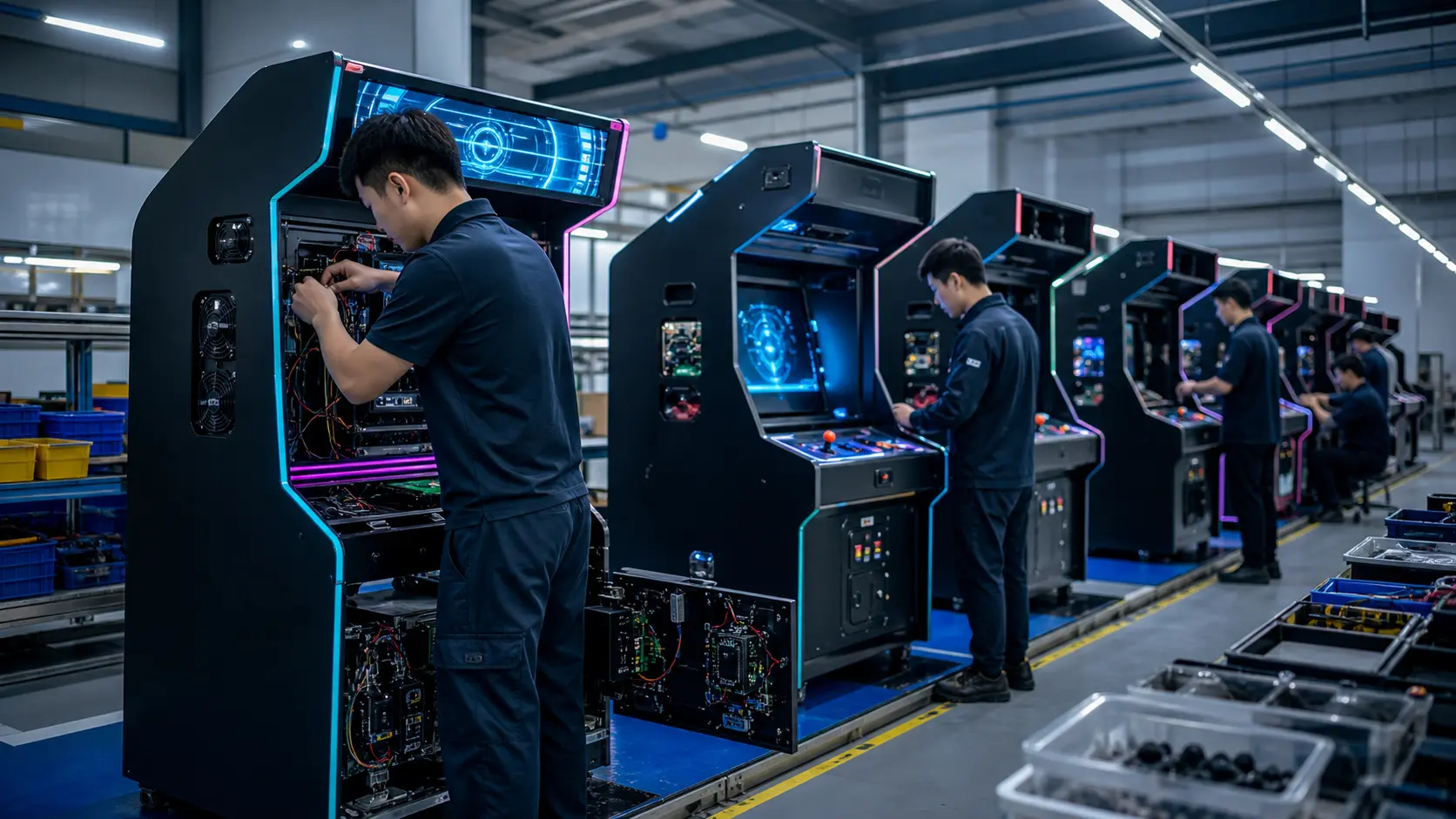
In traditional casino environments, an electronic roulette cabinet or a standard table is constrained by floor space and terminal count. A standard 8-player cabinet generates revenue proportional to those eight seats. If the floor is full, potential revenue walks out the door. We solve this by decoupling the physical mechanical wheel from the betting terminal.
By integrating our remote live arcade turnkey system, one physical roulette machine sitting in a warehouse studio can broadcast its physical state to an unlimited number of remote mobile players or dispersed digital betting kiosks. This is the stadium gaming concurrency model. We build the physical cabinet as a high-durability central hub, designed specifically as a multiplayer electronic roulette machine cabinet engineering marvel.
The physical hardware acts purely as the physical random outcome generator. Our IoT middle-tier captures the video and sensor data, digitizes it, and broadcasts it to the cloud server. From there, 1,000 or even 10,000 players can place bets on their phones or digital grids simultaneously. Because there is no human dealer and no physical seating limit, the revenue cap is effectively removed. We design our server architecture to handle massive concurrent socket connections, ensuring that every player’s bet is registered, verified against the countdown timer, and settled instantly upon the ball drop.
Automated Servo Roulette Wheel Mechanics and Pneumatic Control
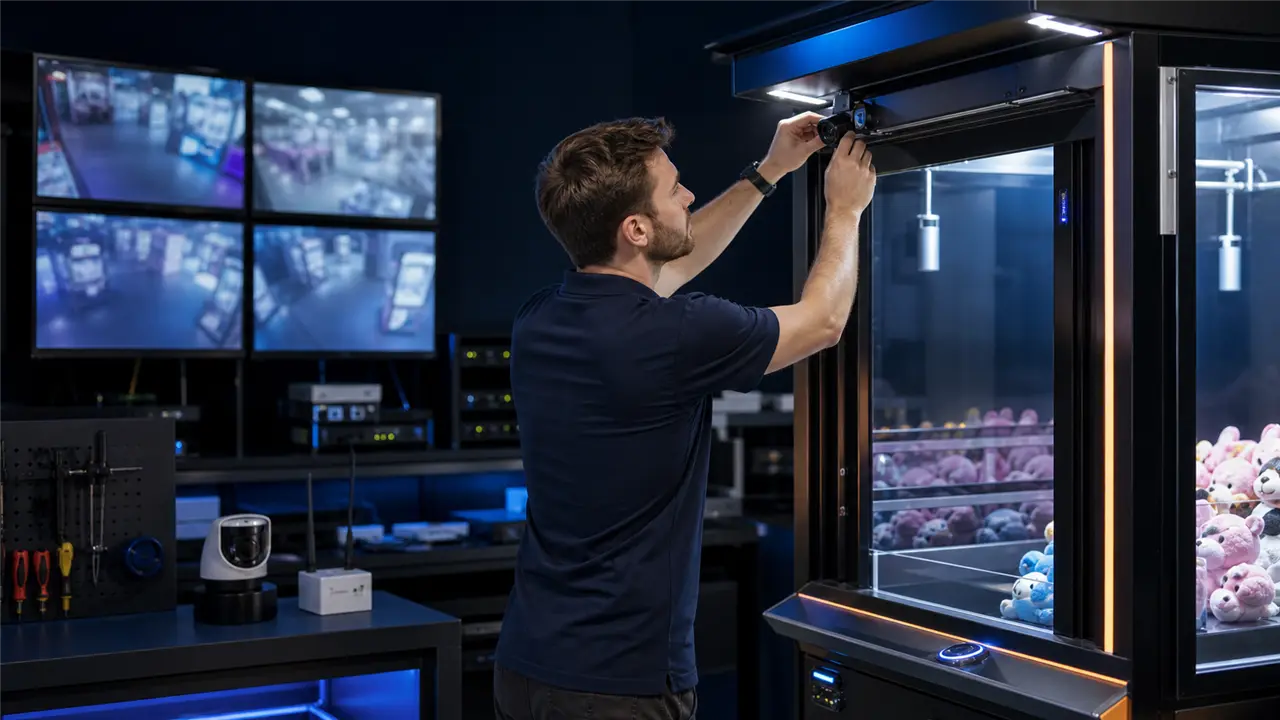
To achieve true teleoperation without human intervention, the physical machine must run flawlessly 24/7. This requires industrial-grade automation. Our automated servo roulette wheel mechanics utilize high-precision closed-loop stepper motors and absolute rotary encoders.
When you inspect our internal schematics, you will see that the wheel cylinder is driven by a high-torque brushless DC servo motor. This ensures the rotor speed is perfectly consistent and programmable. The system can dynamically vary the rotor speed between rounds to introduce natural entropy, but it never deviates from the programmed curve during a spin. We machine the rotor from solid aerospace-grade aluminum alloy on our CNC routers in Panyu, ensuring zero imbalance that could lead to biased outcomes or “drop zones.”
The ball launch mechanism is entirely pneumatic. We employ a silent, high-pressure air compressor coupled with electronically actuated solenoid valves. The air-blower system injects the Teflon ball into the track at precise velocities. By modulating the air pressure and duration, our control board randomizes the ball’s initial velocity within a specified envelope. This mimics a human dealer’s spin while eliminating the possibility of predictable dealer signatures. The pneumatic system is self-cleaning and features an automatic ball return mechanism that retrieves the ball from the winning pocket and cycles it back to the launch tube via a hidden subterranean track.
Dual Laser Ball Drop Detection and High Speed Vision Verification
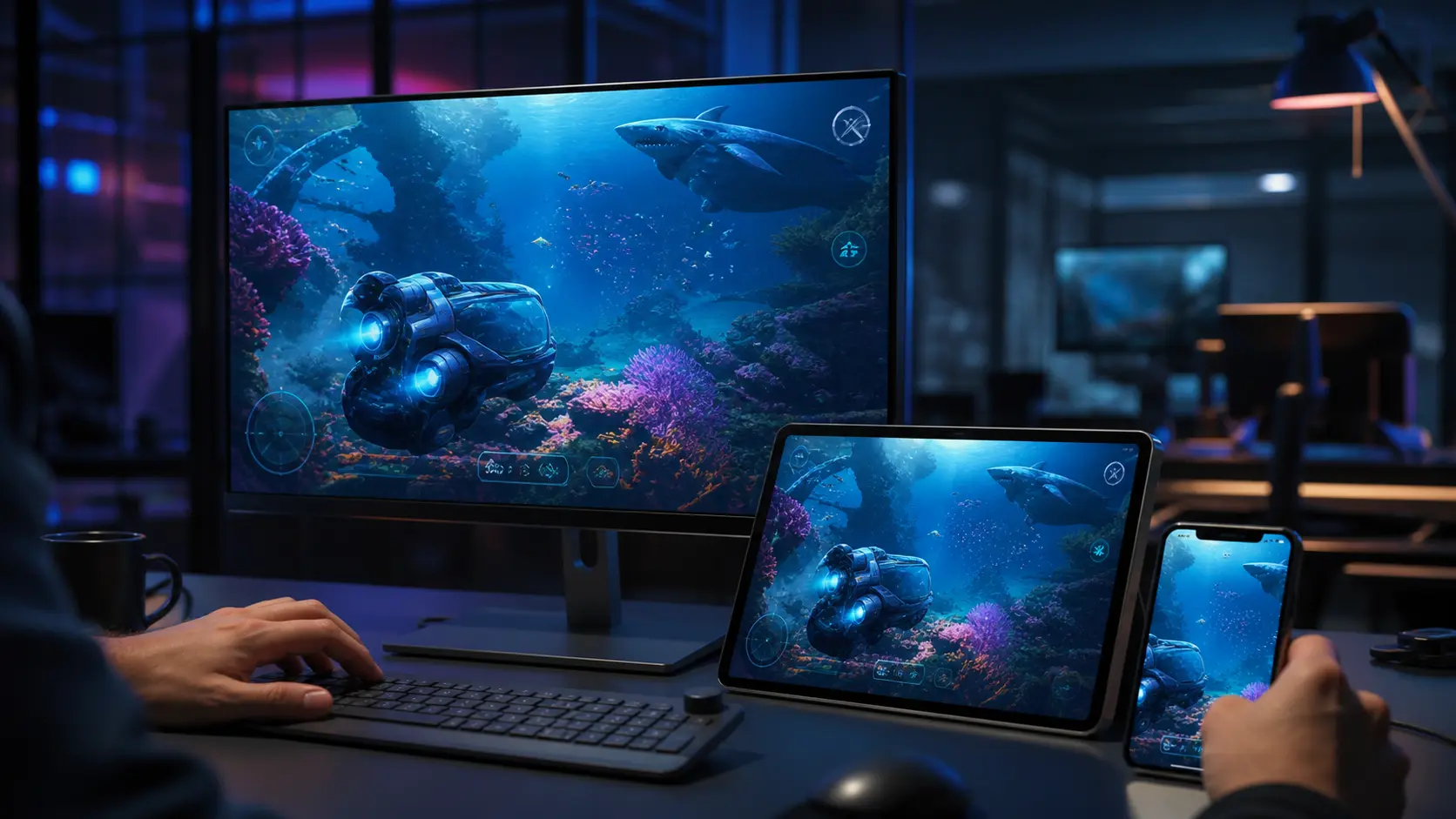
In a remote live environment, the system must translate physical events into digital data with zero latency and absolute accuracy. The most critical event is identifying the winning number. We deploy a redundant, dual-layer sensor architecture.
First, our dual laser ball drop detection system monitors the wheel’s stator. Infrared laser gates are positioned above the wheel to track the ball’s velocity as it orbits the track. As the ball decelerates and drops through the deflectors (diamonds), the laser matrix instantly calculates the exact millisecond the ball enters the rotor area.
Second, we utilize optical computer vision for pocket number identification. A high-frame-rate industrial machine vision camera (capable of 120 FPS or higher) is mounted directly above the wheel center. This camera continuously feeds video frames to a dedicated edge-computing FPGA board. The vision algorithm tracks the ball and the rotor simultaneously. Because the wheel has an optical index mark or an absolute encoder reading the exact position of the ‘0’ pocket, the system dynamically calculates the ball’s position relative to the rotating pockets. The instant the ball settles, the vision system confirms the pocket number (0-36 or 00). The dual verification ensures that false readings from dirt or reflections are eliminated.
Sub 80ms WebRTC Video Streaming and Real Time Betting Integration
For remote players to trust the game, they must watch the physical event unfold with no perceptible delay. If the video lags behind the digital betting grid, players will suspect manipulation. Our architecture leverages low latency webrtc video streaming roulette technology to achieve glass-to-glass latency of under 80 milliseconds.
We mount multiple 4K PTZ (Pan-Tilt-Zoom) or fixed industrial cameras around the machine cabinet. One provides a wide shot of the machine, one focuses closely on the wheel, and another might show the ambient environment to prove it is a live broadcast. These video feeds are encoded via hardware H.265 encoders directly at the machine edge.
The video stream is synchronized absolutely with the game state machine. On the player’s mobile app or digital betting kiosk, the video overlay and the digital betting grid (the felt) run on the exact same clock. When the player taps a chip and places it on a split or a straight-up number, the UI updates instantly, while the background video shows the wheel spinning in real-time. This seamless integration requires profound expertise in both hardware integration and full-stack software development, which is why we deliver 100% complete turnkey solutions rather than disjointed parts.
State Machine Countdown Logic and Timestamp Verification
The core of fair electronic table gaming is the state machine logic that governs when bets are accepted and when they are locked. In teleoperation, latency jitter over cellular networks (like 4G/5G) means that a bet placed by a user might reach the server a few milliseconds late.
We implement strict “No More Bets” countdown state machine logic combined with millisecond-accurate timestamp verification. The game loop operates in defined phases 1. Betting Open The wheel is stationary or spinning slowly. The pneumatic launcher is preparing the ball. The UI displays the countdown timer (e.g., 20 seconds). 2. Wheel Spin Initiated The servo motor accelerates the rotor. The pneumatic system launches the ball. Betting is still open. 3. No More Bets (Lockout) Based on the laser gates detecting the ball’s velocity dropping below a threshold, the system fires a hard lockout event. The server instantly rejects any incoming bets with a timestamp after this exact millisecond. The UI displays “No More Bets” and disables the betting grid. 4. Result Determination The ball drops into a pocket. The vision system and laser detectors verify the number. 5. Settlement The server calculates all winning bets, updates player balances, and triggers the physical pneumatic ball return.
This timestamping is executed at the server level, utilizing NTP (Network Time Protocol) synchronization across all nodes. We do not trust the client-side clock. If a player attempts to exploit network lag to place a bet after the physical ball has dropped (a technique known as past-posting), our server-side timestamp verification algorithm definitively rejects the transaction.
Remote Live Roulette Machine Farm Infrastructure Engineering
When operators scale from one machine to dozens, they transition from a single arcade setup to a full-scale live studio machine farm. We engineer the physical remote live roulette machine farm infrastructure to guarantee 99.99% uptime.
Our cabinets are built with heavy-duty 2.0mm thick cold-rolled steel enclosures. In a warehouse farm environment with dozens of mechanical wheels and pneumatic compressors running simultaneously, vibration and noise pollution are significant challenges. We employ acoustic damping materials inside the cabinet walls and utilize industrial vibration isolation mounts for the wheel chassis. This ensures that the spinning of one wheel does not transmit kinetic energy through the floor to disrupt the ball drop on an adjacent machine.
Power stability is paramount. We exclusively use authentic Mean Well industrial power supplies with extremely low voltage ripple characteristics. The main control board, the servo drivers, and the edge-computing cameras all operate on isolated power rails. We install heavy-duty EMI (Electromagnetic Interference) filters to prevent electrical noise from the air compressors from interfering with the delicate high-speed vision data transmission. Every machine is pre-wired with redundant Gigabit Ethernet ports for failover network connectivity.
Operator ROI Math Model and Scalability
The business case for remote live electronic roulette is compelling. Let us analyze the Operator ROI math model based on our deployment data.
Consider a traditional 8-player electronic roulette machine in a physical venue. Assuming an average bet of $5 per spin, 60 spins per hour, and 50% occupancy (4 players). The gross turnover is 4 * $5 * 60 = $1,200 per hour. With a standard house edge of 2.7% (single zero), the theoretical win is $32.40 per hour.
Now, consider our teleoperation stadium model. You purchase one industrial-grade automated wheel cabinet from our factory. You deploy it in a low-rent warehouse studio. Through your mobile app network or dispersed digital kiosks, you average 500 concurrent players during peak hours. The exact same mechanical spin serves all of them. 500 players * $5 average bet * 60 spins = $150,000 turnover per hour. Theoretical win (2.7%) = $4,050 per hour.
The hardware cost is fixed. The physical maintenance is identical to a single machine. The bandwidth and server costs scale logarithmically, but the revenue scales linearly with player acquisition. Operators routinely report payback periods (ROI) of 20 to 30 days. This is the power of decoupling the physical random number generation from the spatial constraints of the venue.
Panyu Factory FAT Inspection and B2B Turnkey Procurement
We are not software resellers or middleman traders. We are the source factory. When you procure a remote live roulette system from Guangzhou Miba Animation Technology Co., Ltd., you are dealing directly with the engineers who cut the steel and compile the C++ server code.
We invite all serious B2B buyers to our Panyu manufacturing base for rigorous Factory Acceptance Testing (FAT). You can walk the assembly line, inspect the CNC routing of the aluminum rotors, test the WebRTC latency on your own mobile device, and verify the pneumatic ball launch consistency. We conform strictly to commercial arcade game machines manufacturing standards.
We deliver complete solutions. You receive the fully assembled heavy-duty cabinet, the pre-configured edge computing servers, the integrated 4K camera arrays, and the complete backend management software with 100% source code buyout options. We configure the API endpoints to interface directly with your existing payment gateways or crypto wallets.
If you are ready to build a massively scalable remote live casino operation, bypass the fragmented component suppliers and partner with a complete machine manufacturer. Contact our engineering team today to review technical schematics and discuss your custom UI requirements.
Direct Engineering Contact
- WhatsApp/WeChat +86 17620842078
- Telegram https//t.me/JLwyc
- Email miba515527@gmail.com
Frequently Asked Questions
How does the remote live roulette system handle ball launch randomization without a human dealer? Our automated systems utilize a closed-loop pneumatic air-blower mechanism combined with an electronic solenoid valve. The control board randomizes the air pressure and the injection duration within a precise algorithmic envelope. This ensures every ball launch velocity is unique and unpredictable, mimicking a human dealer while eliminating predictable physical signatures.
What is the latency between the physical ball drop and the digital video feed? By utilizing dedicated hardware H.265 encoders and an optimized WebRTC streaming architecture, we achieve glass-to-glass latency of under 80 milliseconds. This ensures that remote players viewing the broadcast on mobile devices see the physical outcome perfectly synchronized with their digital betting grids, eliminating any perception of delay or manipulation.
How does the system accurately detect the winning pocket without human input? We employ a dual-layer verification system. Infrared laser gates track the ball’s orbital velocity and detect the exact moment it drops. Simultaneously, a high-frame-rate industrial machine vision camera mounted above the wheel uses custom algorithms to identify the ball’s resting position relative to the zero-index marker on the rotor, ensuring 100% accurate pocket detection.
Can we customize the digital betting UI and integrate it with our existing player management backend? Absolutely. Because we provide 100% source code buyout delivery for the software suite, the front-end digital betting grid (whether HTML5 for mobile or standalone kiosks) can be entirely re-skinned to match your brand. Our backend provides secure RESTful APIs and WebSocket endpoints for seamless integration with your proprietary wallet, CRM, and player tracking databases.
What infrastructure is required to host multiple automated wheels in a warehouse studio? A remote live machine farm requires stable industrial power, which is why we equip all cabinets with Mean Well low-ripple power supplies and heavy-duty EMI filters. The warehouse must have robust acoustic damping and vibration isolation to prevent pneumatic compressor noise and mechanical vibrations from cross-contaminating adjacent machines. Redundant high-bandwidth fiber optic internet connections are essential for uninterrupted WebRTC uplink.
html