- Technical Comparison Progressive Web Apps vs Native Apps vs Standard Web
- Service Worker Caching Strategies for Seamless Heavy Asset Pre-Loading
- Web App Manifest Optimization and Home Screen Installation Prompts
- WebGL Canvas Rendering and Mobile GPU Memory Optimization
- Web Push Notification Architecture for Player Retention and Re-Engagement
- Biometric Authentication and Secure Cashier Session Handshakes
- Multi-Device QA Benchmarks and Lighthouse Performance Tuning
- Frequently Asked Questions
Modern iGaming operators consistently face massive friction when attempting to distribute real-money gaming applications through traditional mobile app stores. Apple and Google enforce stringent regulatory requirements, complex review processes, and hefty commission fees that severely impact operator margins. In numerous jurisdictions, strict compliance policies simply prohibit the upload of gambling applications to the official stores, leaving operators to rely on convoluted APK side-loading instructions for Android or highly unstable enterprise certificates for iOS. Furthermore, requiring players to download heavy application packages introduces significant friction, leading to astronomical user acquisition costs and high abandonment rates before the player ever spins a slot or joins a blackjack table. To overcome these deep-rooted industry challenges, forward-thinking gaming enterprises are aggressively pivoting toward pwa online casino game development.
Progressive Web Apps provide a transformational mobile casino pwa architecture that bridges the gap between the frictionless accessibility of a standard website and the high-performance immersive nature of a native mobile application. By utilizing modern web capabilities, a progressive web app casino can be installed directly from the mobile browser to the user device home screen bypassing app store restrictions entirely. This seamless instant installation means that players can access the gaming lobby within seconds without downloading gigabytes of heavy assets upfront. As operators seek out robust h5 casino game source code, implementing cross platform html5 casino games wrapped in a PWA architecture becomes the ultimate strategy for rapid market penetration, lower acquisition costs, and deeply integrated player retention. The technological shift empowers operators to maintain total control over their distribution pipelines, software updates, and revenue streams without being beholden to the arbitrary policy changes of massive technology monopolies. For a comprehensive architectural overview and turnkey procurement frameworks, review our master guide on custom game development and mathematical modeling. For further architectural integration standards, refer to How B2B Operators Evaluate and Deploy Custom. For factory-direct procurement and comprehensive engineering specs, consult our master guide on white label casino game engine and source code ownership.
Technical Comparison Progressive Web Apps vs Native Apps vs Standard Web
Understanding the architectural advantages requires a strict technical breakdown of how a progressive web app casino operates compared to traditional deployment channels across crucial performance and distribution metrics. For further architectural integration standards, refer to How Operators Deploy Turnkey Fish Game WebGL.
| Technical Metric | Progressive Web App Casino | Native iOS Android App | Standard Mobile Web Browser |
|---|---|---|---|
| **Installation Friction** | Instant one tap from browser without redirects | High friction requiring massive store download | Zero friction but no home screen persistence |
| **Asset Caching Speed** | Deep Service Worker background precaching | Full upfront heavy download block | Highly volatile browser cache reliant |
| **Push Notification Retention** | Native OS level support with rich payloads | Native OS level support with deep linking | Very limited and heavily restrictive |
| **WebGL Framerate Stability** | Highly optimized sustained 60fps rendering | Maximum hardware native performance access | Fluctuating framerates based on network drops |
| **Store Commission Bypass** | Complete 100% bypass of app store revenue cuts | Subject to mandatory 30% transaction cut | Complete 100% bypass |
| **Cross Platform Codebase** | Unified HTML5 JavaScript TypeScript codebase | Fragmented expensive Swift and Kotlin silos | Unified HTML5 JavaScript codebase |
Service Worker Caching Strategies for Seamless Heavy Asset Pre-Loading
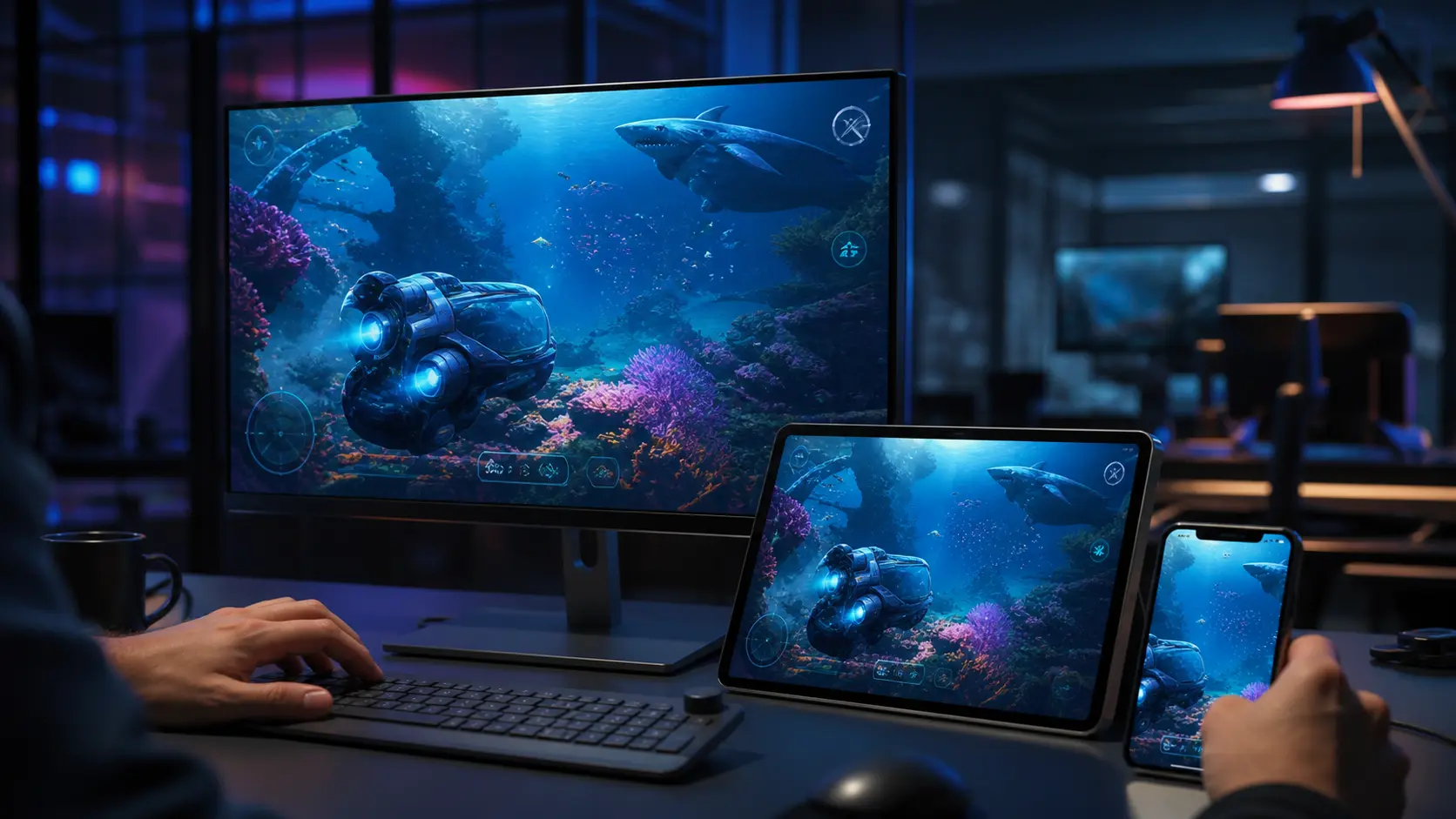
The core foundational element of successful pwa online casino game development revolves around the intelligent utilization of Service Workers. A Service Worker acts as a client-side programmable network proxy that intercepts all HTTP requests made by the cross platform html5 casino games. In a traditional web environment, a player experiencing intermittent network connectivity might suffer from broken visual assets, missing slot symbols, or a complete catastrophic crash of the gaming session. Service Workers eliminate this risk by implementing sophisticated caching strategies that ensure reliable offline or low-network functionality, transforming the browser into a robust standalone execution environment.
For heavy iGaming applications, operators must implement a meticulous cache-first strategy for static graphical assets and a network-first strategy for critical transactional data. When the player initially accesses the progressive web app casino, the Service Worker silently initiates background threads to download and precache heavy audio files, high-resolution sprite sheets, complex WebGL shaders, and core JavaScript execution logic. Once these heavy assets are stored securely in the Cache Storage API of the local browser environment, subsequent game launches load instantaneously, regardless of the underlying cellular network speed. This mobile casino pwa architecture creates an illusion of native speed because the game engine does not need to repeatedly fetch high-bandwidth graphical assets from the remote content delivery network. Operators frequently utilize libraries like Workbox to automate complex routing and caching rules, ensuring that stale-while-revalidate patterns are appropriately applied to dynamic leaderboard data or jackpot tickers.
Engineers building the h5 casino game source code must also configure granular cache invalidation logic alongside IndexedDB storage for state management. Casino game mathematics, paytable updates, or promotional banner changes require immediate visibility to maintain regulatory compliance and fairness. Through precise cryptographic versioning in the Service Worker install and activate lifecycle events, the PWA ensures that obsolete caches are aggressively purged and replaced with the newest secure assets. If a player loses connection during a spin, the local IndexedDB state securely holds the unacknowledged transaction payload, automatically synchronizing with the server via the Background Sync API the millisecond cellular service is restored.
Web App Manifest Optimization and Home Screen Installation Prompts

To achieve the highly coveted instant installation feature that drives conversion metrics, the mobile casino pwa architecture relies entirely on the Web App Manifest payload. This crucial JSON file provides the mobile operating system with all the required metadata to treat the cross platform html5 casino games exactly like natively compiled applications. Operators must painstakingly optimize every parameter within the manifest document to ensure the highest possible conversion rate when players are prompted to add the casino to their device home screens.
The manifest document defines essential property directives such as the full application name, the shortened short_name string utilized for the restrictive home screen icon constraints, the precise display mode, the background color, and the overarching theme color which dictates the system status bar styling. By setting the display property string to standalone or fullscreen, the progressive web app casino instructs the mobile operating system to strip away the browser URL bar, navigation buttons, and tab management interfaces. This execution creates a deeply immersive, uninterrupted gaming environment visually indistinguishable from a standard native application downloaded from an official app store repository. Furthermore, configuring the shortcuts array within the manifest allows operators to implement long-press deep links on the home screen icon, enabling VIP players to instantly launch directly into their favorite live dealer roulette table or the direct deposit cashier interface.
Triggering the BeforeInstallPromptEvent is a delicate behavioral science in advanced pwa online casino game development. Instead of aggressively spamming the player with mandatory installation popups upon their very first generic visit, sophisticated operators integrate the Add to Home Screen prompt seamlessly into the psychological high points of the user journey. For example, the programmatic prompt might only fire after the player successfully registers a verified account, makes their initial fiat or cryptocurrency deposit, or achieves a mathematically significant multiplier win on a slot game. This highly contextual installation strategy maximizes platform trust, avoids early bounce rates, and significantly elevates the opt-in percentage for the progressive web app casino distribution channel.
WebGL Canvas Rendering and Mobile GPU Memory Optimization

Delivering cross platform html5 casino games that rival the visual fidelity of native applications requires an uncompromising approach to graphical rendering pipelines. High-end pwa online casino game development leans heavily on the HTML5 Canvas element tightly coupled with the WebGL 2.0 API. This advanced architecture allows the progressive web app casino to bypass the traditionally slow DOM layout rendering pipeline and communicate directly with the mobile device Graphics Processing Unit. For intricate 3D slot machine mathematics visualization, complex particle physics used in crash games, or high-fidelity live dealer video overlay integration, hardware-accelerated WebGL is the strictly mandatory rendering engine.
However, mobile GPU memory is highly constrained and heavily fragmented compared to desktop operating environments. If the h5 casino game source code is bloated with unoptimized raw image textures, the PWA will inevitably crash due to out-of-memory exception errors on mid-tier Android ecosystems or older generation iOS hardware. Advanced mobile casino pwa architecture mandates the extensive use of highly compressed GPU-native texture formats such as ASTC, ETC2, or S3TC, dynamically determined based on explicit device support capabilities detected at runtime via WebGL extensions. Graphics engineers must diligently utilize texture atlases or sprite packing algorithms via tools like TexturePacker to drastically minimize CPU-to-GPU draw calls, ensuring the graphics processor spends its dedicated cycles rendering active pixels rather than constantly switching contextual state bindings.
Memory leaks represent fatal catastrophes in long-duration real-money casino sessions. Rigorous WebGL resource management requires the explicit programmatic disposal of unused vertex buffers, bound textures, and framebuffers precisely when a player navigates between different disparate games in the main operator lobby. Through meticulous memory profiling utilizing Chrome DevTools heap snapshots and aggressive deterministic garbage collection strategies, a well-optimized progressive web app casino can sustain a rigorously locked 60 frames per second rendering target. Furthermore, robust error handling must monitor the WEBGL_lose_context extension, ensuring the game engine gracefully recovers or downgrades to a 2D Canvas context if the operating system aggressively reclaims GPU resources.
Web Push Notification Architecture for Player Retention and Re-Engagement
Long-term player retention and maximum lifetime value represent the ultimate battlegrounds for global iGaming operators, and native applications historically held a massive structural advantage due to their unfettered ability to send rich push notifications. Today, cutting-edge pwa online casino game development completely levels the playing field through the deep integration of the standard Web Push Protocol combined with the browser Push API. By explicitly securing user consent during high-intent moments, the progressive web app casino can directly deliver rich media, highly targeted, and individually personalized notifications straight to the device lock screen, functioning perfectly even when the host browser application is fully terminated in the background.
The structural architecture underlying this powerful capability requires highly robust cryptographic back-end integration. When a player agrees to subscribe, the client Service Worker generates a mathematically unique subscription object utilizing VAPID Voluntary Application Server Identification keys. This cryptographic object is securely transmitted via authenticated endpoints and stored deeply within the operator relational database. When a time-sensitive promotional campaign such as a weekend reload bonus, targeted free spins drop, or VIP leaderboard tournament commences, the backend server encrypts the notification payload and directly dispatches it through the respective vendor push service like Firebase Cloud Messaging FCM or the Apple Push Notification service APNs for supported iOS versions.
For cross platform html5 casino games, delivery timing and contextual relevance are absolutely paramount. Senior software engineers must deploy silent push notification payloads that trigger background synchronization routines via the Background Sync API. This elegant mechanism allows the PWA to securely fetch the latest graphical promotional banners or silently update the encrypted player wallet balance entirely in the background without disturbing the user. When the player ultimately taps the visually rich notification alert, the mobile casino pwa architecture ensures they are instantly deep-linked into the specific slot game or secure cashier page interface, dramatically reducing the frictional steps of re-engagement and rapidly accelerating the conversion path to deposit.
Biometric Authentication and Secure Cashier Session Handshakes
Financial security and identity verification in real-money gaming environments absolutely cannot be compromised under any circumstances. One of the most significant architectural advancements in modern pwa online casino game development is the deep native integration of the Web Authentication API WebAuthn based on FIDO2 standards. This powerful cryptographic specification empowers the progressive web app casino to interface directly with the isolated native biometric hardware enclaves of the mobile device, fully leveraging Face ID arrays, Touch ID sensors, or advanced ultrasonic Android Fingerprint scanners. By implementing standard WebAuthn flows, operators effectively eliminate the severe conversion friction of traditional complex password-based logins while simultaneously eradicating dangerous phishing vulnerabilities, credential stuffing, and unauthorized account takeover attack vectors.
When a VIP player attempts to access the compiled h5 casino game source code cashier interface for fiat deposits or cryptocurrency withdrawals, the mobile casino pwa architecture initiates a highly secure public key cryptographic handshake. During initial registration, the device secure enclave generates a mathematically unique public-private ECDSA key pair. The private key strictly never leaves the isolated biometric hardware under any circumstances, while the corresponding public key is registered with the operator secure authentication server. All subsequent session logins simply require the player to verify their physical identity via a momentary biometric scan, which locally signs a cryptographic challenge securely transmitted by the backend server.
This frictionless biometric authentication mechanism drastically reduces the average time to play metric and significantly decreases catastrophic drop-off rates specifically at the high-friction cashier processing stage. Furthermore, underlying session management within the cross platform html5 casino games must strictly utilize secure, HttpOnly, and SameSite strict configured cookies securely combined with short-lived JSON Web Tokens JWTs. This multi-layered defense heavily mitigates cross-site request forgery CSRF or cross-site scripting XSS attack vectors. Strict Content Security Policy CSP headers are also enforced to prevent the execution of malicious third-party scripts, ensuring that high-roller VIP players can confidently transact massive sums of money securely within the progressive web app casino environment.
Multi-Device QA Benchmarks and Lighthouse Performance Tuning
Deploying a mathematically flawless and highly performant progressive web app casino across the deeply fragmented global landscape of diverse mobile devices requires an exhaustive, highly automated approach to Quality Assurance and deep performance benchmarking. Enterprise-grade pwa online casino game development demands strict unwavering adherence to Google Lighthouse algorithmic metrics, specifically targeting the crucial Core Web Vitals heavily scrutinized by search engines Largest Contentful Paint LCP, First Input Delay FID, Interaction to Next Paint INP, and Cumulative Layout Shift CLS. Operators utilizing advanced compiled h5 casino game source code must algorithmically ensure that the initial casino lobby network load achieves a perfect Lighthouse PWA audit score to mathematically guarantee a premium, uncompromised user experience.
Multi-device Quality Assurance testing for advanced mobile casino pwa architecture mandates utilizing massive physical device farm infrastructures, such as AWS Device Farm or BrowserStack, to programmatically test the cross platform html5 casino games on a massive spectrum of global hardware profiles. This robust testing ranges from low-end budget Android devices prevalent in emerging markets to the absolute latest flagship iOS models dominating tier-one jurisdictions. Performance engineers meticulously monitor deep CPU utilization threads, catastrophic battery drain curves, and severe thermal throttling parameters during extended automated gameplay sessions. Excessive thermal battery consumption remains a primary statistical reason players aggressively uninstall casino applications, making deep thermal and energy profiling critical mandatory phases of the software release lifecycle.
Furthermore, severe network throttling simulations are heavily utilized in continuous integration pipelines to mathematically verify the absolute resiliency of the Service Worker intelligent caching strategies. The automated QA process must explicitly verify that the progressive web app casino gracefully degrades functionality in highly unstable 3G, Edge, or heavily packet-loss network conditions without corrupting the underlying deterministic game state or losing critical transactional financial data. Only by successfully passing these incredibly rigorous, multi-layered hardware fragmentation and extreme network degradation benchmarks can a top-tier operator confidently deploy their complex PWA architecture to the highly competitive and lucrative global iGaming market.
Frequently Asked Questions
Question What exactly is pwa online casino game development and how does it structurally benefit operators?
Progressive Web App PWA development for the casino industry involves engineering robust web applications that deeply leverage modern browser APIs to securely deliver a native-like executable experience. For enterprise operators, the massive structural benefits include entirely bypassing traditional monopolistic app store restrictions, completely eliminating the mandatory 30% revenue tax transaction fees imposed by Apple and Google ecosystems, and dramatically reducing expensive user acquisition costs. Players can instantly install the casino platform directly from their mobile browser directly to their home screen without downloading massive gigabyte installation files, instantly enabling immediate access to real-money gaming environments.
Question Can a progressive web app casino offer the exact same graphical visual fidelity as a natively compiled mobile application?
Yes absolutely. By utilizing HTML5 Canvas APIs deeply coupled with the hardware-accelerated WebGL 2.0 rendering engine, a progressive web app casino can securely interface directly with the mobile device dedicated GPU hardware. When structurally engineered correctly with highly optimized compressed texture atlases and ruthlessly efficient memory garbage collection management, these web applications can easily sustain a rigorously locked 60 frames per second framerate, structurally providing an immersive, high-fidelity visualization experience that is virtually indistinguishable from a heavy natively compiled application.
Question How does mobile casino pwa architecture handle unexpected network disconnections during a live real money slot spin?
The underlying robust architecture relies heavily on programmable Service Workers, which act as client-side intercepting network proxies. While critical financial transaction data always mandates server-side cryptographic validation, the local Service Worker reliably caches the heavy graphical assets and the precise state of the interactive user interface. If a sudden disconnection occurs mid-spin, the cross platform html5 casino games engine will gracefully pause all rendering and actively attempt to reconnect. Once the socket connection is securely restored, the local game state smoothly synchronizes with the deterministic backend server outcome and resumes the exact visual representation where it left off, mathematically ensuring absolutely no financial transaction data is ever lost.
Question Is compiled h5 casino game source code deployed within a PWA ecosystem secure enough for high roller VIP players?
Yes it is exceptionally secure. Modern PWA enterprise architecture securely supports highly advanced military-grade security protocols including the Web Authentication API WebAuthn based on robust FIDO2 specifications. This seamlessly allows operators to structurally integrate native device-level biometric security hardware such as Apple Face ID and ultrasonic fingerprint scanning enclaves. When securely coupled with encrypted WebSocket multiplexed connections, encrypted JSON payload transmissions, and strict HttpOnly JSON Web Token session management architectures, the PWA execution environment remains incredibly robust against sophisticated phishing campaigns, automated credential stuffing, and unauthorized account takeover attacks, making it perfectly structurally sound for massive high-value VIP transactions.
Question Do rich web push notifications work reliably on a deployed cross platform html5 casino games implementation?
Web push notification protocols are now widely and reliably supported across all modern mobile operating systems. The Android ecosystem has extensively supported the standard Web Push API for years, allowing deep seamless integration directly with the native system notification tray. With recent critical architectural updates, the Apple iOS ecosystem now fully officially supports robust web push notifications specifically for PWAs structurally added to the device home screen. This monumental capability directly empowers operators to reliably send highly targeted, rich media notification payloads for lucrative reload bonuses or VIP tournament alerts, actively driving immense player retention and lucrative re-engagement funnels entirely without ever requiring a native application installation.
Guangzhou Miba Animation Technology Co., Ltd.
Enterprise Engineering & Development Architecture Division
Engineer Contact Engineer Wang
WhatsApp / WeChat +86 17620842078
Telegram https://t.me/JLwyc
Email miba515527@gmail.com