- The Financial Bleed of Arcade Revenue Leakage and Black Box Cheating
- Hardware Teardown of Common Venue Attacks
- The Four Tier Hardware Defense Architecture Explained
- Integrating Turnkey Defense Systems at the Factory Level
- Calculating the Return on Investment for Secure Arcade Cabinets
- Schedule a Technical Audit with Our Engineering Team
- Frequently Asked Questions About [Arcade Machine Security](/arcade-machine-security-anti-cheat-hardware-defense/)
Every night across commercial gaming venues from Las Vegas to Manila, arcade operators lose thousands of dollars to sophisticated hardware attacks. I have spent over 12 years in the trenches of hardware electrical engineering and game system architecture, and I can tell you that the battle against arcade cheaters has moved far beyond simple mechanical locks. As the Lead Hardware and Game System Architect at Guangzhou Miba Animation Technology Co., Ltd., my daily routine inside our 15,000-square-meter Panyu manufacturing base involves tearing down the latest cheating devices seized from the field and engineering military-grade countermeasures to protect our clients’ investments.
When operators purchase cheap, unshielded machines from generic trading companies, they are essentially installing unsecured ATMs on their casino floors. We refuse to compromise on security. We are a turnkey solutions manufacturer, and our commercial hardware is built from the ground up to withstand brutal electromagnetic pulse attacks, radio frequency interference, and advanced software tampering. In this engineering deep dive, I will expose exactly how these cheating devices operate and how our four-tier hardware defense architecture permanently neutralizes them.
The Financial Bleed of Arcade Revenue Leakage and Black Box Cheating
Before we dissect the circuitry, we must understand the commercial impact of venue attacks. Arcade security is not a theoretical exercise for computer science students. It is a harsh operational reality that directly dictates your return on investment. If an eight-player fish hunting table or a bank of electronic roulette cabinets is compromised, the mathematical edge (the RTP or Return to Player) is instantly shattered.
Operators often assume their revenue drop is due to bad foot traffic or unlucky payout variance. In my experience auditing failed venues, the reality is far more sinister. Professional cheating rings utilize covert devices concealed in cigarette packs or modified smartphones to inject false credits, manipulate stepper motors, or crash the logic board during a payout cycle. A single undetected EMP jammer attack can drain a high-denomination slot cabinet of $5,000 within a few minutes.
Our factory approach at Arcade Manufacturer is absolute risk mitigation. We do not sell vulnerable sheet metal boxes. We deliver fortress-level game hardware integrated with industrial-grade anti-cheat systems. To defeat the enemy, we first reverse-engineer their weapons.
Hardware Teardown of Common Venue Attacks
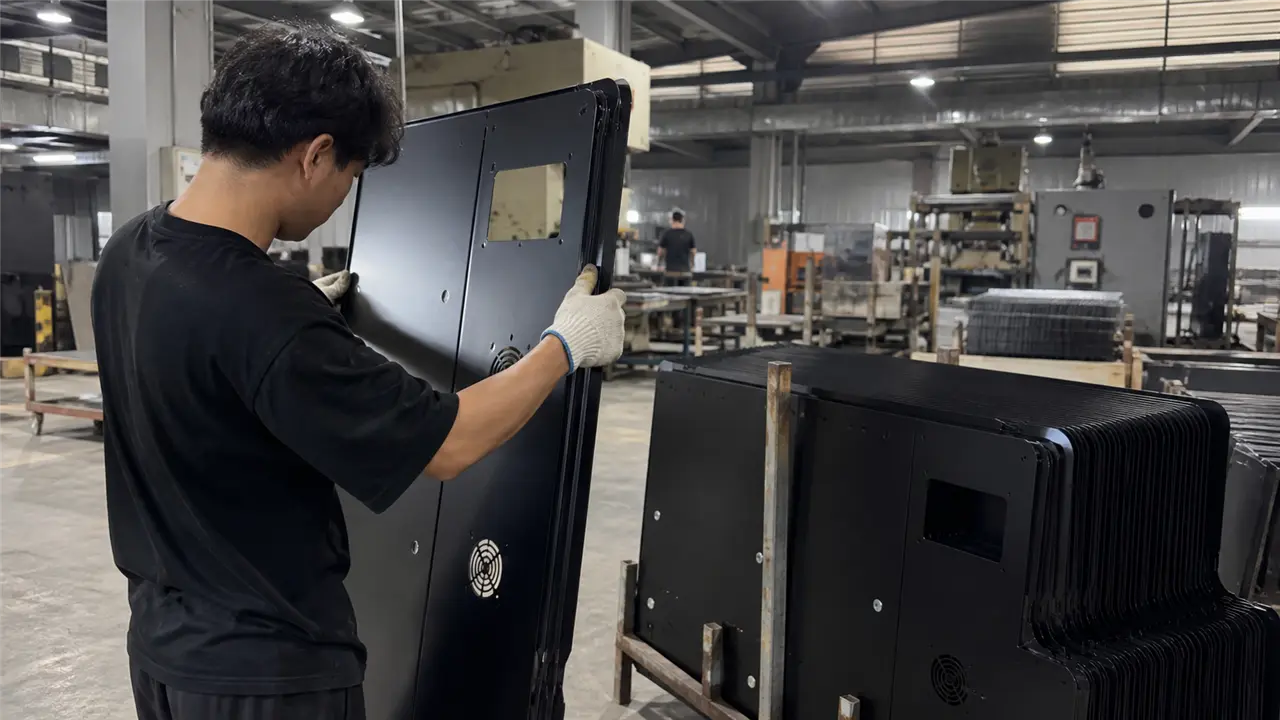
In our Panyu QA lab, my engineering team maintains an extensive archive of black-market cheating devices. We routinely subject our own logic boards to brutal stress tests using these tools to ensure zero vulnerability. Let us examine the technical mechanics of the three most devastating attacks currently deployed against commercial gaming machines.
EMP Electromagnetic Pulse Jammers and High Frequency Sparks
The most prevalent and destructive attack vector is the Electromagnetic Pulse (EMP) jammer. Cheaters construct these devices using simple high-voltage generators—often cannibalized from stun guns or gas lighter piezoelectric igniters—coupled with a copper induction coil. When placed near the coin door or the acrylic display panel of a vulnerable cabinet, the jammer emits a massive localized magnetic field and high-frequency RF spark.
How does this steal your money? The localized EMP creates a massive transient voltage spike within the unshielded internal wiring of the arcade machine. This induced current surges through the GPIO (General Purpose Input/Output) lines leading to the main motherboard. If the logic board lacks proper opto-isolation, the CPU misinterprets this electrical noise as a legitimate hardware interrupt—specifically, the signal generated when a physical coin triggers the microswitch or the bill acceptor registers a hundred-dollar note. The machine blindly registers hundreds of false credits in seconds.
Furthermore, severe EMP bursts can corrupt the volatile RAM where the game’s payout history and accounting meters are stored. I have seen poorly manufactured cabinets completely factory-reset by a $30 jammer, erasing all audit trails and allowing the cheater to cash out the hopper without any digital footprint. To understand how we specifically insulate our high-risk gambling cabinets against this, you must review our detailed slot machine EMP jammer blocker engineering protocols.
Optical Stringing on Bill and Coin Acceptors
While EMPs attack the logic board, stringing attacks target the peripheral currency validators. Stringing is one of the oldest tricks in the arcade industry, but modern execution has become highly sophisticated. A cheater attaches a micro-filament (often high-tensile fishing line or transparent optical fiber) to a legitimate banknote or a drilled coin.
The mechanism is simple yet effective. The bill acceptor pulls the banknote inward, scanning the magnetic ink and optical watermarks to validate the currency. Once the validator sends the 12V or 5V pulse to the mainboard to register the credit, the cheater violently yanks the bill back out using the filament.
In substandard generic machines, the bill acceptor’s mechanical anti-pullback teeth are made of cheap plastic that easily snaps, or the optical sensors are too slow to register the reverse motion. More advanced stringing attacks utilize pulsing infrared LEDs disguised as coins to blind the optical sensors entirely, tricking the validator into sending continuous credit pulses. The only way to stop this is at the hardware signal level, a concept we fully detail in our bill acceptor pulse optical isolator engineering technical paper.
Memory Key Logger Snooping and Rogue Firmware Injection
As arcade machines evolve into PC-based architectures (utilizing standard ATX motherboards, DDR4 RAM, and SATA SSDs), the attack surface expands into the digital realm. A highly sophisticated attack we have intercepted involves memory snooping and rogue firmware injection.
Syndicates use insider access—perhaps a bribed venue attendant—to plug a malicious USB dongle or a hardware keylogger directly into the I/O control board. This hardware-in-the-middle attack intercepts the proprietary communication protocol between the mechanical buttons and the game logic. It can dynamically alter the payout algorithms, forcefully trigger the jackpot command, or clone the game’s proprietary ROM to be pirated.
Because we specialize in 100% source code ownership and custom game software development, protecting the intellectual property and the mathematical integrity of the game is our highest priority. Standard Windows-based arcade systems are woefully inadequate against these kernel-level intrusions.
The Four Tier Hardware Defense Architecture Explained
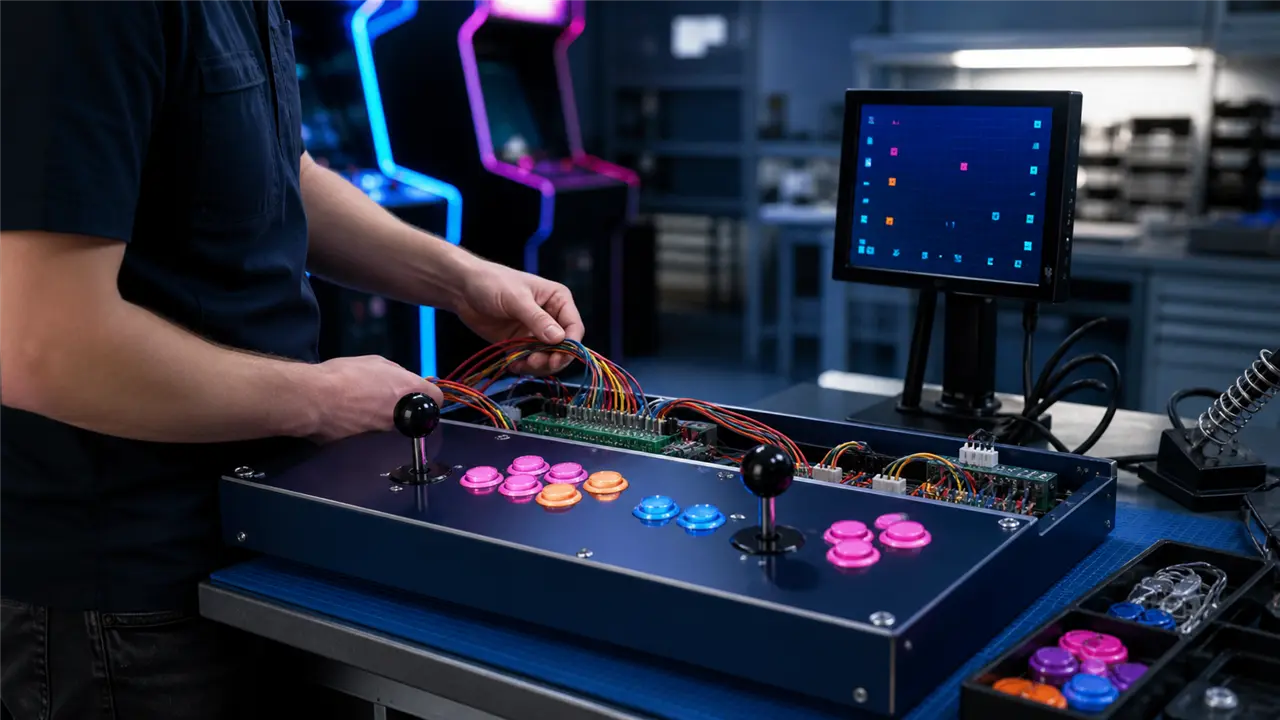
Identifying the threats is only the first step. At Guangzhou Miba Animation, our engineering philosophy is built on defense-in-depth. We do not rely on a single point of failure. We implement a proprietary four-tier hardware defense architecture on every commercial machine that leaves our factory floor. This is not aftermarket patching; this is native, silicon-level security designed from the blueprint stage.
Tier 1 Faraday Shielding and Transient Surge Protection
The first line of defense is physical electromagnetic shielding. Every premium cabinet we manufacture utilizes thick, cold-rolled steel construction. However, a metal box is not enough if there are gaps for RF energy to leak through.
We utilize a modified Faraday cage design. The internal logic box housing the main motherboard, the I/O interface board, and the power supply is independently enclosed in a secondary grounded aluminum chassis. All ventilation cutouts are engineered utilizing honeycomb waveguide meshes that allow thermal dissipation but block radio frequency wavelengths typically emitted by commercial jammers (usually in the 300MHz to 1.5GHz spectrum).
To address induced currents on the wiring harness, we implement rigorous Transient Surge Protection. We do not use cheap glass fuses. Our I/O boards are populated with high-capacity Transient Voltage Suppressor (TVS) diodes and Metal Oxide Varistors (MOVs). When an EMP jammer induces a 10,000-volt spike on the coin mech wire, the TVS diode detects the overvoltage in less than 5 picoseconds (5ps). It instantly clamps the voltage down to a safe 5V logic level, shunting the massive excess energy directly to the earth ground. The game continues running smoothly, and the logic board never sees the spike.
Tier 2 Optical Pulse Isolation and Anti Stringing Protocols
To permanently defeat bill stringing and fake pulse injection, we sever the direct electrical connection between the currency peripherals and the main CPU. We achieve this through complete Optical Pulse Isolation.
Instead of a direct copper wire carrying the credit signal, the signal from the bill acceptor drives an infrared LED inside a sealed optocoupler chip (such as the industrial PC817 or high-speed 6N137). Across a physical air gap inside the chip, a photo-transistor detects the light and sends the clean signal to the CPU.
If a cheater uses a high-voltage taser on the bill acceptor bezel, the voltage travels up the wire and destroys the inexpensive LED inside the optocoupler. Because there is no physical electrical connection across the internal air gap, the 50,000-volt surge stops dead. The main $1,500 motherboard is perfectly protected. The machine may require a $5 optocoupler replacement, but your venue avoids a catastrophic hardware loss and false payout.
Furthermore, our custom I/O microcontrollers utilize intelligent debounce algorithms. They do not just count pulses; they measure the exact pulse width and timing interval. If a bill acceptor sends a credit pulse that is 10 milliseconds too fast—indicative of an artificial pulse generator rather than a mechanical relay—the system instantly flags the anomaly, ignores the input, and triggers a silent alarm to the venue management system.
Tier 3 Dynamic Key Stream AI Trojan Terminator
Protecting the communication lines against hardware-in-the-middle attacks requires advanced cryptography. We developed the Dynamic Key Stream AI Trojan Terminator system to secure the data payload between the operator’s control panel and the main game engine.
Generic machines send button inputs as plain, static serial commands (e.g., HEX 0x01 means “Fire Weapon”). A logic analyzer can easily record and replay this command. Our architecture utilizes a dynamic, rolling-code encryption algorithm similar to automotive keyless entry systems, reinforced by a localized AI monitoring chip.
Every millisecond, the encryption key changes. If a rogue USB device attempts to inject a “Fire Weapon” or “Cash Out” command using an old key, the AI Trojan Terminator immediately recognizes the mismatch. The system instantly locks out the I/O board, freezes the game state, and throws an Error Code 99 (Tamper Detect) on the screen, requiring a physical manager key to reset. You can see this technology heavily applied in our high-stakes multiplayer environments, as documented in our fish table anti jammer device engineering specifications.
Tier 4 Wideband 300 to 1200MHz RF Detection Alarms
The final tier of our defense architecture is active environmental monitoring. While Tier 1 through Tier 3 passively absorb and neutralize attacks, Tier 4 aggressively identifies the attacker on your floor.
We install wideband RF antenna sensors inside the acrylic marquees and control panels. These sensors are tuned to actively scan the 300MHz to 1200MHz frequency bands—the exact spectrum utilized by commercial EMP jammers and bluetooth-enabled tampering devices.
When a cheater activates a jammer near the machine, the RF sensor detects the anomalous electromagnetic wave before it even penetrates the steel chassis. The sensor triggers a cascading security protocol: 1. The logic board enters an immediate “Halt” state, pausing all gameplay and freezing the current credits so nothing can be added or cashed out. 2. A high-decibel internal siren is activated, drawing immediate attention from your venue floor staff. 3. If connected to our Remote Live Arcade cloud telemetry system, a push notification with the exact machine ID and camera feed is sent directly to the venue manager’s smartphone.
Integrating Turnkey Defense Systems at the Factory Level

Many operators attempt to retrofit security into cheap, second-hand machines by buying standalone “anti-shock alarms” from online marketplaces. As an engineer, I must be blunt: this is a dangerously inadequate approach. A $10 aftermarket alarm spliced into a compromised wiring harness does not provide security; it merely provides the illusion of safety.
True security cannot be bolted on as an afterthought. It must be engineered into the printed circuit board routing, the grounding topology of the power supply, and the kernel logic of the operating system. When you partner with us for your venue rollout, you are not buying a collection of spare parts. You are investing in a cohesive, impenetrable system. We handle the structural CAD design, the PCB fabrication, the software compilation, and the final assembly under one roof. For a comprehensive look at how we enforce these standards across our entire product line, review our commercial arcade game machines manufacturing standards.
Calculating the Return on Investment for Secure Arcade Cabinets
When presenting our turnkey solutions to international B2B buyers, the conversation naturally shifts to cost. Yes, a custom-engineered cabinet featuring full optical isolation, heavy-gauge Faraday shielding, and the AI Trojan Terminator system requires a higher initial capital expenditure than a generic, unshielded box from a mass-market trader.
Let us calculate the actual Return on Investment (ROI) utilizing a conservative risk model. Assume a venue operates 20 standard slot or fish machines. If an organized cheating ring hits the venue just once a month utilizing an EMP jammer, successfully bleeding $800 per machine across 5 machines, the monthly loss is $4,000. Annually, this represents a staggering $48,000 in direct revenue leakage. This does not account for the downtime, the cost of replacing fried motherboards, or the devastating impact on legitimate player trust.
By investing marginally more per unit to procure our fortress-class cabinets, that $48,000 annual loss is reduced to absolute zero. The security hardware pays for itself within the first financial quarter. Furthermore, our robust industrial design guarantees an operational lifespan exceeding 5 to 7 years without degradation, ensuring your mathematical RTP remains exactly where you programmed it.
Schedule a Technical Audit with Our Engineering Team
Your venue’s profitability depends on the integrity of your hardware. Do not leave your floor exposed to black-market attacks. If you are upgrading your current arcade, planning a massive new family entertainment center, or requiring a custom game built with absolute source code security, we are your direct factory partners.
We invite B2B buyers, game operators, and regional distributors to engage directly with our engineering department. We can provide live video demonstrations of our anti-cheat hardware neutralizing active EMP attacks in our Panyu testing labs.
Reach out to me directly to discuss your specific custom cabinet and secure game development requirements.
Engineer Wang (Lead Hardware & Game System Architect) WhatsApp / WeChat: +86 17620842078 Telegram: https://t.me/JLwyc Email: miba515527@gmail.com Factory Location: Panyu Manufacturing Base, Guangzhou, China
Frequently Asked Questions About [Arcade Machine Security](/arcade-machine-security-anti-cheat-hardware-defense/)
What is an arcade EMP jammer and how does it steal credits? An EMP (Electromagnetic Pulse) jammer is a handheld device that emits a localized, high-voltage magnetic wave. When placed near an unshielded arcade machine, it induces a power surge in the internal wiring. If the machine lacks opto-isolation, the logic board registers this surge as a valid pulse from the coin acceptor, adding hundreds of false credits.
Can your machines be hacked with a USB drive or keylogger? No. Our advanced commercial cabinets utilize our proprietary Tier 3 Dynamic Key Stream AI Trojan Terminator system. This system encrypts the communication between the hardware buttons and the main CPU using a rolling-code algorithm. Any unauthorized USB device or inline keylogger is instantly detected, triggering a system lockdown to protect the game’s integrity and source code.
Why shouldn’t I just buy cheap aftermarket anti-shock alarms? Aftermarket alarms only provide a loud noise when a shock is detected; they do not physically prevent the high-voltage surge from reaching and destroying your expensive motherboard. Our factory-integrated defense architecture utilizes Transient Voltage Suppressors (TVS) and physical optocoupler air-gaps to shunt the surge to ground, completely protecting the internal electronics while simultaneously locking down the game state.
Do you provide security for custom developed games and software? Absolutely. We are a complete turnkey manufacturer. When we develop custom 2D/3D games for your venue, the mathematical RTP models and proprietary logic are protected at the kernel level. We provide 100% source code ownership upon project completion, ensuring you have total control over your digital assets without fear of backdoor exploits.
How do I test if my current arcade machines are secure? We recommend a comprehensive technical audit. You can contact our Panyu engineering team via WhatsApp (+86 17620842078) with photos of the internal wiring and I/O boards of your current machines. We can quickly identify vulnerabilities such as unshielded GPIO lines or lacking TVS diode protection, and consult on upgrading your fleet to our fortress-class cabinets.