- Technical Comparison Unified Multi-Tenant White-Label Lobby vs Standalone Single-Game Deployments vs Third-Party Aggregator iFrames
- Distributed Microservices Architecture for High-Concurrency Gaming Halls
- Dynamic Sub-Game Hot Loading and Asset Modularization
- Multi-Tier Master Agent Tree and Credit Distribution Protocols
- Unified Single-Wallet Cashier API and Automated Settlement Pipelines
- Zero-Trust Security Gateways and DDoS Mitigation for Gaming Portals
- Operator Onboarding and Rapid Cloud Deployment Milestones
- Frequently Asked Questions
- Contact and System Implementation
The current iGaming ecosystem demands unprecedented agility from operators attempting to launch multi-category gaming portals. Launching a platform that combines high-intensity multiplayer fish shooting games, high-variance algorithmic slot mechanics, real-time crash game multipliers, and live dealer table integrations traditionally required managing bloated monolithic server infrastructures or paying exorbitant licensing fees to disparate third-party aggregators. These legacy approaches result in fragmented user experiences, unoptimized network payloads, and severe operational bottlenecks during peak concurrent traffic. Furthermore, independent standalone game deployments complicate master agent hierarchies and disrupt seamless cross-game wallet integrations, causing extensive friction for end-users managing their funds.
The modern paradigm shift relies on robust white label online gaming hall software designed from the ground up as a decentralized multi-tenant architecture. By leveraging a centralized lobby framework capable of dynamically hot-loading heterogeneous game clients, operators can maintain absolute brand autonomy while minimizing technical overhead. This approach eliminates the redundant middleware layers usually associated with a casino game aggregator api and replaces them with an optimized unified portal. The result is a highly scalable turnkey sweepstakes lobby demo environment that transitions effortlessly into a production-ready custom white label casino portal. This comprehensive engineering guide deconstructs the underlying software architecture principles, distributed state management protocols, and deployment pipelines that make this multi-tenant gaming hall infrastructure structurally superior. For a comprehensive architectural overview and turnkey procurement frameworks, review our master guide on custom casino game development platform. For factory-direct procurement and comprehensive engineering specs, consult our master guide on custom casino and arcade game development architecture.
Technical Comparison Unified Multi-Tenant White-Label Lobby vs Standalone Single-Game Deployments vs Third-Party Aggregator iFrames
When architecting a comprehensive enterprise-grade iGaming environment, the structural methodology defines both operational efficiency and long-term horizontal scalability. The table below delineates the profound technical and operational differences between unified multi-tenant lobbies, standalone single-game setups, and traditional third-party iFrame aggregators. To explore detailed technical specifications and deployment considerations, see our operational guide on How Operators Deploy Turnkey Fish Game WebGL.
| Architecture Paradigm | Unified Multi-Tenant White-Label Lobby | Standalone Single-Game Deployments | Third-Party Aggregator iFrames |
|---|---|---|---|
| **Tenant Isolation** | Hardware-level database sharding with strict logical separation per operator. | Non-existent or manual server partitioning requiring intense DevOps oversight. | Shared infrastructure with minimal operator-level control or data visibility. |
| **Database Structure** | Horizontally scalable clusters using asynchronous replication and Read Replicas. | Siloed monolithic databases requiring complex ETL pipelines for cross-game analytics. | Black-box databases controlled entirely by the third-party provider. |
| **Sub-Game Swapping** | Dynamic hot swapping via modular AssetBundles and WebAssembly over Edge CDN. | Requires full application downtime, rigorous store approval, and client redeployment. | Dependent on provider deployment schedules and API synchronization delays. |
| **Revenue Share** | 100% retained by operator post-deployment without ongoing GGR royalties. | High operational cost per individual game deployment limits overall profitability. | High percentage royalties (often 10-20% of GGR) paid continuously to aggregator layer. |
| **Branding Autonomy** | Total front-end customization including lobby UI, shaders, and native app shells. | Limited to simple logo replacements or basic CSS color scheme tweaks. | Dictated by the aggregator with rigid iFrame DOM limitations and cross-origin security blocks. |
| **Latency Profile** | Ultra-low latency via centralized stateful WebSocket connections and edge caching. | Variable network latency depending on disparate server locations and sub-optimal routing. | High latency due to cross-origin routing, multiple DNS lookups, and bloated payload headers. |
The technical superiority of the unified lobby model becomes immediately apparent when scaling an enterprise-grade platform. Operators are no longer constrained by the rigid limitations of an iFrame-based casino game aggregator api but instead wield total cryptographic and architectural control over their custom white label casino portal infrastructure.
Distributed Microservices Architecture for High-Concurrency Gaming Halls
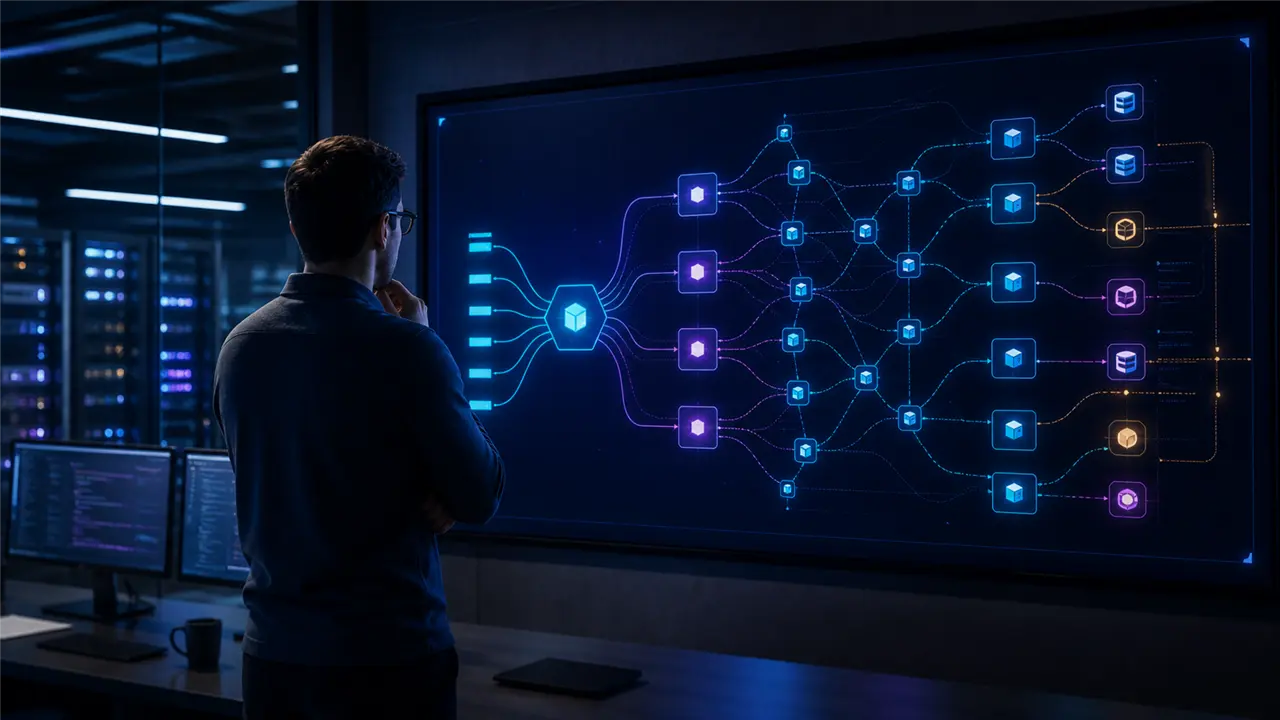
To sustain tens of thousands of concurrent websocket connections during peak gaming periods without degradation in packet processing times, white label online gaming hall software must transcend legacy monolithic designs. The backend infrastructure is constructed utilizing a highly decoupled distributed microservices architecture. This framework separates distinct functional domains such as user authentication (OAuth2/JWT), financial transactions, real-time deterministic game logic, and administrative reporting into isolated, independently scalable services.
The foundation of this architecture relies heavily on Kubernetes (K8s) for container orchestration. Each microservice is encapsulated within lightweight Linux Alpine Docker containers, allowing the K8s Horizontal Pod Autoscaler (HPA) to auto-scale individual components based on real-time telemetry metrics such as CPU load, memory utilization, and network throughput. For instance, during a massive influx of users joining a high-stakes multiplayer fish game room, the cluster can instantly spin up additional node instances specifically for the collision detection and state synchronization services without needlessly allocating expensive compute resources to the back-office reporting or configuration microservices.
Communication between these internal microservices is facilitated by high-performance remote procedure call protocols like gRPC utilizing Protocol Buffers (Protobuf). This strongly-typed binary serialization format significantly reduces payload sizes compared to traditional RESTful JSON APIs, thereby minimizing internal network latency and reducing CPU overhead parsing payloads. For asynchronous event-driven communications, such as logging wager histories to cold storage or updating distributed progressive jackpot pools across the multi-tenant ecosystem, a fault-tolerant streaming platform like Apache Kafka is implemented. Kafka ensures high-throughput message brokering, guaranteeing that no transaction data is lost even in the event of a localized pod crash.
State management for real-time multiplayer interactions relies heavily on in-memory data grids such as a Redis Cluster running in high-availability mode. Redis provides sub-millisecond read and write operations, essential for synchronizing high-frequency events like bullet trajectories, entity spawning in fish games, or real-time multiplier curve generation in crash games. This distributed caching layer effectively shields the persistent relational database cluster (such as PostgreSQL running in a multi-master or primary-replica configuration) from extreme write loads, ensuring long-term data integrity while maintaining blazing-fast gameplay loops.
Dynamic Sub-Game Hot Loading and Asset Modularization

A critical, bandwidth-saving feature of advanced white label online gaming hall software is the ability to introduce new gaming content without requiring the end-user to download monolithic application updates from mobile app stores. This is achieved through sophisticated dynamic sub-game hot loading and comprehensive asset modularization techniques within the custom white label casino portal.
The client-side architecture typically utilizes the Unity 3D engine or Cocos Creator, exporting the core lobby framework as a lightweight, pre-compiled application shell. This minimal shell contains only the essential structural components required for user authentication, cryptographic token management, unified wallet interfaces, and the overarching multi tier agent management dashboard interface. Individual sub-games (video slots, fish table games, live dealer views) are packaged as separate, highly compressed modular AssetBundles or WebAssembly payloads.
When a player selects a specific game from the main hall interface, the client dynamically resolves the asset manifest and requests the corresponding asset package from a globally distributed Content Delivery Network (CDN) utilizing HTTP/3 and QUIC protocols for maximum multiplexing efficiency. The client-side engine loads these assets directly into RAM at runtime, seamlessly transitioning the user into the selected game environment without exiting the main application context. This modular approach drastically reduces the initial installation footprint of the gaming hall application (often keeping the initial download under 50MB), significantly improving user acquisition conversion rates while ensuring that the platform can scale its game library infinitely.
Furthermore, this architecture allows operators to implement targeted A/B testing and localized, geo-fenced content delivery. Different geographical regions can be served customized graphical variations of the same game, or entirely different game portfolios, controlled dynamically from a centralized backend configuration server. If a specific game requires a critical bug fix or an algorithmic RTP (Return to Player) adjustment, developers simply push a new asset package to the CDN. Clients will automatically detect the version mismatch via hash comparison and fetch the updated version upon their next initialization of that specific sub-game. This seamless hot-updating mechanism ensures zero downtime for the overall casino lobby while facilitating continuous, aggressive deployment of game enhancements.
Multi-Tier Master Agent Tree and Credit Distribution Protocols
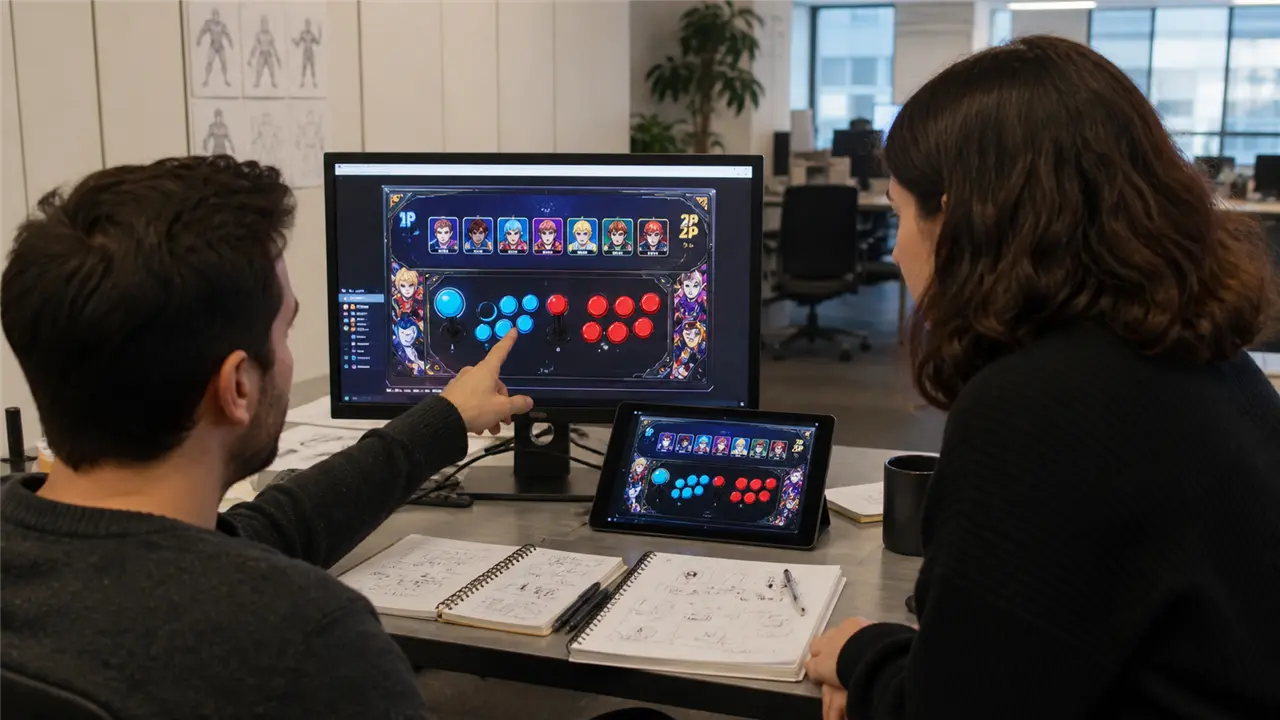
A successful turnkey sweepstakes lobby demo or production deployment heavily relies on its administrative capabilities, specifically the implementation of a mathematically rigorous multi tier agent management dashboard. The hierarchical distribution of game credits, downline management, and the meticulous tracking of commission structures are paramount for operators utilizing a sprawling, decentralized agent-based business model.
The architecture of this multi-tier system resembles a Directed Acyclic Graph (DAG) stored within a relational database, where the super administrator (the primary system operator) resides at the apex root node. Beneath this root, potentially infinite layers of master agents, sub-agents, and direct affiliate promoters can be dynamically instantiated. The software utilizes complex recursive SQL queries (Common Table Expressions or CTEs) or specialized graph database modules to map these hierarchical lineages in real-time, ensuring that every downstream wager or credit transfer accurately reflects upwards through the complex commission pipeline.
Credit distribution protocols within this ecosystem are engineered with absolute atomic transactional integrity. When an agent transfers virtual credits to a subordinate agent or a direct player account, the backend utilizes Distributed Transaction Coordinators (DTC) implementing the Saga architectural pattern to ensure that the deduction from the sender’s wallet and the addition to the receiver’s wallet occur simultaneously and without failure. This strict ACID (Atomicity, Consistency, Isolation, Durability) database compliance prevents any possibility of credit duplication, ghost generation, or loss during unexpected network interruptions or pod evictions.
The multi tier agent management dashboard provides granular, Role-Based Access Control (RBAC). Each node in the hierarchy is granted specific cryptographic tokens (JSON Web Tokens equipped with custom claims) that strictly define their API permissions. A master agent can monitor real-time gross gaming revenue (GGR), active concurrent users (CCU), and detailed, row-level bet histories for their entire specific downline, but the API gateway strictly drops any request attempting to query data belonging to parallel or superior branches. This cryptographic segregation of administrative data ensures complete operational security, GDPR compliance, and business privacy across the multi-tenant architecture.
Unified Single-Wallet Cashier API and Automated Settlement Pipelines
In legacy casino platform architectures, players frequently encountered the high-friction requirement of manually transferring funds between a central lobby wallet and individual game-specific wallets. Modern white label online gaming hall software completely eliminates this user experience bottleneck through the implementation of a highly sophisticated, high-throughput unified single-wallet cashier API.
This architecture centralizes all financial states and ledger mutations within a highly secure, isolated ledger microservice. Regardless of whether a player is engaging with an integrated casino game aggregator api, playing a proprietary high-volatility slot machine, or participating in a real-time multiplayer fish game, all wagers and winnings are processed directly against this centralized, single source of truth balance. The technical execution involves establishing persistent WebSocket connections between the individual distributed game servers and the central wallet service. When a bet is placed, the game server issues a synchronous reservation (hold) request to the wallet via gRPC. Upon the algorithmic resolution of the game round, a settlement (commit) request is immediately dispatched, updating the persistent database ledger in real-time.
To handle the immense volume of these concurrent micro-transactions—often exceeding tens of thousands of requests per second during peak hours—the settlement pipelines are heavily optimized. Utilizing advanced techniques such as memory-mapped files, batch commit processing, and asynchronous database writes, the system minimizes I/O bottlenecks. Automated reconciliation processes run continuously as background cron jobs, mathematically verifying the integrity of the SQL ledger against the immutable, append-only event logs stored in the Kafka cluster. Any detected discrepancy immediately triggers an administrative alert and automatically freezes the affected account to prevent exploitation.
Furthermore, this unified cashier API is engineered for seamless, modular integration with external payment gateways, fiat processors, and blockchain cryptocurrency networks (like Tron TRC20 or Ethereum ERC20). The system supports dynamic, smart routing of fiat deposits and withdrawals, automatically selecting the most cost-efficient and reliable processing channel based on the user’s geographic location, VIP tier, and transaction history. Automated settlement pipelines also manage the complex legal and mathematical calculations required for dual-currency sweepstakes mechanics, clearly delineating between non-redeemable standard play credits (Gold Coins) and redeemable sweepstakes tokens (Sweeps Coins) within the database schema, while presenting a unified, intuitive interface to the end-user.
Zero-Trust Security Gateways and DDoS Mitigation for Gaming Portals
Operating a highly visible, highly profitable custom white label casino portal inevitably attracts significant adversarial attention. Threats range from automated botnets attempting credential stuffing and scraping, to massive volumetric Distributed Denial of Service (DDoS) attacks designed specifically to extort operators via downtime. Therefore, the external network perimeter and internal service mesh of the white label online gaming hall software must be fortified using an uncompromising zero-trust security model.
The primary entry point for all external client traffic is an intelligent API Gateway (such as Kong or NGINX Plus) acting as a hardened reverse proxy. This gateway is responsible for terminating SSL/TLS connections, strictly enforcing modern transport layer security protocols (TLS 1.3 only). It scrutinizes all incoming packet payloads, immediately dropping malformed requests, and enforces strict, distributed rate-limiting policies on a per-IP and per-JWT token basis. This aggressive rate limiting at the edge is crucial to mitigate brute-force authentication attacks and application-layer (Layer 7) DDoS vectors that attempt to exhaust database connections.
Behind the API Gateway, the internal zero-trust philosophy mandates that no microservice inherently trusts any other internal service, regardless of their proximity within the Kubernetes cluster. All internal gRPC and REST communications must carry cryptographically signed, short-lived authentication tokens. Furthermore, mutual TLS (mTLS) is enforced strictly across the internal service mesh (utilizing technologies like Istio or Linkerd). This architectural choice ensures that even in the highly unlikely event a malicious actor manages to compromise a peripheral, low-privilege service, lateral movement or privilege escalation within the cluster is strictly contained and mathematically blocked.
For mitigating volumetric network-layer (Layer 3 and Layer 4) DDoS attacks, the architecture natively integrates with globally distributed cloud scrubbing centers provided by enterprise infrastructure partners such as Cloudflare Enterprise or AWS Shield Advanced. These scrubbing centers utilize Border Gateway Protocol (BGP) Anycast routing to absorb, analyze, and filter malicious traffic via eBPF (Extended Berkeley Packet Filter) rules before it ever reaches the origin VPC servers. Additionally, the platform deploys advanced heuristics and machine learning algorithms to identify anomalous behavior patterns—such as unnatural betting frequencies, impossible client-side click rates, or coordinated exploitation attempts within the multiplayer environments—instantly flagging and isolating suspicious accounts for manual administrative review without disrupting legitimate players.
Operator Onboarding and Rapid Cloud Deployment Milestones
The true enterprise value of a turnkey sweepstakes lobby demo lies not just in its feature set, but in its capacity for rapid, error-free production deployment. The engineering lifecycle for launching a new operator on the multi-tenant platform is highly automated, minimizing time-to-market while ensuring absolute structural and security integrity.
The onboarding process begins with sophisticated Infrastructure as Code (IaC) templates utilizing declarative tools like Terraform or AWS CloudFormation. These scripts automatically and predictably provision the necessary virtual private clouds (VPCs), configure isolated database clusters, establish NAT gateways, and deploy the Kubernetes node pools specifically tailored to the new operator’s projected traffic volume and geographical target audience. This automated infrastructure provisioning guarantees a standardized, highly secure environment that is mathematically identical to the rigorously tested staging configurations, eliminating configuration drift and human error.
Subsequent deployment milestones involve the automated CI/CD (Continuous Integration / Continuous Deployment) pipelines orchestrated by Jenkins or GitHub Actions. Utilizing modern GitOps principles (managed via ArgoCD or Flux), commits to the operator’s specific configuration repositories automatically trigger container build processes. The custom white label casino portal assets—including bespoke UI branding elements, custom shader variants, localized language packs, and specific game mathematical portfolio configurations—are compiled, compressed, and pushed directly to the edge CDN buckets.
Simultaneously, the backend microservices pull their specific configuration maps, environment variables, and cryptographic secrets from a centralized, encrypted key management service like HashiCorp Vault. This guarantees that sensitive operational data, API keys, and database passwords are never hardcoded in the application source code. Through this streamlined, highly engineered methodology, an operator can seamlessly transition from initial technical consultation and contract signing to managing a fully operational, revenue-generating gaming hall in a matter of weeks, rather than the multiple quarters of development typically required for legacy platform integrations.
Frequently Asked Questions
Question How does the unified wallet handle concurrent bets from multiple browser tabs?
The system utilizes advanced optimistic concurrency control combined with strict row-level locking (SELECT FOR UPDATE) within the PostgreSQL ledger database. If a user attempts to place simultaneous, split-second bets across multiple tabs or devices that collectively exceed their total available balance, the system processes the transactions strictly sequentially based on microsecond timestamps. The first transaction will succeed, updating the ledger, while subsequent transactions will be instantaneously rejected by the wallet microservice with an insufficient funds error, completely preventing any negative balance or race condition scenarios.
Question Can the multi tier agent dashboard support custom commission formulas?
Yes, the multi tier agent management dashboard is highly programmable and configurable. The commission calculation engine utilizes a flexible, rules-based evaluation system allowing operators to define highly complex, non-linear commission structures. These mathematical formulas can incorporate dynamic variables such as total daily turnover, net GGR, player retention metrics, active days, and specific game category profit weightings. To maintain system performance, these intense calculations are executed asynchronously via background cron jobs utilizing message queues, preventing any database lockups during peak gameplay hours.
Question What is the typical server latency for the hot loading asset modules?
Because the modular game assets (AssetBundles and WebAssembly binaries) are heavily compressed (using Brotli or LZ4) and distributed via a global Edge CDN, the physical network distance between the user and the asset origin is minimized. Typical download and extraction times for a standard 20MB to 30MB sub-game payload over a standard 4G mobile network connection range from just 3 to 5 seconds. Once loaded and instantiated into device RAM, all subsequent transitions between the main lobby and the sub-game occur instantaneously without any further network download overhead.
Question How does the platform ensure random number generation fairness?
All algorithmic game logic for slots, virtual table games, and deterministic crash games relies entirely on a server-side, cryptographically secure pseudo-random number generator (CSPRNG). The client-side application handles zero logic and is strictly a visual renderer. The cryptographic seeds for this RNG are continuously mixed using high-entropy environmental variables (such as network timing jitter and hardware interrupts). The entire RNG software pipeline and its hardware deployment undergo rigorous third-party auditing and statistical testing (e.g., by GLI or BMM Testlabs) to ensure perfect statistical randomness and compliance with strict international gaming jurisdictions.
Question Is it possible to integrate third party sportsbooks into the lobby?
Yes, the custom white label casino portal is specifically designed with a flexible, generic middleware layer specifically to act as a routing casino game aggregator api for external services. Third-party sportsbooks, live dealer video feeds, and specialized third-party lottery systems can be seamlessly integrated using standardized RESTful APIs and secure WebSocket feeds. These external providers plug directly into the unified single-wallet architecture via seamless API bridging, appearing entirely natively within the operator’s main lobby interface without requiring the user to navigate away from the portal.
Contact and System Implementation
For advanced platform architecture documentation, rigorous infrastructure deployment consultations, or to request a secure turnkey sweepstakes lobby demo, please contact our lead enterprise engineering team directly.
Engineer Wang
WhatsApp/WeChat: +86 17620842078
Telegram: https://t.me/JLwyc
Email: miba515527@gmail.com
Guangzhou Miba Animation Technology Co., Ltd.