- Technical Comparison Physical Arcade Claw Machine vs Basic Video Streaming App vs Full Turnkey B2B Remote Live Tele-Operation App
- Mobile Client Architecture and Native Tele-Operation Controls
- Monetization Models In-App Currency and Multi-Tier Route Accounting
- Physical Venue Retrofit and Maintenance Checklist
- Frequently Asked Questions
- Transform Your Warehouse into a Global Digital Arcade
For arcade owners constrained by local foot traffic and operating hours, the revenue ceiling is rigid. Modern B2B remote claw machine app development fundamentally breaks this barrier, allowing operators to digitize physical cabinets and stream them to millions of smartphone users worldwide.
By integrating IoT robotics, sub-80ms WebRTC streaming, and native mobile client architectures, developers can transform a dormant warehouse or closed physical venue into a 24/7 global profit center. This solution bypasses traditional geographic limitations while eliminating the heavy friction of maintaining service arcade locations across disparate cities. Ready to scale your floor space? Request a soft live app demo of our remote tele-operation gateway today. For a comprehensive architectural overview and turnkey procurement frameworks, review our master guide on remote live arcade teleoperation solutions. For factory-direct procurement and comprehensive engineering specs, consult our master guide on remote live arcade turnkey system architecture.
Technical Comparison Physical Arcade Claw Machine vs Basic Video Streaming App vs Full Turnkey B2B Remote Live Tele-Operation App
| Metric | Physical Arcade Claw Machine | Basic Video Streaming App | Full Turnkey B2B Remote Live Tele-Operation App |
|---|---|---|---|
| **Revenue Hours** | 10 to 14 hours per day | 24/7 (High Latency) | 24/7 Global Peak Traffic Optimization |
| **Control Latency** | 0ms (Direct physical wiring) | 500ms to 2000ms (HLS/RTMP) | Sub-80ms (WebRTC Hardware Encoded) |
| **Physical Footprint ROI** | Limited by local footfall density | Moderate but heavily churns users | Exponential due to global concurrent routing |
| **Security and Trust** | Relies on arcade machine security glass | Software vulnerabilities common | Enterprise [hardware defense systems](/arcade-machine-security-anti-cheat-hardware-defense-systems/) and TLS |
| **Prize Fulfillment** | Manual stock and instant dispense | Manual backend messaging | Automated ERP barcode logistics gateway |
| **Accounting** | Manual coin drop [daily cash reconciliation](/daily-cash-reconciliation-for-game-rooms-catching-cheating-losses-earl/) | Basic digital dashboard | Real-time multi-tier route accounting telemetry |
Mobile Client Architecture and Native Tele-Operation Controls
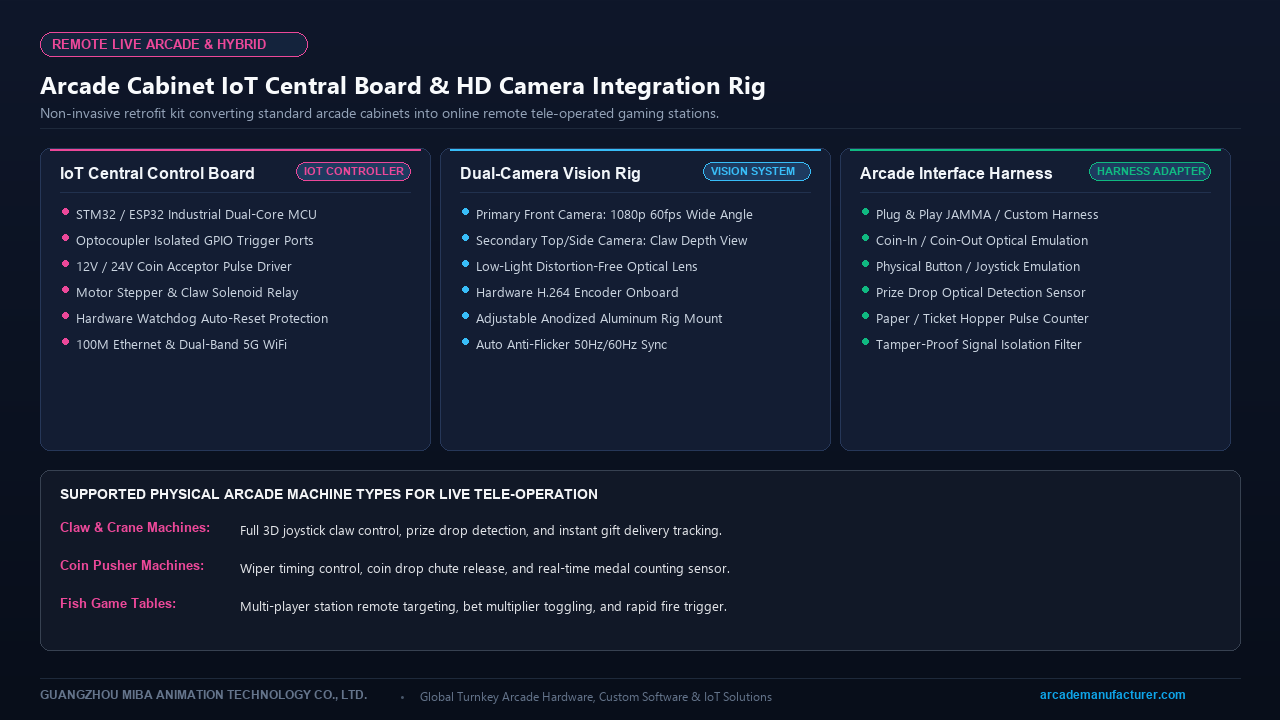
Achieving a true-to-life arcade experience on a smartphone demands a highly optimized mobile client architecture. The core objective of B2B remote claw machine app development is ensuring that user inputs on a touchscreen translate into immediate gantry movement on a physical cabinet thousands of miles away.
Utilizing frameworks like Flutter or React Native paired with native iOS and Android SDKs allows development teams to build high-performance, cross-platform applications. These frameworks interface directly with WebRTC media servers to receive dual-camera streams (front and top-down views) at 60 FPS. To eliminate the sluggishness typical of legacy IP camera streams, the architecture relies on edge-node routing and UDP-based WebRTC protocols, ensuring video delivery and control signal transmission remain under 80 milliseconds.
Furthermore, the mobile UI incorporates a low-jitter virtual joystick and an optimized drop button. These components are programmed to send extremely lightweight binary payloads over WebSockets, bypassing heavy HTTP overhead.
- Mobile Application | | Edge Routing Server | | Physical Claw Machine
- (Flutter/React Nat) | | (WebRTC / WebSockets) | | (IoT Gateway / PLC)
- Virtual Joystick | =====> | – Input Signal Parsing | =====> | – Motor Driver Relay
- Camera Viewports | <===== | - Hardware Video Trans. | <===== | - IP Camera Encoders
- Coin/Credit State | | – Session Management | | – Cabinet Coin Logic
- To prevent players from manipulating network packets to falsely trigger a win, robust hardware defense systems are integrated at the firmware level of the IoT gateway, continuously verifying the integrity of the timestamped commands against the live video feed. This ensures a tamper-proof environment superior to legacy software-only protections.
- ## Prize Win Verification and Automated Fulfillment Logistics
- The most critical operational bottleneck in scaling a remote claw business is backend prize logistics. Without an automated verification process, operators are forced to manually review camera footage for every claimed win. Modern B2B app platforms solve this by integrating highly accurate optical drop sensors inside the physical cabinet.
- When the gantry releases a prize into the chute, the optical sensor array detects the volumetric profile of the falling object. This hardware event triggers a secure interrupt to the IoT controller, which instantly verifies the win against the player’s active session token. By acting as an infallible anti cheat device, the sensor array eliminates fraudulent win claims and automates the player’s inventory update in real-time.
- Once a player requests shipment of their accumulated virtual inventory, the platform’s automated ERP shipping gateway takes over.
- [ Prize Drop Event ] -> [ Optical Sensor Array ] -> [ IoT Gateway Interrupt ]
- [ User Mobile Inventory Updated ] <- [ Backend Session & Win Verification ]
- [ Player Requests Shipment ] -> [ ERP Fulfillment Gateway ] -> [ Warehouse Barcode Scan ]
Warehouse staff scan the physical barcode of the plush toys, which the ERP system instantly matches with the user’s shipping manifest, printing postage labels automatically. This closed-loop barcode tracking reduces overhead, slashes shipping errors, and ensures operators maintain precise inventory counts without tedious manual audits.
Monetization Models In-App Currency and Multi-Tier Route Accounting
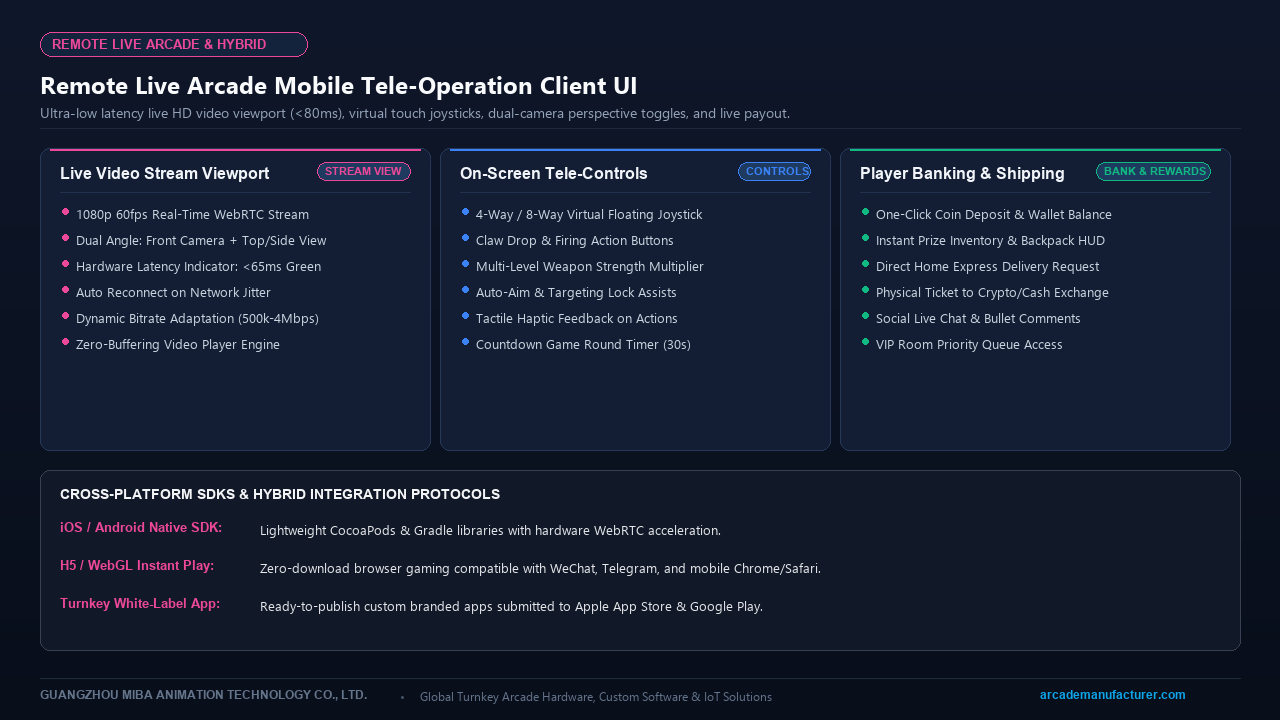
Transitioning from a physical token model to a global digital app allows operators to deploy highly sophisticated monetization models. In-App currency systems abstract the real-world cost of play, encouraging deeper engagement and larger transaction volumes. Players typically purchase credit coin packs through Apple App Store, Google Play, or third-party payment gateways, with bulk purchases yielding bonus virtual credits.
Beyond standard pay-per-play, operators can introduce subscription VIP tiers. For a recurring monthly fee, VIP players receive discounted gameplay, free monthly shipping vouchers, or access to exclusive high-value prize machines. This recurring revenue stabilizes cash flow and dramatically increases the lifetime value (LTV) of the mobile player base.
On the backend, B2B platforms provide comprehensive route accounting telemetry. For operators managing dozens of machines across multiple physical warehouses or sharing revenue with IP owners, the system automatically calculates the revenue split per machine, per session, or per prize. Unlike the exhausting process of daily cash reconciliation at physical service arcade locations, this digital telemetry provides real-time dashboards showing yield-per-cabinet, player retention metrics, and optimal prize payout rates.
Physical Venue Retrofit and Maintenance Checklist
Converting an existing warehouse or retrofitting an operational arcade into a live-streaming studio requires meticulous physical preparation. The hardware must run continuously without the luxury of an on-site attendant rebooting systems during peak gameplay.
Cabinet Power Isolation: Standard arcade cabinets are not designed to run 24/7. Operators must install industrial-grade power distribution units (PDUs) with remote relay capabilities. This allows the backend software to perform hard power cycles on specific cabinets if a mainboard or gantry motor freezes, minimizing downtime without human intervention.
Industrial IP Camera Mounting: Consumer-grade webcams will fail under continuous use. Operators must mount industrial IP cameras equipped with varifocal lenses and hardware H.264/H.265 encoders. Typically, two cameras are mounted per cabinet: a direct front-facing camera for precise depth perception and a top-down camera focused directly over the prize chute. Mounting brackets must be vibration-dampened to prevent the heavy gantry movements from blurring the video feed.
Ethernet Trunking and Network Backbone: Relying on Wi-Fi in a warehouse full of heavy metal cabinets and unshielded electric motors is a recipe for catastrophic packet loss. Every machine must be hardwired via Cat6 Ethernet trunking back to a managed gigabit switch. Implementing redundant fiber-optic uplinks ensures the sub-80ms video streaming threshold is maintained even when hundreds of cabinets are active simultaneously.
By following a strict maintenance and retrofit checklist, arcade owners can ensure their hardware remains robust, secure, and ready to service thousands of remote players without interruption.
Frequently Asked Questions
How does remote claw machine app development reduce latency? Developers use native SDKs and WebRTC protocols to stream video and transmit joystick inputs over UDP. By utilizing edge-node servers and hardware encoding at the cabinet level, the control loop latency is consistently kept under 80 milliseconds, ensuring a seamless real-time experience for mobile users.
What is the best way to verify prize wins automatically? Integrating optical drop sensors in the physical cabinet chute provides the most reliable verification. When a prize falls, the sensor sends a hardware interrupt to the backend, which verifies the active session token. This acts as an automated anti-fraud mechanism, instantly crediting the player’s digital inventory.
Can I convert my existing physical arcade machines to a mobile app? Yes. Through B2B retrofitting, existing cabinets are equipped with an IoT relay board, industrial IP cameras, and network controllers. This connects the legacy coin, joystick, and gantry mechanics directly to the cloud platform, turning standard machines into globally accessible live-streaming units.
How is revenue tracked in a remote claw machine platform? Unlike manual daily cash counts, the backend platform utilizes real-time route accounting telemetry. All digital token purchases, VIP subscriptions, and gameplay sessions are logged automatically. The system provides instantaneous dashboards for revenue splits, profit margins, and inventory costs without physical audits.
Transform Your Warehouse into a Global Digital Arcade
Taking a physical operation and bridging it to the global mobile market requires battle-tested engineering, secure network architectures, and highly reliable industrial hardware. Do not let your cabinet revenues be dictated by local foot traffic or restricted opening hours.
For turnkey B2B remote live tele-operation app development, custom IoT cabinet integration, and high-performance server architectures, contact Engineer Wang at +86 17620842078. As an industry leader operating from our advanced manufacturing facility in Panyu, Guangzhou Miba Animation Technology Co., Ltd. delivers the hardware and software infrastructure required to scale your business globally. Reach out today to deploy your remote arcade platform.