- The Engineering Challenge Behind Unattended Roulette Operations
- Precision Brushless DC Servo Motor Drive Architecture
- Pneumatic Air Blower Launch System Engineering
- High Wear Materials for Casino Grade Durability
- Ball Retrieval and Auto Chambering Mechanism
- Firmware Control Architecture and Safety Logic
- Electrical Noise Isolation and Power Regulation
- B2B Procurement and Turnkey Integration
- Frequently Asked Questions
Running a profitable electronic table game floor means your equipment must operate twenty-four hours a day without human croupiers. Casino operators and arcade owners frequently struggle with automated roulette wheels that stall, launch balls inconsistently, or suffer from track wear after just a few months of continuous use. These mechanical failures directly impact the Return to Player (RTP) integrity and cause operators to hemorrhage revenue during peak hours. In our Panyu 15,000m² manufacturing base at Guangzhou Miba Animation Technology Co., Ltd. (Arcade Manufacturer), we have completely re-engineered the automated roulette hardware stack to eliminate these pain points. I am Engineer Wang, Lead Hardware and Game System Architect, and I have spent over a decade perfecting industrial-grade, fully automated roulette machine cabinets for global B2B deployments. Today I am walking you through our state-of-the-art servo motor drives, pneumatic ball launch systems, and bulletproof firmware control logic designed exclusively for turnkey venue solutions.
The Engineering Challenge Behind Unattended Roulette Operations
Creating a fair and mathematically sound automated roulette wheel requires significantly more than just spinning a bowl and tossing a ball. Human dealers naturally introduce entropy and variability in both wheel speed and ball launch velocity. When building an unattended machine, we must replicate this entropy artificially using precise electro-mechanical systems.
If the rotation speed is fixed, players utilizing advanced predictive algorithms can exploit the predictability of the drop zone. If the air pressure for the ball launch fluctuates, the ball might not complete the required minimum revolutions before descending into the wheel head. Furthermore, continuous friction on the track from a ceramic ball traveling at high speeds will eventually degrade inferior materials, creating micro-grooves that alter the ball’s trajectory and compromise the mathematical randomness of the game.
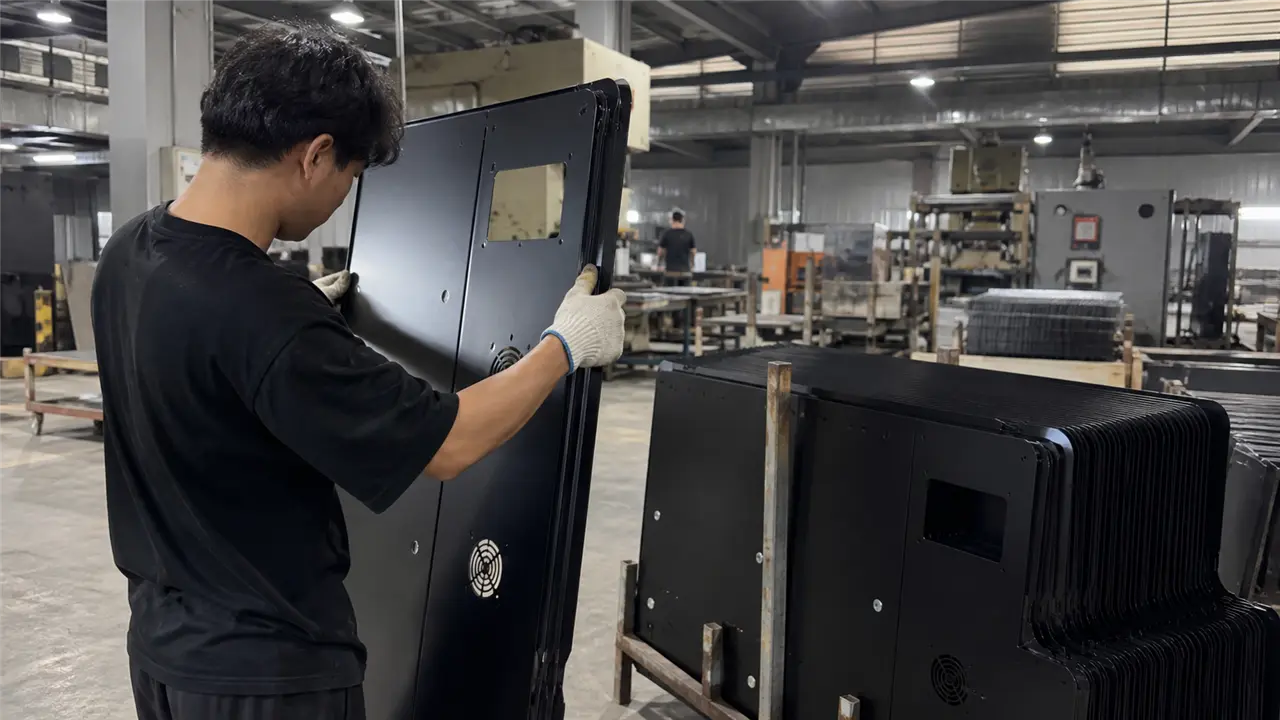
Our manufacturing philosophy dictates that every multiplayer electronic roulette machine cabinet engineering must withstand the harshest commercial environments. This means no loose parts, no DIY repair headaches, and absolute reliability from the factory floor to your gaming venue. We deliver complete machine solutions where every pneumatic valve and servo drive is strictly integrated and tested before shipping.
Precision Brushless DC Servo Motor Drive Architecture
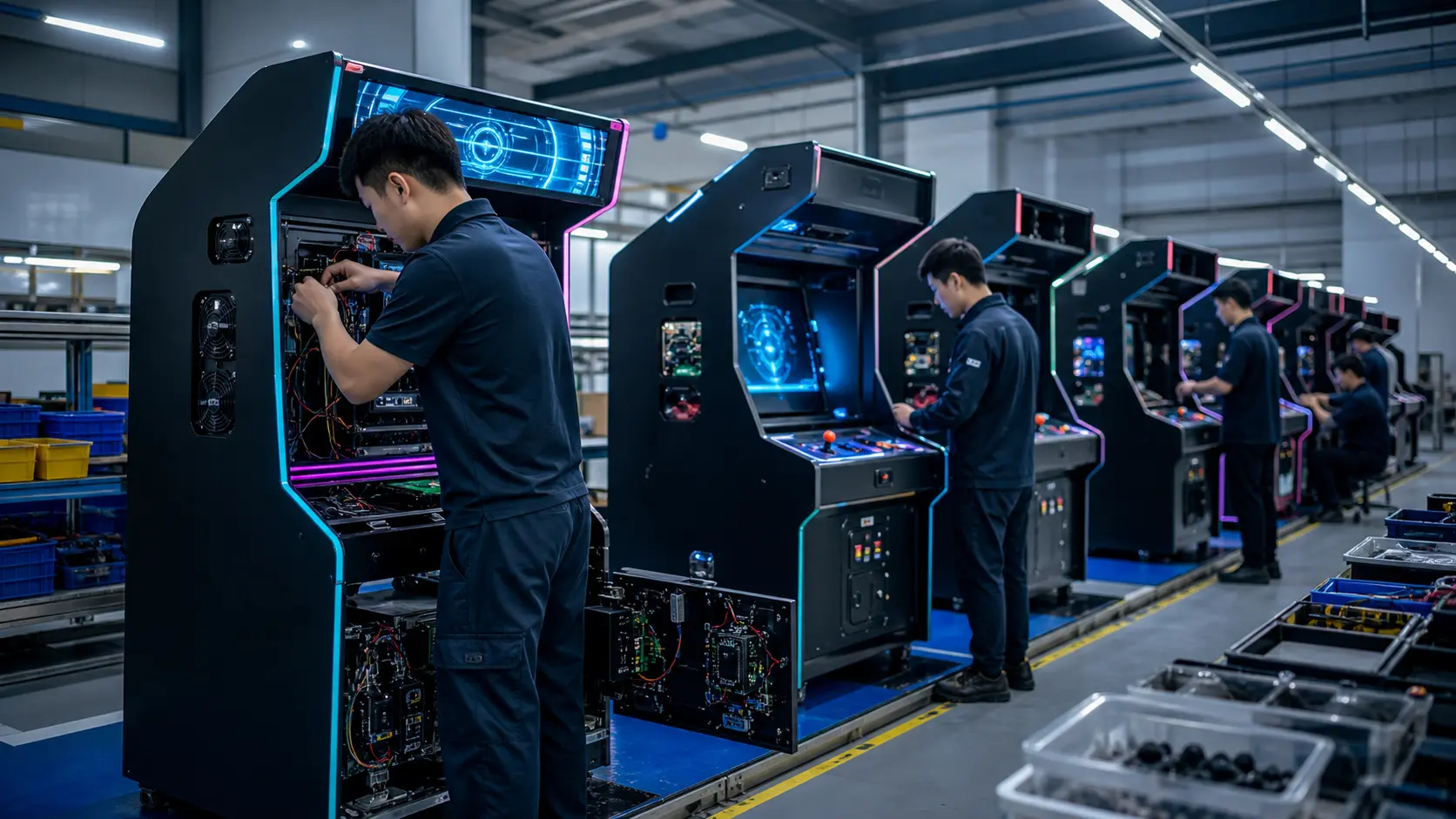
At the heart of our automated roulette system lies a commercial-grade Brushless DC (BLDC) servo motor. We abandoned traditional stepper motors years ago because they suffer from resonance issues and lack the smooth torque delivery required for a heavy, solid brass roulette wheel.
The BLDC servo motor we employ operates flawlessly with heavy dynamic loads. The solid brass nickel-plated wheel head acts as a massive flywheel. Overcoming this inertia smoothly without jarring the chassis requires high starting torque and precise current vector control. Our drive controllers utilize Field Oriented Control (FOC) algorithms to ensure that current is delivered to the motor windings in exact proportion to the required torque, resulting in silent and buttery-smooth acceleration.
Closed Loop Encoder Feedback for Randomized Rotation
To guarantee mathematical randomness and prevent pattern prediction, the wheel must never spin at the same speed twice. Our servo drives are equipped with absolute optical encoders providing 17-bit resolution. This closed-loop feedback allows the main PLC (Programmable Logic Controller) to monitor the exact angular position of the wheel up to thousands of times per second.
Through our proprietary firmware, we inject controlled entropy into the motor drive profile. The system randomly generates a target rotation speed between 15 RPM and 35 RPM for every individual spin. Additionally, the software automatically alternates between clockwise and counter-clockwise spins after every cycle. This alternating rotation not only replicates the traditional casino experience but also ensures even mechanical wear on the bearings and the ball track. If you are operating a remote live electronic roulette turnkey system, this level of unpredictable, yet flawlessly controlled mechanical movement is what guarantees gaming commission compliance and player trust.
Pneumatic Air Blower Launch System Engineering

The most critical moment in any roulette game is the ball launch. Mechanical flickers or spring-loaded pushers are unreliable and prone to jamming. Instead, we utilize an industrial pneumatic air-blower system to fire the ball into the track. This system guarantees consistent momentum while completely isolating the launch mechanism from physical wear and tear.
Our pneumatic architecture is built around a heavy-duty air compressor housed within the acoustic-damped base of the cabinet. The system maintains a constant reservoir pressure, but it is the precision control of this air that makes our machines superior.
Tangential Ball Launch Nozzle Design
The air is released through high-speed compressed air solenoid valves capable of switching in under 10 milliseconds. We utilize a dedicated 4-6 bar air pressure regulator immediately upstream of the solenoid. This ensures that the burst of air hitting the ball is exactly the same pressure every single time, regardless of the compressor’s cut-in and cut-out cycles.
The launch nozzle is engineered at a precise tangential angle relative to the ball track. When the PLC triggers the solenoid, the air blast strikes the ball, propelling it seamlessly into the outer rim. By adjusting the duration of the solenoid valve opening (typically in the range of 150 to 300 milliseconds), we can inject further randomization into the ball’s initial velocity. The ball completes the required number of orbits before gravity and friction overcome the centrifugal force, causing it to drop gracefully into the wheel head. This pneumatic design is completely maintenance-free and guarantees millions of trouble-free launches for your casino floor.
High Wear Materials for Casino Grade Durability
An automated roulette wheel spins continuously for thousands of hours per month. The friction generated by a heavy ball traveling along the track is immense. We refuse to use cheap acrylics or standard aluminum for our critical contact surfaces. Our engineering standards dictate the use of advanced metallurgy and composites to ensure zero degradation over the lifespan of the machine.
Teflon and Ceramic Composite Ball Tracks
The outer track where the ball orbits is subjected to the highest friction. We manufacture this track using a proprietary Teflon and ceramic composite material. This composite offers an incredibly low coefficient of friction, allowing the ball to glide silently and maintain its momentum for longer periods. Furthermore, the ceramic infusion provides extreme surface hardness, completely preventing the formation of micro-grooves or wear patterns.
If a track develops grooves, the ball will begin to rattle and drop predictably, destroying the mathematical fairness of the game. Our composite tracks have been tested in our Panyu QA lab to withstand over 10 million spin cycles with zero measurable surface degradation. This is the quality standard you expect when purchasing a complete machine from a true source factory.
Solid Brass Nickel Plated Wheel Head and Hardened Steel Deflectors
The spinning wheel head itself is machined from a solid billet of high-grade brass. This provides the necessary weight and inertia for smooth rotation. After precision CNC machining, the brass is heavily nickel-plated. This plating not only provides a stunning, mirror-like aesthetic fit for luxury VIP rooms but also protects the brass from oxidation and minor impacts.
The ball deflector frets (the diamond-shaped obstacles on the slope) are manufactured from hardened stainless steel. In cheaper machines, these deflectors are often made of zinc alloy or plastic, which quickly dent or chip upon repeated impacts from the ball. Our hardened steel frets ensure a sharp, randomized deflection every time the ball drops, maintaining the integrity of the game’s entropy. For comprehensive insight into our manufacturing processes, review our commercial arcade game machines manufacturing standards.
Ball Retrieval and Auto Chambering Mechanism
Once the ball has landed in a pocket and the result has been read by our dual laser ball drop detection system, the ball must be quickly and reliably retrieved for the next spin. Any delay in this process directly hurts your hourly revenue.
Our auto-chambering mechanism utilizes a gravity trap system combined with precisely timed trapdoors. Once the payout phase is complete, the central cone of the wheel head descends slightly, or a specific trapdoor opens, allowing the ball to fall safely into the retrieval channel beneath the wheel.
From the retrieval channel, a specialized pneumatic suction system or a mechanized elevator smoothly transports the ball back up into the firing tube. We design this entire pathway with smooth, sweeping curves to prevent the ball from ever jamming. Sensors placed at strategic points along the retrieval path verify the ball’s location at all times. If the system detects a delay, it automatically initiates a micro-vibration sequence to dislodge any potential stiction, ensuring the ball always returns to the launch chamber within 3 seconds.
Firmware Control Architecture and Safety Logic
Hardware is only as good as the software governing it. Our proprietary firmware acts as the central nervous system for the entire electronic roulette cabinet. We program our PLCs and microcontrollers to anticipate every conceivable environmental anomaly and mechanical stress test.
Wheel Tilt Detection and Motor Stall Recovery
Security is paramount in automated gaming. Players or environmental factors might bump the machine, attempting to alter the ball’s trajectory. To combat this, our cabinets are equipped with highly sensitive 3-axis MEMS accelerometers. This wheel tilt detection system continuously monitors the physical level of the machine. If an impact or tilt exceeding a programmed threshold (e.g., 1.5 degrees) is detected during a spin, the firmware instantly aborts the game, voids all bets, and alerts the operator via the backend management system.
Furthermore, we employ automated motor stall recovery routines. If a foreign object somehow enters the wheel area and restricts the rotation, the servo drive controller detects an immediate spike in current draw. Before the motor windings can overheat, the firmware triggers an emergency stop. The system then attempts a gentle, low-torque reverse rotation to clear the obstruction. If the obstruction remains, the machine enters a safe lockdown mode and signals for maintenance, preventing any catastrophic hardware damage.
Electrical Noise Isolation and Power Regulation
Integrating high-power servo motors, heavy-duty air compressors, and delicate IoT microcontrollers within the same cabinet is an electrical engineering nightmare. The electromagnetic interference (EMI) and transient voltage spikes generated by switching inductive loads can easily corrupt data streams, causing system crashes or false sensor readings.
In our Panyu manufacturing base, we employ strict industrial isolation protocols. Every motor drive and solenoid valve is separated from the logic control boards using high-speed optocouplers. This optical isolation ensures that no electrical noise from the high-voltage side can travel back into the sensitive microprocessors.
Additionally, we use medical-grade, low-noise DC power regulation for all logic and sensor circuits. The power supplies for the heavy mechanical components are entirely separate from the power supplies running the game software and IoT communication modules. This architecture guarantees absolute stability, which is vital when streaming low-latency video and telemetry data for a remote live arcade turnkey system.
B2B Procurement and Turnkey Integration
We are not a spare parts vendor. We are a turnkey solutions provider and a complete machine manufacturer. When you partner with Guangzhou Miba Animation Technology Co., Ltd., you are purchasing industrial-grade reliability designed for 24/7 commercial operation. We provide 100% source code ownership options, allowing you complete control over your gaming operations and the freedom to customize the software to your specific market demands.
From the structural integrity of the heavy-gauge steel chassis to the microsecond precision of our servo firmware, every component is engineered to maximize your return on investment. If you are an operator looking to upgrade your casino floor with flawless automated electronic roulette systems, or an entrepreneur planning a large-scale remote live arcade deployment, we are your direct source factory.
Ready to deploy industrial-grade automated roulette solutions in your venue? Contact our engineering team today for technical specifications, FAT (Factory Acceptance Testing) scheduling, and wholesale pricing.
Engineer Wang (Lead Hardware & Game System Architect)
- WhatsApp/WeChat: +86 17620842078
- Telegram: https://t.me/JLwyc
- Email: miba515527@gmail.com
- Factory Location: Panyu Manufacturing Base, Guangzhou, China
Frequently Asked Questions
How does the pneumatic launch system prevent predictability? Our firmware introduces a randomized millisecond variance in the solenoid valve opening duration, combined with random starting wheel speeds and alternating rotation directions. This multi-layered entropy ensures every ball drop is mathematically unpredictable and fair.
Can the Teflon and ceramic composite track wear out over time? Under normal commercial operating conditions, our proprietary composite tracks are designed to last for millions of spin cycles without developing micro-grooves. We utilize extreme surface hardness materials precisely to eliminate the wear and tear common in cheaper acrylic tracks.
What happens if the automated roulette machine is bumped during a spin? The cabinet features sensitive 3-axis tilt detection sensors. If an impact or tilt exceeds the safety threshold during active gameplay, the firmware immediately aborts the spin, voids the current bets, and sends an alert to the operator’s backend system to prevent any physical manipulation of the game result.
Does the servo motor create electrical noise that interferes with the game software? No. We utilize industrial optocouplers to physically isolate the high-power motor drive circuits from the delicate logic and IoT microcontrollers. We also deploy dual isolated power supplies, ensuring pristine, low-noise power delivery to all critical data systems.
Are you selling replacement parts like solenoids or wheels separately? No. We specialize exclusively in the manufacturing and B2B wholesale of complete arcade and casino machine cabinets, alongside turnkey software solutions. We do not operate as a retail spare parts supplier; our focus is entirely on delivering comprehensive, ready-to-operate commercial equipment to global operators.
html
“`