- Securing Remote Claw Machine Profitability Through Sensor Validation
- Core Technologies of the Multi-Beam Infrared Matrix
- Firmware Signal Processing and Interference Rejection
- Anti-Cheat Logic and Timestamp Correlation
- Cloud Telemetry and Automated Inventory Management
- Next-Generation Automated Restocking Engineering
- The Panyu Factory Quality Assurance Testing Protocol
- Customizing Your [Remote Live Arcade](/remote-live-arcade-turnkey-system-iot-low-latency-streaming-architecture/) Network
- Frequently Asked Questions
If there is one absolute truth I have learned after 12 years of architecting arcade hardware at our Panyu manufacturing base, it is that operators lose sleep over inventory shrinkage. In the remote live arcade sector, every unrecorded prize drop and every fraudulent claim directly erodes your return on investment. Remote claw operators face a unique challenge compared to traditional street route venues. Because the player is controlling a physical machine via a mobile app from miles away, the system must autonomously and infallibly detect whether a prize has actually been won. Without reliable physical validation, your remote live claw machine turnkey system is blind to its own profit margins.
At Guangzhou Miba Animation Technology Co., Ltd. (Arcade Manufacturer), our 50-person R&D team treats prize validation not as an afterthought, but as a mission-critical industrial process. We design, manufacture, and deliver complete machine cabinets outfitted with proprietary infrared prize drop sensor matrices and automated restocking telemetry. My name is Engineer Wang, and today I will walk you through the precise hardware engineering, anti-cheat firmware correlation, and cloud telemetry systems we build into every remote claw machine leaving our 15,000m² factory floor. We do not sell loose sensors or DIY repair kits; we engineer complete, turnkey operational platforms designed for maximum profitability and zero operational downtime.
Securing Remote Claw Machine Profitability Through Sensor Validation
When a player triggers a drop in a remote claw application, the physical hardware must report back to the cloud ledger within milliseconds. A false positive means the system credits a win when no prize fell, leading to lost merchandise and shipping disputes. A false negative means a legitimate winner does not receive their notification, triggering customer service tickets and damaging your brand reputation.
Our answer to this dilemma is a deeply integrated sensor framework that communicates directly with the machine’s IoT control board. By utilizing an engineered matrix of infrared beams, we eliminate the blind spots common in cheap, single-beam sensors found on entry-level machines. We understand that operators need industrial-grade reliability, which is why our sensor arrays are subjected to rigorous factory testing to ensure perfect accuracy under prolonged operational stress.
Core Technologies of the Multi-Beam Infrared Matrix
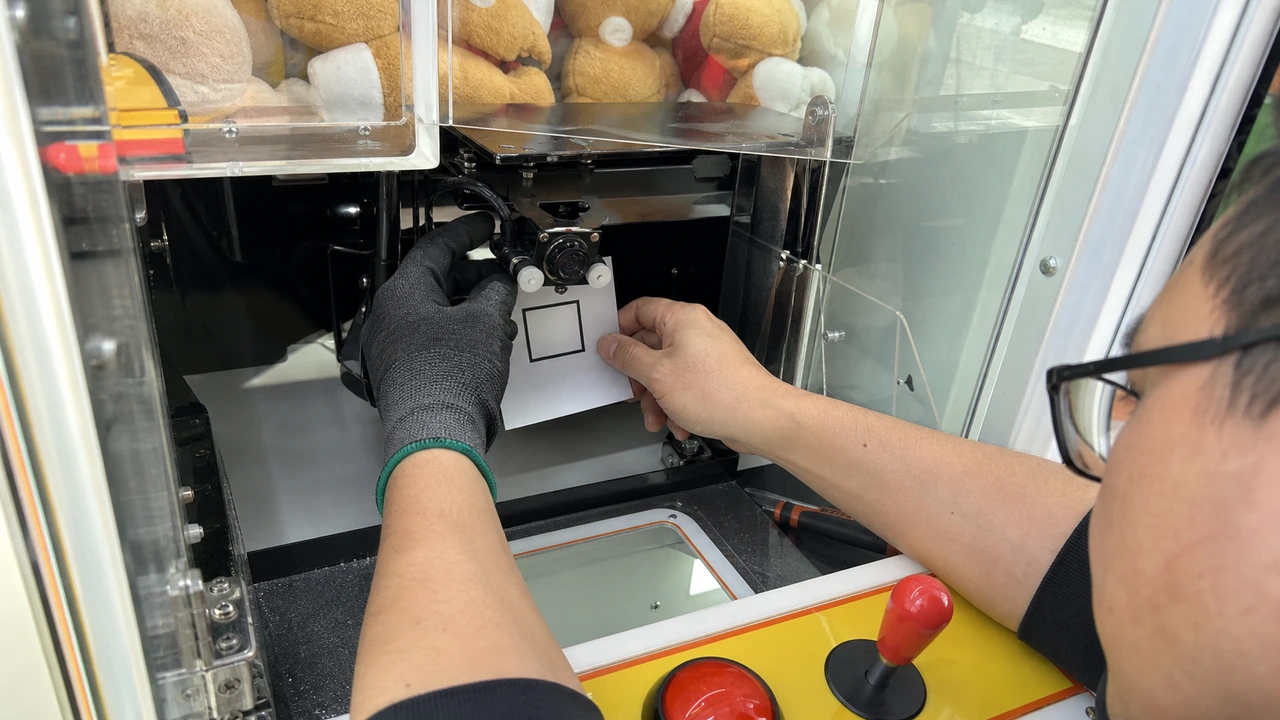
The aperture of a crane machine prize chute is the critical threshold where inventory transitions into revenue loss. To secure this threshold, we rely on advanced optical engineering rather than mechanical tripwires.
Through-Beam Optical Curtain Architecture
Instead of utilizing standard reflective photoelectric sensors which can be confused by shiny plush toy wrappers or varying ambient light, we deploy a through-beam optical curtain architecture. This system utilizes a dedicated transmitter array on one side of the chute and a receiver array on the opposite side. The transmitter pulses modulated infrared light at a specific frequency, typically 38 kHz, which the receiver is tuned to detect.
When a solid object passes through this optical curtain, it breaks the beams, dropping the receiver voltage and triggering an interrupt on the local microcontroller. Because the signal is modulated, it is highly immune to ambient lighting fluctuations in a warehouse environment, such as high-bay LED cycling or sunlight penetrating a window. This through-beam method guarantees a physical break in the optical path.
Eliminating Blind Spots in the Prize Chute
A standard single-beam sensor is woefully inadequate for modern remote claw operations. A small capsule or irregularly shaped plush can easily slip past a single beam without triggering a detection. To counter this, our engineering team designs a multi-beam matrix that creates a complete grid across the entire horizontal plane of the prize chute.
We strategically position up to 16 individual emitter-receiver pairs, spaced at 15mm intervals, creating an impenetrable optical net. Whether the prize is a heavy boxed figurine or a small acrylic keychain, its passage will interrupt multiple beams simultaneously. This matrix configuration completely eliminates physical blind spots, ensuring 100% detection accuracy for any item large enough to span the 15mm gap.
Firmware Signal Processing and Interference Rejection
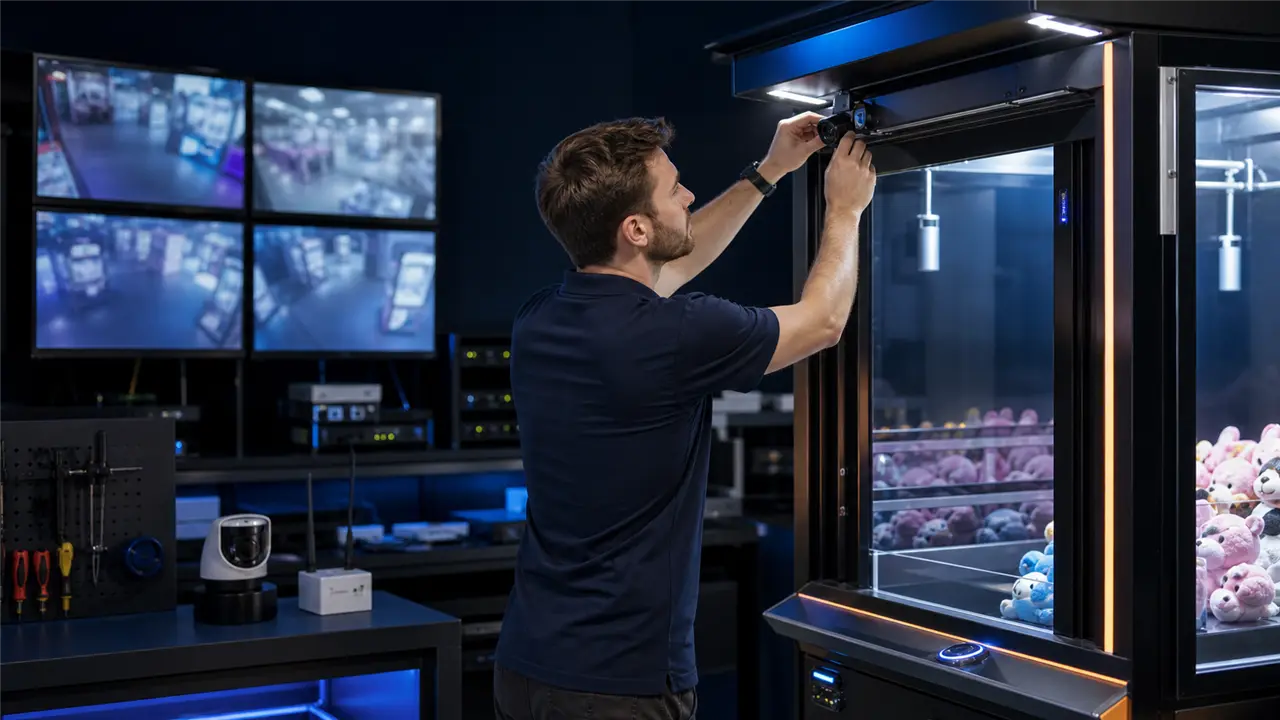
Hardware alone cannot distinguish between a legitimate prize drop and environmental noise. The raw signal from the receiver matrix must be processed by robust firmware algorithms to filter out interference and validate the physical characteristics of the falling object.
Debounce Algorithms and Pulse Width Validation
In the Panyu QA lab, we observe that a falling plush toy creates a specific signal signature. As the irregular shape of the prize tumbles through the optical curtain, it may cause rapid, fluttering beam interruptions before completely clearing the sensor zone. If read directly, a naive software loop might register this single drop as five or six distinct wins.
Our firmware incorporates sophisticated debounce algorithms and pulse width validation logic. When a beam is broken, the microcontroller initiates a timer. To register as a valid drop, the beam must remain interrupted for a minimum threshold—typically between 40ms and 150ms, depending on the mass and terminal velocity of the typical prize type loaded into the cabinet. If the interruption is shorter than 40ms, the firmware dismisses it as a transient anomaly, such as a falling speck of dust or a passing insect.
Distinguishing Genuine Prize Drops from Fraudulent Tampering
Warehouse operators occasionally deal with internal shrinkage or tampering during maintenance. Furthermore, if a machine is deployed in a hybrid environment accessible to the public, tampering becomes a significant threat. Cheaters may attempt to trip the sensor using a wire, a tape measure, or by shining an external laser into the receiver array.
Our pulse width validation is bidirectional. Not only do we check for minimum interruption times, but we also monitor for maximum duration. If the optical curtain remains broken for longer than 800ms, the system flags a “Sensor Blocked” error rather than registering a win. This immediately halts the game session, alerts the warehouse management dashboard, and prevents continuous fraudulent payouts. The modulated 38 kHz frequency also completely defeats attempts to blind the receiver with standard flashlights or unmodulated IR sources.
Anti-Cheat Logic and Timestamp Correlation
The ultimate layer of our validation architecture involves synchronizing the local hardware events with the global game state logic. A sensor trigger in isolation is meaningless unless it perfectly aligns with the player’s actions within the application. For a deep dive into our comprehensive security protocols, I highly recommend reviewing our documentation on industrial arcade machine security anti cheat defense.
Claw Release Trigger vs Beam Interruption Window
Our proprietary IoT control boards maintain strict temporal awareness of every mechanical action. When the player commands the claw to drop, grab, and return to the home position, the system logs the exact millisecond the gantry reaches the limit switch above the prize chute and the solenoid releases the voltage to open the prongs.
We enforce a strict correlation rule between the claw release trigger event timestamp and the infrared beam interruption window. In our physics models, a prize falling from the apex of the gantry to the sensor plane takes a highly predictable amount of time. We define a strict <1,500ms correlation window. If the infrared sensor matrix reports a drop event, but the gantry did not execute a release command within the preceding 1,500ms, the drop is instantly classified as anomalous.
Preventing Exploits Through Industrial Security Protocols
This tight correlation logic is the bedrock of our anti-fraud infrastructure. It completely negates “shaking” exploits, where a cabinet might be physically bumped to dislodge a prize resting precariously on the edge of the chute. Even if the prize falls and breaks the beam, the lack of a corresponding software release command within the <1,500ms window means the cloud ledger will not record a win.
Furthermore, if the system detects an anomalous drop, it automatically triggers a high-resolution snapshot from the internal surveillance cameras. This provides the operator with immediate visual evidence of the event, aiding in dispute resolution and identifying hardware issues. To understand how we configure these camera systems for optimal clarity, see our guide on dual camera video streaming depth perception.
Cloud Telemetry and Automated Inventory Management
Once the local hardware and firmware have definitively validated a prize drop, this data must be instantly propagated to the cloud architecture. This telemetry is the lifeblood of a profitable remote arcade operation, transforming isolated cabinets into a unified, data-driven network.
Real-Time Prize Ledger and Operator Dashboards
Upon successful validation, the IoT control board transmits an encrypted payload over the WebRTC websocket directly to the cloud backend. This payload includes the machine ID, the exact timestamp, the player session token, and the sensor validation hash. The backend instantly decrements the inventory count for that specific cabinet in the real-time prize ledger.
Operators access this data through our centralized management dashboards. You can view minute-by-minute win rates, inventory depletion curves, and hardware health metrics across your entire fleet of hundreds of machines. When a cabinet’s inventory drops below a customizable threshold (e.g., 5 items remaining), the system automatically pushes an alert to the warehouse staff’s mobile devices, ensuring the machine never sits empty.
Seamless Integration with the Remote Claw App Ecosystem
This instantaneous backend verification is crucial for the player experience. The moment the backend ledger records the win, the mobile application fires a celebratory animation and adds the prize to the user’s digital shipping cart. This frictionless loop—from physical hardware to digital fulfillment—is what defines a premium remote claw experience. For insights on monetizing this fulfillment process, operators should consult our analysis on remote claw machine app development costs.
Next-Generation Automated Restocking Engineering
The traditional model of remote claw operations relies heavily on manual labor. When an alert fires, a warehouse employee must physically walk to the machine, unlock the door, and arrange new prizes on the playfield. At Guangzhou Miba Animation Technology Co., Ltd., we are actively engineering solutions to automate this bottleneck, minimizing labor costs and eliminating machine downtime.
Modular Gravity Feeder Magazines and Spiral Dispensers
For specific types of standardized merchandise—such as boxed figures, capsule toys, or uniform plush items—we offer advanced machine configurations featuring automated restocking mechanisms. These include modular gravity feeder magazines mounted at the rear of the cabinet, and spiral dispensers similar to those found in traditional vending machines.
When the optical matrix detects a win and the cloud ledger confirms the inventory reduction, the main controller board can immediately trigger a stepper motor in the restocking module. A fresh prize is gently deposited onto the playfield, ready for the next player. This happens seamlessly within seconds, ensuring the machine is immediately available for the next queuing player without requiring human intervention. We detailed the power requirements for these auxiliary motors in our breakdown of remote claw machine gantry hardware modification.
Warehouse Telemetry Alerts and Zero-Downtime Operations
Even with automated dispensing, the magazines eventually require refilling. However, our telemetry systems shift this from a reactive emergency to a scheduled logistical task. Warehouse managers can monitor the capacity of all dispensing modules globally.
By analyzing play volume and win frequency, our predictive algorithms generate optimized route maps for floor staff. A worker is dispatched to reload a sector of machines exactly 30 minutes before they run dry, creating a zero-downtime operational environment. This level of industrial efficiency is only possible when you partner with a complete machine manufacturer capable of harmonizing the hardware mechanics with the cloud software infrastructure.
The Panyu Factory Quality Assurance Testing Protocol
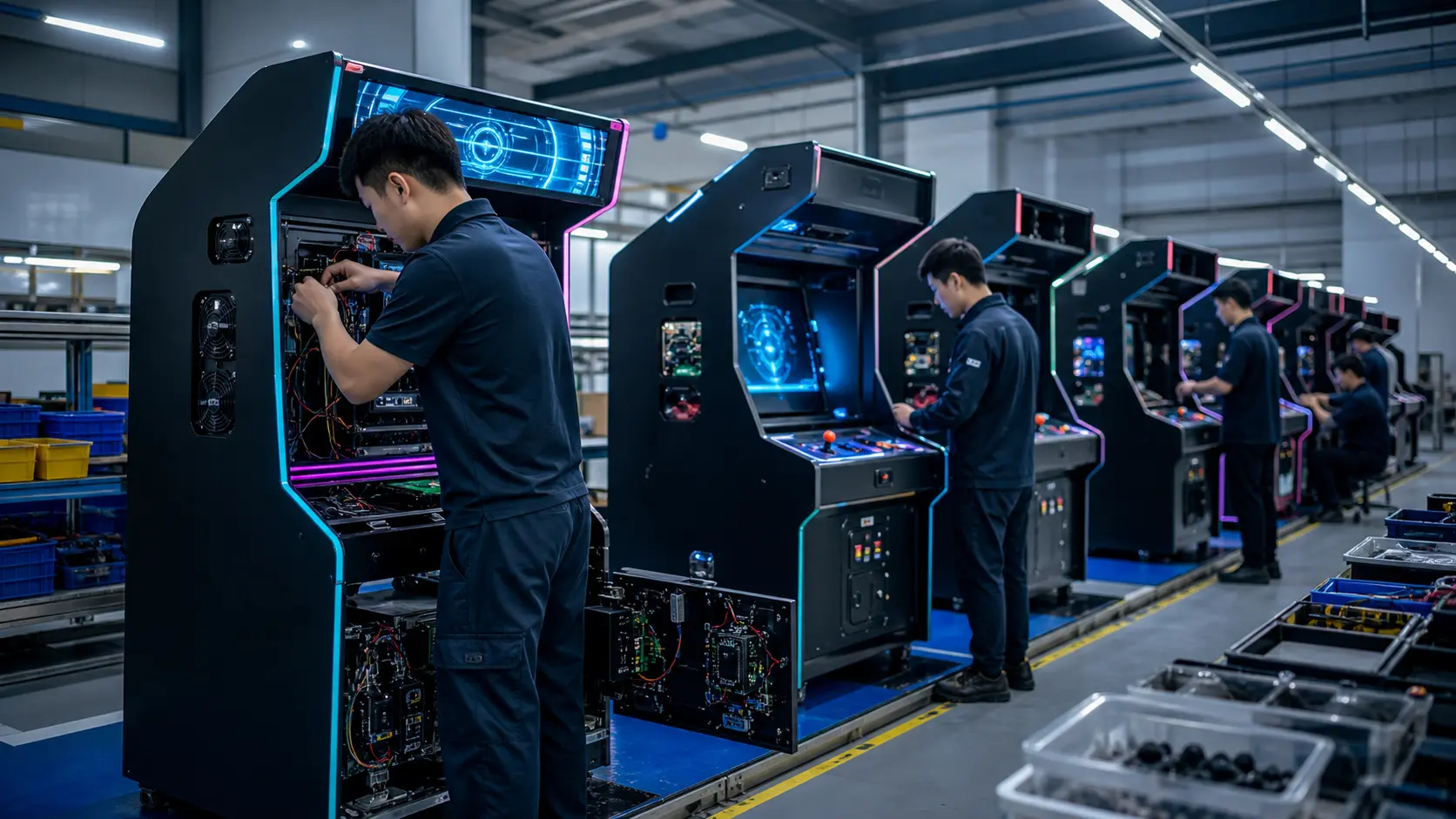
Our commitment to reliability is enforced on our assembly lines in Guangzhou. We do not simply install components; we rigorously test the entire integrated system under simulated extreme conditions.
Environmental Stress Screening for Optical Components
Before any infrared sensor matrix is installed in a cabinet, the individual PCB assemblies undergo environmental stress screening. We subject the boards to rapid thermal cycling from -10°C to +60°C to expose any latent solder joint defects. Furthermore, the optical arrays are tested in high-humidity chambers to ensure condensation does not obscure the lenses or trigger false positives.
End-to-End System Integration Testing
Once the cabinet is fully assembled, it enters the final System Integration Testing (SIT) phase. Our technicians perform hundreds of automated test drops using standardized weights and shapes. We monitor the raw sensor data via serial debug ports to verify the pulse width validation algorithms are performing within a 1% tolerance margin.
We deliberately attempt to trigger the sensor using wires, reflective tape, and high-intensity strobe lights to confirm the anti-tampering logic is impenetrable. Only when a complete machine passes this grueling protocol—demonstrating 100% win detection accuracy and 0% false positive susceptibility—is it crated for export.
Customizing Your [Remote Live Arcade](/remote-live-arcade-turnkey-system-iot-low-latency-streaming-architecture/) Network
Building a profitable remote live arcade requires far more than strapping a webcam to a generic crane machine. It demands industrial-grade hardware, sophisticated firmware validation, and seamless cloud telemetry. As a source factory and complete solution provider, we engineer these capabilities into every cabinet we produce.
If you are planning to deploy a remote claw facility and require robust, fraud-proof hardware architecture, we are ready to supply the customized solutions you need to scale aggressively.
Contact Engineer Wang for Factory Direct Pricing and Technical Consultations:
- WhatsApp/WeChat: +86 17620842078
- Telegram: https://t.me/JLwyc
- Email: miba515527@gmail.com
Frequently Asked Questions
Q: Can ambient sunlight entering the warehouse trigger false wins on the sensor matrix? A: No. Our optical curtains utilize modulated infrared light at a specific frequency (typically 38 kHz). The receivers are tuned exclusively to this frequency and will reject unmodulated ambient light, including direct sunlight and high-intensity LED factory lighting.
Q: How does the system handle an item that gets stuck in the prize chute and continuously blocks the beam? A: Our firmware monitors the maximum duration of a beam interruption. If the optical matrix is blocked for longer than 800ms, the system registers a “Sensor Blocked” error, halts the game, and sends an immediate alert to the warehouse dashboard for a staff member to clear the obstruction.
Q: Is it possible for a player to cheat the system by shaking the cabinet to drop a prize without playing? A: No. We employ strict anti-cheat timestamp correlation. The infrared sensor trigger is only validated as a win if the gantry solenoid received a release command within the preceding 1,500ms. Unauthorized drops are flagged, and the machine cameras instantly capture a snapshot of the event.
Q: Can the automated restocking modules handle standard plush toys? A: Automated dispensers like spiral coils and gravity magazines are best suited for standardized merchandise like boxed items, capsules, and uniformly packaged goods. For highly irregular items like loose plush, manual restocking based on our low-inventory telemetry alerts remains the most reliable method.