- Architecting the Virtual Lobby and Dynamic Room Allocation
- Hardware to Cloud Credit Synchronization Framework
- Structuring the [Multi Tier Agent](/multi-tier-agent-backend-systems-for-arcade-operators/) Hierarchy for Revenue Share
- Deploying Anti Bot Defenses and Fair Play Auditing
- Return on Investment and Operator Profit Margins
- Frequently Asked Questions
Running a highly profitable remote live arcade requires far more than just pointing a camera at a cabinet. When you scale your operations to dozens or hundreds of physical fish tables, the bottleneck is rarely the hardware itself. The true challenge lies in the cloud infrastructure bridging the gap between physical coin pulses and digital sweepstakes wallets. Operators constantly face network jitter causing credit desynchronization, autofire bots draining the mathematical return-to-player (RTP) models, and inefficient seat allocation leaving revenue-generating machines idle while players wait in frustration.
At Guangzhou Miba Animation Technology Co., Ltd. (Arcade Manufacturer), our Panyu 15,000m² manufacturing base handles the complete lifecycle of arcade solutions. We do not just punch the steel cabinets or wire the harnesses. We engineer the complete turnkey solution from the bare-metal IoT relays inside the cabinet to the high-concurrency Kubernetes clusters routing player inputs. In my 12 years of designing hardware and software systems, I have seen operators lose tens of thousands of dollars over a single weekend because their backend failed to log transactions idempotently during a micro-disconnect.
Our philosophy is simple. We build industrial-grade, secure, and highly available architectures that guarantee your financial ledgers remain flawless. If you are researching fish table game source code buyout architecture, you must first understand the foundation that supports it. A brilliant game engine is useless if the backend drops credits or allows player collision. In this detailed technical breakdown, I will expose exactly how we design scalable remote room allocation frameworks, virtual queuing state machines, and hardware-to-cloud sweepstakes synchronizations that protect your profit margins.
Architecting the Virtual Lobby and Dynamic Room Allocation
A physical fish table, such as an 8-player Ocean King or Fire Kirin cabinet, features distinct player stations. In a traditional brick-and-mortar arcade, players simply walk up and sit down. In a remote live setting, mapping these physical seats to virtual users scattered across the globe requires a highly responsive and fault-tolerant state machine. When a player logs into your mobile app or web portal, they first enter the virtual lobby. This lobby must reflect the real-time, microsecond-accurate availability of every physical seat across your entire server farm.
To achieve this concurrency without race conditions, we deploy a dynamic seat assignment protocol backed by distributed locking mechanisms. When a player requests an open seat, the backend immediately issues a temporary distributed lock on that specific station (for instance, Station 3 on Machine A) using Redis. This lock has a strict timeout window, typically configured to 15 seconds. The player must initialize their video control stream and confirm their digital wallet deposit within this window. If they fail to do so, the timeout reclamation service automatically frees the lock, kicks the inactive session back to the lobby, and instantly pings the next player in the priority queue. This aggressive reclamation prevents inactive users from squatting on profitable hardware, maximizing the daily active utilization of each physical board.
Spectator mode introduces another layer of network complexity. We cannot afford to waste bandwidth or processing power on passive observers, yet we must provide a seamless transition when they decide to play. We utilize advanced WebRTC protocols with dedicated STUN and TURN relays to ensure zero-latency video switching. When a user is in the queue or simply watching a high-stakes room, they receive a compressed, lower-bitrate video feed that consumes minimal server resources. The precise moment they transition from spectator to active player, the backend instantly upgrades their WebRTC stream to a high-definition, ultra-low latency feed (consistently under 80 milliseconds glass-to-glass) and binds their digital joystick inputs to the physical IoT relays on the machine. For a deeper understanding of the physical camera mounts, capture cards, and optical sensors that make this visual fidelity possible, I encourage operators to review our documentation on remote live fish table machine custom deployment.
Our queue management system is not a simple first-in, first-out (FIFO) line. We implement a priority weighting algorithm. VIP players, or those with significantly higher sweepstakes wallet balances, can be routed to high-limit rooms automatically, bypassing standard queues. Furthermore, the backend handles room allocation by continuously polling the hardware heartbeat of each physical machine. If an IoT board reports abnormal temperature spikes, fluctuating power supply ripples, or dropped frames, the load balancer automatically marks that room as Maintenance and seamlessly migrates queued players to healthy hardware, ensuring that players are never routed to a machine experiencing technical degradation.
Hardware to Cloud Credit Synchronization Framework
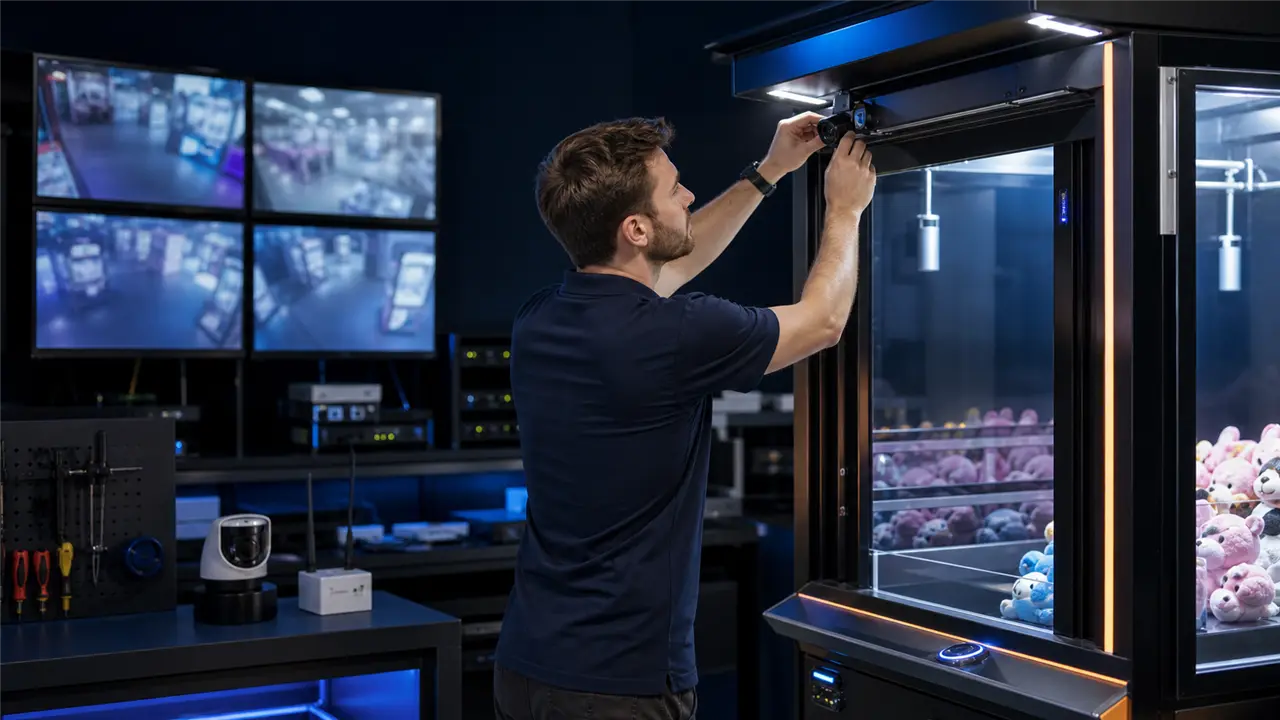
The most complex engineering feat in remote arcade deployment is mapping a digital sweepstakes wallet (whether it utilizes Gold Coins for amusement or Sweeps Coins for redeemable play) to the physical pulse counts of a game board. When a player taps the Insert Coin button on their smartphone, that digital HTTP request must traverse the internet, hit our MQTT broker, route to the specific IoT controller in the factory, and fire a precisely timed electrical pulse into the I/O board of the fish table.
At our Panyu QA testing lab, our protocol mandates strict optical isolation for all pulse circuits. We use industrial-grade optocouplers to ensure that the physical game board cannot send hazardous voltage spikes back into our IoT controller, protecting the delicate microprocessors. But the true engineering marvel resides in the software layer. How do we ensure that a player’s digital balance is perfectly, mathematically synchronized with the machine’s internal mechanical ledger?
The answer is strict idempotent transaction logging. Every single credit injection or cash-out request generates a cryptographically secure, unique UUID at the client level. When the cloud backend sends an add 100 credits command to the IoT board, it includes this UUID. The IoT board executes the rapid sequence of pulses and sends an acknowledgment payload back to the cloud. If the network experiences a transient drop and the cloud never receives the acknowledgment, the cloud’s retry mechanism will automatically resend the command. Because the IoT board retains a rolling cache of recently processed UUIDs, it recognizes the duplicate request. It knows the pulses were already fired and simply resends the acknowledgment without double-charging the machine or the player. This guarantees that credits are never duplicated or lost in the ether.
This robust synchronization is absolutely critical when integrating our proprietary hardware with your existing sweepstakes platforms. We heavily modify the physical wiring harnesses to support these high-speed digital transactions without triggering the game board’s built-in anti-cheat alarms. Operators looking to upgrade their existing fleets can study the specifics of our wiring schematics and IoT integrations in our technical guide on multiplayer remote fish table hardware modification.
We also map the payout pulses identically. When a player hits a massive jackpot multiplier and cashes out, the physical game board fires hundreds, sometimes thousands, of coin-out pulses in rapid succession. A poorly designed system will drop pulses if the read loop is too slow. Our IoT controller utilizes hardware-level interrupts to buffer these pulses perfectly, packages them into a single encrypted payload, and updates the digital sweepstakes wallet in real-time, matching the machine’s accounting byte for byte.
Structuring the [Multi Tier Agent](/multi-tier-agent-backend-systems-for-arcade-operators/) Hierarchy for Revenue Share

A successful sweepstakes or remote arcade operation rarely relies on a single individual. The industry standard utilizes a complex multi-tier distributor model to expand market reach rapidly, and your backend architecture must support these intricate accounting ledgers natively out of the box. Our enterprise architecture supports a scalable five-layer hierarchy encompassing Super Master, Master, Venue Operator, Cashier, and Player.
Every financial transaction on the platform triggers an automated, real-time revenue share calculation. When a player purchases $1,000 worth of Gold Coins or Sweeps Coins, the backend’s ledger engine instantly parses the transaction and splits that revenue according to the predetermined percentage agreements established at each tier. The Super Master can view macroscopic global metrics, liquidity pools, and gross gaming revenue (GGR) across the entire network. Conversely, the Cashier only has visibility into the specific transactions, player deposits, and redemptions occurring during their active shift at a local internet cafe or digital storefront.
To maintain uncompromising security across these operational tiers, we utilize strict role-based access control (RBAC) secured by JWT authentication and short-lived session tokens. Financial ledgers within our system are completely immutable. We deploy append-only database architectures, fundamentally similar to event sourcing patterns. This means that every credit transfer, bonus award, manual balance adjustment, or player redemption is permanently recorded with a cryptographic hash, a precise timestamp, and the unique ID of the agent who initiated the action.
This level of financial granularity and auditability is what separates a professional, enterprise-grade operation from a risky, hobbyist setup. When large-scale operators approach us for a complete turnkey sweepstakes software backend, this immutable ledger is the core feature we emphasize. It permanently eliminates accounting disputes between master distributors and sub-agents, ensuring that every fraction of a cent generated by the machines is accounted for and distributed securely.
Deploying Anti Bot Defenses and Fair Play Auditing
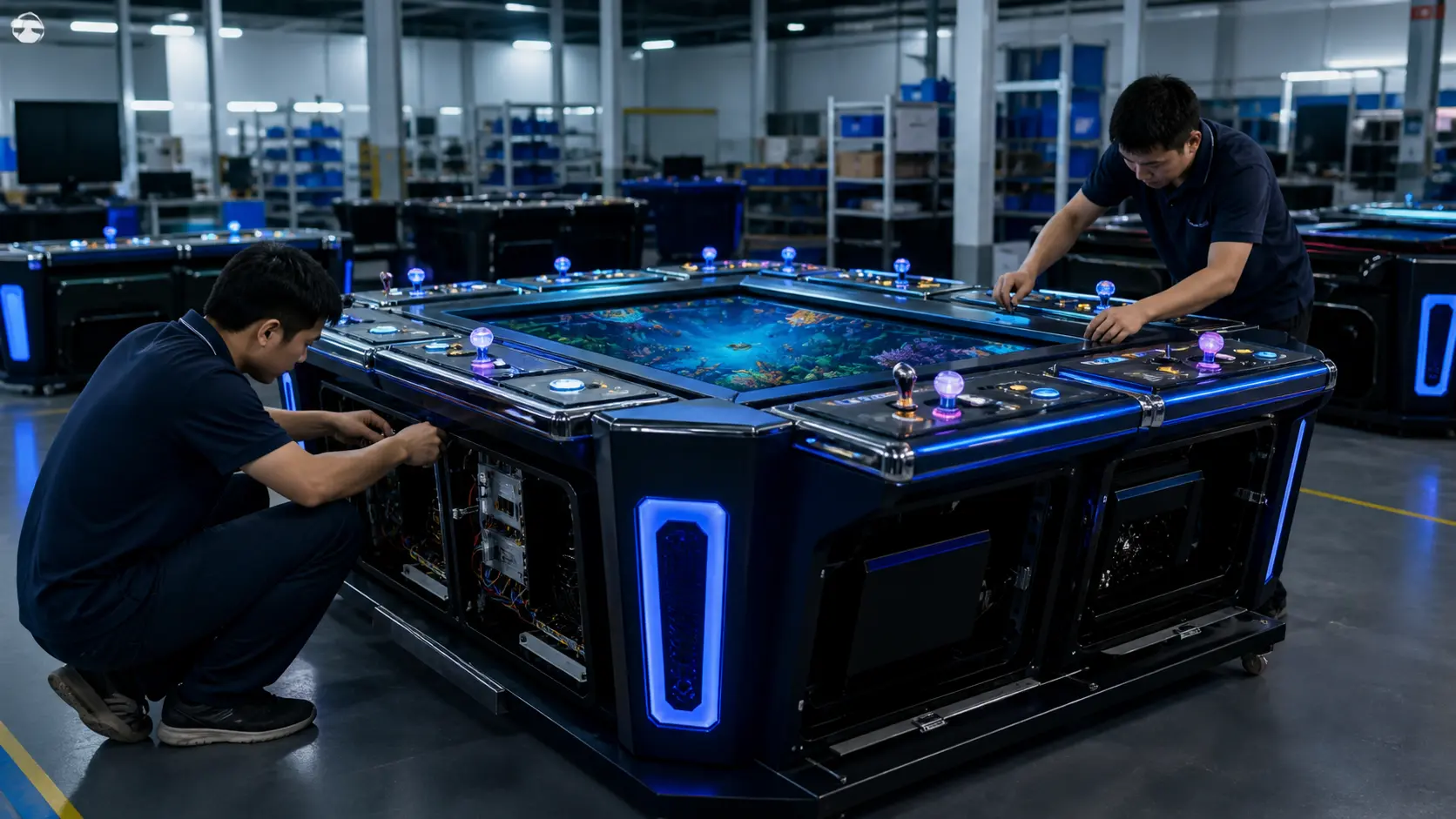
Remote fish tables are highly lucrative, making them prime targets for malicious actors utilizing autofire macros, AI-driven aiming bots, and packet interception tools. Because the client application is ultimately running on an uncontrolled device (the player’s personal phone or PC), we must assume the client environment is compromised and enforce all security measures directly at the cloud and hardware levels.
I spent months in our advanced testing facility developing a proprietary entropy-based click rate analysis engine. A legitimate human player repeatedly pressing a fire button exhibits natural, microscopic variance in their click intervals due to muscle fatigue and neurological reaction times. A macro program or bot, however, sends command packets at mathematically perfect intervals (for example, exactly every 50 milliseconds without fail). Our cloud backend continuously calculates the standard deviation of input timestamps for every active player. If the entropy of the inputs falls below a humanly possible threshold, the system immediately flags the account, temporarily disables their weapon relays on the physical board, and issues a high-priority alert to the venue operator.
Furthermore, we implement sophisticated collusion prevention algorithms. In competitive fish hunting games, multiple players actively shooting at the same high-value boss character can sometimes exploit the game’s internal mathematical variance. Our backend continuously monitors the IP addresses, geographical telemetry, and behavioral patterns of players occupying adjacent seats in the virtual lobby. If we detect suspicious coordination between accounts (e.g., three accounts always joining the same room simultaneously and coordinating fire), our dynamic load balancer can automatically and seamlessly reassign them to different virtual rooms, completely neutralizing their tactical advantage.
Finally, we conduct exhaustive, real-time RTP payout auditing against the physical board’s DIP switch configurations. If a physical fish game board is mechanically set to an 85% payout rate, our cloud backend tracks the exact coin-in and coin-out data over thousands of gaming sessions to mathematically verify that the physical curve is holding true. If a machine suddenly begins paying out at 120% due to a failing physical component or a new, undetected software exploit, the backend’s anomaly detection engine immediately triggers an automatic emergency stop. This instantly locks the virtual room, disconnects the hardware relays, and prevents further revenue leakage until our engineering team can audit the board.
Return on Investment and Operator Profit Margins
Investing in a robust room allocation and credit synchronization backend directly and profoundly impacts your bottom line. Cheap, poorly coded backend systems inevitably result in dropped connections, lost player credits, and furious customers demanding manual refunds. By utilizing our industrial-grade IoT controllers and cloud architecture, our operators consistently achieve an uptime of 99.99%, maximizing their Gross Gaming Revenue.
When planning your operational budget, it is absolutely vital to understand the total cost of ownership. Attempting to build this intricate, highly specialized infrastructure from scratch requires hiring massive teams of cloud architects, hardware engineers, and security specialists, which is astronomically expensive and fraught with risk. By partnering directly with us for a turnkey deployment, you leverage over a decade of our dedicated R&D. For a detailed, pragmatic breakdown of these economics and development timelines, I strongly recommend reading our comprehensive analysis on remote live arcade app engineering costs.
Let me be perfectly clear. We are not a trading company flipping cheap plastic parts and unstable white-label software. We are the source factory. Our complete machine cabinets are forged with heavy-duty steel, our wiring harnesses use pure copper, and our cloud systems run on enterprise-grade infrastructure. When you are ready to scale your remote arcade business without agonizing over credit desyncs, bot networks, or accounting discrepancies, you need to talk to the engineers who actually build the systems from the ground up.
For FAT factory testing, live system demos, or comprehensive architecture consultations, contact me directly. We will ensure your next deployment is bulletproof. WhatsApp/WeChat: +86 17620842078 Telegram: https://t.me/JLwyc Email: miba515527@gmail.com
Frequently Asked Questions
What happens to a player’s credits if their internet connection drops during a game? Our backend architecture utilizes strict idempotent transaction logging. If a player disconnects unexpectedly, their virtual seat is locked for a brief, configurable grace period. If they do not successfully reconnect within this window, the system automatically triggers a secure cash-out sequence, reading the final, verified pulse count directly from the physical game board and securely updating their digital sweepstakes wallet. Absolutely no credits are ever lost in transit.
How does the spectator mode handle high definition video latency? We utilize advanced WebRTC technology integrated with dedicated edge servers (STUN/TURN) to consistently keep video latency under 80 milliseconds globally. Spectators receive a slightly lower bitrate stream to conserve server bandwidth. This stream instantly and seamlessly upgrades to an HD, ultra-low latency feed the exact moment they take a seat and begin interacting with the hardware.
Can the backend support multiple levels of distributors and sub-agents? Yes, natively. Our enterprise architecture features a scalable five-tier hierarchy including Super Master, Master, Venue Operator, Cashier, and Player. The immutable ledger system automatically calculates revenue shares in real-time based on your custom agreements and provides securely isolated reporting dashboards for every tier, ensuring transparent accounting.
How do you prevent malicious players from using autofire bots or macros? We deploy proprietary entropy-based click rate analysis directly on our cloud backend. By analyzing the standard deviation of a player’s input timestamps, we can instantly distinguish between natural human variance and the mathematically perfect intervals characteristic of a macro or bot. The system automatically blocks these malicious inputs before they ever reach the physical hardware relays.