- Position Zero Executive Briefing
- A Direct Welcome from Engineer Wang
- Core Fundamentals of Automated Coin Elevator Engineering
- Advanced High Speed Optical Coin Drop Counting
- Wiper Drop Arm Motion Control and Remote Trigger Precision
- Industrial WebRTC Streaming and Dual Angle Camera Framing
- Acoustic Damping Engineering and Warehouse Farm Deployment
- Operator Return on Investment Math Model and Economic Validation
- Factory Acceptance Testing and Strict Quality Assurance
- Comprehensive Frequently Asked Questions on Remote Live Operations
- Schema Structured Data Integration
Operating a commercial coin pusher farm requires more than just webcams and basic circuit boards. In the rapidly scaling sector of teleoperation and online sweepstakes entertainment, building a stable cloud-controlled machine farm demands industrial-grade engineering. This definitive technical guide unpacks the complex hardware and software synergy required to convert standard physical arcade equipment into fully automated unattended remote live platforms. From zero-latency streaming protocols to continuous token recycling mechanisms, we will explore the precise manufacturing standards that ensure flawless 24/7 operation for global investors.
Position Zero Executive Briefing
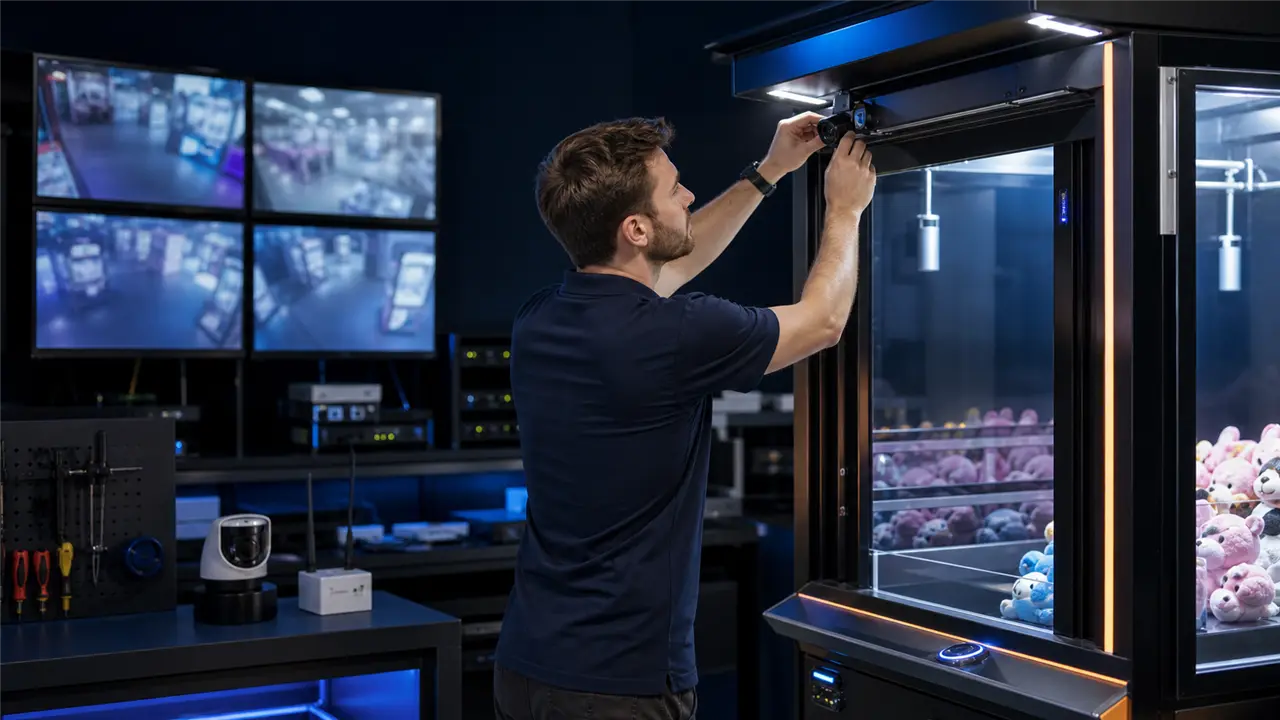
A professional remote live coin pusher turnkey operation relies on the seamless integration of physical electro-mechanical systems and low-latency cloud infrastructure. The core architecture comprises a continuous motorized spiral coin elevator for autonomous token recycling, high-speed optical drop counters for instantaneous player credit synchronization, and WebRTC streaming frameworks delivering under 80 milliseconds of latency. By implementing industrial wiper drop arm motion control and robust IoT trigger systems, operators can achieve massive scalability. When properly deployed in a sound-dampened warehouse farm layout, this turnkey ecosystem consistently yields a proven operator return on investment within a 35 to 50 day payback window.
A Direct Welcome from Engineer Wang
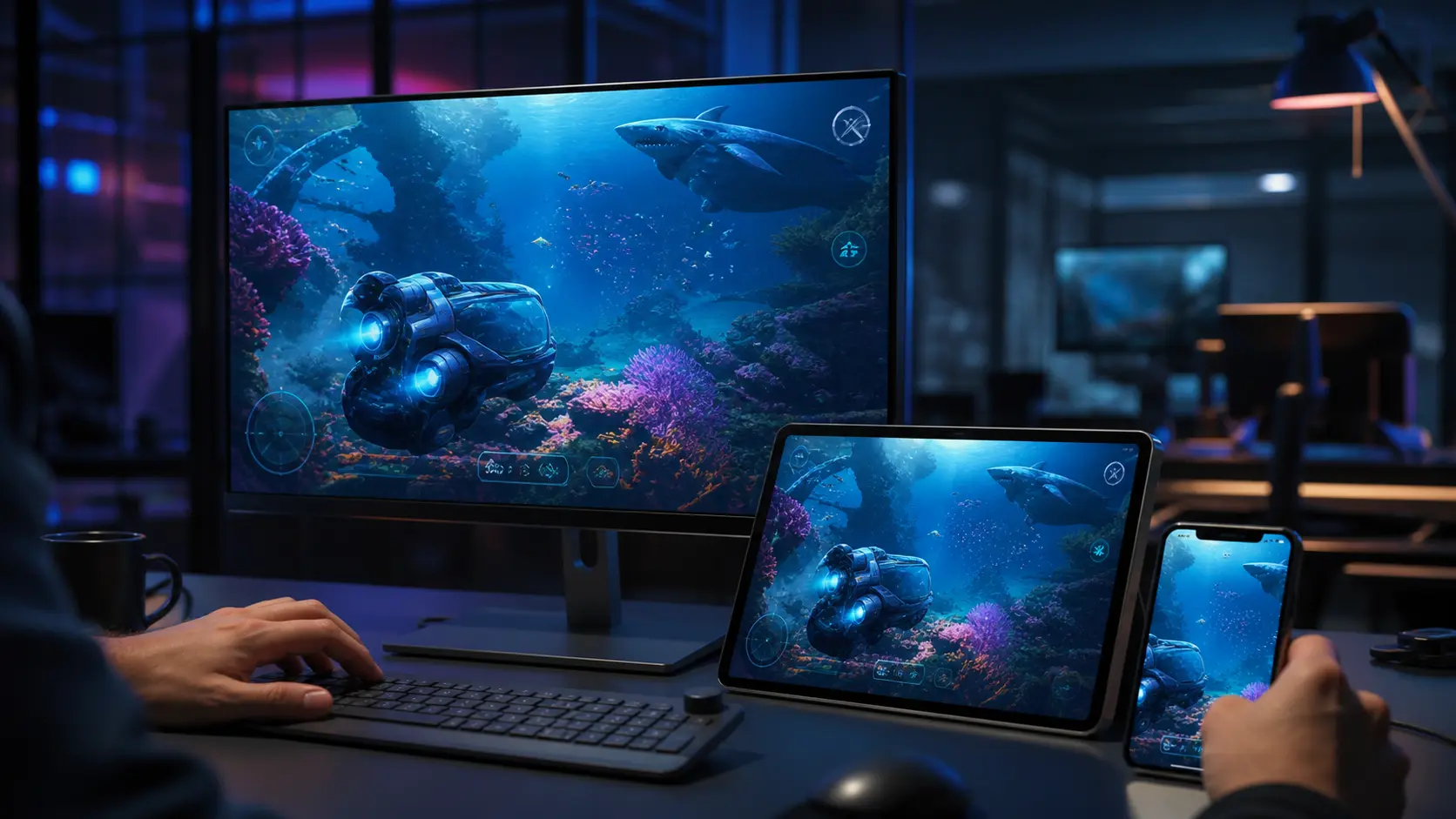
Hello and welcome to the manufacturing floor at Guangzhou Miba Animation Technology Co., Ltd. I am Engineer Wang, your lead hardware and game system architect. Over the past twelve years, I have engineered and deployed hundreds of commercial arcade systems for B2B operators worldwide. The shift from traditional street locations to cloud-based machine farms has fundamentally altered the technical landscape of our industry. Today, buyers are not just looking for an entertaining cabinet. You require a robust, self-sustaining financial engine capable of running non-stop without human intervention on the warehouse floor.
Our Panyu factory spanning 15,000 square meters is dedicated exclusively to delivering turn-key hardware and software solutions. We do not deal in piecemeal spare parts or consumer-grade hobby kits. We engineer heavy-duty source-code-backed systems designed for commercial longevity. I frequently speak with overseas investors who have suffered massive financial losses because they attempted to retrofit cheap amusement machines with generic internet cameras. They encounter jammed coin hoppers, desynced credit boards, and network lag that destroys player trust. Our mission is to eliminate those catastrophic failure points before the equipment ever leaves our facility. This guide serves as your blueprint for understanding exactly what goes into our premium remote live arcade turnkey system and how our engineering guarantees your profitability.
If you are ready to scale a professional operation and need direct technical consultation regarding layout planning or bespoke machine modifications, connect with me directly on WhatsApp at +86 17620842078. We provide comprehensive factory acceptance testing and video consultations directly from our assembly line.
Core Fundamentals of Automated Coin Elevator Engineering

The heart of any unattended physical coin pusher is its token management system. In a traditional arcade hall, attendants manually refill hoppers and clear token jams when players cash out. In a remote live environment, human intervention is mathematically impossible and economically disastrous. This brings us to the critical necessity of continuous token recycling loops.
Our industrial design integrates a motorized spiral coin elevator that actively scoops fallen tokens from the lower collection payout tray and lifts them vertically back into the primary top distribution hopper. This creates an infinite closed-loop system where tokens are never truly lost from the machine’s internal ecosystem. We utilize heavy-duty 40Cr steel gears rather than standard nylon components to drive the elevator auger. Nylon gears will inevitably warp and strip under the relentless weight of thousands of metal tokens running 24 hours a day. The steel gear mechanism ensures a continuous upward flow without stalling.
Furthermore, we engineer our elevator tracks with precision-milled tolerances that match the exact diameter and thickness of the tokens specified by the operator. If a token is 25mm in diameter, the track is milled to 25.4mm. This strict tolerance prevents two tokens from overlapping and wedging against the elevator wall, which is the primary cause of motor burnout in inferior designs. This meticulous approach to automated coin elevator engineering guarantees that players never experience a “hopper empty” error during peak remote gameplay sessions.
The electrical architecture supporting this continuous recycling loop utilizes high-torque brushless DC motors equipped with thermal overload protection. If debris somehow enters the collection tray and jams the auger, the system immediately detects the amperage spike and reverses the motor for three seconds to clear the obstruction before resuming normal upward rotation. This auto-clearing logic operates entirely at the firmware level, ensuring uptime without triggering a software alarm that requires operator intervention.
Advanced High Speed Optical Coin Drop Counting
Translating a physical token dropping off a playfield ledge into a digital credit synchronized on a player’s mobile phone requires extraordinary precision. Mechanical microswitches are entirely inadequate for this task. They bounce, they wear out, and they frequently double-count or miss fast-moving clusters of tokens cascading simultaneously. To resolve this, our factory implements a multi-array optical sensory barrier.
When tokens are pushed over the edge, they pass through a calibrated laser curtain. This high speed optical coin drop counting matrix utilizes infrared emitters and receivers polling at 10,000 hertz. As the metal token breaks the invisible light plane, the logic board calculates the size and velocity of the object. This algorithmic validation completely eliminates false positives caused by dust, shadows, or reflective glare from the cabinet lighting.
The moment the optical matrix registers a valid drop, the data is instantly processed by our proprietary edge-computing IoT board and pushed to the cloud sweepstakes credit sync server. This happens in under 15 milliseconds. For the remote player tapping a button on their smartphone in another country, the visual feedback of the coin falling and the corresponding credit increasing on their screen appears instantaneous and deeply satisfying. This airtight synchronization is paramount for maintaining regulatory compliance in sweepstakes jurisdictions, where accounting discrepancies between physical drops and digital ledgers can lead to severe legal complications.
We also integrate anti-cheat logic within the optical counting firmware. If a sudden catastrophic cascade occurs, or if the sensor array is blinded by a malicious external light source (a common vector for internal warehouse theft), the system immediately halts the wiper arm, flags the machine status as anomalous, and alerts the operator dashboard. Every single token is cryptographically logged from the physical drop to the cloud database.
Wiper Drop Arm Motion Control and Remote Trigger Precision
The physical interface between the remote player and the machine relies on the wiper drop arm. The player presses a button on their interface to release a token precisely when the sweeping arm is in the optimal position to push the existing token mountain forward. Any delay, stutter, or mechanical slop in this mechanism instantly ruins the player experience and destroys the illusion of control.
Our factory discards standard stepping motors in favor of closed-loop servo motors equipped with absolute encoders for the wiper arm assembly. Standard stepper motors lose their positioning reference over time due to skipped steps during rapid directional changes. Our closed-loop servos report their exact rotational angle back to the central controller 1,000 times per second. This means the wiper arm moves with surgical smoothness and absolute predictability.
When a player triggers a coin drop via the app, the cloud server routes the command down to the IoT relay board inside the cabinet. The relay engages the coin release solenoid. By utilizing solid-state relays with optical isolation instead of traditional mechanical relays, we eliminate contact bounce and electromagnetic interference. The response time from the player’s tap to the physical solenoid firing is optimized at the hardware level. This deep synergy between software commands and physical actuation is the defining hallmark of our remote coin pusher machine hardware modification expertise.
Furthermore, the sweep range, speed, and return delay of the wiper arm can be dynamically adjusted by the operator via our centralized management console. During promotional events or high-traffic weekends, operators can tweak these physical parameters globally across hundreds of machines simultaneously without ever stepping foot onto the warehouse floor.
Industrial WebRTC Streaming and Dual Angle Camera Framing
Video delivery is the lifeblood of remote live arcade operations. If the video stutters, buffers, or exhibits high latency, the core gameplay loop is broken. Players must see the token drop exactly when they press the button. To achieve this, we completely bypass traditional HLS or RTMP streaming protocols, which inherently introduce 3 to 10 seconds of delay.
Our systems are built entirely on WebRTC infrastructure, leveraging edge nodes deployed in premium data centers globally. WebRTC enables true peer-to-peer style UDP transmission, driving glass-to-glass latency down to under 80 milliseconds. This ultra-low latency requires dedicated hardware encoding on the machine side. Every cabinet is equipped with an industrial-grade compute module running an embedded Linux OS that captures the raw camera feed, encodes it using hardware-accelerated H.264/H.265 profiles, and pushes the stream directly to the nearest WebRTC gateway.
Equally important to the streaming protocol is the optical framing. A single camera cannot convey the necessary depth of field and action. Our standard configuration demands dual angle camera framing high refresh edge streaming. Camera A is a high-resolution, 60fps macro lens mounted closely above the playfield edge, providing an intimate, high-tension view of the tokens teetering on the precipice. Camera B is a wide-angle 1080p lens mounted higher up, offering a comprehensive overview of the pusher arm and the token mountain.
Both streams are encoded synchronously. The player’s web interface or mobile app dynamically composites these two feeds, allowing them to switch perspectives instantly without requesting a new stream from the server. To guarantee crisp image quality under the harsh LED lighting of the cabinet, we utilize industrial machine-vision camera sensors featuring high dynamic range (HDR) and global shutters. This prevents the “jello” motion blur effect common in cheap rolling-shutter webcams when the shiny metal tokens move rapidly across the frame.
Acoustic Damping Engineering and Warehouse Farm Deployment
Scaling from a dozen machines to a farm of five hundred requires rigorous environmental planning. Coin pusher machines are inherently loud. When hundreds of them operate simultaneously in a warehouse setting, the ambient noise level can exceed 100 decibels. This acoustic chaos bleeds into the sensitive microphones mounted inside each cabinet, resulting in a cacophonous and jarring audio experience for the remote player.
To mitigate this, our engineering team implements aggressive acoustic damping directly into the chassis design. The interior walls of the coin hoppers, the return chutes, and the cabinet side panels are lined with high-density polyurethane acoustic foam and heavy mass-loaded vinyl barriers. We isolate the vibrating components using silicone mounting gaskets. This localized soundproofing dramatically reduces the mechanical clatter, allowing the directional shotgun microphones mounted near the playfield to capture the satisfying “clinking” of falling coins cleanly, without picking up the roar of the surrounding warehouse.
Understanding cloud coin pusher farm deployment costs involves mapping out power distribution, network topology, and HVAC loads. Each machine draws a continuous 300 to 500 watts depending on the lighting and motor loads. A 200-machine farm requires heavy industrial electrical panels and robust cooling systems to dissipate the thermal output of the motors and encoding computers. We provide comprehensive CAD layout schematics for our B2B clients, detailing optimal row spacing for maintenance access, overhead cable tray routing for Cat6 Ethernet and power lines, and strategic placement of network switches to prevent bottlenecking the massive outbound video bandwidth.
A standard rack-mounted switch configuration utilizes 10 Gigabit fiber uplinks to edge routers, ensuring that the continuous video feeds from hundreds of cameras never saturate the local network. We mandate hardwired Ethernet connections for every single machine; Wi-Fi is strictly prohibited in our deployment standards due to packet loss and spectrum congestion in dense warehouse environments.
Operator Return on Investment Math Model and Economic Validation
Commercial operators and B2B investors require concrete financial modeling before committing to a massive hardware procurement cycle. The business model of remote live coin pushers is highly lucrative due to the elimination of premium retail real estate rent, the removal of on-site staff overhead, and the ability to operate 24/7 across global time zones.
Let us examine the economic math model. A single industrial-grade remote coin pusher machine from our Panyu factory represents a fixed capital expenditure (CapEx). When deployed in an optimized warehouse location, the monthly operational expenditure (OpEx) per machine—including electricity, bandwidth, server hosting, and warehouse rent—is remarkably low.
Assuming a conservative utilization rate of just 30% (approximately 7.2 hours of active play per day) and a calibrated payout mathematically controlled by our backend sweepstakes engine, a single machine consistently generates substantial daily gross revenue. Because our hardware is engineered for zero downtime and features automated token recycling, the machine never stops earning due to a hopper jam or a crashed software state.
When factoring in the initial hardware cost, shipping, and installation against the daily net profit, our comprehensive commercial coin pusher machine wholesale manufacturing solutions yield a mathematically proven payback period of 35 to 50 days. After this rapid ROI window, the machine transitions into pure profit generation, operating reliably for years thanks to the 40Cr steel gears, brushless motors, and industrial IoT components. This rapid capital recovery allows operators to aggressively compound their revenue by continuously expanding their farm size.
Factory Acceptance Testing and Strict Quality Assurance
Before any container leaves our loading docks in Guangzhou, every single machine undergoes a brutal Factory Acceptance Testing (FAT) protocol. We do not believe in beta testing our hardware on the client’s dime. Our quality assurance lab simulates the harshest possible operating conditions.
Each machine is powered on and subjected to a 168-hour continuous burn-in test. During this week-long phase, the coin elevators run non-stop, recycling thousands of tokens. We monitor the thermal output of the servo motors using infrared thermography to ensure no component exceeds safe operating parameters. The IoT boards are bombarded with simulated network packet loss to verify that the credit synchronization logic fails safely and recovers automatically without manual resets.
We rigorously test the optical sensor arrays by dropping tokens at maximum velocity under varying lighting conditions, ensuring the 10,000 hertz polling rate maintains 100% accuracy. Our network engineers verify the WebRTC video encoding pipeline, confirming that the sub-80ms latency holds stable even when the local switch is under heavy synthetic load.
This unwavering commitment to commercial arcade game machines manufacturing standards separates us from temporary assembly workshops. When you partner with us, you are buying peace of mind. We invite all prospective B2B buyers to schedule a live video walk-through of our assembly line and QA testing facility. Contact me, Engineer Wang, directly on WhatsApp at +86 17620842078 to discuss your specific voltage requirements, token dimensions, and API integration needs. We provide full English technical documentation, API endpoints for your frontend developers, and 12-hour video debugging support directly from the factory floor.
Comprehensive Frequently Asked Questions on Remote Live Operations
Understanding the intricate technical details of scaling a remote live arcade requires clarity on several engineering fronts. Below are the most pressing questions B2B investors and operators ask our engineering team.
How does the automated token recycling system prevent physical jams in the hopper
Our automated token recycling systems utilize a precision-milled motorized spiral elevator driven by heavy-duty 40Cr steel gears. The track tolerances are customized to the exact millimeter of your specific token diameter. This prevents overlapping coins from wedging against the elevator walls. Additionally, the brushless DC motor features intelligent firmware that detects amperage spikes caused by debris; it instantly reverses rotation for three seconds to autonomously clear any blockage before resuming upward motion.
What is the actual latency of the live video stream and how is it achieved
Our hardware achieves a glass-to-glass latency of under 80 milliseconds. We completely discard high-latency protocols like RTMP or HLS. Instead, every machine is equipped with an edge-computing module that captures the raw camera sensor data and performs hardware-accelerated H.264/H.265 encoding. This compressed feed is then transmitted via true WebRTC peer-to-peer UDP protocols to global edge nodes, ensuring real-time responsiveness when the remote player triggers the drop arm.
How do you ensure player credits are synchronized perfectly with physical coin drops
We abandon mechanical microswitches entirely in favor of a multi-array optical sensory barrier. This infrared laser curtain polls at 10,000 hertz, instantly calculating the size and velocity of any object breaking the plane to eliminate false positives from dust or light reflections. Upon a validated token drop, our proprietary IoT relay board pushes the encrypted data to the cloud sweepstakes ledger in under 15 milliseconds, guaranteeing absolute synchronization and regulatory compliance.
What are the power and network requirements for a 100 machine warehouse farm deployment
A 100-machine deployment requires industrial three-phase power, as each cabinet draws a continuous 300 to 500 watts. You will need dedicated electrical panels capable of handling a sustained 50kW load, plus overhead for HVAC cooling. For networking, we mandate hardwired Cat6 Ethernet cabling directly to rack-mounted Gigabit switches with 10Gbps fiber uplinks to your edge router. Wi-Fi is strictly prohibited to prevent packet loss and ensure the massive outbound WebRTC video bandwidth remains unthrottled.
Can the hardware integrate with our existing sweepstakes software and mobile app frontend
Absolutely. We are a source-code-backed manufacturer providing turn-key hardware. Our IoT control boards expose a comprehensive, well-documented RESTful API and WebSocket endpoints. Your frontend development team can easily send trigger commands for the wiper arm and receive encrypted, real-time credit sync data. We offer 100% source code buyout options and direct engineering support to ensure seamless integration with your existing mobile app and sweepstakes management backend.
Schema Structured Data Integration
html
“`