- Securing Your Demo and Early Access Material
- Structural Engineering for Commercial Arcade Environments
- Defeating the Modern Arcade Hacker
- Request Our Technical Architecture Whitepaper
- Core Mathematical Stability and Programmable RTP
- Capital Recovery and Machine Investment Economics
- Factory Acceptance Test and Quality Assurance Protocols
- Technical Support and Mainboard Troubleshooting Framework
- Connect With Engineer Wang for Direct Factory Procurement
- Frequently Asked Questions
I have spent the last 12 years walking arcade floors and designing circuit boards in our Panyu manufacturing base, and I know exactly what keeps a venue owner awake at night. When you operate a high-traffic gaming venue, a multiplayer electronic roulette cabinet is not just a piece of entertainment equipment; it is a critical revenue generation engine. If a machine crashes during a Friday night peak hour, or worse, if a player uses an EMP jammer to manipulate the payout hopper, you are not just losing potential earnings. You are bleeding direct cash and severely damaging the trust of your legitimate VIP players.
Venue operators do not care about meaningless specification sheets or hollow marketing terms. You care about stability, continuous uptime, mathematically reliable Return to Player percentages, and absolute protection against theft. In our 15,000-square-meter facility at Guangzhou Miba Animation Technology Co., Ltd., my team of 50 engineers and I have built our entire manufacturing philosophy around these operator realities. We engineer every chassis, solder every logic board, and compile every line of mathematical code to ensure your investment pays for itself within the first few months and then runs flawlessly for years. For factory-direct procurement and comprehensive engineering specs, consult our master guide on arcade game machine manufacturing and custom cabinet sourcing.
If you are planning a new venue layout or need to upgrade your existing floor with secure hardware, you can reach out directly. I am Engineer Wang, Lead Hardware and Game System Architect. Let us dive into the engineering truth behind commercial roulette and Forest Dance equipment.
Securing Your Demo and Early Access Material
Before we explore the deep technical architecture of these machines, you might want to see the physical units in action. Our engineering team maintains a comprehensive video gallery and technical catalog demonstrating our cabinets operating under maximum load conditions.
You can request our updated 2024 cabinet catalog and high-resolution demonstration videos to review the exact dimensions, aesthetic finishes, and interface options available for your venue. We provide transparent specifications so you can accurately measure floor space and power distribution requirements before making any financial commitments.
Structural Engineering for Commercial Arcade Environments
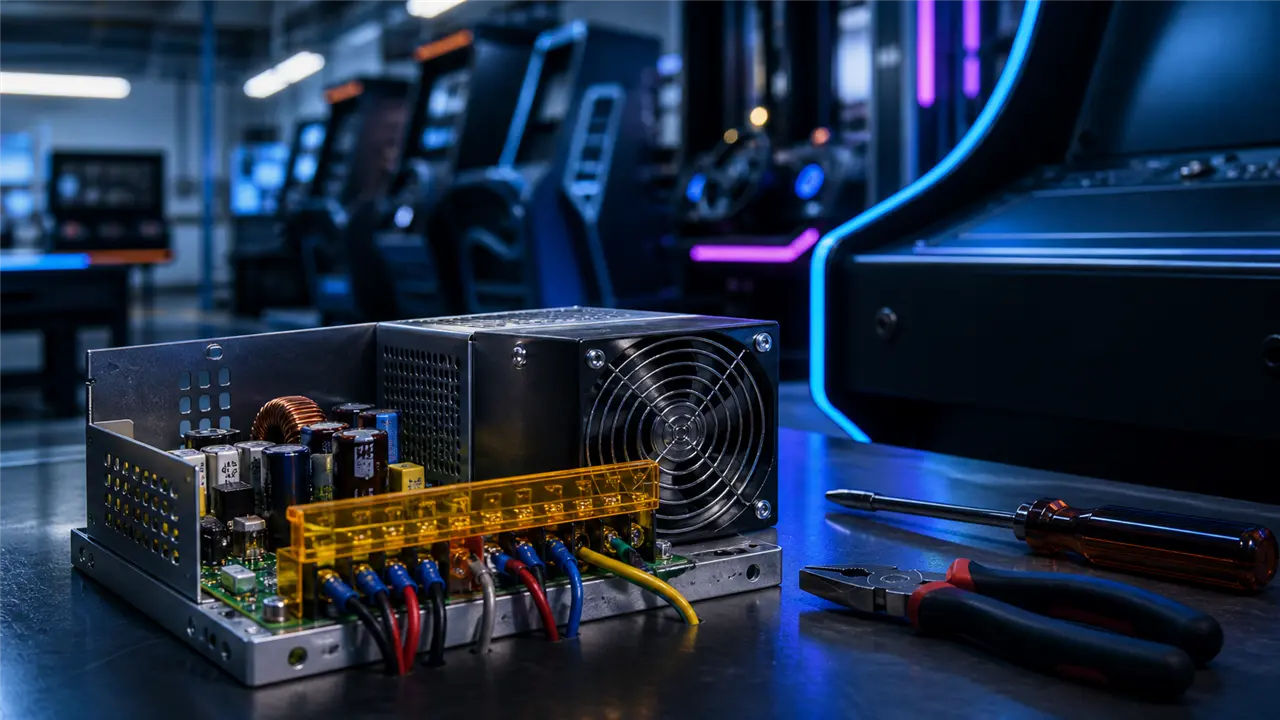
The physical foundation of a multiplayer electronic roulette cabinet determines its lifespan in a hostile commercial environment. Players leaning on the console, spilled drinks, and continuous button smashing are everyday realities. We do not build consumer-grade toys; we manufacture industrial steel fortresses.
Heavy Duty Sheet Metal Chassis Construction
We fabricate our cabinets using 1.5mm to 2.0mm cold-rolled steel. This heavy-gauge material prevents the chassis from warping over time, even when supporting the weight of an 8-player or 12-player configuration. The surface undergoes a high-temperature powder coating process to resist scratches, chemical cleaners, and general wear. When your floor staff wipes down the machine multiple times a day, the finish will remain pristine for years.
Thermal Management and Power Distribution
A multiplayer setup running continuous graphic rendering and mechanical payouts generates significant heat. If the internal temperature exceeds safe thresholds, the logic board will throttle performance, causing the game screen to stutter or freeze.
We address this by integrating industrial-grade Meanwell power supplies known for their exceptional voltage stability and low ripple noise. Our thermal architecture features dual intake fans at the base and exhaust fans near the upper monitor housing, creating a continuous upward draft. We route all high-voltage AC lines completely separate from the 5V and 12V DC logic lines to eliminate electromagnetic interference within the cabinet wiring harness.
Defeating the Modern Arcade Hacker
As long as I have been designing gaming hardware, players have tried to find ways to cheat the system. Today, operators face sophisticated threats from handheld EMP generators, Bluetooth sniffers, and mechanical manipulation tools. Our security infrastructure is designed to make your multiplayer electronic roulette cabinet an impenetrable vault.
Transient Voltage Suppression and EMP Shielding
The most common attack vector is an Electromagnetic Pulse device held against the coin acceptor or payout hopper. The pulse induces a massive voltage spike in the unshielded wires, tricking the mainboard into registering false credits or triggering an unauthorized coin release.
Our engineering team counters this with a multi-layered defense. First, we install Transient Voltage Suppressor diodes across every sensitive input line. These diodes clamp transient surges in less than five picoseconds, absorbing the energy before it reaches the microprocessor. Second, we utilize optocoupler isolation circuits for all peripheral communications. The signal from the bill acceptor or hopper is converted to light and back to an electrical signal, creating a physical gap that high-voltage spikes cannot cross.
Dynamic Key Encryption and Anti-Skimming
To prevent organized syndicates from intercepting communication between the mainboard and the server, we implement dynamic encryption keys. The AI intelligent Trojan terminator chip continuously scrambles the data stream. Even if a bad actor manages to physically tap into the serial lines using a V5 or K8 multi-band sniffer, the captured data is entirely useless. The machine will instantly detect the voltage drop from the wiretap, trigger a security lockdown, and send an alert to your operator dashboard.
Request Our Technical Architecture Whitepaper
Understanding the depth of our hardware security and software encryption is crucial for large-scale operations. If you are a distributor or a venue chain manager looking for deep-level integration, our technical documentation provides the exact schematics and protocol details you need.
Reach out to request our complete Technical Architecture Whitepaper. This document covers our proprietary communication protocols, integration APIs for custom management systems, and detailed schematic breakdowns of our anti-cheat logic boards.
Core Mathematical Stability and Programmable RTP
Hardware keeps the machine running, but mathematics makes you money. Games like Forest Dance and Animal Roulette rely on complex probability models to ensure long-term profitability while keeping players engaged through localized volatility.
True Random Number Generation
Our software utilizes hardware-seeded True Random Number Generators. Unlike standard pseudo-random algorithms that can become predictable, our TRNG samples physical entropy from thermal noise on the motherboard. This ensures every spin of the electronic roulette wheel is completely independent, mathematically fair, and impossible to predict.
Adjustable Return to Player Calibration
Different markets require different operational strategies. We give venue owners complete control over the Return to Player settings through a secure operator menu. You can calibrate the machine to hold anywhere from 4% to 15% depending on your local regulations and competitive landscape.
More importantly, our mathematical models guarantee stability. If you set the machine to a 94% RTP, the math will hold true over the statistical cycle. You will not experience sudden, unexplainable revenue drains. Our game logic also includes automatic risk management; if a single player places disproportionately high bets on a single outcome, the system dynamically balances the exposure to protect the venue from catastrophic short-term losses.
Capital Recovery and Machine Investment Economics
When you purchase a multiplayer electronic roulette cabinet from Arcade Manufacturer, you are making a capital investment. My job is to ensure that investment yields a rapid and predictable return. Let us examine a realistic ROI projection based on data from our venue operator partners.
Projected Revenue and Payback Timeline
Below is a conservative performance matrix for a standard 8-player electronic roulette configuration operating in a medium-traffic venue.
| Operational Metric | Projected Data Value |
|---|---|
| Average Operating Hours per Day | 12 Hours |
| Average Occupancy Rate | 60% (approx. 5 active players) |
| Average Bets per Hour per Player | $25.00 |
| Venue RTP Setting | 92% (8% House Edge) |
| Projected Daily Gross Profit | $120.00 |
| Projected Monthly Gross Profit | $3,600.00 |
| Estimated Machine Cost | $4,500.00 – $6,000.00 |
| Estimated ROI Recovery Period | 1.5 to 2 Months |
These figures demonstrate why industrial-grade stability is paramount. If a cheaper, poorly manufactured machine goes down for just three days a month, you lose nearly $400 in direct profit, not including the cost of emergency repairs and spare parts. Investing in our robust Panyu manufacturing quality guarantees those revenue streams remain uninterrupted.
Factory Acceptance Test and Quality Assurance Protocols
We refuse to let our venue partners act as beta testers. Before any multiplayer cabinet leaves our Guangzhou facility, it must pass our rigorous Factory Acceptance Test. This protocol ensures that when you uncrate the machine, plug it in, and turn the key, it works perfectly.
Mandatory Inspection Checklist
Every unit undergoes the following validation steps in our QA laboratory: 1. Continuous 72-hour burn-in test at maximum processing load to verify thermal stability and power supply integrity. 2. EMP resistance testing using military-grade pulse generators applied directly to the coin slot, bill acceptor, and control deck. 3. Mechanical stress testing of all player buttons, joysticks, and payout hoppers (minimum 50,000 actuation cycles). 4. Network latency and synchronization testing to ensure zero delay across all 8 or 12 player stations. 5. Verification of optical isolation circuits and ground fault protection systems. 6. Complete audit of the mathematical cycle to confirm the empirical RTP matches the programmed setting.
Technical Support and Mainboard Troubleshooting Framework
Even the best hardware requires occasional maintenance. We design our cabinets for modular rapid repair. If a component fails, your floor staff can swap it out in minutes without needing an electrical engineering degree.
Common Operator Error Codes and Resolutions
We have standardized our diagnostic reporting. When a fault occurs, the main display will show a specific code. Here is a quick reference guide for your technicians.
| Diagnostic Code | Fault Description | Immediate Operator Action |
|---|---|---|
| ERR-01 | Hopper Optical Sensor Blocked | Clear dust or jammed coin from hopper laser sensor. |
| ERR-04 | Bill Acceptor Communication Timeout | Check the serial cable connection; verify optocoupler isolation board is seated. |
| ERR-07 | Voltage Drop on 5V Logic Line | Inspect Meanwell power supply; check for unauthorized wire taps on harness. |
| ERR-09 | EMP Anomaly Detected | Machine is in security lockdown. Reset via operator key switch and review security footage. |
| ERR-12 | Memory Checksum Failure | Replace CMOS battery on mainboard; reload factory defaults from secure USB. |
Our JAMMA interface harnesses use standardized pinouts, and all proprietary connections are clearly labeled. This modular approach minimizes downtime and keeps your revenue flowing.
Connect With Engineer Wang for Direct Factory Procurement
You have seen the engineering depth and operator-focused design that goes into every cabinet we build. Do not risk your venue profitability on unverified trading companies or consumer-grade hardware.
If you are ready to secure a highly profitable, mathematically stable, and EMP-proof multiplayer electronic roulette cabinet, contact me directly. We can discuss your floor plan, customize the software to your specific market needs, and schedule a live virtual tour of our Panyu factory floor.
Connect with Engineer Wang (Lead Hardware and Game System Architect):
- WhatsApp and WeChat: +86 17620842078
- Telegram direct message: https://t.me/JLwyc
- Direct Email: miba515527@gmail.com
- Facility: Panyu Manufacturing Base, Guangzhou, China
Related Engineering References and Floor Operational Guides
- For multiplier calibration, see our Forest Dance and animal roulette setup guide.
- Compare terminal configurations in our 8-player electronic roulette machine specifications.
- Inspect anti-cheating laser circuits in our electronic roulette motherboard sensor calibration guide.
- Calculate coin-in margins using our casino-grade roulette machine ROI model.
Frequently Asked Questions
How does the machine handle a sudden power failure during a bet?
Our architecture includes an automated watchdog circuit and a persistent NVRAM (Non-Volatile Random Access Memory) module. If the main power is cut instantly, the system saves the exact state of the game, including all player credits and active bets, within milliseconds. When power is restored, the machine reboots precisely to the moment before the outage, ensuring zero financial disputes with your players.
Can we customize the mathematics and graphics for our local market?
Absolutely. We operate a full in-house game development studio utilizing Unity and Unreal Engine. We can modify the 3D graphics, change the animal symbols in Forest Dance, adjust the audio localization, and completely recalibrate the RTP math model to align with your specific regional demographics and regulatory requirements.
What is the maximum number of player stations we can connect?
Our standard chassis configurations support 4, 6, 8, or 12 players around a central display. However, our modular network architecture allows you to link satellite terminals. Through our low-latency local server setup, you can theoretically connect up to 50 individual player terminals to a single centralized roulette or Forest Dance host screen without any lag.
Do you provide spare parts with the initial container shipment?
Yes. We understand that waiting for international shipping for a $10 component is unacceptable for a venue operator. Every wholesale container order includes a comprehensive “Operator Survival Kit.” This includes spare Meanwell power supplies, replacement hoppers, extra button harnesses, and backup logic boards based on the volume of your order.
How do you prevent venue staff from manipulating the accounting data?
We implement a strict dual-layer authorization system. Routine maintenance requires a standard operator key, but accessing the financial ledgers, clearing the lifetime credit history, or adjusting the RTP requires the master administrative key and a secure digital passcode. Furthermore, the mainboard features an unalterable hardware audit chip that records every coin in and out over the entire lifespan of the machine.