- Bypassing App Store Monopolies and Expanding Distribution
- Core Graphics Rendering Pipeline and Canvas Performance
- WebAssembly Mathematical Core and Zero Latency Execution
- Dynamic Asset Streaming and Initial Load Optimization
- Responsive Viewport Scaling and Mobile Orientation
- Multi Tenant Operator Backoffice and Real Time Sync
- Commercial Source Code Buyout Terms and Total Ownership
- Frequently Asked Questions Technical Q and A
- Schedule a Live Technical Demo Today
Cross platform HTML5 casino engine architecture utilizes WebGL and WebAssembly to deliver instant-play 60FPS gaming across browsers without native app store restrictions. At our Panyu manufacturing base, we engineer turnkey mobile web platforms with dynamic asset streaming and provide 100% commercial source code buyout for complete operator ownership.
The commercial gaming industry has fundamentally shifted away from closed native application ecosystems toward instant-play web experiences. As an operator scaling a new digital sweepstakes or real-money gaming brand, relying on centralized app stores introduces existential risks—arbitrary unpublishings, mandatory 30% revenue sharing, and significant user acquisition friction. I am Engineer Wang, lead software architect and hardware integrator at Guangzhou Miba Animation Technology Co., Ltd. (Arcade Manufacturer). Over the past twelve years, my team of 50 developers and I have designed, compiled, and deployed high-performance digital gaming architectures for top-tier operators globally. Operating out of our 15,000m² manufacturing base in Panyu, we do not just build custom casino and arcade game software engineering solutions; we deliver the entire technology stack, from bare-metal server infrastructure to commercial source code handovers.
In this document, I will dismantle the technical architecture of a modern HTML5 casino game engine. I will detail how we achieve native-like performance on sub-$100 Android devices using WebGL pipelines, how we secure mathematical models using WebAssembly, and why our 100% uncompiled source code buyout model is the only mathematically sound investment for serious enterprise operators. For operators deploying virtual table gaming and multi-station terminals, review our mathematical odds calibration on electronic table game baccarat and dragon tiger software engine. When scaling multiplier mini-games with dynamic cashouts, explore our engineering teardown on mines instant win game source code and provably fair math models. For estimates on frontend asset pipelines and regulatory compliance logic, read our comprehensive building a turnkey sweepstakes platform tech stack. For global operators integrating non-custodial crypto payments and automated cold wallet sweeping, inspect our crypto casino platform architecture and multichain payment gateway.
Bypassing App Store Monopolies and Expanding Distribution
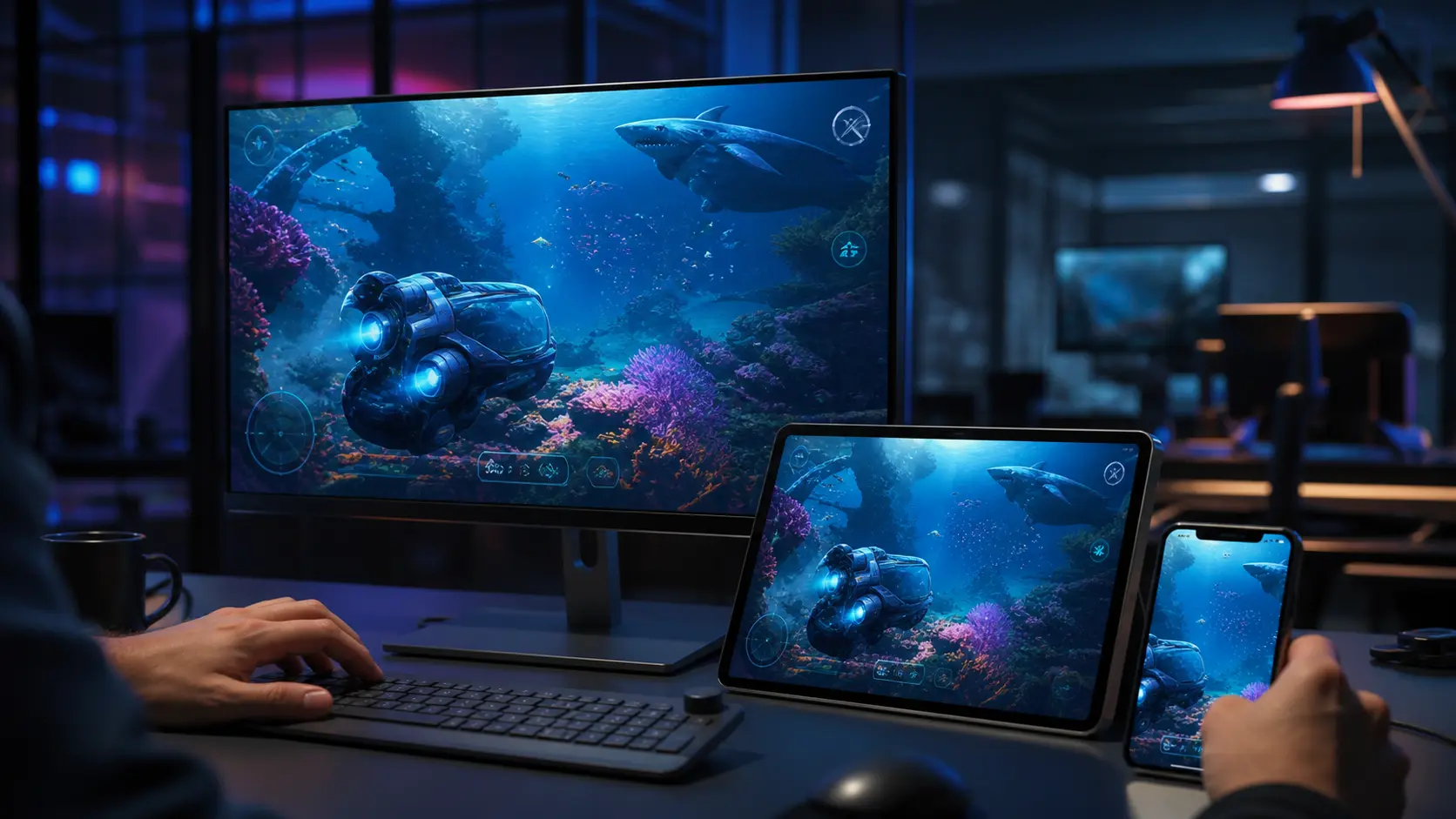
The traditional mobile application deployment model is fundamentally broken for the gaming industry. Apple and Google mandate strict compliance with fluid gambling policies, often resulting in overnight suspensions of legitimate sweepstakes or social casino applications. Furthermore, the mandatory 30% tax on in-app purchases destroys the profit margins of high-RTP (Return to Player) math models.
By migrating to a robust HTML5 architecture, operators instantly reclaim sovereignty over their distribution networks and financial pipelines. Our web engines bypass app store monopolies entirely. Players do not need to download a 300MB application or navigate store approvals. Instead, operators can utilize WhatsApp, SMS marketing, or Telegram to distribute direct links to the gaming lobby.
When a player clicks a promotional link, the HTML5 engine boots within the mobile browser (Safari, Chrome, or embedded webviews) in under three seconds. This frictionless onboarding process drastically reduces user acquisition costs. When combined with our telegram mini app casino bot architecture ton wallet integration, operators can leverage the instant-messaging ecosystem to push updates, handle crypto deposits, and retain players without ever interacting with a centralized app store reviewer. We design these architectures to grant you absolute control over your audience and your revenue.
Core Graphics Rendering Pipeline and Canvas Performance

Rendering high-fidelity slot machine reels, particle effects, and dynamic fish game environments inside a mobile browser requires precise memory management and low-level graphics API utilization. We do not rely on bloated DOM manipulation. Instead, our custom engines heavily leverage WebGL and WebGPU to talk directly to the device GPU.
While we maintain expertise in unity webgl casino game optimization memory leaks ios safari, our native HTML5 framework stack relies heavily on optimized Pixi.js and Phaser rendering pipelines customized by our Panyu engineering team. We rewrite the core rendering loops to ensure absolute 60FPS lock on low-end mobile devices.
Our graphics pipeline implements aggressive batch rendering. Instead of issuing thousands of individual draw calls to the GPU for each coin, spark, and reel symbol, our engine groups identical textures into a single geometry batch. This reduces CPU overhead drastically. Furthermore, we implement rigorous object pooling. In a high-intensity fish shooting game, creating and destroying bullet objects continuously triggers the browser garbage collector, resulting in severe frame drops and stuttering. Our memory architecture pre-allocates bullet and fish sprites into an active memory pool, recycling them transparently to maintain a smooth, jitter-free visual experience across all supported devices.
WebAssembly Mathematical Core and Zero Latency Execution

Traditional HTML5 games often execute sensitive game logic—such as RNG (Random Number Generation) evaluations and collision physics—either purely on the server (causing high latency) or in plain JavaScript (exposing intellectual property and risking client-side manipulation). We deploy a hybrid architecture utilizing WebAssembly (Wasm) to solve both problems simultaneously.
Our core mathematical models, cryptographic RNG seed evaluations, and complex physics algorithms are written in C++ and Rust, then compiled into binary WebAssembly modules. Wasm executes at near-native speeds directly within the browser V8 engine. By processing slot reel mathematics and fish collision detection via Wasm on the client side, we achieve zero-latency feedback for the player. The reels stop exactly when intended, and the hit registration in fish games feels instantaneous.
Most importantly, WebAssembly acts as a robust obfuscation layer. The compiled binary format ensures that your proprietary RTP algorithms and hit frequency models are deeply protected from reverse engineering or client-side tampering. Competitors or malicious players attempting to inspect the browser memory will only find compiled bytecode, ensuring that your proprietary game mechanics remain strictly confidential.
Dynamic Asset Streaming and Initial Load Optimization
One of the largest hurdles in web gaming is the initial payload size. Players will abandon a game if they are forced to stare at a loading bar on a weak 3G or 4G network. To combat this, our engineering team has developed a highly optimized asset streaming architecture that guarantees an initial time-to-interactive of under 2.8 seconds.
We discard standard unoptimized PNG and JPEG files. Our pipeline utilizes advanced texture compression formats natively supported by the GPU. We deploy ASTC (Adaptive Scalable Texture Compression) and ETC2 (Ericsson Texture Compression) for mobile targets, falling back to highly optimized WebP atlases for legacy browser support. This means textures are decompressed directly on the GPU rather than the CPU, saving massive amounts of RAM and battery life.
Furthermore, we utilize Brotli compression for all binary deltas and JavaScript payloads. The game engine does not load the entire asset library upfront. Instead, it downloads a minimalist core bundle containing only the UI shell, the loading screen, and the primary lobby assets. As the player navigates, our intelligent prefetcher dynamically streams subsequent game modules, audio files, and high-resolution symbol atlases in the background. This granular chunking strategy ensures that players are spinning reels or shooting fish while the remainder of the assets silently populate the browser cache.
Responsive Viewport Scaling and Mobile Orientation
A commercial HTML5 game must look immaculate regardless of the hardware it is running on. Operators cannot afford interface clipping on edge-to-edge displays or distorted reels on square aspect ratios. Our UI/UX architecture employs dynamic responsive viewport scaling that guarantees mathematical precision across every conceivable screen dimension.
We implement custom safe area insets to detect iPhone notches, punch-hole cameras, and rounded screen corners. The engine dynamically calculates the optimal layout bounds, ensuring that essential UI elements like the spin button, bet configuration, and credit balance never overlap with hardware obstructions. For deeper technical insights into this layout strategy, operators can review our cross platform html5 sweepstakes games mobile optimization documentation.
Our system supports dynamic orientation switching on the fly. Whether a player holds their device in a 16:9 desktop landscape, a 9:16 vertical portrait, or an ultra-wide 18:9 configuration, the canvas intelligently recalculates scale factors using letterboxing or pan-and-scan techniques depending on the operator preference. For portrait-mode slot games, we implement virtual on-screen touch controls that mimic the physical button decks we manufacture in our Panyu facility, delivering a tactile, highly responsive ergonomic experience.
Multi Tenant Operator Backoffice and Real Time Sync
A powerful client-side engine is useless without an industrial-grade backend to manage it. The HTML5 client communicates securely with our robust multi-tenant operator backoffice via encrypted WebSockets and REST APIs. This architecture is built to support massive concurrency, handling tens of thousands of simultaneous spins and transactions with sub-millisecond database commit times.
From the operator control panel, you maintain absolute authority over the entire gaming ecosystem. The backoffice allows for real-time RTP adjustments across individual games or entire player cohorts. You can dynamically modify volatility metrics, trigger network-wide progressive jackpots, and push live configurations to the HTML5 client without requiring the player to refresh their browser.
The system features multi-currency credit synchronization, natively supporting fiat payment gateways and cryptocurrency ledgers. For operators deploying scalable enterprise solutions, this backend integrates seamlessly with our white label slot game software platform, providing a unified dashboard for agent management, player KYC, revenue analytics, and live risk management.
Commercial Source Code Buyout Terms and Total Ownership
The standard practice in the iGaming software industry is to lease games on a revenue-share model (often taking 8% to 15% of Gross Gaming Revenue) or to provide encrypted, black-box software that the operator can never truly audit or modify. At Arcade Manufacturer, we completely reject this exploitative model. We operate as your dedicated engineering and manufacturing partner.
We offer a 100% commercial source code buyout agreement for all custom HTML5 game development. Upon project completion and final payment, our Panyu software team transfers the complete, uncompiled source code repository directly to your technical team. This includes all raw Unity/Phaser project files, original uncompressed art assets, server-side Node.js/Go backend code, and the proprietary math model configuration files.
When you purchase a system from us, you own the intellectual property outright. You are not bound by ongoing royalty fees, hidden licensing traps, or mandatory maintenance contracts. You have the absolute freedom to audit the RNG logic, modify the UI to suit regional markets, and deploy the engine onto your own isolated infrastructure. For a comprehensive overview of how we handle source control and handovers, consult our game source code buyout agreement bare metal docker deployment protocol. We engineer these systems so that you hold all the leverage, maximizing your long-term valuation and operational independence.
Frequently Asked Questions Technical Q and A
Does the HTML5 engine support offline play or intermittent network drops? Yes. Our engine implements robust state-machine serialization. If a player experiences a network drop while a slot reel is spinning or a fish is targeted, the client instantly pauses and buffers the input. Once the WebRTC or WebSocket connection is re-established, the client resyncs with the server state database, ensuring zero loss of credits and a seamless continuation of the gameplay loop.
How do you handle audio latency on iOS Safari browsers? iOS Safari imposes strict rules requiring user interaction before the Web Audio API can initialize, which often causes sound delays. Our engine utilizes a hidden, silent audio buffer that unlocks the audio context upon the very first touch event (such as tapping the screen to enter the lobby). We then rely on heavily optimized audio sprite sheets rather than loading individual MP3 files, ensuring frame-perfect sound effect synchronization during high-speed reel stops.
Can the WebAssembly math core be updated without a hard cache reset? Absolutely. Our asset delivery network utilizes cache-busting hashing in the file names (e.g., `math_core_v1.0.4.wasm`). When you adjust the RTP or volatility models via the backoffice, the server flags the new Wasm binary payload. On the next lobby load, the client dynamically fetches only the updated delta file, ensuring the new mathematical models are instantly active across your entire player base.
What is the minimum device specification required for 60FPS performance? Our custom WebGL pipeline is aggressively optimized for legacy hardware. We guarantee a solid 60FPS on devices equivalent to the iPhone 7 or a mid-range Android device from 2017 (such as devices utilizing the Snapdragon 625). We achieve this through dynamic resolution scaling—the engine detects hardware GPU frame drops and imperceptibly lowers the internal render resolution while keeping the UI text crisp and native.
Do you provide API documentation for third party wallet integration? Yes. With our source code buyout package, we provide extensive, localized technical documentation and Postman collections. Our backoffice architecture features a modular Wallet API (Seamless Wallet and Transfer Wallet protocols). Your internal engineering team can easily hook into our exposed webhooks to integrate proprietary crypto payment gateways or legacy fiat processors within hours.
Schedule a Live Technical Demo Today
Do not rely on opaque software providers who hold your business hostage with monthly royalties and hidden source code. Partner with a true source manufacturer and engineering studio that guarantees your operational independence.
At our Panyu facility, we are ready to walk you through our HTML5 rendering architecture, demonstrate our WebAssembly math models, and outline our 100% source code buyout terms. Let us architect the engine that will power your next multi-million dollar casino brand.
Contact Engineer Wang directly to schedule a live technical architecture review and backend demonstration:
- WhatsApp/WeChat: +86 17620842078
- Telegram: https://t.me/JLwyc
- Email: miba515527@gmail.com