- Overcoming Legacy System Limitations Through Complete Source Code Ownership
- Unity Server Authoritative Architecture for High Volume Multiplayer Fish Hunting
- High Precision Collision Detection and Bullet Hit Registration Algorithms
- Constructing Configurable Math Payout Algorithms and Retention Mechanics
- Hardware Integration Flow from Software to the Physical Arcade Cabinet
- Our Turnkey Custom Development Workflow at the Panyu Factory
- Partner with Arcade Manufacturer for Your Source Code Buyout
- Frequently Asked Questions About Fish Game Software Buyouts
Many arcade operators, sweepstakes parlor owners, and commercial game distributors eventually hit a hard ceiling when leasing closed-loop game boards or licensing white-label software platforms. You are forced to pay perpetual revenue shares, you struggle with hidden backdoor algorithms that unpredictable siphon profits, and you lack the fundamental freedom to tweak the RTP (Return to Player) mechanics or reskin graphical assets for your specific local market demographics. The real money and sustainable growth in commercial gaming come from absolute control over your technology stack. At Arcade Manufacturer, operating out of our extensive 15,000m² manufacturing facility in Panyu, Guangzhou, we provide complete, unencrypted source code buyout solutions for high-performance multiplayer fish hunting games. I am Engineer Wang, lead hardware and system architect here, and my dedicated 50-person development studio engineers custom Unity-based arcade suites entirely from the ground up. This comprehensive technical breakdown explores exactly how we structure our server-authoritative netcode, engineer precision collision detection, and construct configurable math engines to give you an unshakeable, highly profitable foundation for your arcade or sweepstakes business empire.
Overcoming Legacy System Limitations Through Complete Source Code Ownership
When you run a large-scale operating route, a distributed sweepstakes network, or a dedicated premium game room, your core asset is not merely the physical machine cabinet or the monitors. The true asset is the mathematical engine driving player retention, psychological engagement, and steady revenue yield. Most off-the-shelf commercial game boards restrict operators to rudimentary dip-switch settings or superficial frontend dashboard sliders. If you want to radically modify the volatility of a specific boss fish, integrate a proprietary local progressive jackpot system tied to a physical overhead display, or overhaul the entire visual theme to comply with local regulatory compliance, you are entirely locked out of the system.
Our complete source code buyout model changes this entire operational dynamic. When you commission a custom fish hunting game from our Panyu studio, we deliver the entire Unity project repository, the complete backend server source code, the relational database schemas, and the extensive mathematical spreadsheets that govern the economy. You own the intellectual property outright. This allows your internal technical team to expand the game infinitely, or you can retain our specialized engineers on a long-term retainer basis for ongoing feature additions and seasonal content updates. The upfront strategic investment in custom casino and arcade game software engineering guarantees that no third-party developer will ever siphon off a percentage of your daily coin-in, nor will they suddenly shut down your operational servers due to licensing disputes or shifting company policies. You dictate the roadmap, the profitability margins, and the ultimate destiny of your gaming enterprise.
Unity Server Authoritative Architecture for High Volume Multiplayer Fish Hunting
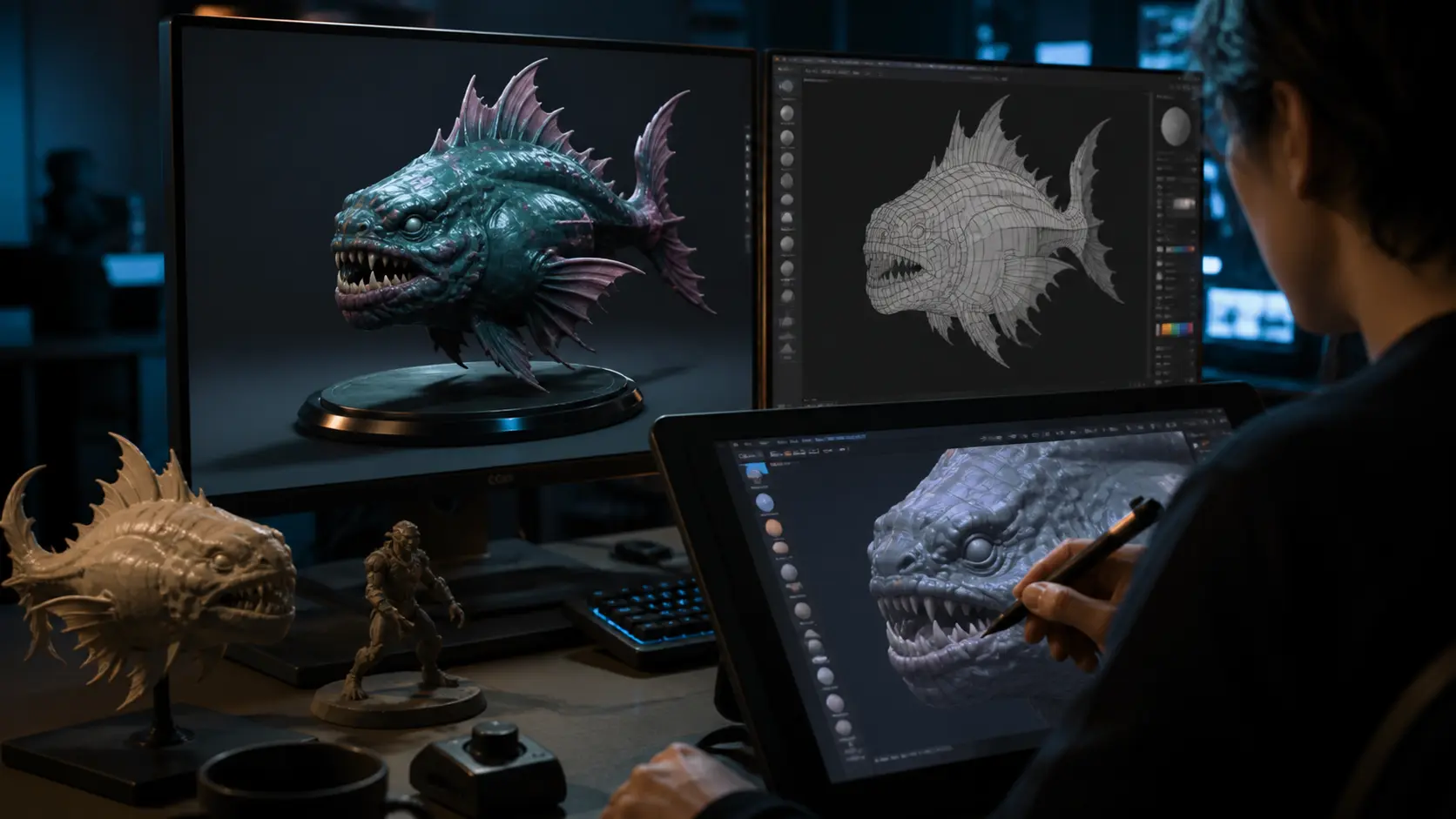
The single biggest vulnerability in legacy fish arcade games and low-tier sweepstakes platforms is client-side trust. Early generation titles calculated hit registration and payout distributions on the local physical terminal or the player’s mobile device. This made them highly susceptible to memory injection hacks, network packet manipulation, and memory scanning tools that could artificially inflate a player’s credit balance. We build all our modern games strictly on a server-authoritative network architecture.
Centralized Game State Synchronization and Execution
In our robust architecture, the Unity client application running on the physical cabinet—or a player’s mobile device for sweepstakes apps—acts solely as a dumb rendering terminal and a relayer of user inputs. When a player presses the physical shoot button or taps the screen, the client merely sends an input command payload. This payload contains the precise timestamp, the joystick aim angle vector, and the currently selected bullet power tier.
The central game server, which our team typically writes in high-performance C# utilizing reliable UDP protocols or highly concurrent TCP sockets, receives these inputs and simulates the entire game world internally. The server independently determines whether the bullet was legally fired based on the player’s current verified credit balance in the database. It calculates the exact trajectory, runs the collision detection against the mathematically defined fish hitboxes, and executes the RNG (Random Number Generator) payout logic. The server then broadcasts the final outcome back to all connected clients in the room. If a malicious player attempts to hack their local client to instantly kill a high-value Dragon boss without spending credits, the server simply rejects the invalid state because the calculation never successfully executed on the authoritative backend.
Network Latency Mitigation and Advanced Client Side Prediction
Multiplayer fish hunting games require instantaneous, visceral feedback. A player rapidly firing ten bullets per second needs to see those bullets leave the cannon immediately upon pressing the button; any perceived delay breaks the immersion and causes frustration. To mask the inherent network latency of cloud-hosted servers, we implement advanced client-side prediction algorithms exclusively for visual particle effects and projectile rendering.
When the button is pressed, the local Unity client immediately instantiates the visual bullet prefab and renders its pathing across the screen. However, the actual mathematical hit registration, probability calculation, and credit deduction remain strictly locked on the server. If the server disagrees with the client’s visual representation due to a sudden packet drop, a network jitter spike, or a timing discrepancy, the server aggressively reconciles the state. The client is forced to correct itself invisibly to the user, perhaps by rendering a miss animation or quietly deleting the stray visual bullet. This dual-layer approach ensures a highly competitive, fast-paced graphical gameplay experience without ever compromising the ironclad security of the financial ledger.
Optimizing Network Payload with Protocol Buffers
To support thousands of concurrent players across massive server instances, we discard bloated JSON or XML data serialization. Our engineers utilize Google Protocol Buffers (Protobuf) or FlatBuffers for all network communication between the Unity client and the C# server. This binary serialization format drastically compresses the packet size of fish trajectory updates, bullet coordinates, and score synchronizations. By minimizing the bandwidth overhead, operators save significantly on AWS or Azure cloud hosting costs, while players enjoy a seamless, lag-free hunting experience even on suboptimal 4G mobile connections.
High Precision Collision Detection and Bullet Hit Registration Algorithms

In a bustling multiplayer fish game supporting up to ten players simultaneously on a massive flat-panel display, the screen is flooded with hundreds of individual fish swimming along complex bezier curves, accompanied by thousands of active player bullets. Calculating collisions for every single bullet against every single fish during every single rendering frame is computationally explosive. If handled poorly, this results in severe server degradation, dropped ticks, and delayed payouts.
Spatial Partitioning and Quadtree Optimization Implementations
To overcome these severe performance bottlenecks, our development studio implements aggressive spatial partitioning, specifically utilizing Quadtree data structures directly on the server side. The virtual game screen area is mathematically divided into a grid of quadrants. Instead of iterating a naive O(n^2) check where every bullet is tested against every fish on the screen, the server query is heavily localized. It only checks for collisions against fish currently residing in the exact same Quadtree quadrant as the traveling bullet.
As the aquatic creatures move along their designated spline trajectory vectors, they dynamically update their position and re-register within the Quadtree hierarchy. This elegant mathematical optimization reduces the collision checking overhead from O(n^2) down to O(n log n), empowering a single server instance core to process thousands of concurrent physics interactions without dropping below the critical 60Hz tick rate. Precision is maintained down to the pixel level, ensuring that the explosive visual hits accurately reflect the backend matrix calculations.
Validating Fish Trajectories and Polygon Bounding Boxes
Every fish species within our engine is assigned a distinct geometric bounding box or a complex composite of circular hitboxes. The massive boss monsters, such as the Golden Toad, the Deep Sea Leviathan, or the Fire Dragon, utilize highly intricate polygonal hitboxes designed to perfectly match their 3D skeletal animations and twisting movements. Our Unity engine developers rigorously sync the server’s invisible physics colliders with the client’s visual rendering mesh.
We also heavily employ predictive raycast hit registration. Since a bullet takes a measurable fraction of a second to cross the digital screen, the server actively calculates the future intersection point of the bullet’s velocity vector against the fish’s moving spline trajectory. This forward-looking mathematical projection ensures that even on mobile connections with higher ping times, the hit registration feels flawlessly fair and immediately responsive to the player, eliminating the frustration of bullets visually passing right through a target.
Constructing Configurable Math Payout Algorithms and Retention Mechanics
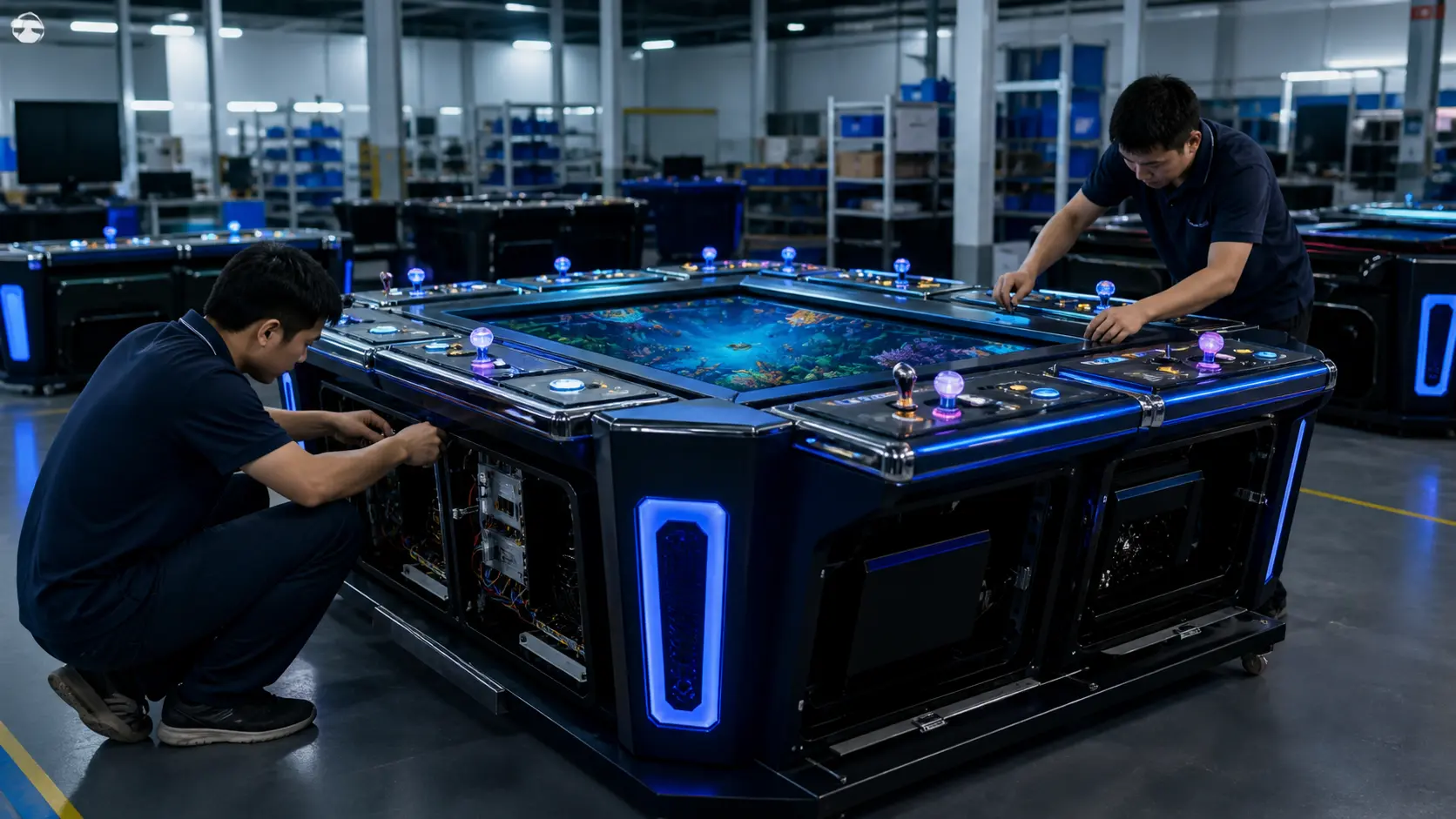
The dazzling visual flash, the booming sound effects, and the 3D animations of a fish game are merely the initial hook to draw players to the cabinet. The mathematical engine is the true heartbeat of the system. It is what keeps players locked in their seats for hours on end and ensures the operator generates a highly predictable, mathematically guaranteed financial yield. Building a perfectly balanced math model requires deep, specialized expertise in statistical probability, risk management, and human behavioral psychology.
Defining Base Return to Player Control Matrix
Our proprietary backend math engines provide operators the granular power to define the target RTP (Return to Player) via a highly secure, encrypted web dashboard. Typical commercial operational settings range comfortably between 92 percent and 96 percent. In practical terms, this means that over an infinite statistical timeline, for every $100 wagered by the player base, the machine’s algorithm will return $92 to $96 in winnings, yielding a stable, guaranteed house edge of 4 percent to 8 percent.
However, commercial fish games absolutely do not operate on a simple, flat RNG (Random Number Generator) probability per shot like a basic roulette wheel. We utilize a highly sophisticated, multi-layered variance and pool accumulation system. The server constantly tracks the current financial “pool” of available credits. When a player fires a bullet, the specific credit cost is instantly added to the pool. When a fish is successfully killed, the multiplier payout is deducted from the pool. The core algorithm constantly evaluates the pool’s health against the strict target RTP setting. If the pool is rich and overflowing, the engine dynamically increases the kill probability for upcoming shots across the board, triggering an exciting “payout phase.” If the pool is severely depleted, the engine tightens the underlying probabilities, seamlessly entering a strict “collection phase.”
Bullet Power Tiers and Dynamic Volatility Swings
Players have the agency to toggle their weapon power on the fly, risking vastly more credits per single shot in exchange for a higher potential payout bracket. The math engine scales the underlying kill probability inverse to the selected bullet power, strictly maintaining the expected mathematical value while drastically increasing the variance and volatility of the session.
For instance, firing a Level 1 bullet at a 10x multiplier fish might have a fixed 10 percent base kill chance during a neutral phase. Firing a Level 10 bullet at that exact same fish costs ten times as much currency. The engine intelligently adjusts the probability downward to ensure the long-term RTP remains stable, but it introduces massive short-term volatility. This carefully orchestrated mathematical dance creates the exhilarating, adrenaline-pumping highs and the agonizing near-misses that drive the arcade gaming experience. We custom-program localized progressive multipliers, sudden death laser cannons, and screen-clearing chain-reaction explosions to brilliantly mask the underlying math and create a strong perception of player skill.
Algorithmic Evasion and Fish Trajectory Manipulation
To further obfuscate the rigid math engine from perceptive veteran players, our developers directly link the AI fish behavior to the current algorithmic pool phase. During a harsh collection phase, high-value target fish might subtly accelerate their swimming speed as they approach the edge of the screen, or intelligently swim behind dense blocking schools of low-value minnows to absorb player fire.
Conversely, during a generous payout phase, boss characters might purposefully slow down their animation cycles, slightly expand their hitboxes, or spawn in highly clustered, vulnerable formations. These micro-adjustments in the trajectory vectors and AI behaviors are completely controlled by the authoritative server, ensuring that the gameplay feels incredibly organic, dynamic, and responsive rather than rigidly predetermined by a visible spreadsheet.
Hardware Integration Flow from Software to the Physical Arcade Cabinet
Absolute software ownership is only half the equation for a successful venue operation. To deploy a massively profitable game, the custom code must interface flawlessly with robust, industrial-grade hardware. This exact intersection is where our physical manufacturing capabilities at the Panyu base perfectly converge with our software engineering prowess.
Interfacing with the Industrial IO Controller Board
Our custom Unity software builds include deeply integrated proprietary DLLs that communicate directly with industrial IO control boards via high-speed USB or legacy RS232 serial protocols. This low-level integration ensures sub-millisecond response times for aggressive joystick movements and rapid-fire button presses. We map the digital input arrays directly into the customized Unity input manager, entirely bypassing the standard Windows OS input lag that plagues cheaper amateur setups.
Furthermore, this direct hardware integration heavily extends to the financial peripherals: the high-capacity bill acceptors (validators), the anti-stringing coin mechs, and the high-speed ticket dispensers. The server software validates every single electrical pulse from the bill acceptor, utilizing heavily encrypted handshakes to prevent pulse-injection fraud or relay attacks. For ambitious operators deploying entire fleets of physical hardware, mastering the commercial fish table game machine cabinet engineering is absolutely critical to maximizing the operational lifespan and the financial security of the software deployed on the floor.
Establishing Ironclad Security Protocols and Hardware Handshakes
When you finally own the source code, you simultaneously inherit the massive responsibility of protecting it from unauthorized cloning, illegal distribution, or theft by rogue employees and rival operators. We implement aggressive, hardware-locked encryption schemas directly into the compiler. The compiled game software generates a unique, unforgeable cryptographic hash based precisely on the specific motherboard serial number, the network MAC address, and a proprietary USB security dongle programmed in our factory. The Unity software will instantly refuse to boot, locking the screen, if the hardware signature does not perfectly match the authorized operator ledger.
Additionally, physical machines on a bustling casino or arcade floor are highly vulnerable to aggressive external electrical attacks. We deeply integrate our software stack with our high-end fish table anti jammer device, which is purposefully designed to detect and immediately neutralize EMP (Electromagnetic Pulse) attacks. If the hardware sensor detects a dangerous transient voltage spike characteristic of a handheld jammer, it instantly sends an urgent hardware interrupt signal straight to the Unity software. This triggers an immediate freeze of the game state, physically locks the bill acceptor gears, and triggers a loud audible alarm alongside a silent notification on the operator’s backend mobile dashboard.
Our Turnkey Custom Development Workflow at the Panyu Factory
Creating a highly profitable, bespoke fish game from scratch is a rigorous, multi-disciplinary engineering process. We do not just hand you a hard drive filled with messy code and wish you luck; we actively partner with you through every single phase of technical development.
First, we begin the engagement with the Game Design Document (GDD) and extensive math model prototyping. We run literally millions of simulated automated shots through our C# math engine to accurately graph the volatility curves and ensure the RTP holds perfectly true under extreme stress testing conditions. Once the core math is scientifically validated, our massive 2D and 3D art teams begin production asset creation, designing entirely unique aquatic monsters, dazzling particle effects, and intricate weapon models specifically tailored to your brand identity and target demographic.
Simultaneously, our senior network engineers construct the robust server backend, deploying it on AWS, Google Cloud, or local dedicated bare-metal servers depending strictly on your latency requirements and regional laws. We conduct extensive load testing, simulating thousands of concurrent bot players firing randomly across the network to identify and ruthlessly eliminate any memory leaks, garbage collection stutters, or CPU bottlenecks within the Quadtree collision logic.
Finally, we physically integrate the finished software onto our custom-built sheet metal cabinets right on our factory floor. Our dedicated QA lab subjects the entire integrated system to a continuous 72-hour burn-in testing protocol, meticulously evaluating thermal performance, IO responsiveness, power supply stability, and overall software crash resilience.
Partner with Arcade Manufacturer for Your Source Code Buyout
Relying on leased game boards severely limits your overall profitability and exposes you to unacceptable third-party risks. By investing strategically in a complete source code buyout, you secure your absolute operational independence, maximize your long-term revenue retention, and gain the ultimate engineering flexibility to rapidly adapt to changing local market demands and player preferences.
Our massive team at Guangzhou Miba Animation Technology Co., Ltd. possesses the highly specialized technical expertise required to architect lightning-fast Unity math engines, secure server-authoritative netcode, and bulletproof industrial hardware. We invite serious arcade operators, software distributors, and sweepstakes investors to experience our manufacturing and coding capabilities firsthand.
For a comprehensive technical consultation, a live demonstration of our backend management dashboards, or to schedule an interactive video tour of our Panyu manufacturing base and QA testing labs, reach out to me directly. Let us build the unbreakable technological foundation of your next arcade empire together.
Contact Engineer Wang today: WhatsApp/WeChat: +86 17620842078 Telegram: https://t.me/JLwyc Email: miba515527@gmail.com
Frequently Asked Questions About Fish Game Software Buyouts
What exactly is included in a complete source code buyout package? A comprehensive source code buyout strictly includes the complete Unity project files (including all uncompiled 3D assets, C# scripts, and scene files), the entire backend server application source code, the relational database structure schemas, and the proprietary mathematical calculation engine spreadsheets. You receive total intellectual property ownership and the unrestricted rights to modify, deploy, re-skin, and monetize the software without ever paying any ongoing royalty fees or revenue shares to a third party.
How does the algorithmic math engine maintain operator profitability? The math engine utilizes a sophisticated, dynamic pool accumulation system. It precisely tracks the total incoming credits wagered versus the outgoing credits paid out to players. By continuously and dynamically adjusting the underlying kill probabilities of the individual fish based on your predefined target RTP (Return to Player) threshold, the system ensures the operator maintains a highly predictable profit margin over long-term operations while simultaneously providing a highly volatile, adrenaline-pumping experience for the player during short-term sessions.
Can the central game server handle sweepstakes mobile players and physical arcade cabinets simultaneously? Yes, absolutely. Our highly optimized server-authoritative architecture is inherently designed to be cross-platform and agnostic to the client device. A single game room hosted on the central C# server can seamlessly accept concurrent connections from a physical multi-player cabinet running a Windows Unity client and a remote mobile user playing on a customized Android or iOS application. This ensures a unified, massive player base and a strictly centralized accounting ledger for the operator.
How do you technically protect the custom software from being hacked, reverse-engineered, or cloned? We employ a rigorous multi-layered hardware and software security approach. Core gameplay mechanics are strictly server-authoritative, rendering all client-side memory injection tools and cheat engines entirely useless. To prevent unauthorized distribution and piracy, the compiled executable software is cryptographically bound to the physical hardware using advanced hashing algorithms tied directly to motherboard serial numbers and proprietary USB security dongles. We also implement TLS encrypted data packets for all network communication to prevent packet sniffing and man-in-the-middle attacks.
How long does it realistically take to develop a custom fish game from scratch at your facility? The engineering development timeline varies significantly based on the sheer complexity of the art assets and specific proprietary feature requirements requested by the operator. A complete, high-quality custom build—including entirely unique 3D models, bespoke math engine tuning, extensive QA testing, and seamless hardware integration—typically requires 3 to 5 months from the initial Game Design Document approval phase to the final Factory Acceptance Testing (FAT) on our Panyu assembly line.