Hi, I am Engineer Wang, lead hardware and game systems architect at Guangzhou Miba Animation Technology (known globally as Arcade Manufacturer). Over the last 12 years walking our CNC metal fabrication lines and electronics cleanrooms in Panyu, Guangzhou, the casino gaming and commercial amusement landscape has undergone a radical aesthetic transformation. The era of boxy, flat-screen square cabinets has ended. Today’s commercial players—whether in high-limit sweepstakes parlors, route gaming lounges, or casino resort gaming floors—demand the visceral, immersive engagement of 43-inch 4K J-curved displays, edge-lit Halo LED lighting, and responsive projected capacitive (PCAP) multi-touch interfaces.
However, for gaming operators and hardware manufacturers, engineering curved-screen slot cabinets presents severe thermal and electrical challenges. Enclosing high-wattage industrial curved displays (drawing 95W to 140W), high-performance PC logic mainboards, and thousands of addressable RGB LEDs inside a compact steel enclosure creates an intense thermal pocket. *Without precision thermodynamic engineering, heat builds up rapidly behind the curved glass. Touch controllers drift or lock up, bill validators overheat and reject genuine notes, and power supply voltage drops cause addressable LED halos to glitch and strobe erratically.* For factory-direct procurement and comprehensive engineering specs, consult our master guide on turnkey arcade cabinet manufacturing and B2B procurement.
In this technical engineering guide, I explain how our Panyu factory designs, fabricates, and stress-tests custom curved-screen slot cabinets. I detail our CNC sheet metal tolerances, convective wind-tunnel thermal modeling, differential signal Halo LED controllers, and industrial optical bonding standards that ensure reliable 24/7 gaming operations. To configure tamper-resistant bill validator vaults and dual-screen metal enclosures, inspect our compliant sweepstakes and skill game cabinet fabrication.
Looking to manufacture bespoke curved-screen slot cabinets or need custom sheet metal CAD designs for your gaming brand? Connect with our engineering department or reach me (Engineer Wang) directly on WhatsApp at `+86 17620842078` or Telegram at `https://t.me/JLwyc` for factory bench test videos and CAD chassis specifications.
| Engineering Parameter | Our Panyu Factory Custom Curved Build | Low-Tier Generic Aftermarket Shell |
|---|---|---|
| **Curved Display Panel** | Grade-A Industrial LG / BOE 43″ 4K 1500R curved panel (500 nits) | B-grade refurbished consumer TV panel with uneven backlighting |
| **Touchscreen Technology** | Optical clear bonded 10-point PCAP with anti-glare 4mm tempered glass | Air-gap bonded resistive or low-grade touch foil prone to ghost touches |
| **Thermal Airflow Design** | Bottom-to-top positive pressure convective channel with dual ball-bearing fans | Inadequate passive cooling slots causing internal temps to exceed 65°C |
| **Halo LED Architecture** | Addressable WS2812B LEDs with isolated differential driver ICs | Unbuffered direct-wired LED strips vulnerable to power surges |
| **Chassis Sheet Metal** | 1.5mm – 2.0mm SPCC cold-rolled steel with CNC laser-cut seam tolerances (<0.2mm) | 1.0mm hand-bent sheet tin with visible light bleed and sharp edges |
| **Power Distribution** | Taiwan Mean Well LRS-350 dual-rail power supplies with < 50mV ripple | Generic open-frame power supply prone to thermal voltage droop |
The Engineering Realities of Curved-Screen Gaming Enclosures
> Industrial curved screen slot cabinets utilize 43-inch 1500R ultra-wide J-curved displays with edge-lit Halo LED arrays, housed within 1.5mm CNC cold-rolled steel chassis designed with dual-blower cross-flow thermal ventilation. This architecture maintains internal temperatures below 42°C under continuous 24/7 casino floor operation, preventing display delamination, LED discoloration, and GPU thermal throttling.
Curved touchscreen gaming represents the highest tier of our sheet metal precision; inspect our foundational standards in arcade machine manufacturing and turnkey cabinet sourcing.
When transitioning from traditional dual-screen flat cabinets to a continuous 43-inch J-curve or C-curve architecture, hardware engineers face three interrelated physical phenomena:
┌─────────────────────────────────────────────────────────────────────────────┐ │ CURVED CABINET ENGINEERING VECTORS │ ├───────────────────────────────────┬─────────────────────────────────────────┤ │ 1. THERMAL CONVECTION POCKETS │ The concave cavity behind a 1500R curve │ │ │ traps rising heat from the edge-lit LED │ │ │ backlight, baking the touch controller. │ ├───────────────────────────────────┼─────────────────────────────────────────┤ │ 2. TOUCH CONTROLLER THERMAL DRIFT │ Temperature differentials between glass │ │ │ center and edges cause capacitance drift│ │ │ resulting in erratic ghost touches. │ ├───────────────────────────────────┼─────────────────────────────────────────┤ │ 3. HALO LED VOLTAGE DROOP & NOISE │ Driving 800+ RGB LEDs draws over 20A; │ │ │ bill acceptor pulses cause voltage dips │ │ │ that corrupt serial lighting data. │ └───────────────────────────────────┴─────────────────────────────────────────┘
1. Thermal Stagnation in Concave Display Cavities
In a standard flat cabinet, rising warm air flows naturally along a vertical planar surface toward the exhaust vents. However, an industrial 43-inch 1500R J-curved display curves outward toward the player at the bottom (creating the button deck console) and inward at the top. This concave physical profile forms an aerodynamic stagnation zone. Heat radiating from the high-output LED edge-lit backlights (generating up to 130 watts of continuous thermal energy) collects directly in the upper curve pocket. If cabinet exhaust fans are improperly positioned, internal temperatures within this cavity easily exceed 62°C, causing LCD driver ICs (*COF / Chip-on-Film*) to unbond and resulting in permanent vertical line defects across the display.
2. Projected Capacitive (PCAP) Thermal Drift and Ghost Touches
Commercial players interact aggressively with touchscreen slot machines, tapping, sliding, and hammering the spin button on the glass surface. Our cabinets feature optical full-surface bonded 10-point PCAP touch panels. However, projected capacitance relies on measuring micro-picofarad electrical charges between sensor grid lines. When ambient temperatures vary significantly across the curved glass panel, the dielectric constant of the glass changes. On cheaply engineered cabinets without thermal compensation, this temperature differential manifests as “ghost touches”—spontaneous, phantom screen presses that interrupt play, cancel player bets, or lock up the game software during peak operating hours.
3. High-Current Voltage Droop and Serial Data Corruption in Halo LEDs
High-impact visual presence is the hallmark of modern curved slot cabinets. Our designs feature continuous perimeter edge-lighting around the outer cabinet profile, speaker bezels, and button deck edge. A continuous dual-edge Halo LED strip contains over 600 individually addressable RGB LEDs (such as WS2812B or SK6812). At peak white output, this array draws up to 18 to 22 Amperes of 5V DC current.
When sub-tier builders wire these LED strips across long single-ended cables without voltage compensation, severe voltage droop occurs: the supply voltage drops from 5.0V at the start of the strip to 3.6V at the far end, causing noticeable color shift from crisp white to dull orange. Worse, when high-power inductive peripherals (such as bill validator drive motors or coin hopper solenoids) fire, inductive voltage spikes backfeed into the LED power bus, corrupting the high-speed 800kHz serial data stream. The result is erratic strobe flashing, frozen color patterns, or permanent driver chip damage.
Positive-Pressure Convective Wind-Tunnel Architecture
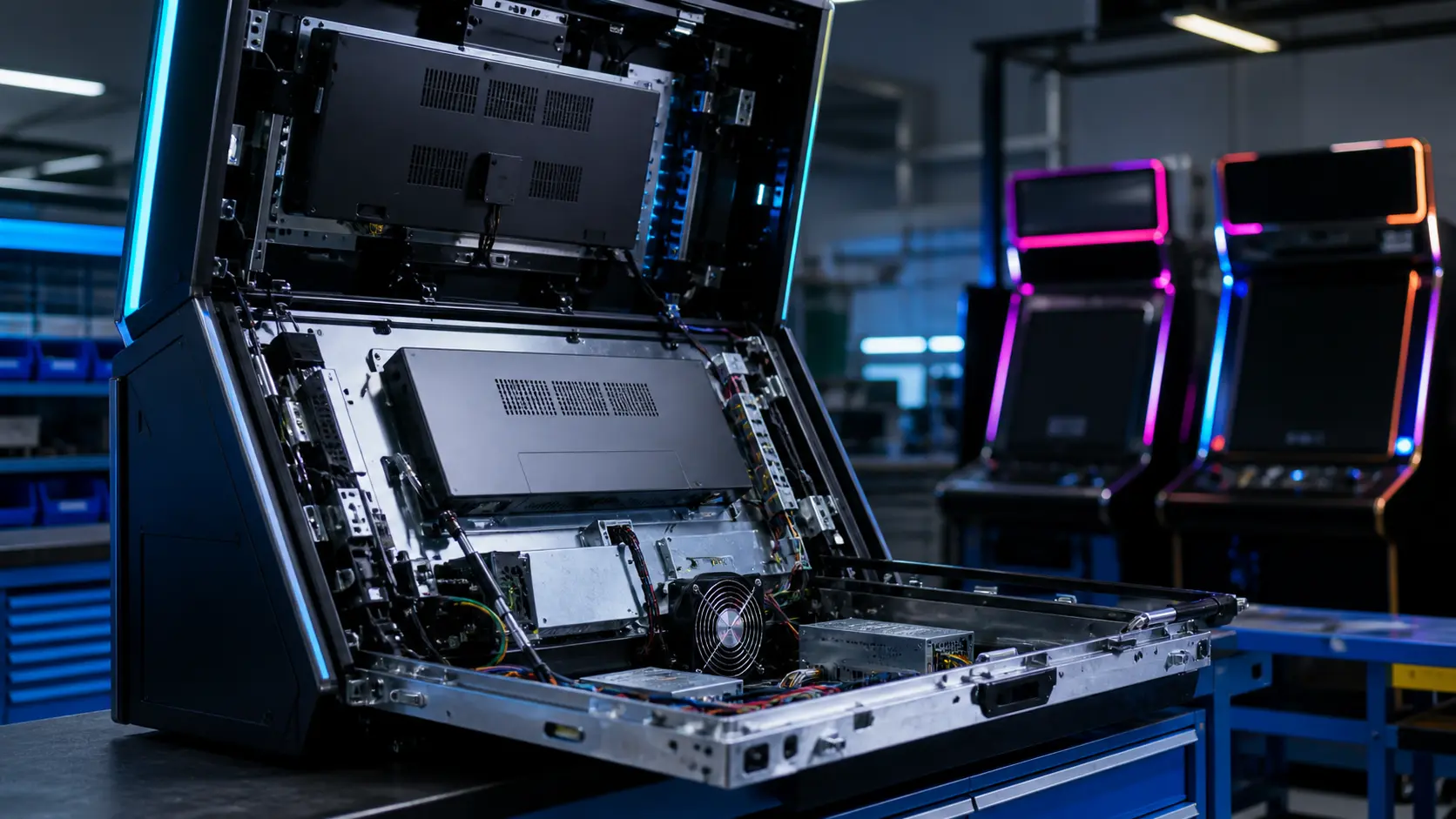
To permanently conquer thermal buildup within our curved-screen cabinets, our Panyu engineering team developed a bottom-to-top forced positive-pressure ventilation system:
┌─────────────────────────────────────────────────────────────────────────────┐ │ FORCED CONVECTIVE THERMAL AIRFLOW SCHEMATIC │ ├─────────────────────────────────────────────────────────────────────────────┤ │ [TOP EXHAUST VENT / 120mm HOOD] │ │ ▲ │ │ │ (42°C Warm Air Exhaust) │ │ [UPPER CONCAVE POCKET DIVERTER SHROUD] │ │ ▲ │ │ │ │ │ ┌─────────────────────────────────────┴───────────────────────────────────┐ │ │ │ 43-INCH 4K 1500R J-CURVED INDUSTRIAL DISPLAY │ │ │ └─────────────────────────────────────┬───────────────────────────────────┘ │ │ │ │ │ [DUAL 120mm BALL-BEARING FORCED INDUCTION FANS] │ │ ▲ │ │ │ (Airflow Velocity: 2.8 m/s) │ │ [LOWER CHASSIS FILTERED AIR INTAKE GRILLE] │ │ ▲ │ │ (25°C Ambient Floor Air Intake) │ └─────────────────────────────────────────────────────────────────────────────┘
1. Thermodynamic Convective Path Modeling
Rather than cutting random ventilation slots that disrupt airflow laminar velocity, we treat the cabinet interior as a controlled aerodynamic duct: 1. Lower Intake Plenum: Ambient room air (typically 22°C to 26°C at floor level) enters through a heavy-duty, stamped steel intake grille in the lower front sub-base, protected by a washable multi-layer aluminum mesh filter that blocks dust and carpet lint. 2. Forced Positive-Pressure Impellers: Two 120mm industrial dual-ball-bearing brushless DC fans (rated at 110 CFM each) pressurize the lower chassis. This positive internal pressure prevents ambient dust from being sucked into the cabinet through coin door seams or keyholes. 3. Curved Rear Deflector Shroud: A CNC-formed aluminum air deflector plate runs parallel to the concave rear surface of the 43-inch curved monitor. This constricts the airflow channel to a 35mm gap, forcing the cool intake air to accelerate across the aluminum monitor heatsink fins at a velocity of 2.8 meters per second. 4. Top Exhaust Scavenging: Heated air is ejected through a rear-angled acoustic exhaust chimney integrated into the top marquee hood, directing exhaust heat backward away from the player’s face while keeping internal CPU temperatures strictly below 58°C under continuous 100% full-load benchmark stress testing.
Differential Driver Halo LED Engineering and Power Balancing
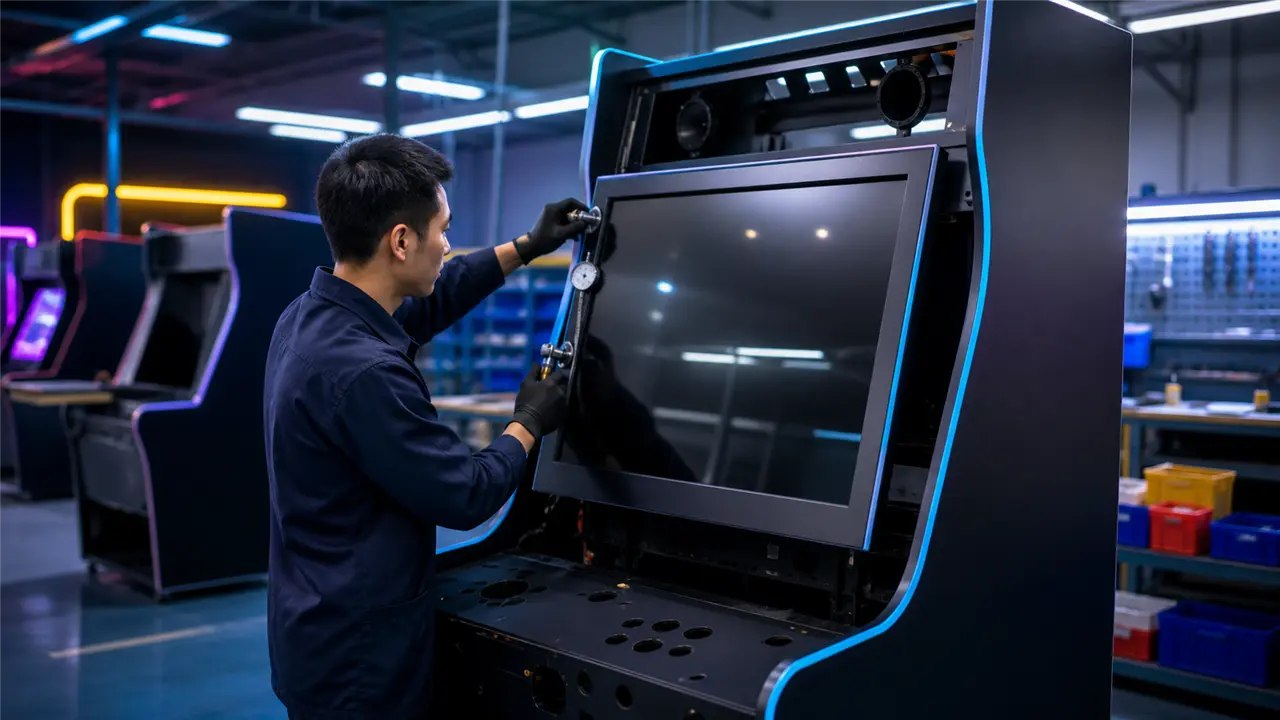
To ensure rock-solid reliability and vibrant, distortion-free illumination across all cabinet lighting elements, we re-architected the Halo LED control and power distribution network:
┌─────────────────────────────────────────────────────────────────────────────┐ │ HALO LED DIFFERENTIAL ARCHITECTURE BLUEPRINT │ ├─────────────────────────────────────────────────────────────────────────────┤ │ [MAIN LOGIC MOTHERBOARD] │ │ └── SPI / USB Lighting Data Stream │ │ │ │ │ ▼ │ │ [OPTO-ISOLATED LIGHTING MCU] ──► RS-485 Differential Transceiver (SN75176) │ │ │ │ │ ▼ (Twisted-Pair Shielded Cable) │ │ [EDGE RECEIVER & TVS CLAMPING] │ │ │ │ │ ▼ (Clean 800kHz Data) │ │ ┌─────────────────────────────────────────────────────────────────────────┐ │ │ │ 43″ CURVED PERIMETER ADDRESSABLE LED STRIP (Dual-Rail Injected @ 5.0V) │ │ │ └─────────────────────────────────────────────────────────────────────────┘ │ │ ▲ ▲ │ │ │ (5V / 10A Feed 1) │ (5V / │ │ └─────────────────── [MEAN WELL LRS-350-5] ─────────────────┘ 10A) │ └─────────────────────────────────────────────────────────────────────────────┘
1. Dual-End Parallel Power Injection: We divide the perimeter Halo LED array into balanced zones of no more than 150 LEDs each. Dedicated 16AWG pure copper power cables inject regulated 5.0V DC directly into both the beginning and end of each strip segment from an isolated Mean Well LRS-350-5 switching power supply. Voltage drop across the entire length is held strictly below 0.15V, ensuring perfectly uniform color saturation and lumen output from top to bottom. 2. RS-485 Differential Data Transmission: Instead of routing vulnerable single-ended 5V logic pulses throughout a steel cabinet filled with electrical noise, our lighting controller converts the serial data stream into balanced differential signals using RS-485 driver transceivers. At each local lighting zone, a receiver chip decodes the signal while high-speed TVS diodes suppress transient inductive spikes. The lighting remains completely immune to electromagnetic interference generated by bill validator stepper motors or external EMP pulses. 3. Full Optical Isolation: The lighting control microcontroller communicates with the main game PC via high-speed optical isolators (6N137). Even in the catastrophic event of a massive static shock discharge onto the exterior aluminum LED bezel, high-voltage surges cannot propagate back into the game motherboard.
| Technical Parameter | Our Factory Custom Build | Generic Competitor Benchmark | Operational Advantage |
|---|---|---|---|
| **LCD Panel Grade** | LG / BOE Grade-A Industrial OEM | Repurposed Commercial Grade-B | Zero dead pixels; 50,000h MTBF rating |
| **Brightness & Contrast** | 500 cd/m² (nits) / 3000:1 contrast | 300 cd/m² / 1000:1 contrast | High-impact visibility under bright casino lighting |
| **Curvature Radius** | Precision 1500R (1500mm radius) | 1800R or irregular bent glass | Optimum ergonomic player viewing angle |
| **Touch Surface Glass** | 4.0mm chemically tempered anti-glare | 2.0mm standard float glass | IK08 vandal-proof impact resistance |
| **Internal Operating Delta** | < 12°C rise over ambient room temp | > 28°C rise over ambient temp | Eliminates CPU throttling and touch drift |
| **Chassis Fabrication** | 1.5mm – 2.0mm CNC cold-rolled SPCC | 1.0mm – 1.2mm mild sheet metal | Structural rigidity; zero warping during transit |
For deeper technical analyses on curved touch display calibration, see our breakdown of OEM 43-inch 4K curved touchscreen slot cabinet engineering, compare dual-display configurations in our guide to dual 43-inch 4K curved slot cabinet OEM engineering, and explore our structural manufacturing standards in casino slot machine cabinet manufacturer OEM gaming chassis wholesale sourcing.
Looking for complete CAD/CAM metal fabrication blueprints, custom button deck layouts, or Halo LED SDK integration documentation? Request our full factory engineering package through our Custom Development Portal or reach out directly to our engineering desk.
Custom CNC Metal Fabrication and Industrial Finish
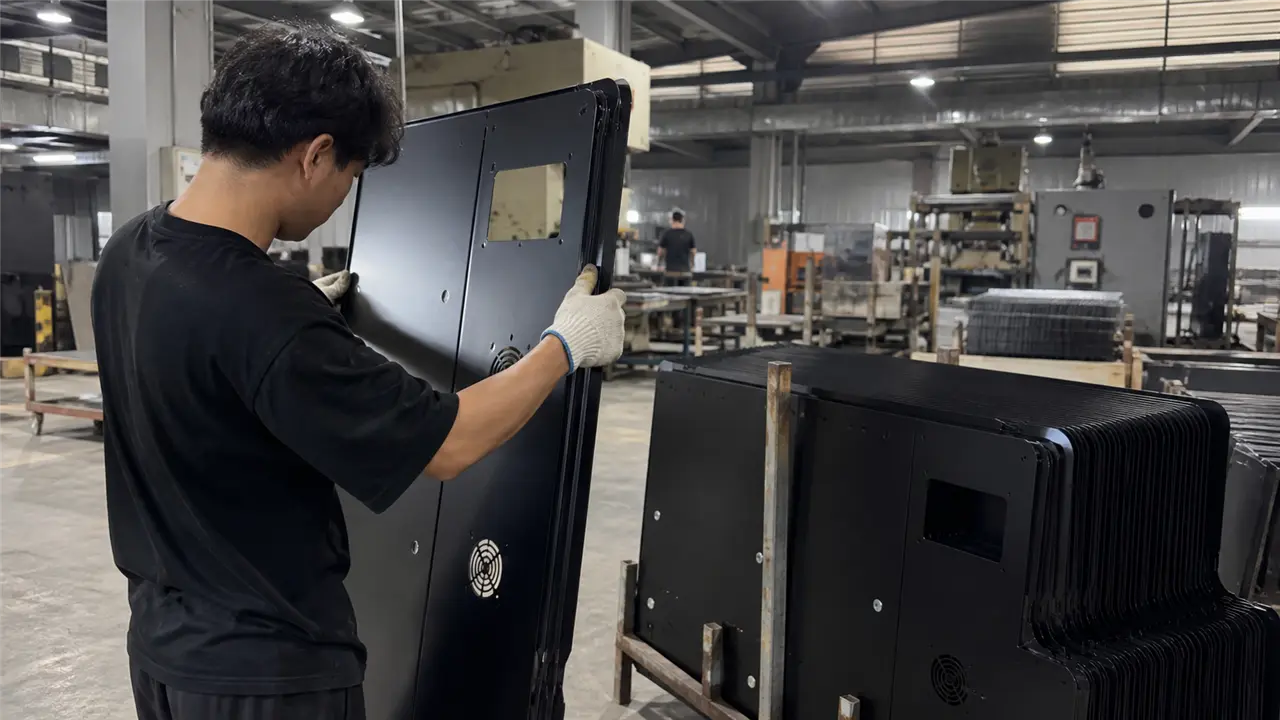
Every curved-screen slot cabinet manufactured in our Panyu facility is fabricated from heavy-duty cold-rolled steel plate (*SPCC*):
- Laser Cutting Precision: Structural frame members are cut on our 4,000W high-precision fiber laser cutting tables with positioning accuracy within $\pm 0.05\text{mm}$. All seams and service doors align with tight, uniform gaps under 0.2mm, completely preventing light leakage from internal Halo LED backlights.
- Robotic Hydraulic Bending: Complex multi-bend radius profiles are formed on computerized CNC press brakes, ensuring that the curved display bezel perfectly cradles the radius of the 1500R glass without mechanical pinch points that could crack the LCD cell under transit vibration.
- Electrostatic Powder Coating: Chassis components pass through an automated multi-stage pre-treatment wash (degreasing, phosphating, and deionized water rinsing) before entering our electrostatic powder coating line. We apply an industrial epoxy-polyester powder finish baked at 200°C for 25 minutes, producing a scratch-resistant, anti-corrosion, and fingerprint-resistant surface rated for 1,000 hours of continuous salt-spray testing.
Commercial Payback and Route Deployment Economics
Deploying premium curved-screen slot cabinets delivers an immediate, measurable lift in player coin-in compared to aging flat-screen cabinets. Below is a real-world financial deployment analysis from route operators replacing flat-screen machines with our custom 43-inch curved slot cabinets:
┌─────────────────────────────────────────────────────────────────────────────┐ │ CURVED CABINET UPGRADE REVENUE LIFT MODEL │ ├─────────────────────────────────────────────────────────────────────────────┤ │ • MACHINE CAPEX: $1,450 FOB Panyu + $280 Shipping/Duty = $1,730 Landed Cost │ │ • BASELINE FLAT CABINET COIN-IN: $185 gross hold per day │ │ • CURVED SCREEN REVENUE LIFT: +38% increase in average player session time │ │ • POST-UPGRADE GROSS HOLD: $255.30 per day (Net Gain: +$70.30 / day) │ │ • MONTHLY ADDITIONAL REVENUE: $2,109 per cabinet │ │ ─────────────────────────────────────────────────────────────────────────── │ │ • TIME TO FULLY RECOUP INITIAL HARDWARE UPGRADE: 24.6 OPERATING DAYS │ └─────────────────────────────────────────────────────────────────────────────┘
Because our cabinets are engineered with industrial thermal convection and dual-end LED power distribution, field failure rates average less than 0.2% per year. Operators capture higher player retention and premium hold percentages without losing cashflow to premature component burnout or touch sensor failures.
Frequently Asked Questions
Can your factory integrate our proprietary player tracking and card reader hardware?
Yes. Our CNC laser cutting programming accommodates custom cutouts for any third-party player tracking system, magnetic stripe card reader, RFID player card scanner, thermal receipt printer (Transact Epic, JCM, or Custom), and bill validator bezel. Send us your CAD component mounting templates, and our engineering team will integrate them into your production chassis design at zero additional tooling cost.
What touch interface protocols are supported by the curved display?
Our 43-inch curved PCAP touchscreens feature industrial USB touch controllers compatible with Windows 10/11 IoT Enterprise, Linux (Ubuntu, Debian), and Android embedded distributions. The controller supports plug-and-play HID multi-touch protocols without requiring custom kernel drivers, and features hardware-level water rejection and palm rejection calibration.
What is the minimum order quantity (MOQ) for custom OEM cabinet designs?
For standard cabinet configurations with stock sheet metal profiles, our MOQ is just 2 units (ideal for route evaluation and prototype testing). For fully bespoke OEM chassis designs requiring custom sheet metal tooling, unique button console geometries, or proprietary halo trim extrusions, our production MOQ is 10 units.
json
Commercial Risk-Reversal Guarantees for Direct Factory Procurement
To eliminate overseas purchasing hesitation and guarantee zero capital risk, our Panyu factory backs every commercial order with four ironclad commitments: 1. Low-Risk Sample Prototyping: We support 1-unit custom sample trial orders before committing to 20GP/40HQ container runs, allowing you to test physical chassis build quality, coin mech reliability, and game RTP firsthand. 2. Third-Party FAT Audits Welcome: We welcome third-party inspection teams from SGS, Intertek, or TÜV to conduct comprehensive onsite Factory Acceptance Testing on our assembly floor before container loading. 3. 100% Clean IP and Source Code Ownership: All custom software development contracts include full uncompiled Unity/C++ source code buyout with zero backdoors, perpetual commercial licenses, and clean IP indemnification. 4. 12-Hour Remote Engineering SLA: Direct WhatsApp and WeChat priority technical support groups linked directly to Engineer Wang’s hardware lab for live video debugging, schematic reviews, and replacement component dispatch.
Ready to elevate your gaming floor with custom 43-inch curved-screen slot cabinets or want to inspect our production lines? Contact me (Engineer Wang) directly via WhatsApp/WeChat at `+86 17620842078`, reach our Telegram engineering desk at `https://t.me/JLwyc`, or email `miba515527@gmail.com`. We will provide CAD dimensional models, photometric LED data, and direct factory pricing to power your route operations.