- The Economics and Reality of the Modern Fish Table Market
- Strategic Site Selection and Electrical Infrastructure Planning
- Commercial Cabinet Hardware Engineering Standards
- The Mathematical Core and Adjustable RTP Settings
- Defeating EMP Attacks and Anti Cheat Security Measures
- Financial Modeling CAPEX OPEX and Payback Period
- Our Panyu Manufacturing Base and Quality Assurance
- Comprehensive Factory Acceptance Test Checklist
- Technical Troubleshooting and Hardware Diagnostics
- Integrating Hybrid Systems and Remote Operations
- Frequently Asked Questions
Are you planning to enter the highly lucrative commercial arcade sector but losing sleep over potential hardware failures on a busy Friday night? Venue operators do not care about abstract sheet metal specifications or theoretical processing speeds. You care about whether a sudden power surge will wipe out hundreds of dollars in player credits, whether your machines can withstand sophisticated EMP jammer attacks, and if your mathematical return-to-player models are genuinely stable enough to guarantee a consistent ninety-two to ninety-six percent profit margin. I am Engineer Wang, Lead Hardware and Game System Architect at Guangzhou Miba Animation Technology Co., Ltd. Over my twelve years in the arcade hardware engineering trenches, I have seen countless operators fail because they purchased cheap, uncertified cabinets that turned into maintenance nightmares. In our Panyu manufacturing base, our fifty-person research and development team designs hardware solutions specifically engineered to eliminate downtime, protect your floor from organized cheating, and accelerate your return on investment. If you are serious about understanding how to start a fish table business the right way, this document will serve as your comprehensive blueprint for success.
[CTA Early: Ready to see our commercial-grade fish tables in action? Request a live video demo from our Panyu factory today and secure your operator catalog to see the difference firsthand.] For factory-direct procurement and comprehensive engineering specs, consult our master guide on commercial arcade game machines manufacturing factory.
The Economics and Reality of the Modern Fish Table Market
Starting a commercial venue is far more complex than simply renting a storefront and plugging in a few monitors. The modern fish table market requires a strategic approach to capital expenditure, operational cash flow, and aggressive risk management. Operators who succeed treat their venues like highly optimized financial engines. The core product is entertainment, but the underlying mechanism is mathematical consistency backed by bulletproof hardware.
Many new entrants make the fatal mistake of prioritizing the lowest initial purchase price. They buy refurbished or substandard machines from brokers who offer zero post-sale support. What happens next is entirely predictable. Within three months, the power supplies fail, the joysticks lose responsiveness, and players migrate to competing venues that offer a premium experience. Even worse, vulnerable I/O boards are exploited by players using hidden interference devices, resulting in massive unaccounted payout losses that can bankrupt a venue in a matter of weeks.
We approach this entirely differently at Arcade Manufacturer. We build turnkey solutions meant to run continuously for years under extreme stress. We understand that your profitability hinges entirely on machine uptime and mathematical integrity. Our hardware and software ecosystems are designed to operate flawlessly under the extreme stress of peak weekend traffic, ensuring that your investment generates revenue rather than repair bills. The shift from traditional arcade setups to high-stakes skill-based and hybrid configurations demands a foundational understanding of what makes a machine truly commercial-grade.
Strategic Site Selection and Electrical Infrastructure Planning
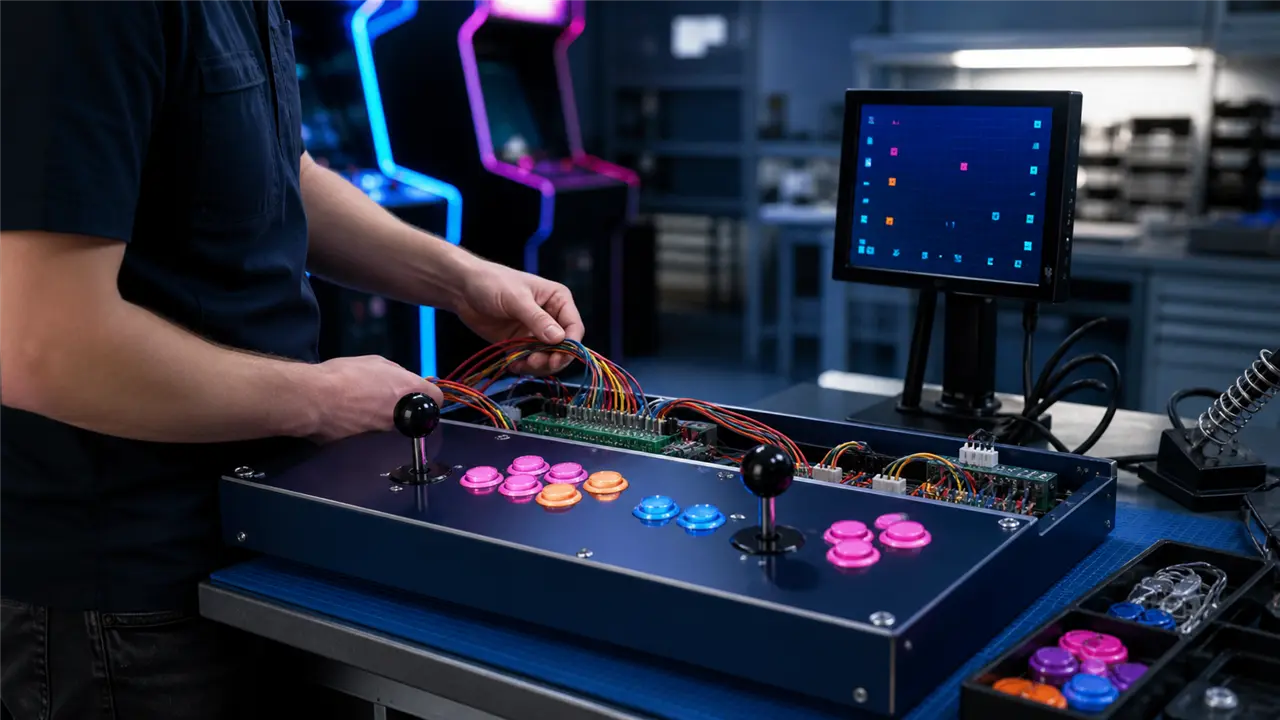
Before you order a single cabinet or sign a lease, your physical venue must be rigorously evaluated and prepared to handle the extreme electrical and environmental demands of commercial gaming equipment. Failure at this stage results in cascading hardware failures later.
Power Requirements and Grounding Topologies
A standard eight-player or ten-player fish table consumes a significant amount of continuous power, especially when accounting for the large high-definition displays, high-output audio amplifiers driving subwoofers, and multi-channel LED lighting systems. Attempting to run multiple machines on standard residential-grade circuits is a guaranteed path to nuisance tripping and sensitive hardware damage.
I always advise operators to install dedicated twenty-amp circuits for every two large fish tables. More importantly, the grounding infrastructure must be absolute. Improper grounding is the number one cause of erratic I/O board behavior, coin acceptor malfunctions, and random system resets. In our Panyu facility, we mandate isolated ground receptacles for all testing stations and factory acceptance lines. When a venue has floating grounds, static discharge from players walking on carpets can easily jump to the control panel and reset a logic board. Your master electrician must ensure a true earth ground tied directly to the building’s main grounding rod to protect the sensitive PCB components and ensure flawless continuous operation.
Optimizing the Floor Plan for Dwell Time and Security
The physical layout of your equipment directly influences both your daily revenue and your security posture. Fish tables are community games; they naturally draw crowds, spectators, and high-energy interactions. You must allocate sufficient aisle space—a minimum of forty-eight to sixty inches—around the machines to prevent congestion while allowing your floor staff to circulate freely and offer hospitality services.
Line of sight is your first and most vital defense against cheating and disputes. Every machine must be clearly visible from the main attendant counter. Do not place tables in blind corners, narrow hallways, or behind structural pillars. Additionally, position your overhead security cameras strategically to capture both the player controls and the display screen simultaneously. This dual-angle coverage is essential for resolving disputes over payouts, identifying suspicious player behavior, and monitoring the exact timing of bill insertions. Lighting also plays a crucial role; maintain a dimly lit ambient environment to enhance the visual impact of the game screens, but ensure bright, focused task lighting over cash handling areas.
Commercial Cabinet Hardware Engineering Standards
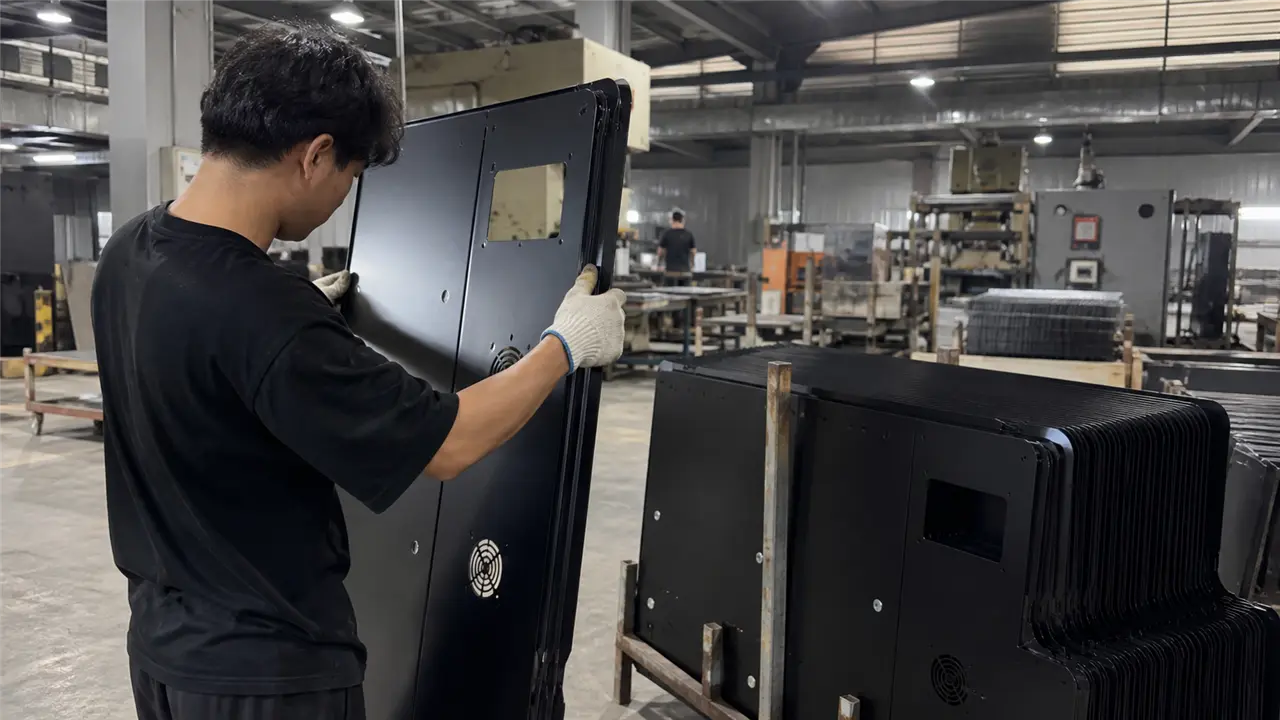
The physical cabinet is the literal armor protecting your investment. We absolutely refuse to use thin, easily warped materials. Our manufacturing protocols dictate heavy-gauge cold-rolled steel enclosures, reinforced internal bracing, and moisture-resistant composite paneling for all exterior surfaces.
Power Supply Units and Ripple Suppression
The heartbeat of any arcade machine is the power supply. A cheap power supply introduces severe voltage ripples that slowly degrade logic chips, corrupt memory sectors, and cause random game freezes during critical boss fights. We exclusively utilize genuine Mean Well industrial power supplies. These units feature active power factor correction, exceptional ripple suppression, and massive thermal overhead. If your venue experiences a minor brownout or voltage sag during a summer heatwave, the high-capacity capacitors in a Mean Well unit can hold the logic voltage stable long enough to prevent a system reset, saving the current game state, maintaining player trust, and preventing heated disputes over lost credits.
Operator Interfaces and Component Durability
Players are notoriously aggressive with joysticks and buttons, particularly during high-stakes multipliers and boss rounds. Standard consumer-grade microswitches will fail within weeks, leading to dead stations and lost revenue. We equip our control panels with extreme-duty microswitches rated for over ten million actuations.
Furthermore, our wiring harnesses are a point of extreme pride. We custom-loom every harness and utilize premium insulated connectors with locking tabs. We eliminate the messy, hazardous spaghetti wiring commonly found in inferior machines. We replace it with cleanly routed, color-coded, and zip-tied cable assemblies that make field maintenance straightforward for any technician. Our PCB trace routing is engineered to separate high-voltage lighting lines from low-voltage data lines, completely eliminating electromagnetic crosstalk that causes false button presses.
[CTA Mid: Do you want a deep dive into our hardware schematics and logic board architecture? Contact our engineering team today to request our comprehensive Technical Whitepaper and PCB Blueprint guide.]
The Mathematical Core and Adjustable RTP Settings
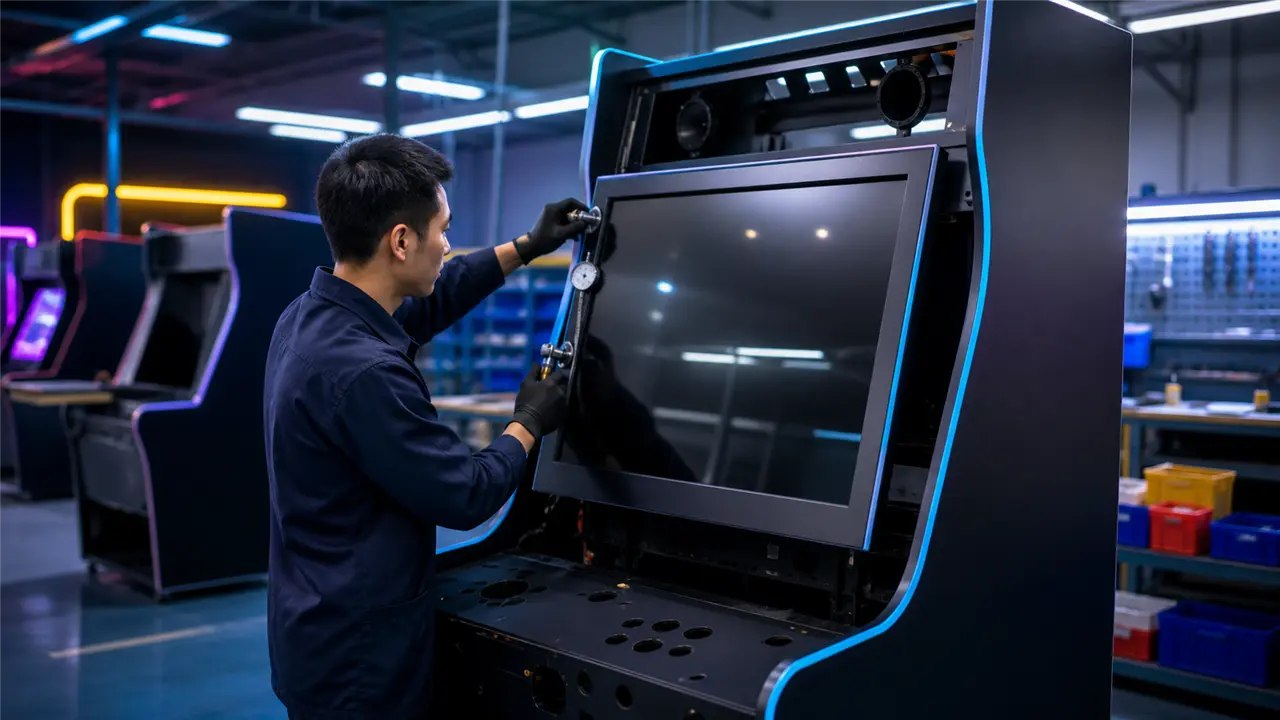
The long-term viability and valuation of your business are dictated entirely by the mathematics governing the game. The Return to Player percentage determines exactly how much of the incoming revenue is held by the house versus paid back to the players over millions of cycles.
Volatility and Hit Frequency Mechanics
A commercial fish table is not a simple random number generator; it is a complex, multi-layered behavioral ecosystem. If a machine is set too tight and players realize they cannot win, they will leave your venue forever and spread negative word-of-mouth. If it is set too loose, you will bleed capital and fail to cover your operational expenses. Our game software, developed from the ground up by our in-house Unreal Engine and Unity engineering team, utilizes advanced multi-threaded math models that balance high volatility spikes with satisfying hit frequencies flawlessly.
We provide venue operators with granular, secure administrative control over the RTP settings. You can adjust the hold percentage dynamically based on your financial targets, the day of the week, and the competitive landscape of your specific location. Our proprietary algorithms ensure that the math curve remains mathematically smooth. It strictly avoids the drastic, obvious payout droughts that alienate hardcore players, instead offering a mathematically sound, wildly entertaining experience that consistently achieves your targeted profit margin over the long term.
Defeating EMP Attacks and Anti Cheat Security Measures
This section represents where my specific expertise as a hardware architect becomes critical for your financial survival. The black market is unfortunately flooded with miniaturized electromagnetic pulse generators, high-frequency zappers, and sophisticated cheating devices designed to inject false credits into arcade hardware.
Defeating Electromagnetic Interference Completely
An EMP device emits a high-frequency, high-voltage burst intended to overwhelm the coin acceptor or bill validator circuits, tricking the motherboard into registering valid currency that does not exist. To combat this devastating threat, our engineering team has developed proprietary, multi-stage EMP interference shielding. We install heavy-duty transient voltage suppression diodes capable of sub-five picosecond transient surge clamping directly on the I/O pathways. When an EMP attack is detected by our sensors, the massive energy surge is immediately shunted to the earth ground, and the currency mechanism is instantly optically isolated from the main logic board using high-speed optocouplers.
The V5 and K8 Anti Theft Architecture
Beyond brute-force EMPs, sophisticated attackers may attempt to use radio frequency transmitters, Bluetooth exploits, or physical wiretapping to hijack communication lines. Our premium cabinets are equipped standard with V5 and K8 multi-band anti-theft dogs. These hardware modules actively monitor the entire 300 to 1200 megahertz spectrum and sanitize the serial communication lines between the currency acceptors and the game board.
Furthermore, we utilize dynamic key encryption for all data passing through our game boards. The communication protocol constantly scrambles the data packets using rolling algorithms, rendering logic analyzers, packet sniffers, and man-in-the-middle attacks entirely useless. If an attacker attempts to physically splice a hardware logger into our wiring harness, the system detects the minute impedance change and instantly locks down the board, halting the game and displaying a tamper alert to the venue operator.
Financial Modeling CAPEX OPEX and Payback Period
To successfully execute your business plan and secure funding, you must accurately model your financial projections. Below is a detailed breakdown to illustrate the realistic costs, operational expenses, and expected return on investment for a mid-sized commercial venue operating a fleet of ten premium fish tables.
Capital Expenditure Estimations
The initial capital expenditure involves everything required to design the floor and open the doors.
- Commercial Fish Tables: Ten flagship units featuring 85-inch ultra-high-definition LG panels, Mean Well power infrastructure, and full EMP shielding suites. Estimated total cost ranging from fifty-five thousand to eighty-five thousand dollars depending on specific custom configurations, seating styles, and international sea freight shipping.
- Venue Buildout and Electrical: Dedicated twenty-amp circuits, isolated heavy-duty grounds, atmospheric LED lighting, specialized acoustic ceiling treatments, and HVAC capacity upgrades to handle the heat output. Estimated conservatively at twenty thousand to thirty-five thousand dollars.
- Security and Surveillance Infrastructure: High-definition NVR camera systems, dual-angle coverage, secure cash handling vaults, and biometric access for the back office. Estimated at seven thousand dollars.
- Initial Licensing Legal and Permits: Highly variable by local municipality jurisdiction, but budget approximately five thousand to ten thousand dollars for compliance and zoning.
Operational Expenditure and Profitability Projections
Operational expenditures represent the ongoing burn rate, including rent, commercial utilities, payroll, insurance, and localized marketing. Let us assume a highly conservative daily gross revenue of three hundred dollars per machine.
- Monthly Gross Revenue: Ten machines generating three hundred dollars a day equals roughly ninety thousand dollars per month in total throughput.
- Player Payouts: At a standard competitive RTP model, payouts will consume a significant portion of this gross, but your retained net hold is the critical metric. If your mathematically enforced net hold is thirty percent, your gross profit is twenty-seven thousand dollars.
- Monthly OPEX: Prime commercial rent, trained staff across multiple shifts, electricity, and liability insurance averaging thirteen thousand dollars monthly.
- Net Monthly Cash Flow: Approximately fourteen thousand dollars in pure positive cash flow.
Under this highly conservative financial model, the payback period for the entire hardware capital expenditure is typically achieved rapidly within four to six months. This exceptional speed of ROI is exactly why the commercial fish table sector remains so attractive to serious institutional investors, provided they absolutely refuse to compromise and instead utilize durable, highly secure hardware from a trusted, proven manufacturer like Guangzhou Miba Animation Technology Co., Ltd.
Our Panyu Manufacturing Base and Quality Assurance
When you choose to partner with us, you are bypassing brokers and dealing directly with the engineering source. Our Panyu facility spans over fifteen thousand square meters of dedicated, high-tech manufacturing space. We do not merely assemble cheap parts; we engineer robust commercial solutions from bare metal and raw silicon.
Every single machine that leaves our factory floor undergoes a grueling, mandatory seventy-two-hour thermal aging test. We run the motherboards, graphic processing units, and power supplies at absolute maximum load in elevated temperature environmental chambers. Our goal is to force any marginal silicon components or weak solder joints to fail in our laboratory, ensuring they never fail on your venue floor. Our fifty-person engineering and quality assurance team inspects every crimped wire, every soldered connection, and every structural weld. We document the entire QA process meticulously with traceable serial numbers, ensuring that the product you receive strictly meets exacting international commercial standards.
Comprehensive Factory Acceptance Test Checklist
When receiving your equipment via freight, we strongly encourage all operators to perform their own rigorous acceptance testing before signing the final bill of lading. Follow this detailed checklist to verify the structural and electronic integrity of your new hardware.
1. Chassis and Cabinet Inspection: Verify all security locks, high-tension hinges, and service access panels operate smoothly and seat tightly without any visible pry gaps. Check the tempered glass for any micro-fractures. 2. Grounding Verification: Use a professional multimeter to confirm absolute continuity between the earth ground pin on the main power plug and the metal chassis of the power supply, the coin doors, and the control panel framework. 3. Display Calibration and Testing: Power on the entire system and utilize a test pattern to check for dead pixels, backlight bleed, and correct color temperature. Verify the protective overlay is firmly secured and aligned perfectly with the bezel. 4. I/O Diagnostic Run: Access the hidden operator menu and systematically test every single joystick microswitch, fire button, weapon toggle, and coin eject button. Ensure immediate, tactile response with zero detectable input lag. 5. Currency Validation Tolerance: Feed a diverse mix of pristine, severely worn, wrinkled, and damp currency into the bill validators. Test the mechanical coin mechanisms with various token weights and metallic alloys to ensure highly accurate counting and absolute rejection of unauthorized slugs. 6. Security Audit and Fault Simulation: If equipped with our advanced security suites, safely trigger a controlled electrical fault to verify the V5/K8 anti-theft system immediately halts game progress, drops the high-voltage lines, and alerts the operator interface.
Technical Troubleshooting and Hardware Diagnostics
Even the most robust, over-engineered hardware requires occasional preventative maintenance and field repairs. Our systems are specifically designed for rapid, tool-less field service by non-engineers.
Common Issues and Rapid Field Resolutions
- Symptom The main screen remains black but all control panel LED lights are illuminated brightly.
- * Resolution: This indicates a logic board boot sequence failure or a mechanically disconnected HDMI/VGA cable. First, check the video cable seating and ensure the retaining screws are tight. Next, use a multimeter to verify the critical five-volt logic line from the Mean Well power supply is delivering exactly 5.0 to 5.1 volts under load. If the voltage has sagged to 4.8 volts, carefully adjust the tuning potentiometer on the power supply to restore proper logic voltage and reboot.
- Symptom A specific player station joystick registers no directional input on one axis.
- * Resolution: This is exceedingly rarely a mainboard failure. It is almost always a worn microswitch issue or a physically broken wire at the quick-disconnect crimp due to aggressive player action. Swap the suspect microswitch with a known good one from another station. If the problem persists, trace the specific ground wire for that player station back through the harness to the JAMMA edge connector to check for continuity breaks.
- Symptom The bill validator mechanically accepts and stacks bills but digital credits are not added to the game.
- * Resolution: This strictly points to a digital communication failure between the validator unit and the game board. Check the pulse isolation module and inspect the serial communication cables for pin damage. Ensure the hardware DIP switches on the side of the validator precisely match the required pulse rate configuration of the game software.
Standard JAMMA and Custom I/O Pinout Reference
Understanding your wiring harness topography is crucial for quick, pressure-filled repairs. Always refer to the specific wiring manual shipped with your cabinet, but standard commercial layouts follow predictable paths. The ground loop must be absolutely continuous across all stations. The twelve-volt high-current rail drives the audio amplifiers, ticket dispensers, and coin door incandescent lights, while the precise, heavily filtered five-volt rail is strictly reserved for the game PCB and logic I/O processing. Never, under any circumstances, bridge these rails or you will instantly destroy the logic board.
Integrating Hybrid Systems and Remote Operations
The inevitable future of the commercial arcade business is hybrid architecture. We offer advanced, proprietary remote management systems that allow you to monitor your entire floor from anywhere in the world in real-time. Using ultra-low latency WebRTC protocols, our backend software connects your physical cabinets securely to an encrypted cloud server infrastructure.
You can instantly view highly detailed real-time revenue reports, monitor mechanical hopper levels, track specific player station profitability, and adjust RTP settings dynamically from your smartphone or tablet. Furthermore, our hardware is fully compatible right out of the box with modern RFID card reader systems and remote payment gateways. This allows forward-thinking operators to transition away from physical coin and cash handling entirely, thereby drastically reducing labor costs, eliminating the risk of internal employee theft, and streamlining the accounting process.
Related Engineering References and Floor Operational Guides
- For our comprehensive factory production standards, review our turnkey fish table manufacturing framework.
- To secure your floor against transient spark attacks, see our breakdown on EMP jammer detectors for fish game arcades.
- Compare footprint and power demands with our commercial Ocean King hardware specifications.
- For pulse harness isolation schematics, inspect our fish table bill validator wiring guide.
Frequently Asked Questions
How much physical space do I truly need for a profitable commercial setup? For a highly profitable, sustainable commercial venue, you should plan for at least two thousand to three thousand square feet. This allows for ten to fifteen large footprint fish tables, a substantial redemption prize counter, adequate restrooms, comfortable spacing for players to navigate, and a secure back office for cash counting.
Why should I choose to work with a factory in China over a local domestic distributor? Working directly with Guangzhou Miba Animation Technology Co., Ltd. entirely eliminates the massive distributor markup, saving you tens of thousands of dollars. More importantly, you get direct, unfiltered access to the engineers who actually designed and wrote the code for the system. If you have a complex technical anomaly, you are speaking directly with me, Engineer Wang, not a sales representative reading blindly from a script.
Can the core RTP mathematical model be changed easily by a rogue employee? Absolutely not. Access to the core mathematical settings and hit frequency algorithms is protected by a rigorous multi-tier encrypted password system and physical hard-coded operator keys. Cashiers and floor attendants can reset individual credits or clear physical bill jams, but only authorized executive management possessing the master keys can alter the payout algorithms.
How do you handle international shipping and complex customs clearance for such large heavy cabinets? We have over a decade of extensive experience in global logistics and export compliance. We handle all export documentation directly from our Panyu factory and partner with established, bonded freight forwarders to ensure your cabinets arrive safely via international sea freight. We design our custom packaging using heavy-duty treated wooden crates to prevent transit damage, moisture ingress, and forklift mishandling.
What specific kind of post-sale technical support do you genuinely offer? We offer comprehensive, lifelong technical support. We provide highly detailed video diagnostic tutorials, complete schematic diagrams, and direct, instant communication via WhatsApp and Telegram. If a specialized silicon component fails, we DHL replacement parts immediately from our massive factory inventory, bypassing supply chain delays to get your machine earning again.
[CTA Final: Stop gambling your capital with inferior hardware and start building a highly secure, predictably profitable arcade business today. Contact Engineer Wang directly via WhatsApp at +86 17620842078, reach out on Telegram at https://t.me/JLwyc, or email miba515527@gmail.com to comprehensively discuss your custom venue requirements and schedule a factory tour.]
By prioritizing absolute structural integrity, deploying sophisticated military-grade anti-cheat mechanisms, and leveraging transparent, mathematically sound payout models, you can establish a highly successful and dominant fish table business in your local market. The initial strategic investment in premium, commercial-grade hardware from a dedicated, engineering-first manufacturer is the only proven, guaranteed strategy to ensure long-term profitability, minimize stress, and achieve operational peace of mind.