Operators running traditional arcade venues face mounting pressures from escalating retail rent, limited foot traffic, and aggressive local competition. Expanding floor space requires massive capital expenditure, while operating hours are strictly capped by mall regulations. Many route operators reach out to me directly asking how they can scale their arcade business without being crippled by overhead. At our Guangzhou Panyu manufacturing base, we have successfully guided hundreds of clients through a highly profitable transition. By shifting to a remote live arcade model, operators bypass retail limitations and tap into a global player base operating around the clock. This business model fundamentally changes the profit equation by swapping high commercial rent for low-cost industrial warehouse space. As Engineer Wang, I have spent over twelve years designing hardware and software architectures that make this transition seamless. In this document, we break down the exact deployment costs, evaluate the operator revenue model, and detail our factory procurement roadmap. We provide a complete turnkey solution that ensures operators achieve maximum profitability with minimized risk.
Shifting from Physical Venues to Cloud Machine Farms
The traditional arcade business relies heavily on prime real estate. High foot traffic locations command premium retail rents that eat away at profit margins before a single coin is dropped. Transitioning to a cloud machine farm entirely changes this dynamic. Instead of fighting for expensive mall storefronts, operators deploy our hardware in secure industrial warehouses.
Floor Space Utilization and Rent Economics
Commercial retail spaces often charge exorbitant rates per square foot. In a typical setup, an eight-player fish table requires significant clearance space for players to sit comfortably, move around, and socialize. This limits the total number of machines a venue can host. Conversely, setting up cloud fish table machine farm deployment in an industrial warehouse allows for high-density stacking. We design custom rack architectures that stack mainboards and controller arrays vertically. Without the need for player walkways, decorative lighting, or physical seating, operators can pack five times the number of gaming stations into the same square footage. Industrial warehouse rent costs a fraction of commercial retail rent, instantly boosting operational margins.
Breaking the Chains of Operating Hours
Physical venues are bound by local curfews, mall operating hours, and staff availability. A traditional arcade might operate for twelve hours a day, leaving the hardware sitting idle and depreciating for the remaining twelve hours. Remote live arcade setups operate twenty-four hours a day, seven days a week. By leveraging an internet-connected model, players across different time zones access the machines continuously. This uninterrupted operation effectively doubles the revenue-generating window of the hardware. We build our power supplies and mainboards to withstand continuous heavy load.
Radical Labor Cost Reduction
Managing a physical venue requires a fleet of attendants, technicians, cashiers, and security personnel. Payroll is often the second largest expense after rent. In a remote deployment, labor requirements plummet. A warehouse housing fifty remote machines might only need two on-site maintenance technicians per shift. The entire credit system, player registration, and dispute resolution are handled via our automated backend software. This allows operators to scale their machine count without a proportional increase in human resource overhead.
Detailed CapEx and OpEx Breakdown for Operators
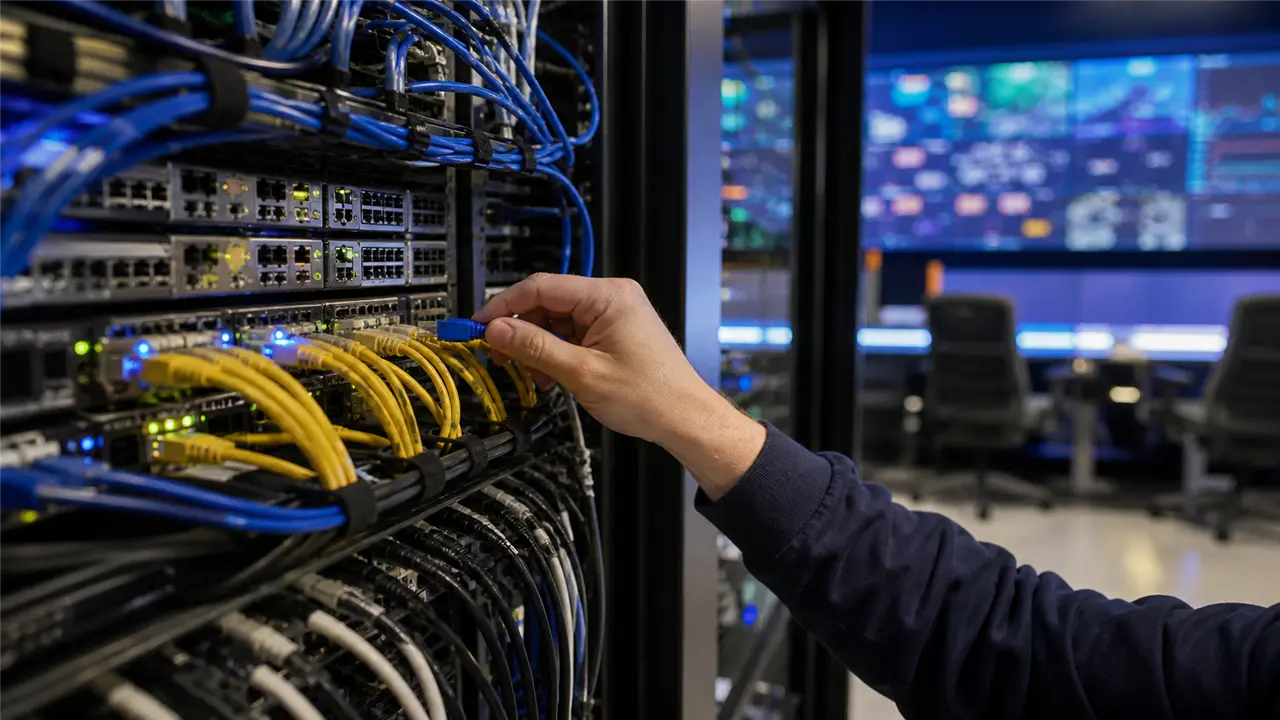
Understanding the financial commitment is crucial for operators planning a large-scale deployment. We believe in total transparency regarding capital expenditures and operational expenses. As a source manufacturer, we supply the complete package without hidden middleman markups.
Capital Expenditure for Hardware and Infrastructure
The initial investment centers around the turnkey physical machine cabinet cost and the necessary networking hardware. When operators order from our factory, they receive fully integrated systems. For a remote setup, traditional bulky metal cabinets are often replaced by specialized server-rack chassis that house the game boards, IoT relays, and video capture cards. The cost per node depends heavily on the chosen game board mathematics and the processing power required.
Next is the IoT gateway and video encoder kit. High-definition video streaming is the backbone of remote arcades. Players must see the fish swimming with zero perceived lag. We integrate industrial-grade H.265 hardware encoders that capture the game’s HDMI output and push it directly to the streaming server. These encoders are paired with physical relay boards that translate mobile app inputs into hardwired joystick and button signals.
Mobile white-label app customization is another vital CapEx component. Players interact with your brand, not ours. We provide a fully customized mobile application featuring your logo, UI color scheme, and payment gateway integration. Our software studio handles the complete frontend design and backend database architecture.
Operational Expenditure for Bandwidth and Maintenance
The primary ongoing cost for a remote arcade is cloud streaming bandwidth. Achieving sub-80ms latency requires robust WebRTC infrastructure. Operators must budget for TURN and STUN server traffic, which facilitates peer-to-peer connections across restrictive NAT firewalls. We optimize our video encoders to maintain crystal-clear 1080p resolution at minimal bitrates, keeping monthly bandwidth bills manageable even at peak concurrency.
Maintenance and server hosting form the remainder of the OpEx. While our hardware is incredibly durable, mechanical relays and network switches require occasional inspection. Server hosting for the user database, wallet system, and matchmaking lobby must be scaled according to the player base. We assist operators in setting up scalable cloud instances on AWS or localized data centers to ensure regional stability.
Operator ROI Math Model and Profitability Projection
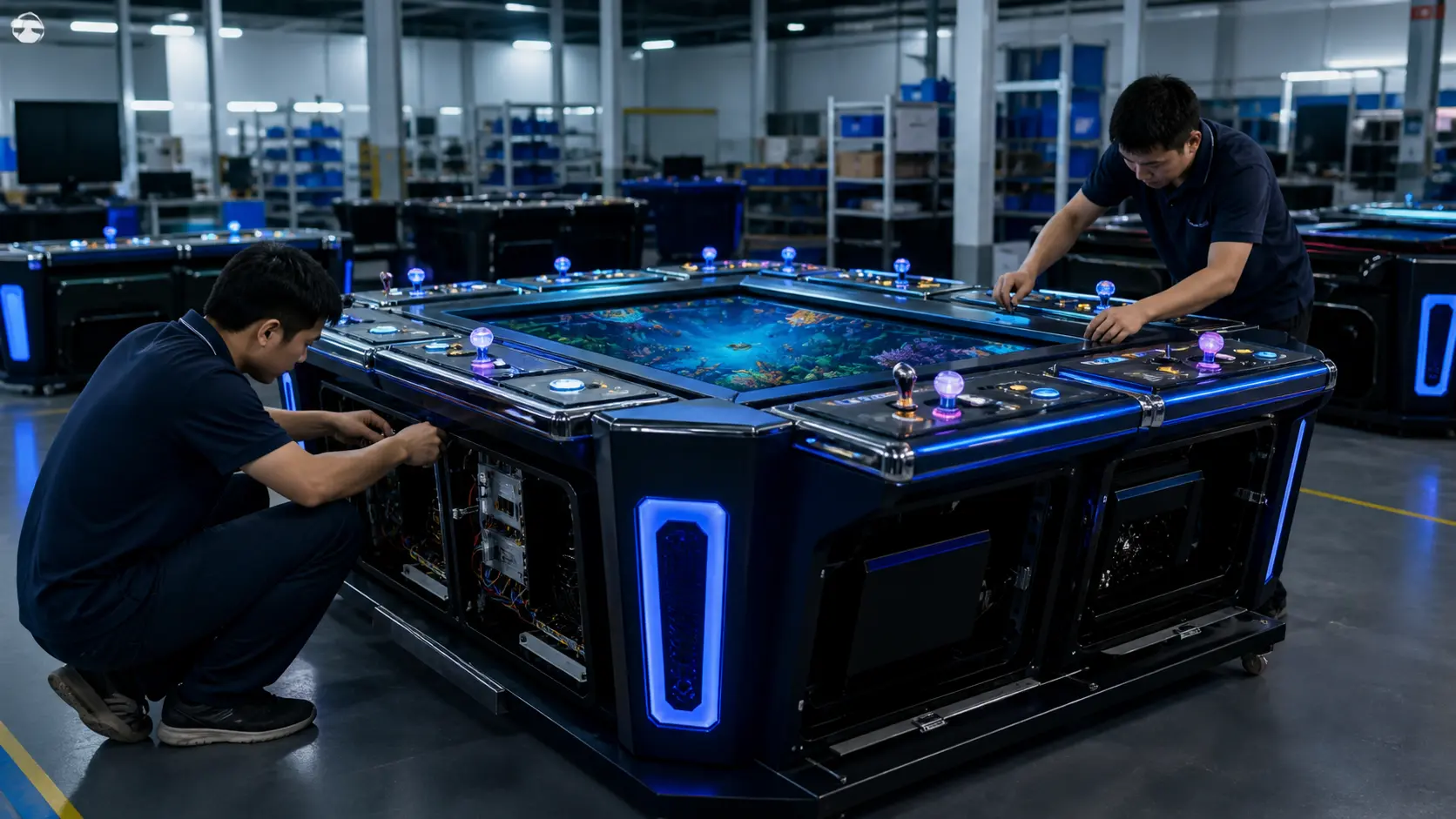
The most common question I receive on WhatsApp is regarding the payback period. Operators need to know when they will cross the break-even point. We have developed a rigorous financial model based on empirical data from our most successful partners.
Revenue Projection for a Ten Table Deployment
Let us examine a standard mid-sized deployment consisting of ten physical fish tables modified for remote play. An eight-player table yields eighty total gaming stations. In a physical venue, achieving a consistent 60% daily capacity is nearly impossible outside of weekends. In a borderless remote model, achieving a 60% average daily capacity is standard due to global accessibility.
With eighty stations running 24/7 at 60% capacity, operators see an average of 48 active players at any given moment. Based on a conservative hold percentage and average bet size, our mathematical models demonstrate a substantial daily gross gaming revenue. We tune the RTP math models explicitly to balance player retention with operator profitability.
Forty Five to Sixty Day Payback Period
When we subtract the daily OpEx involving bandwidth and minor administrative costs, the net daily profit remains exceptionally high. Dividing the initial CapEx by the net daily profit reveals a 45 to 60-day payback period projection based on a 10-table / 80-station deployment under 60% average daily capacity. This rapid capital recovery outpaces almost any traditional brick-and-mortar amusement investment.
Operators must also consider the integration of proper management tools. Utilizing our remote fish table room allocation backend ensures maximum utilization of available seats. The system intelligently queues players and synchronizes credits instantly, preventing revenue leakage during seat transitions.
Turnkey Procurement Pipeline at Our Guangzhou Panyu Factory
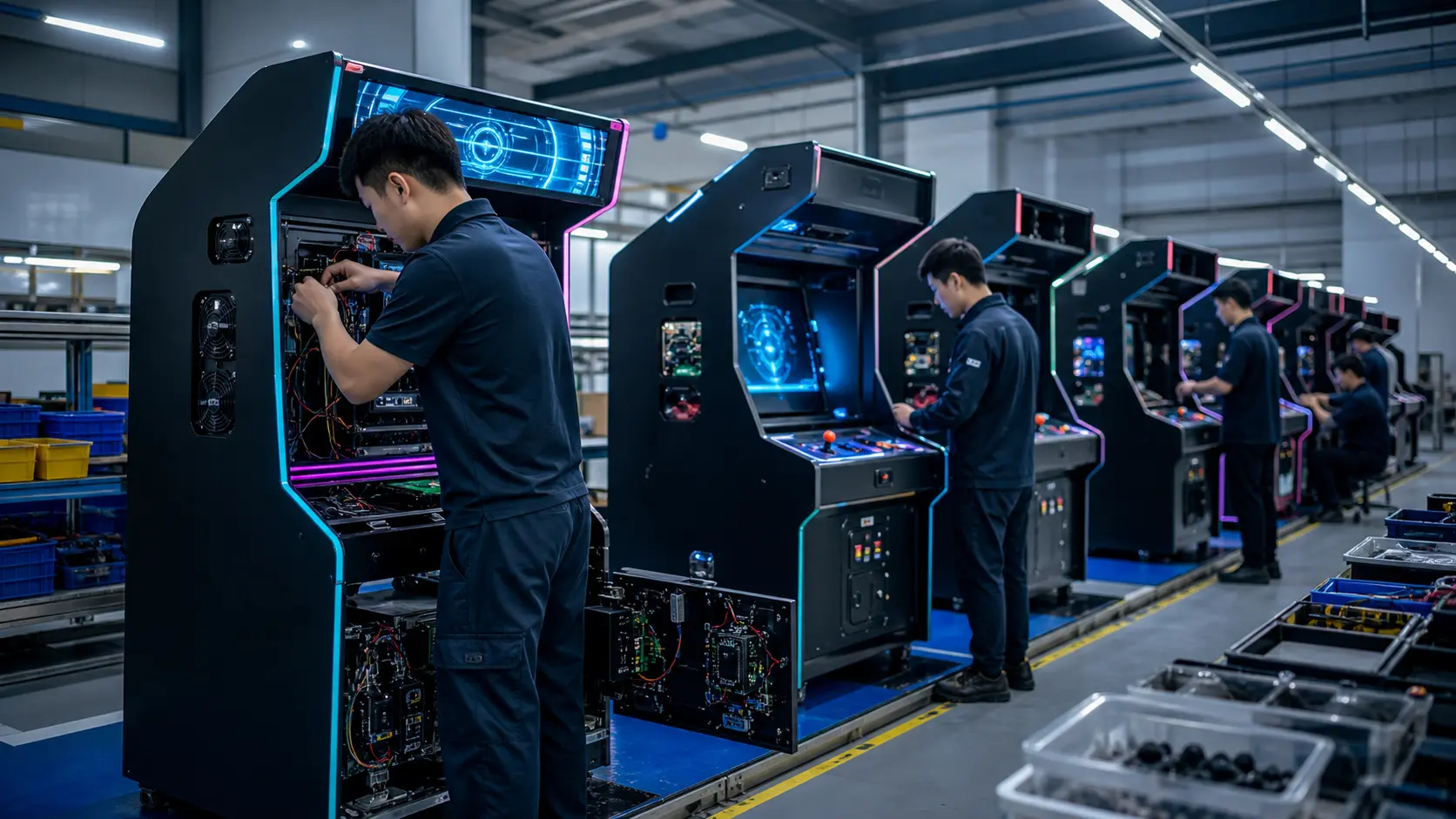
Procuring highly specialized arcade equipment requires a trusted manufacturing partner. We are not a trading company simply flipping products. We are a 15,000m² manufacturing base employing fifty full-time R&D engineers and an extensive assembly workforce. We handle everything from raw sheet metal to final software deployment.
CAD Customization and Structural Engineering
Every successful project begins with precision engineering. For operators building remote farms, we provide extensive CAD customization to design space-efficient rack mounts and thermal management systems. For operators maintaining physical venues, we offer bespoke cabinet designs. You can review our commercial fish table game machine cabinet engineering for insights into our structural integrity standards. We use heavy-gauge steel and secure locking mechanisms to protect your investment.
Hardware Prewiring and Assembly
Our assembly lines operate under strict quality control protocols. Hardware pre-wiring is executed by seasoned technicians using high-grade copper wiring harnesses that prevent voltage drops. We install premium branded power supplies and industrial IoT components. Every connection is soldered, heat-shrunk, and cable-tied to withstand years of continuous vibration and thermal cycling. This meticulous approach guarantees that the system communicates flawlessly with the remote live fish table machine custom deployment architecture.
Burn In Testing and FAT Inspection
Before any unit leaves our facility, it undergoes a grueling 72-hour burn-in testing phase. We run the motherboards, video encoders, and network interfaces at maximum load in a temperature-controlled chamber. This process identifies and eliminates any weak electronic components.
Following the burn-in, we conduct a video FAT inspection. I personally walk through the factory floor with my camera, dialing in the operator via video call. We demonstrate the machine’s performance, verify the latency, and test the backend credit system live. This Factory Acceptance Test guarantees that what you see is exactly what will arrive at your warehouse. We strictly adhere to commercial arcade game machines manufacturing standards ensuring our B2B partners receive flawless equipment.
Export Crating and Logistics
Arcade machines are sensitive electronic equipment. We utilize solid plywood export crating rather than cheap cardboard or untreated wood. The machines are wrapped in moisture-barrier film and cushioned with dense EVA foam. This robust packaging ensures your hardware survives rough oceanic transit and arrives ready for immediate deployment.
Advanced Backend Ecosystem and Data Security
We deliver complete source code buyout options for operators who demand total control over their data. This software studio perspective ensures you are never locked into recurring licensing fees for the core game logic. Our system architectures include sophisticated anti-cheat mechanisms and AI-driven dynamic password scrambling to protect the communication between the mobile app and the physical hardware. We deploy industrial-grade EMP jammers within the hardware chassis to prevent any localized interference.
If you are an operator looking to scale rapidly without the burden of retail real estate, our remote live arcade solutions provide the ultimate competitive edge. From exact ROI modeling to flawless factory execution, we stand behind our hardware.
Reach out to our engineering team directly to schedule a demo and request a customized financial projection for your specific region.
WhatsApp/WeChat: +86 17620842078 Telegram: https://t.me/JLwyc Email: miba515527@gmail.com
Frequently Asked Questions
What is the exact space requirement for a remote fish table farm
Unlike physical venues that require expansive floor plans for player comfort, remote farms utilize vertical rack systems. A standard 100-square-meter industrial warehouse can comfortably house enough hardware to support hundreds of simultaneous online players, maximizing your floor space utilization and minimizing rent costs.
How does the video latency affect player experience in remote setups
We integrate hardware-level H.265 video encoders directly to the game boards. Coupled with optimized WebRTC streaming protocols over TURN and STUN servers, we consistently achieve sub-80ms latency. This ultra-low latency ensures that players enjoy real-time shooting and capture mechanics identical to sitting in front of a physical cabinet.
Can the mobile app be fully customized for my local market
Yes. We operate an in-house software studio that provides full white-label app customization. We rebrand the user interface, integrate local fiat and cryptocurrency payment gateways, and adapt the language packs to match your exact regional demographic requirements.
What happens if a hardware component fails during operation
Our systems are built with redundancy and remote diagnostic capabilities. If a node goes offline, the backend watchdog telemetry alerts your maintenance staff immediately. Because the hardware is centrally located in your warehouse rather than scattered across various retail venues, a single technician can swap a faulty board in minutes, minimizing downtime.
How accurate is the 45 to 60-day ROI projection
Our ROI math model is highly accurate and based on empirical data from live operators. It assumes a 10-table deployment running at a 60% average daily capacity. Provided you execute competent local marketing to drive player acquisition, the low OpEx of the warehouse model allows for rapid recovery of the initial CapEx.