- The Financial Reality of Live Dealers Versus Automated Operations
- Technical Advantages of the Modern Baccarat Robot Dealer Machine
- Capital Costs and Layout Blueprint for ETG Setup
- Operational Economics and Fast Payback ROI Analysis
- Panyu Factory Quality Assurance and FAT Protocol
- Electronic Table Maintenance and Troubleshooting Guide
- Actionable Next Steps for Venue Upgrades
- Frequently Asked Questions
When venue operators approach me regarding floor layout optimization, the conversation always gravitates toward labor overhead, operational security, and minimizing downtime. You are likely staring at rising payroll costs for live dealers, mounting surveillance expenses to monitor human errors, and the undeniable reality of player disputes over misread cards. As someone who has spent 12 years architecting secure gaming systems, I understand that an operator does not just buy a machine; you are buying predictable margins, verifiable math models, and sleep equity on a busy Friday night. In our Panyu manufacturing base, we engineer solutions directly targeting these financial leaks. By deploying a commercial-grade baccarat robot dealer machine, operators eliminate dealer fatigue, guarantee 100% accurate roadmaps, and drastically accelerate game pacing. This article breaks down the exact capital expenditure, expected return on investment, and the deep hardware architecture required to future-proof your electronic table game floor against both cheating and mechanical downtime.
The Financial Reality of Live Dealers Versus Automated Operations
Evaluating the transition from traditional felt tables to an electronic table game venue requires a hard look at recurring expenses. Traditional gaming floors bleed revenue through inefficiencies that are often accepted as the cost of doing business. However, modern technology renders these losses obsolete. Operators must view their floor not as a collection of tables, but as a high-frequency trading platform where every second of downtime equals lost revenue. For factory-direct procurement and comprehensive engineering specs, consult our master guide on arcade game machine manufacturing and custom cabinet sourcing.
Breaking Down the Hidden Overhead of Traditional Tables
A standard live baccarat table requires at least three dealers covering a 24-hour shift cycle, plus a pit boss for oversight and a dedicated surveillance camera operator closely monitoring chip exchanges. Factor in base salaries, healthcare benefits, break rotations, and the inevitable human errors that result in miscalculated payouts, and the true cost of a single table becomes staggering. Furthermore, the game pace is inherently limited by human mechanics. Shuffling, dealing, collecting chips, and calculating payouts manually consume valuable minutes per shoe.
In contrast, our engineering team designs electronic table environments that eliminate these bottlenecks entirely. A centralized baccarat robot dealer machine seamlessly handles the physical cards while broadcasting verified outcomes to dozens of satellite betting terminals simultaneously. The game pace increases by up to 40%, directly translating to higher hands per hour and increased total handle. You are paying for precision engineering once, rather than paying for human inconsistency and labor inflation in perpetuity. The transition shifts your business model from labor-intensive to asset-backed.
Mitigating Disputed Payouts and Chip Security Risks
Disputes at the table freeze action and kill the momentum of the floor. When a player questions a payout or a card read, the floor manager must review surveillance footage, pausing the game and aggravating other patrons who are waiting to bet. Physical chips are also highly vulnerable to theft, counterfeiting, and internal miscounts by staff.
We solve this at the fundamental hardware level. The betting terminals in our ETG setups utilize encrypted digital credit systems, completely removing physical chips from the floor. Every wager, win, and loss is recorded in real-time on our secure server architecture. The baccarat robot dealer machine utilizes industrial-grade optical sensors to read the physical cards as they are drawn, instantaneously updating the digital roadmaps on every player terminal. There is zero ambiguity. If a player queries a result, the unalterable system log provides instant verification, keeping the game flowing and protecting your bottom line from both honest mistakes and calculated fraud.
Technical Advantages of the Modern Baccarat Robot Dealer Machine
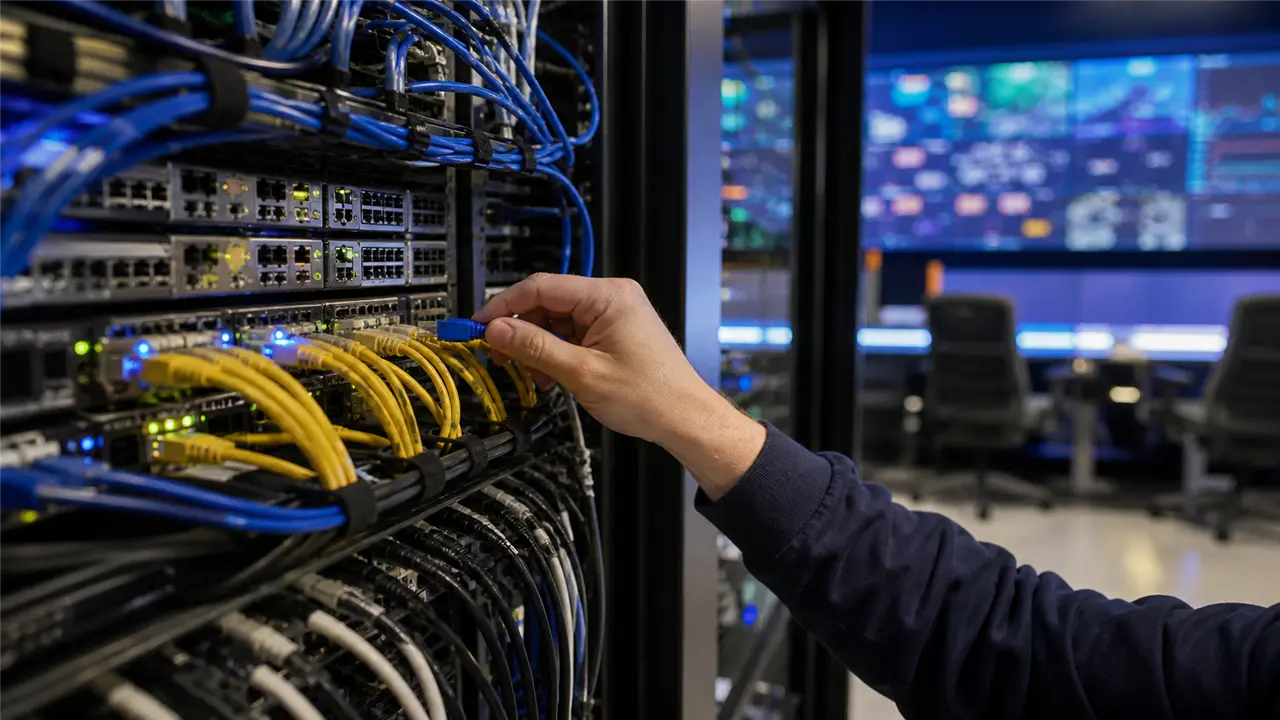
You might wonder how a mechanical system withstands the relentless 24/7 demands of a busy gaming floor. The answer lies in the component-level choices we make on the assembly line in Guangzhou. We do not use consumer-grade plastics or hobbyist electronics. We build industrial equipment designed for continuous, high-stress operation in demanding environments.
High Torque Stepper Motors and Anti Jam Card Shoes
The heart of the automated dealer is its card dispensing mechanism. We utilize closed-loop, high-torque NEMA 23 stepper motors, identical to those used in precision CNC manufacturing. These motors provide exact control over the feed rollers, ensuring single-card dispensation even with slightly warped or humid cards commonly found in tropical casino environments.
To prevent card jams, which are catastrophic to player trust, our engineers developed a proprietary anti-jam geometry within the acrylic card shoe. Micro-vibration modules agitate the deck just enough to prevent static cling between cards. Furthermore, torque sensors continuously monitor the load on the dispensing motor. If an anomalous resistance is detected, the system executes a micro-reversal algorithm to clear the potential jam before it occurs, all within milliseconds, entirely invisible to the players placing their bets.
Opto Isolators and Encrypted Signal Transmission
A baccarat robot dealer machine is only as secure as its communication with the satellite betting terminals. Hackers and sophisticated syndicates attempt to intercept the card-read data before it reaches the player screens, gaining a crucial advantage to place late bets.
Our motherboards isolate the sensitive card-reading optical logic from the main communication bus using high-speed opto-isolators. This physical gap in the circuit prevents electrical interference and blocks any attempt to inject malicious signals via EMP devices or static wands. Data leaving the machine is encrypted using dynamic AES-256 rolling keys. Even if a bad actor manages to tap the CAT6 cables connecting the dealer unit to the network switch, the intercepted data is a meaningless stream of noise. We engineer our hardware assuming it will be attacked, ensuring your venue remains an impenetrable fortress of profitability.
Capital Costs and Layout Blueprint for ETG Setup
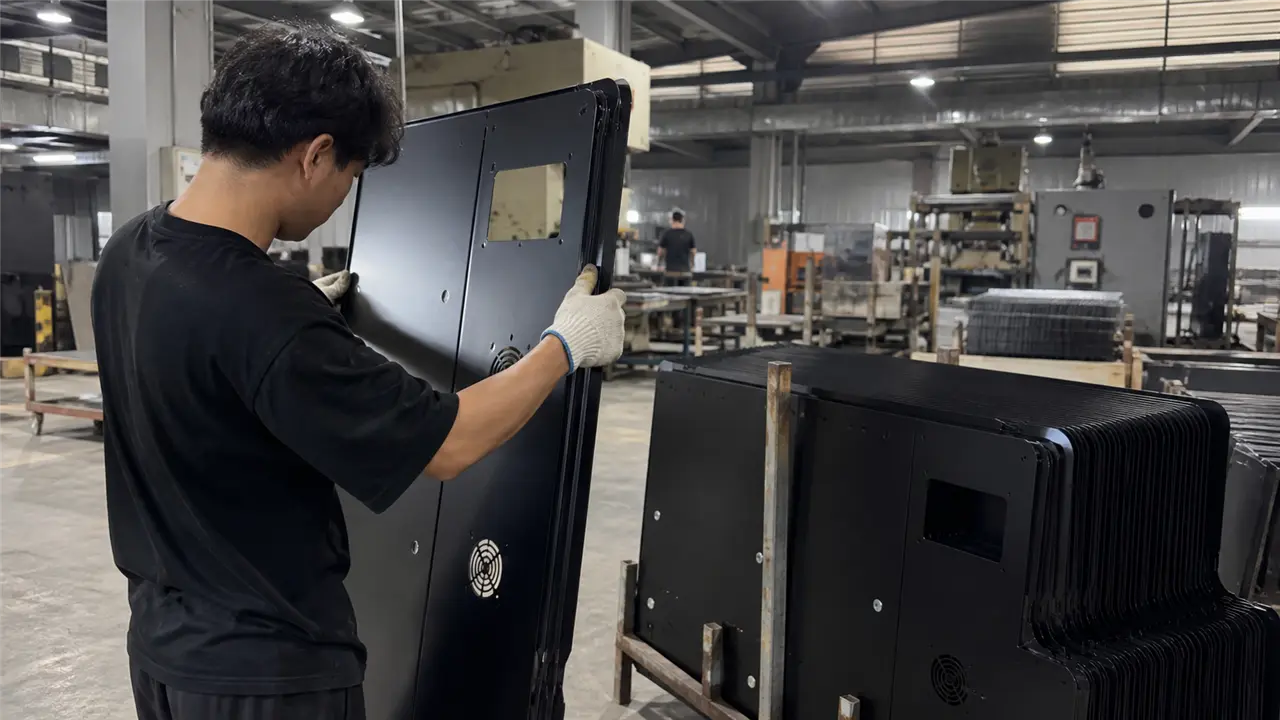
Transitioning to an ETG layout requires capital, but the expenditure is highly predictable and carries a definitive end date. Let us examine the hardware requirements and spatial blueprint for a standard 30-seat stadium baccarat configuration, designed for maximum player throughput.
Core Hardware Investment Breakdown
A standard configuration centers around one primary baccarat robot dealer machine. This central unit sits within a secure, transparent housing, usually elevated on a custom podium for maximum player visibility across the room. Surrounding it are 30 individual player terminals arranged in an amphitheater or staggered row layout.
Each player terminal features a 27-inch or 32-inch capacitive touch screen, an embedded bill validator (such as JCM or MEI) equipped with anti-fishing mechanisms, and a ticket-in/ticket-out (TITO) thermal printer. The terminals run on industrial fanless PCs with solid-state drives, ensuring zero moving parts at the player station to minimize maintenance.
The initial hardware cost for the central dealer unit, the 30 terminals, the gigabit network switches, and the central server rack represents your primary capital expenditure. Unlike live tables, you are not buying chairs, felt, and chips repeatedly; you are investing in a heavily depreciable technology asset with a fixed lifespan and a calculable, rapid return.
Server Topology and Real Time Accounting
The backbone of the ETG venue is the backend server rack. We deploy a redundant, dual-server topology. Server A handles real-time game logic, random number generation (for virtual variants if needed), and immediate payout calculations. Server B acts as a hot-standby and handles all accounting, logging, and TITO management.
This architecture ensures that if a localized hardware failure occurs on Server A, Server B assumes control without dropping a single active bet or logging off any players. The accounting software provides the operator with a granular, real-time dashboard. You can monitor the precise coin-in, coin-out, and hold percentage of the entire stadium or drill down into the performance of individual player terminals. This data empowers you to optimize floor placement, adjust minimum bets during peak hours dynamically, and precisely track your return on investment down to the hour.
Operational Economics and Fast Payback ROI Analysis
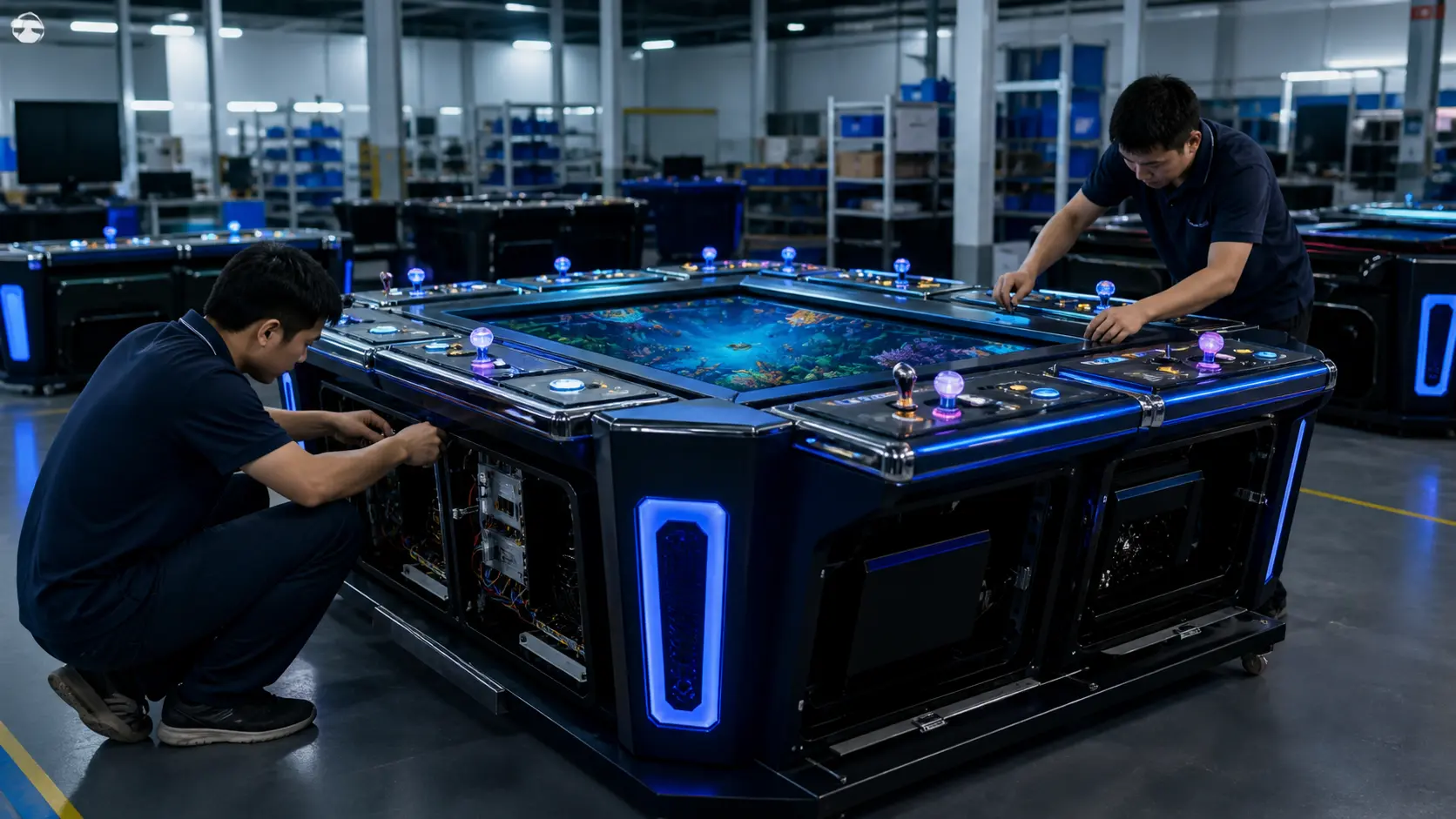
Let us move past the theoretical and examine the hard mathematical realities of venue operation. The compelling argument for deploying a baccarat robot dealer machine within an ETG stadium is the aggressive compression of the ROI timeline.
By eliminating the salaries of four full-time equivalent dealers and a supervisor for that specific game, the operational savings begin on day one. Furthermore, the automated dealer increases the hands per hour from roughly 45 (live dealer average) to over 70. Assuming a conservative average bet per hand across 30 terminals, this 55% increase in game volume exponentially drives up the daily handle.
Here is a highly detailed baseline projection for a 30-seat ETG stadium installation.
| Financial Metric | Traditional Live Table (30 Players) | ETG Stadium Setup (30 Terminals) | Delta Advantage |
|---|---|---|---|
| **Initial Capital Expenditure** | Low (Table, Chairs, Chips) | High (Hardware, Servers, Wiring) | Upfront investment required |
| **Monthly Labor Cost** | $15,000 – $25,000 (Dealers, Pit Boss) | $0 (Automated Dealer) | Immediate massive savings |
| **Hands Per Hour Average** | 45 | 70+ | +55% Volume |
| **Error and Dispute Loss** | ~2% of Gross Revenue | 0% (System Verified) | Complete revenue capture |
| **Estimated ROI Payback** | N/A (Constant drain) | 4 to 8 Months | Rapid capitalization |
| **Player Retention** | Relies on dealer charisma | Driven by fast pace and privacy | Consistent, non-fatiguing |
| **Surveillance Overhead** | High (Camera dedicated per table) | Low (Data-driven system alerts) | Reduced backend monitoring |
| **Space Utilization** | Poor (Requires large footprint per player) | Excellent (Compact terminal density) | Maximized revenue per square foot |
*Note: These figures are baseline estimates based on our extensive deployments across Southeast Asia, Eastern Europe, and Latin America. Exact ROI depends on your jurisdiction’s tax structure, import duties, and localized labor costs.*
The math is undeniable and highly favorable to the operator. Within a very short window, typically under eight months for a high-volume venue, the ETG stadium pays for itself entirely through labor savings and increased game velocity. From that point forward, the operational margin expands significantly compared to traditional table games, creating a cash-flowing asset that requires minimal daily management.
Panyu Factory Quality Assurance and FAT Protocol
Before any hardware leaves our 15,000-square-meter facility in Guangzhou, it undergoes a brutal Factory Acceptance Testing (FAT) protocol. We do not ship beta products to our clients, and we do not expect you to be our QA department. As the lead architect, I personally oversee the sign-off on major ETG deployments. We invite venue operators to our facility to witness this testing firsthand, or we provide comprehensive video documentation of the process for remote verification.
Comprehensive Hardware Stress Testing Procedures
We run the baccarat robot dealer machine continuously for 72 hours under heavy simulated load. We deliberately introduce warped cards, varying ambient humidity levels, and fluctuating voltage from the power mains. The system must operate flawlessly, reading cards with 100% accuracy and maintaining the encrypted network link without a single dropped packet.
We test the bill validators by feeding them heavily circulated, taped, and wrinkled currency, verifying their rejection rate for counterfeits and their acceptance rate for legitimate bills. We pound the capacitive touch screens with mechanical testing arms to simulate years of aggressive, frustrated player interaction. Our quality assurance is not merely a checklist; it is a philosophy of over-engineering to guarantee maximum uptime.
FAT QA Inspection Checklist
When auditing a new ETG deployment, our technicians follow this exact framework. You should demand nothing less from your equipment provider to ensure floor stability.
- [ ] Power Supply Stability
- * Verify Mean Well industrial power supplies maintain steady output under peak load (e.g., all 30 terminals printing simultaneously while screens are at max brightness).
- * Confirm functionality of UPS backup integration for graceful database shutdown during rolling blackouts.
- [ ] Card Recognition Accuracy
- * Execute 500 consecutive shoe deals using mixed decks (new, worn, marked, bent).
- * Verify 100% match between physical card dealt and the digital display on all 30 remote terminals.
- [ ] Network Latency and Redundancy
- * Measure packet latency between central dealer unit and furthest terminal (< 5ms required for instant betting lockouts).
- * Simulate switch failure to verify immediate failover to the redundant network loop without dropping player sessions.
- [ ] Physical Security Hardening
- * Test anti-tamper switches on the robot dealer housing (must trigger instant system halt, flash warning lights, and send admin alert).
- * Verify EMP shielding on logic boards using a 1000V transient pulse generator placed directly against the cabinet.
- [ ] TITO System Verification
- * Print and scan 100 cash-out vouchers, confirming database synchronization, barcode readability, and accurate ledger deduction.
- [ ] Thermal Management
- * Run continuous operation in a 40°C environmental chamber, ensuring internal CPU and motor temperatures remain within safe operating thresholds to prevent throttling.
Electronic Table Maintenance and Troubleshooting Guide
Even the most robust hardware requires routine maintenance and occasional troubleshooting. Our systems are designed for modularity, allowing your floor technicians to swap components rapidly without requiring specialized engineering degrees or prolonged training. Downtime is the enemy of ROI, so we build specifically for rapid repairability.
Proactive Maintenance Schedules
To ensure your baccarat robot dealer machine operates flawlessly, your team must adhere to a strict maintenance schedule. The optical sensors reading the cards must be cleaned weekly using 99% isopropyl alcohol and lint-free swabs to prevent dust accumulation from interfering with card recognition algorithms.
The feed rollers within the shoe mechanism require monthly inspection and periodic replacement every six to eight months, depending on the volume of play and the quality of the cards used. We provide ample spare parts with every shipment to ensure you are never waiting on international shipping for a simple rubber roller. Furthermore, all internal cabinet fans and dust filters must be vacuumed monthly to maintain optimal airflow across the motherboards and power supplies.
Actionable Troubleshooting Matrix
When an issue arises on the floor, your technicians need clear, diagnostic steps. Here is a baseline troubleshooting matrix drawn directly from our engineering manuals, designed to get your machines back online instantly.
| Fault Symptom | Probable Cause | Corrective Action | Engineer Wang Technical Note |
|---|---|---|---|
| **Dealer Machine Halts Mid-Shoe** | Card jam in feed mechanism; Optical sensor mismatch. | 1. Open housing (triggers security log). 2. Clear card path manually. 3. Clean optical sensor array. 4. Execute system reset via admin panel. | Do not use compressed air directly on the sensor, as it can force dust behind the lens. Use a gentle swab. Always verify the physical card count matches the system log after clearing a jam. |
| **Player Terminal Displays Network Sync Error** | Localized CAT6 cable fault; Switch port failure. | 1. Check RJ45 connection at terminal base. 2. Ping terminal IP from central server. 3. Swap patch cable or switch port if ping fails. | Our systems use standard TCP/IP protocols. Treat this like a standard IT networking issue. Keep spare pre-made cables on hand in the server room. |
| **Bill Validator Rejects Legitimate Notes** | Dirty sensor path; Outdated firmware for new currency. | 1. Slide out validator head. 2. Clean internal optics with approved cleaning card. 3. Verify firmware version against manufacturer specs. | Bill validators are the primary point of failure due to environmental dirt. Implement a strict bi-weekly cleaning schedule for all validators on the floor. |
| **Touch Screen Unresponsive or Ghost Touching** | USB communication drop; Static buildup; Ground loop. | 1. Hard reboot the individual terminal. 2. Verify ground wire connection inside the cabinet. 3. Replace USB controller board if issue persists. | Ensure your venue has proper grounding to the building’s main earth. Static electricity from carpeted floors is a major enemy of capacitive touch arrays. |
| **Roadmap Display Inconsistent Across Terminals** | Database sync latency on Server A; Heavy SQL lock. | 1. Check Server A CPU load. 2. Force manual sync from admin dashboard. 3. If persistent, failover to Server B and reboot Server A. | This is extremely rare with our dual-server setup, but indicates a heavy database lock. Contact our remote support for SQL optimization and index rebuilding. |
| **TITO Printer Jams Frequently** | Poor paper quality; Misaligned feed path. | 1. Open printer chassis. 2. Clear paper path. 3. Ensure thermal paper roll is seated perfectly straight. | Use only high-quality thermal paper. Cheap paper creates excessive dust that ruins the printer’s thermal head over time. |
Actionable Next Steps for Venue Upgrades
Upgrading to an ETG stadium architecture is a strategic maneuver that positions your venue for higher profitability and reduced operational headaches. The transition requires careful planning, robust hardware, and a partner who understands the intricate balance of game math, physical engineering, and floor security. You cannot afford to experiment with unproven suppliers when your floor’s revenue is at stake.
If you are currently evaluating your floor layout and want to see the real-world performance data of our systems, reach out to our team. We can provide you with a comprehensive product catalog, detailed CAD layouts, and technical specifications for our latest stadium configurations.
For operators serious about deploying this technology to slash overhead, we offer detailed architectural blueprints and custom ROI calculations based on your specific floor dimensions and local economic factors. We encourage you to request our technical whitepaper on ETG network security and anti-cheat hardware integrations.
When you are ready to move from planning to execution, I invite you to contact me directly. We can schedule a video consultation to discuss your specific requirements, provide a transparent factory-direct quotation, and arrange for you to witness our FAT procedures firsthand at our Panyu manufacturing base. We build machines that build your wealth.
- WhatsApp / WeChat: `+86 17620842078`
- Telegram: `https://t.me/JLwyc`
- Email: `miba515527@gmail.com`
- Lead Architect: Engineer Wang
Related Engineering References and Floor Operational Guides
- For complete industrial ETG engineering standards, review our electronic table game and baccarat manufacturing framework.
- For robotic dealing shuffler architecture, see our electronic baccarat and dragon tiger cabinet setup guide.
- Inspect encrypted thermal ticket protocols in our arcade policy printer hardware security guide.
- Review physical solenoid actuator calibration in our push ball arcade machine engineering guide.
Frequently Asked Questions
How long does it take to manufacture and deploy a 30-seat ETG stadium? From the moment the initial deposit is confirmed and the layout drawings are finalized by your architectural team, our standard manufacturing lead time in Panyu is 25 to 35 days. Shipping and customs clearance vary significantly by destination, but physical installation on your floor typically requires less than five days with our remote engineering support or our dispatched on-site deployment team.
Can the baccarat robot dealer machine handle custom game rules or side bets? Absolutely. The mathematical models and payout structures are governed entirely by the central server software, not hardcoded into the physical machine. We can customize the software logic to accommodate any regional game variations, specialized side bets, or progressive jackpot systems you require to remain competitive in your specific local market.
What happens if the main server experiences a catastrophic hardware failure? Our standard ETG deployments utilize a redundant, hot-standby dual-server architecture specifically for this scenario. If Server A suffers a complete hardware failure, Server B automatically assumes control within milliseconds. Player balances, active bets, and game history are preserved entirely, ensuring zero disruption to the gameplay experience and protecting your venue from massive financial liability.
Is it possible to integrate the ETG system with our existing casino management system CMS? Yes. Our accounting servers export data using standard casino protocols, including SAS 6.02, allowing seamless integration with major CMS platforms. We can work directly with your IT department to map the necessary data fields, ensuring your ETG stadium reports seamlessly into your central accounting and player tracking databases without manual data entry.
Do you provide training for our floor staff and technicians? Comprehensive training is a core component of our turnkey solution. We provide extensive operational manuals, step-by-step video tutorials, and live remote training sessions for your technical staff. We ensure your team is fully capable of performing routine maintenance, troubleshooting common issues using the matrix, and managing the backend administrative dashboard confidently before we consider the deployment complete.