- Volumetric Field Disruption Sensors
- Multi Axis Accelerometer Integration
- Active Mesh Continuity Loops
- Optical Door Switch Anomalies
- Integrated Audit and Telemetry Logging
- Parameter Comparison Table
- Advanced PCB Layer Isolation and High Voltage Pulse Hardening Architecture
- Operator Standard Operating Procedures and Incident Response Playbook
- Advanced PCB Layer Isolation and High Voltage Pulse Hardening Architecture
- Operator Standard Operating Procedures and Incident Response Playbook
- Frequently Asked Questions
Defending high-revenue amusement cabinets requires partnering with a custom arcade security solutions factory that engineers robust physical enclosure tamper detection systems. Standard locks are easily bypassed, leading to direct access to logic boards and coin hoppers, resulting in massive operator losses.
By implementing volumetric field sensors, multi-axis accelerometers, and active mesh continuity loops, an advanced tamper detection architecture provides an impenetrable physical perimeter. These systems immediately log intrusions, sever power to payout mechanisms, and transmit encrypted alerts, ensuring unauthorized access is instantly thwarted. For bespoke factory-integrated security, contact Engineer Wang at Guangzhou Miba Animation Technology Co., Ltd. (Panyu Manufacturing Base). WhatsApp: +86 17620842078, Telegram: https://t.me/JLwyc, Email: miba515527@gmail.com. For factory-direct procurement and comprehensive engineering specs, consult our master guide on industrial arcade machine security and anti-cheat hardware defense.
Volumetric Field Disruption Sensors
Volumetric sensors create a localized capacitive field within the arcade cabinet interior. When an attacker drills a hole or inserts a conductive tool to manipulate the coin drop mechanism, the dielectric constant of the internal volume changes. This disruption is instantly detected by an analog-to-digital converter monitoring the capacitive baseline. Such precision allows the detection system to trigger an alarm well before the intruder physically touches any sensitive component.
Multi Axis Accelerometer Integration
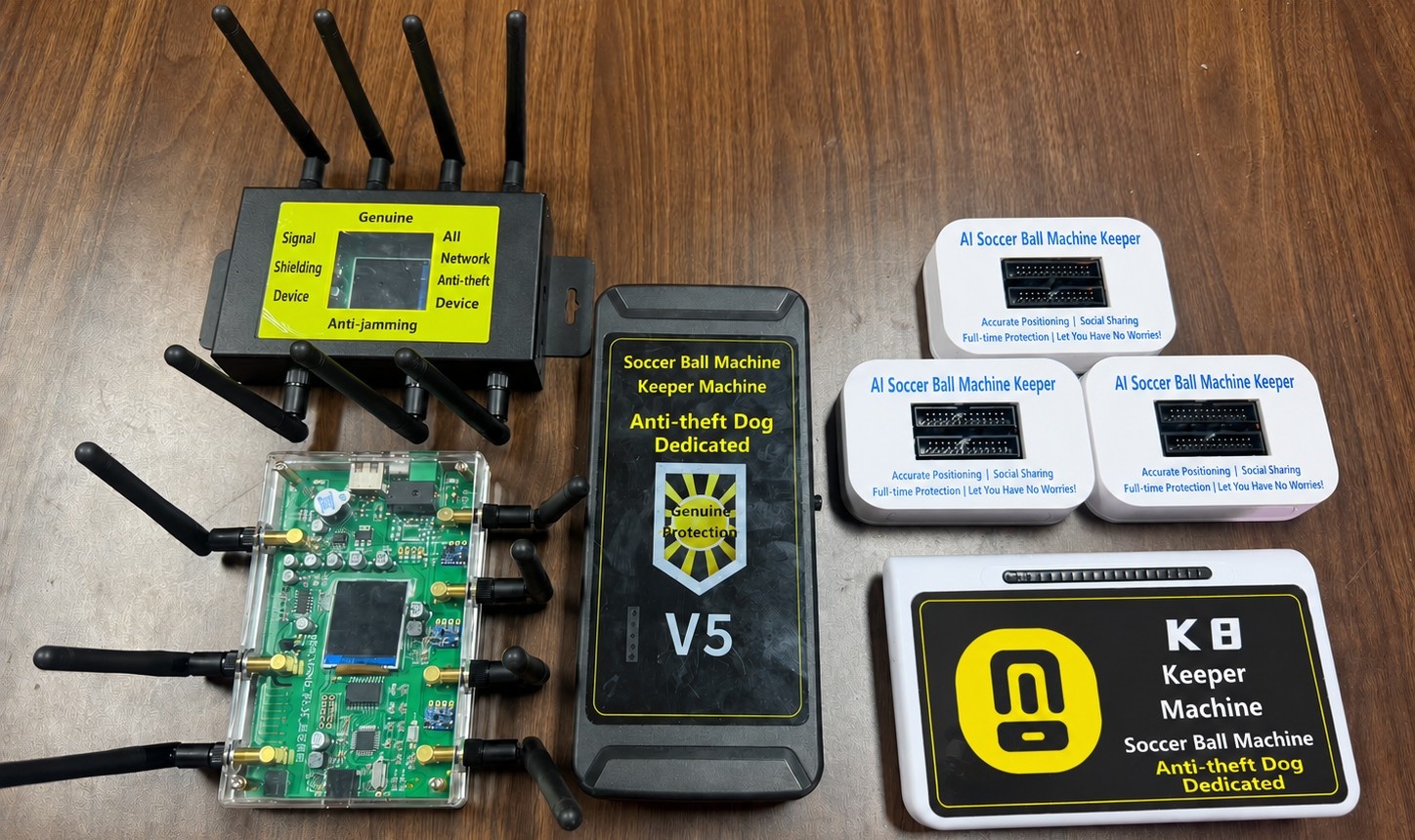
Cabinet tilting and aggressive physical manipulation are common tactics to induce false coin drops. By mounting 6-axis MEMS accelerometers directly to the main logic board, operators can monitor for specific shock profiles. The firmware distinguishes between a standard user bump and a coordinated, high-impact strike using Fast Fourier Transform algorithms to analyze the vibrational frequency.
Active Mesh Continuity Loops
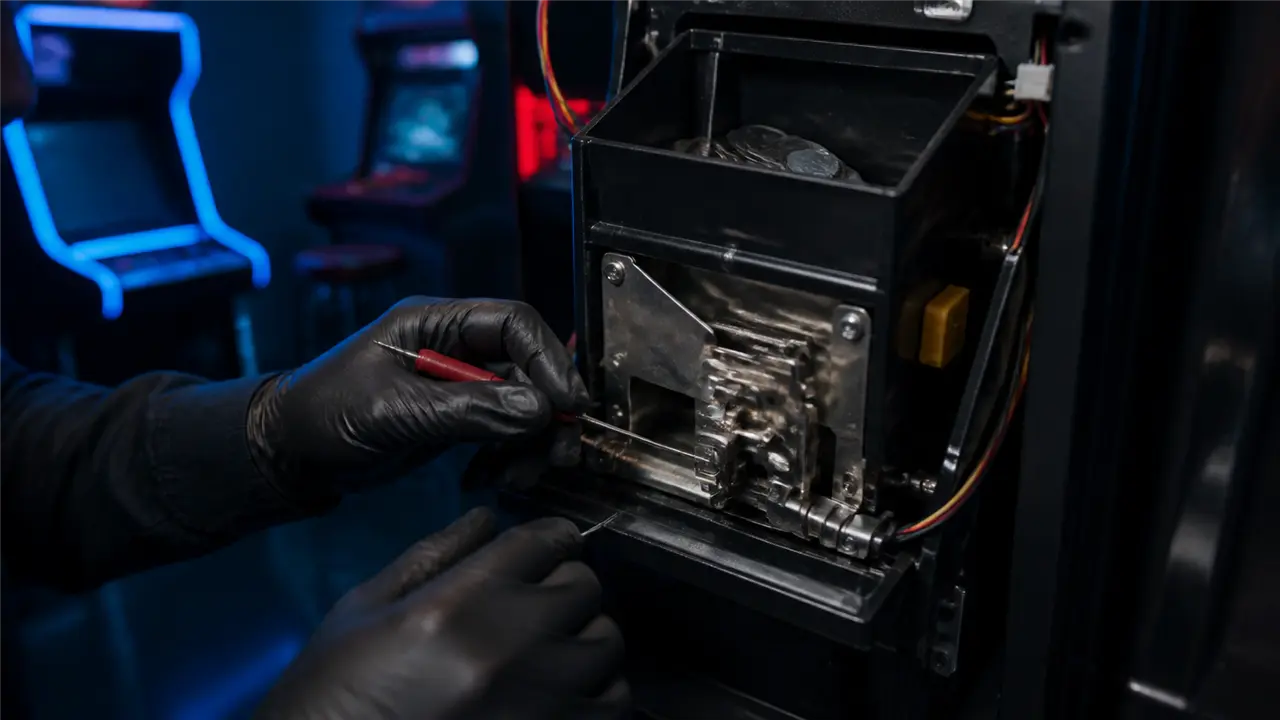
To prevent drilling and cutting, active mesh continuity loops are embedded within the enclosure panels. A low-voltage, high-frequency signal continuously circulates through this mesh. If a drill bit severs any part of the trace, the resulting open circuit is instantly recognized. This immediately triggers a non-maskable interrupt that clears sensitive volatile memory, protecting cryptographic keys and credit data.
Optical Door Switch Anomalies

Standard mechanical door switches can be easily defeated with a magnet or shim. Custom security enclosures utilize modulated optical switches. These sensors emit a coded infrared pulse that must reflect off a specifically patterned surface on the cabinet door. Any attempt to bypass the switch with ambient light or a generic reflective surface fails to produce the correct demodulated code, registering as a tamper event.
Integrated Audit and Telemetry Logging
Physical detection is useless without secure logging. Every tamper event, tilt alarm, and continuity breach is written to an immutable, battery-backed SRAM accompanied by a cryptographic timestamp. The system leverages an encrypted cellular or Wi-Fi uplink to stream these logs to the route operator’s central server in real-time, allowing for rapid dispatch of security personnel.
Parameter Comparison Table
| Sensor Technology | Traditional Enclosure | Custom Tamper Detection System |
|---|---|---|
| Door Switches | Mechanical / Magnetic | Modulated Optical |
| Tilt Sensing | Pendulum / Mercury | 6-Axis MEMS Accelerometer |
| Drill Protection | Thick Steel | Active Continuity Mesh |
| Intrusion Sensing | None | Volumetric Capacitive Field |
| Audit Logging | Local Plaintext | Encrypted Real-Time Telemetry |
Advanced PCB Layer Isolation and High Voltage Pulse Hardening Architecture
In commercial route operations and high-stakes casino floors, transient voltage surges from high-frequency EMP jammers can easily induce parasitic latch-up in sensitive microcontroller CMOS gates. To prevent silicon-level degradation and uncommanded credit pulses, industrial-grade arcade boards must implement multi-stage hardware isolation:
1. Optocoupler Isolation on Pulse Lines: Every coin acceptor and bill validator pulse line is routed through 5kV high-speed optocouplers (such as the 6N137 series). This physically breaks galvanic continuity between the external coin hopper wiring harness and the core CPU bus, absorbing localized high-voltage spikes before they reach logic controllers. 2. Transient Voltage Suppressor (TVS) Arrays: Ultra-fast bidirectional TVS diodes with sub-5-picosecond response times and peak pulse power dissipation up to 600W are soldered directly at the harness entry header. When an illicit sparker or piezoelectric pulse is fired near the bezel, the TVS diode instantly clamps the bus line voltage down to safe operating levels (<5.5V DC). 3. Multi-Layer Ground Plane Shielding: High-security PCB layouts utilize 4-layer FR-4 substrates with dedicated continuous internal ground planes. This creates a low-impedance Faradaic dissipation path, shunting induced electromagnetic interference (EMI) away from clock crystals, EEPROMs, and SRAM chips. 4. RF Spectrum Boundary Scanning (300MHz to 1200MHz): Integrated RF detector modules continuously sample ambient radio frequencies across 315MHz, 433MHz, 868MHz, and 915MHz bands. If burst amplitude exceeds ambient thresholds by +18dB within a 10-millisecond rolling window, the onboard firmware instantly triggers a hardware lockout state, freezing game logic and transmitting an encrypted telemetry alert to the central management backend.
| Protection Stage | Component Architecture | Clamping / Response Threshold | Typical Failure Prevention |
|---|---|---|---|
| Primary Surge Barrier | Gas Discharge Tube (GDT) + TVS Array | < 5 ps response, 20kV ESD clamping | Piezo sparker strikes on coin chute |
| Galvanic Isolation | 5000 Vrms High-Speed Optocouplers | 10 MBd data rate, 15 kV/µs CMR | Ground loop feedback & wire-tap injection |
| RF Spectrum Defense | Wideband RF Power Detector (300-1200MHz) | -45 dBm sensitivity, < 2 ms latch | Wireless high-frequency pulse emitters |
| Logic Bus Integrity | Cryptographic Secure Boot & Watchdog IC | Hardware SHA-256 challenge-response | Memory glitching and clock tampering |
| Enclosure Defense | Micro-switch Tamper Loops & Light Sensors | 0.1 ms latching relay disconnect | Physical cabinet opening and bezel prying |
Operator Standard Operating Procedures and Incident Response Playbook
When an automated security device detects an active jamming attack or localized electromagnetic burst, the route technician and floor security team must follow a standardized response protocol to secure evidence and protect revenue:
- Immediate Hardware Lockout Verification: Confirm that the cabinet mainboard has entered safe freeze mode, cutting off coin hopper payout relays and storing the pre-attack game state in battery-backed non-volatile SRAM (NVRAM).
- Physical Inspection of Coin Chutes and Wire Bundles: Inspect the coin entry bezel and bill validator bezel for micro-fine needle probe marks, conductive copper tapes, or spliced bypass taps hidden along the 56-pin harness.
- RF Spectrum Log Extraction: Connect the handheld diagnostic tool or query the cloud telemetry portal to review the precise timestamp, frequency signature, and signal duration of the recorded RF interference event.
- Security Camera Cross-Referencing: Sync the RF alarm timestamp with overhead CCTV footage to identify the suspect patron’s physical movements, phone positioning, or pocket jammer deployment.
Advanced PCB Layer Isolation and High Voltage Pulse Hardening Architecture
In commercial route operations and high-stakes casino floors, transient voltage surges from high-frequency EMP jammers can easily induce parasitic latch-up in sensitive microcontroller CMOS gates. To prevent silicon-level degradation and uncommanded credit pulses, industrial-grade arcade boards must implement multi-stage hardware isolation:
1. Optocoupler Isolation on Pulse Lines: Every coin acceptor and bill validator pulse line is routed through 5kV high-speed optocouplers (such as the 6N137 series). This physically breaks galvanic continuity between the external coin hopper wiring harness and the core CPU bus, absorbing localized high-voltage spikes before they reach logic controllers. 2. Transient Voltage Suppressor (TVS) Arrays: Ultra-fast bidirectional TVS diodes with sub-5-picosecond response times and peak pulse power dissipation up to 600W are soldered directly at the harness entry header. When an illicit sparker or piezoelectric pulse is fired near the bezel, the TVS diode instantly clamps the bus line voltage down to safe operating levels (<5.5V DC). 3. Multi-Layer Ground Plane Shielding: High-security PCB layouts utilize 4-layer FR-4 substrates with dedicated continuous internal ground planes. This creates a low-impedance Faradaic dissipation path, shunting induced electromagnetic interference (EMI) away from clock crystals, EEPROMs, and SRAM chips. 4. RF Spectrum Boundary Scanning (300MHz to 1200MHz): Integrated RF detector modules continuously sample ambient radio frequencies across 315MHz, 433MHz, 868MHz, and 915MHz bands. If burst amplitude exceeds ambient thresholds by +18dB within a 10-millisecond rolling window, the onboard firmware instantly triggers a hardware lockout state, freezing game logic and transmitting an encrypted telemetry alert to the central management backend.
| Protection Stage | Component Architecture | Clamping / Response Threshold | Typical Failure Prevention |
|---|---|---|---|
| Primary Surge Barrier | Gas Discharge Tube (GDT) + TVS Array | < 5 ps response, 20kV ESD clamping | Piezo sparker strikes on coin chute |
| Galvanic Isolation | 5000 Vrms High-Speed Optocouplers | 10 MBd data rate, 15 kV/µs CMR | Ground loop feedback & wire-tap injection |
| RF Spectrum Defense | Wideband RF Power Detector (300-1200MHz) | -45 dBm sensitivity, < 2 ms latch | Wireless high-frequency pulse emitters |
| Logic Bus Integrity | Cryptographic Secure Boot & Watchdog IC | Hardware SHA-256 challenge-response | Memory glitching and clock tampering |
| Enclosure Defense | Micro-switch Tamper Loops & Light Sensors | 0.1 ms latching relay disconnect | Physical cabinet opening and bezel prying |
Operator Standard Operating Procedures and Incident Response Playbook
When an automated security device detects an active jamming attack or localized electromagnetic burst, the route technician and floor security team must follow a standardized response protocol to secure evidence and protect revenue: (for full technical specifications, explore our engineering review on 300-1200MHz RF spectrum scanning and wireless cheat defense)
- Immediate Hardware Lockout Verification: Confirm that the cabinet mainboard has entered safe freeze mode, cutting off coin hopper payout relays and storing the pre-attack game state in battery-backed non-volatile SRAM (NVRAM).
- Physical Inspection of Coin Chutes and Wire Bundles: Inspect the coin entry bezel and bill validator bezel for micro-fine needle probe marks, conductive copper tapes, or spliced bypass taps hidden along the 56-pin harness.
- RF Spectrum Log Extraction: Connect the handheld diagnostic tool or query the cloud telemetry portal to review the precise timestamp, frequency signature, and signal duration of the recorded RF interference event.
- Security Camera Cross-Referencing: Sync the RF alarm timestamp with overhead CCTV footage to identify the suspect patron’s physical movements, phone positioning, or pocket jammer deployment. (for full technical specifications, explore our engineering review on arcade machine security anti-cheat hardware defense)
Frequently Asked Questions
What are volumetric field disruption sensors in arcade security
Volumetric sensors measure the capacitance of the internal cabinet space. They detect the intrusion of tools or hands by measuring changes in the dielectric constant before the attacker reaches the sensitive internal components.
How do active mesh continuity loops prevent drilling attacks
Active meshes are interwoven conductive traces embedded in the cabinet panels. A continuous electrical signal runs through them. If a drill severs a trace, the circuit breaks, instantly triggering a tamper alarm and wiping sensitive data.
Why use modulated optical switches instead of standard magnetic switches
Standard magnetic switches can be bypassed by placing an external magnet near the sensor. Modulated optical switches require a specific, pulsed infrared reflection, making them immune to simple bypass techniques.
For enterprise deployment of these systems, consult Engineer Wang at Guangzhou Miba Animation Technology Co., Ltd. (Panyu Manufacturing Base). WhatsApp: +86 17620842078. Telegram: https://t.me/JLwyc. Email: miba515527@gmail.com.