- Strategic Cost Benefits of Full Source Code Ownership
- Unity Fish Game Source Code Buyout Pricing and Licensing Structures
- Business Model Comparison Matrix
- Technical Architecture of Modern Fish Hunting Games
- Mathematical Odds Engine and Dynamic RTP Algorithms
- Backend Infrastructure and Node Go Server Deployment
- [Multi Tier Agent](/multi-tier-agent-backend-systems-for-arcade-operators/) Backoffice Hierarchy and Financial Gateways
- Executing the Deployment and Launch Strategy
- Securing Your Path to Full Platform Ownership
- Frequently Asked Questions
Modern arcade and casino platform operators consistently search for reliable pathways to ownership and full technical control over their software infrastructure. Buying complete Unity fish game source code eliminates endless monthly revenue share fees and provides the technical autonomy required to conquer highly competitive regional markets. By securing the source code, businesses bypass standard software-as-a-service limitations, allowing them to integrate proprietary payment gateways, adjust core return-to-player algorithms, and fully brand the user interface.
This guide thoroughly examines the complete technical landscape of Unity fish game source code buyout pricing, architectural deployment strategies, mathematical odds engine implementation, and server-side configurations. Operators looking to scale operations, maximize profit margins, and secure permanent intellectual property rights will discover a robust blueprint for navigating turnkey game software acquisition and deploying independent platforms worldwide. From optimizing the WebSocket determinism to expanding the backend microservices, this extensive manual covers every core component required to succeed. For a comprehensive architectural overview and turnkey procurement frameworks, review our master guide on white label casino software guide. For factory-direct procurement and comprehensive engineering specs, consult our master guide on game software source code buyout and turnkey development.
Strategic Cost Benefits of Full Source Code Ownership
The conventional route for launching an online fish hunting game often involves white-label partnerships or revenue-sharing agreements where the operator surrenders a significant percentage of Gross Gaming Revenue. This model functions adequately for initial market entry but quickly becomes a financial liability as transaction volumes scale. The continuous bleed of monthly operational taxation severely hampers aggressive marketing reinvestment and restricts long-term platform evolution. To explore detailed technical specifications and deployment considerations, see our operational guide on How White Label Sweepstakes Software Powers. To explore detailed technical specifications and deployment considerations, see our operational guide on How Gaming Operators Scale Cross Platform. To explore detailed technical specifications and deployment considerations, see our operational guide on How Mathematical Modeling and Dynamic RTP. To explore detailed technical specifications and deployment considerations, see our operational guide on How Studios Build Custom Crash Games.
Transitioning to a complete source code buyout shifts the operator from a tenant to an owner. A one-time capital expenditure provides unrestrained access to both the Unity client frontend and the backend server architecture. Ownership guarantees that all future profits remain in-house, significantly accelerating long-term return on investment while empowering technical teams to modify the platform securely. Furthermore, operators gain the exclusive ability to compile custom executables, launch specialized regional sub-brands, and license the software to secondary agents under their own commercial terms. Over a three-year operational lifecycle, the financial savings generated by eliminating a standard fifteen percent revenue share easily fund entire internal development teams and massive user acquisition campaigns.
Unity Fish Game Source Code Buyout Pricing and Licensing Structures
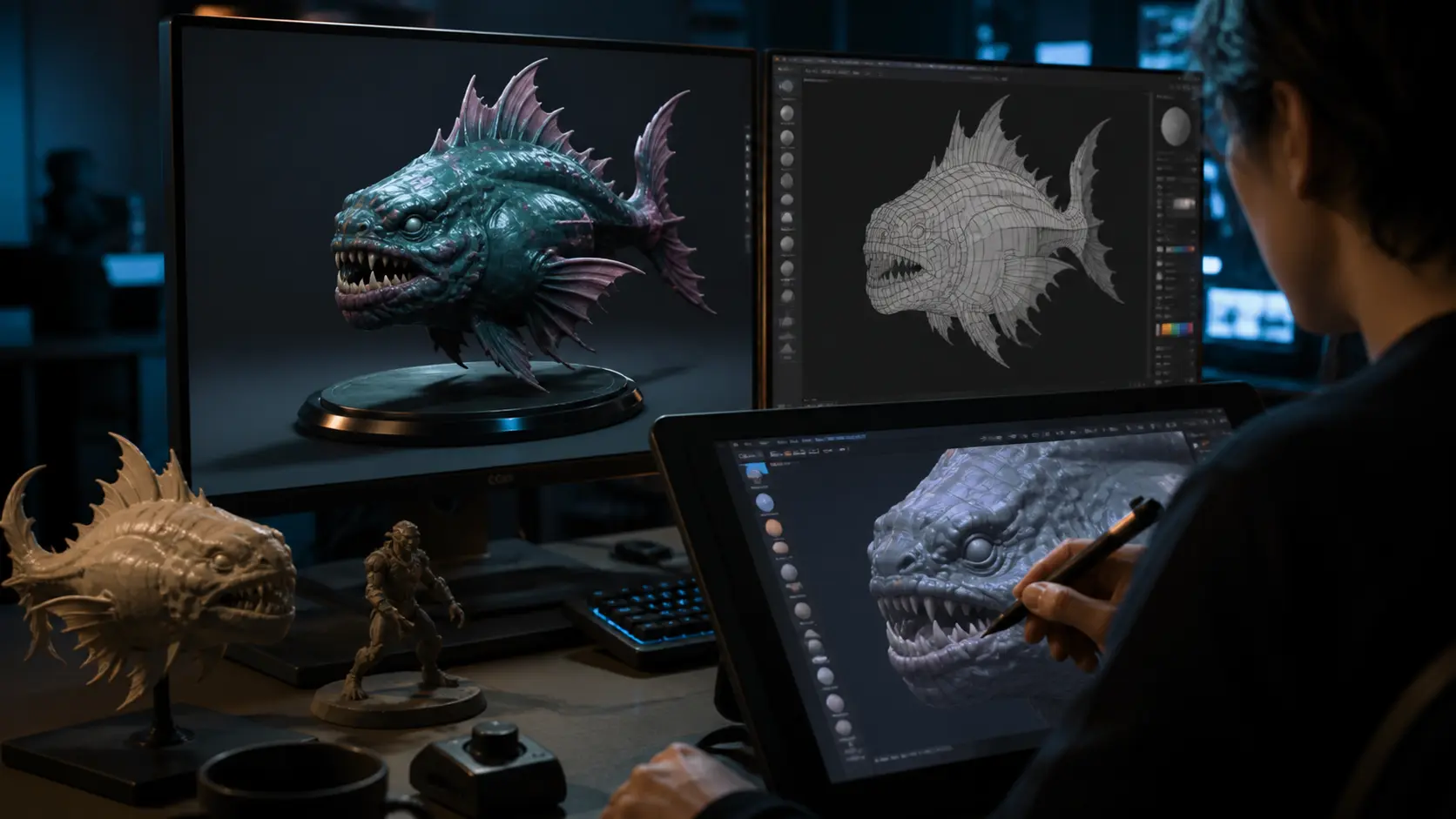
Navigating the financial elements of a source code purchase requires a clear understanding of what assets the package includes. Typically, elite development studios offer tiered acquisition frameworks based on the depth of the provided assets and the complexity of the integrated systems. A transparent breakdown of the provided repositories and intellectual property rights forms the foundation of any successful technology acquisition.
Core Architecture Buyout
A base-level buyout generally encompasses the raw Unity client project files, standard 2D and 3D fish models, basic particle systems, and the compiled server binaries. This tier suits operators possessing an internal engineering team capable of constructing custom backoffice portals and reverse-engineering the database schemas. Pricing for these packages varies heavily based on the age of the game assets, the sophistication of the visual effects, and whether the server source code is partially obfuscated. While cost-effective upfront, this approach demands significant in-house technical capability to launch successfully and maintain long-term stability.
Comprehensive Turnkey Ownership
Premium source code acquisitions deliver an exhaustive suite of technologies. These packages supply the full uncompiled source code for both the Unity client and the entire backend ecosystem, including Node.js or Go language game servers, the React or Vue backoffice administration panels, and complete PostgreSQL or MongoDB database configurations. Buyers receive extensive API documentation, deployment automation scripts, and technical support hours. This tier guarantees that operators possess absolute control over every single byte of data and every logical function within the platform.
To explore customized buyout packages and secure high-performance Unity arcade codebases, contact Engineer Wang via WhatsApp +86 17620842078, reach out on Telegram https://t.me/JLwyc, or send a direct Email to miba515527@gmail.com for a comprehensive technical consultation and pricing breakdown.
Business Model Comparison Matrix
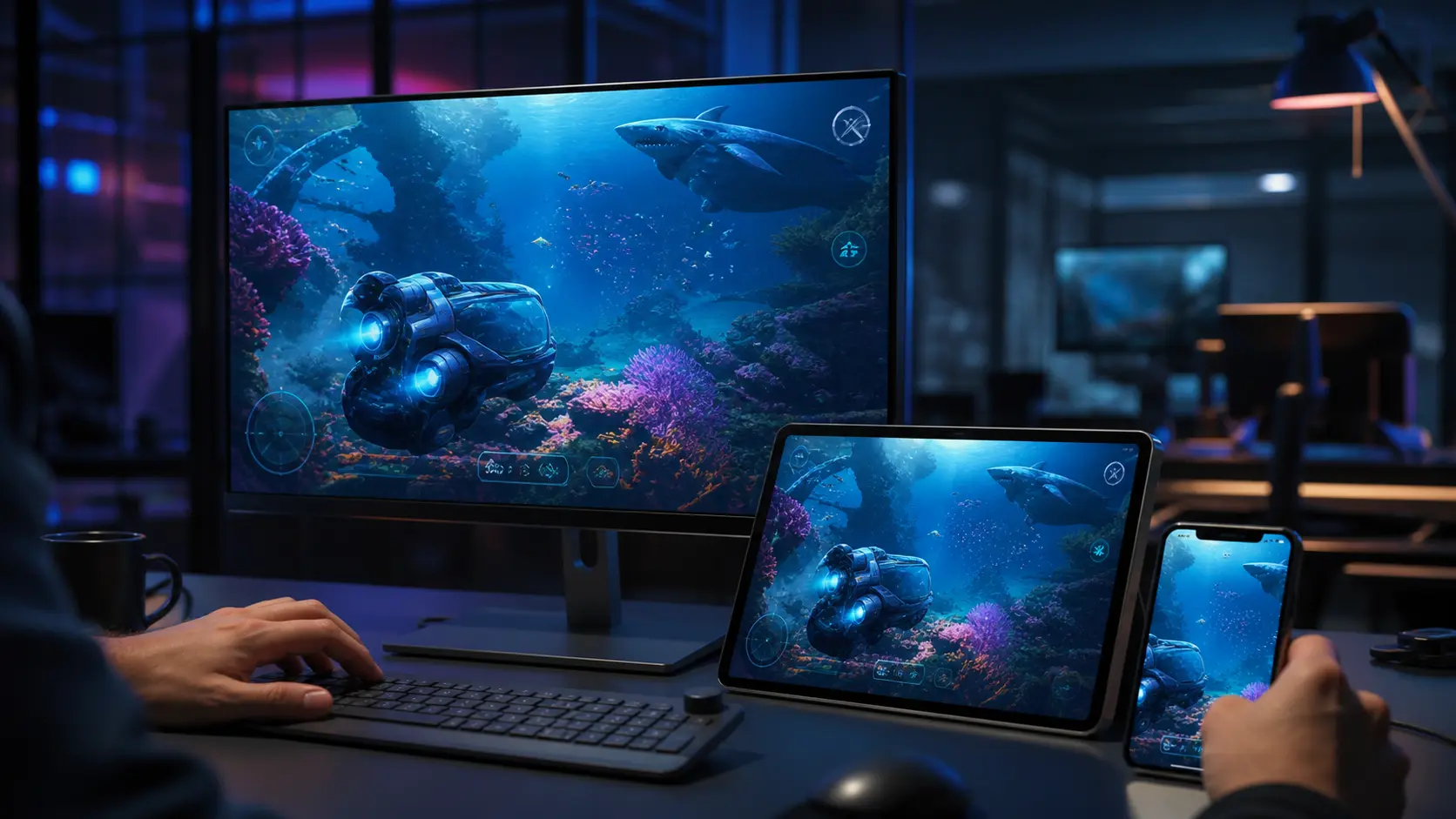
The following table meticulously compares the strategic and financial implications of different operational models in the iGaming and arcade sectors. It highlights why high-volume platforms eventually migrate toward complete code ownership.
| Operational Feature | Full Source Code Buyout | White Label SaaS | Revenue Share Model |
|---|---|---|---|
| **Initial Capital Expenditure** | High upfront cost | Moderate setup fee | Zero to minimal setup fee |
| **Ongoing Profit Margins** | 100% retained | Moderate (fixed monthly fees) | Low (surrender 15-30% GGR) |
| **Technical Autonomy** | Complete unrestricted access | Limited to UI branding | Zero access |
| **Database Control** | Absolute ownership | Hosted by provider | Hosted by provider |
| **RTP and Odds Customization** | Deep algorithmic control | Limited preset toggles | Locked by provider |
| **Platform Scalability** | Infinite | Bound by license limits | Bound by contract terms |
| **Deployment Time** | Several weeks for integration | Several days | Immediate |
Technical Architecture of Modern Fish Hunting Games
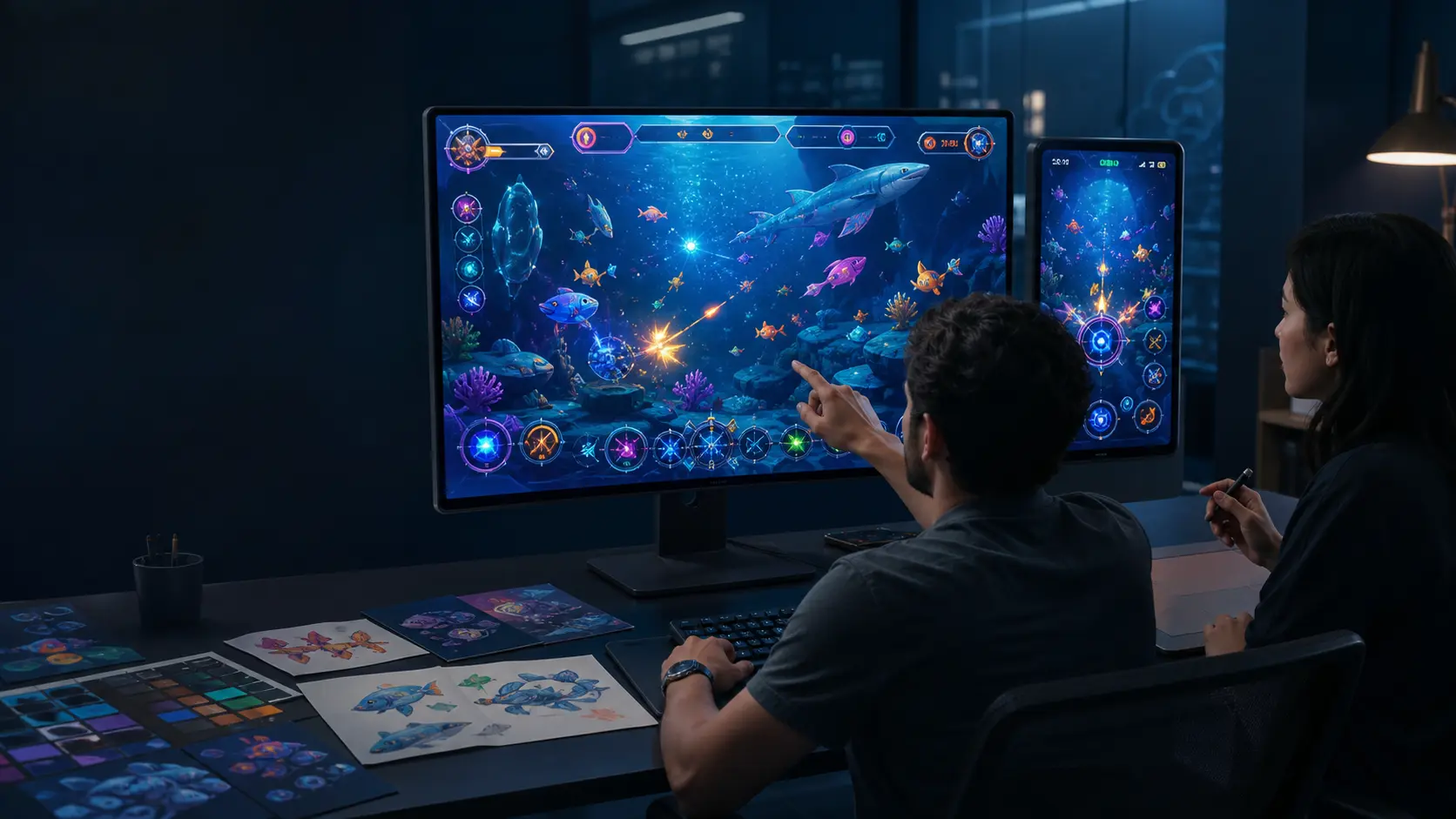
Deploying a high-concurrency multiplayer fish game mandates a highly optimized, distributed client-server architecture capable of processing thousands of rapid-fire collisions per second while strictly preventing client-side manipulation. The foundational structure must inherently distrust the player’s device, relying entirely on server-side validation to govern the flow of currency.
Unity C Sharp Client Rendering Pipeline
The frontend visual experience relies exclusively on the Unity engine, utilizing advanced C# scripting to handle complex asset rendering, pathfinding interpolation, and user input capture. Modern fish games require immense graphical fidelity to engage players, often mixing high-definition 2D sprites with intricate 3D models animated via rigged skeletal meshes. Developers optimize draw calls by utilizing texture atlases and object pooling for the hundreds of bullets and fish appearing simultaneously on screen.
Developers utilize Unity’s Universal Render Pipeline to ensure the game maintains a stable sixty frames per second across diverse hardware, ranging from high-end desktop web browsers to budget Android smartphones. Asset bundles play a crucial role in memory management; rather than forcing players to download all resources simultaneously, the client dynamically streams textures, particle effects, and audio files over HTTP based on the current active room. This reduces initial load times and significantly lowers player abandonment rates during the initial application launch.
WebSocket Deterministic Collision Handling
Network communication between the Unity client and the backend server relies almost entirely on persistent WebSocket connections. Traditional REST APIs introduce unacceptable latency for a fast-paced shooting game where millisecond precision defines the user experience. WebSockets enable full-duplex, real-time data transmission, allowing the server to broadcast fish spawn coordinates, movement vectors, and game state changes continuously to all connected clients within a specific virtual room.
Security dictates that all collision detection and hit validation must occur on the server. The Unity client acts merely as a visual presentation layer and input transmitter. When a player fires a weapon, the client sends a message containing the projectile angle, timestamp, and target trajectory. The server simulates the projectile path, detects intersections with the bounding boxes of active fish, and calculates the probability of a successful capture using the core mathematical engine. This deterministic approach completely neutralizes client-side aimbots, memory injection tools, and packet spoofing exploits.
Mathematical Odds Engine and Dynamic RTP Algorithms
The absolute core of any commercially viable fish game lies in its mathematical volatility model and Return to Player configuration. Unlike static slot machines, fish games introduce an element of perceived skill, masking the underlying probability distributions with rapid gameplay and chaotic on-screen action. The engine must perfectly balance player gratification against the operator’s required profit margins.
Algorithmic Hit Probability Calculation
When the server processes a collision event, it does not simply rely on a fixed percentage. The capture probability $P(c)$ for any specific fish depends dynamically on multiple variables, including the baseline multiplier of the fish $M_f$, the current bet level of the player $B_p$, the player’s personal historical win/loss delta $D_p$, and the global pool surplus of the specific game room $S_r$.
A standard hit validation algorithm might utilize a formula resembling the following logic.
$P(c) = \frac{B_p}{M_f} \times K(D_p, S_r) \times \epsilon$
In this equation, $K$ represents a dynamic adjustment coefficient regulated by the backoffice risk management settings, and $\epsilon$ represents a cryptographic random number generated by a secure pseudo-random number generator. If $P(c)$ exceeds a predetermined threshold, the server flags the fish as captured, broadcasts the death animation sequence to all clients in the room, and credits the player’s account. This multi-variable approach ensures that no two sessions feel perfectly identical, keeping the player deeply engaged in the gameplay loop.
Dynamic RTP Control and Financial Risk Management
Operators require granular control over the global Return to Player metric, typically maintaining an RTP between 85% and 98%. A full source code buyout grants direct access to these mathematical levers. The server maintains strict accounting ledgers for every individual game instance, continuously monitoring the influx of player wagers against the outflow of prize payouts. Advanced analytics dashboards provide real-time visibility into the exact financial health of the platform at any given microsecond.
If a particular room approaches a predefined payout deficit, the dynamic odds engine automatically tightens the global capture probability, making high-multiplier boss fish temporarily invincible or requiring significantly more ammunition to defeat. Conversely, if the system accumulates excess reserves, it can trigger localized jackpot events, swarm periods, or increase the hit rate to stimulate player engagement and extend session length. Operators can configure these volatility curves directly within the game server configuration files or through a secure administrative API, allowing for precision tuning based on distinct geographical market preferences.
For deep dives into optimizing RTP algorithms and acquiring verified, mathematically balanced fish game source code, connect directly with Engineer Wang. Start a conversation on WhatsApp +86 17620842078, chat via Telegram https://t.me/JLwyc, or Email miba515527@gmail.com to request detailed mathematical documentation and architecture diagrams.
Backend Infrastructure and Node Go Server Deployment
Scaling a real-time multiplayer arcade platform demands robust backend infrastructure engineered for high availability and low latency. The most performant fish game servers currently utilize either Node.js for asynchronous event-driven I/O or Go for extreme concurrent processing capabilities. The choice of language heavily influences the deployment strategy and the maximum concurrent player limits per server instance.
Distributed Microservices Architecture
A monolithic server architecture quickly becomes a bottleneck during peak traffic periods, especially when processing massive arrays of floating point physics calculations. Therefore, enterprise-grade fish game source code employs a distributed microservices topology. The infrastructure typically splits into several specialized components that communicate via high-speed internal remote procedure calls or message brokers like RabbitMQ or Apache Kafka.
Gateway servers manage incoming WebSocket connections, handling SSL termination and initial user authentication before routing the client to an available game node. State servers manage the active game logic, running the physics simulations, pathfinding algorithms, and collision detection for specific rooms. Wallet servers handle all financial transactions, securely locking user balances during gameplay and writing state changes to the database. This modular approach allows operators to dynamically spin up additional state servers to handle sudden spikes in player activity without disrupting the core wallet or gateway systems. It also isolates critical financial services from the highly volatile game logic components.
High Performance Database Ledger Security
Data integrity represents the highest priority for casino operators. The system cannot afford dropped transactions or database deadlocks during high-frequency betting rounds. The architecture generally leverages an in-memory datastore like Redis to handle rapid, volatile state changes, such as active bullet counts, temporary player session tokens, and real-time room populations. Redis operations process in sub-millisecond speeds, making it the perfect intermediary layer.
For persistent data storage, including user account balances, detailed transaction histories, and administrative configurations, the system utilizes robust relational databases like PostgreSQL or highly scalable NoSQL solutions like MongoDB. Database sharding and read replica configurations ensure the system remains responsive even when parsing millions of daily transaction logs. Security protocols mandate strict field-level encryption for sensitive user data and immutable transaction logging to facilitate comprehensive financial auditing and dispute resolution. Automated backup systems stream database snapshots to cold storage continuously, guaranteeing zero data loss in the event of hardware failure.
[Multi Tier Agent](/multi-tier-agent-backend-systems-for-arcade-operators/) Backoffice Hierarchy and Financial Gateways
A critical advantage of acquiring complete source code lies in the ability to construct unlimited, deeply nested agent hierarchies without incurring per-seat licensing fees. The backoffice administration panel serves as the command center for the entire operation, dictating the flow of funds and the delegation of operational authority.
Infinite Agent Commission Structures
The backoffice software enables the creation of master administrators, regional distributors, sub-agents, and promoters. Each tier possesses specific access privileges and commission structures based on gross gaming revenue or total betting turnover. The system automates the complex calculations required to distribute daily, weekly, or monthly settlements across the entire hierarchy, providing transparent reporting dashboards for all stakeholders. This structure empowers operators to rapidly expand their network of affiliates and boots-on-the-ground agents without manually calculating complex revenue splits.
Custom Payment Gateway Integration
Operating in diverse international markets requires the flexibility to integrate localized payment solutions. Standard SaaS platforms restrict operators to a limited selection of approved payment processors, often charging exorbitant integration fees or shaving percentages off every transaction. A source code buyout provides the freedom to develop custom API wrappers for regional bank transfers, localized mobile wallets, and various cryptocurrency networks including USDT via TRC20 and ERC20 protocols. This autonomy significantly reduces transaction friction, lowers processing fees, and accelerates deposit and withdrawal times for end-users, massively improving player retention metrics.
Executing the Deployment and Launch Strategy
Successfully launching a fully owned fish game platform involves a highly structured deployment strategy. The process requires precise coordination between the operations team, the server engineering staff, and the marketing division to ensure a flawless public release. A poorly executed deployment can compromise network security or result in severe database inconsistencies.
Infrastructure Provisioning and Environment Configuration
The initial phase involves provisioning the required cloud infrastructure, typically utilizing major providers like AWS, Google Cloud, or specialized offshore hosting environments. Network engineers configure virtual private clouds, firewalls, and DDoS mitigation services like Cloudflare to protect the application layer. The server environments must be strictly segregated into staging, testing, and production tiers to ensure smooth deployment pipelines. Hardware specification requires careful planning; game logic servers prioritize CPU clock speeds, while database servers require exceptionally fast NVMe solid-state drives to handle heavy write loads.
Continuous Integration and Continuous Deployment
Modern development practices dictate the implementation of automated CI CD pipelines. Utilizing tools like Jenkins, GitLab CI, or GitHub Actions, operators can automate the compilation of the Unity client binaries for various platforms, including WebGL, Android APK, and iOS IPA. These pipelines automatically execute unit tests on the core server logic, build Docker containers for the microservices, and orchestrate zero-downtime deployments via Kubernetes clusters.
This level of operational maturity guarantees that future updates, new fish species integrations, and mathematical adjustments can be pushed to the live production environment seamlessly without disrupting active player sessions. Monitoring tools such as Prometheus and Grafana hook into the deployment pipelines, providing engineers with granular telemetry data regarding CPU load, memory consumption, and network latency across the entire cluster.
Securing Your Path to Full Platform Ownership
Transitioning from a revenue-sharing operator to a full software owner represents the most significant step toward building a durable, highly profitable arcade and iGaming business. By securing the complete Unity fish game source code, operators gain absolute control over their technological destiny, financial margins, and mathematical frameworks. The initial investment unlocks limitless scalability, providing the foundation for launching customized regional brands and establishing dominant market positions globally. The ability to dictate platform direction without relying on external vendor roadmaps provides an insurmountable competitive advantage.
Take absolute control of your iGaming infrastructure and eliminate ongoing revenue share fees permanently. To review live demonstrations, analyze backend architecture configurations, and discuss source code buyout pricing, reach out to Engineer Wang today. Contact via WhatsApp +86 17620842078, connect on Telegram https://t.me/JLwyc, or Email miba515527@gmail.com for expert guidance on launching your fully owned platform and maximizing your operational potential.
Frequently Asked Questions
Does a full source code buyout include both the Unity client and the server backend
Yes, a comprehensive source code buyout package includes the uncompiled Unity project files for the visual client, the complete backend server source code (often written in Node.js or Go), the backoffice administration panel code, and all corresponding database schemas. This allows your team to compile, modify, and deploy the entire software stack independently.
How is the RTP configured and controlled after purchasing the source code
Upon acquiring the source code, operators gain direct access to the mathematical odds engine and configuration files. You can dynamically adjust the global Return to Player percentage, modify individual fish multipliers, configure jackpot trigger conditions, and set automated volatility curves to manage payout risks across different game rooms directly through the backoffice or server parameters.
Can we integrate our own localized payment gateways into the platform
Absolutely. One of the primary advantages of owning the source code is the ability to write custom API integrations for any payment processor. You can bypass the limitations of white-label providers and integrate regional bank transfers, localized e-wallets, or specific cryptocurrency networks like USDT TRC20 directly into your wallet server architecture.
What infrastructure is required to host a high-concurrency fish game server
Hosting a real-time multiplayer fish game requires a robust, distributed architecture. Operators typically deploy a microservices ecosystem utilizing cloud providers or dedicated offshore hardware. The stack usually involves gateway servers for WebSocket management, state servers for game physics and collision detection, wallet servers for transaction handling, Redis for in-memory caching, and PostgreSQL or MongoDB for persistent data storage.