- Architectural and Commercial Comparison Matrix
- Unity C# Slot Engine Architecture and Reel State Machine Pipelines
- Dynamic Payline Calculation and Cluster-Pay Evaluation Engines
- Spine 2D and 3D Visual Effects Integration for High-Engagement Bonus Rounds
- Decoupled Mathematical Engines and Server-Authoritative Spin Resolution
- Asset Pipeline Customization and Multi-Language Localization Workflows
- Source Code Due Diligence and Secure Repository Handover Protocols
- Frequently Asked Questions
The strategic acquisition of custom slot game unity source code packages is a pivotal move for leading iGaming operators and game aggregators seeking full autonomy over their product portfolios. When gaming platforms decide to buy online slot machine source code, they are actively bypassing the traditional revenue-share models and restrictive black-box licensing agreements that plague the modern digital casino sector. Purchasing uncompiled Unity C# slot machine source code ensures that the operator holds complete intellectual property rights, enabling deep in-house customization, proprietary mathematical modeling, and seamless integration into custom wallet systems. This highly technical engineering guide explores the mechanics of procuring clean, uncompiled Unity C# source code, avoiding trojaned DLLs, and implementing robust architectures for scalable custom slot game development.
By securing the raw unity slot source code c#, development teams can independently audit the codebase for security vulnerabilities, customize reel configurations, and dictate the precise slot machine rtp programming logic. The shift toward a full buyout model mitigates the risks associated with third-party dependencies, ensures regulatory compliance through transparent RNG (Random Number Generator) certification processes, and eliminates ongoing royalty fees. This document outlines the architectural paradigms, rendering pipelines, and security protocols necessary to successfully acquire and customize enterprise-grade slot machine source code. For a comprehensive architectural overview and turnkey procurement frameworks, review our master guide on turnkey online gaming software source code. For further architectural integration standards, refer to How B2B Operators Evaluate and Deploy Custom. For factory-direct procurement and comprehensive engineering specs, consult our master guide on custom arcade game software studio engineering.
Architectural and Commercial Comparison Matrix
The table below provides a stringent technical comparison between uncompiled Unity C# source code buyouts, obfuscated binary licensing, and standard API slot integration. For further architectural integration standards, refer to How Operators Deploy Turnkey Fish Game WebGL.
| Feature Metric | Uncompiled Unity C# Source Code Buyout | Obfuscated Binary Licensing | Standard API Slot Integration |
|---|---|---|---|
| Re-theming Speed | Extremely fast via Unity Prefab overriding | Slow and dependent on vendor timelines | Non-existent to minimal |
| Payline Logic Customization | Absolute control via raw C# modification | Hardcoded and inaccessible | Fixed by remote game provider |
| RTP Math Engine Control | Full access for proprietary slot machine rtp programming | Opaque black-box implementation | Strict server-side control by vendor |
| Offline Testing Capability | Unrestricted local execution and debugging | Difficult due to DRM and remote checks | Impossible |
| Total Cost of Ownership | High initial capital expenditure but zero ongoing royalties | Medium upfront plus recurring license fees | Low entry cost but high perpetual revenue share |
| Security Auditing | 100% transparent and compilable from source | Susceptible to trojaned DLLs and backdoors | Reliant entirely on third-party audits |
Unity C# Slot Engine Architecture and Reel State Machine Pipelines
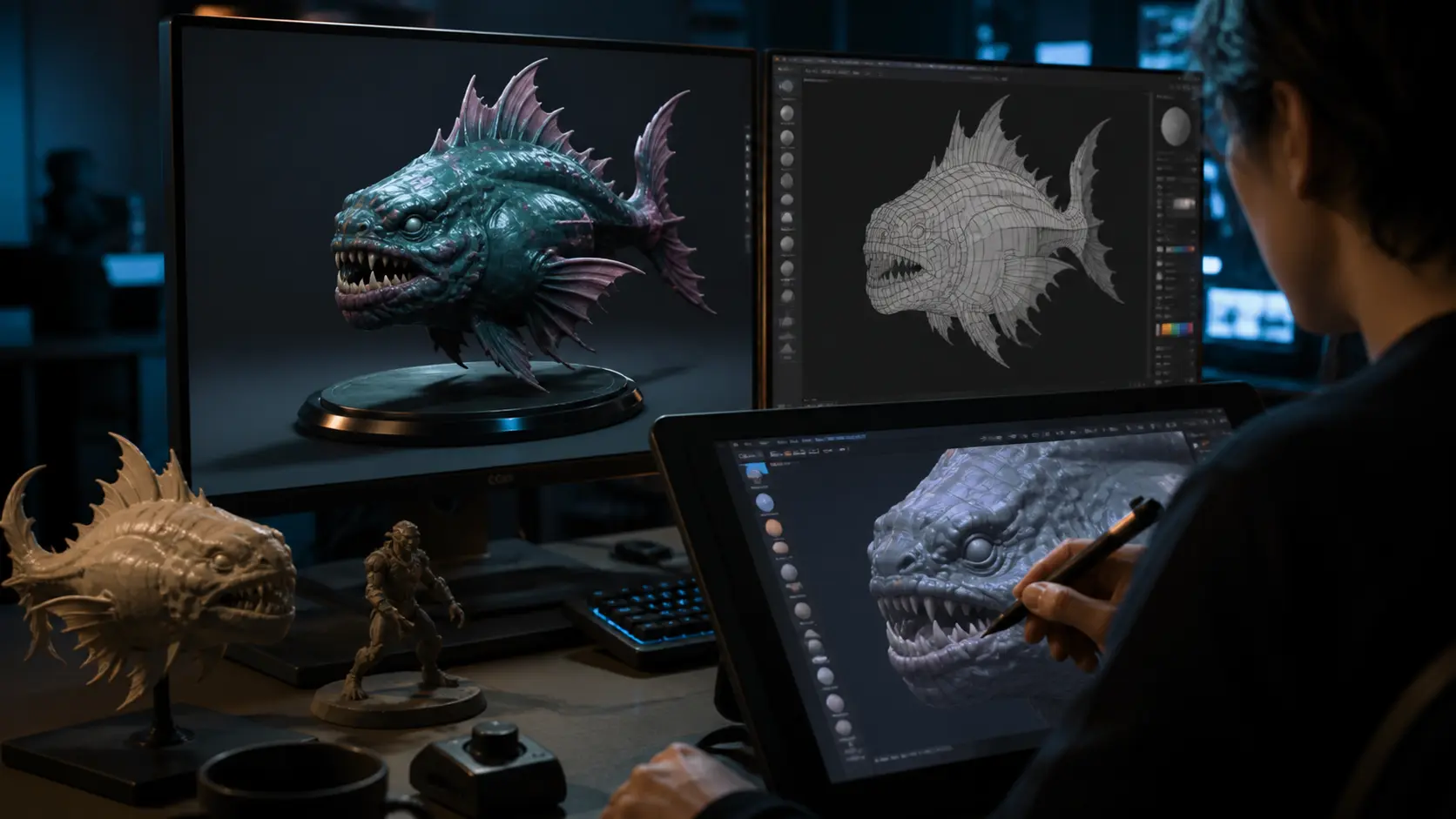
When evaluating custom slot game unity source code packages, the foundational element is the reel state machine pipeline. A robust custom slot game development architecture avoids monolithic update loops in favor of a decoupled, event-driven state machine. The reel spin lifecycle—encompassing idle, acceleration, constant velocity, deceleration, and bounce-back states—must be meticulously managed by discrete C# classes utilizing the Unity DOTween library or custom Coroutines for frame-independent interpolation.
In an enterprise-grade unity slot source code c# package, the visual representation of reels is entirely detached from the underlying mathematical evaluation. The state machine dictates the transition between states based on authoritative server responses or local deterministic math engines. The acceleration phase involves calculating the initial velocity vector, transitioning seamlessly into a constant velocity loop where reel symbols are dynamically instantiated, recycled, and repositioned using object pooling patterns. This object pooling is critical to prevent garbage collection spikes that can cause micro-stutters during high-speed spins on mobile devices.
The deceleration phase is perhaps the most mathematically complex, requiring a pre-calculated spline curve to ensure the reel lands exactly on the targeted symbol index. A high-quality codebase will abstract this interpolation logic, allowing technical artists to tweak the easing curves without altering the core C# implementation. The final bounce-back or elastic landing effect relies on precise transform manipulation, culminating in the broadcasting of an “OnReelStop” event, which triggers the subsequent evaluation pipeline.
Dynamic Payline Calculation and Cluster-Pay Evaluation Engines

The core differentiator in premium slot machine rtp programming lies in the payline calculation and cluster-pay evaluation engines. When you buy online slot machine source code, the evaluation engine must support multi-directional paylines, scatter pays, and complex cluster mechanics (such as cascading reels or Megaways). The Unity C# architecture typically employs a grid-based coordinate system where each symbol is mapped to a two-dimensional matrix representing the final spin state.
For standard payline evaluation, the system iterates through a pre-defined array of valid paths across the grid. Efficient custom slot game development necessitates utilizing bitwise operations or optimized loop structures in C# to rapidly evaluate thousands of potential winning combinations per frame. The mathematical engine cross-references the instantiated symbol IDs against a comprehensive payout table, applying multipliers and wild substitutions dynamically.
Cluster-pay evaluation engines require a fundamentally different approach, often utilizing Breadth-First Search (BFS) or Depth-First Search (DFS) algorithms to identify contiguous groupings of identical symbols. The custom slot game unity source code must gracefully handle edge cases, such as overlapping clusters or cascading chain reactions, where winning symbols are destroyed and new symbols fall into place. The integration of Unity’s asynchronous programming model (`async/await`) is highly beneficial here, allowing the evaluation logic to pause while visual destruction and cascading animations play out, ensuring perfect synchronization between the mathematical outcome and the visual presentation.
Spine 2D and 3D Visual Effects Integration for High-Engagement Bonus Rounds

Acquiring raw unity slot source code c# provides the absolute freedom to overhaul the visual fidelity of the game through advanced asset integration. Modern slot games rely heavily on Esoteric Software’s Spine 2D for character animations and dynamic symbol effects. The codebase must feature a seamless integration layer for the Spine-Unity runtime, allowing for programmatic control over animation states, mixing times, and event attachments.
During high-engagement bonus rounds—such as free spins or pick-and-win mini-games—the visual effects pipeline must transition smoothly from standard 2D rendering to complex particle systems and 3D overlays. High-quality custom slot game development utilizes Unity’s Universal Render Pipeline (URP) to manage multiple camera layers, ensuring that explosive particle effects (created via the Shuriken system or Visual Effect Graph) are rendered consistently above the reel layers but below the UI canvas.
The integration of 3D visual effects often involves instantiating dynamic 3D models overlaying the 2D grid. The source code must include utility scripts that map 2D screen coordinates to 3D world space, ensuring that 3D coins or expanding wilds align perfectly with the underlying reel matrix. By possessing the uncompiled C# files, development teams can optimize the draw calls and shader complexity, ensuring smooth 60 FPS performance across lower-end Android devices while maintaining high visual impact.
Decoupled Mathematical Engines and Server-Authoritative Spin Resolution
A critical aspect of slot machine rtp programming is the strict separation between the client-side presentation layer and the server-side mathematical engine. When gaming platforms buy online slot machine source code, they must ensure the architecture supports server-authoritative spin resolution. The Unity client should act purely as a dumb terminal, rendering the results dictated by an external Random Number Generator (RNG) and mathematical model.
The communication protocol—typically WebSockets for real-time multiplayer slots or secure HTTPS REST APIs for standard games—must be encapsulated within a robust networking manager class. Upon initiating a spin, the client sends a request to the server and enters a holding state. The server executes the highly complex RNG logic, calculates the final grid matrix, determines all winning combinations, and sends a compressed JSON or Protobuf payload back to the Unity client.
The custom slot game unity source code must parse this payload and feed the deterministic outcome into the reel state machine. This decoupled approach prevents client-side manipulation and ensures absolute integrity in the RTP calculations. Furthermore, for offline or standalone arcade terminal deployments, the source code should include a local stub of the math engine, allowing operators to compile a standalone build where the RNG and paytable logic execute locally without requiring a persistent internet connection, while still maintaining the identical mathematical distributions.
Asset Pipeline Customization and Multi-Language Localization Workflows
Enterprise operators investing in custom slot game development require streamlined workflows for rapid re-theming and localization. Clean unity slot source code c# packages leverage Unity’s ScriptableObjects to decouple data from logic. The asset pipeline should define all game configurations—including symbol textures, audio clips, animation controllers, and base probabilities—within easily modifiable ScriptableObject instances.
This architecture enables technical artists and game designers to clone an entire slot machine, swap out the visual and audio assets within the Unity Editor, and generate a completely new game variant without writing a single line of C# code. The reliance on Unity Prefab variants ensures that updates to the core engine logic are inherited by all themed iterations, drastically reducing maintenance overhead.
Multi-language localization workflows must be deeply integrated into the custom slot game unity source code. Hardcoded strings are strictly forbidden. The UI rendering pipeline must hook into a centralized localization manager that loads language-specific JSON dictionaries at runtime. The UI components (such as TextMeshPro fields) must dynamically resize and adjust font fallback mechanisms to accommodate languages with complex character sets, such as Arabic, Thai, or simplified Chinese. This level of architectural foresight is mandatory for platforms targeting global demographics.
Source Code Due Diligence and Secure Repository Handover Protocols
The commercial acquisition of uncompiled source code requires stringent due diligence and secure handover protocols to mitigate risks associated with malicious code injection or intellectual property disputes. When a platform decides to buy online slot machine source code, the engineering team must conduct a comprehensive audit of the provided repository before finalizing the transaction.
The first step in this protocol involves static code analysis using tools like SonarQube to identify deprecated APIs, potential memory leaks in the Unity Mono framework, and deviations from standard C# coding conventions. Security auditing focuses intensely on identifying obfuscated classes, undocumented network calls (potential backdoors), and trojaned DLLs hidden within the `Plugins` directory. A pristine unity slot source code c# package must provide the complete source for all proprietary logic, relying only on officially verified third-party assets from the Unity Asset Store.
The secure repository handover protocol should dictate a transfer via a private, self-hosted Git repository. The commit history should be scrutinized to verify the origin and evolution of the codebase. Following the handover, the acquiring team must be able to compile the project cleanly using the specified Unity Editor version, completely independent of the original vendor’s environment. This guarantees true ownership and sets the foundation for ongoing, autonomous custom slot game development.
Frequently Asked Questions
Question How does acquiring uncompiled custom slot game unity source code benefit iGaming operators compared to revenue-share models?
Acquiring uncompiled custom slot game unity source code allows operators to completely eliminate ongoing revenue-share fees paid to third-party game providers. It grants the operator full intellectual property rights, enabling them to re-theme games instantly, customize mathematical models, and deploy games across proprietary networks without licensing restrictions, ultimately maximizing long-term profitability.
Question What are the security advantages of choosing to buy online slot machine source code outright?
When you buy online slot machine source code outright, your engineering team can perform exhaustive static and dynamic analysis on the raw C# files. This transparency guarantees the absence of trojaned DLLs, hidden backdoors, or malicious data exfiltration routines. It also ensures that the RTP calculations and RNG integrations are fully auditable for regulatory compliance.
Question Why is object pooling essential in unity slot source code c# architectures?
In unity slot source code c#, the continuous instantiation and destruction of reel symbols during high-speed spins generates significant garbage collection overhead, which causes noticeable micro-stutters and frame rate drops on mobile devices. Object pooling resolves this by pre-allocating a fixed number of symbol objects in memory and recycling them dynamically as they move on and off the screen, ensuring a silky-smooth 60 FPS presentation.
Question How does custom slot game development handle complex mathematical evaluation like cascading reels?
In custom slot game development, cascading reels (or avalanche mechanics) require the mathematical engine to utilize grid-based search algorithms (like Breadth-First Search) to identify contiguous symbol clusters. The C# logic must asynchronously manage the destruction of winning symbols, calculate the physics or predefined paths for new symbols falling into the grid, and recursively evaluate the matrix for subsequent wins until no further combinations exist.
Question What role does server-authoritative architecture play in slot machine rtp programming?
A server-authoritative architecture is fundamental to secure slot machine rtp programming. It dictates that the Unity client never computes the spin outcome. Instead, a remote server handles the RNG generation and mathematical evaluation, transmitting the final deterministic result to the client. This prevents any form of client-side hacking or manipulation, guaranteeing that the mathematical model and RTP remain entirely uncompromised.
Contact Information:
Engineer Wang
WhatsApp/WeChat: +86 17620842078
Telegram: https://t.me/JLwyc
Email: miba515527@gmail.com
Guangzhou Miba Animation Technology Co., Ltd.