Commercial arcade operations demand structural hardware engineered to withstand severe public abuse. Uncompromising industrial sheet metal fabrication directly determines the physical longevity and asset security of high-revenue gaming platforms on the floor.
Modern heavy-duty cabinets require 1.5mm to 2.0mm SPCC cold-rolled steel, forged through precision CNC laser cutting and hydraulic press brake bending to achieve sub-millimeter tolerances. We implement multi-stage zinc phosphating alongside high-temperature electrostatic powder baking, ensuring cabinets resist localized corrosion and blunt-force trauma while establishing robust arcade machine security perimeters. By integrating dual-layer anti-pry doors and strategic reinforcement ribs, our enclosures protect delicate internal logic boards and critical cash handling peripherals from sustained tampering. Operators seeking to evaluate our fabrication pipeline firsthand can request a live factory tour via our technical operations desk to inspect our automated CNC routing and welding processes. For a comprehensive architectural overview and turnkey procurement frameworks, review our master guide on arcade machine metal fabrication guide. For factory-direct procurement and comprehensive engineering specs, consult our master guide on arcade game machine manufacturing and custom cabinet sourcing.
Cabinet Material Structural Integrity and Lifecycle Comparison
Selecting the correct structural material for casino and arcade chassis directly influences upfront capital expenditure and long-term depreciation rates.
| Technical Metric | Commercial MDF Wood Cabinets | Low-Cost Thin Steel (0.8mm) | Industrial Heavy-Duty CNC Laser-Cut Steel (1.5mm-2.0mm SPCC) |
|---|---|---|---|
| **Tensile Strength Yield** | < 25 MPa | 200 – 250 MPa | 300 – 400+ MPa |
| **Tamper Resistance** | Very Low (Easily splintered) | Moderate (Vulnerable to severe denting) | Maximum (Resists crowbars and heavy blunt force) |
| **Corrosion Resistance** | N/A (Susceptible to moisture warp) | Low (Quickly rusts at exposed joints) | Superior (Multi-stage phosphate and epoxy baking) |
| **Thermal Dissipation** | Poor (Acts as an insulator) | Moderate (High thermal retention) | Excellent (Rapid heat transfer away from PCBs) |
| **Projected Floor Lifecycle** | 1 – 3 Years | 3 – 5 Years | 10 – 15+ Years |
Precision Laser Cutting and CNC Hydraulic Press Brake Bending
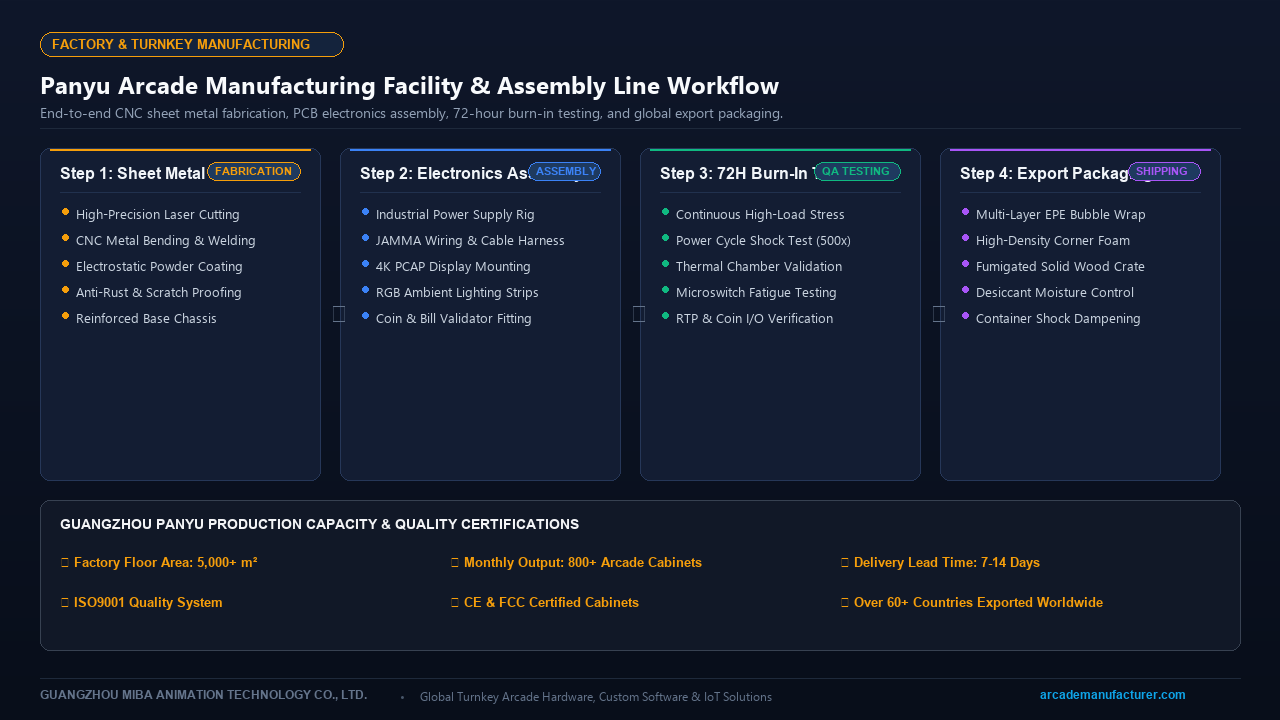
Achieving an impregnable hardware enclosure begins with raw material processing. We exclusively utilize 1.5mm to 2.0mm SPCC cold-rolled steel plates, eliminating the structural vulnerabilities inherent in traditional wooden chassis. Raw steel sheets undergo high-wattage fiber laser cutting, maintaining strict sub-0.05mm tolerances. This surgical accuracy guarantees that intricate chassis panels, monitor bezels, and complex mounting brackets align perfectly during final assembly, preventing misaligned gaps where unauthorized pry tools could gain leverage.
Following laser separation, multi-axis CNC hydraulic press brakes execute precise angular bends. Programmable bending algorithms calculate exact back-spring variables, yielding seamless 90-degree corners and intricate Z-folds without compromising the metal’s internal grain structure. We enforce zero-gap weld joints using automated TIG and MIG welding stations. Highly stressed intersections feature deeply penetrated continuous seam welds rather than weak spot welds. Furthermore, diagonal structural reinforcement ribs are welded across expansive flat panels, drastically mitigating flex and preventing harmonic vibration when high-fidelity audio subwoofers are active.
- [Raw SPCC Steel Plate] -> (Fiber Laser Cutting – Sub-0.05mm Tolerance)
- [CNC Hydraulic Press Brake] -> (Calculated Angle Bending / Z-Folds)
- [Zero-Gap TIG/MIG Welding] -> (Continuous Seam / Reinforcement Ribs)
- [Seamless Structural Chassis Ready for Finishing]
- These rigorous fabrication techniques ensure the physical exterior operates as a primary layer of our hardware defense systems, deterring opportunistic theft and vandalism on unattended gaming floors.
- ## Multi-Stage Surface Treatment and Electrostatic Powder Baking
- A heavy-duty steel chassis requires advanced surface chemistry to prevent oxidation and endure the harsh micro-environments of crowded commercial venues. Untreated or poorly coated steel rapidly degrades under constant human contact, humidity, and accidental fluid spills. We mandate a rigorous multi-stage surface pretreatment protocol before any pigmentation is applied.
- The raw welded chassis first enters an alkaline degreasing bath to remove residual manufacturing oils and cutting fluids. Following multiple high-pressure deionized water rinses, the steel undergoes a specialized zinc phosphating process. This chemical conversion creates a microscopic crystalline layer bonded directly to the steel substrate, drastically improving subsequent powder adhesion and halting sub-surface rust migration if the exterior coating is ever deeply scratched.
- [Alkaline Degreasing] -> (Removes Oils/Debris)
- [Deionized Water Rinse] -> (Neutralizes Surface)
- [Zinc Phosphating] -> (Crystalline Adhesion Layer)
- [Electrostatic Epoxy-Polyester Powder Coating]
- [High-Temperature Baking Oven 200°C] -> (Cross-Linked Polymer Cure)
The pretreated chassis receives a dense application of high-temperature epoxy-polyester powder coat via electrostatic spray guns. The electrical charge ensures uniform wrap-around coverage, even within blind corners and internal mounting channels. The cabinets then travel through a 200°C curing oven, melting the powder into a hardened, cross-linked polymer shell. This finish reliably exceeds 1,000-hour salt spray test ratings, delivering exceptional resistance to impact, abrasion, and aggressive cleaning solvents used daily by venue maintenance crews.
Modular Internal Architecture, Thermal Ducting and Service Access
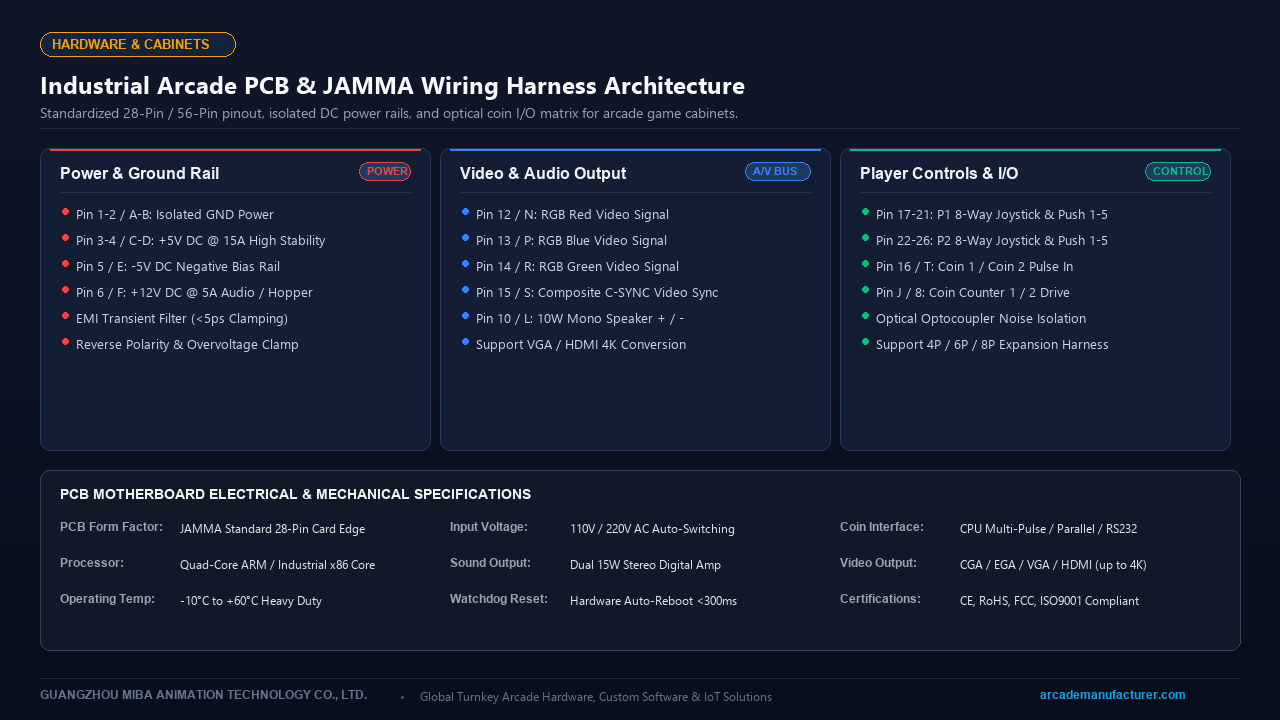
The interior topography of an industrial arcade cabinet must balance impregnable security with rapid serviceability. Route operators require immediate access to logic boards and cash handling mechanisms without exposing the entire machine to vulnerability. We engineer our cabinets with a highly modular internal architecture featuring slide-out PCB trays. Technicians can smoothly extract the main motherboard, power supply, and I/O interface boards on heavy-duty drawer slides, allowing for instantaneous component swaps on the floor without disassembling the primary chassis structure.
Thermal management is equally critical. High-performance gaming platforms utilizing dedicated GPUs generate substantial internal heat. We design calculated thermal ducting pathways, utilizing dual 120mm ball-bearing fan placement to create continuous negative pressure. Cool ambient air is drawn through filtered bottom louvers, directed across the logic boards, and exhausted through top-mounted rear vents. This active convection flow eliminates thermal throttling and drastically extends the operational lifespan of sensitive silicon components.
Security against revenue theft remains paramount. The main cashbox vault is constructed from reinforced 2.0mm steel and secured behind a flush-mounted door featuring anti-pry flanges. We utilize high-security double-bitted cam locks and multi-point locking bars that extend deep into the primary chassis frame. Furthermore, isolated internal routing prevents any cables leading to a potential anti cheat device or card reader from being intercepted or bypassed from the coin-door access panel. This segmented security architecture protects daily revenue while ensuring technicians can safely service arcade locations efficiently.
Quality Assurance Benchmarks and Accelerated Stress Testing
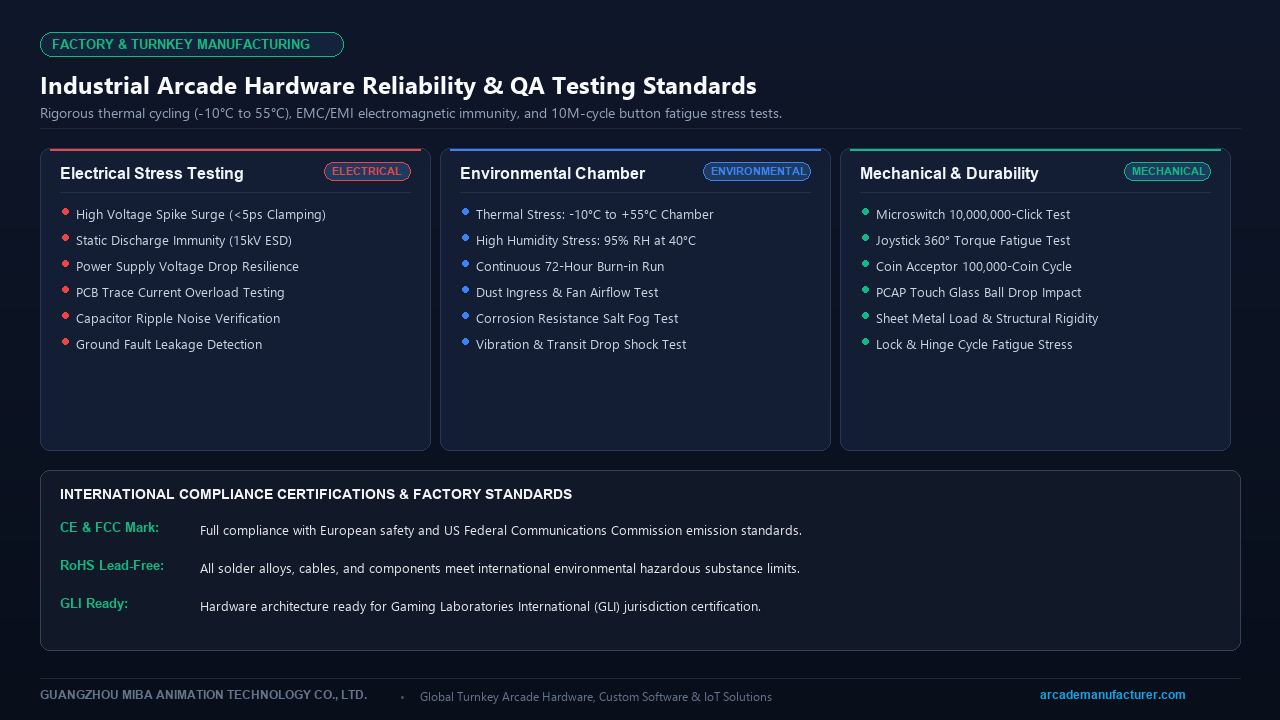
Before deployment, every fabricated cabinet design must pass stringent quality assurance benchmarks to validate its structural resilience. We subject prototype chassis to extreme accelerated stress testing methodologies to simulate years of mechanical abuse on the casino floor.
Drop testing evaluates structural integrity by simulating brutal transit impacts, ensuring heavy internal components like isolation transformers and CRT/LCD mounting brackets do not shear from their welded mounts. Multi-axis vibration resistance testing exposes the cabinet to sustained high-frequency shaking, verifying that zero-gap welds hold firm and internal wire harnesses remain securely fastened to their respective mounting points.
Control panel durability is verified through automated door cycle endurance testing, simulating hundreds of thousands of button presses, joystick wrenching, and coin door slams. Only after passing these destructive physical protocols does a cabinet design enter mass production. Our factory inspection protocol mandates random sampling from the final assembly line, checking dimensional tolerances, coating thickness via electromagnetic gauges, and electrical ground continuity across every metal panel.
Frequently Asked Questions
What makes heavy-duty SPCC steel superior to MDF wood for cabinet construction? Heavy-duty SPCC cold-rolled steel offers immense tensile strength exceeding 300 MPa, providing exceptional resistance against blunt force trauma, moisture warping, and localized vandalism. Unlike MDF, precision CNC laser-cut steel allows for rigid structural reinforcement ribs, superior thermal dissipation, and complex anti-pry locking channels that drastically extend the functional lifecycle of the machine.
How does electrostatic powder baking prevent cabinet corrosion? Electrostatic powder baking applies a dry epoxy-polyester powder to the zinc-phosphated steel chassis. The electrical charge ensures uniform coverage. Once cured in a 200°C oven, the powder melts into a dense, cross-linked polymer layer. This hardened finish resists moisture, scratching, and chemical solvents, easily surviving comprehensive 1,000-hour salt spray durability tests.
Why is modular internal architecture critical for route operators? Modular internal architecture features slide-out PCB trays, quick-disconnect wire harnesses, and segmented cashbox vaults. This design allows floor technicians to rapidly access and replace logic boards, power supplies, or monitors without dismantling the primary structural chassis, significantly reducing machine downtime and labor costs during routine service intervals.
What physical tests are conducted on arcade cabinet sheet metal? Cabinets undergo accelerated stress testing including high-impact drop tests to check weld integrity, multi-axis vibration testing for internal component stability, and extreme automated door cycle endurance tests. Our quality assurance pipeline also verifies sub-0.05mm CNC laser tolerances and validates powder coating thickness to guarantee maximum structural reliability.
—
To discuss custom CNC sheet metal fabrication specifications for your next high-volume gaming platform, contact Engineer Wang at +86 17620842078. Guangzhou Miba Animation Technology Co., Ltd. operates a state-of-the-art manufacturing facility in Panyu, delivering industrial-grade hardware chassis directly to global publishers and route operators.