- The Devastating Impact of Pass Through Trojan Chips on Venue Revenue
- Eradicating Rogue Hardware with Dynamic Key Stream Scrambling
- Defending the Data Pipeline with I/O Line Encryption
- Implementing Anti Tamper Potting Resins for Ultimate Hardware Lockout
- Instant Alarm Triggers on Unauthorized Communication Pulses
- Holistic Defense Uniting Software and Hardware Architectures
- Securing Your Arcade Venue Profitability with Miba Animation
- Frequently Asked Questions
Arcade venue operators are losing thousands of dollars every weekend to organized cheating rings using sophisticated plug-and-play hacking dongles. When revenue drops inexplicably despite high foot traffic, the culprit is rarely simple bad luck. In most cases, a rogue pass-through trojan chip has been covertly installed inside the machine to manipulate the input-output signaling. As the Senior Lead Arcade Security & Anti-Cheat Hardware Architect at Guangzhou Miba Animation, I have dismantled and reverse-engineered hundreds of these illicit devices in our Panyu QA lab. We are an end-to-end original equipment manufacturer and game software developer, entirely focused on delivering secure commercial machines and turnkey venue solutions. We do not deal in piecemeal spare parts for DIY hobbyists; our mandate is engineering bulletproof hardware architectures that protect your bottom line.
In this deep dive, we will explore the harsh reality of modern arcade hacking and detail the enterprise-grade countermeasures we deploy. By integrating dynamic pseudo-random key stream scrambling, encrypted I/O communication, physical potting resins, and instant unauthorized pulse detection, we guarantee that your arcade machines remain profitable.
The Devastating Impact of Pass Through Trojan Chips on Venue Revenue
Commercial fish tables are highly lucrative assets, but their profitability makes them prime targets for sophisticated theft. A pass-through trojan chip is a malicious hardware module designed to intercept and alter communication between the player console and the mainboard. Cheaters briefly distract staff, quickly pop open the control panel using a master key or pry tool, and insert the trojan directly inline with the joystick and button wiring harness.
Once installed, this rogue chip remains entirely dormant during normal gameplay to evade casual detection. However, when the cheater inputs a specific hidden button sequence, the trojan activates. It injects fabricated high-frequency score pulses or alters the shot trajectory data, manipulating the core mathematics of the game. A standard unprotected I/O board accepts these forged signals as legitimate player input, triggering massive unauthorized payouts and rapidly draining your venue’s cash reserves.
The financial bleeding from these invisible attacks is catastrophic. Operators often blame the game’s internal difficulty logic, totally unaware that the hardware itself has been compromised. The only definitive solution is an absolute overhaul of how the machine validates input data.
Eradicating Rogue Hardware with Dynamic Key Stream Scrambling

Legacy arcade cabinets rely on static voltage changes to register button presses. When a player hits “Shoot”, the switch closes, and the line drops to ground. A static mapping system is incredibly vulnerable because a trojan chip only needs to simulate this exact ground pulse to forge an input.
To completely defeat static spoofing, our engineering team developed the Trojan Terminator defense matrix. Instead of waiting for a simple high or low voltage state, our I/O controller and the mainboard communicate using dynamic pseudo-random key stream scrambling.
In this architecture, the host board and the terminal microcontroller exchange a synchronized, continuously rotating cipher sequence. Every single millisecond, the expected electrical signature for a valid button press changes. When a player presses the shoot button, the console microcontroller encrypts that action using the exact key valid for that specific microsecond window. The mainboard receives the encrypted packet, decrypts it using the synchronized seed, and validates the input.
If a cheater installs a pass-through dongle and attempts to inject standard ground pulses, the mainboard instantly rejects the signal because it lacks the necessary dynamic cryptographic signature. Even if the trojan attempts to record and replay a valid encrypted pulse, the replay attack fails completely because the key stream has already rotated. This military-grade scrambling renders all external injection devices functionally useless.
Defending the Data Pipeline with I/O Line Encryption
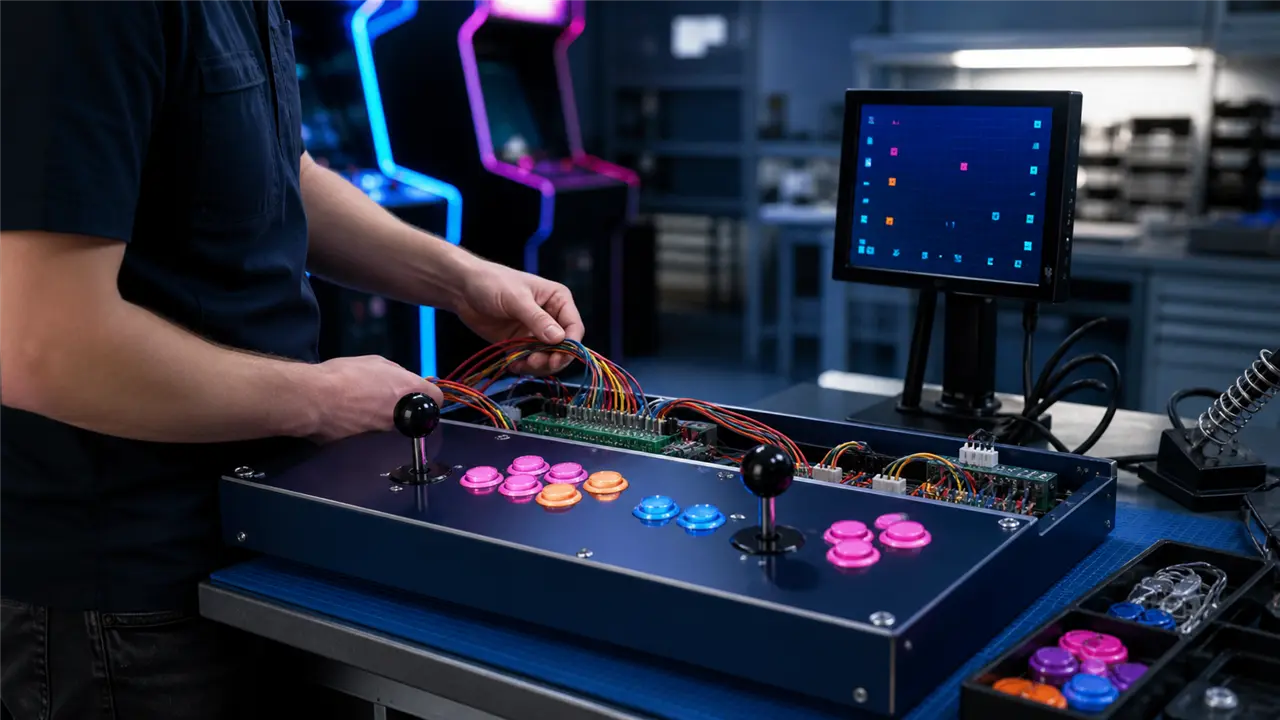
Securing the endpoint is only the first phase of our comprehensive security strategy. We must also fortify the physical data pipeline traveling through the cabinet. The wiring harness connecting the eight-player or ten-player consoles to the central processor spans several feet, presenting a massive attack surface for electromagnetic interference and direct splicing.
Our industrial arcade machine security engineering protocols dictate that raw, unencrypted data must never travel across vulnerable exposed wires. We implement industrial RS-485 differential signaling combined with AES-128 hardware-level encryption across the entire I/O pipeline.
Differential signaling transmits data across two complementary wires. External electromagnetic interference (EMP) from jammers typically affects both wires equally. The receiving differential amplifier at the mainboard reads the difference between the wires, effectively canceling out the injected noise. When combined with our AES-128 encryption, the data traversing the internal harness is entirely opaque to any inline sniffer.
When a malicious actor splices into the harness to read or inject data, all they encounter is scrambled cipher text. Without the localized hardware decryption keys securely locked within the mainboard’s secure enclave, the trojan chip cannot decipher the state of the game or inject meaningful commands. This encrypted pipeline approach ensures that the integrity of your player inputs remains absolutely uncompromised from the microswitch to the game engine.
Implementing Anti Tamper Potting Resins for Ultimate Hardware Lockout
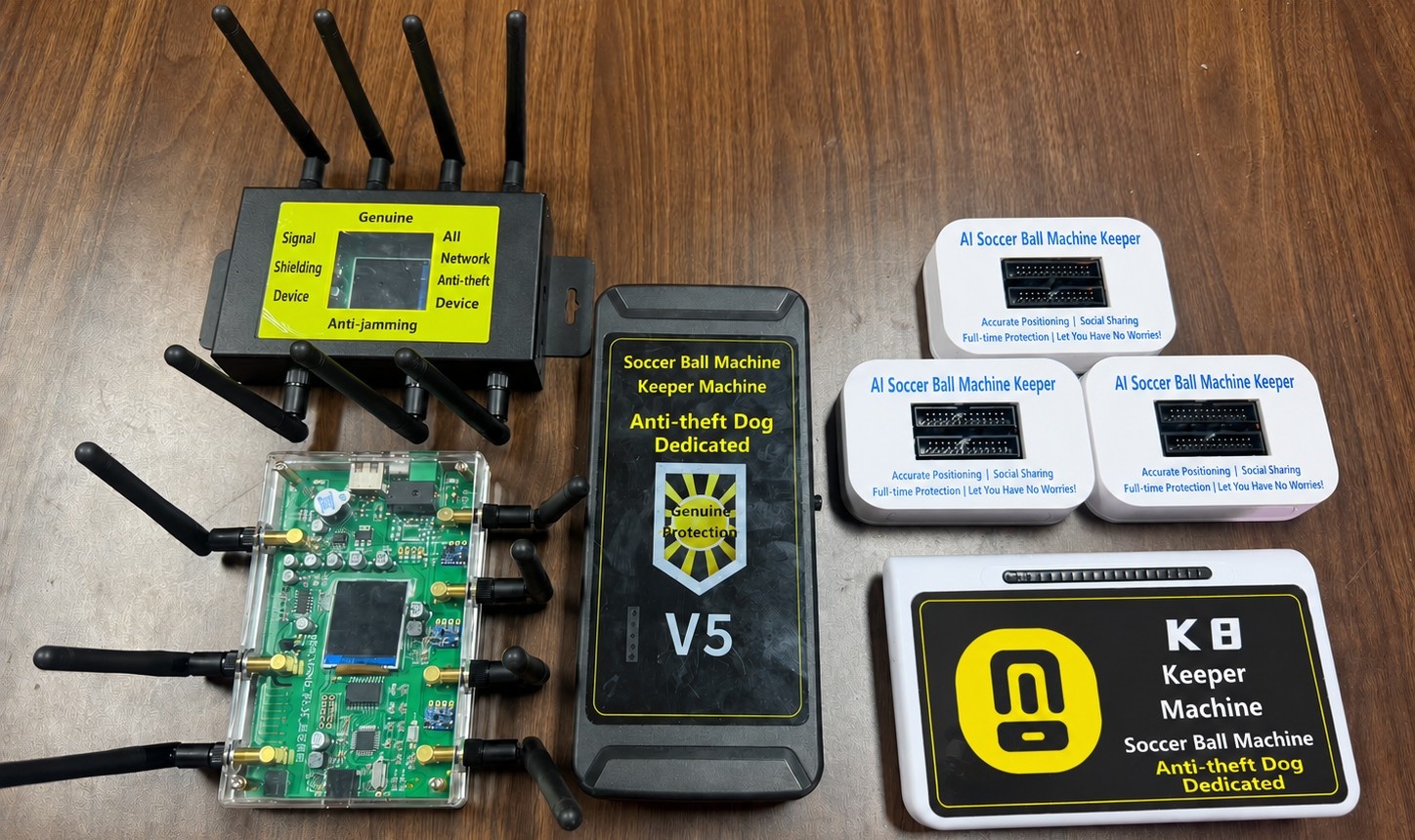
While cryptographic defenses handle logical attacks, we must also confront physical board-level tampering. Highly motivated cheaters will attempt to desolder components, dump firmware from the EEPROM, or attach logic analyzers directly to the microprocessor pins. To stop this hardware manipulation dead in its tracks, we employ extreme physical countermeasures.
In our Panyu manufacturing base, the final stage of security board production involves submerging the entire cryptographic I/O controller in industrial-grade anti-tamper potting resin. We utilize an opaque, highly cross-linked thermosetting epoxy compound that cures to a rigid, rock-hard solid.
This epoxy encapsulates all surface-mount components, vias, and traces. The resin is specifically formulated to be chemically and thermally resistant. If a hacker attempts to dissolve the epoxy using harsh solvents or heat it to soften the compound, the resin binds tighter to the silicon. Excessive force will literally tear the integrated circuits right off the printed circuit board, utterly destroying the hardware and the proprietary firmware housed within it.
Visual inspection is no longer a guessing game for your technical staff. The solid black monolithic block of resin makes it immediately obvious if a board has been modified, scratched, or tampered with. By denying physical access to the diagnostic pins and communication buses, we eliminate the risk of firmware dumping and localized component swapping.
Instant Alarm Triggers on Unauthorized Communication Pulses
Even with our encryption and potting in place, our systems remain vigilant against brute-force attacks. Some crude EMP jammers and hacking devices bypass logical injection and simply blast the circuitry with high-voltage, high-frequency pulses in a desperate attempt to trigger a glitch state or force a reset loop that inadvertently awards credits.
Our mainboards are equipped with hardware-level pulse-width modulation (PWM) analyzers and transient voltage suppression arrays. The system actively monitors the exact duration, frequency, and amplitude of every incoming signal. A human player pressing a button generates a specific mechanical bounce profile and duration. A trojan chip or EMP jammer generates perfectly uniform, rapid-fire pulses that are physically impossible for a human to replicate.
When the logic analyzer detects these unauthorized communication pulses, the Trojan Terminator defense matrix engages instantly. Within less than ten milliseconds, the system drops into a hard lockout state. The game freezes, the screen displays a glaring security error code, and a localized physical alarm sounds in the cabinet to alert your floor managers. Furthermore, the event is immediately logged to the venue management backend, preserving the exact timestamp and terminal location of the attack.
This instant alarm trigger acts as a powerful deterrent. Cheaters thrive on discretion and invisibility. By freezing the machine and sounding an alarm the moment an attack is detected, we expose the malicious actor, allowing your security personnel to intervene immediately and ban the offending individual from your premises.
Holistic Defense Uniting Software and Hardware Architectures
Security cannot exist in a vacuum. A fortified mainboard is only as strong as the physical enclosure housing it and the software running atop it. We integrate our security solutions deeply into the physical build of the machine. As detailed in our overview of commercial fish table game machine cabinet engineering, we utilize reinforced 1.5mm cold-rolled steel chassis, multi-point locking mechanisms, and anti-pry bezels to physically deny access to the internal harness where trojans are typically installed.
Furthermore, true security requires absolute control over the game’s logic. Relying on third-party software with unknown vulnerabilities exposes your operation to massive risk. This is why we offer complete fish table game source code buyout architecture. By owning the Unity 3D engine and the core mathematics, you ensure that there are no hidden backdoors or exploitable loops in the software itself. The combination of our hardware encryption, anti-tamper potting, and fully audited, proprietary source code creates an impenetrable fortress for your gaming operations.
Securing Your Arcade Venue Profitability with Miba Animation
Do not let organized cheating rings siphon away your hard-earned revenue. The days of easily manipulated static I/O boards are over. You need industrial-grade, defense-in-depth architecture designed by engineers who understand exactly how the hackers operate.
At Guangzhou Miba Animation, we build commercial gaming machines designed to maximize your ROI and protect your investment. From dynamic pseudo-random key stream scrambling to physical epoxy encapsulation, our systems are engineered for total operational security.
Stop buying vulnerable generic boards and partner with a true source factory. Contact us today to upgrade your venue’s defenses, request our technical architecture whitepaper, or schedule a direct video consultation with our engineering team in Panyu.
Direct Technical and Sales Inquiries
- Engineer Wang (Lead Hardware & Game System Architect)
- WhatsApp / WeChat: +86 17620842078
- Telegram: https://t.me/JLwyc
- Email: miba515527@gmail.com
- Factory Location: Panyu Manufacturing Base, Guangzhou, China
Frequently Asked Questions
What exactly is a pass-through trojan chip in a fish table
A pass-through trojan chip is an illegal hardware device that cheaters covertly install between the player console and the mainboard. It intercepts legitimate inputs and injects forged signals to manipulate game scores and steal credits without triggering standard alarms.
How does dynamic key stream scrambling stop hacking devices
Dynamic key stream scrambling constantly changes the cryptographic signature required to register a valid button press. Because the expected signal changes every microsecond, a hacking device cannot inject a static ground pulse or replay a recorded signal, rendering the cheat tool completely ineffective.
Why is anti-tamper potting resin necessary for arcade boards
Anti-tamper potting resin encapsulates the sensitive electronic components on the circuit board in a rock-hard, unyielding epoxy. This prevents hackers from physically attaching probes, desoldering chips, or extracting proprietary firmware, physically locking out any attempt at reverse engineering.
What happens when the machine detects an unauthorized communication pulse
When our system detects abnormal pulses consistent with a trojan chip or EMP jammer, it immediately triggers a hard lockout. The game freezes within milliseconds, an on-screen error is displayed, and an audible alarm alerts venue staff to the exact location of the cheating attempt.