- The Intersection of Regulatory Compliance and Hardware Engineering
- Bulletproof Cash Handling Ecosystems for Route Reliability
- Combatting Electromagnetic Interference and Spark Attacks
- Industrial Mechanical Engineering and Vandal-Proof Chassis
- Route Operator Return on Investment and Financial Modeling
- Factory Acceptance Testing QA Checklist
- Field Maintenance and Troubleshooting Protocols
- Consult the Engineering Team for Custom Builds
- Frequently Asked Questions
As a route operator deploying skill and sweepstakes machines across North America, whether navigating the complex ordinances of Pennsylvania, Texas, Georgia, Ohio, or North Carolina, your primary enemy is not just the shifting regulatory landscape. Your real enemies are unexpected Friday-night downtime, jammed bill acceptors during peak hours, and sophisticated EMP spark attacks that quietly drain your profits in seconds. I am Engineer Wang, Lead Hardware and Game System Architect at Guangzhou Miba Animation Technology Co., Ltd. Our 15,000-square-meter manufacturing facility in Panyu, Guangzhou, proudly serves as the hardcore engineering backbone for elite B2B operators worldwide, operating under the renowned Arcade Manufacturer banner.
When a premium location owner trusts you with their highly lucrative floor space, they expect relentless reliability, absolutely zero player disputes over lost credits, and consistent 92% to 96% RTP (Return to Player) draw mathematics. Over the last 12 years of frontline electrical and mechanical engineering, our R&D team has mastered the precise hardware architecture necessary to pass strict jurisdiction validations while ensuring your metal chassis remains an impregnable, profit-generating fortress. We build sweepstakes skill game cabinets that easily outlast the turbulent regulatory cycles, secure your cash box against internal and external theft, and ensure an exceptionally rapid CAPEX payback period. For direct technical consultations, custom cabinet blueprints, and bulk container pricing, you can reach me directly on WhatsApp at +86 17620842078. For factory-direct procurement and comprehensive engineering specs, consult our master guide on complete commercial arcade machines factory guide.
The Intersection of Regulatory Compliance and Hardware Engineering
Operating successfully in the North American distributed gaming and amusement market requires an unforgiving, granular adherence to hardware-level compliance. State laws meticulously dictate whether a machine legally operates on finite probability (such as pull-tab sweepstakes mathematics), pre-reveal display mechanisms, or pure physical nudge skill elements. Software alone cannot bear the total burden of this compliance. The physical cabinet must integrate seamlessly with the motherboard logic to prevent unauthorized tampering, ensuring the game behaves exactly as certified by independent testing laboratories like GLI (Gaming Laboratories International) or BMM Testlabs.
In our Panyu QA testing laboratory, our internal protocol mandates a complete physical and electronic separation of the cash handling logic from the game math RNG (Random Number Generator) core. We utilize secure ROM surface mounting and proprietary hardware watchdog timer circuits. If a location experiences a massive environmental power surge, or if an attempted logic board extraction by an unauthorized party occurs, our watchdog immediately triggers a hardware-level lockdown. This vital feature forces all critical accounting meters to be retained in non-volatile SRAM, backed up by an independent CR2032 battery circuit. The machine will definitively not reboot into a playable state until authorized route personnel reset the tamper flag via a proprietary physical Dallas key or a secure AES-256 encrypted Bluetooth handshake.
For the serious route operator, this specific engineering translates directly to zero liability during random regulatory inspections. When the local gaming commission authorities inspect your route, the physical hard meters will match the software soft meters perfectly. There is no discrepancy, no lost financial data, and absolutely no risk of sudden license revocation. This is the stark difference between purchasing a cheap MDF wooden box and investing in an engineered compliance terminal.
Pre-Reveal and Nudge Skill Mechanism Integration
Skill-based games fundamentally rely on instantaneous physical input from the player to determine the outcome. Whether it is a classic nudge game requiring manual alignment of visual reels, a strategic Tic-Tac-Toe variant, or a hyper-fast memory-based skill challenge, the tactile response of the cabinet buttons is a legal necessity. If the player cannot execute their skill precisely due to hardware lag, the game could easily be legally reclassified as an illegal game of chance, bringing severe criminal consequences to the operator.
To combat this, we utilize industrial-grade Cherry or equivalent microswitches rated for well over ten million mechanical actuations, boasting an actuation force of precisely 125 grams and a travel distance of 1.5mm. This meticulously calculated resistance ensures that when a player perceives an opportunity to exercise their skill, the input latency is effectively zero. We wire these button decks directly to the main logic board via heavily shielded USB cables equipped with ferrite chokes or high-gauge JAMMA harnesses. We purposely bypass any intermediate, cheap USB polling hubs that could introduce critical millisecond input delays.
Furthermore, our pre-reveal touchscreen integrations feature zero-bezel PCAP (Projected Capacitive) glass, bonded directly and flawlessly to the LCD panel. When the software legally reveals the next prize outcome, the display clarity and touch response must be absolutely perfect to satisfy strict legal definitions of full disclosure. A failing touch grid can turn a compliant skill game into a severe legal liability overnight. Therefore, we bind our multi-touch controllers with advanced anti-interference ICs specifically designed to reject false touches caused by static electricity built up on the player or ambient environmental electromagnetic noise.
SAS Protocol and Gateway for Compliance Software
For large-scale sweepstakes route operators, managing machines across hundreds of disparate locations requires incredibly robust backend networking. We engineer our hardware to natively support the Slot Accounting System (SAS) protocol version 6.02 and higher out of the box. Our cabinets include dedicated, modular SAS gateway PCBs that flawlessly translate the proprietary game board data into standardized, encrypted SAS network packets.
This critical integration allows your central management software system to perform real-time ticketing, progressive jackpot synchronization, and remote meter reading without a hitch. If a machine physically loses network connectivity to the central server due to a localized internet outage, our SAS gateway buffers up to 10,000 transactions locally on isolated memory. Once the cellular router or LAN connection is finally restored, the packets are synchronized chronologically, ensuring you never lose a single penny of vital accounting data.
Bulletproof Cash Handling Ecosystems for Route Reliability
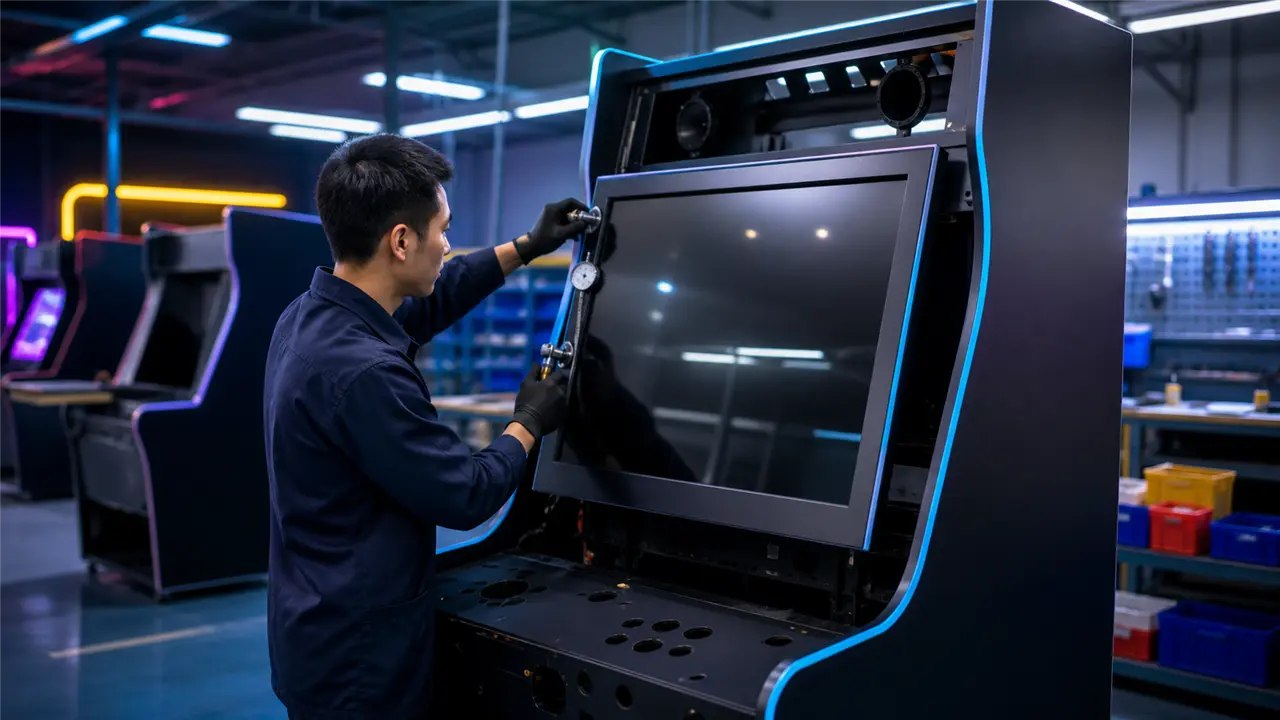
The absolute lifeblood of your entire operation is the bill acceptor and ticket printer assembly. A jammed validator on a busy Friday night translates directly to hundreds of dollars in lost revenue, frustrated idle players, and a furious location owner aggressively threatening to replace your machines with a competitor’s. As a premier sweepstakes skill game cabinet manufacturer, we simply do not compromise on the cash channel under any circumstances.
JCM MEI and Pyramid Validator Architectures
Our standard 1.5mm cold-rolled steel enclosures feature custom-cut, reinforced bezels engineered to seamlessly house the industry’s most reliable validators. We provide drop-in structural support for the JCM UBA and iVIZION series, the legendary MEI SC Advance, and the highly efficient Pyramid Technologies APEX series. We do not just crudely bolt these units onto the front door. We design dedicated, vibration-dampened steel mounting brackets that acoustically isolate the validator from the main cabinet resonance caused by heavy bass subwoofers and aggressive player impact.
The communication protocol routing is equally critical to your financial security. While older platforms recklessly use vulnerable pulse connections, we support and heavily advocate for ccTalk, RS232, and encrypted SAS protocols. Simple pulse wiring can easily be spliced by a thief to inject fake coin drops. In sharp contrast, ccTalk provides heavily encrypted, bi-directional serial communication. If a malicious actor attempts to cut the internal wiring harness and inject fake pulses to rack up illegal credits, our intelligent ccTalk controller immediately detects the desynchronization, shuts down the game logic entirely, flashes a high-intensity error LED array, and discreetly logs a security intrusion code for your route technician.
Thermal Printer and Escrow Integration
Cashless systems and Ticket-in-Ticket-out (TITO) mechanisms are rapidly becoming a mandatory legal requirement for large sweepstakes route operations. Paying out massive amounts of cash over the counter can be highly risky for convenience store location owners. We expertly integrate Ithaca Epic 950, Custom, and TransAct thermal printers with precision-aligned laser-cut exit chutes. A disastrous common issue with inferior generic cabinets is ticket curling and jamming due to improper exit chute angles and fluctuating internal cabinet humidity.
We engineer our printer chassis mounts with a mathematically precise 5-degree downward bias and integrate passive cross-ventilation channels near the thermal printer head to aggressively dissipate thermal buildup during high-volume player cash-outs. The crucial escrow functionality of the bill validator is tied directly to the printer logic through our proprietary IO board. If the printer sensors detect a low paper state or an impending ticket jam, it communicates via our centralized distribution board to instantly disable the bill acceptor bezel lights. This sophisticated closed-loop logic system absolutely prevents players from inserting cash when the machine physically cannot issue a payout ticket, saving your location staff from endless player disputes and manual refund headaches.
Combatting Electromagnetic Interference and Spark Attacks
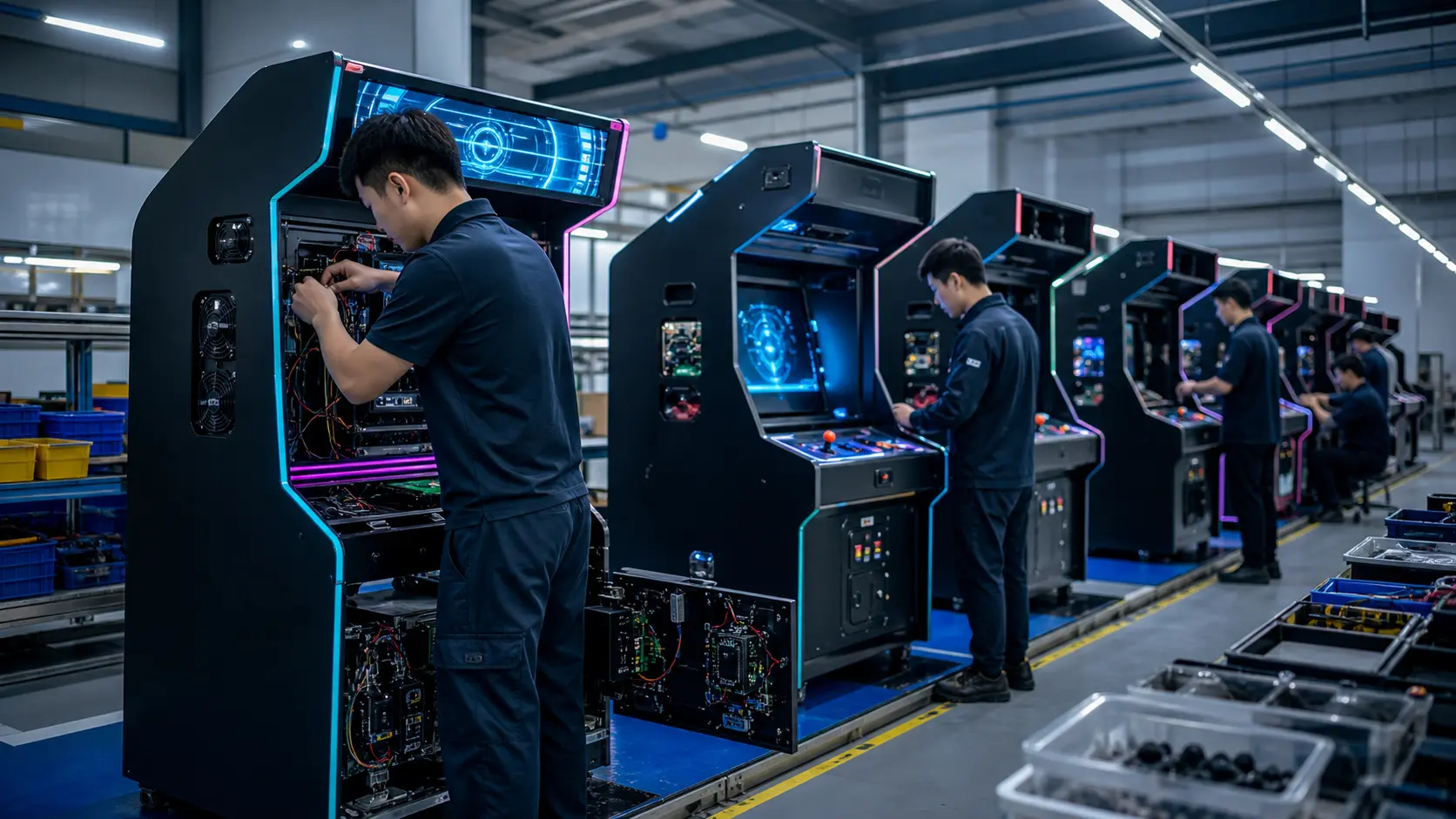
One of the most persistent, invisible, and devastating threats to distributed arcade gaming is the localized use of EMP (Electromagnetic Pulse) devices and high-frequency spark generators. Criminal rings use these highly concealable pocket-sized devices, often built from piezeo igniters or modified high-voltage stun guns, to induce massive transient spikes into the coin mech, button deck, or bill validator bezel. This electromagnetic assault tricks the main logic board into registering false credits or causes a total system crash that automatically commands the hopper or thermal printer to unlawfully dump cash.
Five Picosecond Transient Surge Clamping
We have engineered our sweepstakes skill game cabinets to be virtually immune to these sophisticated attacks. In our electrical power distribution design, we strategically employ heavy-duty metal oxide varistors (MOVs) and transient voltage suppression (TVS) diodes across all vulnerable input peripheral lines. These military-grade components are selected for their aggressive breakdown voltage thresholds and react in less than five picoseconds. They flawlessly clamp any induced voltage spikes—often violently exceeding 10,000 volts—safely straight to our massive earth ground plane before they can ever reach or fry the delicate central logic board.
Power Supply Ripple Suppression and Galvanic Isolation
The absolute foundation of electrical stability and game math integrity is the power supply unit. We exclusively utilize Mean Well industrial-grade power supplies, specifically selected by our engineering team for their exceptionally low ripple and high-frequency noise rejection characteristics. A subtly fluctuating 5V or 12V rail can cause logic board micro-instability, leading to spontaneous system reboots, lost player wagers, and deeply corrupted EEPROM accounting data.
Beyond the robust power supply, we deliberately implement opto-isolator circuits between the high-voltage peripheral side (validators, printers, mechanical meters) and the low-voltage logic side (motherboard, game software program). An opto-isolator creatively uses light to transmit a signal across a physical air gap, providing complete galvanic isolation. This brilliant engineering ensures that even a catastrophic electrical short or a sustained, focused EMP attack directed at the coin door cannot physically jump the gap to damage your extremely expensive game software ROM. Your intellectual property and financial data remain protected at the molecular circuit level.
Industrial Mechanical Engineering and Vandal-Proof Chassis
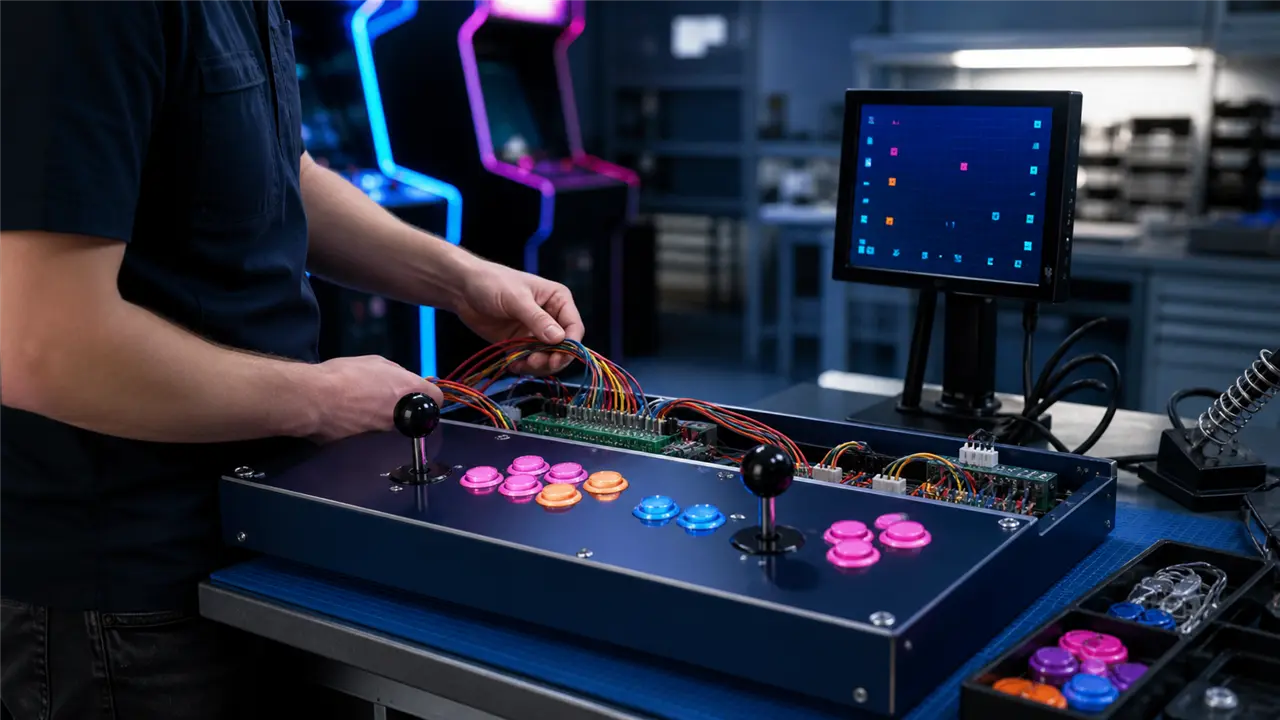
A sweepstakes cabinet deployed in a busy, unsupervised truck stop, a dimly lit dive bar, or an unmonitored convenience store corner will inevitably endure severe physical abuse. Cheap MDF and compressed particleboard cabinets will chip terribly at the edges, swell drastically and warp from spilled drinks, and eventually succumb entirely to standard pry-bar and screwdriver attacks. We build our premium cabinets using exclusively 1.2mm to 1.5mm thick cold-rolled carbon steel, meticulously welded by our automated robotic arms for flawless, unbreakable seam integrity.
Secure Locking Mechanisms and Internal Vaults
Our primary door assemblies feature heavy-duty continuous stainless steel piano hinges and multi-point locking bars that securely lock the door across its entire vertical length. We exclusively utilize Medeco or comparable high-security tubular pin locks, deeply recessed into thick steel collars to completely prevent drill bits and slide-hammer extraction attacks by thieves.
Crucially, the cash box itself is housed within an independent internal steel vault, entirely separate from the logic board maintenance access. This highly effective dual-layer architecture allows regular, low-wage location staff to safely empty the cash box at the end of their shift without ever exposing the sensitive game electronics, compliance configuration dip switches, or hard accounting meters to unauthorized personnel. It completely protects the route operator from internal shrinkage, employee theft, and operator fraud.
Modular Component Swapping for Field Technicians
When a component inevitably reaches the absolute end of its operational lifecycle after years of relentless 24/7 operation, your route technician must accurately swap it out quickly to restore the machine’s earning potential. We design our internal wiring harnesses with heavy-duty, color-coded, and keyed Molex and AMP connectors, thoroughly bundled, zip-tied, and labeled clearly in English. The main logic board tray is mounted on lubricated steel sliding rails, allowing a technician to seamlessly pull the entire brain out for a fast, complete swap in under two minutes.
Our striking external LED accent lighting is driven by premium addressable WS2812B strips housed in extruded aluminum channels with diffused, impact-resistant polycarbonate covers. If a specific LED strip fails, it simply unplugs via a single three-pin waterproof connector. There is absolutely no field soldering required on the route. There is no confusing wire splicing in a dark bar. We engineer exclusively for maximum uptime and radically minimal labor costs.
Route Operator Return on Investment and Financial Modeling
You are not simply buying metal boxes with screens; you are strategically buying highly optimized, autonomous revenue generation engines. The upfront capital expenditure (CAPEX) of an Arcade Manufacturer engineered cabinet is dramatically offset by the massive reduction in expensive maintenance truck rolls and the total elimination of lost revenue from theft or hardware downtime.
When you meticulously factor in a standard route deployment of fifty machines, the mathematical ROI is indisputable for a professional, forward-thinking operator.
| Financial Metric | Standard Cheap MDF Cabinet | Arcade Manufacturer Steel Cabinet |
|---|---|---|
| **Initial Cabinet Cost** | $600 | $1,200 |
| **Annual Maintenance Calls** | 12 visits | 2 visits |
| **Labor Cost per Visit** | $150 | $150 |
| **Lost Revenue per Incident** | $300 | $300 |
| **Total Annual Downtime Loss** | $3,600 | $600 |
| **Total Annual Maintenance** | $1,800 | $300 |
| **First Year Total Cost of Ownership** | $6,000 | $2,100 |
| **Three Year Projected ROI** | High Depreciation | Exponential Profitability |
By strategically investing in our robust hardware up front, your operational expenditure (OPEX) drops dramatically to the floor. You spend significantly less time diagnosing broken touch screens, clearing tightly jammed thermal printers, and fighting EMP theft, allowing you to spend infinitely more time acquiring lucrative new premium locations and aggressively expanding your route footprint across state lines.
Factory Acceptance Testing QA Checklist
Before any sweepstakes or skill game cabinet is carefully shrink-wrapped, palletized securely, and loaded into a 40HQ ocean shipping container bound for North America, it must flawlessly pass our rigorous Factory Acceptance Testing (FAT) protocol. We categorically do not ship untested beta units. We ship battle-tested profit centers ready to deploy and earn on day one.
- [ ] Electrical Continuity Test: Verify all grounding straps between the main chassis, exterior doors, monitor bezels, and control panels read strictly less than 0.1 ohms of total resistance.
- [ ] High-Pot Insulation Test: Apply a massive 1500V AC between the primary AC power inlet and chassis ground for 60 seconds straight to ensure zero dielectric breakdown or dangerous electrical leakage.
- [ ] Thermal Load Test: Operate the entire cabinet at 100% CPU/GPU processing load inside a sealed 45°C environmental chamber for 48 consecutive hours to verify internal ventilation dynamics and total thermal stability.
- [ ] EMP Resistance Test: Blast all external surfaces, bill validator entries, and button decks with a laboratory-grade 50kV spark generator. The machine must absolutely not register false credits, crash, or reboot the OS.
- [ ] Validator Rejection Rate: Process 500 mixed denomination bills, including severely wrinkled notes and known high-quality counterfeits, through the integrated MEI/JCM unit. Required acceptance of valid currency is >99%, required rejection of counterfeits is flawlessly 100%.
- [ ] Touchscreen Calibration and Latency: Map the PCAP matrix matrix to ensure dead-center sub-millimeter accuracy across all four corners without drift, strictly maintaining an input latency of under 10 milliseconds.
Field Maintenance and Troubleshooting Protocols
Even with our vastly over-engineered designs, routine preventative maintenance is the ultimate key to maximizing the lifespan and total yield of your sweepstakes cabinets. We proactively equip your route technicians with the precise mechanical knowledge needed to confidently diagnose and resolve field issues instantaneously.
| Symptom | Probable Cause | Engineer Wang Technical Solution |
|---|---|---|
| Bill Acceptor Rapid Rejection | Dirty internal optical sensors or misaligned rubber drive belts. | Extract the JCM/MEI head unit entirely. Clean the optic lenses gently with 90% isopropyl alcohol and a lint-free swab. Blow out interior dust with compressed air. Re-calibrate if necessary. |
| Spontaneous Reboot on Coin Insertion | Dangerous micro-arcing or voltage drop on the critical 12V DC rail. | Verify the Mean Well power supply output under full load. Adjust the internal potentiometer to exactly 12.1V. Inspect and aggressively tighten the earth ground connection bolted to the coin door chassis. |
| Touchscreen Dead Zones or Ghost Touches | Improper grounding loops or environmental static electricity buildup. | Ensure the USB cable shielding is firmly grounded to the main steel chassis. Clean the exterior glass thoroughly with a commercial anti-static solution. Recalibrate the touch grid via the controller’s diagnostic utility software. |
| Printer Ticket Jam and Heavy Curling | Worn rubber platen roller or incorrect thermal paper weight utilized. | Swap out the thermal paper strictly to the OEM manufacturer-specified thickness. Clean the platen roller of any sticky adhesive residue. Verify the 5-degree metal exit chute alignment is completely unobstructed. |
| Game Audio Distortion or Clipping | Blown internal TDA amplifier IC or loose subwoofer wire harness. | Check the resistance of the heavy subwoofer (should read exactly 4 or 8 ohms). If resistance is entirely normal, completely replace the modular audio distribution amplifier board via its quick-disconnect harness. |
Consult the Engineering Team for Custom Builds
Every North American jurisdiction possesses unique hardware nuances, and every elite route operator holds specific aesthetic preferences to aggressively dominate their local market. Whether you require a massive upright cabinet for a spacious 24-hour truck stop, a sleek dual-screen slant top for a tight convenience store corner, or a compact bar-top unit for tavern counters, our dedicated R&D engineering team is ready to instantly draft the CAD files and build the physical prototype.
When you strategically partner with Arcade Manufacturer, you completely bypass the trading company middlemen and collaborate directly with the source factory engineers. We speak the exact language of bill acceptors, hardware-level encryption, and maximum ROI.
Ready to upgrade your route hardware and secure your long-term profits? 1. Frontend Discovery: Request our complete 2026 hardware catalog, including detailed CAD blueprints, game board compatibility lists, and technical whitepapers. 2. Mid-Funnel Validation: Schedule a live, interactive video walkthrough of our massive Panyu assembly line to witness our QA and FAT processes in real-time with our engineers. 3. Bottom-Funnel Action: Contact Engineer Wang directly via WhatsApp at +86 17620842078, Telegram at https://t.me/JLwyc, or Email at miba515527@gmail.com for custom bulk pricing, factory inspections, and 40HQ container logistics.
Related Engineering References and Floor Operational Guides
- For our comprehensive factory production standards, review our China arcade machine manufacturer sourcing framework.
- To inspect our physical facility, see our Guangzhou arcade game factory sourcing guide.
- Analyze component BOM pricing with our arcade machine manufacturing cost breakdown.
- Compare direct cabinet pricing in our fish table wholesale manufacturer pricing guide.
Frequently Asked Questions
How do your cabinets handle jurisdiction-specific software validation?
Our hardware architecture is thoroughly agnostic and highly compatible with all major sweepstakes and skill game software platforms currently on the market, including those relying heavily on advanced SAS protocol systems. We meticulously configure the central logic board, secure boot ROMs, watchdog timers, and internal networking routing to exactly match the strict specifications required by testing labs in your specific target state. This absolute diligence guarantees tamper-proof operation and independently verified RNG outputs that seamlessly keep you legally compliant.
Can you integrate cashless payment systems alongside traditional bill acceptors?
Yes, this is highly recommended for modern route operations looking to scale. We frequently and securely integrate Nayax, PayRange, and other prominent cashless telemetry systems directly into the cabinet chassis alongside the bill acceptor. Our innovative designs feature custom dual-cut faceplates and RS232/MDB routing hubs. This flexible architecture allows a player to seamlessly choose between inserting physical cash, swiping a credit card, or using an NFC mobile wallet, with all sensitive financial transactions securely tracked by the internal accounting gateway.
What is the precise lead time for a 40HQ container of customized skill cabinets?
For standard hardware configurations, a 40HQ shipping container (comfortably holding approximately 80 to 120 cabinets depending entirely on the chosen form factor) requires a highly efficient 25-day production cycle from the moment the CAD schematics and bill of materials (BOM) are officially approved by you. Custom metal tooling, specific corporate powder coating colors, or customized silkscreen tempered glass may naturally add an additional 7 to 10 days to the initial production run timeline.
How do you actively prevent internal theft by location staff?
We rely heavily on a stringent, physical dual-vault access system. The external main cabinet door securely grants access to basic maintenance areas (like thermal paper refills or simple screen cleaning) and is tightly secured by one lock. The cash box itself is completely enclosed in a secondary, heavy-gauge steel internal vault equipped with an entirely separate high-security lock and key set. Furthermore, electronic door-open switches are hardwired directly to the logic board, meticulously and permanently logging every single authorized and unauthorized entry with a precise network-synced timestamp.
Is the core hardware easily upgradeable for future game releases?
Absolutely. The incredibly rapid pace of the sweepstakes market heavily requires future-proofing your investments. We utilize standard ATX or ITX PC motherboard form factors combined with our proprietary modular JAMMA/USB breakout boards. If a future game software release suddenly requires massively more GPU processing power, additional system RAM, or a much faster SSD storage medium, your local technicians can easily swap the internal PC components in mere minutes without ever needing to replace the expensive metal cabinet chassis, high-resolution touch screens, or premium bill validators.