- Why Sheet Metal Quality Dictates Your Arcade Floor ROI
- Thermal Airflow Engineering for Zero Downtime
- Structural Anti Theft and Tamper Proof Mechanisms
- Assembly Line and FAT Quality Assurance Checklist
- Financial Breakdown and Custom Chassis ROI
- Common Chassis and Thermal Troubleshooting Matrix
- Frequently Asked Questions
As the Lead Hardware and Game System Architect at Guangzhou Miba Animation Technology Co., Ltd., I have witnessed firsthand how poor cabinet construction destroys arcade operator profits. When Friday night hits and your venue is packed, the last thing you want is a hardware thermal crash or a chassis break-in. In our Panyu manufacturing base, our 15,000m² factory and 50-person R&D team treat the arcade cabinet not just as a metal box, but as a heavily fortified, thermally optimized vault designed to protect your investment. Operators often focus heavily on game software and RTP, but if your sheet metal chassis cannot withstand physical abuse or your thermal airflow design causes your game board to overheat and reboot, your 95% mathematical draw means nothing. We engineer every custom arcade cabinet from the ground up, utilizing aerospace-grade thermal dynamics and reinforced structural integrity to ensure your machines stay online, secure, and highly profitable year after year.
If you are an arcade operator, distributor, or route manager looking to eliminate hardware failures and secure your gaming floor, connect with our engineering team directly to discuss your custom cabinet needs. Direct Factory Contact Engineer Wang WhatsApp/WeChat: +86 17620842078 Telegram: https://t.me/JLwyc Email: miba515527@gmail.com For factory-direct procurement and comprehensive engineering specs, consult our master guide on commercial arcade game machines manufacturing factory.
Why Sheet Metal Quality Dictates Your Arcade Floor ROI
The foundation of any reliable arcade machine is its chassis. Operating a premier China arcade game cabinet factory, we refuse to cut corners on raw materials. The difference between a high-yield machine and a maintenance nightmare often comes down to the gauge and grade of the steel used in the cabinet frame. We build our cabinets to survive the harshest venue environments, from high-humidity coastal arcades to aggressive player interactions in high-stakes gaming rooms.
Cold Rolled Steel SPCC vs Cheap Alloys
Many low-end manufacturers utilize cheap, thin alloys or low-grade plastics that crack under pressure or warp over time. In our factory, our standard protocol mandates the use of premium Cold-Rolled Carbon Steel (SPCC) with a minimum thickness of 1.5mm to 2.0mm for load-bearing structural frames, and reinforced 2.5mm plating around cash boxes and logic board compartments. Cold-rolled steel provides superior tensile strength and dimensional accuracy compared to hot-rolled alternatives.
When an angry player strikes a cabinet, a thin 0.8mm alloy chassis will dent, potentially shorting out internal wiring or cracking the monitor bezel. Our 1.5mm SPCC custom sheet metal chassis absorbs and dissipates physical kinetic energy, protecting the fragile electronics inside. Furthermore, this heavy-duty construction acts as a massive deterrent against physical theft. The cash box vault inside our cabinets is virtually impenetrable without specialized industrial cutting tools.
Advanced Powder Coating and Anti Rust Treatments
Arcade cabinets deployed in tropical climates or high-humidity entertainment centers face a silent killer known as galvanic corrosion. Moisture in the air penetrates microscopic scratches in the paint, causing structural rust that can weaken locking mechanisms and internal grounding points.
To combat this, our manufacturing pipeline includes a rigorous 7-stage phosphating and electro-static powder coating process. Before a single drop of paint is applied, the raw sheet metal is degreased, acid-washed, and treated with a zinc-phosphate conversion coating. We then bake the chassis at 200°C to cure the heavy-duty industrial powder coat. This creates a dielectric barrier that not only resists scratches and chemical spills but also provides excellent electrical insulation, reducing the risk of static discharge reaching the main logic board.
Thermal Airflow Engineering for Zero Downtime
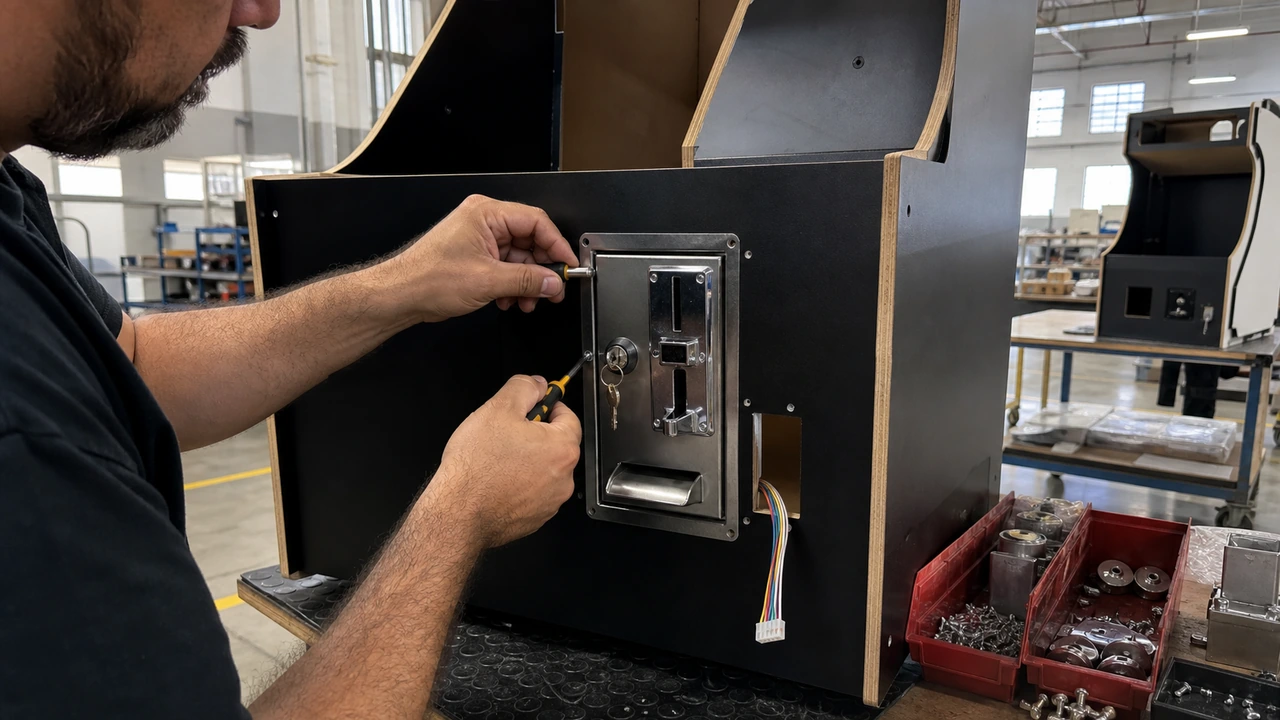
Overheating is the number one cause of logic board degradation, unexpected reboots, and shortened hardware lifespan. A modern fishing game or high-definition slot machine runs complex 3D graphics on Unity or Unreal Engine, pulling significant wattage and generating massive heat loads. Without proper thermal airflow engineering, the internal ambient temperature of a poorly designed cabinet can easily exceed 65°C, causing thermal throttling and catastrophic PCB failure.
Computational Fluid Dynamics in Cabinet Design
We do not guess where to place cooling fans. Our R&D engineering team utilizes advanced Computational Fluid Dynamics (CFD) software to simulate heat dissipation and air pressure zones within the cabinet geometry before a single piece of metal is stamped. We model the heat signatures of the power supply unit, the main logic board, the high-brightness LED monitors, and the coin hoppers.
By analyzing the convective heat transfer, we engineer precise active and passive cooling channels. Our goal is to maintain a positive internal air pressure, which forces hot air out through specific top-exhaust vents while simultaneously preventing dust accumulation from venue floors. Dust is a thermal insulator; keeping dust out is just as important as pushing cold air in.
Intake and Exhaust Strategic Placement
A common mistake made by inexperienced arcade builders is placing intake fans at the very bottom of the cabinet without proper filtration, essentially turning the machine into a venue vacuum cleaner. In our OEM arcade cabinet factory, we strategically position filtered intake vents at the mid-lower chassis level, pulling in cooler ambient air while bypassing heavy floor debris.
High-static-pressure dual ball-bearing fans (rated for 50,000+ hours of continuous operation) push this cool air directly across the primary heat sinks of the game board and power supply. The heated air naturally rises and is aggressively expelled by high-CFM exhaust fans positioned near the upper monitor bezel and rear top panel. This continuous push-pull thermal cycle ensures the internal temperature never exceeds 5°C above the ambient venue temperature, guaranteeing stable game logic execution and consistent 92-96% RTP draw calculations without micro-stutters or crashes during peak hours.
Need detailed CAD drawings or thermal dissipation charts for your next large-scale arcade deployment? Request our Technical Whitepaper and Hardware Architecture Blueprints today. Reach out to Engineer Wang to get access to our proprietary chassis engineering data.
Structural Anti Theft and Tamper Proof Mechanisms
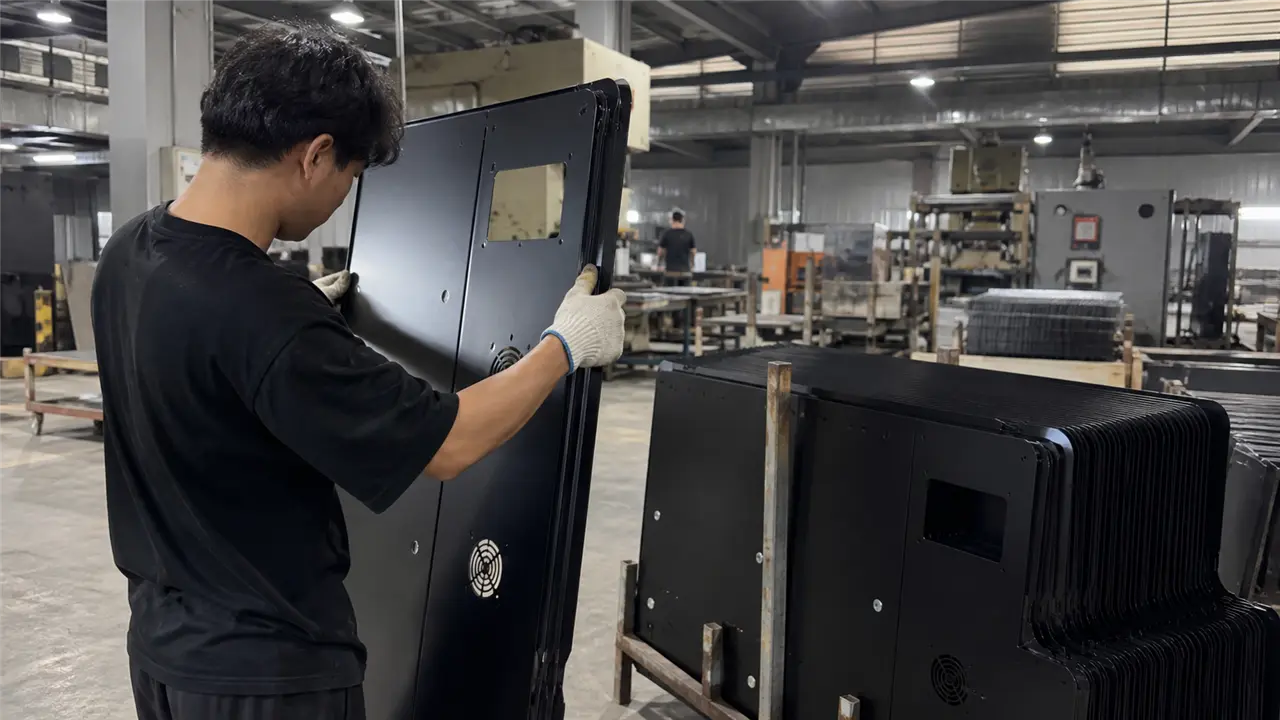
Physical security is directly tied to your bottom line. If a thief can easily pry open the cash door or drill through a lock, your weekly earnings vanish in minutes. Our cabinets are engineered with a multi-layered security architecture that frustrates even the most determined criminals.
Concealed Hinges and Multi Point Locking Systems
An exposed hinge is an invitation for a crowbar. Every custom sheet metal chassis we manufacture features internally concealed, heavy-duty welded piano hinges. There is no external pivot point to attack. When the door is closed, the tolerances are so tight (machined to within 0.2mm accuracy using our CNC laser cutters) that inserting a pry bar is virtually impossible.
Furthermore, we abandon simple single-point cam locks for all high-risk access panels. We install industrial-grade three-point deadbolt locking systems. When the operator turns the key, solid steel rods engage the chassis frame at the top, bottom, and center simultaneously. We utilize anti-drill, anti-pick tubular cylinder locks with hardened steel faceplates.
EMP Shielding and Static Grounding within the Chassis
Modern arcade thieves use handheld EMP (Electromagnetic Pulse) jammers or piezoelectric clickers to inject high-voltage static shocks into coin acceptors, tricking the logic board into registering false credits.
Our sheet metal chassis naturally functions as a Faraday cage, but we go several steps further. Every individual metal panel, monitor bezel, and cash box is bonded together using heavy-gauge braided copper grounding straps, terminating at a centralized earth ground point connected directly to the venue’s electrical ground. If a cheater attempts an EMP attack, the transient electromagnetic surge is immediately shunted to ground before it can penetrate the sensitive communication lines of the game board. We complement this structural shielding with in-line opto-isolators on all pulse input lines, providing complete electrical decoupling and ensuring your revenue remains strictly legitimate.
Assembly Line and FAT Quality Assurance Checklist
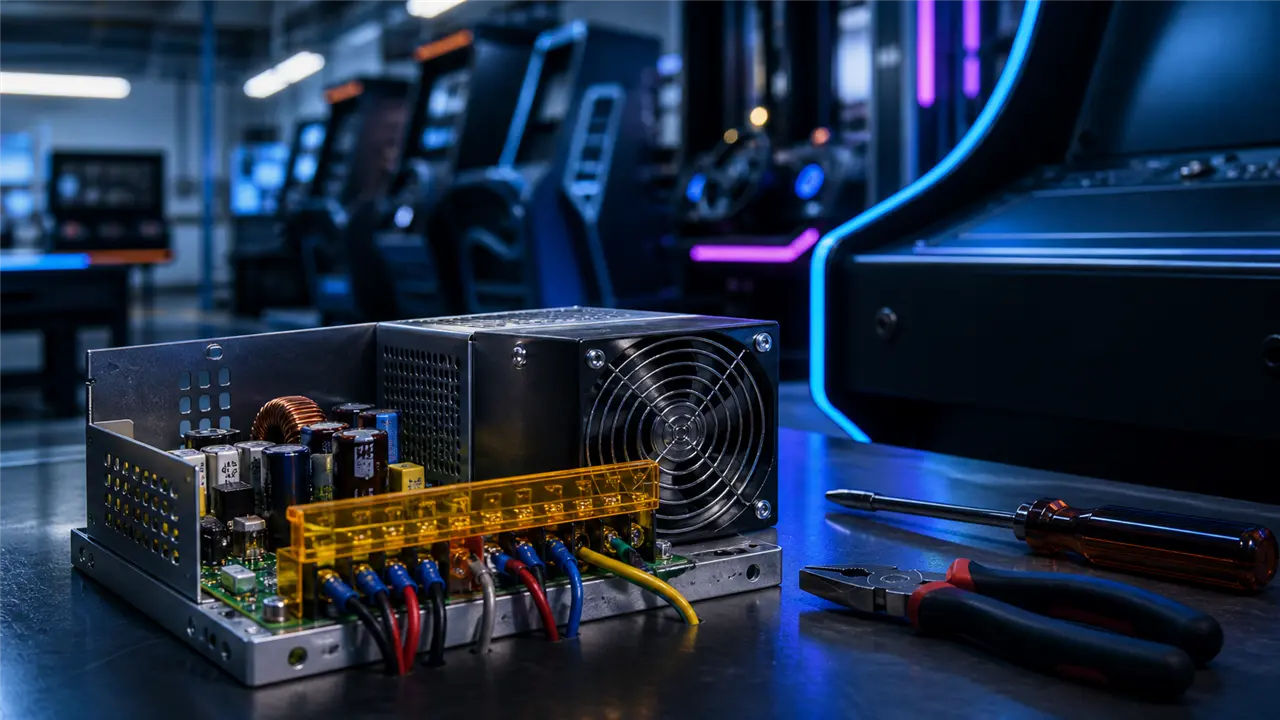
We do not ship a cabinet until it has passed our exhausting Factory Acceptance Testing (FAT) protocol. We simulate years of venue abuse in a matter of days.
Factory Acceptance Testing Checklist
| Quality Assurance Phase | Engineering Protocol | Pass Criteria |
|---|---|---|
| Structural Integrity | 50kg kinetic impact test on main chassis and monitor bezel | Zero deformation, no cracked glass, doors remain fully locked |
| Thermal Stress Test | 72-hour continuous 3D game rendering in a 40°C humidity chamber | Internal CPU/GPU temps remain under 75°C, no thermal throttling |
| EMI and EMP Resilience | Direct application of 50kV electrostatic discharge to coin inputs and metal seams | Zero false credits registered, system maintains stable operation |
| Grounding Continuity | Milli-ohm resistance testing across all bonded chassis panels | Resistance < 0.1 ohms across all internal ground paths |
| Voltage Fluctuation | Simulating brownouts (85V) and spikes (265V) on the AC input | Industrial power supply holds steady DC output, no reboot |
Financial Breakdown and Custom Chassis ROI
Investing in a premium OEM arcade cabinet factory chassis might carry a slightly higher initial capital expenditure (CAPEX), but the long-term operational expenditure (OPEX) savings and revenue protection yield a massive return on investment. Let us examine a realistic 3-year financial scenario for a high-traffic venue operating 20 machines.
Standard vs Custom Engineered Cabinet CAPEX and OPEX over 3 Years
| Financial Metric | Standard Cheap Cabinet (20 Units) | Miba Custom Engineered Cabinet (20 Units) |
|---|---|---|
| Initial CAPEX per Unit | $1,200 | $1,800 |
| Total Initial CAPEX | $24,000 | $36,000 |
| Annual Hardware Failures (Overheating/Rust) | 4-6 incidents per machine | < 1 incident per machine |
| Average Downtime Revenue Loss (3 Years) | $45,000 (Lost Friday/Saturday nights) | $3,500 (Minimal scheduled maintenance) |
| Vandalism and Theft Losses (3 Years) | $12,000 (Pried cash boxes, EMP theft) | $0 (Impenetrable chassis, EMP shielded) |
| Total Cost of Ownership + Lost Revenue | $81,000 | $39,500 |
| **Net Venue Savings / Extra Profit** | **–** | **+$41,500 over 3 Years** |
As the math clearly demonstrates, the heavy-duty SPCC steel, thermal airflow engineering, and anti-theft mechanisms pay for themselves within the first 8 months of operation.
Common Chassis and Thermal Troubleshooting Matrix
Even with the best hardware, operators must know how to maintain their equipment. We have compiled this troubleshooting matrix to help your venue technicians resolve issues instantly.
Troubleshooting Matrix
| Symptom / Issue | Root Cause Analysis | Engineering Solution & Action Plan |
|---|---|---|
| Random reboots during peak hours | Thermal throttling due to blocked airflow or dust accumulation. | Inspect and replace lower intake air filters. Verify high-CFM exhaust fans are spinning at rated RPM. Clear any obstructions behind the cabinet. |
| Mild electrical shock on chassis | Broken ground loop or ungrounded AC outlet in the venue. | Immediately power down. Test AC wall outlet for proper earth ground. Verify internal braided copper ground straps are securely bolted to chassis panels. |
| Coin acceptor rejects all coins | Misaligned coin chute due to loose chassis mounting bracket. | Re-torque the locking nuts on the coin door structural bracket. Ensure the coin path is perfectly vertical and aligned with the vault funnel. |
| Keys stuck in door lock | Corrosion or dirt inside the tubular lock cylinder. | Do not force the key. Apply a graphite-based dry lubricant to the cylinder. Avoid wet lubricants as they attract dust and exacerbate jamming. |
| Screen flickering on startup | Power supply thermal degradation causing unstable 12V rail. | Check internal ambient temperature. If exceeding 55°C, upgrade thermal exhaust fans. Verify power supply output with a multimeter under full game load. |
Related Engineering References and Floor Operational Guides
- For our comprehensive factory production standards, review our China arcade machine manufacturer sourcing framework.
- To inspect our physical facility, see our Guangzhou arcade game factory sourcing guide.
- Analyze component BOM pricing with our arcade machine manufacturing cost breakdown.
- Compare direct cabinet pricing in our fish table wholesale manufacturer pricing guide.
Frequently Asked Questions
Question Why is cold rolled steel better than hot rolled steel for arcade cabinets?
Cold-rolled steel undergoes processing at room temperature, which increases its yield strength and hardness by up to 20% compared to hot-rolled steel. It also provides a much smoother surface finish, allowing our electro-static powder coating to bond perfectly, resulting in superior rust resistance and a premium aesthetic finish for your gaming floor.
Question How does thermal engineering impact the game’s mathematical RTP?
While RTP (Return to Player) is a software algorithm, it requires continuous, stable execution to match its mathematical probability curve. If a cabinet overheats and causes the main board to crash or drop voltage, the game state may reset, leading to unpredictable payout behavior and frustrated players. Thermal stability ensures the hardware runs exactly as the software engineers intended.
Question Can your factory custom design a chassis for a specific new game concept?
Absolutely. As an OEM arcade cabinet factory, we specialize in turnkey solutions. You provide the game concept and hardware requirements, and our R&D team will create the 3D CAD models, run thermal simulations, design the wiring harness, and produce a prototype for your approval before mass production.
Question Are your cabinets protected against EMP jammers and static clickers?
Yes. Our cabinets act as a structural Faraday cage, utilizing bonded metal panels and centralized grounding points. We also install anti-EMP coin acceptors, optically isolated input boards, and proprietary power supply filtration to neutralize high-voltage transient attacks instantly.
Question Can I visit the factory to inspect the manufacturing process?
We highly encourage it. Factory Acceptance Testing (FAT) and transparency are core to our business. We invite all serious buyers and operators to visit our 15,000m² facility in Panyu, Guangzhou, to inspect our CNC machinery, assembly lines, and QA labs in person.
Ready to upgrade your arcade floor with unbreakable hardware and maximum ROI? Do not let cheap cabinets bleed your profits. Contact me today to schedule a video call, request a custom OEM quotation, or book an in-person factory tour. Let us build the foundation of your arcade empire.
Engineer Wang Lead Hardware & Game System Architect Arcade Manufacturer / Guangzhou Miba Animation Technology Co., Ltd. WhatsApp/WeChat: +86 17620842078 Telegram: https://t.me/JLwyc Email: miba515527@gmail.com