- Software Architecture and Development Budget Breakdown
- Cloud Streaming Infrastructure and Bandwidth Unit Economics
- Low Latency Teleoperation Hardware and WebRTC Pipeline Engineering
- Venue Fleet Management and Remote Maintenance Workflows
- Return on Investment and Payback Period Analysis
- Microcontroller Firmware Architecture and Real-Time Telemetry Processing
- Cloud Telemetry Infrastructure and Multi-Region Server Scalability
- Frequently Asked Questions
Launching a commercial remote live arcade application requires balancing upfront software development investments with ongoing cloud streaming bandwidth and physical warehouse infrastructure expenses. Operators entering the teleoperation gaming market must understand the complete financial breakdown of frontend mobile clients, backend microservices, real-time WebRTC media servers, and physical IoT gateway hardware.
Accurate cost modeling prevents budget overruns and ensures sustainable unit economics across active player sessions, token sales, and physical merchandise fulfillment.
| Cost Component | MVP Development Phase | Commercial Production Phase | Ongoing Monthly Operating Cost |
|---|---|---|---|
| iOS & Android App Clients (Flutter / Native) | $15,000 – $25,000 | $35,000 – $60,000 | $1,500 – $3,000 (Maintenance & Updates) |
| Backend Microservices & API Gateway | $12,000 – $20,000 | $25,000 – $45,000 | $800 – $2,500 (Cloud Hosting) |
| WebRTC Edge Video Streaming Servers | $8,000 – $15,000 | $18,000 – $30,000 | $0.02 – $0.05 per active stream hour |
| Venue IoT Gateway Firmware & PCBs | $5,000 – $10,000 | $12,000 – $25,000 | Hardware unit cost ($120 – $250 / machine) |
| Payment Gateway & Ledger Compliance | $4,000 – $8,000 | $10,000 – $18,000 | 2.5% – 3.5% transaction processing fees |
| Physical Warehouse & Network Infrastructure | $5,000 – $12,000 | $20,000 – $50,000 | $1,200 – $3,500 (Dedicated Fiber & Power) |
Software Architecture and Development Budget Breakdown
The software stack of a high-performance remote arcade platform is divided into three core engineering domains:
1. Cross-Platform Mobile Client (Flutter / React Native): Delivering identical high-frame-rate rendering across iOS and Android with custom WebRTC video decoders, virtual joystick haptic feedback, token wallets, and live chat queues. 2. High-Concurrency Backend Microservices (Go / Node.js / Redis): Managing user authentication, queue state machines, deposit processing, real-time leaderboard aggregation, and prize fulfillment tracking. 3. Embedded IoT Edge Gateway Firmware (C / C++ / FreeRTOS): Running on venue controller boards to translate network packets into GPIO relay triggers, stepper motor pulses, and optical sensor readouts with microsecond response times.
Cloud Streaming Infrastructure and Bandwidth Unit Economics
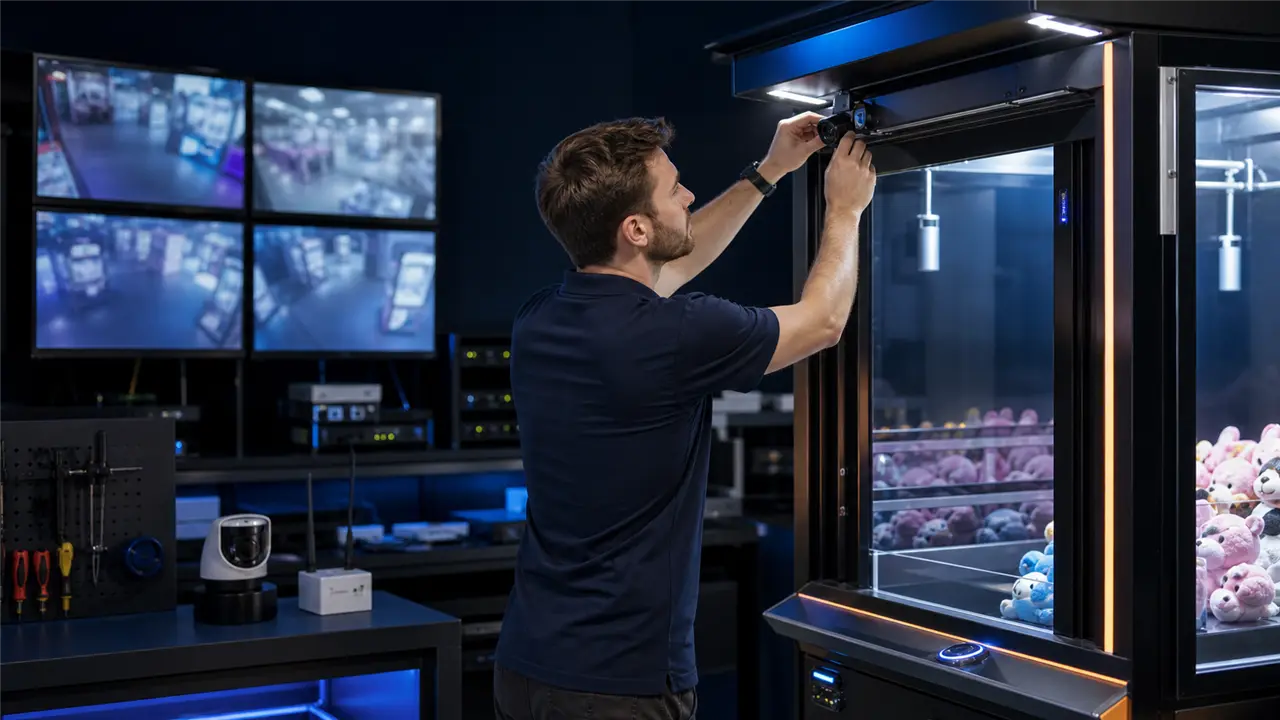
Bandwidth is the primary recurring operational expense in live teleoperation gaming. Video pipelines must be engineered to minimize data transfer costs without compromising visual clarity:
- WebRTC Edge Nodes: Utilizing open-source media servers (MediaSoup, Janus, or Pion) deployed on localized edge cloud instances reduces glass-to-glass latency below 80ms while avoiding expensive proprietary video SaaS fees.
- Dynamic Bitrate Control: Video bitrate is dynamically scaled from 800 kbps (for non-controlling spectators) up to 2.5 Mbps (for active controlling players), saving over 40% in monthly CDN bandwidth overhead.
- Estimated Stream Cost: At commercial edge bandwidth rates ($0.03 to $0.06 per GB), an active 1-minute claw machine game round costs less than $0.003 in cloud streaming infrastructure.
Low Latency Teleoperation Hardware and WebRTC Pipeline Engineering
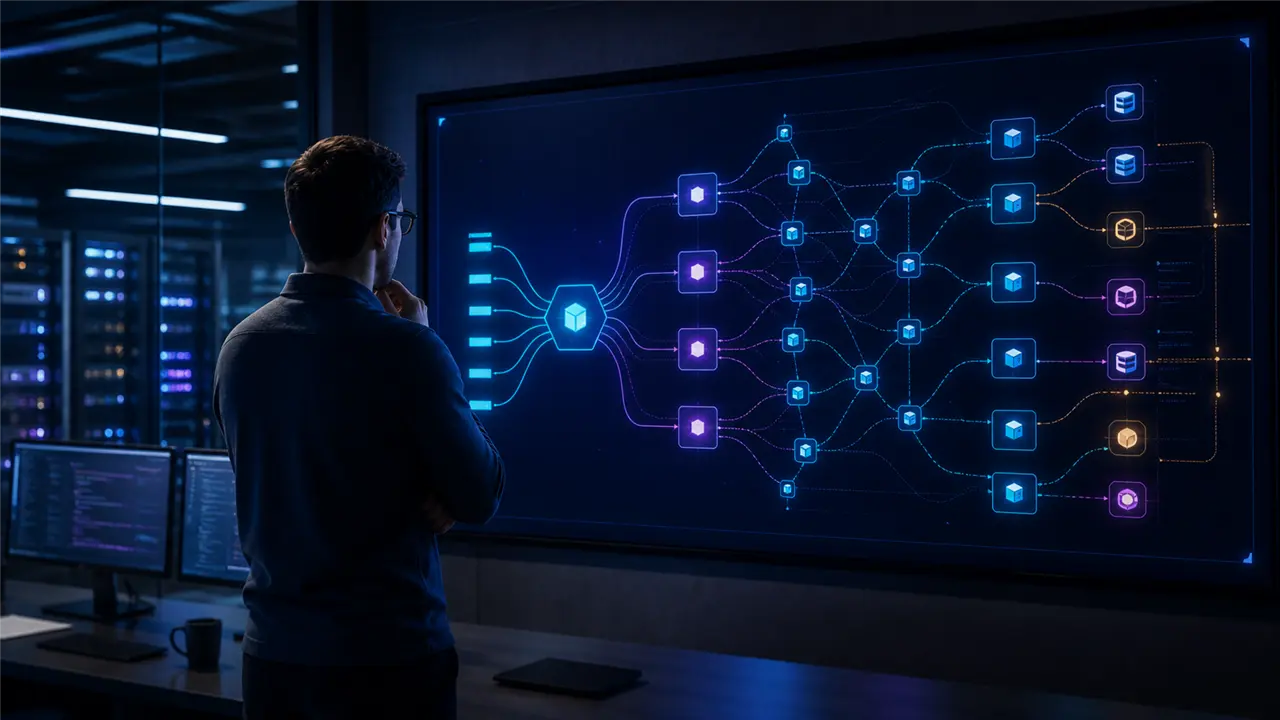
Operating real physical arcade machines over the public internet requires overcoming severe latency, packet jitter, and mechanical response delays. To achieve a seamless real-time player experience where control inputs feel instantaneous (<80ms glass-to-glass latency), the system architecture integrates edge IoT hardware with optimized streaming pipelines:
1. Sub-80ms WebRTC Streaming Infrastructure: Video feeds captured by dual wide-angle 1080p 60FPS industrial IP cameras are encoded using hardware-accelerated H.264 pipelines directly at the local venue edge server. Video frames are streamed over WebRTC using dynamic jitter buffering, ensuring adaptive bitrate streaming across mobile 4G/5G networks. 2. Industrial Edge IoT Gateway Boards: Each bank of claw machines is controlled by an industrial STM32 microcontroller board equipped with isolated GPIO relays, optical encoder counters, and RS-485 serial communication. 3. Mechanical Gantry and Stepper Motor Precision: High-precision NEMA 23 stepper motors and optocoupled limit switches replace standard AC motors. This allows fine-grained micro-stepping positioning, enabling precise claw hovering, dynamic claw grip voltage adjustments (3-stage voltage control: grab, lift, transport), and optical prize drop detection with zero false drops. 4. Cloud Queue and Session Failover Architecture: When multiple concurrent players enter a machine’s live room, the cloud backend maintains a strict FIFO queue with automated spectator view synchronization. If a player experiences network disconnection during an active round, the edge gateway executes an automated safe-return sequence, resetting the claw gantry to home position and safely refunding tokens to the player’s account.
| System Subsystem | Hardware / Protocol Specifications | Operational Target Metric | Business Benefit |
|---|---|---|---|
| Edge Video Encoding | H.264 Hardware Encoder, RTSP to WebRTC | < 60 ms glass-to-glass delay | Real-time visual feedback for precise claw drops |
| Teleoperation Gateway | STM32 ARM Cortex-M4 + Optoisolated Relays | < 5 ms GPIO execution latency | Instantaneous joystick response without input lag |
| Stepper Motor Control | NEMA 23 Stepper, 1/16 Microstepping Driver | ±0.5 mm positioning accuracy | Professional claw control and smooth camera telemetry |
| Prize Detection Sensor | Dual-Beam Infrared Optical Barrier | 99.99% detection accuracy | Automated prize payout verification and inventory sync |
| Network Failover | Dual-WAN Edge Router with 4G/5G Auto-Failover | 99.95% venue uptime SLA | Uninterrupted 24/7 route operation without onsite staff |
Venue Fleet Management and Remote Maintenance Workflows
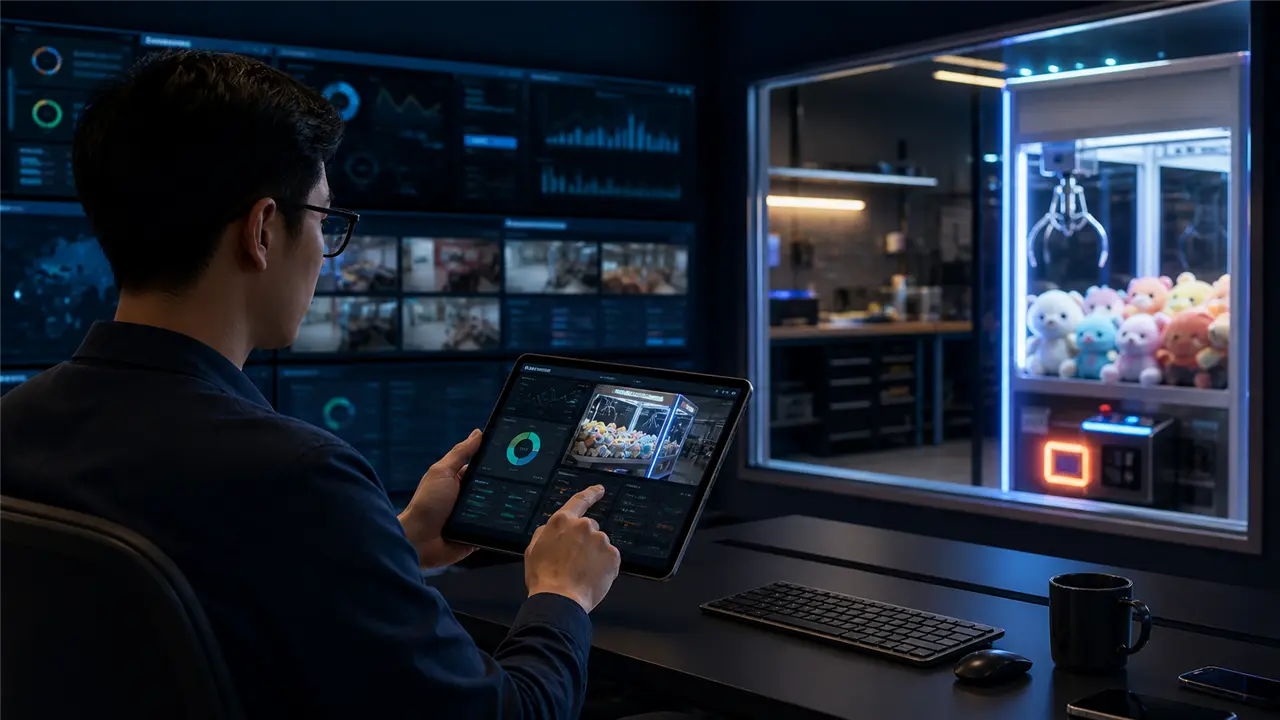
Managing an unattended remote live arcade facility with dozens of physical machines requires centralized telemetry and automated self-healing mechanisms:
- Automated Mechanical Health Diagnostics: Daily self-test routines run automatically during low-traffic hours, testing X/Y/Z gantry travel boundaries, claw grip solenoids, and camera autofocus clarity.
- Smart PDU Remote Power Cycling: Every machine is connected to a cloud-managed PDU, allowing route operators to remotely reboot frozen motherboards or reset gantry controllers directly from their mobile smartphone dashboard.
- Real-Time Prize Inventory and Dispenser Tracking: Optical weight sensors and RFID tags track prize compartment levels, sending automated restocking notifications to local fulfillment teams when plush toy or prize box levels drop below 15%.
Return on Investment and Payback Period Analysis
A facility operating 30 commercial live streaming claw machines typically generates between $15,000 and $35,000 in monthly gross gaming revenue (GGR) depending on marketing customer acquisition costs (CAC) and prize appeal. With average physical machine hardware costs of $800 to $1,400 per unit, full hardware and software development payback is commonly achieved within 4 to 7 months of commercial launch.
Microcontroller Firmware Architecture and Real-Time Telemetry Processing
Operating unattended live arcade teleoperation gateways requires deterministic real-time processing to handle high-frequency pulse inputs, optical encoder readouts, and network communications simultaneously:
1. FreeRTOS Task Scheduling and Priority Queuing: The embedded STM32 firmware utilizes FreeRTOS multitasking to isolate time-critical motor control from network communication. The motor step-generator task runs at highest real-time priority (sub-100 microsecond interrupt service routine), while background tasks handle MQTT JSON telemetry serialization, watchdog petting, and ambient temperature sensor polling. 2. Optically Isolated GPIO Driving Stages: Every digital output driving mechanical relays, solenoids, or gantry motors is buffered through optocouplers with 5kV surge isolation. Reverse EMF diodes (such as 1N4007 or fast Schottky arrays) clamp inductive kickback spikes when claw coils de-energize, preventing microcontroller latch-up or reset loops. 3. Over-The-Air (OTA) Dual-Bank Firmware Updates: Remote gateways feature dual-bank Flash memory architecture. New firmware updates are downloaded, verified via SHA-256 checksums, and written to the inactive flash bank. Upon successful verification, the bootloader switches execution banks seamlessly, enabling zero-downtime fleet updates with automatic rollback upon boot failure. 4. Adaptive Gantry Travel Calibration: During daily self-test cycles, optical endstop microswitches calibrate zero-point reference positions across X, Y, and Z axes. The system automatically measures mechanical travel time and detects belt slippage or mechanical friction increases before physical failure occurs.
| Microcontroller Feature | Specification / Standard | Operational Advantage |
|---|---|---|
| Core Processing Unit | STM32F407 ARM Cortex-M4 @ 168 MHz | High-speed trajectory calculation with zero latency |
| Isolation Barrier | 5000 Vrms Optical Isolation on all I/O | Eliminates ground loop noise from high-current motors |
| Telemetry Interface | RS-485 Modbus RTU / CAN Bus 2.0B | Reliable multi-drop cabinet chaining up to 1200 meters |
| Storage & Logging | 32MB SPI NOR Flash + Ferroelectric RAM (FRAM) | Instantaneous non-volatile transaction logging with infinite write cycles |
| Power Management | 9-36V Wide Input DC-DC Buck Converter | Resilient against venue AC voltage dips and brownouts |
Cloud Telemetry Infrastructure and Multi-Region Server Scalability
When managing multi-venue operations spanning multiple physical warehouses across North America, Europe, and Asia, cloud infrastructure must provide low-latency regional routing: (for full technical specifications, explore our engineering review on turnkey live streaming claw machine business hardware)
- Geo-DNS and Edge Ingress Points: Player connection requests are routed to the nearest cloud edge POP via Anycast DNS, minimizing handshake latency and WebRTC ICE negotiation times.
- Distributed Redis Session Caching: Active player queues, coin wallet balances, and game leases are managed in high-availability Redis clusters with automated Sentinel failover.
- Centralized Video Archive for Dispute Resolution: Every played round’s dual-camera WebRTC video stream is automatically recorded, compressed into H.265 MP4 format, and stored on cloud object storage for 30 days, enabling instant customer support review in case of prize claim disputes. (for full technical specifications, explore our engineering review on reducing remote arcade video latency below 80ms using WebRTC)
Frequently Asked Questions
What is the total estimated startup budget for a 20-machine remote arcade platform?
A standard 20-machine commercial deployment typically requires a total initial budget of $45,000 to $75,000, covering custom mobile app software customization, 20 factory-built physical claw machines with pre-installed IoT boards, edge streaming servers, warehouse networking setup, and initial prize inventory.
How can operators reduce WebRTC streaming bandwidth costs?
By using adaptive stream resolution (broadcasting 720p to queue spectators and switching to high-bitrate 1080p only for the active controlling player) and deploying self-hosted MediaSoup/Janus edge media servers instead of commercial pay-as-you-go video APIs, bandwidth costs can be reduced by over 60%.
Is custom source code buyout cheaper than a white label SaaS platform?
For operators planning more than 6 months of continuous operation, purchasing full source code is significantly cheaper. White label SaaS platforms charge ongoing monthly fees and 10% to 20% revenue royalties, whereas source code ownership involves a one-time buyout with zero future royalties.
json
For complete remote arcade source code buyout estimates, custom IoT controller hardware manufacturing, and turnkey factory machine procurement, contact Engineer Wang at Guangzhou Miba Animation Technology Co., Ltd. (Panyu Manufacturing Base, Guangzhou, China) via WhatsApp/WeChat at +86 17620842078, Telegram at https://t.me/JLwyc, or email miba515527@gmail.com.