- Technical Comparison Matrix Table Factory vs Tier-1 OEMs vs Regional Resellers
- Industrial Sheet Metal Processing from Laser Blanking to Precision CNC Bending
- Display Integration Engineering for Dual 27 Inch and 43 Inch 4K Curved Panels
- Las Vegas and Macau Form Factor Replication with Modular Wiring Standards
- Commercial Multi Player Fish Table Framing, Tempered Glass, and Anti Pry Defense
- Compact Wall Mount and Bar Top Kiosk Architectures for High Yield Venues
- Quality Assurance, EMC Shielding, 72 Hour Burn In, and Export Wooden Crating
- Specialized Cabinet Engineering and Procurement Deep Dives
- Frequently Asked Questions
The global landscape of commercial gaming hardware is undergoing a profound transformation, driven by the relentless demand for higher performance, more immersive displays, and robust physical architectures that can withstand the rigors of continuous casino floor operation. For international casino directors, route operators, and arcade distributors, the strategic sourcing of hardware cabinets is no longer a simple procurement exercise. It is a critical engineering and supply chain decision that directly impacts operational profitability, regulatory compliance, and player retention. Evaluating China factory manufacturing capabilities, particularly within the specialized ecosystem of Panyu, reveals a sophisticated network of industrial sheet metal processing, precision electronics integration, and turnkey assembly tailored for the gaming sector.
This comprehensive master pillar guide explores the deep technical nuances of OEM and ODM engineering workflows. By dissecting the cost structures, metal fabrication methodologies, and display integration protocols employed by leading arcade machine manufacturer oem odm turnkey cabinets entities, this document serves as an authoritative reference for navigating the complex procurement landscape. Whether you are seeking a commercial slot machine cabinet builder panyu for high-volume deployment, sourcing a custom aristocrat slot cabinet clone china with exact dimensional parity, or engineering a dual 43 inch 4k curved slot cabinet oem solution, understanding the underlying manufacturing science is paramount. We will delve into the granular details of material selection, CNC machining tolerances, modular wiring architectures, and stringent quality assurance gateways that define top-tier gaming cabinets. Furthermore, for specialized venues, we will examine the engineering paradigms behind low cost slot machine cabinets for small casinos, the structural requirements for a custom 8 player fish table metal chassis builder, and the space-optimized designs of a wall mount casino gaming kiosk manufacturer. For factory-direct procurement and comprehensive engineering specs, consult our master guide on commercial arcade game machines manufacturing factory.
Technical Comparison Matrix Table Factory vs Tier-1 OEMs vs Regional Resellers
The following technical comparison matrix elucidates the operational, financial, and engineering disparities between direct Panyu factory manufacturing, Tier-1 Las Vegas OEMs, and regional third-party resellers.
| Core Metric | Panyu Direct Factory Manufacturing | Tier-1 Las Vegas OEMs | Regional Third-Party Resellers |
|---|---|---|---|
| Metal Fabrication Tolerances | High precision CNC bending, custom tooling for bespoke designs. | Ultra-high precision, standardized proprietary tooling. | Variable precision, heavily dependent on the original source factory. |
| Display Integration Engineering | Flexible sourcing, rapid integration of dual 43 inch 4K panels. | Proprietary display modules, strict vendor lock-in. | Standard flat panels, limited access to advanced curved displays. |
| Cost Structure and Margins | Highly optimized bill of materials, minimal markup. | Premium pricing reflecting brand equity and R&D. | Mid-tier pricing with reseller markups. |
| Wiring and Protocol Standards | Modular ATX, flexible SAS harnessing, adaptable requirements. | Rigid, proprietary wiring looms, strict adherence to standards. | Generic wiring kits, potential grounding issues. |
| Production Scalability | Rapid scaling capabilities, minimum order quantities as low as 10 units. | High volume continuous production, strict allocation. | Low to medium volume, constrained by local warehousing. |
| Lead Times and Prototyping | Accelerated prototyping, agile iteration cycles. | Extended prototyping phases, rigorous internal compliance reviews. | Immediate availability for stock items, slow for custom. |
| Post-Sale Technical Support | Direct engineer communication, rapid parts replacement. | Highly structured ticketing systems, extensive field networks. | Limited technical expertise, reliance on factory. |
| Regulatory Compliance | CE, FCC baseline, requires client collaboration for GLI. | Pre-certified for major global jurisdictions. | Often lacks rigorous compliance documentation. |
Industrial Sheet Metal Processing from Laser Blanking to Precision CNC Bending
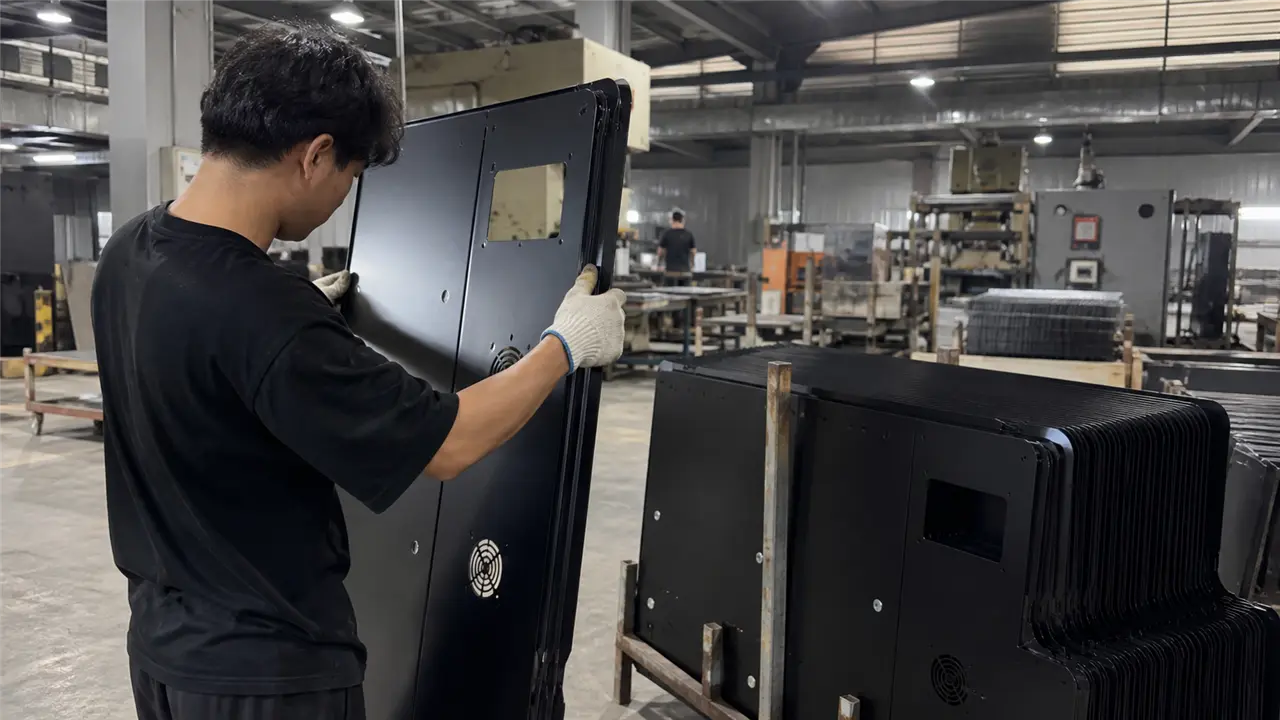
The foundation of any premium arcade or casino cabinet lies in its structural chassis, which dictates not only the aesthetic silhouette but also the durability, security, and thermal management capabilities of the final product. The manufacturing process begins with the rigorous selection of raw materials, predominantly utilizing Cold Rolled Steel or electro-galvanized steel in varying gauges ranging from 1.2mm to 2.0mm, depending on the structural load requirements. For components exposed to high humidity or requiring enhanced corrosion resistance, stainless steel is strategically deployed, particularly in plinths and external trim elements.
The transformation of raw sheet metal into a complex, multi-dimensional cabinet enclosure commences with laser blanking. Advanced fiber laser cutting machines execute high-speed, burr-free cuts with tolerances as tight as 0.05mm. This extreme precision is critical for the subsequent integration of display bezels, button decks, and peripheral mounting brackets, ensuring a seamless fit without the need for manual filing or adjustment. The laser blanking phase is heavily optimized through nesting software, which maximizes material utilization and minimizes scrap, directly contributing to the cost-efficiency sought by route operators.
Following laser cutting, the flat blanks proceed to the precision CNC bending phase. Multi-axis CNC press brakes, equipped with advanced angle measurement systems, fold the steel into complex geometric profiles. The bending process must account for material spring-back and bend deduction calculations to maintain strict dimensional accuracy. This is particularly vital when engineering a custom aristocrat slot cabinet clone china, where precise replication of internal volumes and external angles is required to ensure compatibility with existing casino floor layouts and proprietary game boards.
The structural integrity of the cabinet is further solidified through spot welding and TIG welding processes. Strategic welding points are determined during the CAD engineering phase to prevent chassis flex, especially when supporting heavy components like coin hoppers, oversized power supplies, and massive LCDs. Grounding studs are concurrently welded to the chassis to facilitate comprehensive equipotential bonding, an absolute necessity for mitigating electrostatic discharge and ensuring electromagnetic compatibility.
The final stage of sheet metal processing is the surface finishing. The welded chassis undergoes a multi-stage pretreatment process involving degreasing, descaling, and phosphating to enhance paint adhesion. Electrostatic powder coating is then applied, utilizing high-durability epoxy-polyester blends. The powder is baked in industrial ovens at precisely controlled temperatures, resulting in a robust, scratch-resistant finish that can withstand the severe physical abuse typical of commercial arcade environments. Custom color matching allows manufacturers to align the cabinet aesthetics with specific brand identities.
Display Integration Engineering for Dual 27 Inch and 43 Inch 4K Curved Panels
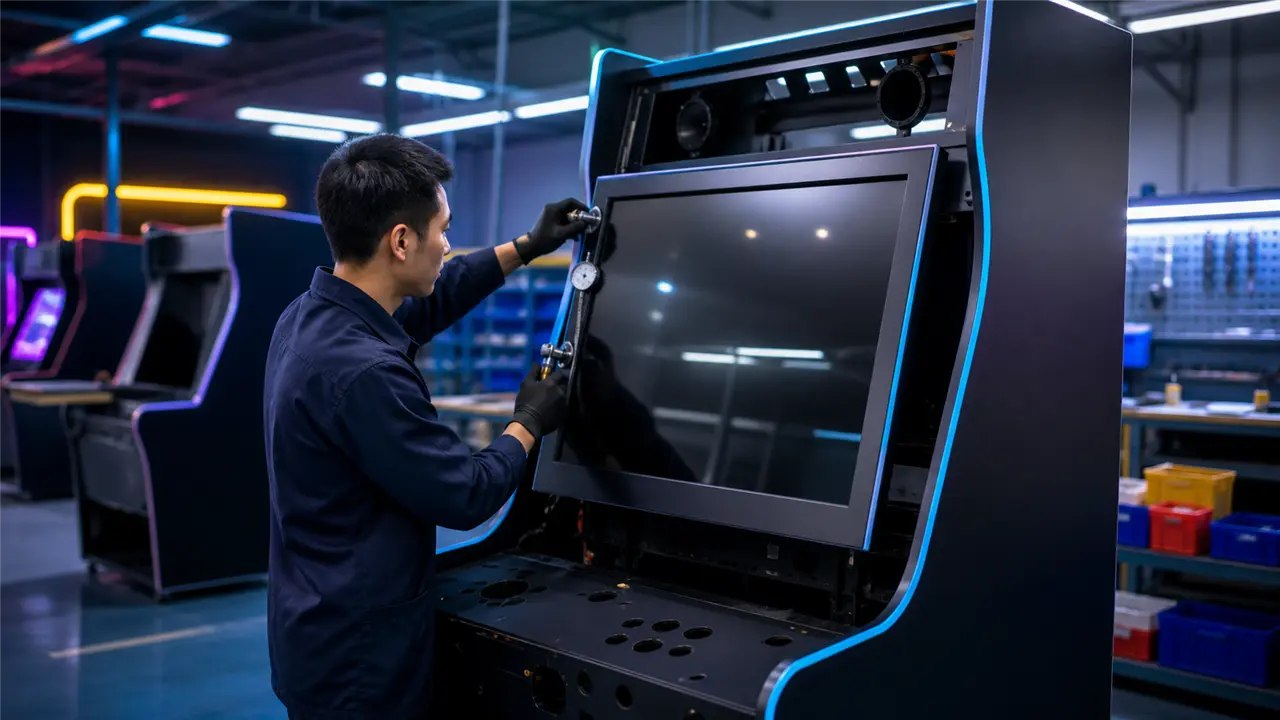
The visual interface is the primary vector for player engagement, making display integration a critical engineering discipline within cabinet manufacturing. Modern slot machines and premium arcade cabinets have migrated from standard aspect ratio monitors to expansive, high-definition visual real estate. The engineering required to support a dual 43 inch 4k curved slot cabinet oem configuration is vastly different from mounting a standard 22-inch flat panel, necessitating bespoke structural and electronic solutions.
When integrating 43-inch 4K curved panels, manufacturers must address the specific curvature radius, typically ranging from R1500 to R4000. J-curve and C-curve displays present unique mounting challenges. The metal chassis must be engineered with heavy-duty VESA standard mounting brackets or custom-designed cradle systems that distribute the weight of the massive panels evenly, preventing torsional stress that could lead to backlight bleed or panel fracturing. Furthermore, the structural design must accommodate precise bezel-less integration, allowing the active display area to sit flush with the exterior glass or halo LED framing, maximizing the immersive experience.
Touch interaction is a mandatory requirement for contemporary gaming hardware. Projected Capacitive touch sensors are the industry standard, offering multi-touch capabilities, high durability, and resistance to liquid spills and surface contaminants. The integration of PCAP touch foils onto curved glass surfaces requires specialized lamination processes within cleanroom environments to eliminate air bubbles and particulate contamination. The touch controllers must be meticulously calibrated to ensure zero latency and precise coordinate mapping, even through thick protective glass layers.
Display electronics and signal routing also require sophisticated engineering. High-resolution 4K panels demand substantial bandwidth, often utilizing advanced eDP or V-by-One HS interfaces rather than legacy LVDS connections. The routing of these high-speed signal cables must be strictly segregated from AC power lines and electromechanical components to prevent electromagnetic interference that can cause display flickering or signal degradation. Driver boards must be carefully selected to support the specific panel timings, refresh rates, and brightness levels.
For casino environments, where ambient lighting is intensely bright, display panels must output a minimum of 400 to 500 nits, with high-contrast ratios to ensure vivid color reproduction and visibility from acute viewing angles. Thermal management of these high-brightness panels is another critical factor. Advanced cabinets incorporate strategic airflow routing, utilizing low-noise, high-CFM extraction fans positioned near the display driver boards and LED backlight inverters to dissipate heat, preventing thermal throttling and extending the operational lifespan of the optical components.
Las Vegas and Macau Form Factor Replication with Modular Wiring Standards
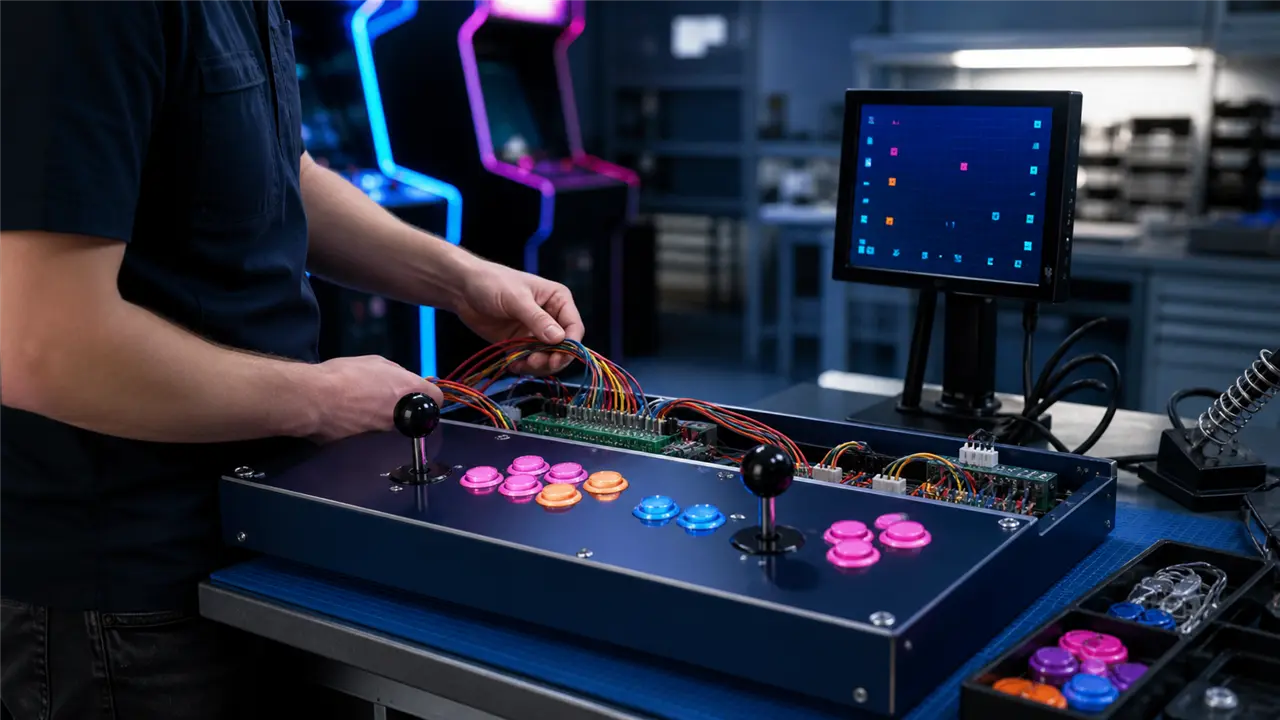
The global gaming market is heavily influenced by the form factors and operational standards established in major hubs like Las Vegas and Macau. Replicating these highly successful architectures while infusing OEM flexibility requires a deep understanding of modular wiring standards, peripheral communication protocols, and ergonomic design principles. A commercial slot machine cabinet builder panyu must possess the capability to engineer cabinets that seamlessly integrate into existing casino infrastructure, mimicking the footprint, sightlines, and player interaction paradigms of Tier-1 OEMs.
A cornerstone of this replication is the integration of standardized communication protocols, most notably the Slot Accounting System protocol. The cabinet internal wiring architecture must facilitate flawless communication between the main logic board, the bill validator, the ticket printer, and the casino central accounting system. This requires meticulously designed wiring harnesses, utilizing UL/CE certified wire gauges, with precise pinout configurations for RS-232, USB, and ccTalk interfaces.
Modular wiring standards are critical for ease of assembly, maintenance, and field serviceability. Rather than utilizing monolithic wiring looms, advanced OEM cabinets employ segmented, color-coded harnesses with high-reliability connectors. This modularity allows technicians to isolate and replace specific sections of the wiring, such as the button deck harness or the top box illumination loom, without dismantling the entire cabinet. Furthermore, the power distribution architecture must be highly robust. Industrial-grade ATX or modular switching power supplies distribute 5V, 12V, and 24V DC to various subsystems. Careful attention must be paid to ground loop isolation to prevent audio hum and erratic peripheral behavior.
The player interface, primarily the button deck, is a focal point of replication. Modern cabinets have transitioned from purely mechanical pushbuttons to sophisticated dynamic button panels incorporating OLED displays or PCAP touchscreens. When engineering these interfaces, the metal fabrication must support the precise mounting of these delicate components while providing a robust, spill-resistant surface. For games requiring aggressive physical interaction, the underlying metal support structure must be heavily reinforced to withstand repetitive high-impact forces without deformation.
Ergonomics play a vital role in player retention. The height of the button deck, the angle of the main display, and the positioning of the bill acceptor must be carefully calculated to accommodate a wide percentile of the player demographic. Replicating the exact ergonomic dimensions of successful Las Vegas cabinets ensures that players experience familiar comfort, encouraging longer session times. This requires precise CAD modeling and extensive prototyping to fine-tune the human-machine interface.
Commercial Multi Player Fish Table Framing, Tempered Glass, and Anti Pry Defense
The multi-player arcade market, particularly the fish hunter genre, presents unique engineering challenges distinct from standard upright slot cabinets. These massive, horizontal gaming platforms accommodate multiple players simultaneously, demanding exceptional structural rigidity, expansive display protection, and rigorous security measures. A custom 8 player fish table metal chassis builder must navigate the complexities of supporting enormous LCD panels within a horizontal orientation that is highly susceptible to physical stress and liquid spills.
The framing architecture of a commercial fish table relies on heavy-duty, welded steel tubing rather than standard sheet metal bending. This robust exoskeleton is necessary to support the immense weight of the display panel and the thick protective glass, while also withstanding the dynamic loads applied by multiple excited players leaning heavily on the machine. The chassis must incorporate adjustable leveling feet and heavy-duty casters to allow for precise positioning on uneven arcade floors and facilitate movement for maintenance.
Protecting the massive horizontal display is paramount. High-quality fish tables employ incredibly durable, 8mm to 10mm thick tempered glass. This glass is often treated with anti-glare and anti-reflective coatings to minimize overhead lighting reflections, ensuring clear visibility from all player stations. Furthermore, the glass perimeter must be hermetically sealed using industrial-grade silicone or specialized rubber gaskets. This liquid spill resistance is critical, as drinks are frequently spilled on the horizontal surface; any liquid ingress into the display electronics or the underlying control panels will result in catastrophic failure.
Security and anti-pry defense mechanisms are vital components of fish table engineering. Due to their high revenue generation and the volume of coins or tickets they process, these machines are prime targets for vandalism and theft. The metal chassis must feature reinforced, recessed doors with hidden hinges to prevent pry-bar attacks. Dual-stage locking mechanisms, utilizing high-security locks, are standard. The routing pathways for coins from the acceptors to the secure cash box must be armored and shielded to prevent tampering or stringing techniques.
The control panel layout for each player station requires precise spacing to ensure comfortable multi-player interaction without physical interference. The mounting plates for the heavy-duty joysticks and oversized action buttons must be exceptionally rigid to prevent flex during aggressive gameplay. Additionally, the interior volume of the massive chassis requires careful thermal management. Strategic ventilation grilles and high-capacity exhaust fans must be integrated to extract the heat generated by the massive display panel, the high-wattage power supplies, and the multi-channel audio amplifiers.
Compact Wall Mount and Bar Top Kiosk Architectures for High Yield Venues
Maximizing revenue per square foot is a universal objective for gaming operators, particularly in spatial constrained environments such as sports bars, lounges, and convenience stores. This demand drives the engineering of compact, highly optimized hardware solutions. Engaging a wall mount casino gaming kiosk manufacturer or sourcing low cost slot machine cabinets for small casinos requires a strategic shift in design philosophy, prioritizing miniaturization, thermal efficiency, and specialized mounting architectures without compromising performance or security.
Wall mount kiosks represent the pinnacle of space optimization. The engineering challenge lies in condensing a complete gaming system into an enclosure with a highly constrained depth. This requires the utilization of custom-form-factor motherboards, ultra-slim switching power supplies, and highly specialized, low-profile peripheral variants. The metal fabrication must be incredibly precise to ensure all components fit within the tight tolerances of the shallow chassis.
The structural integrity of a wall mount unit relies heavily on its mounting system. A heavy-duty steel bracket architecture is typically employed, securely anchored to the wall studs, allowing the heavy kiosk to be safely suspended. The chassis itself must be reinforced at the mounting points to prevent the metal from tearing under the dynamic loads of player interaction. For bar top cabinets, the base must be heavily weighted or equipped with secure bolting mechanisms to prevent tipping or theft from the counter surface.
Thermal throttling is a significant risk in compact volumes. With high-performance components packed tightly alongside heat-generating power supplies and displays, passive cooling is insufficient. The internal layout must be engineered to create a directed airflow tunnel. Cool air is drawn in through precisely calculated intake vents, passed over the critical heat sinks, and expelled via high-RPM exhaust fans at the top. Dust filtration is essential to prevent internal buildup that can rapidly degrade thermal efficiency in these small enclosures.
Security in shallow-depth cabinets requires innovative solutions. Traditional bulky cash boxes are replaced with highly engineered, narrow cash routing systems. The front access door must be secured with multi-point locking rods to prevent pry attacks on the exposed edges. Serviceability is maintained through hinged front panels supported by heavy-duty gas struts, allowing technicians single-handed access to the densely packed internal components for rapid field repairs or paper roll replacements.
Quality Assurance, EMC Shielding, 72 Hour Burn In, and Export Wooden Crating
The transition from a manufactured assembly to a deployment-ready commercial gaming product requires navigating a rigorous gauntlet of quality assurance protocols and physical stress testing. For international buyers sourcing turnkey cabinets, the factory commitment to these final stages is the primary determinant of long-term reliability and regulatory compliance. A comprehensive QA program encompasses electrical safety, electromagnetic compatibility, environmental resilience, and meticulous export preparation.
Electromagnetic Compatibility and Radio Frequency Interference shielding are critical engineering requirements, particularly for cabinets destined for highly regulated casino floors. The metal chassis must function as a Faraday cage. This is achieved by ensuring that all metal panels, doors, and access hatches have excellent electrical continuity, often utilizing EMI shielding gaskets, conductive tapes, and braided grounding straps at hinge points. Compliance with emission standards dictates that the internal logic boards and high-frequency display cables must not radiate interference that could disrupt neighboring machines or communication networks.
The core of the reliability testing is the 72-hour high-temperature burn-in phase. Fully assembled cabinets are placed in specialized environmental chambers where they operate under maximum load at elevated ambient temperatures. This accelerated stress testing is designed to induce the infant mortality failure of marginal electronic components, such as faulty capacitors, weak solder joints, or defective power supply regulators, before the cabinet leaves the factory.
Vibration and drop testing simulate the harsh conditions of international freight and rough handling during installation. Cabinets are subjected to specific frequencies on vibration tables to ensure that heavy components do not break their mounting brackets or fatigue the chassis welds. Wiring harnesses must be securely fastened with cable ties to prevent chafing or disconnection during transit.
The final stage is export preparation. Ocean freight introduces severe risks of moisture damage, salt corrosion, and physical impact. Turnkey cabinets are first wrapped in anti-static film and encased in heavy-duty moisture barrier bags with desiccant packs to prevent condensation and rust during weeks at sea. The packaged cabinets are then secured within custom-built, fumigated wooden crates. These crates are engineered with internal shock-absorbing foam blocking and are structurally reinforced to allow for safe stacking within shipping containers, ensuring the hardware arrives at the final destination in pristine, plug-and-play condition.
Advanced Subsystem Integration and Thermal Dynamics
Beyond the fundamental chassis construction and display mounting, a truly robust commercial cabinet requires the flawless integration of numerous advanced sub-systems. Power delivery networks within these units are highly complex, demanding industrial-grade switching power supplies that provide exceptionally stable DC voltages across multiple rails. These power supplies often incorporate active power factor correction and are subjected to rigorous electrical safety testing to ensure they can handle the fluctuating power grids sometimes encountered in international markets. The internal DC distribution harnesses utilize heavy-gauge, high-strand-count copper wiring to minimize voltage drop over long cable runs, ensuring that high-current draw components like mechanical ticket printers, large coin hoppers, and dual 43-inch backlight inverters receive clean, uninterrupted power during peak operational phases.
Thermal management within these heavily populated chassis is a critical engineering discipline. The cumulative heat generated by high-performance CPU and GPU logic boards, dual high-brightness 4K displays, and multiple industrial power supplies creates a significant thermal load within a confined metal volume. If this heat is not aggressively extracted, the internal ambient temperature will rapidly exceed the operational thresholds of sensitive electronic components, leading to thermal throttling, erratic game behavior, and premature component degradation. Advanced thermal dynamics involve the use of computational fluid dynamics modeling during the CAD design phase to optimize airflow pathways. This translates into the strategic placement of high-CFM intake and exhaust fans, dust-filtered ventilation grilles, and internal air baffles that direct a continuous stream of cool ambient air over the most critical heat-generating components before efficiently expelling the heated air from the upper exhaust ports.
Acoustic engineering is equally vital for creating an immersive player experience without causing auditory fatigue. Commercial cabinets are typically equipped with robust 2.1 or 4.1 channel audio systems featuring high-fidelity mid-range drivers, crisp tweeters, and powerful subwoofers. To prevent the massive acoustic energy generated by these systems from causing structural resonance and panel rattle, the metal chassis must be meticulously treated with sound-deadening materials. Strategic application of butyl rubber compounds or dense acoustic foam to interior surfaces absorbs unwanted vibrations. Furthermore, the speaker mounting enclosures themselves are often isolated from the primary metal chassis using specialized rubber grommets, ensuring that the audio output remains clear and distortion-free even at maximum volume levels.
Ergonomic considerations heavily influence the physical architecture of the cabinet, directly impacting player comfort and session duration. The specific height of the primary button deck, the angle of inclination of the main displays, and the positioning of interactive peripherals like bill validators and ticket printers are driven by extensive anthropometric research. When engineering a custom clone of a highly successful Las Vegas cabinet, absolute adherence to these established ergonomic dimensions is mandatory to ensure the final product feels familiar and comfortable to the target demographic. The button deck interfaces are designed for extreme durability, utilizing either heavy-duty mechanical switches rated for millions of actuations or highly advanced projected capacitive touch surfaces that are entirely resistant to liquid spills and harsh cleaning chemicals.
The visual impact of the cabinet on the casino floor is dramatically enhanced through the integration of sophisticated Addressable RGB LED lighting systems. These halo lighting elements, edge-lit acrylic panels, and synchronized top box displays act as powerful visual attractants. The LED networks are controlled by dedicated microcontrollers that interface directly with the main game logic, allowing the lighting patterns, colors, and intensity to dynamically synchronize with in-game events, bonus rounds, and jackpot celebrations. The wiring infrastructure supporting these lighting systems must be carefully designed to prevent electrical interference with the sensitive data communication lines utilized by the internal casino management network protocols.
Security engineering dictates the design of the cash handling and internal access systems. High-revenue gaming cabinets are perennial targets for sophisticated theft attempts. The cash box compartments are heavily fortified enclosures constructed from ultra-thick steel plating and secured with highly specialized, drill-resistant locking cylinders. The physical pathways routing coins or tokens from the external acceptors to the internal hoppers or drop boxes are armored and designed with complex geometric baffles to defeat common stringing or anti-fishing techniques. Furthermore, all primary access doors and maintenance panels are equipped with multi-point locking mechanisms and sensitive intrusion detection microswitches. These switches are integrated into the cabinet security loop, instantly generating silent alarms and halting game operation if unauthorized physical access is detected by the casino central monitoring system.
The comprehensive quality assurance phase represents the final, critical gateway before global distribution. The exhaustive 72-hour burn-in testing protocol forces the fully assembled cabinet to operate under maximum synthetic load within an elevated temperature environment. This process is specifically designed to accelerate the failure of any marginally defective electronic components, ensuring they are identified and replaced at the factory level rather than failing on the casino floor. Subsequent physical stress testing, including vibration table exposure and simulated drop testing, verifies that the structural integrity of the chassis welds, the heavy component mounting brackets, and the wiring harness anchor points can endure the severe kinetic forces encountered during international ocean freight and subsequent ground transportation. The meticulous packaging process, utilizing ISPM 15 certified fumigated wooden crating, heavy-duty moisture barrier bags, and custom-cut shock-absorbing foam inserts, guarantees that these highly complex, precision-engineered gaming machines arrive at their final destination fully protected against environmental hazards and kinetic damage, ready for immediate, reliable deployment.
Advanced Subsystem Integration and Thermal Dynamics
Beyond the fundamental chassis construction and display mounting, a truly robust commercial cabinet requires the flawless integration of numerous advanced sub-systems. Power delivery networks within these units are highly complex, demanding industrial-grade switching power supplies that provide exceptionally stable DC voltages across multiple rails. These power supplies often incorporate active power factor correction and are subjected to rigorous electrical safety testing to ensure they can handle the fluctuating power grids sometimes encountered in international markets. The internal DC distribution harnesses utilize heavy-gauge, high-strand-count copper wiring to minimize voltage drop over long cable runs, ensuring that high-current draw components like mechanical ticket printers, large coin hoppers, and dual 43-inch backlight inverters receive clean, uninterrupted power during peak operational phases.
Thermal management within these heavily populated chassis is a critical engineering discipline. The cumulative heat generated by high-performance CPU and GPU logic boards, dual high-brightness 4K displays, and multiple industrial power supplies creates a significant thermal load within a confined metal volume. If this heat is not aggressively extracted, the internal ambient temperature will rapidly exceed the operational thresholds of sensitive electronic components, leading to thermal throttling, erratic game behavior, and premature component degradation. Advanced thermal dynamics involve the use of computational fluid dynamics modeling during the CAD design phase to optimize airflow pathways. This translates into the strategic placement of high-CFM intake and exhaust fans, dust-filtered ventilation grilles, and internal air baffles that direct a continuous stream of cool ambient air over the most critical heat-generating components before efficiently expelling the heated air from the upper exhaust ports.
Acoustic engineering is equally vital for creating an immersive player experience without causing auditory fatigue. Commercial cabinets are typically equipped with robust 2.1 or 4.1 channel audio systems featuring high-fidelity mid-range drivers, crisp tweeters, and powerful subwoofers. To prevent the massive acoustic energy generated by these systems from causing structural resonance and panel rattle, the metal chassis must be meticulously treated with sound-deadening materials. Strategic application of butyl rubber compounds or dense acoustic foam to interior surfaces absorbs unwanted vibrations. Furthermore, the speaker mounting enclosures themselves are often isolated from the primary metal chassis using specialized rubber grommets, ensuring that the audio output remains clear and distortion-free even at maximum volume levels.
Ergonomic considerations heavily influence the physical architecture of the cabinet, directly impacting player comfort and session duration. The specific height of the primary button deck, the angle of inclination of the main displays, and the positioning of interactive peripherals like bill validators and ticket printers are driven by extensive anthropometric research. When engineering a custom clone of a highly successful Las Vegas cabinet, absolute adherence to these established ergonomic dimensions is mandatory to ensure the final product feels familiar and comfortable to the target demographic. The button deck interfaces are designed for extreme durability, utilizing either heavy-duty mechanical switches rated for millions of actuations or highly advanced projected capacitive touch surfaces that are entirely resistant to liquid spills and harsh cleaning chemicals.
The visual impact of the cabinet on the casino floor is dramatically enhanced through the integration of sophisticated Addressable RGB LED lighting systems. These halo lighting elements, edge-lit acrylic panels, and synchronized top box displays act as powerful visual attractants. The LED networks are controlled by dedicated microcontrollers that interface directly with the main game logic, allowing the lighting patterns, colors, and intensity to dynamically synchronize with in-game events, bonus rounds, and jackpot celebrations. The wiring infrastructure supporting these lighting systems must be carefully designed to prevent electrical interference with the sensitive data communication lines utilized by the internal casino management network protocols.
Security engineering dictates the design of the cash handling and internal access systems. High-revenue gaming cabinets are perennial targets for sophisticated theft attempts. The cash box compartments are heavily fortified enclosures constructed from ultra-thick steel plating and secured with highly specialized, drill-resistant locking cylinders. The physical pathways routing coins or tokens from the external acceptors to the internal hoppers or drop boxes are armored and designed with complex geometric baffles to defeat common stringing or anti-fishing techniques. Furthermore, all primary access doors and maintenance panels are equipped with multi-point locking mechanisms and sensitive intrusion detection microswitches. These switches are integrated into the cabinet security loop, instantly generating silent alarms and halting game operation if unauthorized physical access is detected by the casino central monitoring system.
The comprehensive quality assurance phase represents the final, critical gateway before global distribution. The exhaustive 72-hour burn-in testing protocol forces the fully assembled cabinet to operate under maximum synthetic load within an elevated temperature environment. This process is specifically designed to accelerate the failure of any marginally defective electronic components, ensuring they are identified and replaced at the factory level rather than failing on the casino floor. Subsequent physical stress testing, including vibration table exposure and simulated drop testing, verifies that the structural integrity of the chassis welds, the heavy component mounting brackets, and the wiring harness anchor points can endure the severe kinetic forces encountered during international ocean freight and subsequent ground transportation. The meticulous packaging process, utilizing ISPM 15 certified fumigated wooden crating, heavy-duty moisture barrier bags, and custom-cut shock-absorbing foam inserts, guarantees that these highly complex, precision-engineered gaming machines arrive at their final destination fully protected against environmental hazards and kinetic damage, ready for immediate, reliable deployment.
Advanced Subsystem Integration and Thermal Dynamics
Beyond the fundamental chassis construction and display mounting, a truly robust commercial cabinet requires the flawless integration of numerous advanced sub-systems. Power delivery networks within these units are highly complex, demanding industrial-grade switching power supplies that provide exceptionally stable DC voltages across multiple rails. These power supplies often incorporate active power factor correction and are subjected to rigorous electrical safety testing to ensure they can handle the fluctuating power grids sometimes encountered in international markets. The internal DC distribution harnesses utilize heavy-gauge, high-strand-count copper wiring to minimize voltage drop over long cable runs, ensuring that high-current draw components like mechanical ticket printers, large coin hoppers, and dual 43-inch backlight inverters receive clean, uninterrupted power during peak operational phases.
Thermal management within these heavily populated chassis is a critical engineering discipline. The cumulative heat generated by high-performance CPU and GPU logic boards, dual high-brightness 4K displays, and multiple industrial power supplies creates a significant thermal load within a confined metal volume. If this heat is not aggressively extracted, the internal ambient temperature will rapidly exceed the operational thresholds of sensitive electronic components, leading to thermal throttling, erratic game behavior, and premature component degradation. Advanced thermal dynamics involve the use of computational fluid dynamics modeling during the CAD design phase to optimize airflow pathways. This translates into the strategic placement of high-CFM intake and exhaust fans, dust-filtered ventilation grilles, and internal air baffles that direct a continuous stream of cool ambient air over the most critical heat-generating components before efficiently expelling the heated air from the upper exhaust ports.
Acoustic engineering is equally vital for creating an immersive player experience without causing auditory fatigue. Commercial cabinets are typically equipped with robust 2.1 or 4.1 channel audio systems featuring high-fidelity mid-range drivers, crisp tweeters, and powerful subwoofers. To prevent the massive acoustic energy generated by these systems from causing structural resonance and panel rattle, the metal chassis must be meticulously treated with sound-deadening materials. Strategic application of butyl rubber compounds or dense acoustic foam to interior surfaces absorbs unwanted vibrations. Furthermore, the speaker mounting enclosures themselves are often isolated from the primary metal chassis using specialized rubber grommets, ensuring that the audio output remains clear and distortion-free even at maximum volume levels.
Ergonomic considerations heavily influence the physical architecture of the cabinet, directly impacting player comfort and session duration. The specific height of the primary button deck, the angle of inclination of the main displays, and the positioning of interactive peripherals like bill validators and ticket printers are driven by extensive anthropometric research. When engineering a custom clone of a highly successful Las Vegas cabinet, absolute adherence to these established ergonomic dimensions is mandatory to ensure the final product feels familiar and comfortable to the target demographic. The button deck interfaces are designed for extreme durability, utilizing either heavy-duty mechanical switches rated for millions of actuations or highly advanced projected capacitive touch surfaces that are entirely resistant to liquid spills and harsh cleaning chemicals.
The visual impact of the cabinet on the casino floor is dramatically enhanced through the integration of sophisticated Addressable RGB LED lighting systems. These halo lighting elements, edge-lit acrylic panels, and synchronized top box displays act as powerful visual attractants. The LED networks are controlled by dedicated microcontrollers that interface directly with the main game logic, allowing the lighting patterns, colors, and intensity to dynamically synchronize with in-game events, bonus rounds, and jackpot celebrations. The wiring infrastructure supporting these lighting systems must be carefully designed to prevent electrical interference with the sensitive data communication lines utilized by the internal casino management network protocols.
Security engineering dictates the design of the cash handling and internal access systems. High-revenue gaming cabinets are perennial targets for sophisticated theft attempts. The cash box compartments are heavily fortified enclosures constructed from ultra-thick steel plating and secured with highly specialized, drill-resistant locking cylinders. The physical pathways routing coins or tokens from the external acceptors to the internal hoppers or drop boxes are armored and designed with complex geometric baffles to defeat common stringing or anti-fishing techniques. Furthermore, all primary access doors and maintenance panels are equipped with multi-point locking mechanisms and sensitive intrusion detection microswitches. These switches are integrated into the cabinet security loop, instantly generating silent alarms and halting game operation if unauthorized physical access is detected by the casino central monitoring system.
The comprehensive quality assurance phase represents the final, critical gateway before global distribution. The exhaustive 72-hour burn-in testing protocol forces the fully assembled cabinet to operate under maximum synthetic load within an elevated temperature environment. This process is specifically designed to accelerate the failure of any marginally defective electronic components, ensuring they are identified and replaced at the factory level rather than failing on the casino floor. Subsequent physical stress testing, including vibration table exposure and simulated drop testing, verifies that the structural integrity of the chassis welds, the heavy component mounting brackets, and the wiring harness anchor points can endure the severe kinetic forces encountered during international ocean freight and subsequent ground transportation. The meticulous packaging process, utilizing ISPM 15 certified fumigated wooden crating, heavy-duty moisture barrier bags, and custom-cut shock-absorbing foam inserts, guarantees that these highly complex, precision-engineered gaming machines arrive at their final destination fully protected against environmental hazards and kinetic damage, ready for immediate, reliable deployment.
Specialized Cabinet Engineering and Procurement Deep Dives
For operators, distributors, and gaming venue executives seeking specialized hardware architectures and cross-border procurement workflows, explore our dedicated engineering breakdowns:
- Electromechanical Redemption: For multi-player physical coin redemption systems, review our technical analysis on Commercial Coin Pusher Machine Manufacturing and Optical Drop Sensor Engineering.
- Armored Cash Vaults: For unattended high-capacity token dispensing and bill-to-bill kiosks, see Heavy Duty Arcade Token and Bill Changer Machine Kiosk Manufacturing for Game Rooms.
- Curved Display Hardware: For advanced 43-inch J-curve chassis and thermal modeling, examine Custom Curved Screen Slot Cabinet Manufacturing and Halo LED Thermal Engineering.
- Onsite Factory Audits: For physical inspection protocols in Panyu, consult our Guangzhou Panyu Arcade Factory Tour and Onsite FAT Acceptance Testing Protocol.
- Customs Tariffs & Landed Cost: For import duty formulas and HS 9504.30.00 compliance, read How Operators Calculate Total Cost to Import Arcade Machines from China with HS Code Tariffs.
- Maritime Packaging Standards: For vacuum foil barriers and moisture calculations, inspect Arcade Machine Shipping from Guangzhou Port with Ocean Freight Moisture and Shock Packaging Standards.
Frequently Asked Questions
What specific metal thicknesses are recommended for commercial slot machine cabinets
For maximum durability and structural integrity, commercial slot machine cabinets should utilize a minimum of 1.5mm Cold Rolled Steel for the main structural chassis. High-stress areas, such as the internal supports for heavy coin hoppers, the mounting brackets for large 43-inch displays, and the primary base plinth, should be reinforced with 2.0mm steel. Utilizing thinner gauges to reduce costs compromises the cabinet rigidity, leading to flex, door misalignment, and vulnerability to pry attacks.
How do factories ensure exact dimensional replication for custom Aristocrat slot cabinet clones
Exact replication requires a process of reverse engineering utilizing highly accurate 3D laser scanning or Coordinate Measuring Machines. The physical dimensions, compound angles, and internal mounting points of the target cabinet are mapped to create a highly detailed CAD model. The factory CNC press brakes and laser cutting machines are then programmed directly from this CAD data. Precision tooling and dedicated welding jigs are fabricated to ensure that every production unit maintains absolute dimensional parity with the original design.
What are the thermal extraction requirements for a dual 43 inch 4K curved slot cabinet
Dual 43-inch 4K curved displays generate significant thermal output, necessitating aggressive active cooling. The cabinet must be engineered with a dedicated thermal pathway. This typically involves dual 120mm high-CFM intake fans positioned at the lower rear, and dual or triple exhaust fans located at the top rear or roof of the cabinet. The internal logic board and power supplies should be positioned within this primary airstream to prevent thermal throttling, which can cause erratic game behavior or premature component failure.
Can a Panyu direct factory integrate proprietary casino protocols like SAS 6.02
Yes, sophisticated Panyu factories possess extensive experience integrating SAS protocols. While the factory primarily provides the hardware and wiring infrastructure, they engineer the harnesses and power distribution to perfectly interface with standard SAS-compatible logic boards and peripherals. The factory can also provide blank logic boards or integrate client-supplied SAS controllers, ensuring the cabinet is ready for software loading and casino floor networking upon arrival.
What anti pry defense mechanisms are standard on 8 player fish tables
High-security 8-player fish tables utilize multiple layers of anti-pry defense. The primary mechanism is the use of heavy-duty, recessed metal doors that overlap the chassis frame, eliminating leverage points for pry bars. Internal steel security bars or locking rods span the length of the access panels. The locks themselves are high-security tubular or Medeco-style cylinders, heavily shrouded by welded steel collars to prevent drilling or physical extraction.
How is high voltage routing handled in compact wall mount casino kiosks
In shallow-depth wall mount kiosks, spatial constraints make high-voltage routing highly critical. AC input lines must be strictly segregated from all low-voltage logic and signal cables to prevent severe EMI and comply with safety standards. The high-voltage lines are routed through dedicated, grounded metal conduits or heavy-duty insulated channels within the chassis, terminating at a shielded, industrially rated power supply unit positioned as far as possible from the motherboard and touch screen controller.
What is the standard timeline for prototyping a new custom cabinet design
A professional OEM factory typically requires 3 to 4 weeks to move from finalized CAD drawings to a fully functional first article prototype. Week 1 involves generating the CNC programming, laser cutting the blanks, and fabricating specialized welding jigs. Week 2 focuses on bending, welding, and surface finishing. Week 3 is dedicated to assembling the metal chassis, integrating the electronics, displays, and wiring harnesses. Week 4 involves rigorous QA testing, fit-and-finish adjustments, and final client review via video conference or direct inspection.
Do Chinese cabinet manufacturers provide fumigated wooden crating for sea freight
Yes, reputable export-oriented manufacturers standardly provide ISPM 15 compliant fumigated wooden crating. This is an international phytosanitary requirement for solid wood packaging material to prevent the spread of pests. The wood is heat-treated or fumigated, and officially stamped. Inside the crate, the cabinets are protected by moisture barrier bags, desiccant, and shock-absorbing foam. This heavy-duty crating is absolutely essential to protect the delicate electronics and heavy displays from the severe kinetic and environmental stresses of ocean container shipping.
Guangzhou Miba Animation Technology Co., Ltd. Engineer Wang WhatsApp/WeChat: +86 17620842078 Telegram: https://t.me/JLwyc Email: miba515527@gmail.com