- Enterprise Vendor Comparison for Multiplayer Card Platforms
- Real-Time Multiplayer Card State Synchronization with WebSockets and Node.js
- Dynamic Table Limits Pot Management and Side Bet Mathematics
- AI Bot Simulation and Realistic Liquidity Seeding Algorithms
- Anti-Collusion Protocols Table Shuffling and Device Fingerprinting
- Multi-Game Modular Architecture Supporting Teen Patti Rummy and Andar Bahar
- Source Code Handover White-Label Licensing and SLA Maintenance
- Frequently Asked Questions
The global iGaming landscape has witnessed exponential growth in region-specific multiplayer card games, with operators continuously seeking the ideal teen patti game development company to build highly concurrent, strictly secure platforms. Launching overseas multiplayer card environments—such as Teen Patti, Rummy, and Andar Bahar—presents unique engineering challenges that differentiate enterprise-grade deployments from superficial reskins. Operators face intense pressure to eliminate state desynchronization, ensure absolute mathematical fairness, and prevent fraudulent collusion rings that plague poorly engineered systems. A robust infrastructure demands advanced state synchronization protocols, rigorous algorithmic integrity verified through GLI RNG certification, and dynamic liquidity management. In this comprehensive technical guide, we will dissect the critical components required to engineer a high-frequency trading-level card platform. We will explore websocket optimization, dynamic pot mathematics, anti-collusion device fingerprinting, and the deployment of modular architectures by a custom card game development studio. Furthermore, we will analyze the technical prerequisites for seamlessly integrating rummy game development services alongside an andar bahar online game source code framework, ensuring operators secure full technical sovereignty and scalability for diverse international markets.
Enterprise Vendor Comparison for Multiplayer Card Platforms
Selecting the appropriate technology partner requires scrutinizing the underlying architecture, customization depth, and operational reliability. B2B operators must distinguish between specialized studios and generic application developers to ensure platform viability under heavy concurrency. For a comprehensive architectural overview and turnkey procurement frameworks, review our master guide on white label casino software guide. For further architectural integration standards, refer to How B2B Operators Evaluate and Deploy Custom. For factory-direct procurement and comprehensive engineering specs, consult our master guide on game software source code buyout and turnkey development.
| Technical Metric | Dedicated B2B Card Game Studio | Off-the-Shelf Card Scripts | Generic Mobile App Agencies |
|---|---|---|---|
| Multiplayer Synchronization Latency | < 50ms utilizing dedicated WebSocket microservices | 200ms+ relying on generic HTTP polling | 150ms+ using basic Firebase integrations |
| Table Limit Customization | Deeply programmable dynamic pot mathematics and side bets | Hardcoded limits requiring full binary recompilation | Basic UI-level restrictions with no backend validation |
| Bot AI Simulation Realism | Machine learning algorithms mapping human behavioral variance | Linear deterministic scripts with predictable betting patterns | Random RNG betting without situational awareness |
| GLI RNG Certification | Pre-certified Mersenne Twister or hardware RNG architectures | Uncertified pseudo-random number generators | Uncertified standard language math libraries |
| Private Club Architecture | Isolated multi-tenant databases with granular agent controls | Single global lobby without agent hierarchy segregation | Basic friend invites without backend agent settlement |
Real-Time Multiplayer Card State Synchronization with WebSockets and Node.js
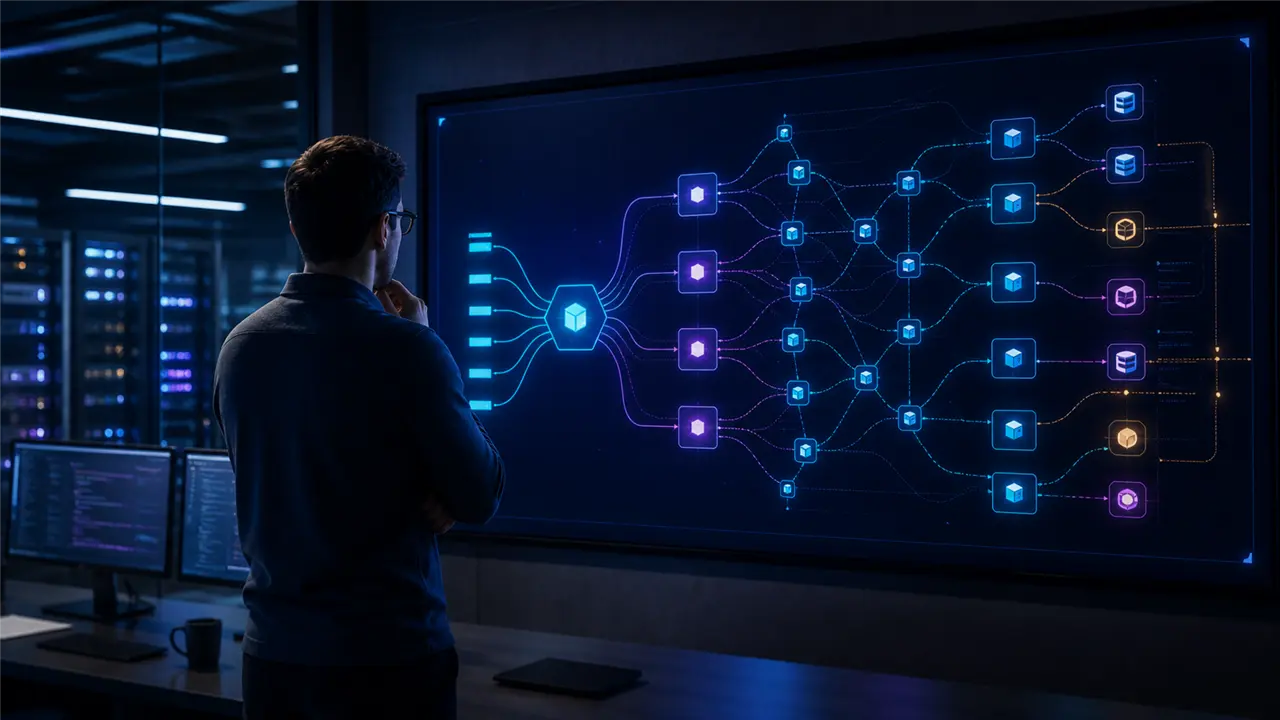
Engineering a seamless multiplayer card environment demands state synchronization protocols capable of handling thousands of concurrent table instances with zero desynchronization. A premier teen patti game development company architects its real-time engine utilizing persistent WebSocket connections rather than traditional RESTful polling, ensuring ultra-low latency updates essential for fast-paced betting rounds. In a typical enterprise deployment, the backend is constructed using Node.js or Golang, operating as a cluster of microservices orchestrated by Kubernetes. Node.js, combined with the Socket.io or ws libraries, excels in managing asynchronous event-driven I/O, allowing a single server node to maintain thousands of concurrent player connections while broadcasting table state mutations instantly. For further architectural integration standards, refer to How Operators Deploy Turnkey Fish Game WebGL.
The state synchronization architecture relies on an authoritative server model. The client application (developed in Unity or Cocos Creator) operates merely as a dumb terminal for rendering graphics and capturing player inputs. When a player initiates a bet, calls, folds, or executes a show action, the client transmits an event payload containing the action intent to the WebSocket server. The authoritative server receives this payload, validates the action against the current state machine of that specific table, recalculates the pot, updates the active player index, and then broadcasts a deterministic state delta to all clients connected to that table room.
To mitigate network jitter and packet loss common in mobile environments across varying geographic regions, custom card game development studio engineers implement sophisticated client-side prediction and server reconciliation algorithms. Furthermore, Redis is utilized as an in-memory data grid to manage active table states, distributed locks, and pub/sub messaging across multiple Node.js instances. This ensures that if a WebSocket server node crashes, the persistent table state remains intact in Redis, allowing clients to seamlessly reconnect to a surviving node and resume the hand precisely where it was interrupted, thus guaranteeing absolute fault tolerance in high-stakes environments.
Dynamic Table Limits Pot Management and Side Bet Mathematics

A sophisticated Teen Patti and Rummy platform requires a highly flexible mathematics engine to manage dynamic table limits, complex pot calculations, and programmable side bets. B2B operators must cater to distinct player segments, ranging from micro-stakes casual users to high-roller VIP rooms, necessitating a backend architecture where limits and commission structures (rake) are configurable at runtime without system downtime. The core mathematics module is responsible for calculating blind amounts, maximum bet caps, pot splits in the event of all-in scenarios, and the execution of side bet payouts (such as pair plus or 3-of-a-kind bonuses).
In the engineering of these systems, a state-of-the-art teen patti game development company utilizes a precise fixed-point arithmetic library on the server side to prevent floating-point inaccuracies that can occur in standard programming languages. When a player executes a “chaal” (bet) or “blind” action, the rules engine dynamically computes the minimum and maximum permissible bet based on the previous player’s action and the table’s absolute limit parameters. If a player initiates a “sideshow” request, the engine manages the temporary state lock, waits for the opponent’s accept or reject command, and executes the comparative logic securely on the server, masking the actual card data from unauthorized clients to prevent memory-sniffing exploits.
The integration of rummy game development services further complicates the mathematics engine, as it must calculate complex score variations based on card melds, deadwood penalties, and joker permutations. The pot management system securely segregates the main pot from side bet pools. Rake is calculated dynamically based on configurable algorithms—such as a percentage of the total pot capped at a specific value, or a flat fee per hand—and is securely transferred to the operator’s central revenue wallet upon the conclusion of the hand. This deterministic mathematical backbone ensures absolute financial integrity, empowering operators to adjust their economic models rapidly in response to market liquidity and player behavioral analytics.
AI Bot Simulation and Realistic Liquidity Seeding Algorithms

Liquidity is the lifeblood of any nascent multiplayer card platform. To prevent the “empty room” syndrome during the initial launch phase, operators require intelligent bot simulation systems. A specialized custom card game development studio engineers AI bots that transcend rudimentary scripted behaviors, utilizing probabilistic decision trees and machine learning to mimic the nuanced variance of human players. These AI entities are crucial for seeding tables, ensuring that real players always find active games regardless of their time zone or preferred stake level.
The backend architecture for bot simulation operates on an independent microservice cluster. These bots connect to the main game servers utilizing the same WebSocket protocols as organic clients, ensuring they bypass no security checks and are subject to the same state validations. The behavioral logic of the AI is governed by configurable parameters including aggression index, fold probability, bluff frequency, and session duration. In Teen Patti, an AI bot evaluates its hand strength, the current pot odds, the actions of preceding players, and its assigned persona profile to determine whether to pack, play blind, or aggressively raise.
Advanced liquidity seeding algorithms monitor global platform occupancy metrics in real-time. If the system detects a player joining an empty table, the liquidity engine dynamically provisions one or more AI bots to join the table, utilizing realistic delays to simulate human loading times. To maintain the illusion of reality, bots are assigned geographically appropriate avatars, usernames, and simulated network latencies. As organic player density increases, the seeding algorithm gracefully rotates bots out of the tables, seamlessly replacing synthetic liquidity with genuine human interaction. This sophisticated orchestration ensures an engaging user experience, maximizing player retention during the critical early stages of platform deployment.
Anti-Collusion Protocols Table Shuffling and Device Fingerprinting
Maintaining the cryptographic and behavioral integrity of the platform is the most critical mandate for any teen patti game development company. Multiplayer card games are prime targets for collusion rings, where multiple players at a single table secretly share their hole cards to defraud unsuspecting opponents. To combat this, enterprise-grade platforms employ strict anti-collusion protocols, relying on big data analytics, deterministic device fingerprinting, and dynamic table shuffling algorithms.
Device fingerprinting is implemented at the client application level, gathering unique hardware identifiers, network topologies, and OS-level configurations to generate an immutable cryptographic hash for each device. The backend security engine cross-references these fingerprints to instantly detect if multiple accounts are operating from the same physical device, the same localized IP subnet, or utilizing known VPN/proxy exit nodes. If a collusion risk threshold is breached, the system autonomously prevents these accounts from joining the same table room. Furthermore, behavioral anomaly detection algorithms analyze betting patterns in real-time. If two players consistently fold to each other’s small bets but aggressively raise when an unaffiliated player enters the pot, the system flags the accounts for manual review and can instantly suspend withdrawals.
Beyond behavioral monitoring, the mathematical core of the platform is fortified by GLI-certified Random Number Generators (RNG). The shuffling algorithm typically utilizes a cryptographically secure pseudo-random number generator (CSPRNG), such as the Fortuna algorithm or a hardware security module (HSM) based entropy source. The server maintains the deck state entirely in memory; client applications are only transmitted the encrypted data of their own hole cards and the community cards. The server never transmits the full deck array to any client, neutralizing the threat of client-side memory injection or packet sniffing hacks. Regular table shuffling policies force players to rotate across different tables after a set number of hands, disrupting established collusion rings and ensuring a continuously dynamic and secure gaming environment.
Multi-Game Modular Architecture Supporting Teen Patti Rummy and Andar Bahar
Operators targeting diverse international markets require a unified ecosystem capable of hosting multiple game variants without fragmenting the underlying infrastructure. A top-tier custom card game development studio designs a multi-game modular architecture, allowing operators to deploy Teen Patti, integrate rummy game development services, and launch an andar bahar online game source code module within a single, cohesive back-office application. This microservices-based architecture decouples the core platform services from the individual game logic engines.
The central architecture consists of foundational microservices: User Authentication, Central Wallet Management, Agent Hierarchy, Analytics, and WebSocket Gateway. Each specific card game operates as an independent logical module that interfaces with these core services via strictly defined gRPC or RESTful APIs. When a player navigates from the Teen Patti lobby to the Andar Bahar lobby, the client seamlessly disconnects from the Teen Patti game server cluster and establishes a new WebSocket connection with the Andar Bahar cluster, while the Central Wallet service locks and transfers the player’s balance to ensure transactional consistency.
This modularity provides unprecedented scalability and maintenance efficiency. If the rummy logic module requires a rule update or bug fix, the engineering team can compile, test, and deploy the updated rummy microservice independently, ensuring zero downtime for players engaged in Teen Patti or Andar Bahar. Furthermore, the unified back-office dashboard grants operators holistic visibility across all game verticals, providing aggregated reports on gross gaming revenue (GGR), active player counts, and agent commission settlements. Acquiring full andar bahar online game source code and other modular game engines guarantees that the operator retains total ownership of the intellectual property, facilitating continuous expansion and customization as market demands evolve.
Source Code Handover White-Label Licensing and SLA Maintenance
For enterprise B2B operators, technical sovereignty is non-negotiable. While SaaS models are suitable for entry-level startups, established operators demand a comprehensive source code handover or exclusive white-label licensing agreements from their chosen teen patti game development company. Securing the complete source code provides operators with the ultimate flexibility to conduct independent security audits, integrate proprietary payment gateways, and develop custom game features without being permanently tethered to the original development studio’s roadmap.
During an enterprise source code handover, the custom card game development studio transfers all intellectual property, including backend server repositories (Node.js/Golang), frontend client repositories (Unity/Cocos), database schemas (PostgreSQL/MongoDB), and infrastructure deployment scripts (Terraform/Docker/Kubernetes). This process must be accompanied by exhaustive technical documentation, covering API endpoints, architecture diagrams, and build procedures. This ensures the operator’s in-house engineering team can seamlessly assume control of the continuous integration and continuous deployment (CI/CD) pipelines.
Alternatively, for operators who prefer to minimize technical overhead, robust white-label licensing coupled with Service Level Agreement (SLA) maintenance contracts is the optimal path. Under an SLA, the development studio assumes responsibility for 24/7 server monitoring, automated database backups, DDoS mitigation, and emergency bug patching. The SLA clearly defines response times for critical severity incidents, guaranteeing high availability (typically 99.99% uptime). Whether opting for full source code acquisition or a managed white-label solution, establishing a rigid legal and technical framework is paramount to ensuring the long-term stability, scalability, and profitability of the multiplayer card platform.
Frequently Asked Questions
Question: What is the recommended server architecture for high-concurrency Teen Patti platforms?
Answer: For high concurrency, a microservices architecture utilizing Node.js or Golang is highly recommended. The system should deploy WebSocket servers for real-time bi-directional communication, orchestrated by Kubernetes for auto-scaling. Redis is essential for in-memory state management and pub/sub messaging across server nodes, while a robust relational database like PostgreSQL handles persistent transactional data and user balances.
Question: How does a custom card game development studio ensure RNG fairness?
Answer: A reputable studio implements cryptographically secure pseudo-random number generators (CSPRNG) or integrates Hardware Security Modules (HSM) to generate true entropy. The shuffling algorithms and math engines are then submitted to independent testing laboratories, such as Gaming Laboratories International (GLI) or iTech Labs, to undergo rigorous statistical analysis and receive official fairness certification.
Question: Can rummy game development services be integrated into an existing Teen Patti application?
Answer: Yes, provided the existing application utilizes a modular, microservices-based backend. The rummy engine can be deployed as an independent service cluster. The primary integration points involve connecting the new rummy frontend module to the existing UI lobby and routing the rummy backend to the platform’s central wallet and user authentication services via secure internal APIs.
Question: What are the security benefits of acquiring andar bahar online game source code?
Answer: Acquiring the full source code grants absolute technical sovereignty. Operators can conduct their own independent code audits to ensure no hidden backdoors exist, deploy the platform on their private on-premise servers or isolated cloud VPCs, and implement proprietary encryption protocols, thereby maximizing data privacy and shielding the platform from external supply chain vulnerabilities.
Question: How do anti-collusion systems detect fraudulent play in real-time?
Answer: Advanced anti-collusion systems utilize a multi-layered approach. They employ device fingerprinting and IP tracking to prevent users from the same network or hardware from sitting at the same table. Simultaneously, behavioral analytics algorithms monitor betting patterns, detecting statistical anomalies such as chip dumping, unusually high fold rates between specific players, or coordinated aggressive betting designed to squeeze out legitimate players.
***
Enterprise Technical Consultation
For detailed architecture blueprints, GLI certification procedures, and complete source code licensing for Teen Patti, Rummy, and Andar Bahar platforms, contact our engineering lead:
Engineer Wang
WhatsApp / WeChat: +86 17620842078
Telegram: https://t.me/JLwyc
Email: miba515527@gmail.com
Company: Guangzhou Miba Animation Technology Co., Ltd.