- Overcoming Video Latency in Remote Live Roulette Operations
- Precision Synchronization and The No More Bets Phase Lock
- Mobile First Digital Betting Grid User Experience
- High Concurrency Bet Aggregation Engine Architecture
- Instant Automated Payout Settlement and Wallet Updates
- Turnkey Setup and Factory Direct Contact Information
- Frequently Asked Questions
The biggest challenge online operators face when running physical arcade machines over the internet is the dreaded video lag that breaks player trust. When your players are placing high-stakes bets on a live electronic roulette wheel, a delay of even half a second between the physical ball dropping and the digital video feed can lead to catastrophic financial disputes, abandoned shopping carts, and immediate loss of credibility. Many venue operators struggle with mismatched video and data feeds, resulting in players placing bets after the ball has already settled. As a leading manufacturer of complete machine turnkey solutions based in Guangzhou, we solve this exact pain point through industrial grade WebRTC video streaming and real time betting synchronization. I am Engineer Wang, lead system architect at our 15,000 square meter Panyu manufacturing base. Our engineering team has perfected the exact software and hardware infrastructure needed to deliver a sub-80ms glass-to-glass latency experience. If you are building a professional remote casino or arcade venue, contact me directly via WhatsApp at +86 17620842078 or Email at miba515527@gmail.com for a complete commercial factory quote.
Overcoming Video Latency in Remote Live Roulette Operations
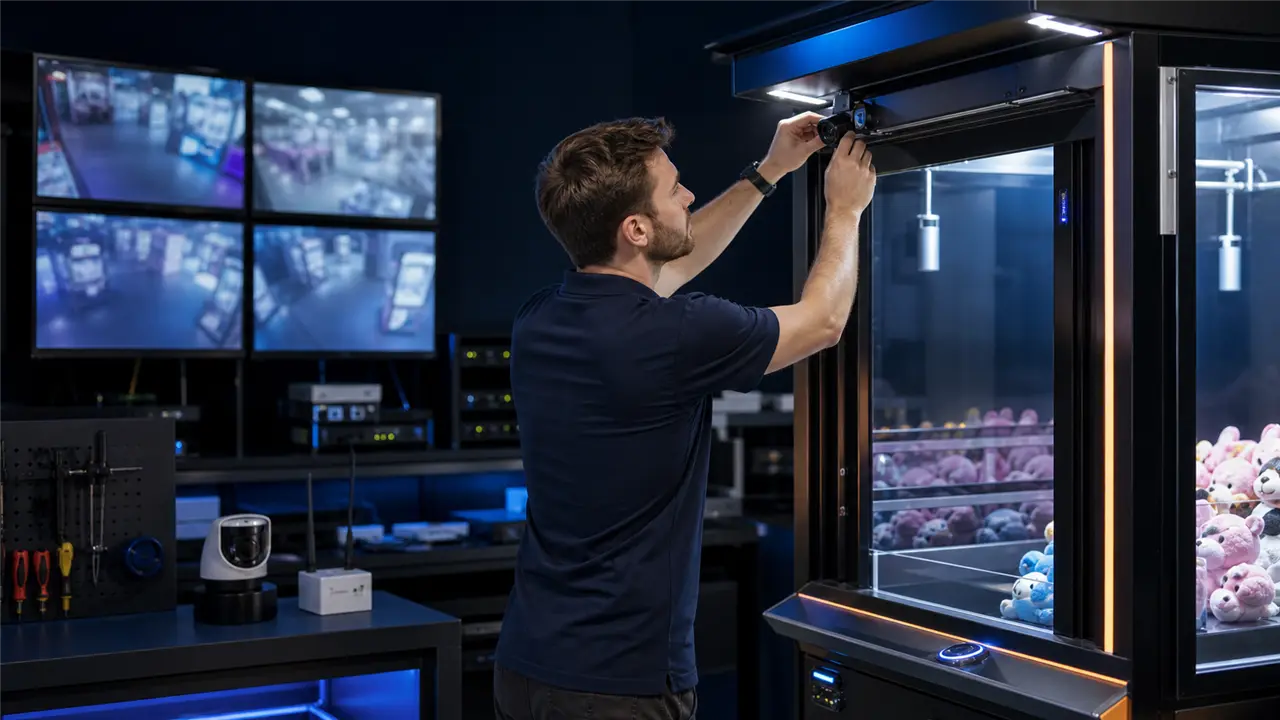
Achieving true real time video streaming requires a dedicated dual-camera 4K WebRTC pipeline that maintains under 80ms glass-to-glass latency across global networks. We deploy a top-down macro wheel view and a panoramic studio view simultaneously to ensure total transparency and player trust without buffering delays.
When we engineer our streaming architecture in our Panyu facility, we completely bypass traditional HLS or RTMP protocols which typically introduce three to ten seconds of lag. Instead, our software development team relies on a custom WebRTC implementation optimized for real time interactive gaming. This infrastructure guarantees that when the physical roulette wheel spins on your venue floor, the player halfway across the world sees the action instantly.
Our factory integrates industrial 4K cameras directly into the hardware cabinets of our remote live electronic roulette turnkey system. The top-down macro camera focuses exclusively on the rotor and the ball, capturing every bounce with extreme clarity. Meanwhile, the panoramic studio view provides players with a wide angle shot of the entire physical machine and the surrounding environment, proving that the broadcast is completely live and authentic. The video feeds are processed at the edge, encoded via hardware accelerated VP8 or H.264, and pushed out through our specialized SFU routing networks. This ensures that even players on mobile cellular connections experience smooth and synchronized video playback. We refuse to compromise on visual fidelity because in the commercial gaming sector, seeing the physical ball land with zero delay is the absolute foundation of your entire revenue model.
Precision Synchronization and The No More Bets Phase Lock
The No More Bets phase lock is an automated countdown timer synchronized perfectly between the WebRTC video frame timestamps and the WebSocket betting servers to prevent late betting fraud. This ensures absolute fairness by locking the betting grid exactly before the ball hits the wheel deflectors.
In physical casino operations, the dealer manually waves off late bets. In our automated remote live arcade turnkey system, this process must be handled by high precision software and IoT sensors. Our engineering team designed a proprietary phase lock mechanism that constantly cross-references the video stream timestamps with our central betting engine. The system knows exactly when the dealer or the automated air blower launches the ball. As the momentum slows down, our logic controllers trigger the “Rien Ne Va Plus” signal across all connected client devices simultaneously.
Because we manufacture the complete hardware and write the entire software stack, the integration is flawless. If a player attempts to submit a chip placement exactly at the cutoff millisecond, the WebSocket server checks the atomic timestamp against the physical wheel’s IoT status. If the wheel has entered the terminal deceleration phase, the server rejects the bet and instantly updates the player’s UI. This eliminates any possibility of latency exploitation. Furthermore, this synchronization works in tandem with our dual laser ball drop detection hardware, which uses high-speed vision sensors to identify the exact winning pocket the moment the ball settles. The transition from the active betting phase to the locked phase is visually communicated on the digital betting grid through smooth UI animations, building anticipation while protecting your bankroll from advantage play.
Mobile First Digital Betting Grid User Experience

Our mobile first digital betting grid provides a multi-touch roulette felt layout optimized for iOS, Android, and HTML5 platforms. It enables players to instantly execute complex wagers including straight up, split, street, corner, and outside bets with immediate chip placement confirmation.
Modern arcade and casino operators know that over 80 percent of betting volume comes from mobile devices. If the user interface is clunky or unresponsive, players will simply leave. Our software studio develops bespoke digital betting grids that replicate the tactile satisfaction of placing physical chips on a real casino table. We utilize hardware accelerated HTML5 Canvas and WebGL rendering to ensure 60 frames per second animations, even on older smartphone models.
When a player taps the intersection of four numbers on their screen, the system instantly calculates the touch coordinates and registers a corner bet. The visual feedback is immediate. A high resolution 3D chip appears exactly where the player tapped, accompanied by a crisp audio confirmation. Our UI framework supports all standard European and American roulette bet types, alongside customizable racetrack grids for call bets and neighbor wagers. To ensure operators can maximize their turnover, we include features like one-tap rebet, double wager buttons, and customizable chip denominations. The entire front-end communicates with our backend through persistent WebSocket connections, ensuring that every chip dropped on the digital felt is acknowledged by the server in less than 20 milliseconds. This level of responsiveness is what transforms a casual visitor into a loyal high volume player within your remote live roulette machine farm infrastructure.
High Concurrency Bet Aggregation Engine Architecture
Our high concurrency bet aggregation engine utilizes Redis in-memory atomic locks to handle over 10,000 simultaneous bet transactions per round without database bottlenecks. This industrial grade backend architecture guarantees that no bets are ever dropped during peak traffic spikes.
Behind the stunning WebRTC video and the smooth mobile UI lies the true workhorse of our turnkey solution. A single live roulette table broadcast globally might attract thousands of concurrent players, all frantically placing multiple bets in the final ten seconds before the countdown expires. Traditional relational databases would buckle under this massive volume of write operations, leading to frozen screens and rejected wagers that infuriate players and cost operators money.
To solve this, my team at Guangzhou Miba Animation Technology Co., Ltd. architects the betting engine entirely in-memory. When a player submits a wager, the request hits a load balancer and is routed to one of our highly available Node.js or Go microservices. The transaction is instantly validated against the player’s wallet balance and locked using Redis distributed atomic locks. This ensures absolute transactional integrity, preventing double spending or race conditions even under extreme server load. Once the betting window closes, the aggregation engine rapidly compiles the tens of thousands of individual wagers into a single optimized dataset, ready for the payout calculation phase. This robust backend is a core component of our comprehensive turnkey sweepstakes software backend, providing venue owners with the peace of mind that their digital infrastructure can effortlessly scale alongside their marketing campaigns and player acquisition efforts.
Instant Automated Payout Settlement and Wallet Updates
Instant automated payout settlement computes complex odds combinations and updates player wallets in under 200ms following winning pocket confirmation. This rapid financial reconciliation keeps the game flowing quickly and maximizes your daily rounds per hour and overall profit margins.
The moment the physical ball drops into a pocket and is verified by our industrial optical sensors, the real time data is transmitted to the bet aggregation engine. The software immediately broadcasts the winning number to all connected clients and triggers the payout algorithm. Roulette involves highly complex payout structures, ranging from 35:1 for straight up bets to 17:1 for splits, and even money for outside bets like red or black. A single player might have a dozen different chips scattered across the digital felt, covering multiple overlapping scenarios.
Our settlement engine executes these mathematical calculations across thousands of active accounts in a fraction of a second. It cross-references the winning number against the aggregated bet ledger, calculates the precise return for every individual chip, and credits the total winnings directly to the respective player wallets. The digital betting grid instantly displays celebratory animations and updates the balance display, ensuring players can immediately use their winnings to place new bets for the next round. By compressing the time required for financial reconciliation to under 200 milliseconds, our complete machine solutions allow operators to run more rounds per hour. More rounds translate directly into a higher total drop and increased daily revenue for your operation. We provide the full source code and API endpoints for seamless integration with your existing payment gateways and accounting platforms.
Turnkey Setup and Factory Direct Contact Information
When you are ready to deploy a truly professional remote live gaming ecosystem, you cannot rely on pieced-together components from multiple disjointed vendors. We are a direct manufacturer of complete physical arcade cabinets and the sole developers of the required low latency software infrastructure. By choosing our turnkey solutions, you eliminate compatibility issues, reduce your time to market, and ensure a flawless experience for your players. We handle the 4K video hardware, the IoT synchronization, the mobile UI development, and the high concurrency backend servers.
Contact our Panyu factory today to discuss your project requirements and receive a comprehensive commercial proposal.
Direct Engineer Contact:
- WhatsApp and WeChat: +86 17620842078
- Telegram: https://t.me/JLwyc
- Email: miba515527@gmail.com
- Manufacturing Base: Guangzhou, China (Guangzhou Miba Animation Technology Co., Ltd.)
Frequently Asked Questions
What is the expected video latency for the live roulette feed? Our proprietary WebRTC pipeline maintains a glass-to-glass latency of under 80 milliseconds globally. This ensures that the video stream matches the physical ball drop perfectly, maintaining player trust and operational integrity.
How does the system handle late betting attempts? We utilize an automated phase lock mechanism that synchronizes the WebRTC video timestamps with our WebSocket servers. When the physical wheel reaches the cutoff point, the system instantly locks the digital betting grid and rejects any late wager attempts.
Can the digital betting grid handle high player volumes? Yes, our backend architecture is built for extreme scalability. By utilizing Redis in-memory atomic locks and microservices, our bet aggregation engine can easily process over 10,000 simultaneous transactions per round without lag or dropped bets.
Is the mobile interface responsive on older smartphones? Absolutely. We develop our digital betting grid using highly optimized HTML5 Canvas and WebGL rendering, ensuring a smooth 60 frames per second experience and instant multi-touch responsiveness across both modern and legacy iOS and Android devices.
Do you supply both the physical machine and the software backend? Yes, we are a true turnkey complete machine manufacturer. We design and build the physical arcade cabinets, integrate the optical sensors and cameras, and develop the complete software platform including the betting engine and wallet management system.