- The Operational Reality of Roulette Machine Motherboard Failures
- Core Architecture of the Industrial Roulette Machine Motherboard
- Optical Sensor Calibration for Anti Cheat Defense
- Real World Operational Economics and ROI Breakdown
- Factory Direct QA Protocol and FAT Inspection Checklist
- Actionable Operator Troubleshooting Guide and Pinout
- Integrating the Roulette Machine Motherboard on the Casino Floor
- Frequently Asked Questions
Hi, I am Engineer Wang, lead hardware and systems architect at Guangzhou Miba Animation Technology Co., Ltd. (Arcade Manufacturer). In my 12 years of designing and troubleshooting arcade route failures in Panyu, I have seen countless operators lose thousands of dollars in a single weekend. The culprit is almost always the same—a vulnerable electronic roulette machine motherboard failing under heavy load or succumbing to external cheating devices.
For high-stakes electronic multiplayer games like Forest Dance (森林舞会) and Animal Roulette (动物连线压分机), the motherboard is the central nervous system. When operators install unshielded, generic mainboards, they expose their venue to EMP jammer attacks, optical sensor spoofing, and catastrophic peak-hour downtime. Venue owners do not care about raw silicon speed; they care about zero downtime, absolute mathematical profit stability, and preventing players from artificially draining the payout pool. We engineer our roulette machine motherboards with industrial-grade transient voltage suppression and encrypted optical calibration to guarantee your 92% to 96% retention margins. For factory-direct procurement and comprehensive engineering specs, consult our master guide on complete commercial arcade machines factory guide.
Evaluating turnkey cabinet hardware or looking to test our playable Unity game demos? Connect with our engineering team or reach me (Engineer Wang) directly via WhatsApp at `+86 17620842078` for instant video demonstrations on our test bench.
| Feature Category | Generic Market Motherboard | Miba Factory-Direct Hardened Motherboard |
|---|---|---|
| EMP & Surge Protection | Basic fuse, no clamping | TVS transient suppression (<5ps clamping time) |
| Optical Sensor Polling | Standard analog read (Vulnerable to light spoofing) | Encrypted digital pulse with dynamic frequency |
| RTP Volatility Control | Fixed ROM, prone to overflow | Dynamic real-time mathematical dampening |
| Data Retention | Battery-backed RAM (Fails after 1 year) | NVRAM with redundant EEPROM mirror backups |
| ROI Payback Period | Unknown (Constant maintenance) | 30 to 60 days on average |
The Operational Reality of Roulette Machine Motherboard Failures
Let us look at a plausible scenario from my bench experience. A route operator managing a 50-machine sweeping hall network in Southeast Asia recently faced a severe revenue leakage problem on their Animal Roulette cabinets. Every Friday night, during peak betting hours, the central roulette wheel would occasionally stall, and the system would incorrectly award a high-multiplier jackpot to a specific terminal.
The operator initially suspected a mechanical jam in the ball bearing. However, after they shipped the faulty roulette machine motherboard to our Panyu laboratory, I quickly identified the real issue. The board was a generic, unshielded PCB using basic analog optical sensors to read the roulette ball’s position. Savvy players had discovered they could use a high-powered infrared emitter hidden in a smartphone to blind the optical receiver just as the ball passed the high-payout slots. The generic motherboard’s firmware, lacking error-handling logic, interpreted the flooded sensor as a valid ball drop and issued the payout. Furthermore, the board had no RF shielding, meaning a standard 300MHz EMP jammer could induce enough voltage on the logic lines to force a system reboot, wiping the active bet ledger and forcing the operator to refund angry players out of pocket.
This is the grim reality of using cheap hardware. A venue boss does not want to constantly monitor the floor for cheaters. They need a system that inherently rejects these anomalies. At our factory, we know that an operator’s primary concern is maintaining a tight, predictable payout curve without the fear of sudden, inexplicable hardware resets or fraudulent credit insertion.
Core Architecture of the Industrial Roulette Machine Motherboard
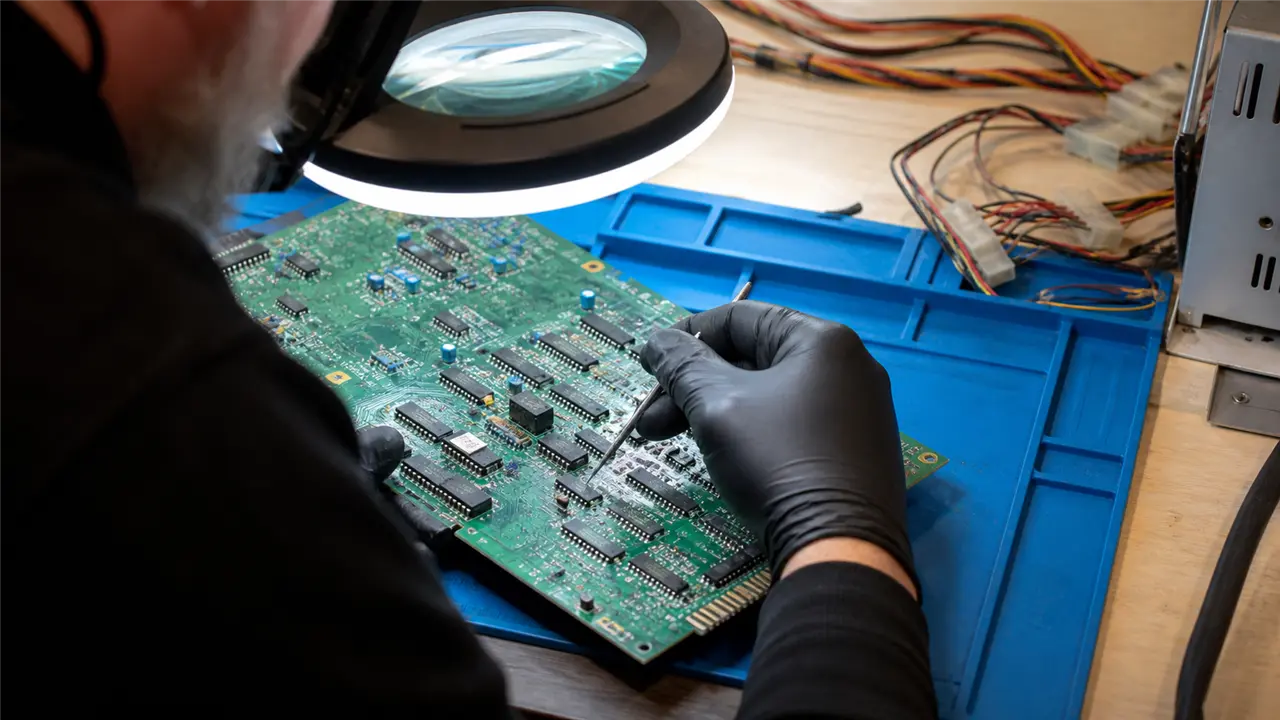
To solve these catastrophic failures, our engineering team completely redesigned the hardware architecture for our electronic roulette and Forest Dance (森林舞会) cabinets. Our approach shifts the paradigm from simple I/O processing to secure, hardened edge computing.
On our Panyu factory assembly line, we stress-test every PCB chassis to ensure it meets strict industrial standards. The foundation of our roulette machine motherboard is a multi-layer PCB with dedicated ground planes to isolate sensitive logic circuits from high-current peripheral drivers, such as hopper motors and ticket dispensers.
We utilize isolated I/O interfaces using high-speed optocouplers. This means that even if a high-voltage surge is introduced through the coin acceptor or the player button panel, the optical isolation barrier prevents the surge from reaching the central processing unit. The logic side remains completely protected. We also implement independent watchdog timers. If the main program loop ever hangs due to an unexpected hardware state, the watchdog hardware will force a safe reboot within milliseconds, restoring the exact state of the ledger from the NVRAM before the screen even flickers.
The RTP (Return to Player) calculation engine is also physically isolated on a secure, encrypted microcontroller. This prevents any external tampering with the payout mathematics. By locking the mathematical model inside a read-protected silicon vault, we guarantee that the 92% to 96% retention rate remains mathematically pure over millions of spins, regardless of how the players interact with the peripheral inputs.
| Engineering Parameter | Specification Standard | Venue Profit Benefit |
|---|---|---|
| Optocoupler Isolation | 5000Vrms minimum isolation voltage | Prevents peripheral surges from killing the CPU |
| Watchdog Timer | Independent hardware-level reset (15ms threshold) | Zero dead-screen downtime during peak hours |
| PCB Architecture | 6-layer FR4 with dedicated analog/digital ground | Eliminates internal noise and erratic behavior |
| RTP Engine | Encrypted secondary MCU (AES-256 equivalent) | Guarantees mathematical profit stability |
| Input Voltage Range | 90V – 260V Wide Range Switching | Prevents resets during casino floor voltage sags |
Optical Sensor Calibration for Anti Cheat Defense
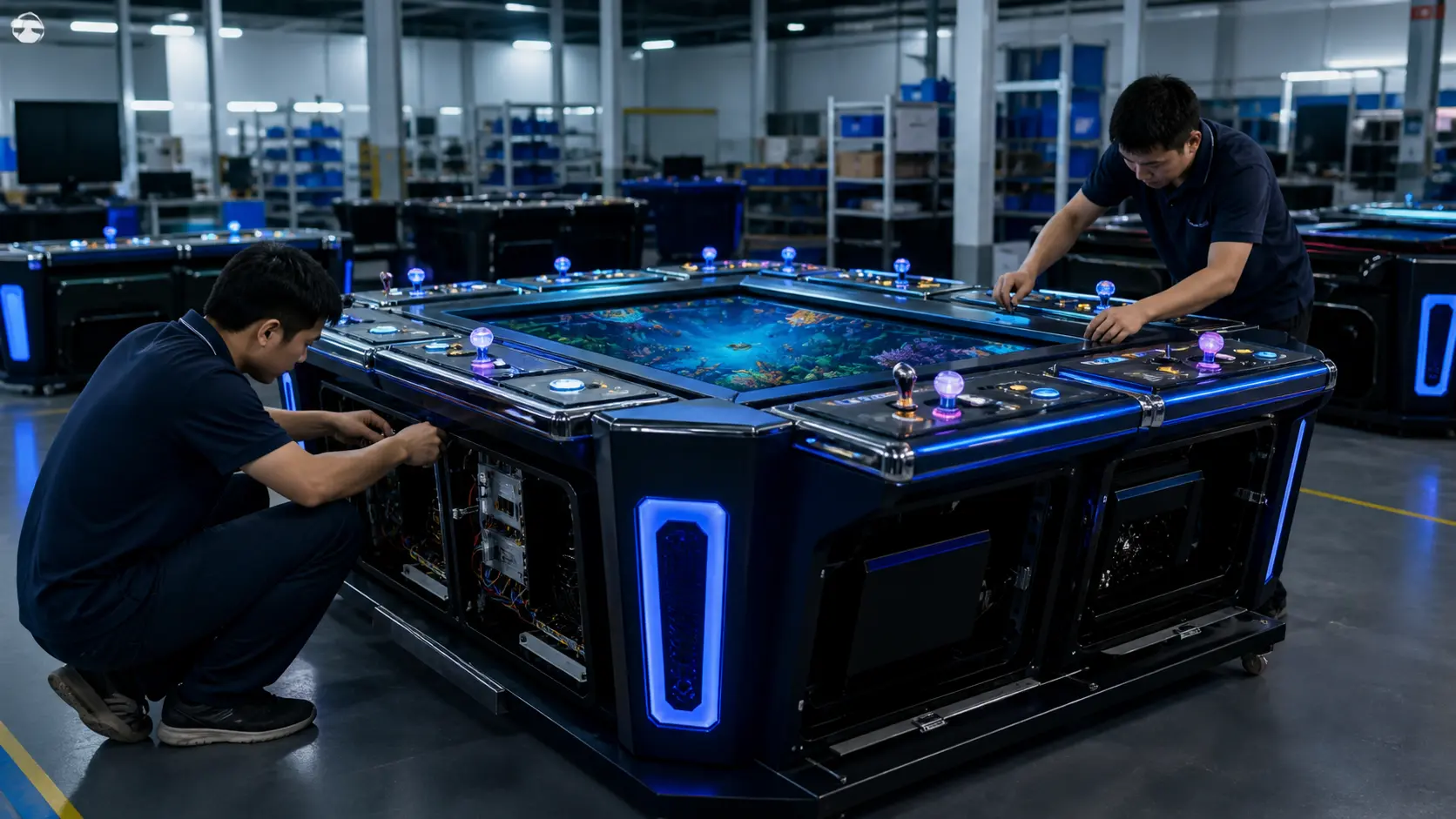
The most critical interface on any physical roulette game is the ball tracking mechanism. Our roulette machine motherboard employs an advanced optical sensor calibration protocol that renders traditional spoofing attacks completely ineffective.
Instead of relying on simple “beam broken” logic, our factory engineers implemented a modulated infrared (IR) pulse system. The IR emitters around the roulette wheel do not emit a constant beam; they pulse at a high frequency, specifically synchronized with the motherboard’s clock. The receiver on the opposite side only registers a valid signal if it detects this exact frequency and pulse width. If a player attempts to blind the sensor with an external laser or a modified smartphone IR blaster, the receiver immediately flags the steady, unmodulated light as an anomaly.
When an anomaly is detected, the roulette machine motherboard instantly triggers a “Tilt” state, freezing all bets, sounding an alarm, and logging the exact terminal and timestamp of the interference. This dynamic frequency modulation acts as an invisible cryptographic handshake between the emitter and the receiver.
Furthermore, environmental factors such as ambient lighting changes (e.g., casino strobes) or dust accumulation on the physical wheel can cause sensor drift. Our firmware includes a continuous auto-calibration loop. During idle periods, the motherboard samples the baseline optical noise floor and dynamically adjusts the comparator thresholds. This ensures that the sensor remains perfectly tuned without requiring a technician to manually adjust potentiometers inside the cabinet every month. This self-healing architecture directly lowers the operator’s maintenance overhead and maximizes uptime.
Need the complete PCB schematics, I/O pinout mappings, or mathematical RTP distribution sheets for your technical team? Request our full factory engineering package directly through our Custom Development Portal.
Real World Operational Economics and ROI Breakdown
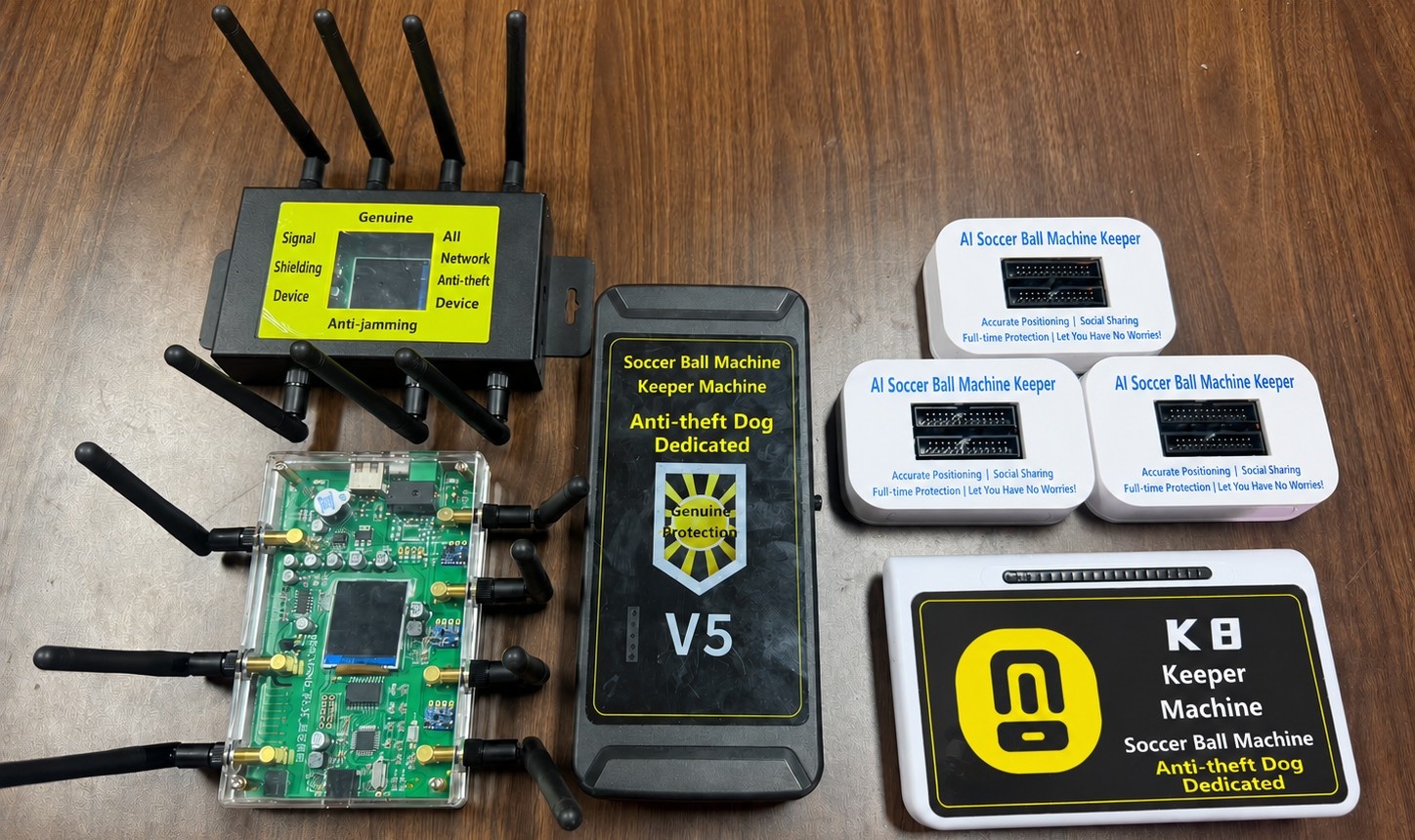
When venue owners evaluate equipment, the conversation must always center around the Total Cost of Ownership (TCO) and the Return on Investment (ROI). Upgrading to a hardened roulette machine motherboard is not merely a technical luxury; it is a fundamental financial strategy.
Let us break down the operational economics. A generic motherboard might save you $200 upfront. However, a single successful EMP attack or optical spoofing incident on a Friday night can easily drain $1,500 in fraudulent payouts. Add to that the cost of operator downtime—if the machine is out of order for three days waiting for a replacement board, a venue could lose an additional $900 in expected net revenue. The cheap board suddenly costs ten times more than the industrial solution.
Our custom roulette machine motherboard solutions provide a measurable increase in net profit margins by virtually eliminating theft leakage and technical downtime. We observe that venues upgrading to our Miba Factory-Direct hardware typically experience a payback period of just 30 to 60 days on the hardware cost, purely from the recovered revenue that would have otherwise been lost to cheaters or hardware lockups.
Here is a concrete breakdown of the financial logic for an 8-player Animal Roulette setup:
| Expense / Revenue Factor | Generic Hardware Strategy | Hardened Factory Strategy |
|---|---|---|
| Initial Hardware Cost | Low (Baseline) | Premium (+15% initial CAPEX) |
| Monthly Cheating Leakage | $800 – $1,500 (Vulnerable) | $0 (Zero-tolerance hardware) |
| Maintenance Downtime | 3-5 Days / Month | < 1 Day / Year |
| Expected Lifespan | 12 – 18 Months | 60+ Months |
| Effective Payback Period | Never (Constant bleed) | 45 Days (From increased margin) |
Factory Direct QA Protocol and FAT Inspection Checklist
The reliability of our roulette machine motherboard begins on the manufacturing floor. In my engineering lab, our senior QA protocol mandates a series of brutal environmental and electrical stress tests before any board is approved for export crating.
We do not just power the boards on to see if the LEDs blink. Every motherboard undergoes a 72-hour continuous burn-in test inside our thermal chambers, cycling between 0°C and 55°C at 85% humidity. This accelerates infant mortality in the silicon and ensures the board will survive in non-climate-controlled environments, such as open-air arcades in humid coastal regions. We also subject the I/O ports to 2,500V transient pulse injections. If the board resets or a single byte of NVRAM is corrupted, the design fails and goes back to the engineering bench.
For operators purchasing container loads of our Forest Dance or roulette cabinets, we enforce a strict Factory Acceptance Testing (FAT) protocol. We invite buyers to participate in a live video walk-through from our Panyu facility, where we demonstrate the following checklist on their actual ordered batch:
- Power Fluctuation Tolerance: Dropping input voltage to 90V and confirming the motherboard maintains logic state and RTP memory.
- EMP Clamping Verification: Triggering a multi-band 300-1200MHz RF jammer directly next to the coin hopper interface and verifying zero credit insertion.
- Optical Spoofing Defense: Attempting to trigger the ball sensors with raw infrared lasers and verifying the system enters a secure “Tilt” state.
- Thermal Imaging Inspection: Running the board at maximum CPU load and using FLIR cameras to verify no hotspots exist on the power regulators.
- Software Obfuscation Audit: Confirming the compiled game ROM matches the secured hash, preventing operator-level manipulation of the win rate.
Actionable Operator Troubleshooting Guide and Pinout
For operators and venue technicians managing the floor, quick diagnosis is the difference between an angry player walking away and a retained customer. Our motherboards feature an onboard 7-segment diagnostic LED that provides immediate hex codes for hardware faults. We designed this to bypass the need for an external multimeter in 90% of field service calls.
Here is an actionable troubleshooting reference for standard operational issues:
| Hex Code | Symptom on Casino Floor | Technical Root Cause | Actionable Field Solution |
|---|---|---|---|
| E-01 | Coin acceptor rejects all tokens | Optical isolation failure on Input Pin 4 | Inspect the 12V supply line to the acceptor; replace optocoupler bank if 12V is clean. |
| E-04 | Roulette ball spins infinitely | Optical sensor array mismatch | Wipe the wheel sensors to remove dust; trigger the auto-calibration switch on the motherboard. |
| E-07 | Machine instantly reboots on payout | Hopper motor inductive kickback | Verify the physical snubber diode on the hopper motor is intact; check board ground continuity. |
| E-09 | Screen frozen, audio loops | Watchdog timer triggered | The motherboard has self-protected from an EMP surge. Power cycle the cabinet to clear the NVRAM flag. |
| E-22 | RTP math discrepancy warning | Encrypted MCU handshake failed | Immediate motherboard replacement required. The security seal or ROM chip has been tampered with. |
By following these diagnostic steps, your floor staff can resolve common hardware faults within minutes. The pinout design on our boards utilizes standard JAMMA 56-pin edge connectors combined with proprietary secure JST headers for the optical wheel, ensuring that your technicians do not need to learn a completely new wiring paradigm.
Integrating the Roulette Machine Motherboard on the Casino Floor
Upgrading to our proprietary motherboard is designed to be as frictionless as possible for existing route operators. The deployment blueprint follows a logical progression to minimize floor downtime.
First, your technical team will map the existing peripheral harnesses. Because our boards support universal logic levels (active high or active low configurable via dip switches), you can retain your current bill validators, coin hoppers, and player button panels.
Second, the optical wheel integration requires precision. You will mount our custom emitter-receiver brackets directly to the physical roulette chassis. Once wired to the motherboard’s dedicated sensor array header, you simply boot the machine in “Calibration Mode.” The motherboard will run a 60-second diagnostic spin, learning the exact timing parameters of the physical wheel and establishing the secure modulated frequency baseline.
Finally, the operator configures the mathematical payout model via the secure operator menu. Using our proprietary USB dongle, the venue manager can set the exact RTP bracket (e.g., 94%), adjust the volatility index for different player demographics, and set absolute maximum single-payout limits to prevent cash drawer depletion. Once the dongle is removed, the settings are locked into the encrypted NVRAM, completely inaccessible to standard floor attendants.
Related Engineering References and Floor Operational Guides
- For our factory engineering standards, review our multiplayer electronic roulette manufacturing framework.
- For multiplier calibration, see our Forest Dance and animal roulette setup guide.
- Compare terminal configurations in our 8-player electronic roulette machine specifications.
- Calculate coin-in margins using our casino-grade roulette machine ROI model.
Frequently Asked Questions
What causes a roulette machine motherboard to repeatedly reset during a spin?
A continuous reboot during a spin is almost always caused by an inductive voltage drop or a deliberate EMP attack. When the physical roulette motor or the coin hopper engages, it draws significant current. If the motherboard lacks proper ground plane isolation or TVS clamping diodes, this current draw creates a voltage dip on the 5V logic line, triggering the CPU’s brown-out detector. Upgrading to our factory motherboard eliminates this via isolated power planes.
How often should the optical sensor calibration be performed on the wheel?
Under normal operating conditions, our motherboards handle calibration automatically. The firmware continuously samples the baseline optical noise during idle periods. However, a manual calibration cycle should be initiated from the operator menu if the cabinet is physically relocated, after a deep cleaning of the roulette wheel, or if the ambient lighting environment in the venue changes dramatically (e.g., adding high-intensity stage lighting nearby).
Can the RTP mathematics be adjusted directly on the roulette machine motherboard?
Yes, but only through a secure hardware handshake. We do not use exposed dip switches for RTP settings, as rogue technicians easily manipulate them. The venue owner must insert a proprietary encrypted USB administrator key to access the backend math configuration menu. From there, the RTP can be adjusted between 85% and 98%, depending on local regulatory requirements and venue profit strategies.
How does the motherboard prevent EMP jammer attacks?
We deploy a multi-layered hardware defense against electromagnetic pulse (EMP) devices. First, the entire logic section of the motherboard is encased in a grounded Faraday shield. Second, every incoming peripheral line (buttons, coin mechs) passes through an optical isolator, physically breaking the electrical connection to the CPU. Finally, transient voltage suppression (TVS) diodes are placed across the power rails to clamp any induced high-voltage spikes to a safe level within 5 picoseconds, long before they can corrupt the RAM.
What is the lead time for a custom roulette machine motherboard batch?
For our standard hardened electronic roulette and Forest Dance (森林舞会) motherboards, our Panyu factory maintains a rolling inventory for immediate dispatch. If you require custom API integration for an external cashless card system or a modified RTP math model, our firmware engineers require 7 to 14 business days to compile, test, and burn the custom ROMs before the 72-hour burn-in phase begins. Total lead time for custom batches is typically under 3 weeks.
json
Ready to eliminate revenue leakage, launch custom white-label gaming titles, or order container-load arcade cabinets directly from our Panyu factory? Contact me (Engineer Wang) directly via WhatsApp/WeChat (`+86 17620842078`), Telegram (`https://t.me/JLwyc`), or email (`miba515527@gmail.com`) for a 24-hour formal quotation and live factory FAT scheduling.